Every procurement manager sourcing private label tissue has come across an FSC certification claim on a supplier quote. But FSC certification verification is not a single checkbox—it is a three-step cross-check that most buyers skip, often because they assume any valid certificate covers the finished product. The reality is that the certificate might only cover raw paper rolls from the mill, not the converting and private-label packaging stage your order depends on.
The most common verification fail I see: a supplier holds FSC chain-of-custody for their paper mill but lets it lapse for the converting facility. They still print FSC logos on boxes and invoices, but the final product is not legally eligible to carry the logo. Your brand takes the greenwashing exposure, not theirs. Even more subtle: they hand you a License Code (FSC-C######) when the official invoice requires the Chain-of-Custody Certificate Code (XXX-COC-######). Accepting the wrong code opens your documentation to audit failure.
This 10-minute verification workflow gives you a repeatable, defensible process to run before approving artwork or releasing a purchase order. You will know exactly what to collect from the supplier, where to enter it on the FSC public dashboard at search.fsc.org, and how to confirm the scope matches your product. No theory. Hand it to a junior team member and get consistent results.
Step 1: Collect Certificate Code and Claim Details
FSC verification takes 10 minutes using the public dashboard at search.fsc.org. Most procurement teams skip the scope check — that is where the risk lives.
Key Takeaways: FSC Certification Verification
Verify FSC certification in 10 minutes by entering the supplier’s license or certificate code into the FSC Public Certificate Search at search.fsc.org, then confirming certificate status, scope (must include finished tissue products like toilet paper, not just raw materials), and claim type (FSC 100%, FSC Mix). Suppliers with expired, suspended, or mismatched FSC certificates expose buyers to brand risk and potential contract penalties — verifying before artwork approval eliminates non-compliance costs estimated at 5-15% of order value. Many OEM tissue suppliers hold FSC certification for raw paper rolls but fail to renew chain-of-custody certification for the converting/private-label stage, meaning the final boxed product cannot legally carry the FSC logo.
Step 1: Collect Certificate Code and Claim Details
Gather three things from the supplier’s quote or invoice: (1) the exact FSC certificate code (e.g., FSC-C123456 or XXX-COC-######), (2) the exact FSC claim language (e.g., ‘FSC Mix’, ‘FSC 100%’, not vague terms like ‘eco-friendly’), and (3) the supplier’s legal entity name exactly as it appears on official documents. A license code printed on marketing materials or product packaging is not sufficient — the official invoice must carry the Chain of Custody (CoC) code. Procurement teams that accept the license code alone are at risk. For deeper context on what each claim actually means, reference the FSC certification requirements for private label tissue.
Step 2: Search FSC Public Dashboard
Access search.fsc.org. Enter the collected code into the ‘Certificate Code’ field, then click ‘Search’. The results will show: entity name, address, certificate status (Valid, Suspended, Expired, Terminated), certificate scope (product categories and activities), and the list of certified products. A ‘Valid’ status alone is insufficient — the scope must explicitly cover ‘finished paper products’ or ‘converting’ for tissue/toilet paper, not just ‘pulp’ or ‘paper mill’. This is the step where most verification failures happen.
Step 3: Verify Scope, Claim, and Document Consistency
Cross-reference the FSC claim on the supplier’s invoice (e.g., ‘FSC Mix Credit’) with the ‘FSC Claim’ field in the database. The claim types must match — a certificate with only ‘FSC 100%’ cannot sell ‘FSC Mix’ products. Also verify that the supplier’s address and legal name on the invoice match the database. Document consistency across quotes, POs, and invoices is a proxy for proper chain-of-custody controls; mismatches warrant investigation before PO approval.
Common Pitfalls in FSC Verification for Tissue
List the top mistakes procurement veterans make: (1) Assuming a broker or trading company doesn’t need its own FSC certification — they do if they issue an invoice with an FSC claim. (2) Relying on a PDF certificate copy instead of checking the live database. (3) Misinterpreting ‘Certificate Code’ (starts with XXX-COC) vs ‘License Code’ (starts with FSC-C). (4) Not verifying scope for the specific product — a certificate covering ‘toilet paper jumbo rolls’ may not cover ‘retail toilet paper 4-ply’. Each mistake increases audit and greenwashing risk.
FSC Claim Language: What to Look For
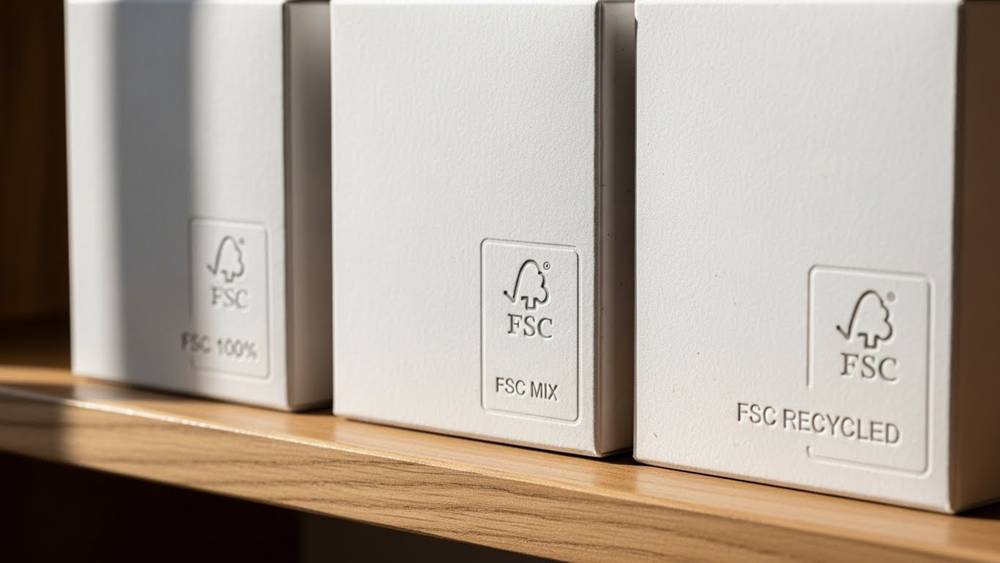
Valid FSC claims: ‘FSC 100%’ (all virgin fiber from FSC-certified forests), ‘FSC Mix’ (mix of FSC-certified, recycled, and/or controlled wood), ‘FSC Recycled’ (100% post-consumer or pre-consumer recycled fiber). Vague terms like ‘sustainable’, ‘green’, ‘eco-friendly’, ‘responsibly sourced’ are not FSC claims and cannot be verified. If a supplier uses these terms without an FSC label and a matching certificate code, you have no verifiable claim.
Step 2: Search FSC Public Dashboard
Verifying an FSC claim takes 10 minutes using the public dashboard. The real risk isn’t a fake certificate—it’s a certificate that doesn’t cover the finished product you’re buying.
Step 1: Collect Certificate Code and Claim Details
Start by pulling three things from the supplier’s quote or commercial invoice. First, the exact FSC certificate code—this will be either a License Code (FSC-C######) or a Chain of Custody Certificate Code (XXX-COC-######). Second, the exact FSC claim language. Valid terms are “FSC 100%”, “FSC Mix”, or “FSC Recycled”. Vague language like “eco-friendly” or “sustainable” is not an FSC claim and cannot be verified. Third, the supplier’s legal entity name exactly as registered with FSC. If the name on the quote differs from the database, stop and ask why. A license code printed on marketing materials or packaging is not sufficient. The final invoice must carry the Chain of Custody Certificate Code (XXX-COC-######). Accepting the license code alone exposes you to audit failure.
Step 2: Search FSC Public Dashboard
Navigate to search.fsc.org. Enter the collected code into the “Certificate Code” field and click Search. The result will display the entity name, address, certificate status (Valid, Suspended, Expired, Terminated), certificate scope, and the list of certified products. A “Valid” status alone means nothing if the scope is wrong. You must confirm the scope explicitly covers “finished tissue products” or “converting” activity. Many OEM tissue suppliers hold FSC certification for their mill (raw paper production) but fail to renew chain-of-custody certification for the converting or private-label stage. This means the final boxed product cannot legally carry the FSC logo. This is the single most common verification fail in tissue procurement. If the scope only mentions “pulp” or “paper mill”, the supplier cannot sell finished toilet paper with an FSC claim.
Step 3: Verify Scope, Claim, and Document Consistency
Cross-reference the FSC claim on the supplier’s invoice with the “FSC Claim” field in the database. A certificate that only permits “FSC 100%” cannot legally sell “FSC Mix” products. Also verify that the supplier’s address and legal name on the invoice match the database exactly. Discrepancies in address or entity name between the quote, purchase order, and invoice are a red flag for weak chain-of-custody controls. Document consistency across quotes, POs, and invoices is a proxy for proper chain-of-custody controls; mismatches warrant investigation before PO approval. This step creates an audit-ready documentation trail that protects your brand and your internal compliance record.
Common Pitfalls in FSC Verification for Tissue
Experienced procurement managers make four repeatable mistakes. First, assuming a broker or trading company doesn’t need its own FSC certification. They do if they issue an invoice with an FSC claim. Second, relying on a PDF certificate copy instead of checking the live database. PDFs can be altered or expired. Third, misinterpreting “Certificate Code” (starts with XXX-COC) versus “License Code” (starts with FSC-C). The invoice must carry the COC code. Fourth, not verifying scope for the specific product—a certificate covering “toilet paper jumbo rolls” may not cover “retail toilet paper 4-ply”. Each of these mistakes increases greenwashing risk and audit exposure.
FSC Claim Language: What to Look For
Three claim types are valid. “FSC 100%” means all virgin fiber comes from FSC-certified forests. “FSC Mix” means a combination of FSC-certified, recycled, and/or controlled wood. “FSC Recycled” means 100% post-consumer or pre-consumer recycled fiber. Terms like “sustainable”, “green”, “eco-friendly”, or “responsibly sourced” are not FSC claims and cannot be verified through the public dashboard. If a supplier uses those terms instead of an FSC claim type, they are not FSC-certified for that product. Do not approve artwork or issue a PO until the claim is corrected to a valid FSC category.
Step 3: Verify Scope, Claim, and Document Consistency
Most verification fails start here: you accept a license code from a PDF instead of the chain-of-custody code on the invoice. That single error kills your audit trail.
Step 1: Collect Certificate Code and Claim Details
Before you open the FSC public dashboard, pull three things from the supplier’s quote or invoice. Do not proceed until you have them in writing.
- Exact FSC certificate code – this will be either a License Code (format: FSC-C######) or a Chain-of-Custody Certificate Code (format: XXX-COC-######). The License Code is often printed on marketing materials and product packaging. It is not sufficient for verification. The official invoice must carry the COC Certificate Code. Accepting only the License Code is the single most common mistake procurement teams make.
- Exact FSC claim language – look for one of: “FSC 100%”, “FSC Mix”, or “FSC Recycled”. Vague terms like “eco-friendly”, “sustainable”, “green” are not FSC claims and cannot be verified. If the supplier uses those words, they are not FSC-certified for the product.
- Supplier’s legal entity name – exactly as it appears on the contract or official registration. The name on the invoice must match the name in the FSC database. Discrepancies here are a red flag for chain-of-custody breakdown.
Document these three items. Every quotation, purchase order, and subsequent invoice must reference the same code and claim. If you see code mismatches across documents, do not approve the PO until the supplier explains the inconsistency. This is your first line of defense.

Common Pitfalls in FSC Verification for Tissue
Most FSC verification failures happen because buyers check the certificate exists but never confirm it covers the finished product. This 10-minute workflow closes that gap.
Step 1: Collect the Right Codes From Your Supplier
Ask your supplier for three things before you open the FSC dashboard. First, the exact FSC certificate code — this will be either a License Code (format: FSC-C######) or a Chain of Custody Certificate Code (format: XXX-COC-######). Second, the exact FSC claim language they intend to use on the invoice and packaging — must be one of three options: “FSC 100%”, “FSC Mix”, or “FSC Recycled”. Third, the supplier’s legal entity name exactly as it appears on their official registration documents.
Here is where most procurement teams slip. Marketing materials and product packaging almost always display the License Code (FSC-C######). That code tells you the company is registered with FSC. It does not tell you they have valid Chain of Custody certification for the converting stage. The official invoice must carry the CoC Certificate Code (XXX-COC-######). If your supplier only provides a License Code, you have not verified the claim. Push back until you get the CoC code.
Step 2: Run the Search on the FSC Public Dashboard
Navigate to search.fsc.org. Enter the certificate code into the “Certificate Code” field and click Search. The results page returns four critical data points: the entity name and address, certificate status (Valid, Suspended, Expired, Terminated), the scope of certification (product categories and permitted activities), and the list of certified product types with their allowed FSC claim labels.
A “Valid” status alone means almost nothing. I have seen certificates with Valid status that cover only “wood pulp sourcing” or “paper mill operations” — neither of which permits the supplier to put the FSC logo on a box of finished toilet paper. The scope line must explicitly include “finished paper products” or “converting” activities for tissue and towel products. If the scope says “pulp” or “paper mill” only, the supplier cannot legally sell you private-label finished goods with an FSC claim.
Step 3: Cross-Check Scope, Claim, and Document Consistency
This is the step that creates an audit-ready trail. Compare three documents side by side: the supplier’s quote, the draft invoice, and the FSC database entry. The legal entity name and address must match exactly across all three. A mismatch — even a minor abbreviation difference — is a red flag that the certificate may belong to a different legal entity within the same group.
Next, confirm the FSC claim type on the invoice matches what the database shows for that product. A supplier whose certificate only authorizes “FSC 100%” claims cannot sell you product labeled “FSC Mix”. The database lists exactly which claim types are permitted for each certified product line. If the claim on the invoice does not match the database, the product cannot legally carry that label.
Finally, check document consistency across quotes, purchase orders, and invoices as a proxy for chain-of-custody controls. Suppliers with proper CoC systems keep their FSC certificate code consistent across every document. Mismatches — a different code on the PO versus the invoice, or a claim that changes between quote and delivery — warrant investigation before you approve payment or artwork.
Common Pitfalls in FSC Verification for Tissue
Four mistakes show up repeatedly in procurement audits. First, assuming a broker or trading company does not need its own FSC certification. If they issue an invoice containing an FSC claim, they must hold their own valid CoC certificate — the manufacturer’s certificate does not cover them. Second, relying on a PDF certificate copy sent by the supplier instead of checking the live database. PDFs can be edited, expired, or belong to a different entity. Third, confusing the License Code (FSC-C######) with the Certificate Code (XXX-COC-######) — accepting a license code as proof of CoC certification leaves you exposed. Fourth, failing to verify scope for the specific product you are buying. A certificate covering “toilet paper jumbo rolls” may not cover “retail 4-ply toilet paper in branded packaging”. If the scope does not list your exact product configuration, the claim is invalid.
FSC Claim Language: What to Look For
Only three claim types are valid on FSC-certified tissue products. “FSC 100%” means all virgin fiber comes from FSC-certified forests. “FSC Mix” indicates a blend of FSC-certified, recycled, and/or controlled wood sources. “FSC Recycled” certifies that 100% of the fiber is post-consumer or pre-consumer recycled content. Any other language — “sustainable”, “green”, “eco-friendly”, “responsibly sourced” — is not an FSC claim and cannot be verified through the FSC database. If your supplier uses these vague terms, they are making an unverifiable marketing statement, not a certified claim.
Frequently Asked Questions
What are FSC certifications?
FSC (Forest Stewardship Council) certification is a third-party verification that paper, wood, and other forest products originate from responsibly managed forests that deliver environmental, social, and economic benefits. It is the most widely recognized forest certification standard globally for tissue products.
What are the requirements for FSC certification?
Suppliers must pass annual audits covering chain-of-custody documentation, physical segregation of FSC-certified and non-certified materials, social compliance including labor rights and workplace safety, and accurate volume accounting for all FSC-labeled products. Certification is not permanent — it requires renewal each year.
What products are FSC certified?
FSC certification covers a broad range of forest-based products: toilet paper, paper towels, facial tissues, jumbo rolls, napkins, paper bags, corrugated boxes, and more. Each supplier’s certificate scope must explicitly list the specific product categories they are authorized to sell with an FSC claim.
FSC Certificate Search: How do I use the online tool?
Go to search.fsc.org, enter the certificate code (e.g., XXX-COC-######), and click Search. The dashboard returns real-time status, scope, product list, and permitted claim types. Always verify against the live database — never rely on a PDF or screenshot provided by the supplier.
FSC Certification online check: Can I verify a license code?
Yes. The FSC Public Certificate Search accepts both License Codes (FSC-C######) and Certificate Codes (XXX-COC-######). However, remember that a License Code alone does not confirm Chain of Custody certification for finished goods. You need the CoC Certificate Code for full verification.
This workflow takes ten minutes. Run it before you approve artwork, before you place the PO, and before any FSC claim appears on your packaging. Your internal audit team will thank you, and your brand avoids the reputational damage that comes from a greenwashing exposure.

FSC Claim Language: What to Look For
The FSC system defines exactly three valid claims you will see on a supplier’s invoice or packaging. Anything else—like “eco-friendly,” “sustainable,” or “green”—is not an FSC claim and cannot be verified through the public database. Memorize these three labels so you can immediately flag any vague language as a compliance risk.
- FSC 100% – All fiber comes from FSC-certified forests. No recycled content. This is the strictest label.
- FSC Mix – Contains a blend of FSC-certified material, recycled fiber, and/or controlled wood. Most common for private-label tissue.
- FSC Recycled – 100% post-consumer or pre-consumer recycled fiber. No virgin material from certified forests.
If a supplier quotes “FSC Mix” on the invoice but their certificate only lists “FSC 100%” in the database, the claim is invalid. Always cross-reference the exact claim language against the scope listed in the official certificate entry. For a deeper breakdown of how these claims interact with different supply chain models, see our guide on FSC vs Other Eco-Certifications for Tissue (opens in same window).
Conclusion
Verifying a supplier’s FSC certification before artwork approval or purchase order placement is a straightforward 10-minute process that eliminates greenwashing risk and provides an audit-ready compliance trail. A valid certificate must cover finished tissue products under a chain-of-custody scope, not just raw paper sourcing, and the claim type must match the invoice language.
With this verification workflow, you can confidently move to the next stage of procurement. Review product options from suppliers who maintain transparent, up-to-date FSC documentation and are willing to share their certificate code upfront for cross-referencing against the public dashboard.
Frequently Asked Questions
What are FSC certifications?
FSC (Forest Stewardship Council) certification is a third-party label that verifies wood-based products, like tissue paper, come from responsibly managed forests that meet strict environmental and social standards. For private label tissue, the key is Chain of Custody (CoC) certification, which tracks the certified material from forest to finished product. Without a valid CoC certificate, a supplier cannot legally print the FSC logo on your branded boxes. Always confirm the supplier’s CoC code, not just a marketing claim.
What are the requirements for FSC certification?
For a tissue supplier to hold FSC certification, they must pass a third-party audit covering responsible forest management (or sourcing from certified suppliers) and maintain a Chain of Custody system that tracks certified material through production, converting, and packaging. The certification scope must explicitly include finished private-label tissue products—not just raw paper rolls. A common failure is that a supplier’s CoC certificate expires or only covers raw materials, meaning the final packaged product cannot legally carry the FSC logo. Check that the scope on the FSC Public Dashboard covers finished tissue goods.
What products are FSC certified?
FSC certification applies to any product made from forest-based materials, and in the tissue industry that includes toilet paper, jumbo rolls, kitchen towels, facial tissues, napkins, and hand towels. However, the certification only covers the specific product lines listed in the supplier’s certificate scope—a supplier certified for raw paper rolls may not be certified for the private-label finished goods you order. You must verify that the finished product type (e.g., 3-ply toilet paper with your branding) is within the scope of their valid CoC certificate. Cross-check the product type in the certificate scope before placing a bulk order.
FSC Certificate Search: How do I use the online tool?
Go to search.fsc.org, enter the supplier’s FSC certificate code (e.g., FSC-C123456 or XXX-COC-######) into the ‘Certificate Code’ field, and click Search. The results will show the entity name, certificate status (active, expired, or suspended), scope of certified products, and the exact claim type (FSC 100%, FSC Mix, FSC Recycled). If the code doesn’t return a matching, active certificate, do not accept the supplier’s claim. Capture a screenshot of the dashboard results as part of your compliance record.
FSC Certification online check: Can I verify a license code?
No—a license code printed on marketing materials or a product sample is not sufficient for FSC verification. The only valid identifier is the Chain of Custody (CoC) certificate code, which must appear on the supplier’s official invoice or quote. Enter that CoC code into search.fsc.org to confirm the certificate status, scope, and claim type. Always request the CoC code from the supplier’s official documentation, not a PDF attachment.