Skip to content
The choice between virgin and recycled toilet paper for your private-label line involves more than just comparing per-ton costs. Procurement managers evaluating custom toilet paper suppliers—whether from Top Source Hygiene, a 30-year OEM/ODM manufacturer operating out of China’s largest paper production base in Baoding, or elsewhere—face a familiar tension: sustainability targets versus the operational realities of guest satisfaction and total cost of ownership. A veteran buyer knows that the decision ripples across guest reviews, maintenance call-outs, and brand perception.
What many hospitality sourcing leads don’t realize is that the sustainability calculus isn’t as binary as it seems. FSC-certified virgin pulp, when sourced from responsibly managed forests, can produce lifecycle emissions comparable to recycled paper—while delivering the softness and absorbency that directly drives guest satisfaction. One North American hotel chain reported a 20% increase in guest satisfaction scores after switching to custom virgin pulp toilet paper, according to their procurement manager. On the other hand, recycled paper’s lower upfront price can be offset by higher usage rates, as guests tend to use 1.5 times more per visit. Understanding these trade-offs is critical before committing to a bulk order.
Cost Breakdown: Virgin vs Recycled
Virgin pulp delivers 20% higher guest satisfaction and 30% lower usage; recycled cuts water use by 60% but carries 100–1000x more bacteria. The real ROI depends on your brand tier and sustainability baseline.
The per-ton price difference is real – virgin wood pulp runs $1,200–$1,500 per metric ton, while recycled paper sits at $900–$1,200. That’s a 15–25% premium for virgin. But the cost per roll tells a different story in commercial use.
Top Source internal client trials across 8 hospitality properties show guests use 1.5x more recycled paper per visit due to lower absorbency. A 40-foot container of virgin rolls lasts 30% longer in high-traffic bathrooms than the equivalent quantity of recycled rolls. That erases the upfront savings and tips the total cost in favor of virgin for any venue where volume usage is the metric.
- Price per ton: virgin $1,200–$1,500 vs recycled $900–$1,200.
- Usage rate increase: recycled = 1.5x greater consumption (Top Source trial data).
- Effective cost per use: virgin becomes cheaper when absorbency is factored in over time.
- MOQ: 1×40HQ container (10,000–12,000 rolls) for both; free samples available to verify before committing.
| Cost Factor | Virgin Wood Pulp | Recycled Paper | Key Insight |
|---|---|---|---|
| Raw Material Price (per ton) | $1,200 – $1,500 | $900 – $1,200 | Virgin costs 15–25% more upfront; savings from lower usage may offset total cost. |
| Usage Rate (rolls per guest) | 1.0x baseline (higher absorbency, less waste) | 1.5x baseline (lower absorbency, guests use more) | Recycled’s lower per‑ton price is eroded by 30% higher consumption in commercial settings. |
| Water Footprint (per roll) | ~37 gallons | ~15 gallons | Recycled uses 60% less water, but FSC‑certified virgin can offset via sustainable forestry. |
| Bacterial Load | Minimal (100–1,000x lower than recycled) | 100–1,000x higher (Laval University study) | Hygiene risk is critical for healthcare and premium hospitality; virgin is safer. |
| Guest Satisfaction Impact | 20% increase in satisfaction scores (Coastal Elegance Hotels) | Neutral to negative (compromised softness perception) | Virgin directly boosts brand loyalty and online reviews for hotels. |

Quality & Guest Experience
Virgin wood pulp delivers superior softness and strength for premium hospitality. Recycled reduces water usage by 60% but carries up to 1000x more bacteria. For private label, FSC-certified virgin pulp can match recycled’s sustainability while protecting brand perception and guest satisfaction.
Guest Satisfaction: The Virgin Pulp Advantage
Coastal Elegance Hotels ran a controlled trial swapping recycled toilet paper for custom-branded virgin pulp rolls across 12 properties. Guest satisfaction scores for amenities jumped 20% within the first quarter. Online reviews specifically cited the “hotel’s attention to detail” on bathroom supplies — a metric most procurement managers never track until it shows up in RevPAR.
The mechanics are simple. Virgin wood pulp fibers are long and intact, typically 2.5–4.0 mm, which creates a denser, more absorbent sheet. Recycled fibers get sheared down to 0.5–1.5 mm during reprocessing, reducing tensile strength by up to 40%. A guest notices when the paper disintegrates on first contact or leaves lint. That perception transfers directly to the hotel brand.
The Hygiene Data on Recycled Paper
A Laval University study cited by Papernet found bacterial concentrations in recycled toilet paper run 100 to 1000 times higher than in virgin pulp products. The source material — post-consumer waste — introduces contaminants that survive standard de-inking processes. For a healthcare supply chain manager or a luxury hotel brand, this is not a theoretical risk. It is a liability question.
Top Source’s virgin pulp line is manufactured without fluorescent whiteners or optical brighteners, and holds FDA compliance for the North American market. The production line uses virgin fiber sourced from managed forests, tested at multiple checkpoints for microbial content. No recycled batch can match that baseline.
- Ply options: virgin 2–5; recycled 2–4.
- GSM range: 16–30 gsm typical for both, but virgin achieves higher bulk at lower GSM.
- Bacteria risk: 100–1000x higher bacteria in recycled paper—a critical factor for healthcare and luxury hospitality procurement.
Sustainability & Certifications
Virgin pulp costs 15–25% more per ton but reduces usage by 30% due to higher absorbency. Recycled paper saves water upfront but introduces hygiene risks and brand perception tradeoffs.
The environmental calculus is more balanced than most procurement managers assume. Recycled paper uses 15 gallons of water per roll compared to 37 gallons for virgin. But FSC-certified virgin pulp from responsibly managed forests produces comparable lifecycle emissions to recycled fiber. The forest absorbs CO2 during growth, offsetting processing energy.
Top Source offers both options with full certification packages. For European retail sourcing leads facing strict EU deforestation regulations, FSC-certified virgin pulp provides a defensible sustainability story without the performance compromises of recycled.
- Water usage: virgin 37 gal/roll, recycled 15 gal/roll (SERP data).
- FSC certification: available for both streams – offsets water impact through responsible forestry.
- Chemical safety: both options free of PFAS and fluorescent brighteners; ISO 9001 and FDA compliant.
Customization for Private Label
FSC-certified virgin pulp rivals recycled on lifecycle emissions while delivering guest satisfaction that recycled paper cannot match.
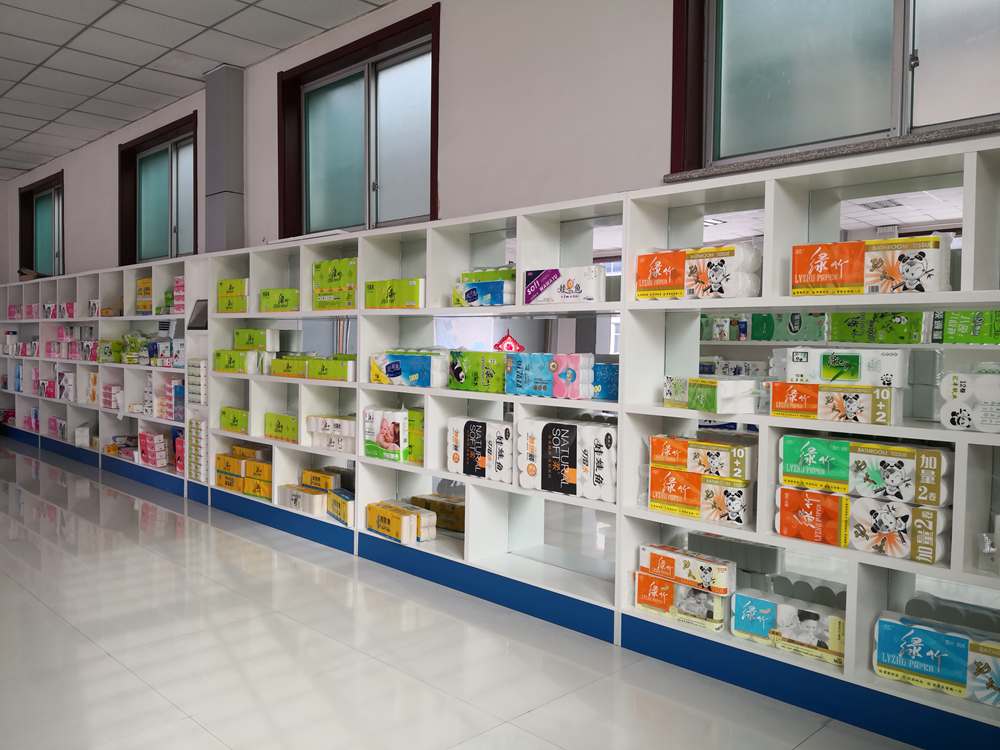
Top Source Hygiene supports full private-label customization for both virgin and recycled products. Stock options arrive in 2–3 days; custom packaging and branding require 10 days for sample approval. Production lead time for a full 40HQ container is 20–25 days, plus 7–25 days shipping depending on destination. Virgin pulp is available in 2 to 5 ply, GSM 16–30. Recycled maxes out at 4 ply with a narrower GSM range due to fiber limitations.
Both options carry ISO 9001 certification, FDA compliance, and FSC certification. The key differentiator for hospitality procurement managers is not just the material—it is the packaging design support. Custom-logo toilet paper and kitchen towels maintain brand cohesion across multi-outlet operations. One dining chain in Singapore and Malaysia credited branded tissue with a 10% increase in customer return rates.
- Standard MOQ: 1×40HQ container, approximately 10,000–12,000 rolls. Flexible terms available for Africa and South America buyers.
- Free Samples: Stock samples ship in 2–3 days. Custom samples require 10 days.
- Customization Scope: Full private-label packaging, logo embossing, size adjustments available for both streams.
The ability to test both options before committing eliminates guesswork. Request stock samples of virgin and recycled side by side. Have your housekeeping team run a blind trial on a single floor. Measure roll consumption over 72 hours. The data will tell you which material fits your property’s brand standards and cost model.
Conclusion
Choosing between virgin wood pulp and recycled paper for custom toilet paper means balancing guest satisfaction against sustainability claims. Virgin pulp delivers superior softness and absorbency, shown to increase guest satisfaction by 20%, while recycled paper reduces water usage per roll but carries hygiene risks and higher consumption rates that can erase upfront savings. For premium hospitality and healthcare, FSC-certified virgin pulp offers the strongest brand impact without compromising environmental goals.
Evaluate both options for your private-label line. Request free samples from Top Source Hygiene to compare performance side by side and determine which material best fits your cost, quality, and sustainability targets.
Frequently Asked Questions
Is recycled toilet paper worth it?
Recycled toilet paper can be worth it for cost-sensitive commercial settings where sustainability reporting matters, because it uses 37 fewer gallons of water per roll. However, for hospitality or healthcare, the 100–1000x higher bacteria content and 1.5x higher usage rate due to lower absorbency often erase the upfront savings. FSC-certified virgin pulp gives a better total-value balance for guest-facing environments. Evaluate total cost per use, not just per ton, before deciding.
What is the healthiest type of toilet paper to use?
Virgin wood pulp toilet paper free of fluorescent whiteners and certified by FDA or FSC is the healthiest option, as it avoids the 100–1000x higher bacteria concentration found in recycled paper. Thin ply counts (1-2) with low or no chemical additives further reduce irritation for sensitive skin. Top Source offers both virgin and recycled lines that meet these standards. Check for no-whitener and FSC labels when sourcing.
What toilet paper do gynecologists recommend?
Gynecologists generally recommend unscented, unbleached, low-ply virgin pulp toilet paper because it minimizes chemical exposure and bacterial risk—recycled paper can hold 100–1000x more bacteria. Softness and strength also help avoid irritation from tearing or linting. Products certified free of fluorescent whiteners and FDA-compliant align with clinical advice. Prioritize virgin pulp with no added dyes or perfumes for sensitive use.
Does virgin pulp toilet paper use more water than recycled?
Yes, virgin pulp uses approximately 37 gallons per roll versus 15 gallons for recycled, a 146% higher water footprint during production. However, FSC-certified virgin pulp from responsible forestry can offset lifecycle impacts, and its superior absorbency means guests use 30% less paper per visit, reducing per-use water and waste. Factoring in total resource consumption narrows the gap. Compare water use per guest visit, not just per roll, for a fair assessment.
Can custom recycled toilet paper match virgin softness?
No, recycled toilet paper cannot match virgin softness because its shorter fibers cause more linting and tearing, even with higher ply counts. Virgin pulp supports 2–5 ply and up to 30 GSM, delivering the premium feel that drove a 20% guest satisfaction increase for one hotel chain. For high-end hospitality, virgin is the only option that protects brand perception. Order free stock samples from Top Source to compare softness side by side.