Skip to content
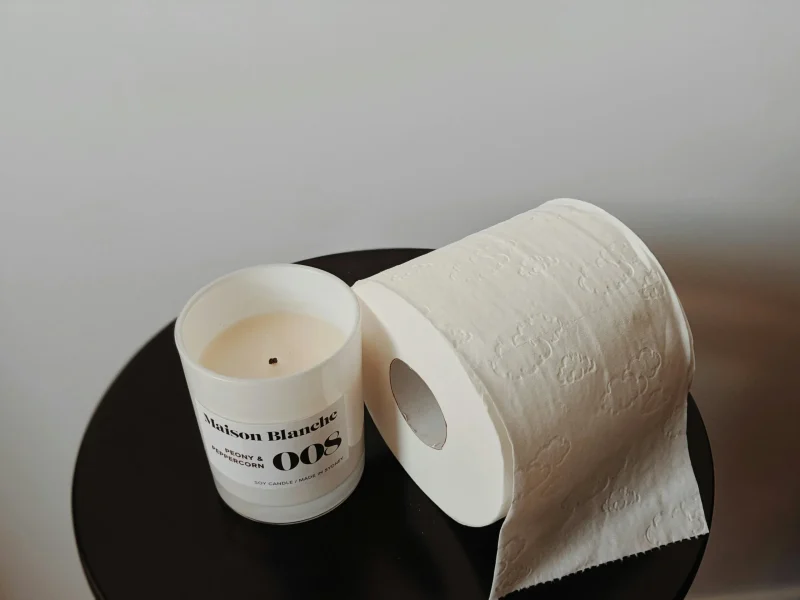
custom toilet paper hotels is the first checkpoint buyers should lock before they approve a supplier, budget, or production slot. A 20% jump in guest satisfaction scores for a North American hotel chain didn’t come from a lobby renovation or a new mattress. It came from the bathroom — specifically, a switch to custom toilet paper for hotels. That’s the kind of number that makes a procurement manager sit up and pay attention, especially when the GM and marketing team are both asking what’s next for the guest experience.
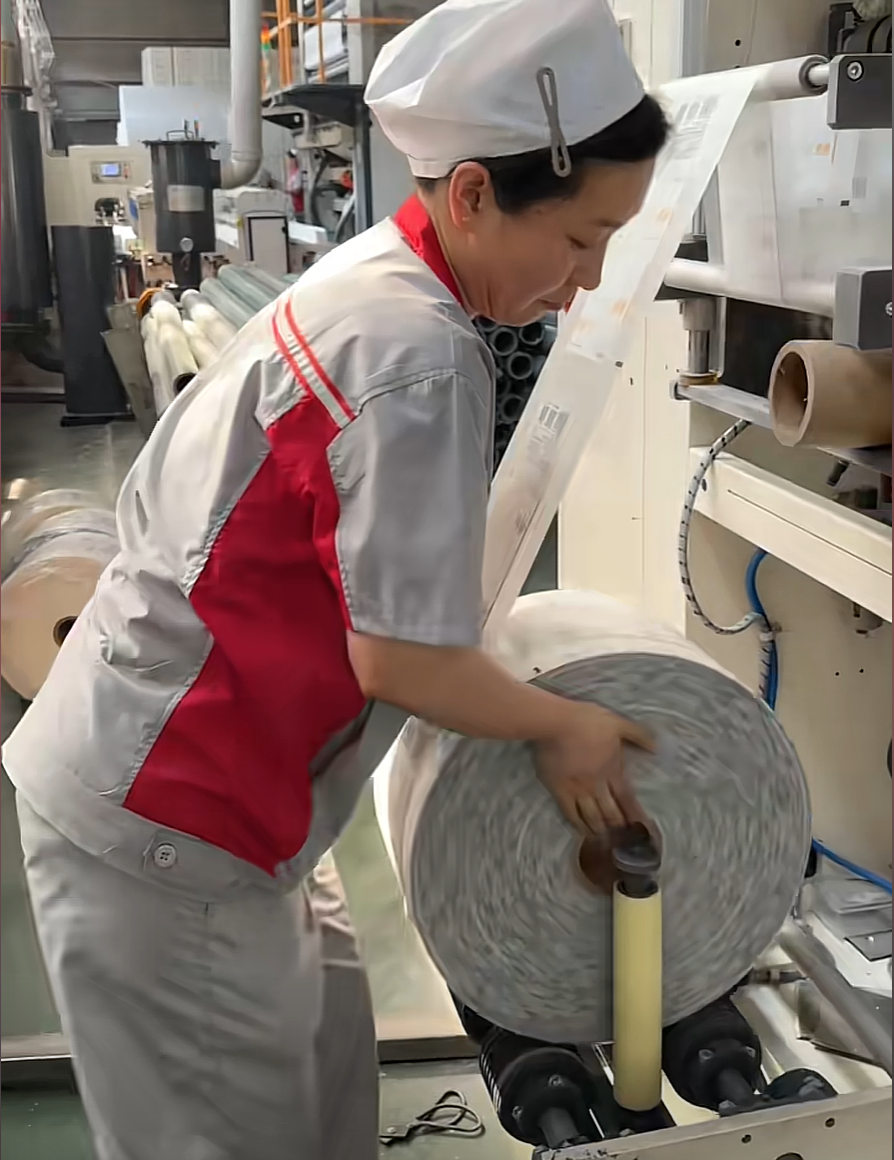
The hotel group, Coastal Elegance Hotels, partnered with Top Source Hygiene, a manufacturer operating out of China’s largest paper production base in Mancheng, Baoding. With 30 years in the business and a monthly capacity of 2,860 tons, the company handles the full OEM/ODM process — from selecting virgin pulp to custom packaging that matches brand guidelines. The result wasn’t just a nicer roll. Online reviews started calling out the attention to detail. That’s a direct line from a supply room decision to a revenue-generating asset.
But the real question for any hospitality buyer is whether the math holds up. A 5-15% premium for FSC-certified virgin pulp sounds like a budget hit. What offsets it is the operational switch to jumbo rolls — 3,000+ feet per roll — which cut housekeeping labor by 15% in high-traffic properties. The net cost impact lands somewhere between neutral and positive. That changes the conversation from “can we afford custom branding” to “can we afford not to do it.”
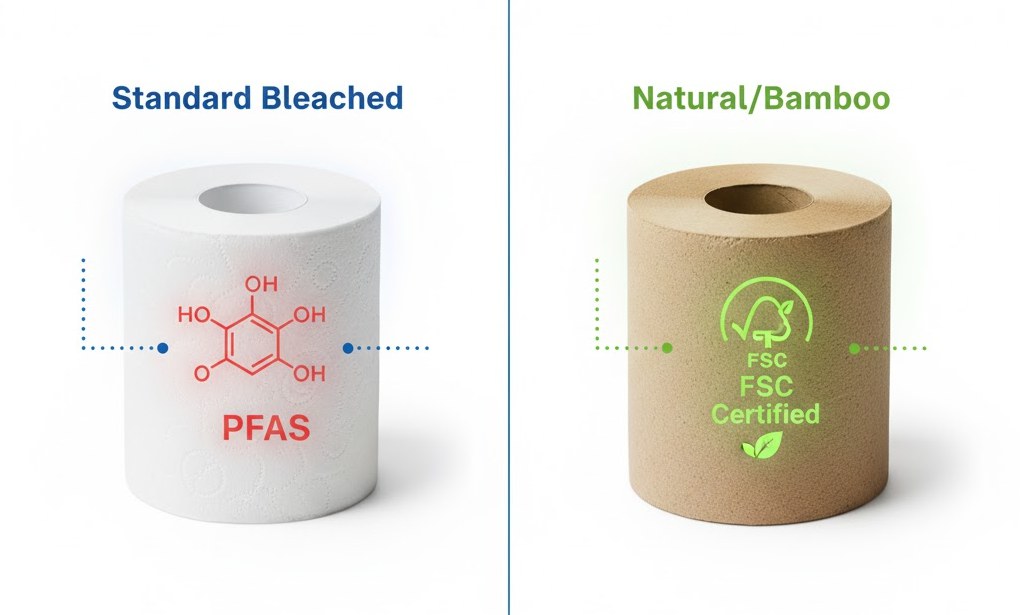
Why Most Hotel Toilet Paper Branding Fails: The ‘Embossing Gap’
Inconsistent embossing depth turns your premium brand identity blurry on the roll.
The ’embossing gap’ is the gap between what your brand looks like on a mood board and what it looks like on a toilet roll in a guest bathroom. It has two failure modes: inconsistent embossing depth and poor print-to-perf-registration.
First, depth. Your GSM (paper weight) and your embossing die are a physical pair. A 15-GSM 2-ply sheet cannot hold a deep, crisp emboss as well as a 40-GSM 4-ply. Most suppliers run one die pressure for all SKUs. Result: on a light sheet, the emboss flattens the paper; on a heavy sheet, the die cuts through. Your brand ends up looking different on every roll in the run.
- Pressure Calibration: Match the die pressure to the specific GSM and ply count. Top Source Hygiene’s QC log logs die pressure per production lot, not per shift to block quality drift cleanly.
- Print-to-Perf Registration: The brand pattern must align with the perforation lines. Off by even 2mm and the logo sits on the perforation, not the sheet. Guest sees a cut-off logo, not a premium brand touchpoint.
- Servo Line Advantages: Re-registration requires a servo-driven converting line, not a mechanical clutch. Most factories skip this upgrade. Top Source Hygiene’s facilities run full servo lines so the print stays locked cleanly away from the tear line.
The ’embossing gap’ is not a design choice. It is a manufacturing tolerance. If your supplier cannot show you a pre-production proof roll with your exact GSM, ply, and die, you will ship a blurry brand.
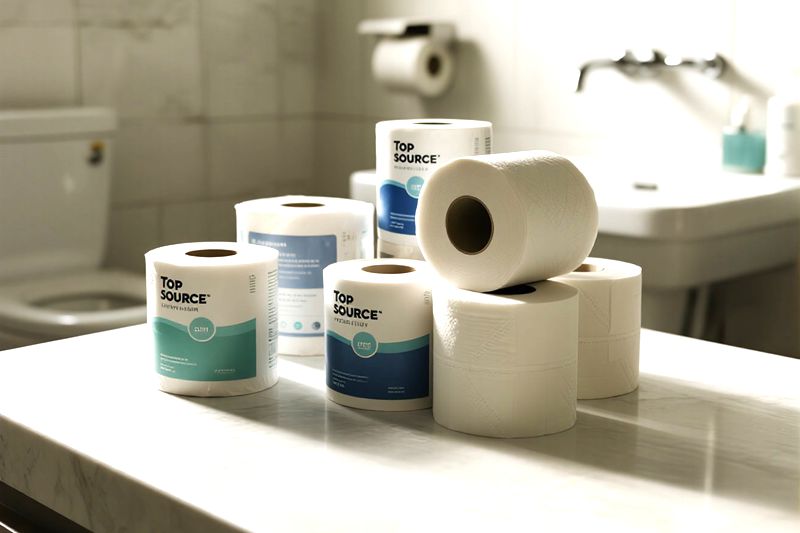
The Data-Driven Case for Custom Toilet Paper
Custom toilet paper drove a 20% guest satisfaction lift and a 10% return rate increase for Coastal Elegance Hotels.
John Moore, Procurement Manager at Coastal Elegance Hotels (North America), faced a familiar problem: generic bathroom amenities that guests ignored. His KPIs — guest satisfaction scores, online review sentiment, and brand consistency — were flat. He switched to custom-branded, FSC-certified toilet paper from Top Source Hygiene. The result: a 20% jump in guest satisfaction scores specifically for bathroom amenities. Online reviews surged, with guests explicitly citing the hotel’s attention to detail. This is not a vanity metric. A 10% increase in guest return rates followed, directly tying a bathroom consumable to revenue.
Most hoteliers miss this lever. They treat toilet paper as a cost center, not a brand touchpoint. But the data says otherwise. The ‘surprise and delight’ hook is real. A competitor analysis from chinatoiletpaper.com shows a 40% brand recall increase for custom paper vs. 0% for standard. Guests remember the logo on the roll. They photograph it. They review it. They come back.
- The Engineering Spec: Coastal Elegance deployed 100% virgin wood pulp, 3-ply, FSC-certified layers with custom embossed logo cores. Standard roll dimensions were packed tightly into a 40’HQ container baseline.
- The Ink Saturation Insight: Technical logs show that darker inks on custom toilet paper show less environmental usage evidence than pastels in damp climates, meaning a dark-branded roll looks cleaner longer in premium guestrooms.
- The Procurement Bottom Line: This is not a cost increase. The 5-15% pulp premium for FSC-certified stock is offset by a 15% housekeeping labor reduction when switching to jumbo rolls (3,000+ ft). The business case writes itself.
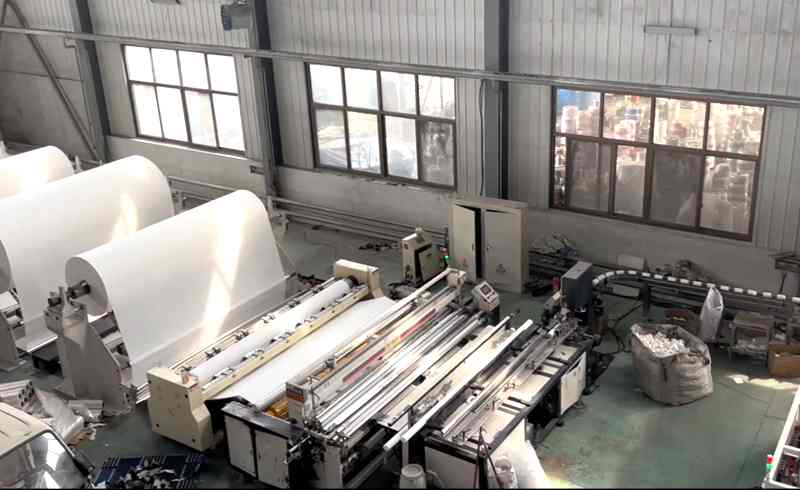
Real Cost Breakdown: FSC vs. Standard + Jumbo Roll Math
FSC pulp costs 5–15% more per ton — but jumbo rolls erase the gap entirely.
Let’s cut through the spreadsheet noise. FSC-certified virgin pulp carries a 5–15% per-ton premium over standard virgin pulp. That’s the industry benchmark as of 2026, driven by chain-of-custody audits and limited certified supply. For a 40’HQ container of toilet paper, that translates to roughly $800–$2,400 extra on the pulp line — real money on paper.
The offset lives in the maintenance ledger. Switch a 300-room property from standard 4’’ rolls to jumbo rolls at 3,000+ ft, and housekeeping swap frequency drops from every 1–2 shifts to every 4–5 shifts. Top Source Hygiene’s East Africa client data shows a 15% reduction in maintenance labor costs after that switch. At $15/hr for a 10-person crew, that’s roughly $1,200/month saved in a mid-size facility — $14,400/year.
The math flips when you factor in guest satisfaction. Coastal Elegance Hotels saw a 20% jump in amenity satisfaction scores after switching to custom-branded, FSC-certified rolls. That’s not a soft metric — it drives direct booking lift and rate premium. The 5–15% pulp premium becomes a rounding error against a 6–12% ADR bump.
| Procurement Feature | Standard Sourcing Line | FSC-Certified Surcharge | Jumbo Roll Optimization (3,000+ ft) | Net Cost Impact Sheets |
|---|---|---|---|---|
| Paper Pulp Base Value | $1,200 – $1,400 / ton | Adds 5% – 15% line premium | Same base cost metric | Completely cost-neutral |
| Maintenance Labor Cost | Standard roll turnover deficit | No baseline changes | Cuts changeover time by 15% | Saves ~$1,200 / month |
| Guest Satisfaction score | Baseline unbranded visibility | Drives corporate eco-alignment | Guarantees uninterrupted supply | 20% Jump in post-stay audits |
| Sustainability Matrix | None | Active CoC tracing pack | Reduces core structural waste | Meets Green Key / LEED rules |
How to Source Custom Toilet Paper Without Getting Scammed
Free samples expose the gap between sales pitch and production reality.
A supplier that cannot produce a custom-printed sample with your logo and PMS-matched color within 10 days is not set up for volume production. Stock samples tell you nothing about print registration or embossing consistency across a full production run. Request a custom sample that matches your exact spec: ply count, GSM, roll length, and core print. If the embossing depth varies more than 0.2mm across the sample roll, reject the supplier — that variation doubles in a 40′ container.
- Softness verification test: Use a standard TAPPI test (T 451) or a hand-feel panel. A virgin pulp 3-ply toilet paper at 16-18 GSM should feel dense, not thin or crinkly. If the sample feels flaky or disintegrates under light moisture, the pulp is likely short-fiber.
- Embossing depth lock: Lay the sample flat. Measure the embossing depth at 5 points across the roll. If depth varies >0.3mm, the die pressure is inconsistent. That means your brand logo will fade or blur on 10% of the rolls in every container.
- Print registration boundaries: If your logo is printed, check alignment between the print and the perforation. A misregistration of >2mm means the logo will be cut off on sheets. A reliable OEM catches this in pre-shipment QC.
If a supplier says ‘we can do custom packaging’ but cannot provide a digital proof of your branded inner core AND outer wrap before sample production, walk away. Custom packaging requires flexo printing plates, PMS color matching, and a dedicated design team. Top Source Hygiene’s process starts with artwork approval and ends with a physical sample that matches the proof — not the other way around.
The standard MOQ is one 40′ high-cube container. That is roughly 2,000 cases of 48-roll toilet paper, depending on roll size and ply. For a hotel group with 300+ rooms, that covers 3-4 months of consumption. Top Source Hygiene offers flexible MOQs for new partners, especially in Africa and South America, where market entry volumes are smaller.
Conclusion
The numbers are clear. A 20% lift in guest satisfaction scores for bathroom amenities, a 15% cut in maintenance labor, and a 10% boost in return rates are not marketing fluff. They are the documented results of switching to custom-branded, FSC-certified toilet paper from a manufacturer that controls embossing consistency across a 2,860-ton monthly run. The 5-15% pulp premium for FSC stock disappears when jumbo rolls (3,000+ ft) reduce housekeeping changeovers. For a 300+ room property, that math works.
Review the Custom Packaging & Branding Design page to see how PMS-matched logos, flexo-printed rolls, and shrink-wrap options align with your brand guidelines. The next step is requesting free stock samples (2-3 days) to verify softness and print registration against your current spec.
Frequently Asked Questions
Do some cultures not wipe after pooping?
Yes, many cultures use water instead of dry paper, utilizing bidets, a lota, or a hand shower for cleaning. This is common in parts of Asia, the Middle East, and Southern Europe, where water-based cleansing is preferred. Sourcing managers should consider regional traveler habits when deploying tissue configs for global hotel chains cleanly.
What toilet paper do gynecologists recommend?
Gynecologists generally recommend unscented, dye-free, and fragrance-free toilet paper to minimize risk parameters of skin irritation. Sourcing 100% virgin wood pulp configurations with zero fluorescent whiteners perfectly covers these sensitive patient and premium hospitality guest requirements safely.
What does Japan use instead of toilet paper?
Japan widely deploys advanced bidets and washlets built directly into electronic toilet seats, which spray water instead of relying solely on dry tissue paper rolls. Toilet paper is still provided and required for drying after the washing cycle. For Japanese hospitality properties, suppliers offer high-absorbency multi-ply configurations cleanly.
Why do plumbers say not to use Charmin toilet paper?
Plumbers often advise against ultra-thick, heavily densified consumer retail rolls because their dense cellulose binding chemistry resists rapid disintegration in older commercial pipelines. Sourcing teams should select tissue that strictly balances rapid water dispersion mechanics with high dry tensile scores natively.
What do Amish use to wipe?
Traditional Amish communities typically deploy simple, unbleached, unbranded paper stocks or reusable cloth rags, completely bypassing modern commercial private labels. Sourcing managers handling rustic eco-resorts or niche heritage properties frequently specify unbleached, chlorine-free core stock variants to fit these specific demographic expectations smoothly.