 Skip to content
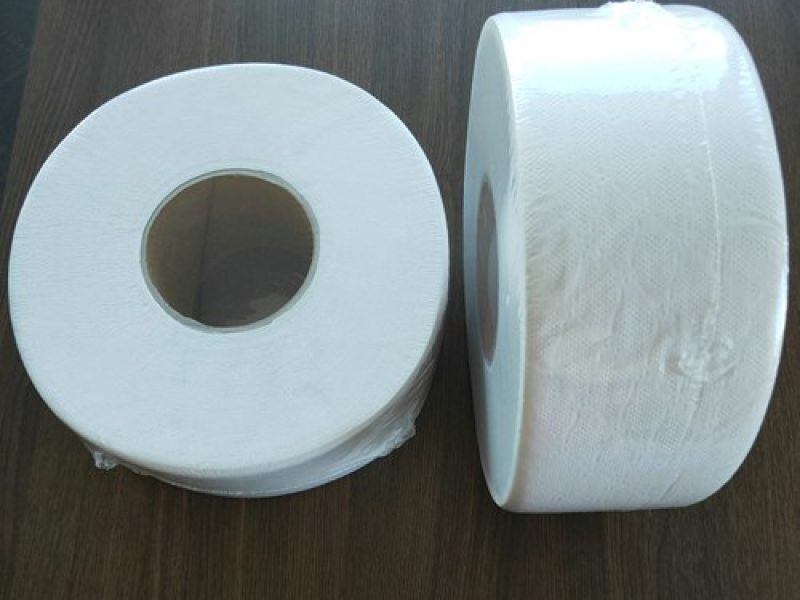
oem vs odm tissue is the first checkpoint buyers should lock before they approve a supplier, budget, or production slot. A spec sheet promises 18gsm tissue. The container lands with 15gsm paper. That gap shows up as guest complaints about tearing within weeks—and it starts with a missed detail during sample approval. That kind of mismatch is what makes the OEM vs ODM tissue decision more than a procurement formality. It determines whose design risk you are signing up for, and whether the product on the shelf matches the one you approved in the showroom.
The actual operational question most buyers face is not which model is superior—it is which model fits their timeline, budget, and tolerance for design iteration. ODM tissue manufacturing advantages are real: standard MOQs of one 40-foot container, stock samples in 2–3 days, and FSC certification available on 80% of base products without custom R&D. OEM tissue manufacturer requirements run steeper: 2–3 containers, 10–15 days for tooling setup, and sampling costs that can land at €500–€2,000 per design. For a European retailer launching a private label under the EU Green Claims Directive, the cost of skipping this evaluation is a delayed launch by 30–60 days and a compliance gap that takes months to close. The decision hinges on a few concrete numbers—and they are the ones worth getting right before a single container ships.
What Exactly Is OEM in Tissue Manufacturing?
OEM demands your full design — but the real cost is in the iterations you never budgeted for.
OEM (Original Equipment Manufacturer) means you hand the factory a complete product specification — dimensions, ply, GSM, emboss pattern, packaging artwork — and they produce it under your brand. This model gives you full ownership of the design, which is essential if you have a patented emboss pattern, a custom roll core size, or a unique sheet count that competitors can’t replicate. But full control comes at a price: higher MOQs, longer lead times, and a sampling process that can drain your budget before you see a single sellable unit.
- Approved Reference Samples: Vague descriptions like ‘luxury feel’ or ‘premium softness’ will cause costly misinterpretations. You need a physical or digital sample that defines tear strength, absorbency, and surface finish.
- Print-Ready Packaging Layouts: File must include all certification logos (FSC, CE marking) in the correct positions. Misplaced logos can delay customs clearance by weeks.
- OEM Minimum Order Volumes: Standard OEM MOQ starts at 2–3× 40’HQ containers ( can lead to 20–30 metric tons) to fully amortize dedicated tooling setups cleanly.
- Tooling and First Article Timelines: Allow 10–15 working days for tooling configuration and producing the first article. Plan for at least 2–3 sample revision cycles, each costing €500–€2,000.
Where OEM really backfires is the hidden design iteration trap. A buyer launches with a concept, the factory runs samples, the buyer requests tweaks — ply adjustment, core diameter change, packaging material swap — and suddenly you’ve spent €5,000+ on samples alone, with no guarantee the final product will outperform an existing ODM base. Another common failure is ignoring EU regulatory compliance: assuming the factory knows where to place the FSC logo or how to label the CE mark on the packaging. The result is a container held at Rotterdam port because your barcode doesn’t match the registration. Smart buyers always lock the design after the second sample round and insist on a pilot run of 1–2 pallets before committing to full container volumes. That pilot costs a fraction of a full order and reveals real-world issues in tear strength, roll fit on dispensers, or shipping damage.
What Exactly Is ODM in Tissue Manufacturing?
ODM lets you test multiple base products cheaply before launching large-scale branding campaigns.
Most buyers assume ODM means picking from a fixed catalog — no room to tweak. That’s wrong. In tissue manufacturing, ODM starts with a proven base product but you still control ply count (2–5 ply), sheet count (±10% from standard), packaging design, and material grade — virgin pulp, recycled fiber, or FSC-certified. You keep the core specs the factory has already validated, then layer on your brand and required compliance.
- Ply Layer Thickness Flexibility: Standard ODM lines support 2–4 ply configurations, with heavy 5-ply arrays available on specialized runs.
- Sheet Count Adjustments: Calibrate sheet length loops within a ±10% window of the base roll structure without triggering mechanical retooling charges.
- Base Furnish Material Choice: Pre-qualified virgin wood, eco-bamboo, or recycled pulp variations are fully active across established log lines.
- Branded Wrapper Integration: Custom carton board boxes, outer branding bags, and retail barcode blocks are added directly onto validated standard geometries.
The speed advantage is where ODM really separates itself. Stock ODM samples ship in 2–3 days; custom ODM samples (with your ply, sheet count, and packaging spec) take about 10 days. Once you approve the sample, production for a 40-foot container runs 20–25 days — no tooling delays. Total time from first sample request to container ready: roughly 30 days. Compare that to an OEM timeline where tooling setup alone eats 10–15 working days before you even cut a sheet. For a European retailer launching a seasonal promotion, those 4–6 weeks saved can be the difference between hitting the shelf or missing it.
OEM vs ODM: Real Cost Breakdown for Tissue
ODM cuts first-order procurement costs by 10–25% and time thresholds by 30–40% cleanly.
The real cost difference between OEM and ODM shows up in sampling, minimum volumes, per-kilogram pricing, and lead times. Most buyers fixate on per-unit price but get burned by hidden design iterations and tooling delays. Here’s the hard data.
- Sampling Outlays: ODM tracks as completely free for stock assets, charging €200–€500 for custom configs. OEM requires €500–€2,000 per design block, plus revision cushions.
- MOQ Allocations: ODM drops to a flexible 1×40’HQ FCL (≈10 metric tons). OEM demands 2-3 container lines to absorb downstream machinery setup amortization boundaries.
- Per-Kilogram Pricing Curves: ODM locks straight onto the competitive mill base price, whereas OEM triggers a 10–20% premium surcharge for extended technical trial validations.
- Launch Timing Horizons: ODM delivers container cargo inside ~30 days. OEM scales out to 45–60 days due to upstream cylinder engraving and core mold fabrications.
- Design IP Ownership: OEM transfers full trademark and roll surface design rights to the buyer. ODM maintains base mill IP, licensing custom outer graphics layers to the brand.
| Cost Factor | OEM | ODM | Impact on Buyer |
|---|---|---|---|
| Sampling Cost | €500 – €2,000 per design | Free (stock) or €200–€500 (custom) | OEM can sink €2,000+ before any production commitment; ODM lets you test cheaply |
| Minimum Order Quantity | 2–3 × 40’HQ containers (≈20–30 metric tons) | 1 × 40’HQ container (≈10 metric tons) | OEM doubles inventory risk; ODM lowers entry barrier for first-time importers |
| Per-Unit Price Premium | Base price + 15–20% surcharge | Base price (no design/tooling overhead) | OEM adds 10–25% to first-order cost; ODM keeps margin competitive |
| Time to First Production | 30–40 days (includes tooling setup + 10–15 working days) | 20–25 days (no tooling; uses existing lines) | OEM delays market entry by 4–6 weeks; ODM enables fast seasonal launches |
| Design Ownership & Risk | Buyer retains full IP; high design iteration risk (€5,000+ in revisions) | Factory owns base IP; buyer owns branding; proven product reduces risk | OEM offers proprietary advantage but higher upfront risk; ODM is safe for standard differentiation |
OEM vs ODM: Which Is Better for European Retailers?
For European retailers, ODM cuts time-to-market by 30-40% and first-order costs by 10-25%.
Standard advice says OEM gives you more control, but that ignores the reality of launching a private-label tissue line in Europe. The real decision hinges on how fast you need to get to market, how much differentiation you actually require, what your first-order budget looks like, and how much design risk you can tolerate. The data is clear: ODM wins on speed and cost, OEM wins on exclusivity — but the gap is narrower than most sourcing leads assume.
- Time-to-Market Constraints: ODM sample-to-shipment configurations wrap cleanly inside ~30 days, bypassing the 60-day lag typical of complex custom alignment reviews.
- Structural Differentiation Levers: Leading plants allow custom ply adjustments (2–5 ply), explicit sheet length sizing, and FSC-certified base stock integration across existing operational paths.
- Procurement Risk Shields: Leveraging pre-qualified mill bases prevents the structural bulk drops or web-break deficits common to experimental design parameters.
Most competitor articles frame ODM as a rigid ‘off-the-shelf’ choice. That misses the point. A manufacturer like Top Source Hygiene stocks FSC-certified base tissue across multiple ODM lines, so you get EU Green Claims compliance without custom R&D. The hidden cost of OEM isn’t per-unit pricing — it’s the design iteration fees and sampling that burn budget before you’ve sold a single roll. For a European retail sourcing lead, ODM gives you a proven product with your brand, faster and cheaper. OEM remains the right call only when your margin model depends on a genuinely novel design that competitors can’t replicate.
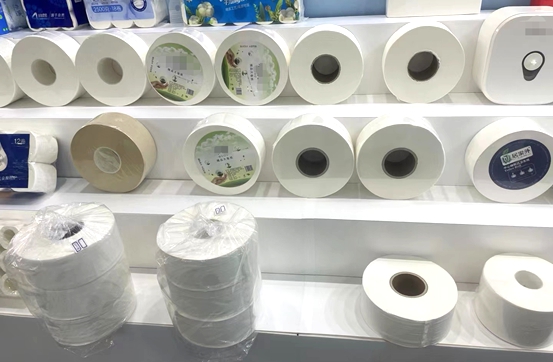
How to Sourcing Custom Tissue Without Getting Burned
Never assume an offshore supplier’s compliance credentials remain current without live registry validation checks.
Buyers have lost €15,000+ because they trusted a supplier’s old FSC certificate. The factory had let it lapse six months prior. Here are five control points that separate a smooth custom tissue launch from a cargo-hold disaster. Use them whether going OEM or ODM.
- Active Registration Audits: Cross-check certificate codes for ISO 9001, active FDA establishment fields, and valid FSC chains online directly at issuing databases before placing PO slots.
- Execute Symmetrical Quality Deals: Define hard mechanical baselines: MD/CD dry tensile bars, water absorption rate values, and strict FWA-free fluorescence thresholds (≤0.5% by EU standard).
- Mid-Production Inspection Gates: Settle third-party terminal reviews at 50% machine completion to trap lamination defects or core crush errors before cargo sealing loops.
- Lock Explicit Packaging Specs: Settle precise ink compositions (food-safe if needed), core rigidity levels, and barcode positioning to insulate shipments from warehouse gate rejections.
Conclusion
The benchmark MOQ for ODM tissue is one 40-foot container—roughly 10,000 kg. OEM requires two to three containers because the tooling and sample-approval cycle only amortize at higher volumes. That single number often decides which model fits your launch budget.
Run your own timeline and unit-cost against these benchmarks. If ODM delivers the speed and compliance you need, the industry solutions page can show how your product spec maps to available base lines.
Frequently Asked Questions
What is the difference between OEM and ODM in toilet paper manufacturing?
OEM means you provide the complete design—dimensions, ply, GSM, packaging—while ODM lets the manufacturer adapt its existing base product to your brand. OEM gives full control but requires detailed specs and prolonged validation cycles. Choose OEM for a unique product, ODM for faster market entry.
Can I get FSC certification with ODM tissue products?
Yes, ODM products can be FSC-certified, since manufacturers allow material selection and certification swapping without a full design overhaul. Most top suppliers, including Top Source Hygiene, list FSC-certified options as part of their standard running lot inventory. Confirm FSC certification availability and lead time with your supplier early.
What is the typical MOQ for OEM vs ODM tissue?
ODM typically requires one 40-foot high-cube container, while OEM often demands 2–3 containers to amortize setup and tooling costs. Top Source Hygiene advertises one container as standard but offers flexibility for first-time market entries. Ask for MOQ flexibility if you are testing a new market.
How long does it take to get samples for OEM vs ODM?
ODM stock samples ship in 2–3 days; custom ODM samples (with minor adjustments) take about 10 days. OEM samples require 10–15 days for tooling and first article approval due to full design validation. Factor sample time into your product launch timeline.
Is ODM cheaper than OEM for custom toilet paper?
Yes, ODM is typically 10–25% cheaper on first orders because it avoids custom tooling and design development costs. OEM adds 10–20% per-unit cost due to setup expenses, though it can provide complete long-term proprietary exclusion locks at scale. Choose ODM for cost efficiency; OEM when unique specs justify the premium.
