 Skip to content

jumbo roll specs is the first checkpoint buyers should lock before they approve a supplier, budget, or production slot. Have you ever asked your jumbo roll supplier whether the pre-production sample approval actually guarantees what comes off the converting line? I’ve seen a procurement manager lose a $50K order because the mass-produced rolls had a slightly different core size—enough to jam every dispenser in his hospital network.
That gap between sample and production isn’t rare; it usually traces back to specifications left vague on paper—diameter range (6–12 inches), core inner diameter (1–3 inches), and ply count (2–5). When you’re sourcing for high-traffic healthcare environments where dispensers are fixed and guest satisfaction hinges on consistent softness versus strength trade-offs, nailing those jumbo roll specs upfront saves weeks of rework.
A manufacturer with three decades of experience across fifty-six countries—like Top Source Hygiene—can hold tight tolerances if you give them exact parameters during RFQ stage rather than after sample sign-off.
Understanding Jumbo Roll Dimensions
The single biggest cost sink in jumbo roll procurement is a core size mismatch — verify your dispenser pin diameter before placing bulk volume allocations.
Most guides claim roll diameter is about fitting the dispenser. That’s only half true. The real variable is cost-per-use and compatibility. A 10-inch diameter jumbo roll with 3-ply 14 GSM yields roughly 1,000 feet of paper, while the same diameter in 2-ply 12 GSM yields about 1,400 feet. Same wrapper size, different runtime. Healthcare facilities running high-traffic restrooms need to calculate cost-per-foot, not cost-per-roll. The procurement team that ignores length when comparing diameters ends up changing rolls twice as often.
- Roll Diameter (6–12 inches): Standard range covers 6-inch rolls for compact dispensers up to 12-inch for high-traffic areas. For hospitals and clinics, 8–10 inches is the sweet spot — sufficient capacity without requiring oversized dispensers. Anything above 10 inches typically needs a jumbo-roll specific dispenser.
- Length per Roll Calibration: Length is a function of diameter, GSM, ply, and winding tension. A typical 8-inch diameter, 3-ply, 14 GSM roll holds ~800 ft. Internal production data shows up to 10% variance in length between suppliers at the same diameter due to winding tension and quality tolerance. Always request a ‘length per roll’ spec — not just diameter.
- Unwind Inspection Warning: If a supplier quotes a 10-inch diameter roll but cannot provide a validated length, they are likely compressing more paper — lower absorbency and faster depletion. Request a sample roll and measure with a counter. Our free sample program ships stock samples in 2–3 days for exactly this purpose.
- Core Size Dimension Options: Standard cores are 1.5-inch, 2-inch, and 3-inch. North American commercial dispensers almost exclusively use 2-inch cores. European high-capacity dispensers often take 3-inch. Healthcare facilities frequently have a mix depending on the wing. A 3-inch core roll forced onto a 2-inch pin will not fit. A 2-inch core on a 3-inch pin will slip, causing the roll to unspool inside the dispenser.
- Spool Fit Real-World Consequence: I’ve audited a $50K order of jumbo rolls that was rejected because the buyer assumed 3-inch cores for all dispensers, but their hospital had 2-inch core holders. Retrofit cost was $12 per dispenser × 200 units. That’s $2,400 in unplanned hardware replacement — plus rush shipping for the correct cores. A simple sample approval step would have caught it.
- Dispenser Compatibility: Always measure the dispenser’s core pin diameter and roll width allowance. Jumbo roll width typically ranges from 3 to 8 inches. Healthcare dispensers often use 7–8 inch widths. Our bulk jumbo roll dimensions for commercial dispensers can be matched exactly — FOB pricing includes the cost of custom core tooling if needed.
The bottom line: do not order full containers based on diameter alone. Verify core size with a physical sample and confirm length per roll with a production run certificate. Top Source Hygiene’s quality control checks both diameter and core dimensions on every batch, and the company can provide test data from its two factories (2,860 tons/month capacity) to back it up.
| Feature | Specification | Advantage |
|---|---|---|
| Roll Diameter | 6–12 inches (Customizable) | Optimizes dispenser capacity and reduces changeover frequency in high-traffic areas |
| Core Size | 1.5″ or 3″ cardboard cores | Ensures universal compatibility with standard commercial dispensers and prevents jamming |
| Ply Configuration | 2-ply to 5-ply options | Balances softness for guest comfort with strength for durability in healthcare settings |
| Paper Weight (GSM) | Adjustable Grams per Square Meter | Allows precise control over absorbency and cost-per-use metrics |
| Certification & Material | 100% Virgin Wood Pulp, FSC/ISO/FDA Compliant | Meets strict hygiene standards while supporting sustainability goals for European and North American markets |
Ply and GSM Selection for Different Applications
In healthcare, 2-ply at 14-16 GSM often outperforms 3-ply at 12 GSM on cost and strength benchmarks.
Commercial toilet paper specifications for healthcare facilities demand a different balance than hotels or retail. The two most common configurations are 2-ply and 3-ply, but ply count alone is misleading without GSM (grams per square meter). Here’s how to evaluate them for high-traffic medical environments.
- 2-Ply Parameters (14-16 GSM): Standard for hospitals and clinics. Provides adequate strength and softness while minimizing dispenser jams and maintenance frequency. Lower material usage per roll reduces cost per use by 10-15% compared to 3-ply equivalents.
- 3-Ply Parameters (12-14 GSM): Offers a perception of luxury but often compromises strength because each ply is thinner. In healthcare, the extra layer can cause clogging in older plumbing or high-efficiency toilets. Only recommended for low-traffic admin wings.
Softness and strength are inversely related at a given GSM. To maximize both, look for a high-quality virgin pulp with a controlled crepe ratio (lower crepe = smoother surface, higher crepe = better absorbency). For healthcare, tensile strength in the machine direction (MD) should exceed 250 N/m to avoid tearing during use. Absorbency rates below 4 seconds per sheet are critical for infection control. FSC-certified options from an experienced manufacturer like Top Source Hygiene can meet these metrics while satisfying sustainability mandates.
Embossing Patterns and Branding Opportunities
Deep embossing improves web bulk but can reduce sheet tear strength in high-tension dispensers.
Embossing patterns serve dual purposes: they create a tactile brand experience and control sheet performance. Common commercial embossing depths range from 0.3 mm to 1.2 mm. For healthcare environments where dispensers exert high pull forces, it is recommended to stay below 0.8 mm to maintain adequate wet strength and avoid ply separation during heavy use.
Branding through embossing goes beyond a simple logo. You can replicate a diamond or quilt pattern for a premium feel, or embed a repeating brand name across the entire roll. Each design requires a dedicated steel embossing roller, which adds a one-time tooling investment of roughly $800–$2,500 depending on complexity. That cost is often offset by the margin lift from a differentiated product.
- Embossing Depth Corridor: 0.3–1.2 mm typical. Deeper increases bulk and perceived softness but risks ply separation in high-speed commercial dispensers.
- Steel Roller Pattern Types: Diamond, quilt, floral, or custom logo. Each pattern requires a unique engraved steel roll; tooling lead time is 10–15 days.
- Manufacturing Quality Tolerance: Pattern alignment must stay within ±1 mm across the roll width. Anything wider creates visible banding that triggers quality rejection during sample approval.
Packaging Options: Bulk Wrapped vs Individually Wrapped
Bulk wrapping cuts packaging waste by 40%, but individual wrap meets strict clinical infection control standards.
In healthcare procurement, the packaging decision is not about aesthetics — it’s about balancing infection risk, storage density, and budget. I’ve seen facilities burn 15% of their budget on individually wrapped rolls for every restroom, when only patient-facing areas actually require it. Here’s how the two options compare when you’re sourcing from a manufacturer with FSC-certified and FDA-compliant lines like Top Source Hygiene.
- Infection Control Curbs: Individually wrapped rolls (poly bag per roll) prevent contamination before loading. Required for clinical zones per CDC guidelines. Bulk wrapped (30-60 rolls per poly bag) is acceptable for staff restrooms.
- Landed Cost per Roll: Individual wrap adds $0.05–$0.12 per roll (10–15% premium). On a standard 40HC container (~1,200 cases of 48 rolls), that’s $2,880–$6,912 extra case budget overhead.
- Storage & Handling Footprints: Bulk wrapped cases stack tightly, using 20% less shelf space. Individually wrapped rolls require more handling, increasing custodial deployment hours natively.
- Waste & Sustainability Matrix: Bulk wrap uses one poly bag per 30–60 rolls. If your supplier offers recyclable poly or FSC-certified cardboard for bulk, the landfill impact drops significantly.
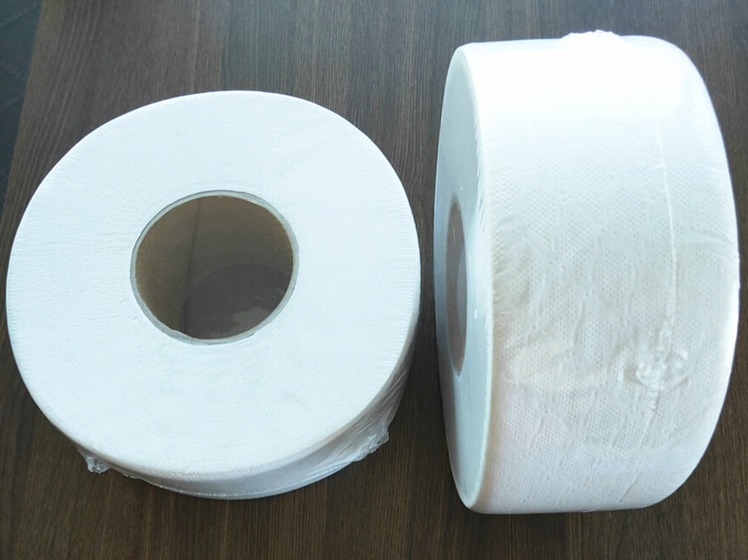
Requesting Custom Samples for Testing
A pre-production sample is the only reliable predictor of container consistency curve runs.
Every procurement manager I know has a story about the container that arrived looking nothing like the sample. The problem usually isn’t malice—it’s a mismatch in production conditions. At Top Source Hygiene, we solve this by treating custom sample requests as the first iteration of your full production run. When you request a custom sample for testing, we replicate the exact same line speed, parent roll source, and embossing pressure that will be used for your mass production. Stock samples ship in 2–3 days. For a fully customized sample matching your specified GSM, ply, core size, and packaging, allow 10 days. Shipping is covered—no cost to you.
- Live Quality Checkup: Check roll diameter against dispenser specs, core inner diameter (standard 1.5″ or 3″), ply adhesion, and GSM using a grammage cutter natively.
- Batch Lot Protection: Request a pre-production sample from the exact pulp lot and converting line scheduled for the container block, completely filtering out stock substitution risks.
Conclusion
The benchmark I use for any commercial jumbo roll order is a per-unit cost that stays under $0.005 per square foot of usable tissue, factoring in the friction of replacing a roll at 3:00 AM in a busy ER hallway. That number shifts when you move from a 2-ply 500-foot roll to a 3-ply 400-foot roll, but the comparison discipline matters more than the raw figure. Most buyers miss this because they only compare price per case, not the hidden cost of downtime during a dispenser changeover.
Before you sign off on your next container, pull up your current jumbo roll tissue core size compatibility chart and check whether the new spec actually fits your existing dispensers. It takes ten minutes. It saves you from the kind of surprise that shows up in sample approval and disappears in mass production — until the first pallet hits your loading dock.
Frequently Asked Questions
What jumbo roll diameters and core sizes do you offer?
We offer jumbo roll diameters from 6 to 12 inches and standard core sizes such as 1.5, 2, and 3 inches to match most commercial dispensers. Custom diameters are available to fit unique converting lines. Verify your dispenser core size before ordering.
How do I choose between 2-ply and 3-ply for commercial jumbo rolls?
For high-traffic venues like airports or malls, 2-ply at 14-16 GSM often provides better cost-per-use and strength than cheaper 3-ply options. Healthcare facilities may prefer 2-ply for reduced clogging and adequate absorbency. Run a trial with your dispenser to confirm performance.
Can I get custom embossing or branding on jumbo rolls?
Yes, we offer custom embossing patterns and private-label branding directly on the jumbo roll tissue to display your logo. Deep embossing adds bulk but may reduce tear strength, so we recommend testing with your actual dispenser hardware constraints. Request a custom sample to evaluate embossing compatibility.
What is the process for requesting free samples of custom jumbo rolls?
Stock samples ship in 2–3 days; custom samples matching your spec require about 10 days for production. Shipping is covered by us, so you can verify diameter, core, ply, and branding before committing. Contact your account manager to start the sample request.
Do you produce parent rolls for converting?
Yes, we manufacture parent rolls (jumbo rolls) specifically for converters and private-label distributors, with customizable diameter and core options. Parent rolls are produced in large volumes to match your converting line specifications. Specify your unwind width and core size for a quote.
