Skip to content
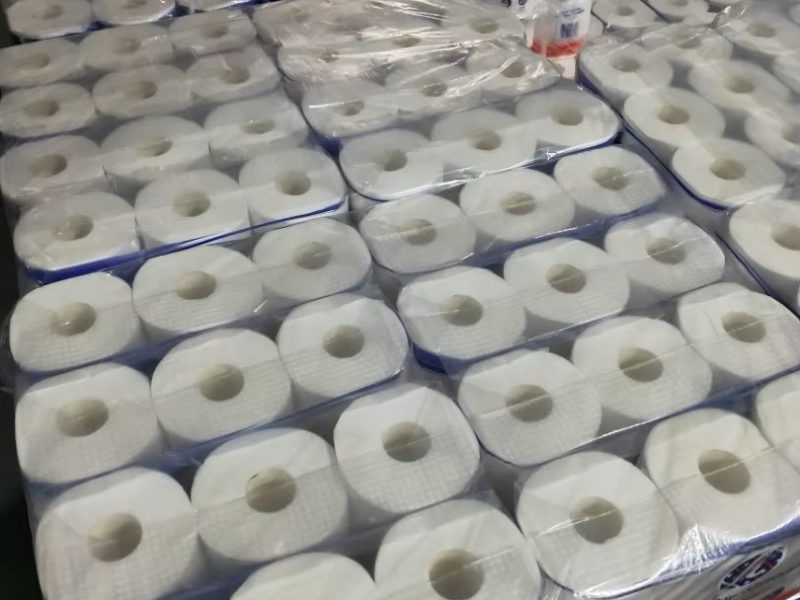
Jumbo roll buying mistakes turn a straightforward restocking order into a dispenser replacement project. It happens more often than you’d think. A facility manager sees a competitive price on a bulk container, signs the purchase order, and three weeks later the rolls either wobble on the spindle or jam the cabinet completely. That’s not a quality problem — it’s a spec mismatch that no amount of paper softness can fix.
For a public facilities buyer in Africa, the stakes are higher. Every order has to balance cost per sheet against roll lifespan and dispenser compatibility. A single container of 2,500–3,000 jumbo rolls represents months of usage in a busy transport hub or school. Get the core diameter wrong and you’re looking at hardware retrofits or wasted inventory. Yet most buyers still focus on price per ton and pulp type, ignoring the dimensions that actually determine fit. That’s where the real cost hides.
Why Jumbo Roll Specs Confuse Buyers
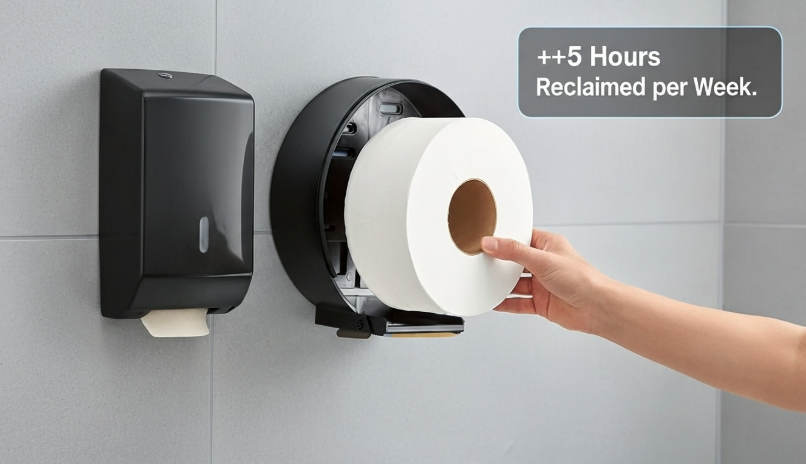
Not all jumbo rolls are the same size, demanding rigorous physical cross-checks against actual facility hardware boundaries.
Most buyers assume ‘jumbo’ means one standard diameter. That assumption leads to the most common and costly mistake in bulk purchasing. There are two industry-standard diameters: 9-inch (230 mm) and 12-inch (305 mm). They are not interchangeable.
A 12-inch roll is roughly 33% larger in diameter than a 9-inch roll. The larger diameter holds significantly more sheets — but it will not fit a dispenser designed for 9-inch rolls. Forcing it causes jams, broken spindles, and eventually dispenser replacement. On the flip side, a 9-inch roll in a 12-inch dispenser leaves a gap that promotes theft and roll spinning.
- Standard 9-inch (230 mm) roll: Common for standard commercial dispensers in Africa, Asia, and many European markets. Typical sheet count: 3,500–5,000. Lighter, easier to handle, lower shipping weight per container.
- Premium 12-inch (305 mm) roll: Preferred in North America and high-traffic venues where roll change frequency matters. Holds 40–50% more sheets but requires a compatible 12-inch dispenser housing envelope cleanly.
Before placing an order, measure your existing dispenser’s internal diameter. If you are buying for a new facility, specify the dispenser model to your supplier. A reliable OEM supplier like Top Source Hygiene stocks both diameters and can produce custom rolls that match your dispenser exactly — no guessing, no damage.
Mistake #1: Ignoring Core Diameter
A wrong core diameter renders your entire jumbo roll order useless.
Jumbo rolls come with two standard core diameters: 1.5-inch (38 mm) and 3-inch (76 mm). Most commercial dispensers are designed for one or the other. Ordering a 3-inch-core roll for a dispenser built for 1.5-inch cores causes the roll to wobble, jam, or fail to rotate entirely — and vice versa. This is not a minor fit issue; it stops your restroom from functioning and wastes the entire container.
- Standard 1.5-inch core (38 mm): Common in standard commercial jumbo roll dispensers, especially older models. Preferred for compact rolls with shorter sheet counts. Fits most wall-mounted units found in African public facilities.
- Industrial 3-inch core (76 mm): Used in high-capacity jumbo rolls that hold more sheets. Requires a compatible dispenser with a wider spindle. Mismatch leads to roll spinning loosely or the core collapsing under tension.

Mistake #2: Choosing the Wrong Ply Count
Ply is cosmetic; GSM dictates real performance and cost indicators.
Most buyers fixate on ply count — 2-ply, 3-ply — assuming more plies automatically mean better quality. That assumption costs you money and performance. Ply is simply the number of layers bonded together. GSM (grams per square meter) measures the actual fiber weight across those layers. A 2-ply roll with 38 GSM will feel thicker, absorb more, and last longer than a 3-ply roll with 24 GSM. The ply number alone tells you nothing about strength or softness.
- GSM range for commercial 2-ply jumbo rolls: 28–40 g/m². Below 28 GSM, the paper feels flimsy and users pull more sheets. Above 40 GSM, cost rises sharply without proportional value in high-traffic public facilities.
- Real cost impact parameters: Switching from 14 GSM to 18 GSM 2-ply increases per-sheet cost by roughly 25%, but extends roll life by 40% because users need fewer sheets per use. Net cost per use drops.
Here is the hard truth for facilities managers: ordering cheap 2-ply at low GSM to save upfront money actually increases your total cost. Users pull twice as many sheets when the paper feels thin, dispensers jam from excessive tearing, and maintenance teams change rolls more often. Always request GSM on the spec sheet. If a supplier can’t or won’t provide it, that is a red flag. Insist on a minimum 18 GSM for 2-ply jumbo rolls in public restrooms.

Mistake #3: Overlooking GSM and Bulk
GSM, not ply count, determines whether a 2-ply roll feels substantial or thin.
Two 2‑ply jumbo rolls from different suppliers can deliver completely different user experiences. The variable that matters is GSM (grams per square meter), which measures the actual paper weight per unit area. A 2‑ply roll at 14 GSM will feel flimsy and tear easily, while a 2‑ply roll at 18 GSM provides the bulk and absorbency users expect — even though both are labeled ‘2‑ply’. For commercial jumbo rolls, the total GSM target for 2‑ply lies between 28 and 40 g/m²; anything below 28 g/m² in a 2‑ply construction typically produces a thin sheet that leads to higher per‑use consumption and more frequent roll changes.
The practical consequence for a facility manager: ordering 2‑ply without specifying a GSM range is a bet. At 14 GSM, a 2‑ply roll may last just 1,500 sheets in a high‑traffic public restroom, while a 2‑ply roll at 18 GSM (a 25% increase in paper weight) can deliver over 2,100 sheets — a 40% gain in roll life. The cost per roll rises by roughly 25%, but the per‑use cost drops because the roll lasts significantly longer. That trade‑off is invisible if you only compare ply counts.
- Ply vs GSM Thickness: Ply is the number of layers; GSM is the total density. Two 2‑ply rolls can have widely different feel and strength if GSM differs by even 4 g/m².
- Optimal Density Range: For commercial 2‑ply jumbo rolls, specify a total GSM between 28 and 40 g/m². Below 28, the product feels thin and runs out faster.
- Splice Count Constraints: Ask for a maximum of one splice per roll. Higher splice counts weaken the sheet and increase waste, especially in high‑use dispensers.
- Packaging Moisture Barriers: Poorly wrapped rolls can absorb moisture in transit, reducing effective GSM by 10–15%. Verify supplier wrapping standards to avoid hidden waste loops cleanly.

Mistake #4: Assuming All Jumbo Rolls Fit Standard Dispensers
Two diameters, two core sizes — one wrong choice jams your entire restroom distribution footprint.
Sourcing teams evaluating commercial rolls must verify face width tolerances and tearing properties cleanly. If your contract brief focuses tightly on paper softness parameters while skipping the mechanical roll dimensions, the landed shipment risks structural assembly failure inside the restroom stalls:
- Dispenser Arm Cavity Fit: Measure the exact casing opening — 9 inches or 12 inches. Forcing outsized nominal diameters cracks the stainless housing completely.
- Core Spindle Connection: Standard manual crank units deploy center spindles; stub-roll holders demand a 3-inch core diameter array to rotate without binding.
- Perforation Tensile Control: Insist on a strict perforation profile to prevent sheets from shredding before user separation events.
- Poly-Wrap Freight Shielding: Demand heavy moisture poly-wrapping to insulate paper tons from marine humidity drops during the Mombasa transit route flawlessly.
At Top Source Hygiene, every jumbo roll is available in both 9-inch and 12-inch diameters with either 1.5-inch or 3-inch cores. We also let you select GSM between 28 and 40 g/m² for 2-ply, so the roll performs exactly as the dispenser expects. Request the compatibility guide with your free sample — it lists the exact specs for the most common brands like Bobrick, Bradley, Kimberly-Clark, and Georgia-Pacific.
How Top Source Hygiene Ensures Compatibility and Quality
Consistent compatibility starts with exact engineering specifications, not supplier guesswork.
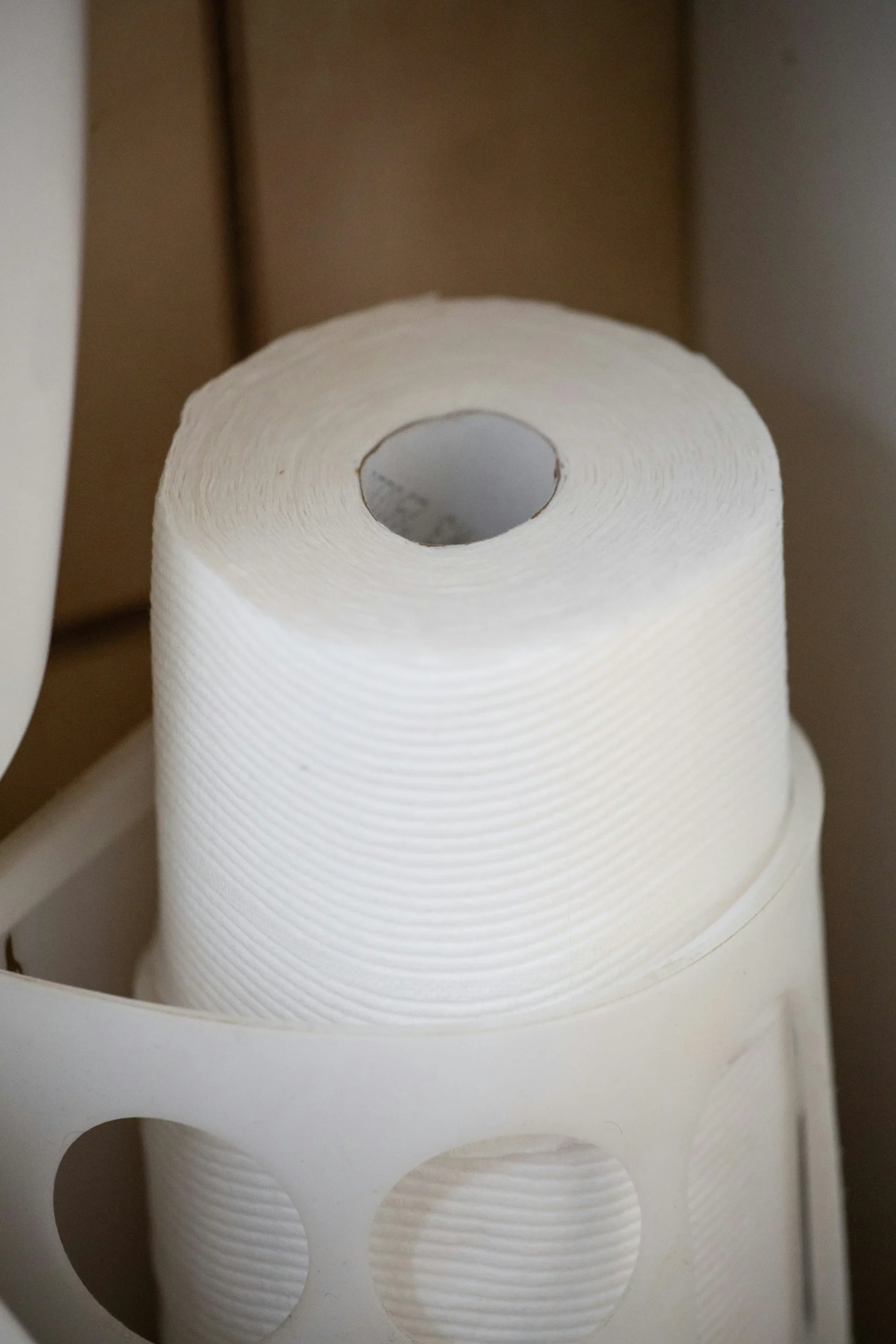
Top Source Hygiene prevents dispenser fit failures by offering both standard jumbo roll diameters: 9-inch (230mm) and 12-inch (305mm). Each roll is manufactured to the stated diameter within ±2mm tolerance, so you don’t get a roll that jams or spins freely.
- Diameter configurations: 9-inch (230mm) for compact dispensers; 12-inch (305mm) for high-capacity corporate units.
- Core size calibrations: 1.5-inch (38mm) or 3-inch (76mm) options block arm wobble and premature tearing.
- GSM weight arrays: Customer-selectable 28–40 g/m² arrays ensure predictable consumption performance indicators.
- Splice transparency metrics: Rigid limits guarantee ≤1 splice point per roll, cutting unexpected paper waste down completely.
Each production batch is tested for absorbency, tensile strength, and bulk before shipping. Our quality control logs are shareable, so you can verify consistency across containers — a concrete step that cuts out the guesswork when ordering for multiple facilities. For African public facilities, lead time is 20–25 days production plus 15–25 days sea freight. Urgent orders can be expedited. MOQ is one 40’HC container (≈2,500–3,000 rolls), but we offer trial orders to verify compatibility before scaling.
Conclusion
Getting the jumbo roll spec right is the difference between a smooth-running facility and a stack of wasted rolls. A 2-ply roll with 18 GSM costs about 25% more per sheet but lasts 40% longer—math that matters when every container shipment to Africa takes 15–25 days. Measure your dispenser core diameter and roll length before you order, and use GSM, not just ply, as your quality benchmark.
Check your current dispenser compatibility against a supplier’s spec sheet before signing a bulk contract. Top Source Hygiene publishes exact diameters, core sizes, and GSM ranges for every jumbo roll, and offers free samples so you can verify fit and feel before committing a full container. Review the product page to compare options and request a sample.
Frequently Asked Questions
What is the standard core diameter for jumbo rolls?
The most common core diameter for commercial jumbo rolls is 3 inches (about 76mm). Some industrial dispensers use a smaller 1.5-inch core spindle. Always verify your dispenser’s core size model specifications before finalizing order volumes.
How do I know if a jumbo roll will fit my dispenser?
Measure the core diameter, roll width, and maximum roll diameter your dispenser accepts. Most jumbo rolls use a 3-inch core and 4-inch width, but measurements vary by manufacturer. Refer to your dispenser’s manual blueprints for exact specs.
What does GSM mean in toilet paper?
GSM stands for Grams per Square Meter and measures the weight and fiber density of the paper. A higher GSM means a denser, more absorbent web sheet that performs consistently. Compare GSM alongside ply count for a true performance evaluation.
What is the difference between 2-ply and 3-ply jumbo rolls?
2-ply has two layers per sheet; 3-ply has three, making it thicker and softer. However, GSM is a more reliable indicator of absorbency and sheet strength than ply count alone. Choose based on facility foot traffic indices, but always verify total GSM.
Can jumbo rolls be customized with private label?
Yes, jumbo rolls can be fully customized with private label branding, including custom packaging, core embossing, and wrapper logs. Partner with an integrated manufacturer offering direct OEM/ODM lines for full customization without middleman surcharges.