
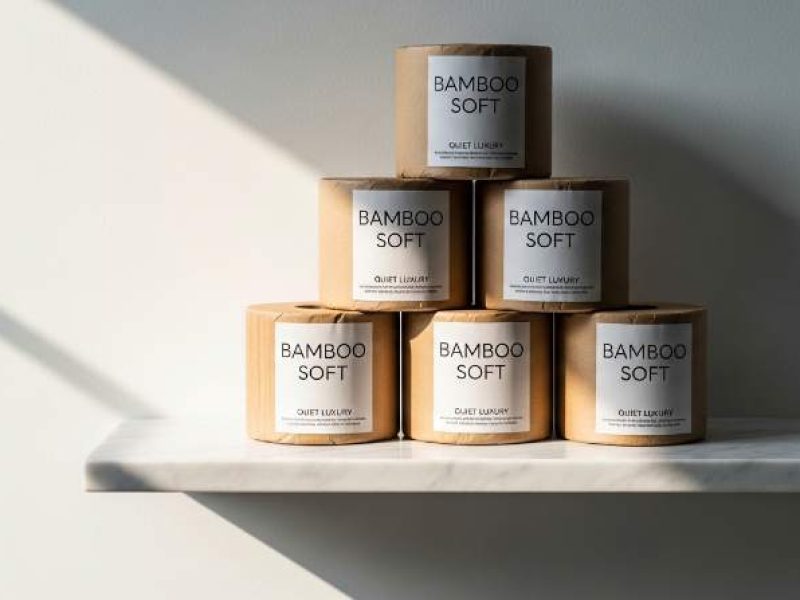
Investing in a Bamboo Private Label allows brands to bypass the price volatility of the traditional timber market while capturing the rapid shift toward sustainable home goods. Many new brands fail because they underestimate the technical requirements of fiber quality and chemical safety during the sourcing process. Neglecting these manufacturing details leads to high return rates and damage to brand reputation in an increasingly scrutinizing retail environment.
This guide provides a technical framework for launching a bamboo brand, starting with a comparison of fiber tensile strength against virgin wood pulp. We examine the specific manufacturing standards required for chemical-free verification and provide a breakdown of ROI potential compared to recycled alternatives. Use these operational insights to vet factory partners and position your product as a premium, sustainable choice in the tissue industry.
Why Is Bamboo Toilet Paper Becoming a Consumer Favorite?
The global shift toward bamboo tissue reflects an industrial pivot where rapid renewability and high fiber performance meet the demands of an increasingly eco-conscious supply chain.
Consumer behavior in the hygiene sector has moved beyond basic utility. Buyers now prioritize products that align with environmental stewardship without sacrificing the tactile quality of virgin pulp. Bamboo serves as the ideal bridge, offering a material that grows with aggressive speed while providing the tensile strength and absorbency required for premium tissue applications.
Rapid Renewal and Forest Preservation
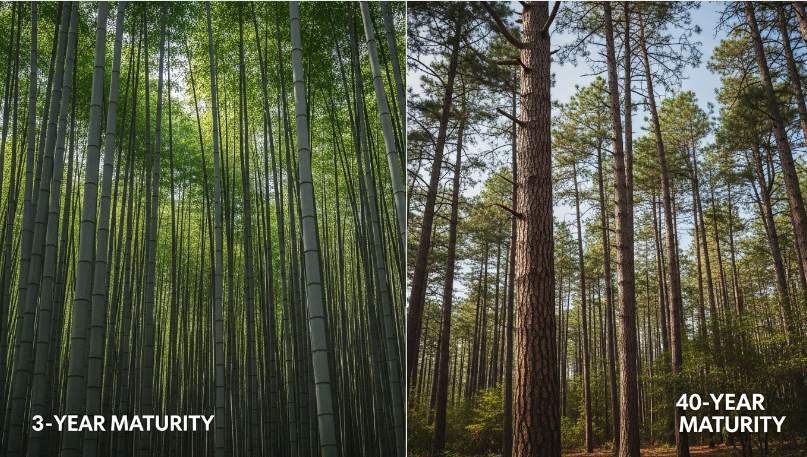
Bamboo’s biological efficiency allows it to reach harvestable maturity in just three to five years. This stands in stark contrast to traditional softwood and hardwood forests, which require decades to replenish. By utilizing bamboo, manufacturers create a circular resource model that alleviates the heavy pressure on old-growth forests and contributes to a measurable slowdown in global deforestation rates.
- Bamboo reaches full maturity in three to five years, whereas traditional trees require decades to grow.
- Utilizing bamboo reduces the pressure on old-growth forests and slows global deforestation rates.
- The plant thrives without the need for intensive irrigation or heavy pesticide use.
Superior Biodegradability and Low Environmental Impact
Biodegradability remains a critical factor for both residential consumers and commercial facility managers. Bamboo fibers break down quickly and efficiently, making the finished paper septic-safe and compatible with complex plumbing systems. The manufacturing process itself is often cleaner, requiring less water and fewer harsh chemical inputs than traditional wood pulp processing.
- Bamboo fibers are naturally biodegradable, preventing long-term waste in septic systems and landfills.
- The manufacturing process typically consumes less water than wood pulp processing.
- Eco-conscious households prioritize bamboo to avoid the harsh bleaching chemicals often found in standard tissue.
Market Expansion and 2026 Growth Projections
Financial data indicates that the bamboo tissue sector is transitioning from a niche “specialty” item to a mainstream retail staple. As manufacturing hubs like Hebei scale up production and optimize logistics, the cost of bamboo tissue continues to normalize. This increased availability allows distributors and wholesalers to capture market share from traditional paper brands while meeting the growing demand for sustainable alternatives.
- Market analysts expect the sector to reach a value of USD 35.62 billion by 2026.
- The industry shows a strong trajectory toward a USD 61.04 billion valuation by 2034.
- Increased production scaling by manufacturers like Top Source Hygiene helps lower costs for the end consumer.
How Does Bamboo Strength Compare to Traditional Wood Pulp?
Bamboo fibers provide a unique structural hybrid that combines the tensile strength of softwood with the surface smoothness of hardwood, resulting in superior wet-strength durability for premium tissue applications.
Fiber Integrity and Material Durability
Bamboo fibers possess anatomical characteristics that bridge the performance gap between traditional pulp varieties. While softwood pulp typically provides strength and hardwood offers softness, bamboo delivers both through its long, flexible fiber strands. This natural composition ensures the resulting tissue maintains high structural integrity even when wet, making it a preferred choice for heavy-duty commercial hand towels and high-ply residential toilet paper.
| Performance Metric | 100% Bamboo Pulp | 100% Virgin Wood Pulp |
|---|---|---|
| Maturation Cycle | 3–5 Years | 40+ Years |
| Tensile Strength (Wet) | High (Superior Resistance) | Moderate to High |
| Fiber Length Profile | Hybrid (Long & Smooth) | Mixed Softwood/Hardwood |
By utilizing this natural strength, manufacturers reduce the total grams per square meter (GSM) required per sheet without sacrificing the “hand feel” or performance. This allows brands to produce thinner, more efficient rolls that withstand rigorous use in high-traffic hospitality environments.
Softness and Liquid Absorption
Bamboo paper achieves high absorbency rates because the fibers are naturally more porous than those found in traditional timber. This micro-structure allows for faster moisture wicking, which is particularly effective in kitchen towels and hand wipes. Despite its strength, the material remains gentle. We use specialized refining processes to ensure the fibers lose their rigidity during the pulping stage, creating a texture suitable for sensitive skin applications.
- Water absorbency levels meet or exceed premium virgin wood pulp standards.
- Smooth fiber geometry reduces surface friction, preventing skin irritation.
- Natural “Bamboo Kun” bio-agents provide inherent antibacterial properties.
Ecological Efficiency and Regrowth Rates
The rapid maturation of bamboo offers a massive advantage for supply chain stability. Bamboo reaches harvestable maturity in roughly one-tenth the time of traditional trees. This quick cycle enables a more consistent supply for global manufacturers and reduces the risk of long-term shortages caused by timber industry volatility. Cultivation requires less water and fewer chemical interventions, significantly lowering the environmental footprint of the raw material.
Industrial Processing and Cost Dynamics
Advanced technology is necessary to convert dense bamboo stalks into soft pulp. While traditional mills are optimized for wood, specialized manufacturing equipment handles bamboo’s natural resins and fiber density. These processing requirements currently place bamboo at a 10–15% cost premium over standard wood pulp. But as consumer demand scales and investments in bamboo-specific infrastructure increase, this cost gap is narrowing. Adopting bamboo pulp allows brands to meet strict ESG targets while securing a high-performance alternative to traditional deforestation-linked materials.
Custom OEM Jumbo Rolls at Factory Prices
What Are the Marketing Angles for a Sustainable Bamboo Brand?
Effective marketing for bamboo brands in 2026 requires shifting from commodity-based selling to high-transparency lifestyle positioning that quantifies environmental impact for the conscious consumer.
Success in the sustainable tissue market depends on moving beyond generic “eco-friendly” labels. Consumers now demand empirical proof of sustainability and products that integrate into their aesthetic values. As a B2B partner, we provide the technical data and customization required to build these narratives around high-performance bamboo fibers.
Authentic Storytelling and Sourcing Transparency
Consumer trust in 2026 hinges on verifiable data. We help brands move past vague claims by providing full FSC chain-of-custody documentation and transparent supply chain metrics that validate every roll’s origin. This level of detail allows brands to educate users on the actual lifecycle of the product, from harvest to disposal.
- Use FSC certifications and transparent supply chain data to validate environmental claims for 2026 market standards.
- Educate consumers on the rapid 3-5 year regrowth cycle of bamboo compared to traditional hardwood forests.
- Highlight the absolute absence of harsh chemicals and fluorescent whiteners in the production process.
Purpose-Driven Lifestyle Positioning
Shifting bamboo paper from a utility item to a decor-friendly choice increases shelf appeal and margin potential. Brands now integrate carbon sequestration metrics directly into their marketing, allowing users to visualize the specific plastic reduction achieved by their purchase. This approach positions the product as a conscious lifestyle choice rather than a basic commodity.
- Design packaging that complements modern home aesthetics, making sustainable paper a decor-friendly choice.
- Link every purchase to quantifiable environmental impacts, such as carbon sequestration or plastic reduction metrics.
- Target hospitality and commercial sectors by positioning bamboo products as premium amenities that improve guest satisfaction scores.
Strategic Digital and Influencer Partnerships
Social proof is the fastest way to scale sustainable household products. We facilitate these marketing efforts by providing behind-the-scenes factory footage and technical performance data that influencers use to build authentic, community-driven narratives. Highlighting factory-direct quality helps demystify the manufacturing process for the end-user.
- Collaborate with eco-conscious influencers to create authentic product demonstrations and reviews.
- Utilize digital channels to share behind-the-scenes manufacturing footage that emphasizes factory-direct quality.
- Build community engagement through social media campaigns focused on plastic-free living and sustainable household transitions.
Customized OEM Solutions for Brand Identity
Regional preferences for ply count, GSM, and roll width vary significantly across global markets. Our OEM services allow distributors to customize technical specifications and branding to align precisely with local 2026 consumer habits. This flexibility ensures that the brand identity resonates with the specific softness and strength expectations of the target demographic.
- Offer flexible private label options that allow brands to launch unique sustainable product lines quickly.
- Develop custom-branded packaging that communicates a specific brand story directly to the end consumer.
- Provide tailored product specifications, such as adjusted GSM or ply, to meet local consumer preferences for softness and strength.
Is the ROI Higher for Bamboo Tissue Compared to Virgin Wood?
While virgin wood pulp maintains immediate dominance through industrial scale, bamboo’s 20% to 30% retail price premium and lower sensitivity to carbon taxation offer a superior long-term ROI for brands targeting premium retail segments.
Production Cost Structures and Manufacturing Efficiency
Manufacturing bamboo tissue currently involves higher processing expenses than the established virgin wood pulp industry. Bamboo fibers require specialized mechanical or chemical processing to achieve the softness consumers expect, which increases initial manufacturing costs. Top Source Hygiene utilizes premium long-fiber wood pulp for its core inventory, benefiting from decades of supply chain infrastructure in North China to keep production costs low and output volumes high. This established efficiency allows distributors to secure predictable returns on high-volume wood pulp orders like the TSH-2559.
| ROI Factor | 100% Virgin Wood Pulp | Sustainable Bamboo Pulp |
|---|---|---|
| Avg. Production Cost | Market Baseline (Low) | 10% – 15% Higher |
| Retail Price Premium | Standard Pricing | 20% – 30% Higher |
| Gross Margin Potential | High Volume / Stable | Premium Unit Margins |
| Target B2B Segment | Commercial & Mass Retail | Specialty Eco-Retail |
Initial manufacturing scales for bamboo are smaller, which limits immediate profit margins for bulk commercial buyers. Virgin wood pulp remains the choice for hospitality groups and janitorial suppliers who prioritize cost-per-meter and reliable large-scale distribution.
Revenue Potential Across Market Segments
The ROI trajectory depends on the brand’s target demographic. Eco-conscious shoppers demonstrate a high willingness to pay for sustainability, allowing retail brands to capture 20% higher margins compared to standard wood-based products. This premium pricing effectively offsets the increased cost of raw materials and specialized processing. Private label owners use bamboo to differentiate their offerings in crowded markets, justifying higher price points that improve bottom-line results for boutique brands.
- Retailers see higher repeat purchase rates in eco-segments due to bamboo’s superior strength and absorbency.
- Commercial venues favor the TSH-JRT08 jumbo rolls for maximum freight value and lower per-sheet costs.
- Subscription models benefit from bamboo’s “luxury” positioning, which supports higher customer lifetime value (LTV).
Profitability Trends and Regulatory Impacts by 2026
Changing environmental standards and improved scaling suggest a favorable shift for bamboo ROI as the industry moves through 2026. Rising costs associated with carbon regulations for traditional timber producers are narrowing the price gap between wood and bamboo pulp. As more factories scale bamboo output, unit costs will likely decrease, making bamboo a more competitive long-term investment.
Supplying FSC-certified products helps businesses avoid environmental compliance penalties while capturing market share in green-focused regions like Europe and North America. Brands that adopt bamboo early build market authority, positioning them to profit as traditional wood pulp faces increasing regulatory pressure and raw material volatility.
How to Ensure Your Bamboo Supply Is Truly Chemical-Free?
Verify your bamboo supply by auditing the manufacturing methodology and demanding third-party certifications that track the fiber from the harvest to the final packaged roll.
Verify Third-Party Safety Certifications
Retailers and distributors in 2026 no longer accept “eco-friendly” labels at face value. Procurement teams must rely on independent audits to confirm that bamboo tissues contain no toxic residues or harmful additives from the pulping stage. These certifications provide a standardized framework for evaluating chemical safety and biological impact.
- Check for OEKO-TEX Standard 100 labels to guarantee the paper underwent testing for hundreds of harmful substances and restricted chemicals.
- Require FSC (Forest Stewardship Council) certification to ensure the raw bamboo originates from responsibly managed, non-GMO sources.
- Look for GOTS or equivalent organic standards that monitor the integrity of the fiber throughout the entire supply chain.
Evaluate Processing and Sourcing Methods
The specific method used to convert raw bamboo into pulp dictates the chemical profile of the finished product. While many brands market bamboo as natural, the extraction process often involves significant solvent use. Identifying the manufacturing technique allows buyers to segment products by their environmental and dermatological safety levels.
| Processing Method | Chemical Profile | Safety Certification |
|---|---|---|
| Mechanical Processing | Zero chemicals; uses physical crushing | GOTS / Organic |
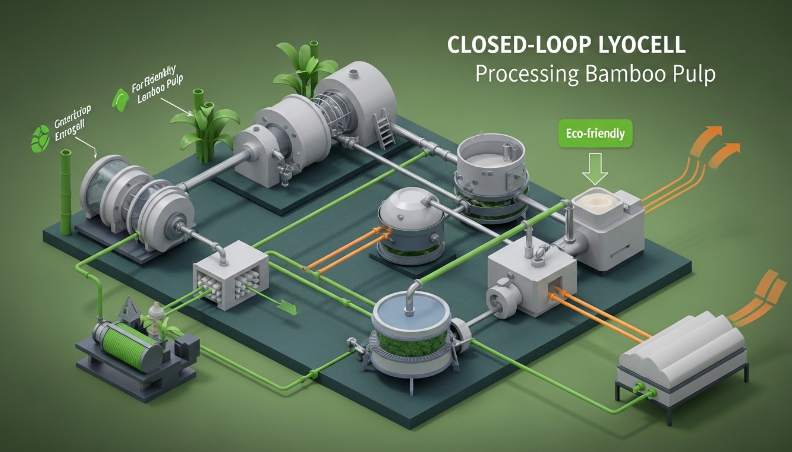
| Lyocell (Closed-Loop) | 99% solvent recovery; non-toxic solvents | OEKO-TEX / ISO 14001 |
| Standard Viscose | High solvent reliance; potential residues | ISO 9001 (Minimum) |
We prioritize Lyocell closed-loop systems because they recycle almost all solvents and prevent environmental discharge. While mechanical processing represents the premium market segment with zero chemical usage, it is often more labor-intensive and costly. Avoid standard viscose production that lacks verifiable chemical recovery protocols, as these processes often rely on harsh solvents that can leave trace residues in the paper fibers.
Confirm TCF and FWA-Free Status
Testing for specific additives like bleach and brighteners ensures the paper remains safe for sensitive skin and prevents environmental buildup. Chlorine-based bleaching remains one of the largest sources of toxic dioxins in the paper industry, making “chlorine-free” status a non-negotiable requirement for sustainable brands.
- Demand TCF (Totally Chlorine Free) documentation to ensure no dioxins or chlorine derivatives were used during the whitening stage.
- Confirm the absence of Fluorescent Whitening Agents (FWAs) which can cause skin irritation and accumulate in local ecosystems.
- Work with experienced suppliers like Top Source Hygiene who maintain strict ISO 9001 quality controls to prevent cross-contamination during large-scale manufacturing.
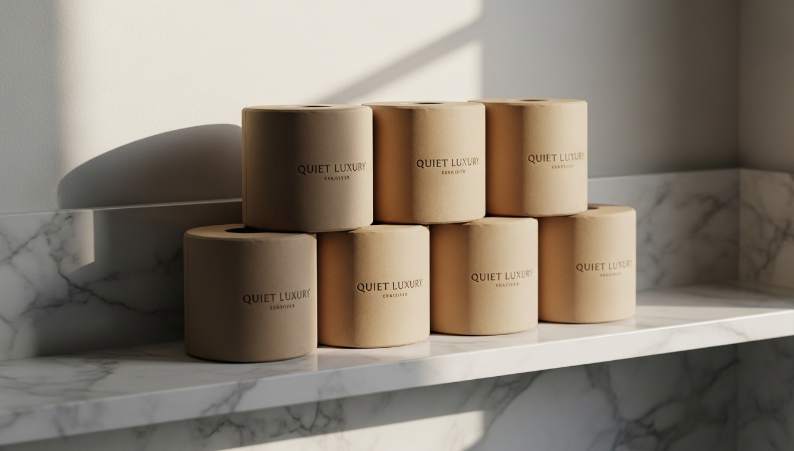
How to Position Bamboo Paper as a Luxury Lifestyle Choice?
Luxury in 2026 is defined by the intersection of high-performance tactile quality and verifiable environmental ethics, shifting bamboo tissue from a niche alternative to a primary choice for high-end households.
Effective luxury positioning requires moving beyond the “green” label to focus on superior performance and design. High-net-worth consumers no longer view sustainability as a sacrifice; they expect premium products to solve environmental problems while outperforming traditional wood-pulp alternatives. To command a price premium, the brand must align with the “quiet luxury” aesthetic that prioritizes understated elegance and high-quality materials over loud branding.
Aesthetic Packaging and Visual Branding
Modern luxury brands are ditching bulk plastic packaging for design-forward, minimalist aesthetics that complement high-end home decor. The goal is to create a product that consumers feel comfortable displaying in their bathrooms rather than hiding in a cabinet. This shift signals that the product is a lifestyle choice rather than a mere utility.
- Use recycled paper wraps with matte finishes and sophisticated color palettes to signal premium quality on retail shelves.
- Implement individual roll wrapping to enhance hygiene perceptions and provide a boutique hotel experience for residential consumers.
- Design packaging that functions as a decor element, reducing the need for consumers to hide paper products.
- Ensure all branding elements reflect a 2026 sensibility through clean typography and understated logos.
Transparency in Eco-Conscious Sourcing
Affluent consumers demand verifiable proof of sustainability. In the 2026 market, vague claims of being “eco-friendly” are insufficient; brands must provide granular data on their supply chains to build trust. Transparency becomes a core component of the luxury narrative, justifying the higher cost through ethical rigor.
- Highlight FSC-certified bamboo forests to guarantee that production supports biodiversity and local ecosystems.
- Emphasize chlorine-free and BPA-free manufacturing processes to appeal to health-conscious buyers seeking non-toxic household goods.
- Share data regarding the 35% faster growth rate of bamboo compared to traditional timber to reinforce the renewable narrative.
- Utilize QR codes on packaging that link to digital twin reports of the specific production batch and its carbon footprint.
Quality Metrics for Premium Softness and Strength
Luxury positioning fails if the product does not outperform standard wood pulp in tactile feel and functional durability. Bamboo’s naturally long fibers provide a unique advantage here, allowing for higher tensile strength without sacrificing softness. Brands must market these technical advantages as superior engineering rather than just a natural byproduct.
- Market 3-ply and 4-ply configurations that offer superior absorbency and a plush texture comparable to high-end virgin wood pulp.
- Promote lint-free technology as a key differentiator for facial tissues used in premium environments.
- Leverage the naturally long fibers of bamboo to provide higher tensile strength, preventing tearing during use.
- Conduct independent lab testing to quantify softness scores, using these metrics to justify higher price points.
Targeted Marketing for Sustainable Lifestyles
Effective positioning frames bamboo paper as an essential component of a conscious, high-performance lifestyle. Marketing should focus on the “guilt-free indulgence” aspect—reminding consumers they can enjoy superior comfort while meeting their environmental goals. Partnerships with high-end influencers and hospitality groups can further cement this aspirational status.
- Partner with luxury hospitality groups and high-end real estate developers to place products in aspirational settings.
- Focus messaging on ‘guilt-free indulgence,’ allowing consumers to enjoy superior comfort without environmental compromise.
- Develop subscription models that emphasize convenience and reliability for busy, high-net-worth households.
- Align the brand with wellness trends by highlighting the hypoallergenic and antibacterial properties inherent in natural bamboo fibers.
Conclusion
Building a successful bamboo tissue brand requires balancing eco-friendly marketing with a stable, chemical-free supply chain. Selecting high-purity pulp and professional manufacturing ensures your product meets luxury standards while maintaining healthy profit margins. This strategic approach protects your brand reputation and secures long-term ROI through consistent fiber quality and efficient container logistics.
Review our current inventory of global best-sellers or contact our team to discuss custom specifications for your first 40HQ container. We provide full pre-shipment visual verification to help you scale your private label with total transparency.
Frequently Asked Questions
How to start a bamboo toilet paper brand?
Starting a bamboo toilet paper brand begins with identifying a unique market niche, such as luxury eco-goods or subscription-based essentials. You must partner with a certified OEM manufacturer that holds FSC (Forest Stewardship Council) certification to ensure ethical harvesting. Focus on sustainable, plastic-free packaging design and build a robust e-commerce platform with a focus on Direct-to-Consumer (DTC) marketing to capture the growing eco-conscious demographic.
Is bamboo paper more profitable?
Bamboo paper offers high profitability potential due to its position in the premium retail segment. While initial production costs may be higher than traditional pulp, the market is expanding rapidly—projected to reach over USD 61 billion by 2034. Consumers are willing to pay a price premium for sustainable alternatives, and the subscription-based model common in this industry ensures a high customer lifetime value and consistent recurring revenue.
Why is bamboo toilet paper trendy?
Bamboo toilet paper is trending due to a massive shift in consumer awareness regarding deforestation and environmental impact. Bamboo’s rapid 3-5 year growth cycle is far more efficient than the decades required for traditional trees, making it a “guilt-free” alternative. Its rise in popularity is also driven by aesthetic, plastic-free branding and its association with the zero-waste lifestyle favored by modern consumers.
How to find a bamboo tissue factory?
To find a reliable factory, utilize global B2B sourcing platforms like Alibaba or Global Sources, specifically filtering for manufacturers with ISO 9001 and FSC certifications. Additionally, attending industry trade shows such as Tissue World or the Canton Fair allows for direct quality inspections. It is essential to request samples and third-party audit reports to verify their sustainability claims and production capacity.
Is bamboo paper softer than recycled?
Yes, bamboo paper is generally much softer than recycled paper. Bamboo fibers are naturally long and smooth, whereas recycled paper is made from short, broken fibers that have been processed multiple times, often resulting in a coarser texture. Bamboo provides a “virgin pulp” feel that balances strength and softness without the environmental cost of old-growth deforestation.
What are the benefits of bamboo toilet paper?
The primary benefits include a significantly lower carbon footprint, reduced water consumption during manufacturing, and a 3-5 year renewable growth cycle that prevents deforestation. Bamboo is also naturally biodegradable, hypoallergenic, and antimicrobial. Because it does not require the same intensive chemical processing as traditional wood-based papers, it is often safer for sensitive skin and septic systems.