
Bamboo vs Tree Pulp decisions shape restroom reliability: picking the wrong tissue spikes maintenance calls, causes clog-related operational downtime and tenant complaints that erode margins and drive higher labor and replacement costs.
This guide serves as a technical SOP for facility managers and procurement teams, laying out the environmental cost of traditional hardwood pulp, bamboo’s rapid-renewable grass profile, why bamboo outperforms recycled paper on tensile strength, the bleaching and processing differences, a cost analysis explaining the premium on bamboo jumbo rolls, plus practical tactics to market bamboo tissue to high-end corporate tenants. It also includes a focused FAQ on performance, plumbing impact, softness, growth rates and septic safety so you can set specs, run tests and justify procurement decisions with measurable criteria.
The Environmental Cost of Traditional Hardwood Pulp
Hardwood-based pulp production imposes persistent ecological damage through forest loss, concentrated water and energy demand, toxic effluent, and lifecycle carbon releases that often outsize alternative fiber pathways.
Deforestation and Biodiversity Loss
Logging hardwood for pulp converts complex, multi-species forests into cleared areas or single-species plantations. That land-use change reduces habitat area and fragments ecosystems, which lowers species richness and undermines natural resilience to pests and climate shocks.
- Clearcutting removes canopy and niche habitats, harming plants, insects, birds, and mammals.
- Replacing diverse forests with monoculture plantations reduces resistance to disease and extreme weather.
- Converting forests to production lands releases carbon stored in trees and soils, locking in emissions for decades.
- Road building and fragmentation increase human access, which raises hunting, extraction, and secondary land clearing.
Water and Energy Consumption
Hardwood pulping concentrates heavy water and energy demand at mill sites. Mechanical washing, screening, and chemical pulping require continuous high-volume flows and steady process heat, which stresses local water systems and forces reliance on fossil or biomass fuel sources.
- Pulping operations use large water flows for washing, screening, and fiber separation.
- Mills run on continuous process heat and power, often supplied by on-site boilers burning fossil fuels or biomass.
- High water withdrawals can stress local supplies during dry seasons or in water-stressed regions.
- Greater energy and water intensity raises operating costs and widens lifecycle environmental impacts.
Chemical Use and Water Pollution
Chemical pulping and bleaching introduce dissolved organics, chlorinated compounds, and heavy metals into effluent streams when treatment falls short. Those discharges reduce dissolved oxygen and damage aquatic ecosystems; treated but complex effluents still pose long-term contamination risks in sediments and food webs.
- Historic chlorine bleaching produced dioxins and furans; many mills now use chlorine dioxide or chlorine-free sequences that cut those compounds but can still form other chlorinated byproducts.
- Effluent often carries high biochemical oxygen demand (BOD) and chemical oxygen demand (COD), which deplete oxygen and harm fisheries.
- Heavy metals and process additives accumulate in sludge, creating disposal and soil-contamination challenges.
- Robust wastewater treatment reduces ecological harm but increases energy use and operating costs.
Carbon Emissions and Lifecycle Impact
A full lifecycle view shows emissions from harvesting, transport, pulping, bleaching, drying, and end-of-life management. Land conversion and soil disturbance produce large, front-loaded carbon releases, while mill energy choices determine ongoing process emissions.
- Harvesting and transport emit CO2 from machinery and fuel use; converting forests to plantations liberates carbon from biomass and soils.
- Chemical pulping and drying add process emissions; totals depend heavily on whether mills use coal, gas, or low-carbon energy.
- Product end-of-life—landfill, incineration, or recycling—changes net emissions and climate outcomes.
- Shifts to certified sourcing, higher mill efficiency, or alternative fibers like reclaimed pulp and fast-growing grasses can lower lifecycle impacts.

Bamboo: The Ultimate Rapid-Renewable Grass Resource
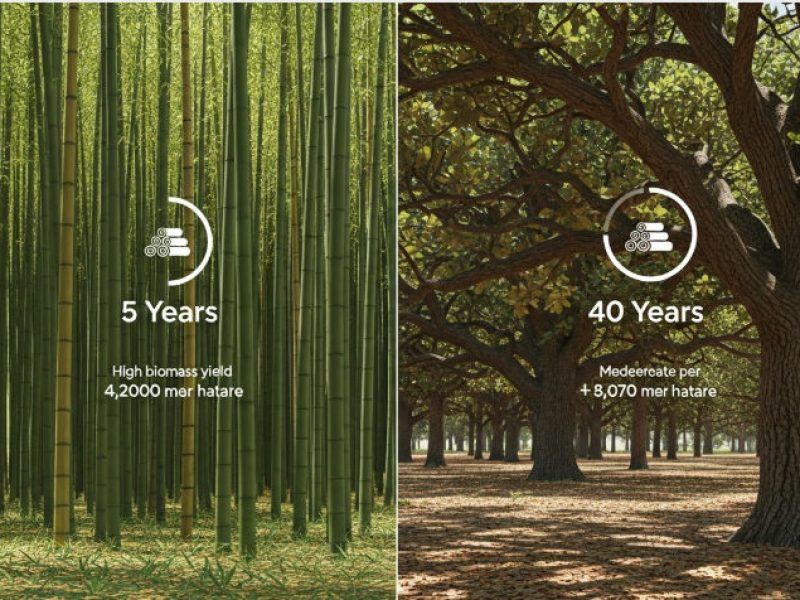
Bamboo reaches harvestable size in 3–5 years, regenerates from rhizomes without replanting, and can deliver far higher annual pulp yield per hectare than hardwood rotations—provided growers avoid converting native ecosystems and manage biodiversity risks.
Growth and renewal rates versus hardwood trees
Most commercially grown bamboo species reach usable biomass in roughly 3–5 years, while hardwood plantations need 20–80 years to mature. Bamboo shoots emerge from an established rhizome network, so producers harvest recurring yields without replanting after initial establishment. That biological difference shortens supply cycles and tightens lead times for pulp mills that secure well-managed plantations.
Higher biomass per hectare gives manufacturers more pulp per land unit and improves land-use efficiency versus slow-rotation forests. Faster rotations lower the average carbon age standing on the landscape but can raise annual carbon sequestration rates under sustainable management. The trade-off comes when plantations replace native forests or peatlands; growers and buyers must apply safeguards—mixed-species buffers, no-conversion policies, and certification—to protect biodiversity and deliver genuine sustainability gains.
Fiber characteristics and performance for tissue products
Bamboo fibers differ in length, wall thickness, and chemistry from hardwood fibers, and those differences influence tensile strength, bulk, softness, and absorbency in finished tissue. When mills refine bamboo pulp correctly and tune creping parameters, the fibers deliver favorable tensile strength and sheet bulk that support durable jumbo rolls and multi-ply constructions.
Producers commonly blend bamboo with hardwood or softwood pulps to balance strength, hand-feel, and cost. Final performance depends on refining intensity, creping geometry, and targeted chemical additives; adjusting those levers lets manufacturers hit specific specs—high-absorbency bathroom tissue, premium soft hotel rolls, or cost-efficient commercial jumbo reels—so bamboo can serve both premium and eco-oriented segments when formulators match process to product goals.
Pulping, bleaching and processing differences
Manufacturers use chemical (kraft) and semi-chemical pulping for bamboo more often than mechanical routes for tissue-grade output. Bamboo often contains higher silica and ash than many woods, which elevates scaling risk in digesters and forces operators to adjust chemistry, temperature profiles, and maintenance schedules to protect equipment and recovery systems.
Bleaching choices—ECF or TCF—determine whiteness and environmental footprint; mills seeking market acceptance for sustainable brands tend to favor TCF or low-chlorine ECF sequences. Processing bamboo also demands robust effluent treatment and solids recovery to meet discharge limits. Those capital and operational adjustments raise near-term costs, but stable feedstock supply and product premiums can offset the investment over time.
Environmental and supply-chain considerations
Rapid regrowth and high yields give bamboo a clear renewability advantage, but life-cycle outcomes depend on land-use change, species choice, and management intensity. Sites with low irrigation and minimal agrochemical inputs deliver the best environmental profiles; conversely, converting biodiverse forests or peat soils to monoculture plantations erases the climate and biodiversity benefits.
Buyers reduce sourcing risk by insisting on certification and traceability—FSC or equivalent chain-of-custody—and by auditing social impacts such as land rights and local employment. Logistically, regional production hubs affect freight cost and lead time; vertically integrated plantation-to-mill supply chains lower price volatility and make bamboo a more commercially reliable pulp source for tissue manufacturers.
OEM Toilet Paper — Fast Global Supply
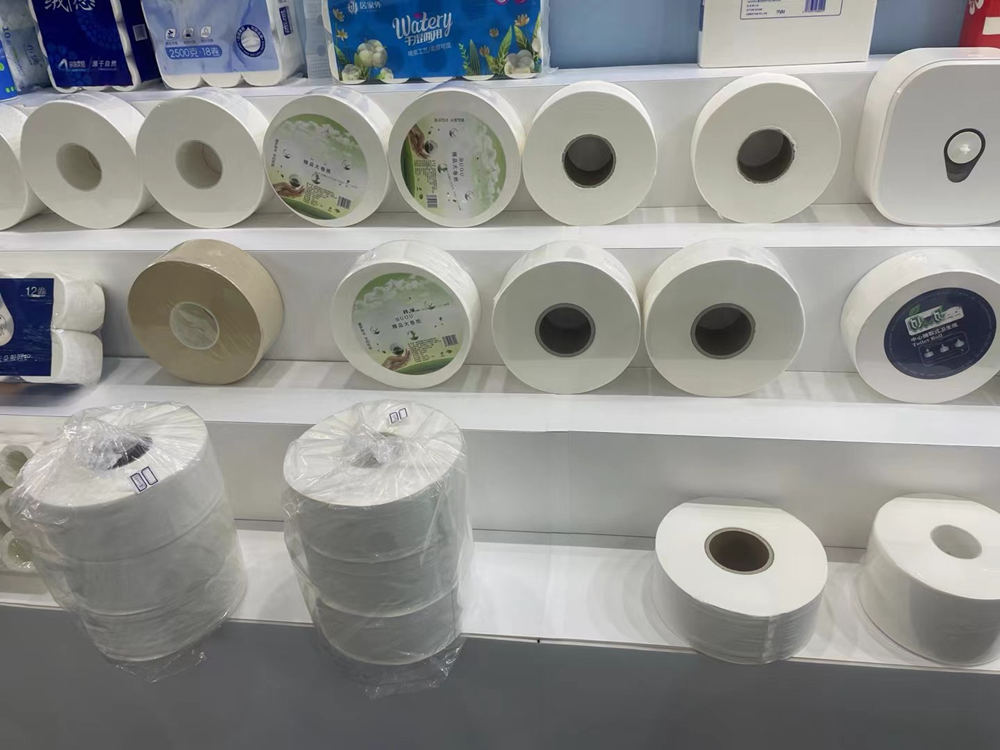
Tensile Strength: Why Bamboo Outperforms Recycled Paper
At the same basis weight, bamboo pulp delivers higher tensile index and breaking length—commonly 1.5–2× versus heavily recycled fiber—because it preserves long cellulose strands and favorable microfibril orientation that improve bonding and load transfer.
Fiber Structure and Composition
Bamboo fibers remain longer and retain more intact cellulose than the short, beaten fibers produced after multiple recycling cycles. Longer fibers increase contact area and enable stronger hydrogen bonding networks; microfibril alignment in bamboo also adds stiffness and tensile strength for a given sheet weight.
Recycled pulp undergoes progressive fiber shortening and hornification during repeated mechanical and chemical processing. That reduces surface area for bonding and leaves residual contaminants—adhesives, inks, fillers—that interrupt continuous fiber networks and create localized weak points in the sheet.
| Characteristic | Bamboo (typical) | Heavily Recycled Pulp (typical) |
|---|---|---|
| Fiber length, cellulose integrity, and contaminants | Longer fibers; higher intact cellulose and favorable microfibril orientation; low residual adhesives or inks; supports robust inter-fiber bonding and load transfer. | Short, beaten fibers from multi-cycle recycling; reduced bonding surface from hornification; higher risk of residual contaminants that weaken local networks. |
Tensile Testing Methods and Benchmarks
Labs measure tensile performance with standard methods such as ISO tensile tests and TAPPI protocols, reporting tensile index (Nm/g), breaking length (km), and elongation/stretch. These metrics predict runnability on converting lines and in-use durability for tissue and towel products.
Comparative testing consistently shows bamboo-derived pulps scoring higher on tensile index and breaking length than heavily recycled blends. In practice, manufacturers see bamboo or bamboo-blend pulps deliver roughly 1.5–2× the tensile performance of multi-cycle recycled fiber under matched refining and basis-weight conditions. Results still vary with pulping chemistry and any strength additives used.
Manufacturing Factors That Affect Strength
Chemical pulping preserves bamboo fiber length and cellulose integrity better than mechanical pulping or repeated recycling. Mills control refining to increase bonding without over-shortening fibers; optimal refining raises tensile strength while keeping acceptable softness and absorbency.
Bleaching and harsh chemical steps can damage fiber structure, so mills trade off whiteness and strength through controlled bleaching sequences. Converting operations—wet pressing, embossing, creping—introduce directionality and affect perceived strength; because bamboo starts with a stronger fiber network, manufacturers can target lower basis weight while retaining sheet integrity.
Performance Implications for Tissue Products
Higher tensile strength lets producers use thinner sheets that still perform—this reduces material use and lowers per-roll costs without hurting user experience. Stronger networks also reduce on-roll breakage and converting waste, improving yield on high-speed lines and raising customer satisfaction in hospitality and commercial settings.
For jumbo rolls and high-capacity formats, better tensile properties extend service intervals, cut dispenser jams, and reduce maintenance. Producers commonly blend bamboo with virgin or recycled fiber to balance cost, sustainability targets, and the tensile requirements for specific products and markets.

The Bleaching and Processing Differences
Bamboo’s non-wood chemistry—higher silica and variable hemicellulose—forces mills to change cook recipes, add pre-treatments, and moderate bleaching to protect fibre strength and manage effluent and equipment wear compared with standard hardwood pulps.
Raw material characteristics: bamboo versus tree pulp
Bamboo behaves like a non-wood grass: fibres vary by species, culm age and position, which drives measurable differences in tensile strength, absorbency and surface formation. Mills see a wider distribution of fibre length and coarseness than with a managed hardwood plantation, so paper formation and softness require closer process tuning and tighter sorting or blending.
Chemically, bamboo often contains elevated silica and variable hemicellulose while lignin can sit in the same range as some hardwoods. The high cellulose yield per tonne improves raw-material efficiency but increases demands during pulping and bleaching. Elevated silica increases abrasion and scaling risk in digesters, evaporators and recovery boilers, so plants must upgrade filtration and maintenance protocols to protect equipment life.
Pulping methods and chemical requirements
Processors use kraft pulping increasingly for bamboo when they need long-fibre strength, while soda or soda-AQ routes appear in mills dedicated to non-wood feedstocks. Mechanical and semi-chemical routes serve specialty grades. Compared with many hardwoods, bamboo frequently requires higher alkali charge or modified cook conditions to liberate silica-bound hemicelluloses and get acceptable delignification without overcooking fibres.
Pre-treatments—alkaline extraction, hot-water washes or targeted enzymes—reduce hemicellulose and protect fibre integrity during the main cook, which lowers subsequent bleaching chemical demand. Oxygen delignification works for both feedstocks and benefits bamboo pulp by cutting chlorine dioxide demand and improving final brightness. Process controls must tighten on liquor-to-wood ratio, temperature and residence time to avoid excess fines that harm formation and softness.
| Feedstock Attribute | Bamboo Pulp (Operational Effects) | 100% Virgin Wood Pulp (Top Source Specs) |
|---|---|---|
| Silica / Hemicellulose / Yield | Higher silica → increased scaling/abrasion; variable hemicellulose → higher alkali and pre-extraction needed; high cellulose yield per tonne improves raw-material efficiency but raises chemical demand. | Low silica and consistent chemistry; predictable cook and bleach loads; factory-controlled long-fibre input delivers target brightness (85–92%) without excessive chemical swings; OBA-free, septic-safe end specs per product manual. |
Bleaching sequences and chemical choices
Mills pick bleaching routes to balance brightness, strength retention and effluent limits. Elemental-chlorine-free (ECF) sequences with chlorine dioxide remain common for high-brightness hardwood pulps. Total-chlorine-free (TCF) flows rely on oxygen, peroxide and ozone stages when regulators or customers demand near-zero chlorinated organics.
Bamboo’s hemicellulose content and extractives push mills to use milder or staged oxidizers and to limit ozone exposure because ozone gives fast brightness but cuts tensile strength if overapplied. Peroxide-based stages suit tissue grades where strength and yield matter. Enzymatic adjuncts—xylanases and laccases—reduce bleaching chemical demand, protect carbohydrate yield and improve final tensile properties. Many mills add optical brighteners at finishing to hit market whiteness without aggressive chemistry that would weaken fibres.
Environmental, effluent and operational considerations
Bamboo pulping produces silica-rich sludges and higher suspended solids than some wood processes, which complicates primary treatment and sludge handling. Switching from chlorine-based bleaching to ECF or TCF cuts AOX; adding oxygen-based stages and enzymatic steps lowers COD and BOD while safeguarding fibre strength. Mills need robust clarification, polymer dosing and solids handling to meet discharge permits.
Silica raises scaling risk in recovery boilers and evaporators, so plants invest in anti-scaling chemistry, filtration upgrades and more frequent maintenance. Closed-loop water systems, alkaline pre-extraction and targeted enzyme use cut water and energy consumption. Finally, bamboo’s rapid renewability supports sustainability claims, but suppliers must document chain-of-custody and demonstrate low-impact processing and effluent controls to satisfy buyers and regulators while offsetting higher chemical and maintenance costs in total landed-cost evaluations.
Cost Analysis: The Premium Price of Bamboo Jumbo Rolls
Bamboo jumbo rolls typically command a raw-material and processing premium, but you can narrow that gap by optimizing sourcing, blending strategies, and production scale.
Raw Material Costs: Bamboo vs Hardwood Pulp
Feedstock prices depend on land and harvest costs, local supply density, and seasonality. Where bamboo grows abundantly—parts of Southeast Asia and China—mill-gate bamboo pulp can approach or match hardwood pulp. In regions without local bamboo supply, import, certification, and logistics push the feedstock cost notably higher. Some bamboo species contain more silica and inorganics, so mills factor additional handling and rejection costs into the effective raw-material price.
Large buyers and vertically integrated suppliers negotiate lower prices through long-term contracts and bulk purchases. For OEMs, model a base raw-material premium by market and scale: assume parity in bamboo-rich regions, a modest premium with regional sourcing, and a significant premium when reliant on imports. Use blended pulps and multi-year sourcing commitments to control cost volatility.
| Cost Driver | Bamboo Pulp (Impact) | Hardwood Pulp (Impact) |
|---|---|---|
| Typical mill-gate differential | Varies by region: parity or small premium in bamboo-rich markets; import-dependent markets show a 20–60% effective premium due to transport, duties, and handling of inorganics. | Generally lower and more stable where pulpwood supply chains and chip mills exist; price sensitivity follows timber and global pulp markets. |
Processing & Manufacturing: Equipment, Chemicals, and Yield
Bamboo requires tailored pulping and additional pre-treatment in many mills to remove silica and liberate usable fiber. Producers often add process hours and chemicals, and may run extra bleaching stages to hit the same brightness and hand feel as hardwood-based tissues. Those steps increase chemical spend per ton and lower throughput versus a standard hardwood line.
Legacy mills face retrofit costs: abrasion-resistant screens, sacrificial liners, and dedicated bamboo lines avoid cross-contamination and excessive downtime. Expect slightly lower finished-ton yield from bamboo feedstock and higher wear on conveyors and pumps, which raises both capex recovery and maintenance-per-ton figures.
Operational Expenses: Energy, Water, and Labor Impacts
Customized pulping and extra washing stages push up energy and water consumption. Mills report higher effluent loads and changed chemistry profiles that require upgraded wastewater treatment or different disposal routes. Operators need training for bamboo-specific process control, so expect higher labor hours per ton during ramp-up.
Economies of scale reduce the per-roll premium: high-utilization plants spread fixed utilities, labor, and recovery-system costs over more tons. Manufacturers can lower running costs by blending small shares of bamboo with hardwood pulp, optimizing chemical recovery, and investing in process control to stabilize yields. Top Source Hygiene’s multi-thousand-ton output model illustrates how scale compresses unit operational costs.
Market Premiums, Certifications, and Distribution Costs
Buyers accept a price uplift for sustainability and perceived softness, but the premium varies by buyer segment and geography. Producers add recurring costs for certifications, product testing, and audits to win premium channels. Branding bamboo as a premium product often requires higher-grade packaging and POS materials, which increase per-unit cost on smaller orders.
Distribution impacts change with higher unit value: freight sensitivity increases, insurance and cargo handling steps matter more, and MOQ drives container economics. To reduce the market premium, prioritize regional sourcing, scale production, use blended pulps where appropriate, and pursue selective high-impact certifications that match buyer willingness to pay.
Marketing Bamboo Tissue to High-End Corporate Tenants
High-end tenants adopt bamboo tissue when sustainability credentials, guest-grade tactile performance, and lower operational touchpoints translate into measurable procurement and facilities wins.
Why Bamboo Tissue Appeals to High-End Corporate Tenants
Facility and procurement teams at premium offices and branded hotels prioritize three things: credible sustainability, a premium tactile experience, and amenities that reinforce brand values. Bamboo meets that brief—it regenerates rapidly compared with tree plantations, supports stronger ESG messaging, and reads as a deliberate amenity choice to guests and tenants.
Buyers also evaluate products by feel and durability. Presenting samples lowers friction: allow decision makers to test softness, wet strength, and appearance under real-use conditions so they judge lifecycle value rather than per-sheet price.
- Sample kit suggestions: 1 jumbo-roll cut sample, 3 individual guest-facing wrapped rolls, and a dispenser-mounted demo roll for on-site drop-in testing.
- Include a short spec sheet: ply count, GSM per ply, rapid-disintegration/septic-safe claim, and certificate thumbnails.
Positioning and Pricing Strategy for Premium Office Supplies
Price bamboo tissue as a premium amenity with quantifiable OPEX wins: longer roll life, fewer restocks, and reduced maintenance calls. Frame cost discussions around total cost of ownership—supply cadence, labor to refill, and guest satisfaction—rather than only per-sheet comparisons.
Segment SKUs into standard, premium, and private-label lines to match different buyer needs. Offer pilot pricing, small-scale pilots, and flexible MOQs to overcome procurement inertia; factory-direct sourcing yields clearer margins and predictable lead times for large portfolios.
- Tiered SKUs: entry (cost-focused), premium (guest-facing quality), private-label (brand-matched packaging).
- Commercial terms to advertise: trial container options, predictable lead times (in-stock 10–15 days; production 20–25 days), and factory photos/video before final payment.
- Bundles: match jumbo rolls with compatible dispensers and facial tissue packs to simplify ordering and increase average order value.
Sustainability Certifications and Procurement Requirements
High-end tenants demand verifiable claims. Provide third-party certifications, chain-of-custody documents, and lab reports on disintegration and residual chemistries. Present region-specific compliance statements for North America and Europe up front to shorten vendor approval cycles.
Support audits and sample-based testing: allow sustainability teams to validate fiber origin, bleaching processes, and chemical usage. Map each claim to a measurable tenant outcome—reduced landfill weight, lower refill frequency, or alignment with corporate ESG goals.
- Certs to include: FSC or equivalent chain-of-custody, ISO 9001, FDA/EU hygiene compliance, and OBA-free declarations.
- Deliverables: certificate copies, lab disintegration reports, and an export-compliant material safety statement.
Packaging, Branding, and Onsite Presentation for Corporate Environments
Design packaging for both guest-facing impact and back-of-house efficiency. Offer private-label and co-branded options with luxury finishes for executive washrooms and discreet bulk packaging for supply closets. Keep guest-facing SKUs visually aligned with the client’s brand standards.
Specify dispenser-compatible SKUs—high-capacity jumbo rolls reduce visible clutter and service time. Provide amenity sets for lobbies and meeting rooms to maintain a consistent brand experience and supply-chain simplicity for facilities teams.
- Guest-facing: individually wrapped rolls with premium sleeve and co-branding option.
- Back-of-house: reinforced master cartons and compressed packing to maximize container payload.
- Recommended models: jumbo commercial roll SKUs for high-traffic toilets and TSH-series guest-grade rolls for executive washrooms.
Sales Channels, Pilot Programs, and Measuring ROI
Target procurement, facilities managers, sustainability officers, and hospitality operations with tailored messaging and samples. Run short, instrumented pilots in representative locations to gather hard data on refill frequency, maintenance time, and guest feedback.
Use pilot results to build a rollout playbook: combine quantitative KPIs with testimonials to speed vendor approval across portfolios. Close the loop with clear reorder workflows, consolidated invoicing, and logistics options that fit corporate vendor-management systems.
- Core KPIs: refill events per week, maintenance calls per location, guest satisfaction scores, and cost-per-use over 90 days.
- Operational support: consolidated invoicing, flexible container options (1x40HQ trials), and pre-shipment visual verification to protect buyer cash flow.
- Scale plan: document pilot outcomes, create a procurement packet, and offer staged rollouts tied to measurable savings or guest-experience gains.
Conclusion
Selecting the right commercial tissue influences plumbing safety, regulatory compliance, and dispenser longevity. Bamboo delivers stronger tensile performance and rapid renewability while virgin wood pulp provides predictable softness and hospitality-grade compatibility, so facility choices affect maintenance and tenant satisfaction. Choosing the correct fiber, ply, and roll format reduces clog risk, lowers replacement costs, and keeps restrooms functioning reliably.
Start with a quick audit of your restroom fleet—check dispenser compatibility, average throughput, and any plumbing or septic constraints. Contact Top Source Hygiene for septic-safe samples, technical specifications, and tailored pricing to pilot in your properties.
Frequently Asked Questions
Is bamboo commercial toilet paper better than tree pulp?
<
From a sustainability perspective bamboo is often better: it regenerates much faster and can require less land and fewer agrochemicals than hardwood forests. Performance-wise bamboo-based toilet paper can match or exceed tree-pulp products in strength and softness, but the environmental advantage depends on manufacturing methods (pulping, bleaching) and verified sourcing.
Does bamboo toilet paper clog commercial pipes?
Not inherently. Properly manufactured bamboo toilet paper designed for commercial use will disperse similarly to conventional toilet paper, but very dense, multi‑ply or wet‑strength products can take longer to break down. For commercial plumbing choose products labeled septic- or sewer-safe and ask vendors for disintegration test data for your system.
Is bamboo jumbo toilet paper softer than recycled?
Generally yes. Bamboo fibers are naturally long and smooth, so bamboo jumbo rolls often feel softer than paper made from post-consumer recycled fibers, which tend to be shorter and coarser. Final softness also depends on ply, processing and additives, so premium recycled options can approach bamboo softness.
How fast does bamboo grow compared to trees?
Bamboo is one of the fastest-growing plants: some species can grow up to about 1 meter (3 feet) per day under ideal conditions, and many reach harvestable size in 3–5 years. Most hardwoods used for pulp need decades to mature (commonly 15–40+ years depending on species), so bamboo offers much faster turnover and higher annual yield per hectare.
Why is wholesale bamboo toilet paper more expensive?
Higher wholesale prices come from several factors: less mature supply chains and lower economies of scale versus wood pulp, specialized pulping and processing costs, import or transport for some regions, certification and traceability premiums, and marketing positioning as a sustainable product. As production scales and processing improves, price gaps typically narrow.
Is bamboo toilet paper septic safe?
Many bamboo toilet papers are septic-safe, but it depends on product formulation. Avoid products with wet‑strength resins or heavy additives for septic systems, and prefer items labeled septic- or sewer-safe or those that pass rapid-disintegration tests. When in doubt, consult the manufacturer’s septic compatibility data or perform a small-site test.