
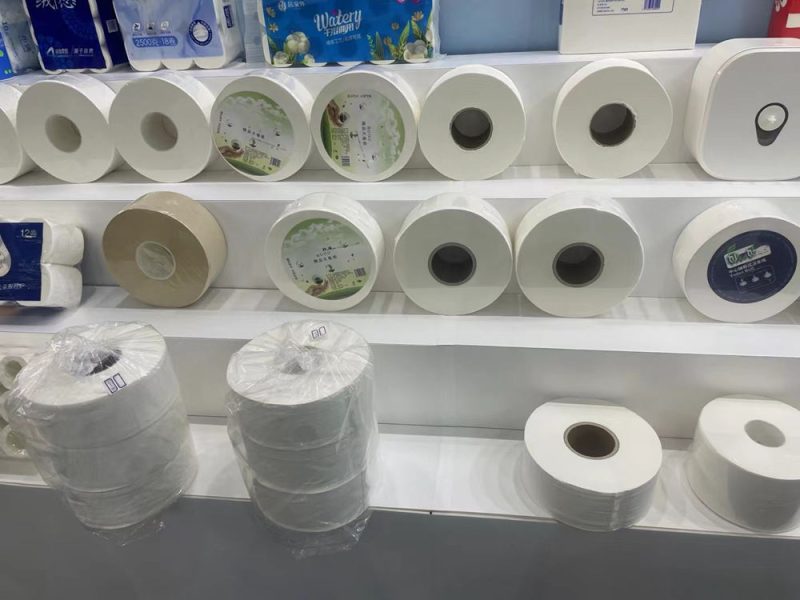
Ply separation impacts facility maintenance budgets and directly influences tenant satisfaction scores in high-traffic commercial buildings. When multi-ply rolls fail to stay bonded, they cause frequent dispenser jams, increase paper waste by up to 30%, and force custodial teams to perform extra maintenance rounds to clear shredded debris. This failure often stems from cost-cutting measures in the manufacturing phase that prioritize high-speed output over structural integrity, leading to a product that literally falls apart during use.
This guide analyzes the technical root causes of de-plying, from inadequate mechanical embossing to inconsistent glue application during high-speed winding. We break down the differences between edge-embossed and fully bonded jumbo rolls while explaining how restroom humidity and winding tension play a role in roll failure. By following these technical standards, procurement officers can establish a reliable testing protocol to vet wholesale samples and ensure product stability before committing to large-scale container orders.
The Frustration of De-Plying Commercial Toilet Paper
Layer separation in multi-ply tissue represents a mechanical failure in the bonding process that increases facility maintenance costs and material waste by up to 30%.
Manufacturing variables dictate whether multi-ply paper remains intact during heavy use. Inconsistent nip pressure during the 2026 production cycle often prevents mechanical embossing from properly interlocking fibers. When pressure fluctuates across the web, the mechanical bond fails, leading to sheets that peel apart before they even reach the dispenser. Top Source Hygiene utilizes high-pressure lamination to ensure these layers stay fused through the entire roll life.
Causes of Layer Separation in Multi-Ply Tissue
Ply separation occurs when the manufacturing environment fails to sustain a consistent bond between paper layers. Fluctuations in moisture content during the conversion process weaken the hydrogen bonds necessary for interlayer adhesion. If the paper becomes too dry or too damp during the embossing stage, the fibers refuse to lock, resulting in delamination.
- Fluctuations in moisture content weaken essential hydrogen bonds.
- Improperly calibrated adhesive chemistry causes delamination under mechanical stress.
- Fiber-to-fiber locking fails when production speeds exceed equipment stabilization limits.
Effects of Poor Tension Control During Winding
High-speed winding operations require precise mechanical stress management to maintain the structural integrity of jumbo rolls. Excessive web tension during the final conversion stage creates internal shearing forces. These forces pull the plies apart during storage, causing layers to slide against each other when a user pulls paper from a dispenser.
- Loose winding allows layers to slide, causing uneven dispensing and paper jams.
- Electronic closed-loop sensors now replace outdated mechanical tensioners for better consistency.
- Uniform winding density prevents rolls from collapsing or de-plying in high-capacity dispensers.
Fiber Bonding and Structural Integrity Standards
Raw material selection is the foundation of ply bonding. Short-fiber configurations offer limited surface area for effective adhesion, which significantly increases separation risks. We prioritize 100% virgin wood pulp with specific density requirements to ensure long-fiber interlocking remains stable. This engineering approach ensures that 2-ply and 3-ply tissues maintain their shape even in high-traffic environments.
- Fiber orientation optimization keeps multi-ply sheets aligned and bonded.
- Advanced paper engineering in 2026 focuses on high-purity, long-fiber wood pulp.
- Strict quality control prevents the use of low-grade, dust-heavy fibers that inhibit bonding.
Operational Challenges for Commercial Facilities
For high-traffic environments like airports or hotels, de-plying tissue is a significant financial burden. Separated layers frequently jam commercial dispensers, triggering unnecessary maintenance calls and guest complaints. Users typically pull double the amount of paper when plies delaminate to compensate for the thin, separated sheets, which rapidly drives up consumption rates.
- Ply separation leads to excessive linting and frequent dispenser malfunctions.
- Facility managers face higher per-unit costs due to avoidable product waste.
- Thin, separated sheets reduce the perceived quality and hygiene standards of the facility.
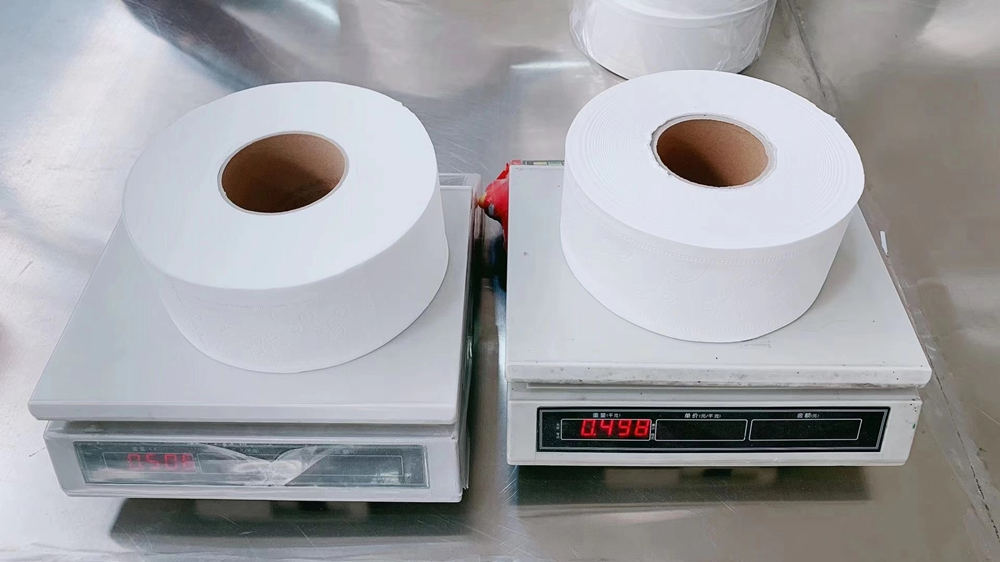
The Manufacturing Process: Gluing vs Mechanical Embossing
The choice between mechanical fiber interlocking and chemical adhesive bonding determines whether a jumbo roll maintains its integrity in high-humidity commercial environments or suffers from catastrophic ply separation.
Mechanical Embossing for Structural Integrity and Efficiency
Mechanical embossing serves as the primary method for bonding plies in high-volume industrial tissue production by reshaping cellulose fibers under intense pressure. This process utilizes CNC-machined rollers, typically crafted from hardened tool steel with a hardness rating of 54 to 90 Hs. By focusing pressure on specific convex geometries, the machine fuses the layers together without the need for external additives. We implement this technique to maintain high resource efficiency, as it eliminates manufacturing scrap by rearranging existing material rather than adding bulk that might interfere with rapid water breakdown.
- Eliminate manufacturing scrap by reshaping fibers instead of adding or removing material.
- Utilize CNC-machined rollers to maintain uniform design reproduction across high-volume production runs.
- Enhance functional properties like grip and surface friction to improve the user experience in commercial settings.
- Implement real-time monitoring of pressure and temperature to ensure consistent ply bonding across 2,860 tons of monthly output.
Glue Lamination for Multi-Ply Softness and Bulk
Adhesive-based bonding allows us to join multiple plies—essential for our premium 3-ply and 4-ply series—while preserving the paper’s natural loft. We apply water-based, OBA-free adhesives in precise patterns that cover only 15-20% of the surface area. This targeted application ensures the tissue remains soft and absorbent, avoiding the “stiffness” sometimes associated with heavy mechanical compression. For hospitality clients sourcing hotel-grade rolls, this method provides the “cloud-like” texture expected in luxury environments.
| Technical Feature | Mechanical Embossing | Glue Lamination |
|---|---|---|
| Bonding Agent | None (Physical fiber fusion) | Water-based, OBA-free adhesive |
| Best Use Case | Jumbo Rolls & Industrial JRT | Luxury 3-Ply to 5-Ply Rolls |
| Humidity Resistance | High (Unaffected by moisture) | Medium (Sensitive to >65% RH) |
| Absorbency Impact | +30% through air pockets | Preserves natural fiber loft |
- Apply targeted adhesive points to secure multi-ply paper without flattening embossed patterns.
- Maintain the high absorbency required for premium tissues by avoiding heavy mechanical compression.
- Select eco-friendly, water-based glues that align with 2026 sustainability standards and FSC requirements.
- Reduce the risk of ply separation in high-speed commercial dispensers through superior chemical bonding.
Comparative Performance in High-Traffic Environments
Operating environment significantly dictates which bonding method succeeds. In airports or malls where relative humidity often exceeds 65%, standard adhesive bonds can soften, leading to de-plying inside the dispenser. For these high-traffic zones, we recommend edge-embossed jumbo rolls. The mechanical bond remains stable regardless of moisture levels, ensuring the paper dispenses cleanly without shredding. For premium facilities, we often combine both methods—using edge embossing for structural stability and point-to-point glue lamination for a luxury feel.
- Prevent de-plying frustrations by using mechanical edge-embossing on high-capacity jumbo rolls.
- Optimize product durability for 2026 hygiene standards by combining both methods in premium tissues.
- Lower facility maintenance costs by ensuring paper rolls dispense cleanly without shredding.
- Verify bond strength through rigorous quality control testing for softness and durability before shipping global orders.
Build Your Unique Toilet Paper Brand

How Cheap Tension Control Leads to Loose Winding
Precision web tension separates professional-grade jumbo rolls from budget alternatives that collapse or de-ply when loaded into high-traffic commercial dispensers.
Web tension management serves as the backbone of roll structural integrity. In high-volume production, even a slight deviation in the winding force causes the paper layers to shift, resulting in “mushy” rolls that frustrate end-users and jam dispensers. While low-cost facilities rely on manual adjustments, professional operations treat tension as a dynamic variable that requires constant calibration.
Inconsistent Ply Bonding and Material Slippage
Inexpensive winding systems often fail to maintain uniform pressure across the width of the roll. This failure causes layers to slide against each other during the rewinding process, essentially breaking the bond created during the embossing stage. When the tension is variable, it creates air pockets between paper plies. This leads to a spongy roll that lacks the density required for industrial use and causes the paper to feel flimsy despite its actual GSM.
- Variable tension creates air pockets between paper plies, leading to a spongy roll that lacks structural integrity.
- Top Source Hygiene utilizes electronic sensors in its 2026 production lines to prevent the ply separation common in low-tier manufacturing.
- Mechanical brake systems typically struggle as the parent roll diameter decreases, resulting in uneven winding tightness.
Transitioning from Manual Brakes to Electronic Closed-Loop Control
The industry is moving away from manual brake systems because they cannot react fast enough to changes in roll diameter. Advanced factories prioritize closed-loop systems that adjust torque in real-time based on the current web speed and roll weight. This shift toward automated tension regulation reduces human error and material waste, ensuring every roll in a 40HQ container meets the same tightness specification.
- Advanced factories prioritize closed-loop systems that adjust torque in real-time based on current web speed.
- Manual adjustments in cheaper setups often lead to telescoping rolls, where the paper shifts laterally off the core during high-speed winding.
- Consistent winding tension ensures that jumbo rolls remain stable during long-distance shipping to North American and European markets.
Real-Time Monitoring and 2026 Industry 4.0 Integration
Modern manufacturing environments now integrate AI-driven diagnostics to detect tension fluctuations before they cause product defects. These smart sensors identify micro-stretches in the paper web, allowing the system to make immediate corrections without stopping the line. This technology is vital for maintaining high output levels without sacrificing the “Pure Quality” standard demanded by global distributors.
- Smart sensors identify micro-stretches in the paper web, allowing for immediate tension correction without stopping the line.
- Data-driven winding protocols help maintain a monthly capacity of 2,860 tons while adhering to strict ISO 9001 quality standards.
- Predictive maintenance on tension controllers prevents the unexpected downtime that often occurs in facilities using legacy hardware.
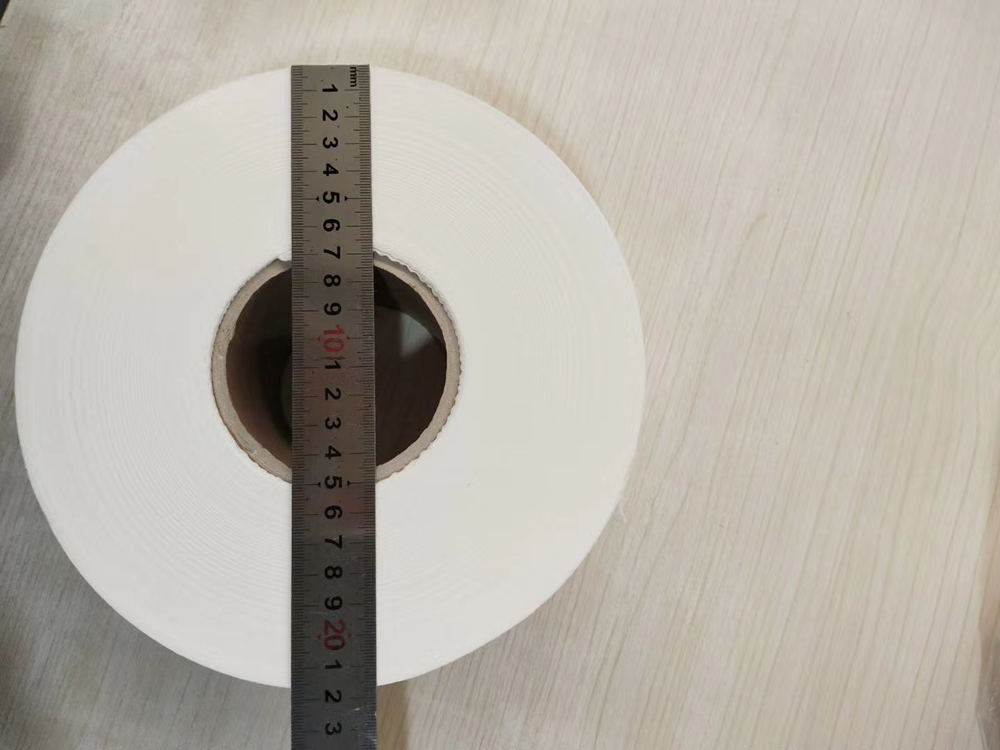
The Impact of High-Humidity Restrooms on Poorly Bonded Paper
Relative humidity levels exceeding 65 percent trigger rapid cellulose fiber expansion and adhesive softening, which compromises the structural integrity of multi-ply jumbo rolls in commercial environments.
Cellulose Fiber Expansion and Adhesive Softening
When restrooms lack proper ventilation, the air becomes saturated with moisture that cellulose fibers naturally absorb. These fibers act like microscopic sponges, expanding as they take on water. This physical expansion puts immediate mechanical stress on the bonds between layers. In many low-cost commercial rolls, the water-based adhesives used during the lamination process begin to re-soften under these conditions. Once the adhesive loses its chemical grip, the plys slide against each other, leading to a complete breakdown of the intended multi-ply structure.
- Cellulose fibers expand significantly when relative humidity passes the 65 percent threshold, disrupting paper web stability.
- Sustained moisture softens standard adhesives, causing a failure of both chemical and physical ply bonds.
- Top Source Hygiene utilizes moisture-resistant bonding techniques to ensure paper layers remain intact even in high-vapor restroom climates.
Accelerated Ply Separation and Material Distortion
Poorly bonded paper fails rapidly when exposed to the high-vapor environments common in high-traffic commercial restrooms. As the plys detach prematurely, the user experience suffers, often resulting in “bird-nesting”—where paper bunches up and creates massive waste. Beyond ply separation, moisture absorption causes visible distortion and warping of the entire jumbo roll. This warping increases friction against the dispenser housing, frequently causing the roll to jam. Internal testing in 2026 shows that poorly bonded paper loses up to 40 percent of its structural strength in these non-ventilated settings.
- Elevated humidity causes plys to detach, leading to increased maintenance calls and significant product waste.
- Moisture absorption leads to roll warping, which can jam commercial dispensers and prevent smooth rotation.
- Low-grade paper experiences a 40 percent drop in structural durability in unventilated, high-moisture environments.
Preserving Structural Stability Through Humidity Control
Facilities management teams must prioritize climate control in storage areas and restrooms to protect their paper inventory. Maintaining a stable environment prevents the adhesive failure modes that occur when moisture levels fluctuate wildly. Controlled environments ensure that the lamination and edge-embossing patterns created during manufacturing remain effective throughout the life of the roll. Proper storage is especially critical for 100% virgin wood pulp products, which offer superior performance only when their fibers remain at the correct moisture equilibrium.
- Maintaining a relative humidity range of 45 to 60 percent provides the best environment for bonded paper products.
- Climate-controlled storage prevents the degradation of adhesive integrity before the product reaches the dispenser.
- Proper environment management protects bulk inventory from atmospheric softening and structural failure.
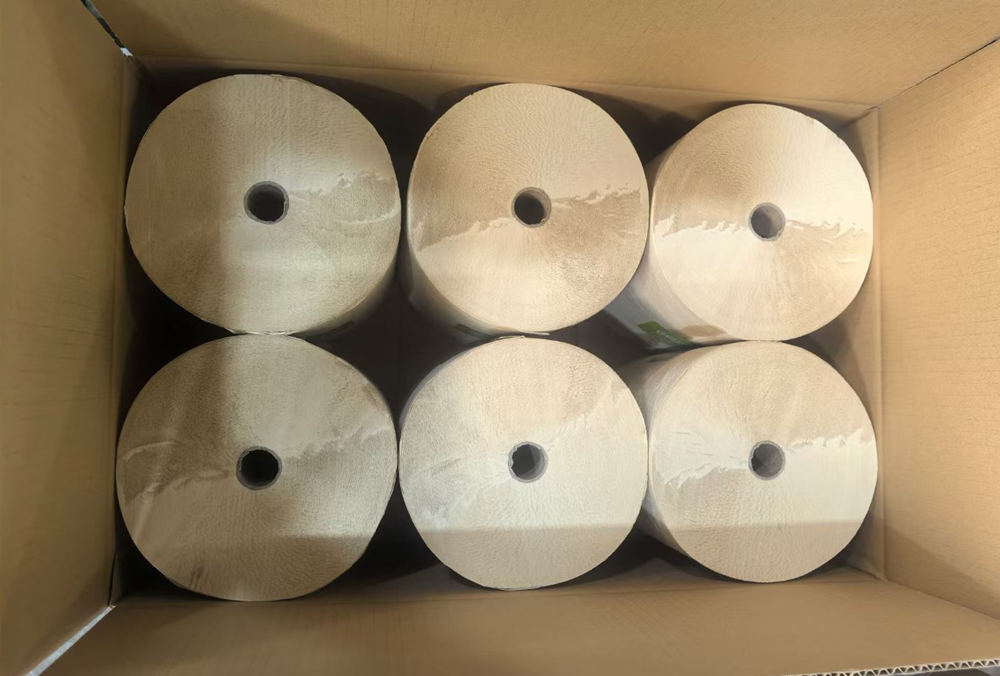
Sourcing High-Quality, Edge-Embossed Jumbo Rolls
High-performance jumbo rolls rely on the mechanical fusion of plies through precision-engineered embossing rollers and synchronized tension systems to eliminate de-plying in high-traffic commercial dispensers.
Technical Specifications of Embossing Rollers
Reliable ply bonding starts with the physical properties of the embossing hardware. Manufacturers must use tool steel rollers with a hardness rating between Hs 54-90. This hardness ensures that the convex patterns do not flatten or wear down over high-volume production cycles, which would otherwise result in weak bonding and mid-roll separation. Roller diameters typically range from 90mm to 300mm to provide the necessary surface area for consistent imprinting across the entire width of the web.
The precision of the engraving itself dictates how well the fibers interlock. Modern production lines utilize electromechanical precision cutting that operates at approximately 4,500 cells per second. This high cell density creates a superior convex geometry that mechanically fuses the plies together without the need for chemical adhesives. By selecting multi-row convex configurations, suppliers can offer a bond that withstands the mechanical stress of industrial dispensers while maintaining the paper’s softness and bulk.
| Technical Feature | Standard Market Spec | TSH Premium Spec |
|---|---|---|
| Roller Material & Hardness | Cast Iron / Hs 30-45 | Tool Steel / Hs 54-90 |
| Engraving Precision | ~1,500 cells/second | ~4,500 cells/second |
| Tension Control System | Mechanical / Manual | Automated Electronic Closed-Loop |
| Bonding Method | Basic Surface Press | Multi-Row Convex Mechanical Bond |
Automated Tension and Ply Alignment Systems
Advanced tension control is the primary defense against defects like loose winding or rib formation. We utilize electronic closed-loop tension systems that monitor the paper web in real-time, adjusting the speed and pressure of the unwinding and embossing phases instantly. This precision prevents material waste and ensures that every meter of a 1,000-foot jumbo roll maintains the same structural integrity as the first. Automation in feeding and alignment also guarantees that perforation lines remain consistent, which is a critical factor for high-capacity 40’HQ container orders where batch uniformity is non-negotiable.
- Electronic closed-loop systems reduce paper tearing and machine downtime.
- Real-time bonding validation minimizes the risk of de-plying in high-traffic airports or malls.
- Automated alignment ensures uniform roll diameters for seamless fit in standard commercial dispensers.
Evaluating Production Scalability and Certification
Sourcing for 2026 demands a partner that can scale without sacrificing quality standards. Top Source Hygiene operates with a 2,860-ton monthly capacity, providing the necessary volume for global distributors and large-scale hospitality groups. This capacity allows us to manage lead times effectively, typically delivering 40HQ containers within a 20-25 day production window. All facilities must demonstrate compliance with ISO 9001 for quality management, alongside FDA and FSC certifications to satisfy the regulatory and sustainability requirements of the North American and European markets.
Before committing to large-scale orders, we recommend verifying the factory’s ability to provide 100% OBA-Free (no optical brightening agents) virgin wood pulp. This ensures the product is safe for sensitive skin and meets the hygiene standards of premium hotel chains. A reliable supplier will provide pre-shipment visual verification, including photos and videos of the loading process, to ensure transparency and protect the buyer’s supply chain integrity.
Testing Wholesale Samples Before Committing to a Container
Technical sample validation acts as the primary safeguard for B2B procurement, ensuring that specified fiber density and ply-bonding integrity remain consistent during high-volume production runs.
Verifying Paper Ply and GSM Standards
Professional buyers evaluate physical specifications to ensure products meet 2026 market requirements for durability. We strictly control the GSM (grams per square meter) between 13g/m² and 22g/m² per ply. This precision prevents the “thinning” effect often found in low-cost alternatives, where manufacturers reduce fiber density to save costs. Inspecting the ply count across 2-ply to 5-ply configurations confirms the structural thickness necessary for premium commercial environments.
| Quality Metric | Standard Market Sample | TSH Factory Standard |
|---|---|---|
| Material Composition | Mixed or Recycled Pulp | 100% Virgin Wood Pulp |
| Chemical Safety | Traces of Fluorescent Whiteners | 100% OBA-Free |
| Ply-Bonding Method | Light Mechanical Embossing | High-Pressure Lamination |
| Disintegration Rate | Variable / Risk of Clogs | Rapid (Septic Safe Certified) |
- Inspect ply count ranging from 2-ply to 5-ply to confirm structural thickness.
- Measure the GSM to ensure the weight matches requested technical specifications.
- Check the texture of the 100% virgin wood pulp for consistent softness and absence of fluorescent whiteners.
Validating Absorbency and Material Integrity
Technical testing confirms whether jumbo rolls and hand towels perform under standard commercial usage. We apply tension to jumbo rolls to check for premature tearing or de-plying issues during dispensing. This is critical for high-traffic environments like airports or malls where mechanical dispensers put significant stress on the paper web. Non-destructive testing on facial tissues also assesses skin-friendliness and ensures a lint-free experience.
- Conduct liquid retention tests to verify high-absorbency claims for kitchen and hand towels.
- Apply tension to jumbo rolls to check for premature tearing or de-plying during dispensing.
- Perform non-destructive testing on facial tissues to assess skin-friendliness and lint-free properties.
Comparing Stock and Custom Sample Timelines
Top Source Hygiene coordinates sample production to allow buyers to test existing inventory and bespoke designs. Stock samples for immediate quality assessment typically ship within 2-3 days from our Hebei facility. If your project requires custom OEM specifications, allot approximately 10 days for production. This phase allows you to finalize private label artwork and unique sizing before we commit to a full 40HQ container run.
- Request stock samples for immediate assessment, which ship within 2-3 days.
- Allot 10 days for custom OEM samples including specific branding or unique sizing.
- Use the sample phase to finalize artwork and private label details before mass production.
Assessing Logistics and Shipping Protection
The validation process includes checking how well products withstand the transit environment. Our packaging utilizes mechanical compression and reinforced 5-ply export cartons to prevent crushing during international shipping. We maintain strict chain-of-custody protocols to ensure samples are not compromised by humidity or external pressure during the trial phase, reflecting our standard operating procedures for full container loads.
- Evaluate packaging durability to ensure units remain hygienic and intact during shipping.
- Utilize the free sample service to confirm the manufacturer’s ability to manage global shipping routes.
- Review chain-of-custody protocols to prevent sample distress from humidity or external pressure.
Conclusion
Selecting jumbo rolls built with high-pressure lamination and 100% virgin wood pulp prevents the common frustrations of ply separation in high-traffic environments. Proper manufacturing ensures that layers remain bonded under varying humidity levels, reducing maintenance calls and paper waste. Focusing on technical specifications like edge-embossing and tension control during procurement safeguards your facility’s operational standards.
Evaluate your current paper performance to identify if ply separation is impacting your supply overhead. You can reach out to our team at Top Source Hygiene to request detailed product samples or a 40HQ quotation tailored to your regional distribution needs.
Frequently Asked Questions
Why does 2-ply commercial toilet paper separate?
Separation, or delamination, typically occurs due to inconsistencies in the manufacturing process, such as improper nip pressure uniformity or inadequate moisture content control. When the mechanical bonding or adhesive chemistry between the two layers is insufficient, the web tension during the high-speed winding process causes the plies to burst or lose synchronization, leading to a split roll.
What causes jumbo rolls to de-ply in the dispenser?
De-plying in jumbo rolls is primarily caused by improper winding tension calibration during the converting process. If the roll is wound too loosely or if the interlayer bonding is weak, the centrifugal force and friction generated when pulling the paper from a commercial dispenser cause the plies to separate. This is often exacerbated by environmental humidity affecting the fiber bonding.
How is 2 ply commercial toilet paper glued together?
Manufacturers use advanced interlayer adhesive chemistry to bond plies. A specialized water-soluble glue is applied to the “peaks” of the embossed pattern on one ply before it is pressed against the second ply. This creates a secure bond that maintains structural integrity during use while ensuring the paper remains biodegradable and safe for plumbing systems.
What is edge embossing on toilet tissue?
Edge embossing is a mechanical finishing process where high-pressure rollers apply a decorative and functional pattern along the sides of the paper web. This process, often called knurling, fuses the fibers of the multiple plies together through physical compression. It ensures the layers remain aligned and prevents “tail-shedding” or ply separation at the start of the roll.
How to test the quality of wholesale jumbo toilet paper?
Quality testing involves evaluating four key metrics: ply bond strength (to ensure layers don’t separate), dry tensile strength (to measure durability), GSM consistency (to verify thickness), and dissolution performance (to ensure rapid water breakdown). A high-quality jumbo roll should demonstrate uniform embossing and a clean “tail tie” that allows for easy starting without tearing.