
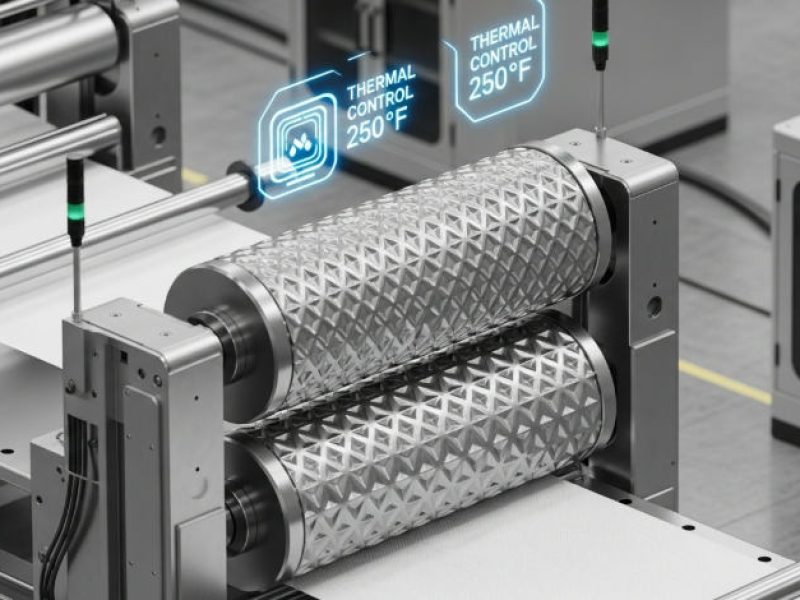
Embossed vs Flat choices directly affect restroom uptime and dispenser reliability, driving up cleaning and refilling labor and risking contract penalties, increased service calls, and avoidable product waste.
This guide functions as a technical SOP: it explains the visual and physical purpose of embossing, compares traditional flat 1-ply commercial tissue with edge-embossed and point-to-point processes, details how manufacturers crimp 2-ply sheets together without glue, and covers common failure modes that make jumbo rolls de-ply. You’ll find inspection checkpoints, material and embossing tolerances, test criteria for absorbency and bulk, and procurement language to help operations, facilities, and purchasing teams reduce dispenser issues, lower service costs, and tighten specifications.
The Visual and Physical Purpose of Toilet Paper Embossing
Embossing reshapes sheet geometry to deliver quantifiable gains in absorbency, bulk and ply bonding while acting as a tactile brand signal for premium positioning.
Decorative Embossing versus Micro-Embossing
Decorative embossing uses larger, visible motifs on the top layer to reinforce brand identity and signal softness. Manufacturers choose distinct floral, geometric or logo patterns so users instantly recognize premium positioning on shelf and in hospitality settings.
Micro-embossing applies fine, repeating textures that change the paper’s internal structure to improve hand-feel and stability without relying on large surface motifs. Engineers set pattern depth and frequency on engraved rollers or patterned plates; those parameters determine whether a pattern reads primarily as aesthetic or structural. Designers balance visual appeal with function to avoid creating weak points or reducing absorbency.
How Embossing Increases Absorbency and Perceived Bulk
Embossed pockets and raised areas increase surface area and create voids that trap and distribute liquid, which boosts absorbency—optimized patterns commonly produce water uptake increases of 60% or more. The three-dimensional relief also raises paper caliper; in some processes bulk rises 150%+ compared with flat tissue, making rolls feel significantly thicker for the user.
Pattern scale and depth act as primary tuning knobs: deeper, larger patterns increase bulk and retention but can reduce smooth hand-feel if overdone. Producers tune embossing parameters to ply count and GSM so absorbency and tactile properties match the product’s intended market position and performance claims.
Bonding Multi-Ply Layers and Preventing De-Ply
Embossing can mechanically bond plies without adhesive by compressing and crimping adjacent layers at contact points. Point-to-point embossing creates concentrated pegs and valleys that lock plies together; edge-crimping joins 2-ply sheets along seams to preserve alignment while allowing controlled separation during use. Some production lines combine emboss bonding with minimal protein-based adhesives where stronger lamination is required.
De-ply happens when emboss depth, pattern spacing, roller pressure, or winding tension stray outside spec. Jumbo rolls magnify those weaknesses because higher winding forces amplify any incomplete bonding. Maintain strict quality control on emboss roll engraving accuracy, roll surface hardness, press settings, thermal stability and winding tension to prevent layer separation in shipping and high-traffic use.
Brand Differentiation and Consumer Perception
Embossing functions as a visible quality cue: shoppers often equate intricate, three-dimensional patterns with softness and higher value. Brands use signature emboss motifs as a tactile logo to stand out at retail and in hospitality, where a distinct pattern reinforces brand memory during repeated stays.
Manufacturers select emboss designs that support targeted claims—soft, ultra-absorbent or hotel-grade—so aesthetic cues match measured performance. The final design must balance differentiation with manufacturability and cost controls to ensure consistent output across high-volume production runs.
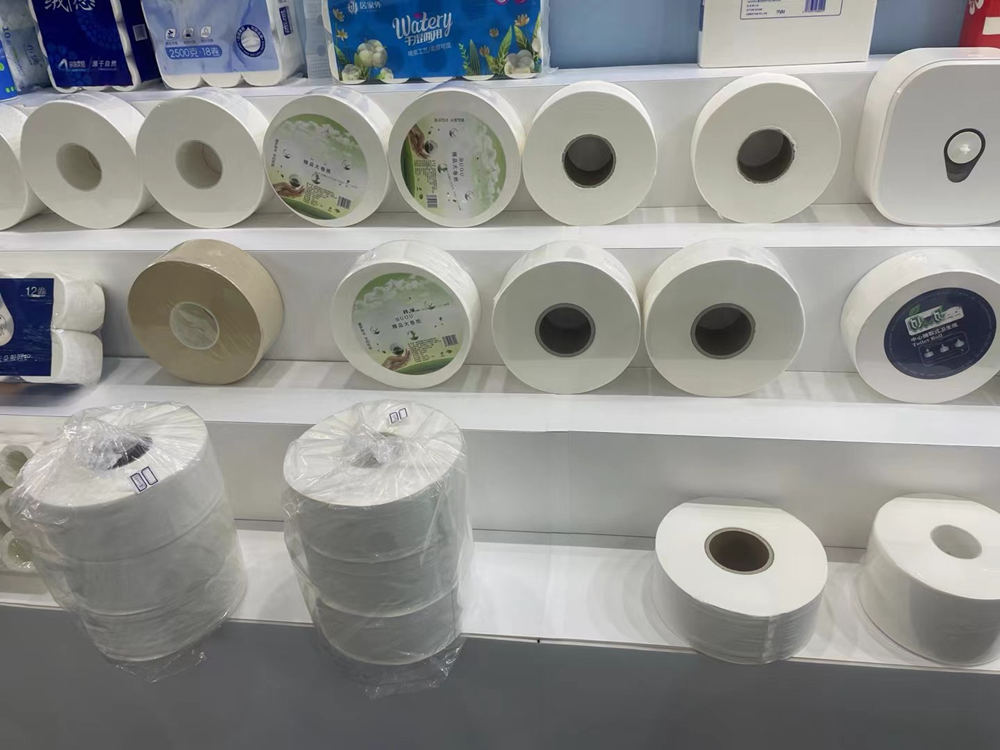
Flat Tissue: The Traditional 1-Ply Commercial Standard
Flat 1‑ply tissue reduces material and handling cost for high‑traffic facilities while deliberately trading off softness and durability for reliable plumbing performance.
Affordability and Cost Drivers
Facilities choose flat 1‑ply because it lowers raw-material spend: a single ply uses significantly less pulp than multi‑ply sheets, which drives down per‑roll cost. Suppliers reinforce that advantage with high‑count bulk packs and dense flat‑box formats that reduce handling and freight cost per unit.
Buying flat tissue changes operational economics. Procurement teams cut supply budgets, warehouse teams gain storage density, and distributors simplify logistics — but facilities accept lower perceived quality and shorter sheet life. For bidders, price, packaging efficiency, and predictable supply cadence matter more than premium feel.
Plumbing Compatibility and Rapid Breakdown
One practical advantage of 1‑ply flat tissue shows in the drains: single‑ply paper disintegrates faster in water, which reduces clog risk in older plumbing and septic systems. Maintenance teams in schools, airports, and legacy buildings often specify 1‑ply to cut service calls and extend drain life.
Manufacturers tune breakdown rates by selecting fiber types and adjusting sheet geometry, so buyers can request products that balance rapid disintegration with baseline strength. When plumbing reliability ranks ahead of guest comfort, fast‑dissolving 1‑ply wins the spec.
Performance: Absorbency and User Comfort
Absorbency and perceived softness scale with ply count and GSM; 1‑ply performs for basic hygiene but often requires more sheets per use. End users notice the difference, so operations that prioritize guest experience avoid 1‑ply in premium restrooms.
You can improve basic comfort without large cost increases by optimizing sheet size, minimal embossing, and fiber selection. For utility areas and high‑turnover restrooms, flat 1‑ply delivers the best cost-to-function match when you align dispenser type and expected usage patterns.
Environmental Certifications and Market Demand
Sustainability requirements now shape many commercial specs. Buyers often require FSC or EcoLogo certification even for low-cost 1‑ply lines, so manufacturers supply certified virgin or recycled‑content options to retain large contracts.
Procurement teams weigh biodegradability and supply‑chain transparency alongside price. Regional standards matter: North American and European buyers demand stronger proof points and certifications, while price sensitivity remains higher in other markets. Choose certified flat products when contract terms include environmental clauses.
Custom OEM Toilet Paper, Fast Delivery

Edge-Embossing: Crimping 2-Ply Sheets Together Without Glue
Edge-embossing forms a mechanical crimp at the sheet edge so two plies lock together without adhesive, shifting quality control from glue application to roll geometry, temperature control and process stability.
Mechanics of Edge-Embossing
Edge-embossing joins two plies by creating complementary deformations along the sheet edge so the layers interlock when compressed. Nested and knob-to-knob patterns use opposing embossing rolls with matched profiles; when the rolls compress the web the raised forms on one ply seat into the recesses of the other, creating a local mechanical interlock that resists normal handling and dispensing forces.
The bond depends on plastic deformation of fibers at the edge rather than adhesive coverage. Embossing depth, pattern geometry and nip pressure set the engagement profile; if you under-emboss you get weak slides and de-ply risk, if you over-emboss you tear fibers and reduce bulk. Designers treat edge-embossing as a converting operation that must balance interlock strength with sheet integrity.
Thermal versus Cold Embossing
Thermal embossing adds heat to pressure so fibers soften and set into a more permanent interlock. Typical production temperatures sit in the 200–270°F range; temperature plus dwell time and pressure determines final bond strength, which makes thermal the preferred choice for heavier basis weights or demanding dispensing environments. Cold embossing relies only on extreme nip pressure and carefully selected roll hardness; it can form acceptable bonds but usually yields lower peel strength and narrower operational margin.
| Parameter | Cold Embossing | Thermal Embossing |
|---|---|---|
| Operating Window | Ambient temperature; Precise roll hardness control. | 200–270°F typical; Requires heat management. |
| Pressure & Dwell | High nip pressure required for fiber interlock. | Moderate pressure with controlled dwell time. |
| Basis Weight Suitability | Best for light-to-medium basis weights. | Ideal for heavier basis weights (Multi-ply). |
| Bond Strength | Moderate; Relies on mechanical deformation. | Higher bond strength via thermal fiber fusion. |
| Energy & Maintenance | Lower energy use; Tighter maintenance tolerances. | Higher energy demand; Greater high-speed stability. |
| Critical Factors | Roll surface precision and nip alignment. | Moisture protection and optics management. |
Roller and Die Design Considerations
Opposing roll patterns must be complementary at the micro scale: knob geometry, crest depth and pitch set how teeth engage and how many fiber intersections form within the crimp. Roll hardness and backing stiffness tune penetration; softer rolls increase contact area but risk flattening bulk, harder rolls concentrate force and raise tear risk. Coatings and surface treatments extend roll life and preserve pattern fidelity across long runs.
Alignment and maintenance matter as much as the initial design. Mis-registration produces mis-crimps, partial interlocks and fiber tearing at the edge; run-to-run consistency requires periodic roll inspection, hardness checks and scheduled refacing or recoating to maintain performance at target line speeds.
Material, Moisture and Process Parameters
Material choices change how embossing behaves. Higher basis weight and bulk supply more fiber mass for a durable crimp, so edge-embossing scales better on 2-ply products with GSM toward the upper end of the spec sheet. Fiber composition matters: long-fiber virgin pulp plastically deforms and holds a crimp better than short-fiber recycled blends.
Moisture controls fiber plasticity during the nip—target ranges depend on furnish, but both under-dried and over-wet webs reduce bond quality. You must tune line speed, nip pressure and dwell time together: increase pressure or dwell to boost bond strength, but watch for web damage and bulk loss. For specialty substrates (coated papers, Teslin) adjust pattern geometry and thermal input accordingly.
Quality Control, Applications and Market Drivers
Quality control focuses on measurable bond metrics and visual geometry. Implement pull and peel tests, measure interlock geometry under microscope, and run roll-integrity checks on wound jumbo cores to detect weak zones that lead to de-ply. Track process variables—roll hardness, nip load, web moisture, and temperature—and correlate them to defect rates so you can set actionable control limits.
Market drivers favor glue-free lamination where operators want lower material costs, fewer regulatory headaches and faster converting. Edge-embossing fits toilet paper, jumbo rolls, kitchen towels and some flexible-packaging applications where a discreet, durable edge joint suffices. Manufacturers optimize embossing to prevent jumbo-roll de-ply, improve dispenser reliability and deliver the perceived thickness and softness that buyers now expect.
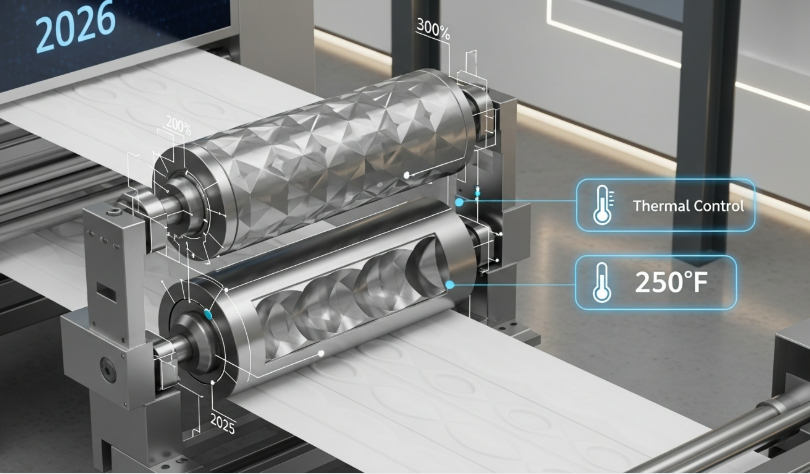
Point-to-Point Embossing for Quilted Volume and Absorbency
Point-to-point embossing presses discrete, precisely registered emboss elements into the web to create a quilted structure that increases bulk, traps liquid, and raises perceived thickness with minimal added fibre weight.
Definition and Historical Context
Point-to-point (PTP) embossing imprints individual raised points into the tissue at defined intervals, building a three-dimensional quilted surface rather than a continuous or nested relief. Engineers introduced the method in the 1960s to produce stronger visual texture and measurable increases in bulk and absorbency. Unlike nested or continuous embossing, PTP relies on distinct emboss points placed with positional accuracy, so each raised element acts as a controlled spacer and liquid channel within the sheet.
Registration and Synchronization Challenges
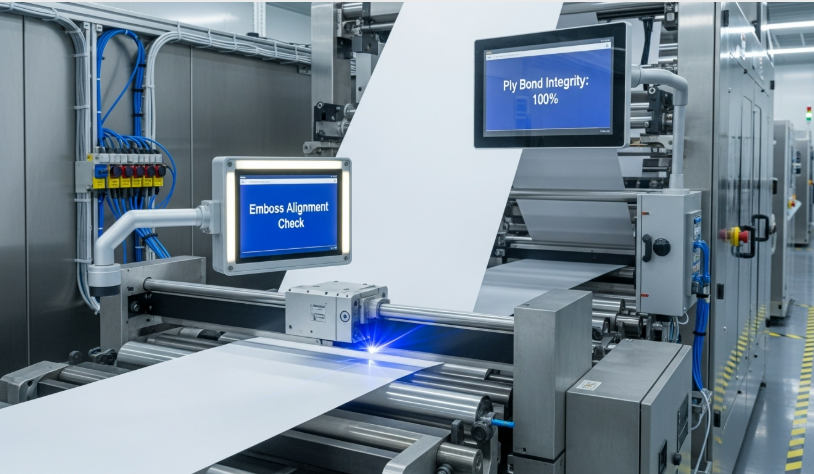
PTP demands tight mechanical and electronic registration between emboss rolls and the moving web. At running speeds, even small phase errors shift emboss points off-target, creating visible misalignment or weakly formed pegs. Two-ply lamination multiplies the problem: both webs must match point-for-point so pegs and valleys interlock correctly to form stable quilts and consistent glue contact.
Manufacturers control the risk with encoder-based phase locking, high-torque servo drives, active web-tension systems and inline vision checks. If timing drifts, lines produce scrap, visible defects and unplanned stops for realignment. Plan setup time, tighter SPC thresholds and predictive maintenance when specifying PTP on a high-speed converter line.
| Parameter | Point-to-Point (PTP) | Nested / Edge Embossing |
|---|---|---|
| Absorbency & Bulk | Higher absorbency uplift (commonly 30%+); Discrete liquid channels and real bulk. | Delivers adequate bulk; Lower quilt definition and absorbency than PTP. |
| Material Efficiency | High volume/bulk achieved with low added GSM (fiber savings). | Standard fiber utilization; Optimized for mass-market high-volume lines. |
| Technical Requirements | Requires CNC-patterned rolls and strict electronic registration. | Faster, more forgiving setup; Lower mechanical complexity. |
| Capital & QC Burden | Higher investment in tooling and rigorous quality control. | Lower capital expenditure and reduced QC maintenance. |
Benefits for Two-Ply Laminated Products
When manufacturers align emboss points across two plies, the sandwich creates interstitial air pockets that raise perceived thickness without proportionally increasing basis weight. Those pockets act as reservoirs: they trap and spread liquids across internal structure, improving retention and wet performance relative to flat or nested emboss patterns.
The result pairs a plush hand with functional absorbency. Measured gains vary by pattern and fibre, but expect meaningful improvements in water uptake and perceived softness when plies marry precisely and glue or mechanical bonding complements the quilt geometry.
Design, Patterning, and Aesthetic Effects
Design choices drive the balance between softness, bulk and strength. Point spacing, emboss depth and peg geometry control how much air the quilt traps and how fluid channels form. Fine, closely spaced points create a denser quilt and a softer hand; larger, deeper points increase visible bulk and open channels for liquid transport.
Designers also use PTP for branding: logo-embossing and distinctive repeat units create shelf differentiation and tactile cues that consumers link to quality. Small directional details—horizontal vs vertical elements, beveled peg edges—alter perceived thickness and haptic response, so pattern design remains both functional and marketing-led.
Manufacturing Trade-offs and Use Cases
Point-to-point raises unit cost through higher tooling, stricter quality control and more frequent setups, so manufacturers reserve it for premium retail and hospitality segments or specialist high-absorbency products. Lines need precision emboss stations, servo drives, and inline inspection; they also require operators trained in registration tuning and SPC for emboss quality.
For high-volume, price-sensitive commercial rolls, nested or edge embossing typically delivers the best cost-per-meter. Choose PTP when product positioning demands visible quilting, measurable absorbency gains or brand-specific surface effects that justify the added capital and operational discipline. Top Source Hygiene’s CNC-precision PTP option, for example, targets a ~30% absorbency lift while keeping GSM low—an efficient way to add perceived value without heavy raw-material increases.
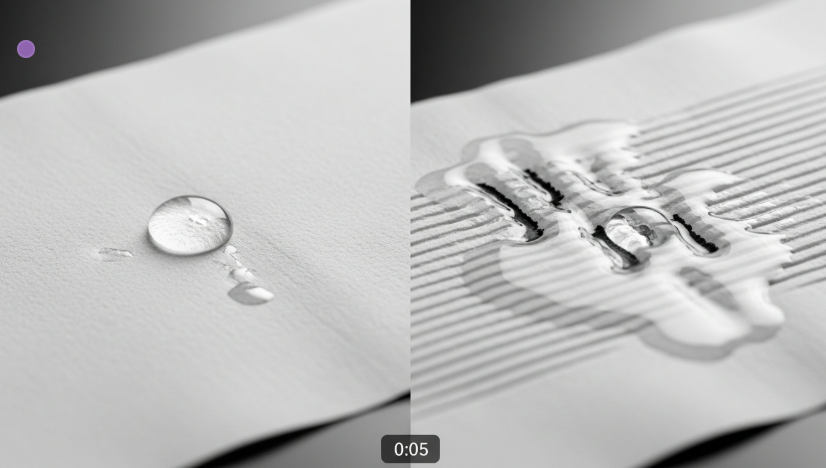
How Poor Embossing Causes Jumbo Rolls to “De-Ply”
Poor emboss transfer, inconsistent adhesive dosing, worn rollers and excessive winding heat each remove the mechanical interlock and glue coverage that hold plies together; fix with calibrated emboss pressure, controlled glue dosing, and scheduled roller maintenance.
Incomplete Emboss Pattern Transfer
When embossing fails to imprint full pattern depth or contact area, the mechanical interlock between plies drops. That lowers friction and grip at the sheet interface so layers slide apart during dispensing or when the roll edge sees stress.
- Cause: Low embossing pressure, misaligned rollers or reduced pattern depth from poor tooling tolerances.
- Effect: Reduced contact area and lower peel strength; separation initiates at weak regions and propagates under load.
- Detection: Visual check for faint patterns, simple peel tests to record separation force, and profilometer or gauge checks for emboss depth.
- Controls & design fix: Calibrate emboss pressure and roller alignment after maintenance, validate pattern depth regularly, and consider increasing pattern repeat or changing emboss geometry to boost inter-ply engagement without over-compressing the sheet.
Uneven Glue or Adhesive Application
Inconsistent glue dosing or placement leaves local gaps where plies lack bonding. Those weak zones act as crack starters: a single missed track or low-dot region lets the layers separate under a dispenser pull or edge stress.
| Failure Mode | Detection Method | Immediate Controls |
|---|---|---|
| Uneven adhesive dosing / missing glue tracks |
|
|
Practical controls include holding adhesive temperature and viscosity within spec, scheduling nozzle cleaning cycles, and using inline imaging or weight checks for coverage. Target a uniform glue coat weight and verify with grab-sample assays to prevent localized peel-prone areas.
Roller Wear, Surface Hardness and Pattern Mismatch
Embossing rollers that wear, abrade or change hardness give uneven imprinting and unpredictable sheet compression. Some roll sections over-compress fibers while others under-emboss, producing irregular glue contact and stress concentrations at edges that start de-plying.
- Cause: Abrasion, surface damage, thermal softening or incorrect roller hardening specs.
- Detection: Periodic roller inspection, hardness testing, and side-by-side comparison of new vs worn pattern samples.
- Maintenance: Replace or regrind rollers per schedule, control roller operating temperature, and keep documented roller life logs to avoid late-stage degradation.
- Specification: Define roller hardness ranges and pattern tolerances in SOPs to keep imprint fidelity consistent across production runs.
High-Speed Winding and Thermal Flattening
As line speed climbs, frictional heat and fast tension changes can flatten emboss features and disrupt glue set. Flattened emboss reduces mechanical interlock and uneven glue setting leaves weak bonds that reveal themselves as de-plying in the field.
- Cause: Excessive winding speed, high nip temperatures, and rapid tension shifts that compress emboss and alter adhesive cure.
- Effect: Lower emboss profile and variable peel strength across the roll.
- Mitigation: Balance throughput with emboss and glue set times, reduce nip heat, refine tension control, and qualify settings at target speeds before full production runs.
- Operational checks: Use inline temperature sensors, tension loggers and end-of-line peel tests as routine QC gates to catch thermal flattening early.
The Illusion of Thickness: How Embossing Tricks the Eye
A well‑designed emboss pattern creates visual and haptic cues—directional relief, beveling, and texture—that make a low‑mass sheet read and feel substantially thicker without changing GSM or ply count.
Directional Relief: Why Horizontal Patterns Look Thicker
Human vision registers horizontal strokes as wider and heavier than vertical ones. Designers exploit that bias by placing horizontal bands or waves across the roll face or sheet center so a single‑ply or thin multi‑ply product reads as fuller on sight. Use horizontal relief on consumer‑facing surfaces where quick visual assessment drives purchase decisions—shelf facing, packaging windows, and the exposed roll edge at dispenser openings.
Pattern scale matters: wide, low‑frequency embossing reads as structural bulk; fine, dense motifs register as surface texture rather than volume. Validate directional choices with mockups under typical retail and hospitality viewing distances to confirm the intended perception at a glance.
Bevels and Shadows: How Light Creates Depth
Embossing introduces tiny bevels and relief that interact with ambient light to produce highlights and shadows—the visual shorthand for depth. Beveled edges catch light and increase local contrast; deeper embossing amplifies that chiaroscuro cue and makes sheets look thicker, but it changes handfeel and can increase perceived roughness.
Place major relief elements with common light sources in mind: overhead fluorescent in public restrooms, warm spotlights in hotel bathrooms, and mixed lighting at retail. When you need the depth illusion without compromising softness, use shallow, multi‑directional embossing that scatters highlights while preserving pliability. Test samples in warm, cool, and fluorescent lighting to ensure consistent depth perception across environments.
Touch and Trust: Haptic Effects on Perceived Quality
Tactile cues drive instant quality judgments. Raised patterns, quilting, and micro‑textures make users attribute higher absorbency and softness to a product before they read any label claims. In procurement and specification, treat emboss pattern as a sensory feature on par with GSM and ply.
Match tactile design to your brand promise: soft, rounded embossing supports “gentle” positioning; pronounced quilting supports “absorbent” claims. Run blind touch panels and controlled sample tests with procurement teams and end‑users to quantify perceived improvements. Avoid aggressive texture that irritates skin or signals abrasiveness; aim for reassuring, comfortable relief patterns.
Practical Design Tactics: Using Embossing to Signal Softness and Absorbency
Combine visual and haptic strategies to deliver a credible sensory message without raising material cost. Pair point‑to‑point quilting in target zones (sheet center or edges users touch most) with subtle background embossing to imply both volume and softness. Use edge‑embossing or crimping when you need structural interlock without adhesive, and reserve heavier quilting for visible face areas where touch matters most.
Track the trade‑offs: deeper or denser embossing can reduce perceived softness, change roll winding tension, and increase dispenser friction. Run pilot runs and include embossing parameters in the product spec alongside GSM, ply, and perforation pitch so manufacturing and QC reproduce the intended sensory outcome consistently. Measure absorbency and bulk on lab samples to confirm pattern-driven gains before full production.
Conclusion
Proper embossing and ply-bonding techniques preserve sheet integrity, prevent jumbo rolls from de-plying, and maintain the absorbency and perceived thickness your customers expect. They also protect operators, meet workplace safety and regulatory requirements (including OSHA where applicable), and extend equipment service life.
Start by auditing your production-line settings and roll samples to confirm emboss patterns and bond strength meet your specifications. Contact Top Source Hygiene for certified samples, technical spec sheets, or a consultation on embossing options tailored to your SKUs and target markets.
Frequently Asked Questions
What is embossed commercial toilet paper?
Embossed commercial toilet paper is tissue that has been patterned by rollers to create surface designs that are both decorative and functional. Embossing increases bulk (often 150%+), water absorbency (measured gains around 60%+), and helps mechanically bond multi‑ply layers; manufacturers use decorative embossing for appearance and micro‑embossing for structural integrity. The result is improved cushioning, perceived softness and product differentiation.
Why does 2-ply jumbo toilet paper separate?
Two‑ply jumbo rolls can separate when the bonding between plies is insufficient. Common causes are weak or improperly matched embossing (low pressure or wrong pattern), inadequate thermal or adhesive bonding, excessive converting or rewind tension, humidity or differential stretch between plies, and stress at perforations or edges. Remedies include optimizing emboss pattern/pressure or micro‑embossing, adding spot adhesive or thermal bonding where appropriate, tightening web‑tension and rewind controls, and managing humidity during converting.
Is embossed toilet paper softer than flat tissue?
Embossing often increases perceived softness because it raises bulk and creates a cushiony surface that feels gentler to the touch; consumers commonly equate embossing with higher quality. True or intrinsic softness, however, is driven mainly by fiber type, creping and finishing — embossing modifies hand‑feel but does not replace higher‑quality pulp or finishing processes.
How do manufacturers stick 2-ply toilet paper together?
Manufacturers mainly use mechanical bonding via embossing: pressure (and sometimes heat) forces fibers between plies to interlock (point‑to‑point or patterned embossing). Some lines add small amounts of water‑based adhesive (food‑safe polymers) applied as dots or lines, or use thermal/ultrasonic bonding for extra security. For jumbo commercial tissue, embossing plus calendering is the most common bonding method because it provides strength without costly adhesives.
Edge embossed vs point-to-point toilet paper?
Edge‑embossed tissue places embossing along sheet edges or near perforations to add continuous edge strength and cleaner tear behavior; point‑to‑point (P2P) uses distributed spot embosses across the sheet to create many local bonds. Edge embossing favors perforation control and manufacturing alignment; P2P yields greater perceived bulk, cushioning and uniform hand‑feel. Choice depends on whether the priority is tear/perf performance (edge) or overall softness and absorbency (P2P).
Does embossing increase the cost of commercial tissue?
Yes — embossing adds cost through specialized equipment (engraved emboss rolls), additional processing steps, tooling amortization, energy and maintenance and occasionally slower line speeds. However embossing also increases bulk (letting you hit target thickness with less fiber) and enables premium pricing because of perceived quality. Net impact varies by scale and process but is typically a modest manufacturing cost increase that is often recovered by material efficiencies and higher retail or contract pricing.