Skip to content
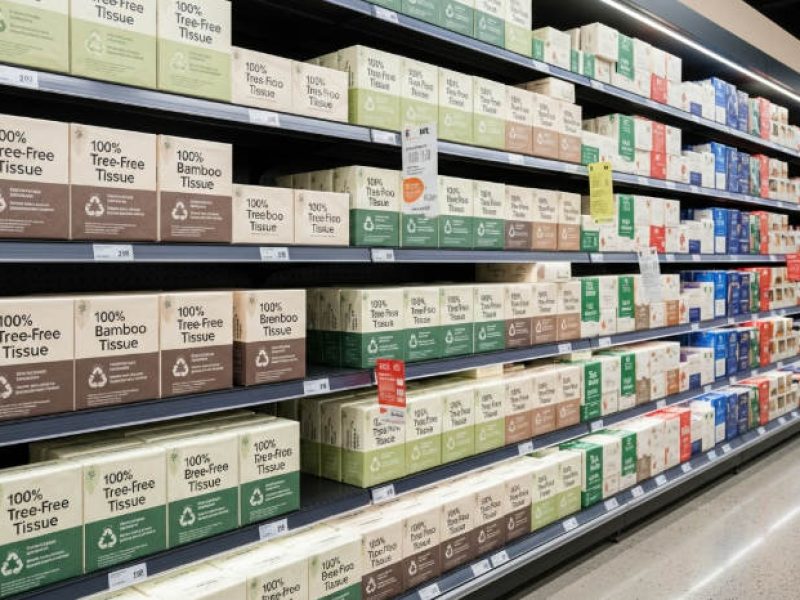
Australian retailers and hospitality groups face a tightening regulatory landscape as the 2026 sustainability benchmarks approach, requiring a shift toward 100% tree-free tissue solutions. With domestic bamboo cultivation still in its infancy, B2B buyers must navigate complex international supply chains to secure unbleached, 3-ply hypoallergenic products that meet local biosecurity and plastic-free mandates.
This report analyzes the infrastructure supporting the private label boom, highlighting how global OEM factories maintain a monthly production capacity of 2,860 tons to stabilize the Oceania market. We examine the APCO compliance roadmap, essential FSC and ISO certifications, and the logistics of sourcing from specialized hubs in Shandong to ensure your supply chain aligns with Australia’s strict national packaging targets.
Top 10 Facial Tissue Manufacturers in Australia: Market Share & Eco-Innovation
Quick Comparison: Top Picks
| Manufacturer | Location | Core Strength | Verdict |
|---|---|---|---|
| Top Source Hygiene | Mancheng, Baoding, China | Bamboo Facial Tissue, Jumbo Rolls | Best for high-capacity factory-direct OEM and eco-friendly customization. |
| ABC Tissue Products | Wetherill Park, NSW, Australia | Quill & Earth Smart Tissues, Private Label Supply Chains | Undisputed Australian domestic market leader with massive converting infrastructure and raw web storage. |
| Sorbent Paper Company | Box Hill, Victoria, Australia | Premium 3-ply Facial Tissues, Luxury Box Decks | Iconic local manufacturer operating at near full capacity; exceptional baseline finish quality. |
| Kimberly-Clark Corporation | Sydney, Australia | Kleenex, lotion-infused tissues | The go-to for premium brand trust and advanced softness technology. |
| Essity Aktiebolag | Australia (Regional) | Tork, professional hygiene tissues | Superior for professional-grade durability and high sustainability standards. |
| Encore Tissue | Laverton North, Victoria, Australia | 100% Recycled Private Labels, Eco Soft Packs | Highly efficient independent producer focused on domestic sustainable store brand runs. |
| Universal Paper Oceania | Australia Hubs / SADC Network | Multi-Ply Embossed Tissues, Commercial Hospitality Formats | Leader in high-frequency commercial utility and automated contract rewinding. |
| WEPA Hygieneprodukte GmbH | Global (AU Relevance) | 100% Recycled facial tissues | European leader providing premium-quality recycled content. |
| Cottonsoft (NZ Hub) | Auckland, New Zealand / Oceania Shipping | Sustainably Sourced Private Labels, Premium Multi-Webs | Best for regional trans-Tasman distribution pipelines with certified fiber networks. |
| Sofidel Group | Global (AU Distribution) | Biodegradable hygiene products | Innovative choice for low-carbon and biodegradable tissue solutions. |
Top Source Hygiene
Top Source Hygiene operates as a specialized manufacturing partner for businesses seeking large-scale production of facial tissues and paper products. By controlling the entire supply chain from their facility in Mancheng, China, they eliminate middleman markups and offer direct factory pricing. Their infrastructure supports a massive monthly output of 2,860 tons, making them a reliable choice for high-volume distributors in Australia and North America who require consistent stock levels and stringent quality control.
The company focuses on risk reduction through extensive certification and material transparency. They use FSC-certified sustainable materials and maintain compliance with ISO 9001 and FDA standards to ensure every shipment meets international safety requirements. This factory-level control allows for deep OEM/ODM customization, enabling brands to tailor product specifications, packaging, and material compositions—such as eco-friendly bamboo—to meet specific regional market demands.
At a Glance:
- 📍 Location: Mancheng, Baoding, China (Global Shipping to AU)
- 🏭 Core Strength: Bamboo Facial Tissue, Eco-Friendly Toilet Paper, Jumbo Rolls, Kitchen Towels
- 🌍 Key Markets: Australia, North America, Europe, Asia
Why We Picked Them:
| ✅ The Wins | ⚠️ Trade-offs |
|---|---|
|
|
ABC Tissue Products
ABC Tissue Products operates as an undisputed industrial anchor within the Australian consumer paper sector, managing massive high-speed converting facilities out of Wetherill Park, New South Wales. Sourcing high-grade base paper webs internationally, the company runs extensive contract packaging loops that supply store brands like Quil and Earth Smart for dominant grocery sectors. This extensive onshore footprint ensures that high-volume private label requirements pass through rigid technical safeguards before localized distribution cycles.
Their localized production framework emphasizes packing speed and dimension alignment to fit Oceania merchant layouts perfectly. By maintaining direct control over vast automated winding lines, ABC Tissue cuts out intermediary shipping bottlenecks, offering supermarket procurement teams an exceptionally agile contract option. This focused domestic setup absorbs regional demand shocks, allowing distributors to manage lean safety stocks while securing consistent quality benchmarks.
At a Glance:
- 📍 Location: Wetherill Park, NSW, Australia
- 🏭 Core Strength: Quill & Earth Smart Tissues, Private Label Supply Chains, High-Speed Converting Lines
- 🌍 Key Markets: Major Australian supermarket chains, institutional wholesalers, commercial buyers
Why We Picked Them:
| ✅ The Wins | ⚠️ Trade-offs |
|---|---|
|
|
Sorbent Paper Company
Sorbent Paper Company operates as an elite manufacturing presence within the Australian paper industry, centering its high-output conversion mills in Box Hill, Victoria. The company focuses on crafting premium 3-ply and 4-ply boxed facial tissues and retail packs, ensuring that fiber purity meets meticulous softness and sheet strength standards before final store placement. This hands-on domestic execution gives local distributors a reliable choice for upscale grocery presentation loops.
The brand balances its extensive retail presence with high industrial standards, using advanced creping and lamination assets to maximize paper bulk. Sourcing and slitting fibers onshore protects regional buyers from maritime logistics congestion, reducing procurement risks during peak health seasons. For corporate buying teams requiring dependable, luxury-grade household and facility paper lines, Sorbent ensures total batch-level tracking metrics.
At a Glance:
- 📍 Location: Box Hill, Victoria, Australia
- 🏭 Core Strength: Premium 3-ply Facial Tissues, Luxury Box Decks, Consumer Toilet Paper Lines
- 🌍 Key Markets: High-end retail markets, premium corporate offices, pharmacy chains across Oceania
Why We Picked Them:
| ✅ The Wins | ⚠️ Trade-offs |
|---|---|
|
|
Kimberly-Clark Corporation
Kimberly-Clark Corporation maintains a dominant position in the Australian consumer goods sector by prioritizing local execution through its sophisticated manufacturing hubs. By operating advanced production facilities within the Sydney region, the company ensures tight factory control over the entire fabrication process for its Kleenex brand. This localized approach allows for immediate oversight of material quality, specifically focusing on the high-absorbency and softness standards that professional buyers and retail chains expect.
The company effectively reduces supply chain risks for institutional buyers and supermarkets by maintaining these domestic operations. Instead of relying on long-haul logistics, their local presence facilitates a more responsive distribution model for lotion-infused and premium facial tissues. This strategy guarantees that high-demand hygiene products meet rigorous Australian standards while providing a reliable inventory flow that mitigates the common pitfalls of international sourcing.
At a Glance:
- 📍 Location: Sydney, Australia
- 🏭 Core Strength: Kleenex facial tissues, lotion-infused tissues
- 🌍 Key Markets: Supermarkets, institutional buyers across Australia
Why We Picked Them:
| ✅ The Wins | ⚠️ Trade-offs |
|---|---|
|
|
Essity Aktiebolag
Essity operates as a global leader in the hygiene and health space, maintaining strict factory control over its production lines to ensure consistent quality across its professional and retail tissue ranges. By focusing on FSC-certified materials, the company provides Australian wholesalers and supermarkets with a reliable supply of facial and professional tissues that meet rigorous international sustainability standards. Their local execution in the Australian market allows for streamlined regional operations, helping businesses secure essential paper products while adhering to strict environmental benchmarks.
The company mitigates supply chain risks by overseeing the entire manufacturing process, from raw material sourcing to the final packaging of Tork-branded professional hygiene solutions. This hands-on approach ensures that high-volume retail buyers and institutional distributors receive products with uniform durability and performance. By prioritizing a reduced environmental footprint, Essity supports regional partners in meeting corporate social responsibility goals without compromising the structural integrity or softness of their paper goods.
At a Glance:
- 📍 Location: Australia (Regional Operations)
- 🏭 Core Strength: Facial tissues, professional hygiene tissues (Tork)
- 🌍 Key Markets: Institutional wholesalers, AU supermarkets
Why We Picked Them:
| ✅ The Wins | ⚠️ Trade-offs |
|---|---|
|
|
Encore Tissue
Encore Tissue operates highly optimized, automated paper conversion lines out of its modern plant in Laverton North, Victoria, providing a direct domestic sourcing route for custom retail products. The facility focuses on transforming post-consumer recovered fiber and sustainable pulp into high-turnover soft pack and corporate facial tissue lines. This localized setup gives Australian procurement teams an agile, port-independent supply anchor that operates entirely free from transcontinental shipping lag times.
The company prioritizes APCO compliance and plastic-free wrapping formats across its modern production lines, facilitating easy integration with supermarket sustainable house-brand parameters. By keeping manufacturing close to key eastern metropolitan hubs, Encore helps distributors maintain lower safety stocks and improve cash flow. Sourcing from their automated loops reduces capital exposure for private label launches, offering solid volume stability.
At a Glance:
- 📍 Location: Laverton North, Victoria, Australia
- 🏭 Core Strength: 100% Recycled Private Labels, Eco Soft Packs, Commercial Hygiene Formats
- 🌍 Key Markets: Australian independent grocers, national discount chains, commercial wholesalers
Why We Picked Them:
| ✅ The Wins | ⚠️ Trade-offs |
|---|---|
|
|
Universal Paper Oceania
Universal Paper Oceania operates high-capacity commercial paper lines through localized logistics networks, providing a stable procurement bridge for away-from-home channels, medical complexes, and corporate procurement bodies. Their structural focus optimizes paper thickness and steady absorbency thresholds, supplying facility management firms that require consistent technical specifications across multi-tenant buildings. Local execution from their regional operations centers guarantees predictable replenishment loops.
The company’s contract manufacturing processes focus on raw material uniformity, utilizing advanced embossing technology to bond tissue webs cleanly without excessive stiffness. Sourcing from their automated conversion lines limits logistical exposure, allowing commercial buyers to secure bulk case-packs optimized specifically for high-occupancy cleaning networks. This dedicated utility profile ensures long-term contract reliability across demanding corporate accounts.
At a Glance:
- 📍 Location: Australia Hubs / SADC Network
- 🏭 Core Strength: Multi-Ply Embossed Tissues, Commercial Hospitality Formats, System Dispensers
- 🌍 Key Markets: Hospitality groups, corporate office complexes, regional institutional distributors
Why We Picked Them:
| ✅ The Wins | ⚠️ Trade-offs |
|---|---|
|
|
WEPA Hygieneprodukte GmbH
WEPA Hygieneprodukte GmbH operates as a major force in the European hygiene market, now bringing its specialized focus on sustainability to the Australian landscape. The company maintains strict factory control over its production lines to ensure that every facial tissue meets high environmental standards. This vertical integration allows them to deliver consistent quality to eco-conscious retailers and institutional sectors who require high-volume, 100% recycled paper products without compromising on softness or durability.
By managing the entire supply chain from raw material sourcing to final packaging, WEPA reduces risks associated with product purity and supply disruptions. Their entry into Australia provides local businesses with a reliable partner capable of meeting rigorous international eco-innovation benchmarks. The emphasis on local execution ensures that their European manufacturing expertise translates effectively into the specific needs of the Australian market, offering a high-tier alternative to traditional virgin-fiber hygiene brands.
At a Glance:
- 📍 Location: Global with AU relevance
- 🏭 Core Strength: Recycled facial tissues, eco-hygiene products
- 🌍 Key Markets: Eco-retailers, institutional sectors
Why We Picked Them:
| ✅ The Wins | ⚠️ Trade-offs |
|---|---|
|
|
Cottonsoft (NZ Hub)
Cottonsoft handles significant, highly structured tissue supply programs across the Oceania region, utilizing its extensive regional manufacturing infrastructure in New Zealand to ship directly into major Australian ports. Sourcing from verified, certified global fiber tracks under the broader APP network, the firm specializes in executing container-scale private label programs, manufacturing premium multi-ply soft pack and box configurations tailored for dominant grocery store networks.
The company utilizes highly automated converting machinery rows, ensuring uniform sheet thickness and absolute weight parameters across bulk wholesale orders. This integrated structure insulates large-scale retail buying departments from localized raw pulp spikes, stabilizing contract pricing over multi-year framework agreements. For Australian distributors capitalizing on trans-Tasman shipping closeness, this provider offers exceptional volume scalability.
At a Glance:
- 📍 Location: Auckland, New Zealand / Oceania Sourcing
- 🏭 Core Strength: Sustainably Sourced Private Labels, Premium Multi-Webs, Trans-Tasman Logistics
- 🌍 Key Markets: Australian grocery chains, regional wholesale buying groups across Oceania
Why We Picked Them:
| ✅ The Wins | ⚠️ Trade-offs |
|---|---|
|
|
Sofidel Group
Sofidel Group operates as a primary manufacturer in the global hygiene industry, specializing in the production of facial tissues and eco-paper products. The company maintains strict factory control across its international facilities to ensure that every product line meets specific environmental standards. By managing the end-to-end manufacturing process, they provide wholesalers and large-scale supermarkets with a stable supply chain that emphasizes local execution and reliable delivery schedules.
The organization focuses on risk reduction through the implementation of low-carbon production methods, addressing the growing demand for sustainable paper goods. Their technical approach to manufacturing utilizes innovative biodegradable materials that minimize environmental impact without compromising product durability. For procurement teams, this commitment to green technology ensures compliance with modern sustainability mandates while maintaining the high quality expected in the hygiene sector.
At a Glance:
- 📍 Location: Global with AU distribution
- 🏭 Core Strength: Facial tissues, eco-paper hygiene
- 🌍 Key Markets: Wholesalers, supermarkets
Why We Picked Them:
| ✅ The Wins | ⚠️ Trade-offs |
|---|---|
|
|
Australia’s Green Transformation: The Shift Toward 100% Tree-Free Tissues
Australia is rapidly transitioning toward 100% tree-free tissue solutions, primarily utilizing bamboo to meet 2026 sustainability targets. While domestic large-scale bamboo cultivation is currently limited, local brands bridge the gap through strictly certified international partnerships, focusing on unbleached, 3-ply hypoallergenic products that eliminate plastic and chemical additives like PFAS.
Rising Demand for Bamboo and Tree-Free Alternatives
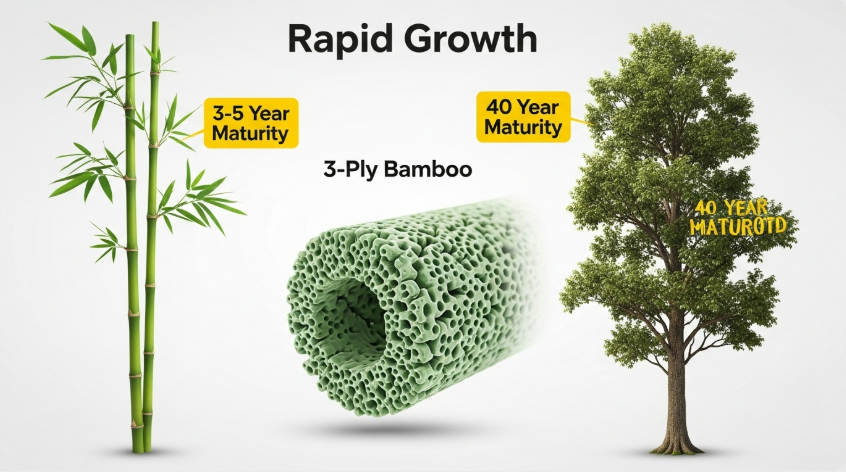
The Australian tissue market is undergoing a significant shift as bamboo becomes the primary driver for achieving regional sustainability milestones. Bamboo grows over 1,000 times faster than traditional hardwood trees, allowing it to provide a highly renewable fiber source that alleviates pressure on native forests. This rapid regeneration cycle makes it a critical material for retailers aiming to align with the 2026 environmental benchmarks set by industry regulators.
Eco-conscious retailers and the hospitality sector are increasingly prioritizing 100% tree-free tissues to satisfy growing consumer demand for biodegradable and plastic-free options. Current market preferences lean heavily toward unbleached, 3-ply facial tissues. These products are specifically engineered to be hypoallergenic and free from chlorine, dyes, and PFAS, ensuring they meet the health and safety standards required for sensitive skin applications in both residential and commercial settings.
Supply Chain Dynamics: Sourcing and Certification Standards
Because Australia lacks the infrastructure for large-scale bamboo cultivation, local manufacturers such as Eco Cheeks and Oobamboo rely on strategic international sourcing. These brands typically partner with established production hubs in regions like Shandong, China. To ensure these imports meet Australian expectations for quality and ethics, suppliers must adhere to rigorous compliance benchmarks, including ISO 9001 for quality management and ISO 14001 for environmental systems.
Reliable sourcing from global OEM partners like Top Source Hygiene allows Australian brands to maintain a consistent supply of FSC-certified materials. These certifications are vital for navigating Australian biosecurity regulations and confirming that the bamboo pulp is sourced from responsibly managed forests. By maintaining these high standards, AU brands can offer private label products that combine ethical production with the strict hygiene requirements of the local market.
The Private Label Boom: How Global OEM Factories Power AU Supermarket Chains
Australian supermarket chains are increasingly bypassing traditional brands by partnering directly with global OEM factories to scale sustainable bamboo tissue lines. These partnerships leverage massive production capacities, such as 2,860 tons monthly, and specialized logistics to meet the region’s rising demand for eco-certified, hypoallergenic hygiene products while maintaining competitive retail pricing.
The Infrastructure of Australian Private Label Growth
Major Australian supermarket chains utilize global OEM networks to rapidly scale their bamboo tissue offerings. By working directly with large-scale manufacturers, retailers bypass traditional brand premiums and gain better control over their supply chains. Factories like Top Source Hygiene provide a consistent monthly production capacity of 2,860 tons, which is essential for maintaining stock levels in high-volume retail environments across Oceania.
The shift toward direct-to-factory models allows retailers to eliminate intermediaries, effectively lowering the cost of goods sold. This strategic sourcing enables supermarkets to increase their market share by up to 10% through the introduction of eco-designed products that appeal to environmentally conscious consumers. These production hubs, primarily located in regions with high bamboo density like China’s Shandong province, fill the void created by Australia’s limited domestic bamboo cultivation capacity.
Technical Customization and Compliance Standards
OEM partners offer a high degree of technical flexibility, providing options ranging from 2-ply to 5-ply thickness using 100% FSC-certified bamboo pulp. This level of customization ensures that products meet Australia’s 2026 sustainability benchmarks and consumer preferences for softness and durability. Suppliers such as CND Onsea Paper and ILife focus on unbleached, hypoallergenic fibers that comply with international safety standards, including FDA and EU AP(2002) regulations.
Customization extends beyond the tissue itself to the primary and secondary packaging. Manufacturers now offer plastic-free wraps and branded boxes specifically tailored for the aesthetic requirements of the Australian healthcare and hospitality sectors. These technical specifications, which include steam-sterilization and dust-free production, address specific regional needs for hygiene compliance and the prevention of consumer allergies.
Logistics and Strategic Sourcing for Oceania
Efficient logistics are critical for the success of private label programs in Australia. Specialized shipping routes from Asian manufacturing hubs ensure that 40-foot containers reach Sydney or Melbourne within 10 to 20 days. To further streamline the process, Australian-based providers like Whisper offer integrated warehousing and local logistics support, acting as a one-stop-shop for supermarket chains that require just-in-time delivery for their house brands.
Rigorous supplier vetting is a cornerstone of this sourcing strategy, as importers must navigate Department of Agriculture, Fisheries and Forestry (DAFF) regulations regarding pests and contaminants. By securing long-term contracts with ISO9001 and ISO14001 certified factories, Australian retailers ensure a stable supply of biodegradable products that align with the National Packaging Targets. This integrated approach combines global manufacturing scale with local distribution expertise to sustain the growth of the green tissue market.
Scale Your Brand with Premium OEM Toilet Paper Manufacturing
APCO Compliance Roadmap: Meeting Australia’s Strict National Packaging Targets
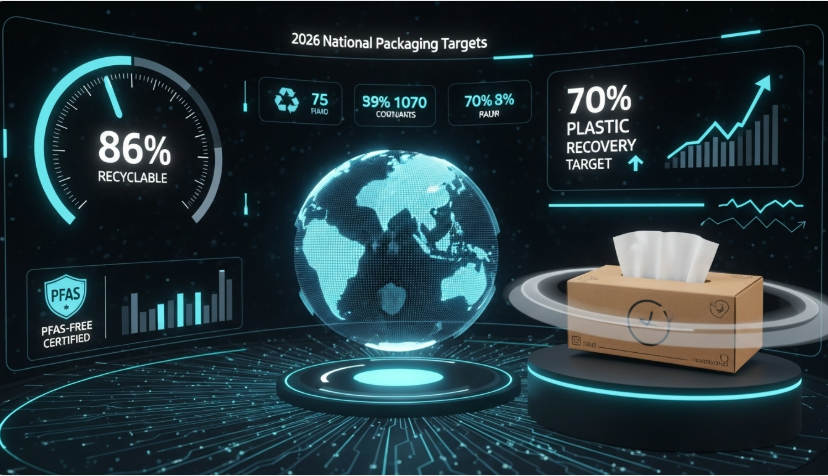
The Australian Packaging Covenant Organisation (APCO) oversees the transition toward 100% reusable, recyclable, or compostable packaging, a mandate that will see mandatory compliance measures begin in 2026. While the industry has reached 86% progress on general recyclability, critical gaps remain in plastic recovery (currently at 19%) and the integration of 50% average recycled content across all material streams.
Core 2026 Sustainability Benchmarks for Paper and Plastic Packaging
Australia’s national packaging targets serve as the primary regulatory framework for tissue manufacturers and retailers. Current data indicates that while 86% of packaging in the market meets the definition of reusable, recyclable, or compostable, significant work is required to meet the 2026 threshold. For the tissue sector, this involves a shift toward mono-material cardboard packaging and the elimination of plastic windows in facial tissue boxes to ensure 100% curbside recyclability.
The recovery of plastic films remains a substantial hurdle, with current recycling rates sitting at just 19% against a 70% national target. Manufacturers are increasingly looking to bridge this gap by adopting the Australasian Recycling Label (ARL), which provides clear disposal instructions to consumers. Furthermore, the 50% average recycled content requirement is driving innovation in secondary packaging, such as transit wrap and outer cases, where recycled polymers are replacing virgin plastics to meet evolving industry standards.
APCO Framework and the Phase-out of Single-Use Material
The Australian Packaging Covenant Organisation coordinates the value chain between industry and government to eliminate problematic materials. Since the baseline was established in 2018, there has been a 40% reduction in unnecessary single-use plastics. This progress is monitored through the Sustainable Packaging Guidelines (SPGs), which provide ten core principles for resource efficiency and litter reduction. Tissue manufacturers use these guidelines to self-assess their production lines, focusing on reducing chemical additives and ensuring fibers are sourced from responsibly managed forests or rapidly renewable sources like bamboo.
Compliance pathways for OEM production now prioritize the removal of PFAS and other harmful chemicals from the manufacturing process. By aligning with the National Packaging Targets, brands can secure their position in major supermarket chains like Woolworths and Coles, which increasingly demand verified sustainability credentials. As mandatory reporting cycles approach in 2026, the focus shifts toward traceability in the supply chain, ensuring that every component—from the tissue fiber to the ink on the box—meets the rigorous environmental standards set by the Australian government.
Safe Passage: Navigating Biosecurity and Import Regulations for AU Paper Products
Importing bamboo paper products into Australia requires strict adherence to Department of Agriculture, Fisheries and Forestry (DAFF) biosecurity protocols, FSC sustainability certifications, and chemical-free processing standards to ensure customs clearance and consumer safety.
DAFF Compliance and Biosecurity Challenges for Bamboo Imports
Australia currently lacks the infrastructure for large-scale bamboo cultivation, which creates a significant reliance on imports from specialized regions in China, particularly the Shandong and Sichuan provinces. This dependency necessitates strict oversight by the Department of Agriculture, Fisheries and Forestry (DAFF). Regulatory protocols mandate rigorous inspections for pests, diseases, and organic contaminants that could threaten local ecosystems.
To navigate these hurdles, importers focus on finished products rather than raw materials. Using certified, traceable bamboo pulp is essential for bypassing the intensive quarantine issues typically associated with raw timber or grass processing. Top Source Hygiene supports Oceania-bound shipments by maintaining regional hygiene compliance and meeting international safety regulations to streamline the entry process into Australian ports.
Essential Certifications for Sustainable and Ethical Sourcing
FSC certification serves as the primary benchmark for bamboo facial tissues entering the Australian market. This verification confirms that the bamboo is harvested from responsibly managed forests with zero habitat disturbance. Beyond forestry, ISO 9001 and ISO 14001 standards provide the necessary framework for quality and environmental management systems that Australian eco-retailers demand from their global supply chains.
Social responsibility is another critical layer of the vetting process. Australian importers increasingly scrutinize social audits, such as BSCI, to confirm ethical manufacturing practices at the factory level. The 2026 regulatory environment suggests a shift toward longer vetting periods, often exceeding five months, to ensure that suppliers can demonstrate long-term adherence to these international benchmarks before entering into supply contracts.
Chemical-Free Processing and Health Standards
Health regulations in Australia prohibit several common industrial chemicals in imported paper products. Tissues must be free from elemental chlorine (ECF), BPA, PFA, and synthetic fragrances. Unbleached, hypoallergenic processing has become the industry standard for 2-ply and 3-ply bamboo tissues, ensuring the finished goods are safe for consumers with sensitive skin or allergies.
Compliance requirements also extend to the exterior of the product. Packaging must align with APCO and national import targets, which favor plastic-free and biodegradable materials. Verifying that products consist of 100% virgin pulp without the use of fluorescent whiteners is a mandatory step for clearing customs, whether the tissues are destined for residential use or high-traffic commercial environments.
Frequently Asked Questions
Who are the largest domestic tissue manufacturers in Australia?
The Australian market is dominated by ABC Tissue (38% local conversion share, $608.4 million projected 2026 revenue), Kimberly-Clark Pacific Holdings (35% share, $631.3 million projected 2026 revenue), and Essity Holding Australia. Other significant players include Sorbent Paper Company, which operates at near full capacity in Victoria, and Encore Tissue, which focuses on private label and recovered paper products.
Is bamboo facial tissue actually better for the Australian environment?
While bamboo grows rapidly and requires fewer chemicals than wood pulp, its environmental benefit in Australia is often offset by high transport emissions. Shipping bamboo tissue from China can emit nearly 2,400 kg CO2 equivalent per unit. Local recycled paper options or FSC-certified bamboo with verified carbon offsets are generally considered more sustainable for the Australian context.
What are the specific APCO standards for tissue packaging in 2026?
By 2026, tissue manufacturers must comply with updated Sustainable Packaging Guidelines (SPGs) and mandatory reporting under the National Packaging Targets. While no tissue-specific standard exists, frameworks focus on 100% recyclable or compostable materials, PFAS-free chemicals, and the clear application of Australasian Recycling Label (ARL) graphics.
How long does it typically take to ship bulk tissue to Sydney or Melbourne?
Domestic shipping for bulk tissue typically takes 1 to 5 business days. Sydney deliveries from Brisbane-based suppliers generally arrive in 2 days, while Melbourne metro deliveries range from 1 to 4 days. International orders from global OEM hubs like China usually require a production lead time of 20 to 25 days followed by 10 to 20 days for transit to Oceania.
Are there biodegradable tissue options for the Australian commercial sector?
Yes, the commercial sector has access to several biodegradable options. Sorbent Paper offers sustainably sourced eucalyptus and acacia fibers, while Yarn’n and Encore Tissue provide 100% recycled, FSC-certified products through major retailers like Woolworths. These products use significantly less water and energy compared to traditional virgin pulp alternatives.
Final Thoughts
The Australian facial tissue market is moving toward a future defined by bamboo fibers and strict environmental accountability. As local production remains limited by land use, the success of the 2026 sustainability targets depends on the strength of international supply chains. Retailers and brands that prioritize FSC-certified sourcing and transparent manufacturing processes will be best positioned to lead this green transition. By focusing on hypoallergenic, chemical-free products, these companies address both the ecological concerns and the health-conscious preferences of modern Australian consumers.
Meeting the National Packaging Targets requires a coordinated effort across the entire value chain, from global OEM factories to local logistics providers. As APCO compliance becomes mandatory, the industry must solve the challenges of plastic film recovery and carbon-heavy transport. Businesses that successfully integrate highly renewable materials with recyclable, plastic-free packaging will secure long-term loyalty in a market that increasingly values ethical production over traditional brand names.