
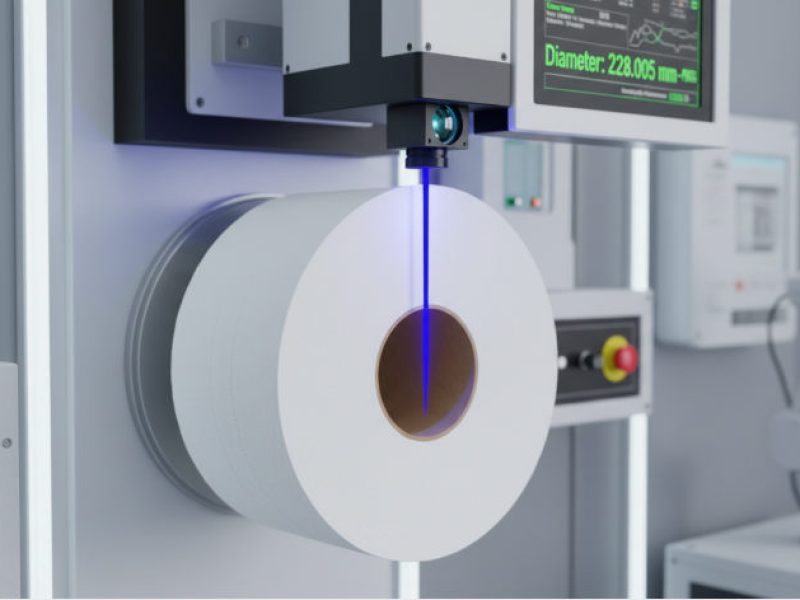
Maintaining a strict JRT roll diameter tolerance prevents equipment jams and costly maintenance cycles in high-traffic commercial environments. Large-scale procurement often fails when rolls arrive slightly oversized, forcing facility teams to manually strip layers of paper or leave dispensers unlocked. This inconsistency turns a simple refill task into a labor-intensive bottleneck that affects both operational budgets and tenant satisfaction.
This guide examines the impact of humidity on paper expansion, the risks of sourcing over-sized jumbo rolls, and the specific measurement techniques required for high-volume quality audits. We provide a technical framework for evaluating supplier consistency to ensure that every pallet integrates seamlessly with standard dispenser specifications. These protocols help procurement officers verify product dimensions before they reach the restroom wall.
Why Is Roll Diameter Accuracy Critical for Automated Dispensers?
Precision in jumbo roll diameter determines the difference between a seamless touchless experience and a mechanical failure that doubles maintenance overhead in high-traffic facilities.
Preventing Mechanical Jams in High-Traffic Facilities
Automated dispensers operate within strict physical enclosures that leave zero margin for diameter variance. When a jumbo roll exceeds the specified housing dimensions, the resulting friction against the internal casing strains the motor. This leads to immediate mechanical jams and potential motor burnout. We utilize precision winding technology in our Mancheng factories to maintain diameter tolerances that match global dispenser specifications, ensuring the paper feeds through the rollers without snagging.
Ensuring Sensor Synchronization for Touchless Systems
Modern electronic dispensers use infrared sensors to calibrate dispensing lengths based on the roll’s remaining size. Inaccurate roll diameters trigger false “empty” alerts or cause the sensor to miscalculate the required torque for dispensing. Variances in roll thickness often result in “ghost pulls” where the dispenser activates but fails to release paper because the roll is not seated correctly. Standardized roll diameters allow procurement managers to achieve the 15% maintenance cost reduction we provide to our commercial clients.
| Performance Metric | Standard JRT Roll | Top Source Hygiene (TSH-JRT08) |
|---|---|---|
| Diameter Tolerance | ±2.0 mm to ±5.0 mm | ±0.005 mm (Precision CNC Controlled) |
| Expansion Resistance | High (0.2% per 10% RH change) | Climate-Controlled Fiber Density |
| Dispenser Compatibility | Variable (Inconsistent Fit) | Universal (Tork/enMotion Compatible) |
Maintaining Paper Tension and Feed Reliability
The diameter of a jumbo roll directly influences the tension levels during the initial pull of an automated cycle. Uniform roll winding prevents the paper from snapping or tearing when the dispenser’s motor initiates a high-speed feed. Accurate diameter control ensures that our 2-ply and 3-ply rolls maintain their structural integrity throughout the entire life of the roll. By providing consistent diameters across 56 countries, we ensure that international hospitality brands maintain a uniform guest experience regardless of the local dispenser model used.
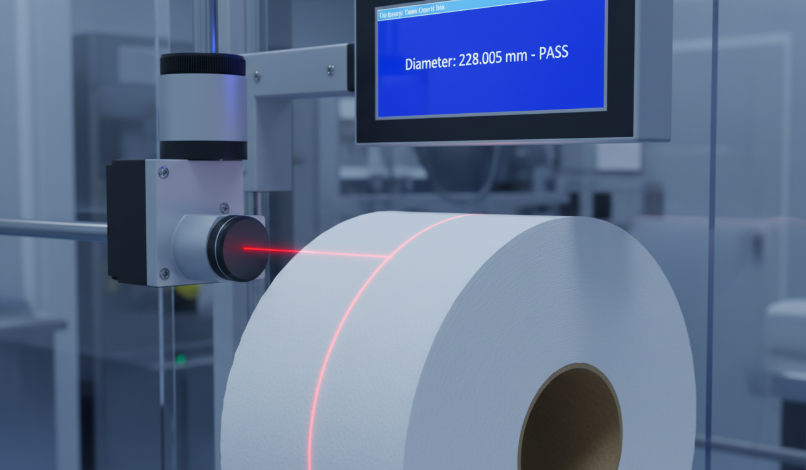
How Does Humidity Impact the Expansion of Jumbo Rolls in Storage?
Paper is naturally hygroscopic; even a 10% shift in relative humidity can swell wood fibers enough to push a jumbo roll beyond its calibrated dispenser tolerance.
Moisture Absorption and Dimensional Instability
High humidity levels directly alter the physical dimensions of paper products through hygroscopic expansion. When relative humidity exceeds 60%, virgin wood pulp fibers absorb water vapor from the surrounding air, causing the individual fibers to swell. In a tightly wound jumbo roll, this microscopic expansion translates into significant physical force.
- Fiber swelling creates internal pressure that often leads to core deformation or “crushing.”
- Outer layers may burst or ripple, creating an uneven surface that jams automated equipment.
- Diameter increases interfere with the sensitive calibration of 2026-gen high-speed dispensers.
Risks of Low Humidity and Static Accumulation
Environments with less than 40% relative humidity compromise the structural integrity of jumbo rolls just as much as high moisture. Low moisture content makes virgin wood pulp fibers brittle, which significantly increases the risk of web breaks during the dispensing process. Brittle paper lacks the tensile flexibility needed to pull smoothly through mechanical rollers.
- Dry conditions facilitate static electricity buildup, causing paper layers to stick together.
- Static discharge disrupts infrared sensors in touchless dispensers, leading to “ghost” dispensing or total failure.
- Static charges attract dust and contaminants in storage facilities, compromising hygiene standards.
Optimal Storage Standards for Diameter Retention
Industry benchmarks require strict environmental controls to maintain a relative humidity range of 55–60%. This window represents the “gold standard” for paper stability. Consistent climate control prevents the “telescoping” effect, where roll layers slide out of alignment and create a conical shape that won’t fit on a standard spindle.
- Maintaining 55–60% RH ensures paper retains its softness and absorbency without gaining excess weight.
- Precise monitoring prevents fibers from losing the ply-bonding strength achieved during manufacturing.
- Top Source Hygiene utilizes precision climate monitoring in our Hebei factories to keep rolls within specified diameter tolerances before shipping.
Impact on Inventory Management and Logistical Accuracy
Environmental factors in storage dictate the reliability of high-volume procurement audits. Fluctuations in humidity lead to inaccurate inventory counts if roll diameters expand beyond their allocated shelf space. When thousands of rolls swell by just 2-3mm, the cumulative effect can prevent a full 40HQ container from being loaded to its maximum payload efficiency.
- We implement moisture-resistant packaging for rolls destined for high-humidity regions like Southeast Asia.
- Strict adherence to storage protocols protects the 20-25 day production lead time by preventing re-work.
- Proper environmental controls guarantee that the product arrives at the distributor’s warehouse in peak condition.
Premium Jumbo Rolls at Factory-Direct Prices
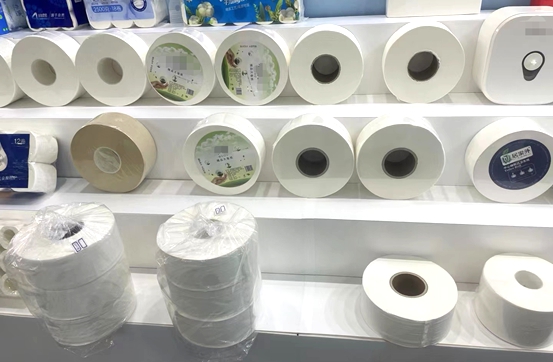
What Are the Risks of Sourcing Over-Sized Jumbo Rolls?
Sourcing jumbo rolls that exceed standard diameter tolerances introduces cascading failures in high-speed automation, elevates catastrophic fire risks through internal heat entrapment, and triggers immediate mechanical degradation of dispenser hardware.
Production Instability and Reduced Runnability
Over-sized jumbo rolls frequently exceed the mechanical design limits of standard winding and converting systems. When roll diameters bypass specified tolerances, the winding equipment experiences significant tension irregularities. These fluctuations often lead to frequent press breaks, where the web snaps under inconsistent pull. These disruptions force operators to lower production speeds, which directly undermines the 2026 output targets required for high-volume facilities.
| Operational Metric | Oversized Roll Impact | Top Source Standard |
|---|---|---|
| Winder Tension | High variance; frequent web snapping | Precision CNC control; ±0.005 mm tolerance |
| Fire Safety | Heat entrapment; invisible combustion | 100% Virgin Wood Pulp; optimized density |
| Dispenser Life | Motor strain; bearing failure | Standard 8″ to 9.38″ compatibility |
Caliper variations across the roll surface cause uneven winding, which disrupts the flow of automated lines. High-capacity industrial facilities rely on precision-aligned rolls to maintain high OEE (Overall Equipment Effectiveness) scores. We find that even a minor deviation in diameter causes the material to “telescope” or sag, rendering the roll unusable for high-speed automated dispensers.
Internal Fire Hazards and Detection Failures
Large roll masses present a unique fire safety risk by trapping heat within the core layers of the paper during the manufacturing process. Over-sized rolls can encapsulate superheated particles that may lead to internal ignition during storage. This combustion often proceeds without generating visible smoke, effectively bypassing standard 2026 warehouse detection systems that rely on optical sensors.
- Dense roll structures make extinguishing deep-seated fires nearly impossible once they take hold.
- Internal heat buildup occurs more rapidly in rolls that exceed standard density and diameter parameters.
- Inventory loss risks increase exponentially when storage facilities house non-compliant roll sizes.
Elevated Scrap Rates and Quality Control Hurdles
Consistency becomes difficult to maintain as roll dimensions deviate from standard industry sizes. Excessive roll size frequently results in coating voids and winding defects. These anomalies often require procurement teams to implement 100-percent inspection protocols, which adds significant labor costs and slows down the supply chain.
Higher scrap rates emerge when the outer layers of the roll sustain damage due to inadequate clearance in storage racks or shipping containers. Sophisticated defect detection systems struggle to maintain accuracy when processing rolls that exceed standard diameter parameters. By sourcing JRT08 commercial jumbo rolls with standardized dimensions, distributors avoid the waste associated with out-of-spec manufacturing.
Equipment Incompatibility and Maintenance Demands
Integrating non-standard jumbo rolls into existing infrastructure leads to accelerated mechanical wear. Most automated dispensers and converting machines require specific roll diameters to function without manual intervention. Forcing over-sized rolls into existing hardware—such as 9-inch Tork or enMotion dispensers—strains bearings and motors.
This strain results in higher long-term maintenance costs and unexpected downtime. Procurement teams may face capital expenditure requirements to upgrade machinery for 2026 compatibility if they fail to enforce diameter tolerances during the sourcing phase. Using 100% Virgin Wood Pulp rolls from a source factory ensures the fiber performance and roll dimensions align perfectly with modern dispensing hardware.
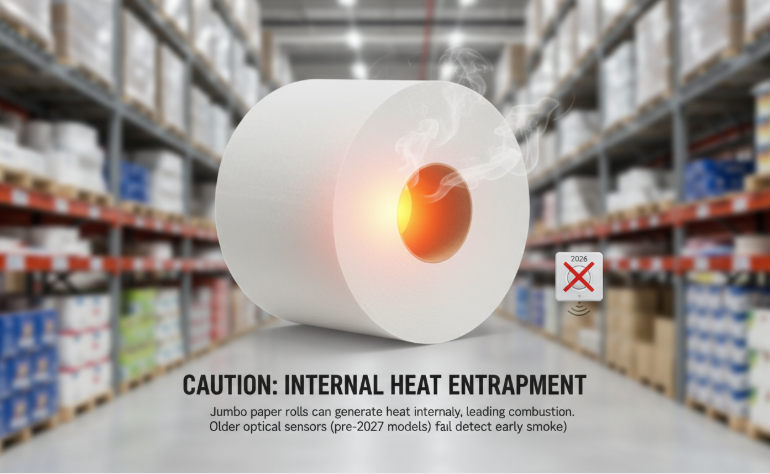
How to Measure JRT Diameter for High-Volume Procurement Audits?
Precise diameter auditing prevents dispenser jamming and optimizes container payload by replacing subjective manual checks with standardized ISO benchmarks and non-contact sensor data.
Adoption of ISO Tolerance Classifications
Modern procurement audits for 2026 move beyond isolated measurement values. Auditors now apply ISO 492 precision classes 0 through 6 to categorize roll uniformity across large-scale shipments. This shift from single-point measurements to standardized benchmarks allows for more accurate acceptance criteria. When verifying 100% virgin wood pulp rolls, teams must account for material compression. Manual calipers often distort the outer layers of soft tissue, leading to false negatives during quality checks. Standardizing these benchmarks ensures that every batch remains consistent with the dispenser requirements of global hospitality and commercial clients.
Application of Non-Contact Laser Sensors
Non-contact measurement methods reduce the risk of roll deformation during the auditing process. Laser-based sensors provide initial diameter readings without applying physical pressure to the tissue surface. This is critical for maintaining the integrity of high-GSM, multi-ply JRT rolls. Ultrasonic sensors facilitate rapid auditing by capturing data across the entire roll face, identifying core eccentricity that traditional manual tapes miss. These tools allow procurement teams to detect out-of-round challenges common in high-volume paper production before the product reaches the final dispenser.
| Audit Metric | Legacy Manual Method | 2026 Technical Standard |
|---|---|---|
| Primary Tooling | Tape Measure / Mechanical Caliper | Laser & Ultrasonic Sensors |
| Material Impact | High Compression (Fiber Distortion) | Zero Contact (No Deformation) |
| Tolerance Logic | Arbitrary +/- Millimeters | ISO 492 Precision Classes (0-6) |
| Consistency Check | Random Sample Inspection | Real-Time Web Velocity Calculation |
Real-Time Calculation for High-Volume Consistency
Hybrid auditing approaches combine physical sensor data with operational metrics to validate diameter stability. Auditors analyze web velocity and spindle position data to confirm dimensions during machine acceleration and deceleration. Cross-referencing production logs with random physical samples ensures that our 2,860-ton monthly capacity maintains precise dimensions within ±0.005 mm. Digital tracking of spindle data provides a secondary verification layer for high-traffic commercial JRT procurement, ensuring that high-density rolls like the TSH-JRT08 series remain compatible with standard industrial dispensers.
Integration of Hybrid Measurement Protocols
Combining direct measurement with calculated stability data creates a reliable audit trail for global supply chain compliance. Audit teams use these hybrid systems to minimize reliance on contact-based tools that produce subjective results. Standardizing measurement at specific spindle positions ensures data repeatability across different factory audits. These protocols help maintain the 15-25 day lead time by identifying diameter deviations early in the quality control cycle. Consistent auditing prevents the “tight roll” syndrome in dispensers and protects the profit margins of distributors by reducing product returns due to sizing errors.
- Use ISO 492 classifications to categorize batch uniformity for B2B contracts.
- Deploy non-contact sensors to avoid crushing 100% virgin wood pulp fibers.
- Verify diameter using real-time web velocity and spindle RPM logs for high-volume orders.
- Document core eccentricity to ensure smooth rotation in automated dispensers.

Why Does Our 2860-Ton Capacity Ensure Diameter Consistency?
Scaling production to a monthly output of 2,860 tons allows for the integration of centralized computer controls and 5-axis machinery that maintain roll tolerances within a strict ±0.005 mm range.
Automated Precision Control Systems
Large-scale operations at Top Source Hygiene utilize centralized computer controls to maintain material uniformity across high-volume production runs. These systems provide granular oversight that smaller facilities cannot economically justify, ensuring that every ton of 100% virgin wood pulp meets specific density requirements.
- Centralized systems manage furnace temperatures to ensure paper fibers bond with consistent density and tensile strength.
- Real-time sensors actively align the paper web to prevent diameter drift during the high-speed winding process.
High-Speed Manufacturing Equipment
The 2026 manufacturing landscape relies on 5-axis precision machinery to achieve tighter dimensional tolerances than legacy equipment. By utilizing high-speed crescent-formers, we stabilize the roll thickness at the source, which is the primary factor in determining the final outer diameter of Jumbo Roll Tissue (JRT).
- Advanced 5-axis equipment maintains roll dimensions within a strict ±0.005 mm tolerance to eliminate dispenser jamming.
- High-speed crescent-formers stabilize roll thickness to ensure every unit fits standard industrial holders across global markets.
Continuous Quality Monitoring
Managing a 2,860-ton monthly volume requires rigorous feedback loops and real-time data tracking to ensure structural reliability. We rely on predictive monitoring rather than reactive inspection to maintain the batch color consistency and diameter accuracy that distributors expect from a direct factory source.
- Overall Equipment Effectiveness (OEE) tracking identifies and corrects size deviations early in the production cycle.
- ISO-standardized checkpoints verify consistency across the entire monthly output to maintain brand reliability for private label partners.

Conclusion
Maintaining precise roll diameter prevents mechanical jams and ensures the first sheet pulls smoothly from the dispenser every time. Accurate sizing eliminates the friction caused by oversized rolls, protecting both the hardware and the end-user experience. This technical consistency reduces maintenance overhead and minimizes paper waste in high-traffic commercial environments.
Review your current procurement specifications to ensure roll dimensions align with your specific dispenser fleet requirements. Contact our team to discuss technical data or to request samples for high-volume JRT sourcing.
Frequently Asked Questions
What is the standard diameter of a jumbo roll?
The industry standard for a standard Jumbo Roll Tissue (JRT) is approximately 9 inches (228mm to 230mm) in diameter. For high-capacity environments, “Super Jumbo” rolls are also common, measuring approximately 12 inches (305mm) in diameter. These rolls typically feature a core size of 3.3 inches to fit standard commercial spindles.
Will a 10-inch roll fit a 9-inch dispenser?
No, a 10-inch roll will not fit in a dispenser rated for 9 inches. Dispenser housings are engineered with strict tolerances to minimize the footprint on stall walls; a roll that exceeds the maximum rated diameter will prevent the cover from latching and will likely be pressed against the interior casing, preventing the roll from rotating.
Why is my jumbo roll too tight in the holder?
A tight fit is usually caused by one of three factors: a roll diameter that is slightly over-specification (manufacturing variance), a crushed or deformed cardboard core that prevents the roll from sitting centered on the spindle, or the use of a 3.3-inch core roll on a spindle designed for 2.25-inch cores without the proper adapter, causing the roll to sit unevenly.
How to measure JRT roll diameter?
To measure the diameter accurately, place the jumbo roll on a flat surface. Use a ruler or tape measure to find the distance from one outer edge of the paper to the opposite edge, ensuring the measuring tool passes directly through the center of the core. For the most accurate results in a facility audit, measure multiple rolls in a case to account for minor manufacturing tolerances.
Does humidity make toilet paper rolls expand?
Yes, toilet paper is highly hygroscopic, meaning it readily absorbs moisture from the air. In high-humidity environments (above 60% relative humidity), the paper fibers swell, which can lead to a measurable increase in the overall diameter of the roll and may cause the paper to feel soft or become difficult to pull if the roll expands against the dispenser walls.
What is the max roll size for Tork dispensers?
The maximum roll size depends on the Tork system: Tork T2 (Standard Jumbo) dispensers are designed for rolls up to 9.5 inches in diameter. Tork T1 (Super Jumbo) dispensers are designed to accommodate larger rolls up to 11.8 inches in diameter. Always verify the specific Tork system number (T1, T2, T3, or T4) to ensure roll compatibility.