
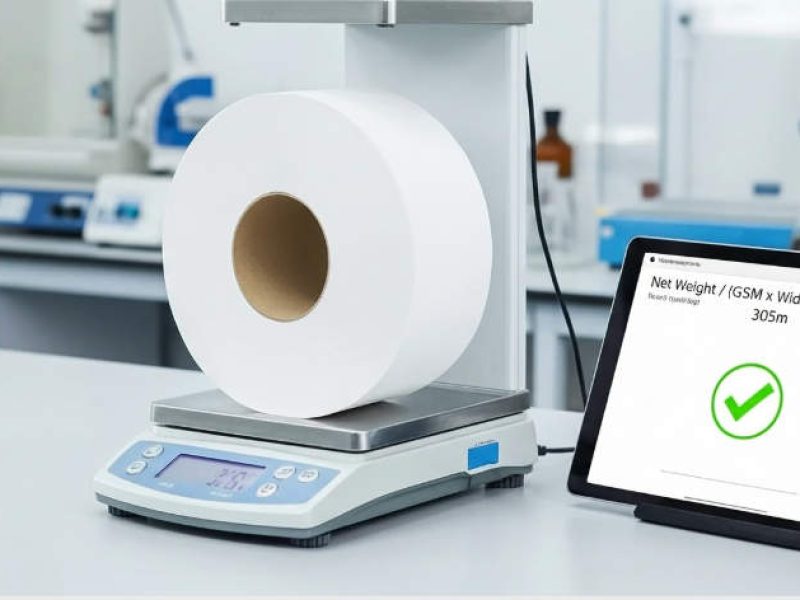
Defending your procurement budget against JRT Sourcing Fraud (Buyer Beware) starts with recognizing that price per roll is often a misleading metric for operational efficiency. Procurement teams frequently lose thousands of dollars annually because they lack the technical tools to verify the actual length of jumbo roll tissue. When manufacturers ship shorter rolls or thinner paper than promised, your cost per usable meter skyrockets, silently draining your maintenance and operations budget.
This technical breakdown provides a protocol for verifying quotes and auditing physical shipments through weight analysis and GSM testing. We examine how to spot deceptive practices like core-weight manipulation and how to run a side-by-side comparison of your samples against the original purchase order. Establishing these verification steps as part of your quality control process prevents hidden costs and ensures your suppliers remain accountable to the specifications they quoted.
Why Is “Price per Roll” the Easiest Way to Deceive B2B Buyers?
Purchasing tissue based solely on unit price ignores the critical variables of material density and operational labor, often leading to a 15% increase in total facility maintenance costs.
Metric Fragmentation and the Obscuration of Total Cost
Sellers frequently fragment pricing into per-unit metrics to distract procurement teams from the Total Cost of Ownership (TCO). This strategy hides bulk handling expenses and implementation fees behind a low entry price. In 2026, sophisticated buyers recognize that a cheap roll often carries hidden logistical burdens that surface only after the contract starts.
Focusing on the roll as the primary unit of measure ignores the integration costs associated with varied dispenser requirements. We see many distributors quote a low per-roll price while failing to account for the specialized hardware or maintenance cycles required to manage sub-standard paper rolls. This obscures the total contract value and makes long-term expenditure difficult to forecast.
Strategic Use of Anchoring Bias in Quotes
Suppliers exploit psychological anchoring by presenting an exceptionally low per-unit price early in the negotiation process. Procurement managers often anchor their expectations to this initial figure, even when the product lacks essential quality specifications. This bias causes buyers to overlook the absence of critical certifications like FSC or ISO 9001, which ensure environmental and manufacturing consistency.
- “Bare-bones” quotes typically exclude shipping reliability and quality control overhead.
- Initial low bids often lead to significant price escalations during the second half of a contract.
- Deceptive quotes rely on the buyer’s failure to audit the supplier’s business credentials.
Variations in Functional Paper Volume
The term “roll” lacks a standardized legal definition for volume, allowing manufacturers to reduce material density without changing the unit name. By manipulating the ply count and GSM (grams per square meter), factories lower production costs while maintaining the same external roll diameter. A cheaper roll often contains significantly less functional paper material than a premium alternative with identical dimensions.
Sellers rely on the fact that most B2B buyers skip calculating the actual cost per kilogram or cost per usable sheet during the initial bidding phase. To combat this, we recommend evaluating products based on weight-based metrics. For instance, our TSH-3396 models utilize high-density solid designs to maximize paper volume, ensuring you pay for usable fiber rather than trapped air in a loosely wound roll.
The Disconnect Between Unit Price and Operational Consumption
Low-priced rolls frequently lead to higher consumption rates, negating the initial savings found in the purchase order. Lower-quality paper with poor absorbency forces end-users to use more sheets per instance, which accelerates stock depletion. This rapid turnover increases the frequency of roll replacements, driving up labor costs for facility management teams in high-traffic sectors like airports or shopping malls.
Top Source Hygiene data suggests that high-capacity, quality-verified rolls can reduce maintenance labor costs by up to 15% compared to low-bid alternatives. By choosing rolls with higher tensile strength and 100% Virgin Wood Pulp, facilities extend the time between refill cycles and improve the overall hygiene experience for the end-user.
How to Use Weight and GSM to Verify the Actual Meters per Roll?
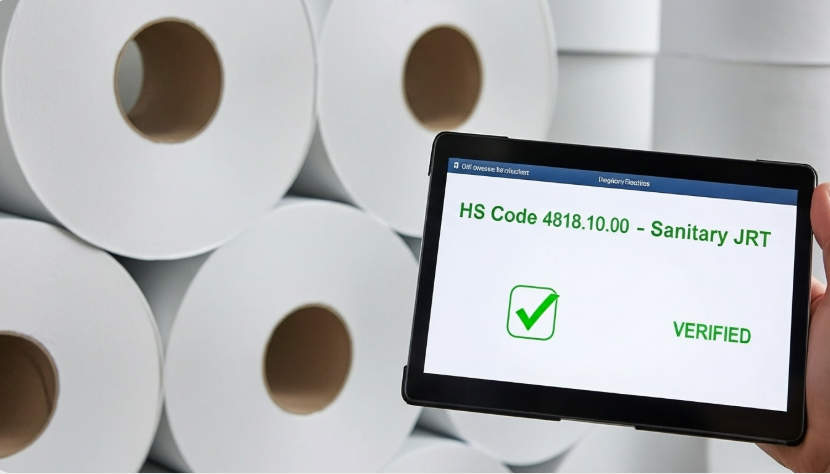
Professional procurement managers use the fixed mathematical relationship between mass, surface area, and GSM to expose suppliers who inflate meterage through low-density winding or heavy cardboard cores.
B2B buyers eliminate guesswork by calculating total roll length using the industry-standard formula: Length = Net Weight / (GSM × Width). This mathematical triangulation ensures that the meters delivered align with the purchase order, preventing the common trap of paying for “air” in loosely wound rolls. Consistency in units is paramount; we convert all measurements to kilograms and meters to maintain high precision during the audit process.
- Calculate length by dividing the net paper weight by the product of the GSM and the roll width.
- Ensure all units remain consistent, typically converting grams to kilograms and millimeters to meters for accuracy.
- Verify that Top Source Hygiene’s 2-ply to 5-ply products meet the calculated density during 2026 quality audits.
- Detect discrepancies early by comparing the theoretical weight against the actual scale weight of a sample roll.
| Audit Metric | Market Deception Trend | Top Source Hygiene Standard |
|---|---|---|
| GSM Accuracy | Claimed 15g but delivered 13.5g | Strict 13-22g/m² range per ply |
| Net Paper Weight | Gross weight includes heavy 300g core | Transparent net weight specifications |
| Roll Winding | Loose winding to fake diameter | High-density mechanical compression |
How GSM Influences Total Paper Volume
Grams per Square Meter (GSM) determines the actual volume of fiber within the product. A higher GSM indicates a thicker, more absorbent sheet, but it also means a roll with a fixed diameter contains fewer total meters than a thinner alternative. Some manufacturers substitute thinner paper while maintaining the roll diameter, effectively reducing the total fiber delivered. We use high-precision scales to confirm that the paper weight matches the 100% virgin wood pulp standards promised in the contract.
- Higher GSM results in a thicker sheet, meaning a roll with a fixed diameter will contain fewer total meters.
- Top Source Hygiene allows clients to customize GSM to balance the ‘hand-feel’ with the required roll length for commercial dispensers.
- Compare the GSM of received samples against the original PO to ensure the manufacturer did not substitute thinner paper to save costs.
- Use high-precision scales to confirm the paper weight matches the 100% virgin wood pulp standards promised in the contract.
Subtracting Core Weight for Net Paper Accuracy
Procurement fraud frequently involves manipulating core weights to inflate the total gross weight of a shipment. Buyers must distinguish between the total roll weight and the actual paper mass by subtracting the weight of the cardboard tube. A heavy, thick-walled core can easily hide a 10% deficit in actual paper volume. We provide transparent specifications regarding core-to-paper ratios to ensure buyers pay for usable product rather than disposable cardboard.
- Subtract the weight of the cardboard core from the total roll weight to find the actual paper mass.
- Audit shipments to ensure the supplier hasn’t used a heavy, thick-walled core to mask a lower volume of actual paper.
- Request transparent specifications from Top Source Hygiene regarding core-to-paper ratios for Jumbo Roll Tissues (JRT).
- Maintain strict oversight on bulk orders to confirm that the net weight aligns with the global shipping documentation.
Verification Steps for 2026 Quality Assurance
Implementing a standard inspection protocol helps maintain consistency across global supply chains. Rather than checking only the easily accessible top-layer rolls, select random samples from throughout the 40’HQ container. Measure the roll width with a digital caliper to ensure it matches the 102mm to 132mm custom widths ordered. If the weight-to-GSM calculation shows a deviation of more than 3%, unroll a sample to measure physical length manually and document the findings for a formal quality report.
- Select random samples from a 40’HQ container rather than checking only the top-layer rolls.
- Measure the width of the roll with a digital caliper to ensure it matches the 10cm or custom width ordered.
- Unroll a single sample to measure the physical length manually if the weight-to-GSM calculation shows a deviation of more than 3%.
- Document all findings in a quality report to compare against the 30 years of manufacturing data provided by the factory.
Premium Jumbo Roll Tissue Factory Pricing
Why Do Some Manufacturers Use Heavy Cores to Mask Low Paper Weight?
Heavy cardboard cores allow unscrupulous factories to inflate gross weight while slashing actual paper length, essentially forcing B2B buyers to pay international freight rates for waste material.
The Illusion of Value Through Gross Weight Quotes
Many suppliers emphasize total roll weight during negotiations to hide a significant reduction in paper density and length. When B2B buyers focus only on price per ton or gross price per roll, they fall into an anchoring bias trap. Factories exploit this by increasing the thickness or density of the cardboard core, maintaining the expected gross weight while winding fewer meters of paper onto the roll.
| Audit Metric | Deceptive “Heavy Core” Roll | Top Source Hygiene (TSH-JRT08) |
|---|---|---|
| Core-to-Paper Ratio | 25% – 35% (Inflated) | 8% – 12% (Standard) |
| Actual Paper Length | 800 – 850 Feet | 1,000 Feet (Guaranteed) |
| Net Paper Weight | ~1.3 lbs | ~1.7 lbs |
Heavy cardboard cores serve no functional purpose for the end-user. They inflate the cost of unusable material and distort the “price per usable meter” calculation. In a typical 40HQ container carrying 9 tons of product, a buyer using deceptive suppliers might pay for over 2 tons of waste cardboard disguised as premium tissue.
How Core Manipulation Compromises GSM and Softness
Substituting paper fibers with heavy cardboard allows factories to lower the Grams per Square Meter (GSM) of the tissue without changing the total roll weight. This reduction in GSM results in thinner, less absorbent paper that tears easily during use. Low-quality manufacturers calibrate machines for high-speed production of low-density paper, relying on the core to provide the structural rigidity needed for packaging and stacking.
- Lower GSM reduces the tensile strength of the sheet, leading to higher consumption rates and user dissatisfaction.
- Top Source Hygiene maintains quality by ensuring GSM stays within the 13–22g/m² range, independent of core weight.
- Precision manufacturing variables are often manipulated to favor volume over fiber density.
Hidden Financial Impacts on Logistics and Material Waste
Paying for excess core weight creates a ripple effect of inefficiency throughout the supply chain. Because shipping costs for a 40’HQ container depend on weight and volume, buyers pay premium international freight rates for waste cardboard. This inefficiency extends to the facility level, where commercial managers at airports or malls face higher disposal costs and a larger environmental footprint due to the disproportionate amount of leftover cardboard.
Verification Protocols for Net Paper Weight
Standardized auditing techniques help procurement officers identify weight manipulation before issuing final payments. Smart buyers now move away from simple gross weight checks and implement systematic matching processes that verify specific paper content.
- Mandate a “Net Paper Weight” clause in all 2026 purchase orders to exclude the core from the price-per-unit calculation.
- Perform sample audits by weighing the cardboard core separately to reveal if the manufacturer substituted pulp for heavy cardboard.
- Use multi-way matching protocols to triangulate PO terms, actual GSM measurements, and shipping documentation.

How to Audit Your Shipment Samples Against Your Original PO?
Systematic auditing of high-volume tissue shipments transitions procurement from reactive dispute resolution to proactive risk management by triangulating technical specifications, financial documents, and physical sample data.
Implementing Three-Way and Four-Way Matching Protocols
B2B buyers face significant financial risk when relying on manual, email-based verification systems. Transitioning to a four-way matching protocol—where the Purchase Order (PO), commercial invoice, packing list, and quality inspection report are compared simultaneously—closes the loopholes typically exploited in bulk paper trades. This systematic approach ensures that the quantity, SKU, and financial terms delivered by Top Source Hygiene align perfectly with the contractual obligations before funds are released.
- Cross-reference the Purchase Order (PO) with the packing list and commercial invoice to identify quantity or SKU mismatches.
- Integrate quality inspection reports into the verification workflow to ensure paper softness and absorbency meet the agreed-upon standards.
- Triangulate delivery records with PO terms to catch unauthorized substitutions before finalizing the payment process.
Verifying Physical Specifications and Material Integrity
A physical audit of shipment samples confirms they match the technical specifications defined in the initial procurement agreement. Sourcing professionals use the relationship between GSM (grams per square meter), roll width, and actual weight to verify declared meterage. This prevents the common industry deception of using heavy cores to mask lower paper weights. By testing for material purity, such as 100% virgin wood pulp, auditors ensure the brand maintains its quality benchmarks across every 40’HQ container.
| Audit Metric | Standard Requirement | TSH Verification Protocol |
|---|---|---|
| Material Composition | 100% Virgin Wood Pulp | Fiber purity testing; no recycled waste mixing. |
| Weight/GSM Consistency | 13–22g/m² per ply | GSM round cutter sample extraction and precision scaling. |
| Chemical Safety | OBA-Free (No whiteners) | UV light verification for absence of fluorescent agents. |
- Measure the Grams per Square Meter (GSM) and roll diameter to prevent weight masking or heavy-core deception.
- Confirm that the material—such as 100% virgin wood pulp—matches the original order requirements to maintain brand quality.
- Check ply counts and sheet dimensions against the original PO to ensure consistency across the entire shipment.
Documenting Discrepancies through Digital Audit Trails
Maintaining a clear record of variations between the shipment and the original agreement facilitates rapid dispute resolution and accountability. Digital tools allow teams to log real-time data on shipment arrivals and sample testing results for immediate comparison. This data forms a historical supplier scorecard, allowing buyers to track Top Source Hygiene’s consistency in meeting quality benchmarks through 2026 and beyond.
- Use digital tools to log real-time data on shipment arrivals and sample testing results for immediate comparison.
- Establish a historical supplier scorecard to track Top Source Hygiene’s consistency in meeting quality benchmarks.
- Maintain structured intake fields for inspection data to reduce rework and catch discrepancies early in the receiving phase.
Auditing Compliance with International Hygiene Standards
Validation of certifications ensures that delivered paper products meet the specific regulatory requirements promised during procurement. Auditors verify that shipment samples carry required FDA, FSC, or ISO 9001 markings as specified in the PO. Furthermore, checking for the absence of optical brightening agents (OBAs) ensures the final product remains septic-safe and skin-friendly, adhering to the eco-friendly safety standards expected in North American and European markets.
- Confirm that shipment samples carry the required FDA, FSC, or ISO 9001 markings as specified in the original PO.
- Verify that the packaging and private label branding align with the final proofs approved during the OEM design stage.
- Check for the absence of fluorescent whiteners in the final product to ensure compliance with eco-friendly safety standards.

What Are the Common Red Flags in Too-Good-To-Be-True JRT Quotes?
Reliable JRT procurement hinges on technical transparency; quotes that omit fiber origin, GSM, or core-to-paper weight ratios are designed to obscure the true cost of ownership and hide material deficiencies.
Pricing Significantly Below Global Market Benchmarks
Market prices for 100% virgin wood pulp follow global commodity trends. In 2026, raw material costs remain relatively stable across major industrial hubs, so any quote undercutting the average by 20% or more requires immediate scrutiny. These extreme discounts usually indicate the substitution of premium long-fiber pulp with inferior recycled waste or the heavy use of fluorescent whiteners (OBAs) to mask a lower-grade yellowish base. B2B buyers should remember that quality fiber has a floor price that factories cannot bypass without compromising product integrity.
Some suppliers utilize “anchoring bias” by offering an impossibly low per-roll price to secure a deposit, only to recoup their margins through inflated shipping fees or hidden “loading surcharges” that emerge after the contract is signed. At Top Source Hygiene, we align our pricing with the Hebei industrial hub’s efficiency, providing a transparent breakdown that includes the 40HQ container payload (typically 7–9 tons) to ensure the landed cost is accurate and predictable.
- Compare quotes against current virgin pulp indices to identify mathematical impossibilities.
- Verify if the “all-in” price includes palletization, customs clearance codes (HS 4818.1000), and port fees.
Omission of Specific GSM and Ply Technical Data
Vague product descriptions are the hallmark of deceptive sourcing. A professional Jumbo Roll Tissue quote must specify the exact Grams per Square Meter (GSM) and the ply count, such as 2-ply or 3-ply. When these details are missing, manufacturers often supply a thinner, less absorbent 11g/m² sheet while charging for a standard 15g/m² specification. This “shrinkflation” allows the vendor to reduce the total amount of paper fiber provided while maintaining the roll’s external diameter.
Another major red flag is listing a “total roll weight” without specifying the core weight. Deceptive suppliers often use heavy, thick-walled cardboard cores (up to 200g or more) to artificially inflate the roll’s weight on the scale. This masks the fact that the buyer is paying for cheap cardboard rather than usable tissue paper. Demand a “net paper weight” specification to ensure you are getting the actual meterage required for high-traffic environments.
- Insist on a 13–22g/m² range per ply for professional-grade JRT.
- Require the manufacturer to list the core diameter (e.g., 76mm) and the core weight separately from the tissue weight.
Failure to Provide Verifiable International Certifications
Direct factories that serve international markets maintain rigorous quality control standards that are easily verifiable. If a supplier cannot produce current ISO 9001, FDA, or FSC certifications, they likely lack the quality management systems found in established facilities. Buyers should be wary of low-resolution, watermarked, or expired certificates where the company name does not match the entity listed on the formal quote. These documents are often “borrowed” from legitimate manufacturers to create a false sense of security.
Verification is particularly critical for “OBA-Free” and “Septic Safe” claims. In North American and European markets, chemical safety and rapid disintegration are legal requirements for plumbing compatibility. A quote that promises these features without third-party lab results or compliance documentation puts the distributor at risk for product liability claims and plumbing damage in large-scale commercial facilities.
Inconsistent Lead Times and Shipping Estimates
An inability to provide a concrete production timeline suggests the vendor is a middleman rather than a direct factory. Genuine manufacturers like Top Source Hygiene typically maintain a 20–25 day production cycle for a 40HQ container. Quotes that promise “instant” global shipping or, conversely, provide unusually long and vague windows (e.g., 60–90 days) indicate logistical instability or a “drop-shipping” model where the seller has no control over the production floor.
Unreliable suppliers also avoid detailing specific shipping routes or port of origin. For buyers in North America, Europe, or Oceania, knowing the dispatch port (such as Tianjin Xingang for Hebei-based factories) is essential for calculating accurate lead times and maintenance schedules. Discrepancies between the quoted lead time and the actual shipping documentation often signal that the order was delayed due to material shortages or the vendor waiting to “pool” multiple small orders to fill a container.
- Ask for pre-shipment visual verification, including photos of the finished goods and loading process.
- Avoid vendors who cannot confirm a 15–25 day production window for standard JRT models.
Conclusion
Verifying JRT quotes through weight and GSM calculations ensures you receive the exact paper length promised in your contract. Identifying heavy core tactics and auditing physical samples protects your profit margins from hidden length cheating often found in low-cost offers. These technical checks transform a risky purchase into a transparent, data-driven procurement process that secures consistent quality for your supply chain.
You can review our technical specifications for 100% virgin wood pulp rolls or request a shipment sample to audit our material integrity firsthand. Contact us to receive a detailed breakdown of our Big 10 inventory and see how we maintain batch consistency across large-scale container orders.
Frequently Asked Questions
How to tell if a JRT roll is shorter than advertised?
To detect “short-winding,” first check the core diameter; manufacturers often use oversized 3.3-inch cores to make a shorter roll appear as large as a standard 9-inch roll. The most reliable method is weighing the roll; a 1000ft roll will have a distinct weight profile (typically 650g–850g depending on GSM). You can also use a mathematical verification: measure the radius from the core to the edge (R) and the core radius (r) in millimeters, then apply the formula (π(R² – r²) / thickness) to estimate the total linear length.
How many meters in a 9-inch jumbo roll?
A standard 9-inch (230mm) diameter Jumbo Roll Tissue (JRT) typically contains approximately 305 meters (1,000 feet) for 2-ply variations. High-density or 1-ply rolls can extend up to 610 meters (2,000 feet) within the same 9-inch outer diameter. Always verify the roll length on the technical datasheet, as “9-inch” refers only to the physical width of the roll, not the linear footage of the paper.
What is the weight of a 1000ft JRT roll?
The weight of a 1000ft JRT roll varies based on the paper’s Grams per Square Meter (GSM) and ply count. On average, a standard 2-ply 1000ft JRT roll weighs between 1.4 lbs and 1.9 lbs (635g to 860g). When calculating shipping or comparing quality, ensure you distinguish between “gross weight” (including the cardboard core) and “net paper weight” to ensure you are receiving the advertised amount of fiber.
How to compare toilet paper by weight?
Comparing by weight is the industry-standard method to bypass misleading “per roll” pricing. To do this, calculate the Price per Kilogram: (Total Case Price / Net Weight of Paper). Be sure to subtract the weight of the cardboard cores and packaging (tare weight). This exposes rolls that may have the same diameter but use lower-density paper or “fluffed” embossing to appear thicker than they actually are.
Common scams in bulk toilet paper trade?
The most common scams involve “metric fragmentation” and anchoring bias. Sellers may offer a lower “per roll” price while reducing the sheet width (e.g., 3.8 inches instead of 4.5 inches) or using significantly lower GSM paper. Other tactics include using oversized cores to hide shorter roll lengths and adding hidden fees like “implementation costs” or mandatory bulk requirements that obscure the true Total Cost of Ownership (TCO).
How to verify GSM of toilet paper?
To verify GSM (Grams per Square Meter), cut a precise 10cm x 10cm square of the tissue. Weigh this sample on a high-precision digital scale. Multiply the weight in grams by 100 to determine the GSM per ply. For a 2-ply roll, if the sample weighs 0.15g, the paper is 15 GSM per ply, totaling 30 GSM. Verifying this ensures the manufacturer hasn’t thinned the paper to save on raw material costs.