
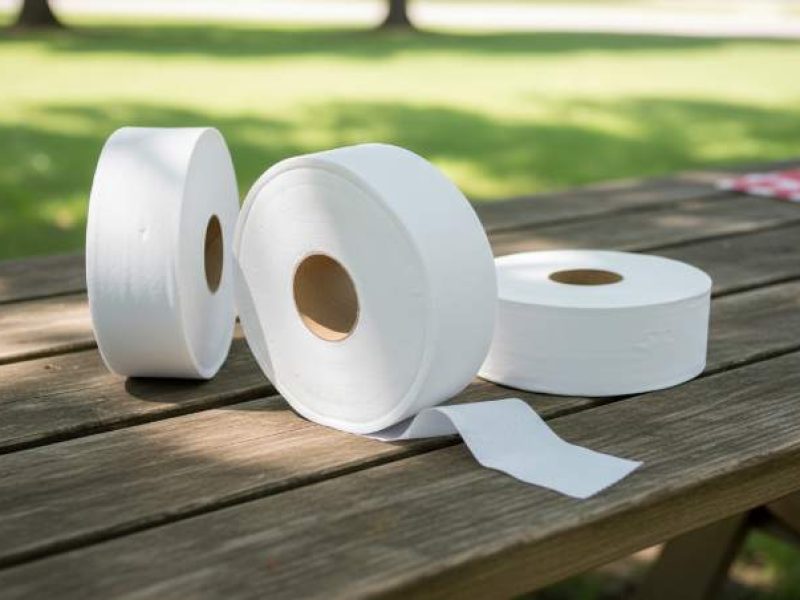
Understanding the disparity between roll diameter vs footage determines whether a procurement budget stays on track or suffers from hidden operational losses. Many facility managers assume a standard 9-inch roll offers consistent value, yet ignoring roll density creates a risk of frequent restocking cycles and inflated maintenance labor. Buying based on visual size rather than actual length allows manufacturers to hide low-capacity products behind a standard exterior, directly impacting the bottom line of high-traffic commercial spaces.
This guide examines the manufacturing secrets of loose winding and provides the math needed to calculate the actual cost-per-foot of wholesale paper. We look at how to verify roll density using digital calipers and why demanding certified spec sheets is a necessary step for any janitorial SOP. By moving past visual estimates, you can implement a data-driven purchasing strategy that ensures you pay for usable paper rather than empty space.
The Deceptive Visuals of the 9-Inch Jumbo Roll
Procurement professionals often overlook that a 9-inch outer diameter is merely a fitment standard for dispensers, not a reliable guarantee of paper volume or maintenance intervals.
Visual Diameter vs. Actual Linear Footage
Standardizing on a 9-inch diameter ensures the roll fits into most JRT dispensers, but this measurement often hides the actual paper density. Procurement teams frequently mistake roll diameter for total capacity, which leads to inaccurate stock projections and unexpected run-outs. A roll with a 9-inch exterior can vary significantly—from 500 to over 2,000 linear feet—depending on the core size and the winding tension used during manufacturing.
Facility managers now prioritize linear footage over visual size to keep dispensers stocked during high-traffic maintenance cycles. Relying on visual diameter alone creates a false sense of security regarding inventory levels, as two rolls of identical size can have a 50% difference in usable material depending on how the manufacturer manages the wind density around the core.
Usable Capacity Variance by Ply Configuration
The number of plies and the thickness of the paper directly impact how much product fits within the fixed 9-inch outer limit. Higher ply counts, such as 3-ply or 4-ply luxury options, significantly reduce the total feet on a roll because each wrap around the core occupies more radial space. While standard jumbo roll dispensers accommodate these different capacities, a simple visual inspection cannot distinguish a high-density 1-ply roll from a low-density 2-ply roll.
Technical specifications must emphasize sheet count and total length to stop the deceptive marketing of jumbo products that lack actual volume. High-quality 100% Virgin Wood Pulp rolls, like the TSH-JRT08, maintain a balance between ply-bonded strength and sufficient linear footage to ensure the roll lasts through heavy use without sacrificing the user experience.
Shifts in Commercial Procurement Valuation
Modern buying strategies move away from diameter-based purchasing to focus on measurable performance metrics. Savvy buyers evaluate paper value by calculating the cost per linear foot rather than the price per roll. This shift identifies hidden costs; for example, a cheap roll with low footage increases labor expenses because janitorial staff must replace it twice as often as a high-density alternative.
- Transparent data on roll density justifies procurement decisions in high-traffic venues like airports and shopping malls.
- Cost per linear foot provides a standardized metric that allows for fair comparisons across different brands and ply counts.
- Top Source Hygiene provides certified spec sheets to ensure distributors can verify the exact volume and material weight they receive in every 40HQ container.
Loose Winding vs Tight Winding: The Manufacturing Secret
Purchasing based on roll diameter alone is a tactical error; the mechanical tension applied during winding determines the true volume of usable paper and the frequency of restroom maintenance.
The Visual Deception of Low-Tension Winding
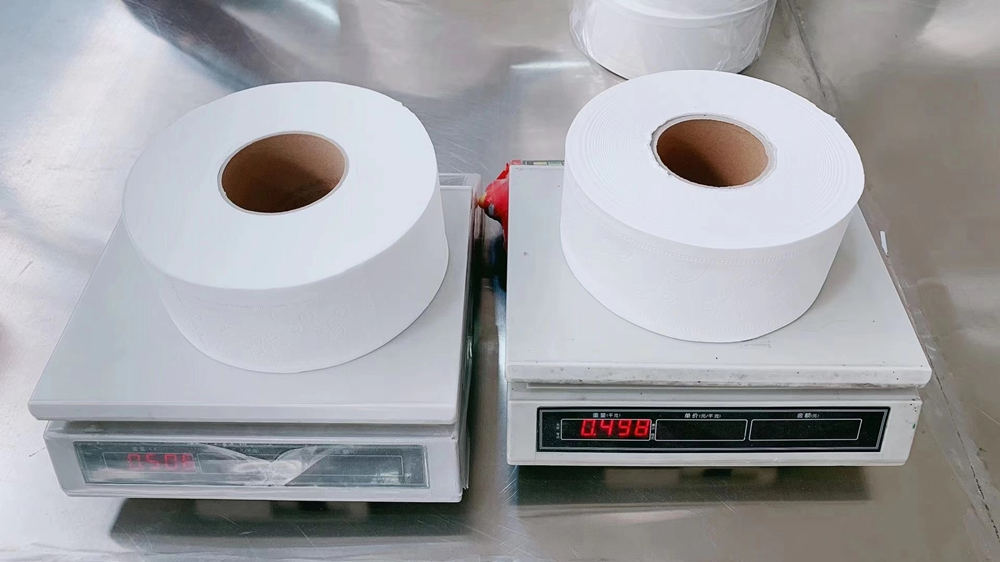
Low-tension manufacturing allows a roll to meet the standard 9-inch jumbo diameter requirement while using significantly less raw material. This “puffy” winding technique creates large air gaps between the paper layers, leading to a roll that looks substantial but lacks fiber density. Manufacturers often use this method to appeal to retail-minded customers who judge value based on visual volume rather than actual weight or linear footage.
| Performance Metric | Low-Tension (Loose) Roll | TSH High-Density Roll |
|---|---|---|
| Estimated 9″ Footage | 500 – 720 Linear Feet | 1,000 – 1,200 Linear Feet |
| Structural Integrity | High risk of telescoping | Rigid; resists core crushing |
| Logistics Efficiency | High bulk; low paper-to-space ratio | Optimized 9-ton 40HQ payload |
While a loosely wound roll might feel softer to the touch initially, users deplete the product much faster due to the lack of material. In commercial settings, this translates to increased labor costs for janitorial staff who must replace rolls twice as often.
Tight Winding and Structural Integrity
Tight-winding methods prioritize paper density and roll stability. High-density rolls prevent “telescoping,” a common defect where the inner layers of the roll slide out of the core during transit or high-speed dispensing. By increasing the winding tension, we fit more linear feet of paper into the same physical 9-inch footprint.
- High-density rolls maximize shipping container efficiency, reducing the landed logistics cost per foot.
- Top Source Hygiene facilities utilize automated tension management to balance structural strength with 2-ply and 3-ply softness.
- Controlled tension prevents “starred” rolls where the center creases under external pressure during stacking.
Electronic Tension Control for Footage Accuracy
In 2026, professional production lines use closed-loop electronic solutions to maintain consistent roll density regardless of ambient humidity or raw material variations. Precision sensors monitor the Grams per Square Meter (GSM) in real-time, allowing the winding speed to adjust automatically to prevent paper breakage.
Digital calibration ensures that every roll in a 2,860-ton monthly production run meets the exact footage specifications requested by the distributor. This eliminates the “short-roll” problem common in manual factories and allows Top Source Hygiene to maintain competitive factory-direct pricing for global clients. Consistent winding tension correlates directly to lower scrap rates and more predictable inventory management for wholesalers.
Scale Your Brand With Expert OEM Manufacturing
Why a 9-Inch Roll Might Only Contain 700 Feet of Paper
Purchasing based on roll diameter alone is a common procurement error; true value lies in the linear footage, which varies drastically based on material gauge, core dimensions, and winding density.
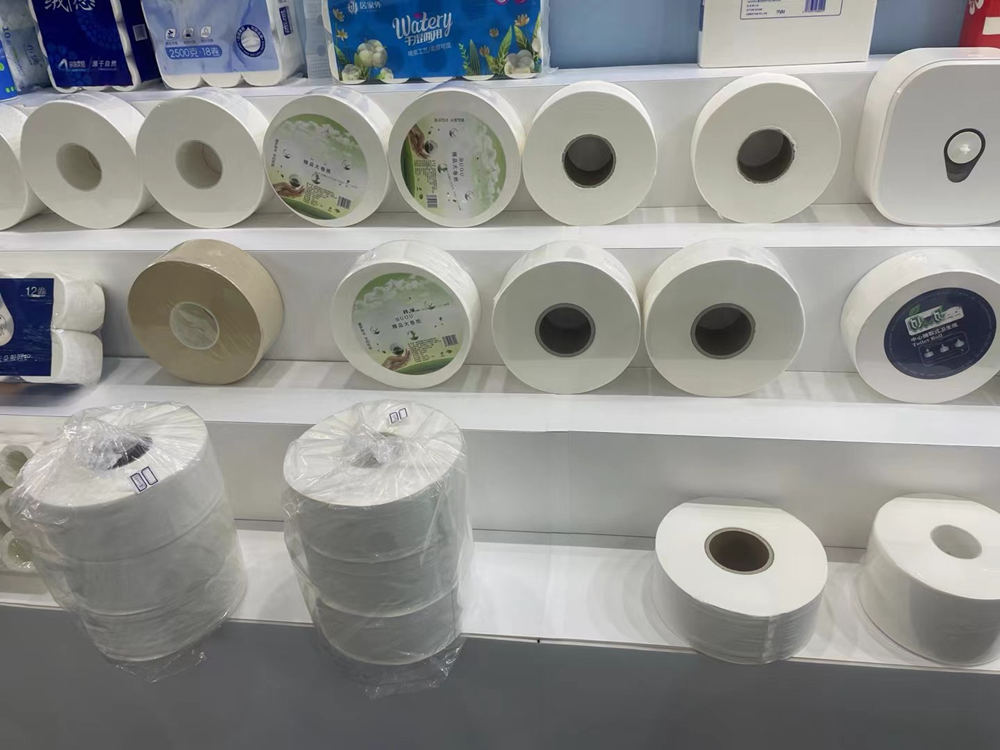
The 9-inch jumbo roll serves as a primary example of how visual dimensions can mislead facility managers. While the outer diameter remains a constant 9 inches to fit standard commercial dispensers, the actual amount of usable paper inside fluctuates. This variance occurs because a roll’s capacity is a calculation of how many layers of material can occupy the radial space between the center core and the outer edge. If the paper is thicker or the core is larger, the total footage drops significantly.
Paper Thickness and GSM Constraints
The grams per square meter (GSM) rating determines the density and thickness of the paper stock. Higher GSM ratings mean each individual sheet is thicker and more absorbent, but this thickness consumes more radial space with every wrap around the core. In a fixed 9-inch diameter, using premium high-GSM paper results in fewer total layers compared to thin, economy-grade sheets.
| Specification Metric | Economy 9-Inch Roll | Premium 9-Inch Roll |
|---|---|---|
| Typical Linear Footage | 1,000 – 1,200 Feet | 700 – 750 Feet |
| Paper Thickness (GSM) | 13 – 15 GSM | 18 – 22 GSM |
| Ply Configuration | 1-Ply or Thin 2-Ply | Ultra-Soft 2-Ply / 3-Ply |
Standard 9-inch rolls often reach their outer limit with only 700 feet of paper when manufacturers prioritize a plush, multi-ply feel. For high-traffic environments, Top Source Hygiene balances this by utilizing precision 13–22g/m² ply density, ensuring the roll meets footage requirements without sacrificing the 100% Virgin Wood Pulp softness users expect.
Core Size and Spatial Displacement
The internal cardboard core directly impacts how much paper a roll can hold. Since the outer diameter is capped at 9 inches to ensure dispenser compatibility, any increase in the core size subtracts from the available winding area.
- A 3.3-inch core leaves significantly less room for paper than a 2-inch core within the same 9-inch profile.
- Some manufacturers use oversized cores to maintain a “jumbo” visual while drastically reducing the linear footage provided.
- Standardizing the ratio between the core and the paper layers is vital for accurate inventory planning and cost-per-foot analysis.
Winding Tension and Roll Density
Mechanical tension during the manufacturing process determines the roll’s final density. Loose winding creates air gaps between the layers, making the roll appear “fluffy” and full at 9 inches, even if it contains minimal footage. While this can improve the perceived softness, it often masks a lower product count. Conversely, tight winding maximizes linear feet but requires precise tension control to prevent “tension bursts” or fiber separation.
We utilize closed-loop electronic systems to maintain consistent winding density. This calibration ensures every 9-inch Jumbo Roll (JRT) delivers its stated footage. By managing the balance between structural integrity and paper volume, we prevent the rotational displacement issues common in poorly wound, loose rolls.
Calculating the True Cost-Per-Foot Based on Actual Length
Procurement strategies in 2026 have shifted away from per-roll pricing to comprehensive cost-per-foot frameworks that expose the hidden expenses of low-density jumbo rolls.
Shifting from Unit Price to Total Cost of Ownership
Effective facility management requires looking past the invoice price of a single case. We analyze operational variables such as replacement frequency and storage requirements alongside the base footage cost to determine the actual impact on the bottom line. A 9-inch jumbo roll with a low sheet count forces janitorial staff to perform more frequent change-outs, which spikes labor costs and increases the risk of run-out complaints in high-traffic environments.
Higher initial roll prices often yield a lower total cost of ownership when the product uses 100% virgin wood pulp. The superior absorbency and tensile strength of virgin fibers mean users consume less paper per visit compared to recycled alternatives. Commercial facilities in 2026 justify the purchase of high-density rolls by documenting the reduction in maintenance labor and the optimization of warehouse space, as more usable paper fits into the same physical footprint.
Factoring Hidden Logistics and Material Surcharges
True cost calculations must account for secondary expenses that inflate the effective price per foot. Hidden expenses, including installation time and local delivery fees, can increase the net footage value by 10% to 15% if procurement teams fail to audit the entire supply chain. Top Source Hygiene utilizes a factory-direct model to eliminate intermediary markups, providing a transparent base for cost-per-foot calculations that many local distributors cannot match.
We evaluate international shipping routes and container loading efficiency to ensure logistics costs do not offset the savings gained from bulk manufacturing. By maximizing the payload of a 40HQ container—often reaching up to 9 tons—manufacturers reduce the landed cost per foot for international buyers in the Middle East and Africa, where freight volatility heavily influences the final price of hygiene paper.
Standardizing Unit Analysis with Digital Measurement Tools
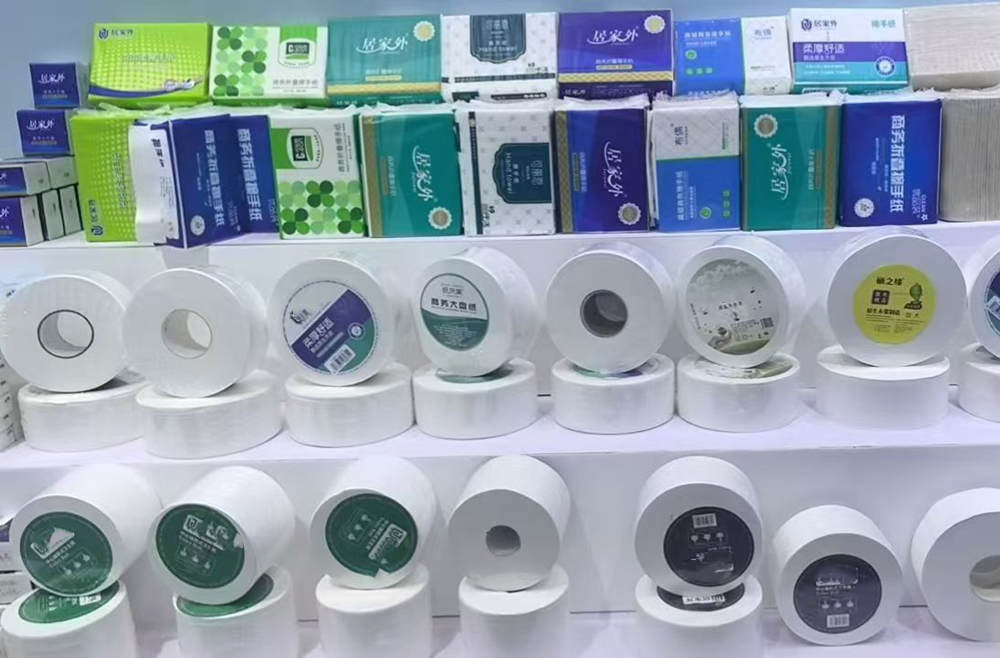
Buyers use standardized formulas to compare cost-per-foot across different ply counts and GSM weights, ensuring they are not overpaying for “air” in loosely wound rolls. Digital tools now convert roll diameter and core size into actual usable length, preventing the common mistake of equating a 9-inch visual diameter with high capacity.
| Metric | Market Standard (Loose Wind) | TSH High-Density (JRT08) |
|---|---|---|
| Actual Footage (Linear Ft) | 700 – 750 ft | 1,000 – 1,200 ft |
| Roll Diameter | 9 Inches (Deceptive) | 9 Inches (Compressed) |
| Change-out Frequency | Daily or Semi-Daily | Once every 2-3 Days |
| Labor Cost Impact | Baseline | 30-40% Reduction |
Unified value metrics allow global retail chains to maintain pricing consistency across North American and European markets. By applying the formula: Length = π × (D² – d²) ÷ (4 × T), where D is the outer diameter and T is the sheet thickness, procurement officers can mathematically verify supplier claims before the product ever leaves the warehouse.
Applying Sector-Specific Formulas for Operational Accuracy
Different industries require specialized formulas to determine material efficiency. The hospitality sector focuses on guest satisfaction scores versus the cost of premium facial tissues, where the “cost of failure” (a dissatisfied guest) far outweighs a few cents saved on roll length. In contrast, public facilities in regions like Africa use high-capacity jumbo roll formulas to reduce maintenance intervals and cut operational costs by up to 15%.
We provide detailed spec sheets that enable facilities managers to calculate precise usage rates based on actual foot-traffic data. This data-driven approach ensures that high-traffic environments—such as airports or shopping malls—are stocked with 5-ply or coreless high-density rolls that offer the best linear footage per cubic meter of shipping space.

Using a Digital Caliper to Verify Ply Thickness and Roll Density
Digital caliper verification converts subjective visual assessments into empirical data, allowing procurement teams to identify “fluffed” jumbo rolls that lack the necessary fiber density to meet high-traffic commercial demands.
Establishing a precise zero-point is the only way to ensure paper thickness measurements remain reliable across different production batches. Even a 0.01mm error in a baseline reading can lead to massive footage miscalculations when multiplied across the hundreds of layers in a 9-inch jumbo roll. We use the digital readout to detect minute variations that would otherwise go unnoticed in modern production standards.
- Ensure the caliper reads exactly zero when the jaws are fully closed before starting a measurement cycle.
- Maintain a clean contact surface on the jaws to prevent debris from creating false thickness readings.
- Use the digital readout to establish a baseline that allows for the detection of minute variations in 2026 production standards.
Proper Alignment Techniques for Material Measurement
Correct jaw placement prevents angular errors that can artificially inflate thickness readings. We align the caliper jaws perpendicularly to the paper material to avoid skewed data caused by diagonal positioning. When measuring 100% Virgin Wood Pulp, we apply consistent, light pressure to the jaws so they touch the paper surface without compressing the fibers, as excessive force will result in an understated GSM (grams per square meter) reading.
- Align the caliper jaws perpendicularly to the paper material to avoid skewed data caused by diagonal positioning.
- Apply consistent, light pressure to the jaws so they touch the paper surface without compressing the fibers.
- Take multiple measurements across different sections of the roll to account for potential material irregularities.
Identifying Manufacturing Irregularities via Rapid Assessment
Digital instruments allow quality control teams to quickly identify discrepancies between nominally identical products. We compare digital readouts against official spec sheets to verify that the ply thickness meets the advertised density, typically ranging between 13–22g/m² per ply for premium commercial stock. This rapid assessment exposes “loose winding” tactics where a roll maintains its 9-inch diameter but lacks the linear footage required for facility efficiency.
- Compare digital readouts against official spec sheets to verify that the ply thickness meets the advertised GSM.
- Use rapid assessment tools to detect thickness discrepancies that might indicate a reduction in raw material usage.
- Analyze the density of the roll by measuring the diameter and comparing it to the total paper length to spot loose winding.
Maintaining Standardized Quality Control in 2026
Precision-based testing supports consistent manufacturing standards and protects the buyer from deceptive roll dimensions. We incorporate digital caliper verification into the standard receiving protocol for wholesale shipments to ensure that every 40HQ container meets the specified payload. This data-driven approach creates a clear audit trail, ensuring that jumbo rolls remain uniform and do not cause malfunctions in automated commercial dispensers.
- Incorporate digital caliper verification into the standard receiving protocol for wholesale shipments.
- Document thickness data across different production runs to ensure the manufacturer maintains consistent quality.
- Verify that the density of jumbo rolls remains uniform, preventing issues with automated dispensers in commercial facilities.
Demanding Certified Spec Sheets from Wholesale Manufacturers
Detailed technical specifications serve as the only legal and operational safeguard against material substitution and “air winding” in high-volume jumbo roll procurement.
Procurement teams must secure written confirmation of fiber origin to maintain product consistency. Standardizing on 100% virgin wood pulp eliminates the structural weaknesses and linting issues common in recycled blends. We define GSM (Grams per Square Meter) requirements specifically—typically ranging from 13 to 22g/m² per ply—to ensure the finished paper meets absorbency and durability expectations for high-traffic environments.
Verifying Material Composition and Ply Density
Vague material descriptions allow suppliers to introduce inferior fibers that reduce paper strength. By locking in precise material specs, buyers ensure the final product meets the required weight and thickness standards.
- Request written confirmation of 100% virgin wood pulp usage to avoid recycled blends that compromise tensile strength.
- Define exact GSM requirements to ensure the paper meets the specific absorbency needs of your target market.
- Include ply count specifications in the contract to prevent manufacturers from thinning layers during high-volume production cycles.
Enforcing Dimensional Accuracy and Roll Length Standards
Certified dimensions protect buyers from deceptive manufacturing practices like loose winding or reduced sheet counts. Since visual diameter often masks significant variance in actual paper footage, spec sheets must move beyond diameter-only metrics to focus on linear length and sheet dimensions.
- Mandate the inclusion of roll diameter, core size, and total linear footage on every 2026 production batch spec sheet.
- Establish allowable tolerance ranges for sheet width and length to maintain consistency across global supply chains.
- Compare certified lengths against physical roll weights to identify and eliminate “air winding” discrepancies where volume is inflated by low tension.
Validating International Compliance and Sustainability Certifications
Regulatory documentation serves as proof that the manufacturer meets the safety and environmental standards required for global retail and commercial entry. Without verified certifications, importers face significant risks of customs delays or market rejection due to non-compliance.
- Demand current ISO 9001 and FDA compliance documents to ensure hygiene products meet North American and European safety mandates.
- Verify FSC (Forest Stewardship Council) certification for all eco-friendly product lines to align with 2026 sustainability targets.
- Cross-reference manufacturer test reports with third-party lab results to confirm the absence of fluorescent whiteners (OBA-Free) or harmful chemicals.
Establishing Performance Metrics for Quality Assurance
Clear performance data on spec sheets provides a baseline for inspecting shipments and resolving disputes with wholesale suppliers. These metrics transform subjective quality opinions into objective, measurable data points that hold the factory accountable.
- Set quantifiable thresholds for liquid absorption capacity and wet strength in the primary specification document.
- Utilize the spec sheet as a legal anchor for quality control inspections before a 40’HQ container leaves the factory.
- Require manufacturers like Top Source Hygiene to provide updated spec sheets for any ODM design changes to maintain brand integrity.
Conclusion
Distinguishing between roll diameter and actual footage ensures procurement transparency and prevents overpaying for loosely wound product. Verifying winding density and ply thickness through technical auditing protects your margins and maintains consistent facility standards across high-traffic environments. These verification steps transform a standard commodity purchase into a data-driven procurement strategy.
Review your current inventory specifications to identify potential footage gaps in your supply chain. You can request a certified technical spec sheet from Top Source Hygiene to compare our high-density winding standards against your existing benchmarks.
Frequently Asked Questions
How many feet are in a 9 inch jumbo toilet paper roll?
A standard 9-inch jumbo roll typically contains between 500 and 2,000 linear feet. The variance depends heavily on the ply: a standard 2-ply roll usually provides 1,000 feet, while a high-capacity 1-ply roll can exceed 2,000 feet within the same 9-inch diameter.
Why are some jumbo toilet paper rolls wound loosely?
Manufacturers use loose winding or “low-tension” winding to increase the physical volume of the roll without adding more paper. This creates a visual deception where a roll appears to be a high-capacity “jumbo” product while actually containing significantly less linear footage than a tightly wound alternative.
How to verify the length of commercial toilet paper?
To verify actual value, procurement professionals should ignore the outer diameter and check the product specifications for “total linear footage” or “sheet count.” A reliable method for onsite verification is to compare the net weight of the rolls (excluding the core), as heavier rolls almost always indicate more actual paper fiber and length.
Does roll diameter equal toilet paper length?
No, roll diameter is an unreliable metric for length. Factors such as the thickness (caliper) of the paper, the size of the cardboard core, and the tightness of the winding can result in two 9-inch rolls having vastly different usable capacities.
How manufacturers cheat on wholesale toilet paper?
Common industry “cheats” include increasing the diameter of the center cardboard core, reducing the width of the roll (e.g., from 4 inches to 3.5 inches), and using “aerated” winding to make a short roll look full-sized. This masks the reduction in total linear footage while maintaining the expected “jumbo” price point.
Cost per foot vs cost per roll for janitorial paper?
Cost per roll is often a misleading metric because it ignores the actual amount of paper provided. Cost per foot (calculated as Total Case Cost divided by Total Case Footage) is the industry standard for determining true value, as it directly correlates to how often the roll will need to be replaced by maintenance staff.