
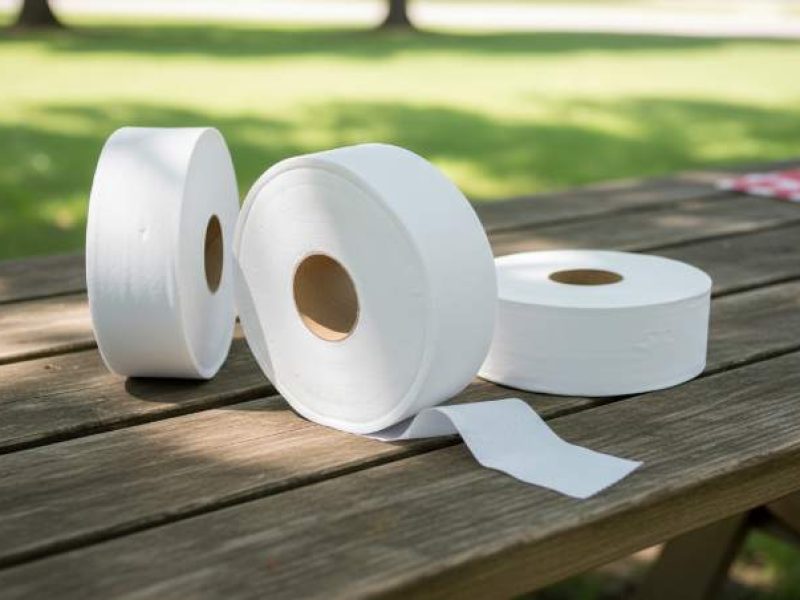
JRT core material science directly dictates the structural integrity of your supply chain, where a single crushed roll can halt an automated dispensing line or lead to significant inventory loss. When high-volume facilities overlook the engineering behind these cardboard centers, they face increased labor costs from manually reshaping rolls and higher waste ratios during transit. A weakened core does more than damage the paper; it compromises operational efficiency and creates unnecessary bottlenecks in high-traffic maintenance schedules.
This technical analysis examines the specific variables that define a high-performance core, starting with the optimal cardboard GSM required to withstand industrial stacking loads. We evaluate how core circularity affects rotation speeds in dispensers and why material density matters in humid storage environments. By comparing virgin and recycled fibers, this guide provides the necessary standards for selecting components that ensure reliable performance from the warehouse floor to the final dispenser.
Why Do Low-Quality Cores Lead to Crushed Rolls During Transit?
Core failure is rarely a random accident; it is the predictable mechanical result of inadequate fiber density meeting the extreme static loads of modern 40HQ maritime logistics.
Insufficient Compressive Resistance in Substandard Materials
Substandard paperboard often relies on low-density recycled fibers that lack the structural integrity to handle significant vertical pressure. When heavy paper rolls are stacked, these fibers reach their yield point quickly, causing the core to flatten or “ovalize.” This structural collapse is a critical failure point for B2B buyers because it directly impacts the end-user experience.
- Low-density recycled fibers provide minimal vertical support when subjected to heavy loads.
- Material failure occurs when the downward pressure exceeds the core’s yield point during long-duration storage.
- Deformed cores prevent the use of standard dispensing equipment at the destination, rendering the product unusable.
Impact of Stacking Pressure in 2026 Global Shipping
Modern shipping maximizes container utilization to combat rising freight costs, placing immense physical stress on the bottom layers of any shipment. In a 40-foot high-cube container, the static load on base pallets can reach several tons. Without high-specification cores, the bottom rolls act as the primary load-bearing members, a role they are not designed to fill without specialized reinforcement.
- Multi-tier stacking in 40-foot high-cube containers increases the static load on base rolls significantly.
- Uneven weight distribution across pallets causes localized core buckling in weaker roll batches.
- Top Source Hygiene reinforces core thickness to prevent structural damage during 2026 ocean transits to North America and Europe.
Vibration and Shift Stress During Maritime Transit
Transit involves constant motion that tests the mechanical bonds of the core. Budget manufacturers often use low-grade adhesives that crystallize and crack under the persistent vibration of a cargo ship or long-haul truck. Once the adhesive bond fails, the core loses its torque resistance, leading to “telescoping” where the paper layers slide out of alignment.
- Road and sea vibrations weaken the structural bonds of low-quality adhesives used in budget core manufacturing.
- Shifting loads during transit concentrate force on the roll edges, which often causes telescoping or total core failure.
- High-strength cores maintain the roll’s center of gravity, ensuring safe handling for warehouse staff and automated systems.
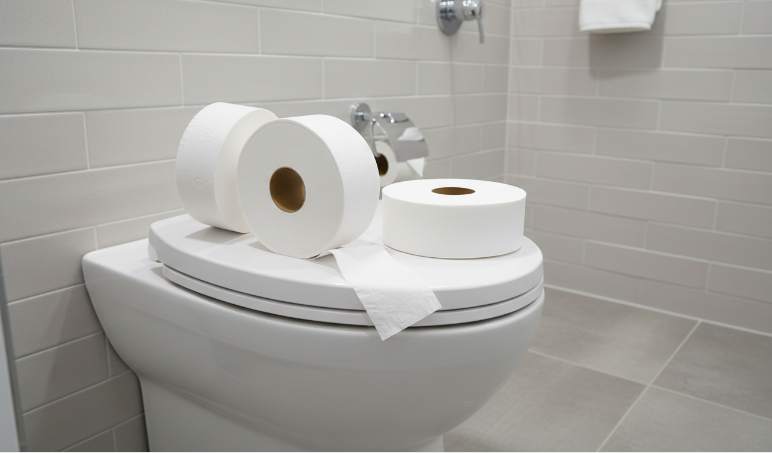
What Is the Optimal Cardboard GSM for a 12-Inch Jumbo Roll?
Selecting the correct cardboard GSM ensures a jumbo roll maintains its cylindrical profile under vertical stacking pressure and prevents core collapse during high-speed mechanical unwinding.
Standard GSM Ranges for Commercial Paper Products
Commercial buyers must align cardboard GSM (grams per square meter) with the specific mechanical demands of their dispensing environment. Cost-sensitive segments, such as retail kiosks and budget-focused facilities, typically utilize lower GSM ranges between 48 and 55. These specifications prioritize economic efficiency but offer limited resistance to external compression. General-purpose commercial systems maintain a better balance of affordability and structural strength by using 55–70 GSM, which serves as the industry standard for most professional environments.
| Application Type | Optimal GSM Range | Key Performance Benefit |
|---|---|---|
| Retail & Kiosk (Cost-Sensitive) | 48 – 55 GSM | Maximum units per container; lowest landed cost. |
| General Commercial (Standard) | 55 – 70 GSM | Balanced crush resistance and high-speed dispensing. |
| Premium Industrial & Logistics | 70 – 80 GSM | Resists moisture and vertical load in 40HQ stacking. |
Premium applications requiring extended storage or high-durability transit cycles necessitate specifications between 70 and 80 GSM. This upper tier provides the rigidity needed to prevent core “ovaling,” a common defect where the core flattens slightly, causing the roll to jump or jam inside the dispenser.
Technical Factors Influencing Weight Selection
High-speed dispensing equipment used in modern facilities puts significant torque on the cardboard core. We use higher GSM materials to prevent the core from tearing or delaminating during rapid use. Environmental exposure also dictates paper weight; in humid storage conditions, cardboard naturally absorbs moisture and loses its structural integrity. Thicker cores offset this degradation, ensuring the rolls remain usable even after months in tropical or unconditioned warehouse environments.
- Mechanical Stress: Higher GSM prevents the inner tube from buckling under the weight of 12-inch jumbo rolls.
- Transit Stability: Thicker walls allow for higher stacking in 40HQ containers without crushing the bottom layers.
- User Experience: Precise circularity maintained by dense cardboard ensures smooth, quiet paper delivery.
Custom GSM Specifications at Top Source Hygiene
With 30 years of manufacturing experience, Top Source Hygiene provides tailored GSM solutions that align with specific regional market demands. Our two advanced factories in the Hebei industrial hub allow for precise control over core density, ensuring that distributors in high-humidity regions like Southeast Asia or Africa receive products engineered for those climates.
We offer full control over these specifications to help wholesalers protect their margins and brand reputation. Every batch undergoes strict quality control to verify that the chosen GSM levels meet ISO 9001 and international performance standards. This factory-direct oversight ensures that the structural foundation of the roll—the core—is never a point of failure in your supply chain.
Scale Your Brand With High-Capacity Jumbo Rolls
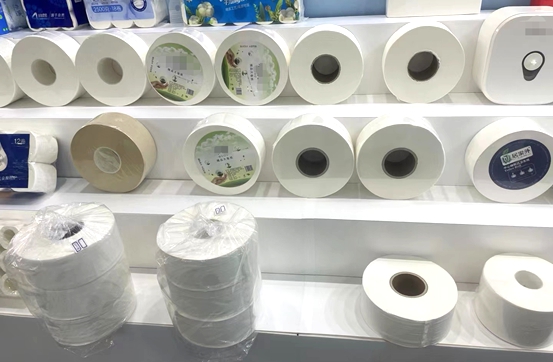
How Does Core Circularity Affect High-Speed Dispensing?
High-speed dispensing efficiency in 2026 hinges on monomaterial core architectures that eliminate material separation delays while ensuring maximum evacuation rates for zero-waste industrial operations.
Monomaterial Construction for Waste Reduction
Circular design in 2026 prioritizes monomaterial builds to streamline the recycling process. By using single-material components, we eliminate the need for complex material separation during disposal. Standard industrial cores often use mixed adhesives and multi-layered paper types that complicate the pulping process. Switching to a unified material structure ensures that the core remains a high-value resource after its initial use, supporting a closed-loop production cycle.
| Performance Metric | Standard Mixed-Material Core | 2026 Monomaterial Core |
|---|---|---|
| Recycling Efficiency | Requires mechanical sorting | Direct pulping/recycling compatible |
| Structural Integrity | Variable layer bonding | High-tension uniform stability |
| Waste Generation | Significant residual adhesive waste | Zero-waste output potential |
Monomaterial designs also support system-wide efficiency by reducing the complexity of the product delivery cycle. When the core and the tissue share compatible fiber origins, the industrial waste stream becomes cleaner. This strategy ensures that high-speed systems remain sustainable without sacrificing the structural integrity required for rapid rotation.
High Evacuation Rates and Product Loss Prevention
Advanced dispensing architectures maximize the amount of product delivered, significantly reducing residual loss in high-performance applications. We engineer dispensing devices to target high evacuation rates, ensuring almost no product remains on the core when the roll finishes. In commercial settings, “stub roll” waste—where the last 5% to 10% of a roll is discarded—represents a massive efficiency leak. Circular engineering solves this by refining the interface between the paper and the core surface.
- Precise core geometry allows for consistent release tension from the first sheet to the last.
- Reducing product loss directly improves resource efficiency in pharmaceutical and high-traffic hospitality sectors.
- Rapid delivery systems maintain waste-reduction standards through improved core-to-dispenser spindle fit.
Integrating Recyclability with Rapid Dispensing Performance
Modern systems balance the need for high-speed operation with end-of-life recyclability to meet global sustainability targets. Dispensing architectures now integrate performance metrics like speed and precision with a product’s eventual recyclability. We no longer view the core as a disposable byproduct but as a functional component of the machine’s mechanical cycle. Resource-efficient designs support the high-performance needs of the consumer sector while ensuring that materials stay within the production loop after use.
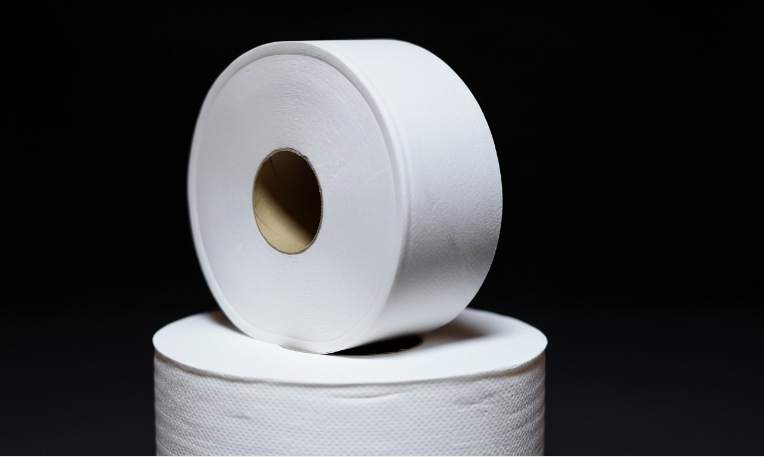
Why Should You Avoid Soft Cores in Humid Storage Conditions?
Soft cores act as moisture magnets, triggering a structural breakdown that destroys stack stability and ruins dispenser compatibility in high-humidity climates.
Moisture Absorption and Loss of Structural Integrity
Soft paper cores function as hygroscopic materials, meaning they readily pull water vapor from the surrounding air. This process weakens the internal fiber bonds that give the core its strength. When cardboard fibers exceed specific moisture thresholds, they lose their inherent rigidity, causing a sharp decline in crush resistance.
- Cardboard fibers lose structural rigidity once moisture content compromises the internal bonding agents.
- Modern storage facilities often deal with fluctuating micro-climates that cause soft cores to sag or collapse under the weight of stacked pallets.
- Weakened cores cannot maintain the internal tension required to keep the virgin wood pulp tissue layers tightly wound.
Dimensional Instability and Material Swelling
Fluctuating humidity levels trigger repeated expansion and contraction cycles. These cycles permanently deform the core’s shape, leading to “out-of-round” rolls. As individual paper fibers swell from moisture absorption, the core’s diameter increases and deviates from its original technical specifications.
- Fiber swelling alters the core’s diameter, making it impossible to fit onto precision-engineered commercial dispensers.
- Deformed rolls wobble or jam during high-speed dispensing, frustrating end-users and increasing maintenance calls.
- Continuous moisture cycles create physical stress that causes the spiral-wound layers of the cardboard to delaminate and peel.
Biological Growth and Hygiene Risks
Damp, soft cardboard creates a primary breeding ground for mold and mildew. This risk is particularly high during long-term storage or maritime transit through tropical zones. Soft cores retain moisture significantly longer than high-density or chemically treated alternatives, which accelerates the development of mold spores.
- High-density cores resist moisture retention, whereas soft cores provide the porous environment fungal colonies need to thrive.
- Fungal growth often migrates from the cardboard core into the 100% virgin wood pulp tissue, rendering the entire roll unsalable.
- Degraded cores emit unpleasant odors that damage brand perception and fail to meet the hygiene standards expected in hospitality and healthcare sectors.
Compression Failure in Stacked Inventory
Humidity drastically lowers the load-bearing capacity of low-GSM cardboard. In professional logistics, we emphasize vertical stacking to maximize space in 40HQ containers. Humidity-softened cores simply cannot support these heavy loads, leading to crushed inventory at the bottom of the stack.
- Softened cores lead to a domino effect where one collapsed roll destabilizes an entire pallet.
- Loss of circularity due to moisture-induced compression makes the roll functionally useless for standard JRT dispensers.
- Switching to moisture-resistant or reinforced cores eliminates the 15-20% inventory loss typically seen in tropical or humid port storage.

Can Recycled Cardboard Cores Meet Industrial Strength Standards?
Recycled cardboard cores in 2026 utilize high-density fiberboard and advanced resin bonding to achieve crush resistance and torque stability identical to virgin fiber counterparts.
Compression and Crush Strength Performance
Modern recycled cores eliminate the structural vulnerabilities previously associated with post-consumer materials. By employing advanced spiral-wound configurations, we distribute both vertical and lateral stress evenly across the core wall. This engineering ensures that the foundation remains intact even when supporting the weight of 12-inch jumbo rolls in high-stacking warehouse environments.
- High-density recycled paperboard matches the load-bearing capacity of virgin fiber alternatives in 40HQ container stacking.
- Spiral-wound layering prevents localized buckling during heavy industrial transit.
- Engineered wall thickness maintains structural integrity under the high compressive forces of industrial winding.
| Performance Metric | Virgin Fiber Core | Engineered Recycled Core |
|---|---|---|
| Crush Resistance | Standard Baseline | 98-102% of Baseline |
| Torque Resistance | High | Enhanced via Resin Adhesives |
| Moisture Stability | Standard | Surface-Treated for Humidity |
Impact of Engineered Adhesives on Structural Integrity
The strength of a recycled core depends largely on the bonding agents used between layers. We use specialized resin-based adhesives that penetrate deep into the recycled fibers, creating a unified, rigid structure. This precision application prevents delamination—the splitting of layers—which is a common failure point when cores face high tension loads on industrial mandrels.
- Advanced resins provide the necessary stiffness to resist internal collapse during rapid winding.
- Bonding agents increase the core’s overall torque resistance, essential for high-speed automated dispensers.
- Precision application ensures uniform adhesive coverage, eliminating weak spots in the core wall.
Dimensional Stability for Industrial High-Speed Winding
Maintaining circularity is the most critical factor for performance in high-speed tissue manufacturing. Recycled cores in 2026 are produced using automated cutting and winding equipment that prevents “ovalization” or warping. This dimensional consistency ensures the core fits securely on industrial mandrels, providing vibration-free dispensing in high-traffic commercial environments.
- Strict circularity tolerance prevents machine jams during the winding and converting process.
- Consistent wall thickness ensures compatibility with standard JRT dispenser spindles.
- Modern recycled material demonstrates excellent shape retention even under fluctuating humidity levels.
Aligning Sustainable Materials with Global Compliance
Global brands now require sustainable supply chains without a drop in mechanical reliability. Recycled cardboard cores offer a direct solution to meet green procurement demands in North American and European markets. These components undergo the same rigorous ISO 9001 testing protocols as virgin cores, ensuring they meet every safety and performance benchmark required by industrial distributors.
- FSC-certified recycled options satisfy international environmental compliance standards.
- Transitioning to 100% recycled cores reduces the carbon footprint per roll for wholesale buyers.
- Rigid testing ensures zero compromise on performance during high-volume logistics handling.
Conclusion
High-strength cores prevent roll deformation during stacking and ensure seamless performance in commercial dispensers. Choosing the correct cardboard GSM and maintaining structural circularity protects your inventory from transit damage and reduces waste. These engineering details directly impact the landed quality of bulk orders and overall distribution efficiency.
Review your current shipping specifications to ensure your jumbo rolls can withstand high-pressure container loading. Contact Top Source Hygiene to request technical specifications or a sample pack for your private label project.
Frequently Asked Questions
Why is the toilet paper core important?
The core is critical for maintaining the structural integrity of the roll, especially under compressive forces during transit and stacking. A robust core prevents operational vulnerabilities and ensures the roll remains stable during downstream processing and dispensing. High-quality core construction is essential to prevent crushing, which can destabilize entire stacks and lead to economic losses and safety hazards.
What is the core diameter of JRT?
Standard Jumbo Roll Tissue (JRT) cores typically come in two industry-standard diameters: 2.25 inches (approximately 57mm) and 3 inches (approximately 76mm). These sizes are engineered to fit universal commercial dispensers, ensuring smooth rotation and consistent paper tension during use.
How to fix a crushed toilet paper roll?
To fix a crushed roll, you can insert a cylindrical object with a matching diameter—such as a PVC pipe or a core expander tool—into the center to manually reshape the cardboard. In industrial settings, applying internal pressure while rotating the roll can often restore the circular profile, allowing it to fit back onto the dispenser spindle.
Does core weight affect JRT price?
Yes, core weight affects the overall pricing of JRT. Heavier cores require more material and higher-grade paperboard to increase compressive strength. While this increases the per-unit production cost, it significantly reduces the financial risk of product damage during shipping and handling, making it a cost-effective choice for industrial-scale operations.
What is the standard JRT core material?
The standard material for JRT cores is multi-ply recycled kraft paperboard. These layers are spirally wound and bonded with high-strength adhesives to create a rigid, durable tube that can withstand the weight and tension of large-format tissue rolls.
Can JRT cores be recycled?
Absolutely. JRT cores are made from paperboard and are 100% recyclable. They should be disposed of in standard cardboard recycling streams. Recycling these cores is a key component of sustainable facility management and helps reduce industrial waste.