
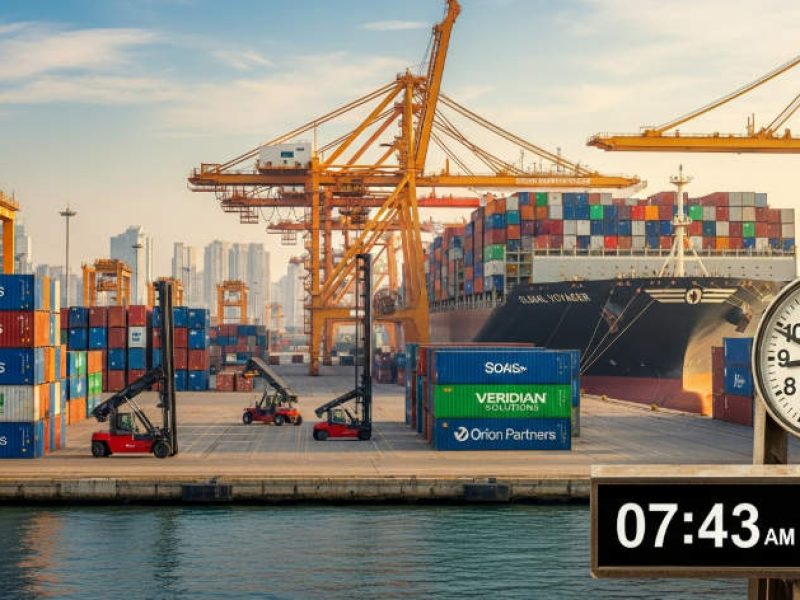
Managing Global Port Logistics (JRT) determines whether a bulk tissue order remains profitable or becomes a financial liability due to escalating sea freight and port congestion fees. For B2B importers, a single delay in the supply chain ripples into missed retail deadlines and significant capital tied up in transit. Reliable port-to-port movement serves as the backbone of a high-volume paper business, where shipping efficiency directly impacts the final landed cost per ton.
This guide details the operational steps needed to streamline jumbo roll shipments, covering everything from precise HS code classification for customs clearance to container booking strategies during peak demand. You will find technical insights on how factory proximity to major shipping hubs reduces inland transportation risks and how to structure delivery schedules that bypass expensive port demurrage. These protocols act as a standard operating procedure for maintaining a steady inventory flow from China to your distribution center.
Why Does Factory Proximity to Major Ports Lower Your Landed Cost?
Reducing the physical gap between the production line and the loading dock eliminates the hidden “middle mile” costs that often inflate the landed price of high-volume paper goods.
Reduction of Inland Drayage and Transportation Fees
Minimizing the distance between the production line and the shipping terminal eliminates significant inland freight expenses. For bulk paper products, where volume often dictates cost, every mile of inland transport adds a layer of drayage fees that cannot be recovered. Shortening the path from the factory to the pier reduces the number of vehicle movements required to transport 40’HQ containers, which directly decreases the total landed cost per unit.
| Logistics Factor | Port-Proximate Factory | Inland Manufacturer |
|---|---|---|
| Inland Drayage (40’HQ) | Minimal (Direct terminal access) | High (Long-haul trucking/rail) |
| Transit Buffer | 1-2 Days to Port | 5-10 Days to Port |
| Inventory Holding Cost | Optimized cash flow | Capital tied in transit |
Top Source Hygiene leverages its strategic location in the Mancheng production base to simplify container transfers to major North China ports like Tianjin Xingang. This geographic advantage allows our loading teams to maximize the payload of every 40HQ container—typically 7 to 9 tons—ensuring that clients pay for paper, not for unnecessary fuel and trucking surcharges.
Faster Transit Times and Improved Working Capital
Proximity to port infrastructure speeds up the transition from factory floor to ocean vessel, optimizing cash flow for distributors and hospitality groups. Quick access to ocean freight services reduces the time goods spend in transit before reaching the customer. Faster shipping cycles lower inventory holding costs and improve working capital efficiency.
- Reduced lead times allow for leaner inventory levels at your warehouse.
- Decreased capital tied up in stored paper goods improves liquidity.
- Swift dispatch to Tianjin Xingang enables faster response to 2026 market demand spikes.
Minimized Exposure to Port Congestion and Handling Delays
Strategic factory placement allows for more flexible scheduling and fewer transshipment complications. Locating manufacturing near major hubs provides more options for navigating port congestion or geopolitical disruptions. Direct shipping from nearby ports reduces the need for multiple transshipment points, which cuts down on handling fees and potential damage to the cargo.
Reliable proximity ensures that urgent orders meet 2026 shipping deadlines without the risk of long-distance inland delays. By avoiding unnecessary staging and multiple hand-offs, we protect the integrity of the 100% Virgin Wood Pulp rolls. This streamlined logistics chain maintains our commitment to delivering “Pure Quality” while shielding your margins from the volatility of inland transport networks.
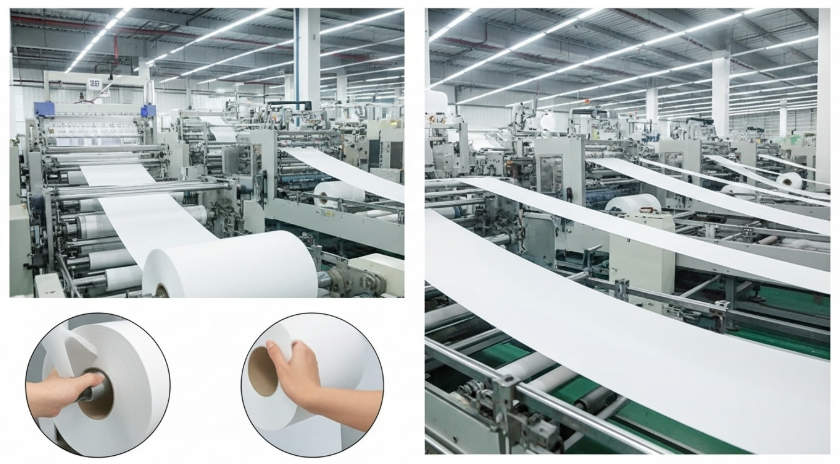
How to Handle Container Shortages and Booking for JRT Shipments?
In the 2026 logistics landscape, securing Jumbo Roll Tissue supply chains requires a shift from reactive booking to an eight-week lead time strategy and multi-port routing to bypass persistent hub congestion.
Advance Booking and Lead Time Planning
Managing high-volume Jumbo Roll Tissue (JRT) orders requires tight alignment between manufacturing schedules and vessel space acquisition. Secure equipment by initiating cargo bookings at least six to eight weeks before your target departure date. This window allows for fluctuations in equipment availability at Northern China terminals.
- Synchronize the 20-25 day production cycle at Top Source Hygiene factories with carrier schedules to move cargo directly from the facility to the port.
- Build a buffer for local haulage delays by ensuring cargo is ready for pickup at least three days before the official port cut-off time.
- Align factory output with the specific container type needed, typically 40’HQ, to avoid delays caused by mismatched equipment requests.
Multi-Port Routing for Regional Distribution
Bypassing traditional bottlenecks at major global hubs prevents paper products from sitting idle in port queues. Route shipments through secondary entry points in North America and Europe to maintain a steady flow of inventory to commercial clients. This strategy reduces the risk of stockouts during peak demand periods.
- Leverage existing logistics routes across 56+ countries to identify less congested regional discharge ports for bulk JRT orders.
- Use intermodal transport options to move containers from smaller ports to final warehouse destinations, minimizing reliance on overstretched truck lanes.
- Evaluate the transit time versus cost trade-offs when selecting alternative ports to ensure the landed cost remains within budget.
Long-Term Service Agreements for Rate Stability
Fixed-rate contracts with ocean carriers offer essential price predictability for high-capacity shipments. Negotiate volume commitments to lock in space and protect your procurement budget from spot market price spikes throughout the fiscal year. These agreements often include equipment guarantees that are unavailable on the spot market.
- Prioritize carriers that offer specific container guarantees for paper goods to reduce the risk of cargo being rolled to later vessels.
- Partner with third-party logistics (3PL) providers to consolidate regional orders into full 40’HQ loads for improved bargaining power with shipping lines.
- Review contract terms quarterly to ensure they reflect current market capacity and demand for bulky tissue products.
Digital Tracking for Supply Chain Visibility
Real-time monitoring tools help logistics managers predict and mitigate potential transport delays. Implementing digital cargo-tracking platforms allows you to monitor JRT shipments from the Mancheng production base to the final port of arrival. This visibility is vital for managing local inventory and customer expectations.
- Utilize data-driven repositioning strategies to anticipate equipment shortages in Northern China before they impact scheduled bookings.
- Share real-time status updates with hospitality and commercial clients to ensure they can adjust their internal supply levels effectively.
- Apply predictive analytics to historical shipping data to identify recurring seasonal delays at specific transit nodes.
Premium OEM Jumbo Rolls At Factory Prices
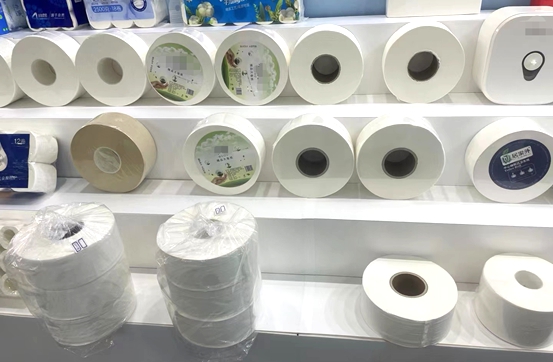
What Are the Customs Classification (HS Codes) for Jumbo Rolls?
Applying the correct HS code determines your entire tax liability and clearance speed; misclassifying sanitary Jumbo Roll Tissue (JRT) as industrial paper can trigger 20-30% in avoidable port demurrage and audit penalties.
Standard Classification for Coated and Surface-Decorated Rolls
Most industrial and commercial jumbo rolls move through international trade under the HS Code 4811 classification. This category specifically captures paper and paperboard that has been surface-decorated, coated, or impregnated. For Top Source Hygiene clients, this code applies when rolls serve as raw materials for further processing or specific commercial applications where the paper is not strictly defined as final-use sanitary tissue.
| Product Category | Primary HS Code | Technical Distinction |
|---|---|---|
| Sanitary Jumbo Roll (JRT) | 4818.10.00 | Width ≤ 36cm; 100% Virgin Wood Pulp |
| Industrial Coated Jumbo | 4811.90.00 | Surface-treated or impregnated rolls |
| Lightweight Thermal Paper | 4811.90.00.10 | Weight ≤ 65 gr/m² for receipt stock |
- HS Code 4811 covers paperboard in rolls or sheets that underwent impregnation during the manufacturing process.
- Customs authorities apply this code to a wide variety of formats used in the retail and commercial sectors.
- Specific surface treatments trigger different sub-headings, though classification remains consistent across major global markets.
Technical Subcategories for Thermal and Lightweight Paper
Weight and dimensions dictate the precise sub-classification for thermal and lightweight jumbo rolls. When importing rolls with a weight of 65 gr/m² or less, we typically utilize HS Code 4811900010. Precision in these numbers prevents customs holds during the 15-25 day production-to-port cycle. HS Code 4811.90 serves as the primary sub-heading for specialty coated rolls, but regional standards often introduce more granular requirements.
- Indian classification standards frequently specify HS Code 48119094 for incoming thermal paper jumbo roll shipments.
- Sub-headings change based on roll width and total weight per bundle.
- Importers must confirm the Grams per Square Meter (GSM) to ensure the 4811.90 sub-category accurately reflects the cargo.
Material-Specific Coding for Ribbons and Special Formats
Jumbo formats that incorporate non-paper elements or specific transfer technologies require distinct customs entries to avoid shipping delays. Thermal transfer ribbons in jumbo format, for instance, classify under HS Code 3702.42.0000 rather than standard paper codes. This distinction is vital for Top Source Hygiene clients who bundle hygiene paper products with commercial printer supplies in a single 40HQ container.
Accurate HS Code application ensures that our 2860-ton monthly output moves through ports like Tianjin Xingang without friction. We verify the importing country’s 2026 tariff schedule for every order to account for variations in coating characteristics. This rigorous documentation process protects your profit margins by preventing unforeseen duties and securing the duty-free status often associated with sanitary paper products like HS 4818.10.00 in the United States.
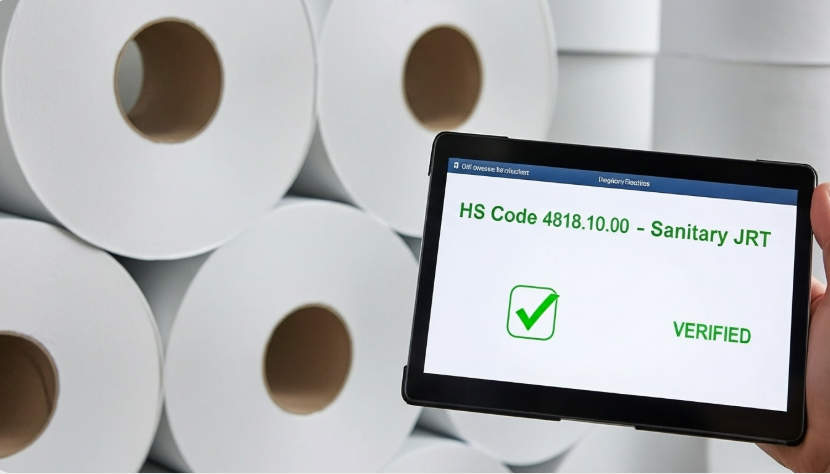
How to Optimize Your Shipping Schedule to Avoid Port Demurrage?
Minimizing port demurrage requires a transition from reactive booking to a predictive logistics model that aligns production output with real-time terminal velocity.
Port demurrage frequently adds 20% to 30% to the final landed cost of jumbo roll tissue (JRT) shipments when containers exceed their allotted free time at the terminal. To mitigate this risk, logistics teams must move beyond traditional scheduling. We use predictive modeling to anticipate port congestion trends specifically for the 2026 shipping season. By analyzing historical turnaround data and seasonal labor availability, we adjust shipping windows to ensure containers arrive when terminal throughput is at its highest efficiency.
| Optimization Factor | Traditional Logistics | TSH Optimized Standard |
|---|---|---|
| Documentation Timing | Post-arrival submission | 72-hour pre-vessel clearance |
| Inventory Strategy | Just-in-Time (JIT) | Active Production Buffer |
| Tracking Accuracy | Carrier website updates | IoT-enabled real-time alerts |
Data-Driven Scheduling and Predictive Analytics
Effective scheduling relies on demand forecasting that syncs production finishes with available vessel space. We avoid the common mistake of finishing a production run only to find that haulage capacity is locked for the week. Instead, we use the following protocols:
- Implement predictive modeling to anticipate port congestion trends for the 2026 shipping season.
- Use demand forecasting to align production finishes with available vessel space and haulage capacity.
- Adjust shipping windows based on historical data regarding port turnaround times and seasonal labor availability.
Strategic Port Coordination and Documentation Protocols
Administrative errors cause more demurrage than physical port congestion. We eliminate these bottlenecks by submitting all customs documentation and import permits at least 72 hours before the vessel arrives. This proactive approach ensures immediate clearance upon discharge. Furthermore, we establish direct communication channels with local drayage providers to confirm pickup appointments the moment the container hits the dock, bypassing the typical 24-hour administrative lag.
- Submit all customs documentation and import permits at least 72 hours before the vessel arrives to ensure immediate clearance.
- Establish direct communication channels with local drayage providers to confirm pickup appointments the moment the container is discharged.
- Monitor blockchain-enabled documentation systems to reduce errors that typically cause administrative delays at the terminal.
Real-Time IoT Tracking and Logistics Visibility
Visibility is the primary defense against unforeseen transit delays. We deploy IoT-enabled tracking on our jumbo roll shipments, providing automated alerts when cargo reaches terminal gates. This data allows warehouse teams to prepare for rapid de-vanning, ensuring containers return to the port within the free-time window. We also integrate digital twin technology to simulate logistics contingencies, identifying alternative routes if inland transport disruptions occur.
- Deploy IoT-enabled tracking on jumbo roll shipments to receive automated alerts upon arrival at terminal gates.
- Integrate digital twin technology to simulate logistics contingencies and identify alternative routes during inland transport disruptions.
- Maintain constant visibility over container status to coordinate with warehouse teams for rapid de-vanning.
High-Volume Production Buffers for Shipping Flexibility
Top Source Hygiene utilizes a 2,860-ton monthly output to create a manufacturing buffer. Unlike factories operating on a strict just-in-time model, our volume allows us to maintain a safety stock of common paper products. This inventory enables us to load containers early if a booking slot opens unexpectedly due to a cancellation, or to delay a shipment slightly if a specific port is facing a temporary strike or backlog.
- Leverage the 15–25 day production lead time to sync cargo readiness with optimal ocean carrier schedules.
- Maintain a safety stock of common paper products to allow for early container loading when booking slots open unexpectedly.
- Utilize high manufacturing output to consolidate orders, reducing the total number of individual shipments requiring port clearance.
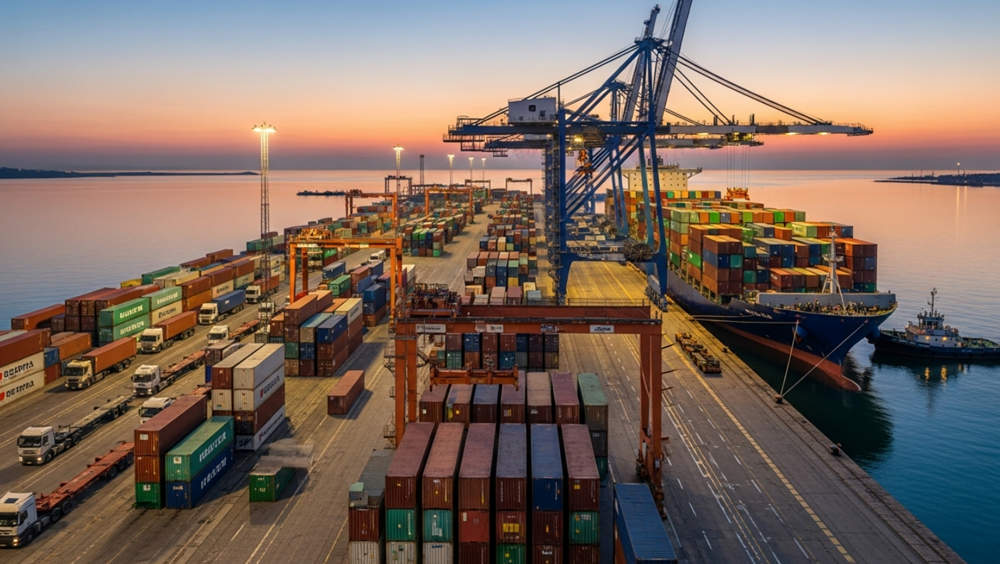
Why Is Our 2860-Ton Monthly Output a Buffer Against Logistics Delays?
Maintaining a massive 2,860-ton monthly production capacity transforms our facility from a standard factory into a strategic inventory reserve, effectively absorbing the impact of global maritime volatility.
We leverage our 2,860-ton monthly capacity to create production buffers that account for unpredictable port closures or strikes. This scale allows us to maintain a consistent manufacturing rhythm regardless of outbound logistics status. By decoupling production from immediate shipping availability, we ensure that your orders remain on schedule at the factory level.
Mitigating Port Congestion and Shipping Volatility
Maintaining a surplus of paper products ensures that manufacturing continues even when outbound logistics temporarily stall. This buffer allows Top Source Hygiene to absorb delays caused by labor shortages and weather disruptions without impacting your long-term supply chain stability.
- We use our high output to build safety stock, protecting your brand from sudden maritime disruptions.
- Our facility operates as a logistics shock absorber, holding ready-to-ship goods when port terminals reach peak congestion.
- Clients receive their orders from existing stock reserves during periods of high congestion, preventing retail stockouts and lost revenue.
Balancing Inventory Levels Against Global Supply Risks
High-volume manufacturing allows us to carry extra inventory, effectively neutralizing the risk of sudden logistics bottlenecks. We trade manageable storage costs for the security of a reliable product flow, which protects your brand from the market instability seen in recent years.
- We prioritize stock availability to prevent the high costs associated with empty shelves and damaged customer loyalty.
- Our active production management ensures that the cost of carrying inventory remains significantly lower than the potential financial damage of supply chain gaps.
- We maintain rigorous batch consistency across these larger inventory reserves, so quality never fluctuates during high-demand periods.
Navigating Regional Transit Delays in 2026
Shipments to Asia and Australia in 2026 often require generous timing buffers due to hub congestion and rerouted vessels around the Cape. Our high output provides the necessary lead time for these long-distance transits, ensuring your products arrive when needed despite extended routing.
- Top Source Hygiene uses its two advanced factories in Hebei to front-load production for regions facing tighter shipping capacity, such as North America.
- Increased output volume allows us to secure vessel space earlier by providing carriers with predictable, high-volume cargo commitments.
- We adjust production schedules in real-time to match shifting vessel arrival windows, keeping the flow of paper products moving on schedule.
Leveraging High Volume for Strategic Stockpiling
Consistent 2,860-ton output enables the positioning of inventory in key markets, reducing your dependence on international shipping timelines. Large-scale manufacturing runs also reduce the per-unit logistics cost when shipping bulk 40HQ containers of toilet paper and jumbo rolls.
- We produce enough volume to support regional distribution centers, enabling faster local delivery for our OEM and ODM partners.
- Our loading teams in Hebei maximize every inch of a 40HQ container, ensuring the lowest landed cost per roll for high-volume buyers.
- Our high monthly output supports a resilient supply model that bypasses the traditional just-in-time risks common in the paper industry.
Conclusion
Optimizing Jumbo Roll Tissue logistics requires a balance between port proximity, accurate customs classification, and container payload efficiency. Effective management of these variables reduces inland freight costs and prevents unnecessary port demurrage fees. A stable supply chain backed by high manufacturing output ensures that bulk paper orders remain on schedule despite global shipping fluctuations.
Assess your current 40HQ loading patterns to see if there is room to lower your landed cost per roll. Reach out to our logistics experts for a detailed freight estimate or to discuss custom packaging solutions for your market.
Frequently Asked Questions
What is the HS code for toilet paper rolls?
The standard Harmonized System (HS) code for toilet paper rolls is 4818.10. This classification is used globally for toilet paper in rolls or sheets and is essential for accurate customs declarations and duty assessments during international trade.
How to ship bulk TP from China?
To ship bulk toilet paper efficiently, utilize 40ft High Cube (HQ) containers to maximize volume, as paper is a high-volume, low-weight commodity. To minimize landed costs, source from factories near major ports to reduce drayage expenses and inland transportation complexity. Ensure the use of container load optimization and moisture-proof packaging to protect the integrity of the paper during the ocean transit.
What are the best shipping terms for JRT?
The best shipping terms for Jumbo Roll Tissue (JRT) are typically FOB (Free on Board), which allows the buyer to control freight rates and choose the ocean carrier, or CIF (Cost, Insurance, and Freight) for those preferring the seller to handle the logistics. Utilizing FOB is often preferred by experienced importers to better negotiate freight rates and optimize container movements through nearby ports.
How much is sea freight for a 40ft HQ?
Sea freight for a 40ft HQ container currently ranges from $3,000 to $6,000 depending on the route and seasonal demand. Total landed costs are significantly lowered when sourcing from factories with high port proximity, as this minimizes inland drayage costs and reduces exposure to port congestion delays that can inflate overall freight expenses.
How to avoid customs issues with paper?
Avoid customs issues by ensuring all documentation accurately reflects the correct HS code (4818.10) and that wood packaging materials meet ISPM 15 standards. Strategic inventory positioning and staging near major ports can also help avoid unnecessary duty exposure and reduce handling fees associated with multiple transshipment points.
Why buy JRT direct from China?
Buying JRT direct from China leverages massive economies of scale and significantly lowers landed costs due to the high concentration of factories near major ports. This proximity reduces inland transportation fees and provides faster access to ocean freight services, which improves working capital efficiency and expands profit margins compared to indirect sourcing.