
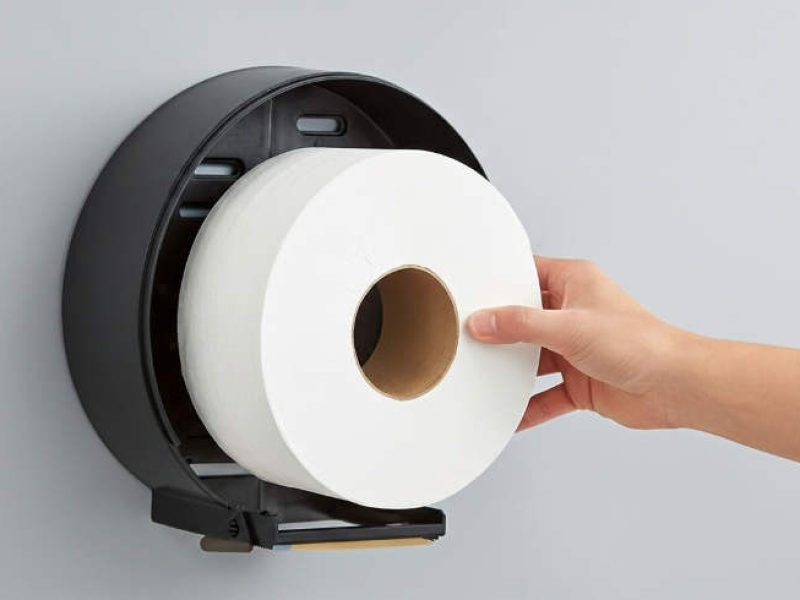
Deciding between 9-Inch vs 12-Inch (Specs) for facility maintenance determines whether a restroom stays operational or becomes a source of constant labor overhead. In high-traffic environments like airports or stadiums, choosing the wrong roll diameter leads to premature run-outs and forces custodial teams into more frequent refill cycles. These maintenance gaps do more than frustrate users; they drive up operational costs and impact the overall hygiene standards of the building.
This guide provides a technical breakdown of jumbo roll tissue capacity, comparing total linear footage and shipping efficiency across different sizes. We examine dispenser clearance requirements and how roll diameter affects the ease of pulling paper to ensure your procurement strategy matches your hardware. Use these specifications as a standard operating procedure for optimizing supply chains and reducing restroom downtime.
How Do 9-Inch and 12-Inch Rolls Compare in Total Footage?
Commercial facilities optimize maintenance labor by selecting roll diameters that match foot traffic volume, with 12-inch rolls providing nearly 100% more capacity than standard 9-inch variants.
Footage Benchmarks for 9-Inch Rolls
The standard 9-inch jumbo roll tissue (JRT), often classified as the “Junior” size, serves as the industry baseline for commercial restrooms. A typical 2-ply roll contains approximately 1,000 feet of paper. This length offers roughly five times the capacity of a standard household roll, making it ideal for medium-traffic environments like retail spaces and professional offices.
| Metric | 9-Inch JRT (Junior) | 12-Inch JRT (Senior) |
|---|---|---|
| Average Footage (2-Ply) | ~1,000 Feet | 1,900 – 2,000 Feet |
| Standard Core Size | 3.3 Inches (84mm) | 3.3 Inches (Industry Standard) |
| Best Use Case | Offices / Retail Shops | Airports / Stadiums |
Capacity Increases in 12-Inch Rolls
The 12-inch jumbo roll, or “Senior” JRT, focuses on extreme high-volume environments where reducing maintenance frequency is the primary goal. These rolls generally provide between 1,900 and 2,000 feet of 2-ply tissue, effectively doubling the capacity of the 9-inch version.
- High-traffic hubs like airports and stadiums utilize this diameter to ensure paper remains available during peak usage hours without constant restocking.
- The increased diameter creates a superior footage-to-core ratio, maximizing the usable product per roll.
- We optimize winding tension on these larger rolls to prevent sagging or jamming in large-format dispensers.
Factors Influencing Total Paper Length
Outer diameter is only one variable in determining the total length of the roll. Manufacturing choices regarding material and density play a massive role in the final footage delivered.
- Ply Count: Increasing the ply count reduces the total footage on a roll of fixed diameter. A 3-ply roll will naturally be shorter than a 2-ply roll of the same 9-inch or 12-inch size.
- GSM (Grams per Square Meter): Heavier, more absorbent paper occupies more space. High-GSM luxury rolls will have less footage than lighter-weight industrial alternatives.
- Core Size: A smaller core allows for more wraps of tissue within the outer diameter limit, increasing the total paper available.
- Customization: Top Source Hygiene provides OEM services to calculate specific footage targets, adjusting tension and GSM to meet the brand requirements of global partners.
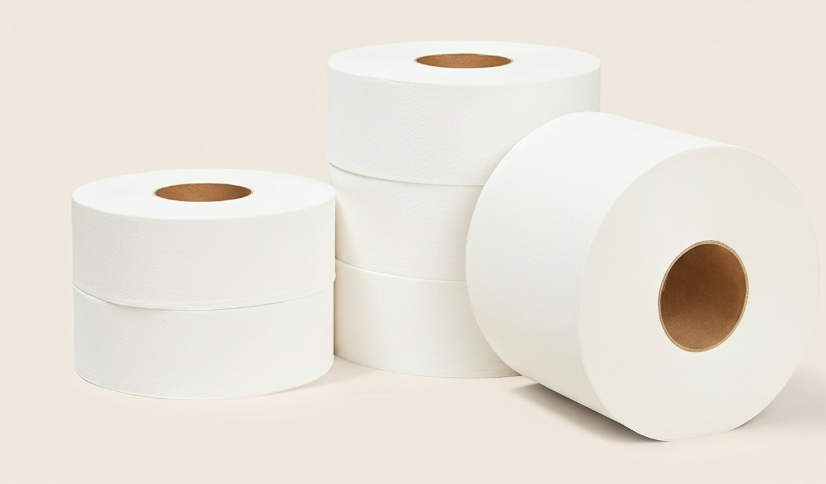
Which Diameter Is Best Suited for Airport and Stadium Use?
Deciding between 9-inch and 12-inch jumbo rolls requires balancing the extreme surge capacity needed for event intermissions against the space-constrained, 24-hour traffic flow of international transit hubs.
High-traffic venues like stadiums and airports face distinct physiological demand patterns that dictate roll diameter selection. While both environments prioritize uptime and hygiene, the mechanical requirements of a 15-minute halftime rush differ significantly from the steady, round-the-clock throughput of an airport terminal. Selecting the wrong diameter leads to either excessive maintenance labor or frequent “run-out” complaints that damage venue reputation.
12-Inch High-Capacity Rolls for Stadium Peak Loads
Stadiums operate on a “surge” model where restroom usage is virtually nonexistent for long periods, followed by extreme usage spikes during intermissions or at the end of an event. In these high-pressure windows, the volume of paper available in each stall is the most critical metric for operational success.
- The 12-inch diameter roll provides the highest footage per unit, significantly minimizing the risk of run-outs during 2026 sporting events.
- Large-format rolls reduce the frequency of waste because staff change them less often during high-pressure windows, ensuring rolls are not discarded prematurely.
- Top Source Hygiene produces these high-density rolls using 100% virgin wood pulp to ensure maximum tensile strength during rapid dispensing.
9-Inch Diameter Rolls for Continuous Airport Traffic
Airports maintain a consistent, 24-hour flow of passengers where restroom availability is a constant requirement. Because airport stalls are often designed with a focus on modern aesthetics and space optimization, the physical footprint of the dispenser plays a larger role in the procurement process.
- The 9-inch roll fits a wider variety of compact, wall-mounted dispensers common in modern terminal designs, saving valuable square footage.
- Maintenance teams prefer this size for standard high-traffic restrooms because it balances capacity with a lower physical weight for easier restocking across sprawling terminals.
- Top Source Hygiene supplies 2-ply and 3-ply 9-inch rolls that meet the strict international hygiene and septic-safety standards required for global aviation hubs.
Labor Efficiency Gains in Large-Scale Facilities
Labor costs for restroom maintenance often exceed the cost of the paper itself. Choosing a roll diameter that aligns with the venue’s cleaning schedule is the most effective way to reduce the total cost of ownership in professional facilities.
- Facilities utilizing 12-inch rolls often realize a 15% reduction in maintenance labor costs due to the extended intervals between roll replacement cycles.
- Custom GSM (grams per square meter) options allow venue managers to increase roll density and paper thickness without altering the physical diameter of existing dispensers.
- Top Source Hygiene’s monthly production capacity of 2,860 tons ensures a stable supply chain for large venues managing the consumption of thousands of rolls per week.
Tailored OEM Specifications for Venue Branding
Global venues increasingly use custom-branded hygiene products to enhance guest satisfaction and maintain a premium professional atmosphere. This extends from the quality of the wood pulp to the specific dimensions and packaging of the jumbo rolls.
- Stadium operators utilize OEM services to include venue logos or directional cues on the paper packaging to reinforce brand identity.
- Top Source Hygiene offers custom ply options from 2-ply to 5-ply, allowing airports to select softness levels that match the tier of their lounges or terminals.
- B2B clients in over 56 countries utilize these bespoke diameter and thickness settings to meet specific regional compliance and high guest expectations.
High-Capacity Jumbo Tissue At Factory Prices
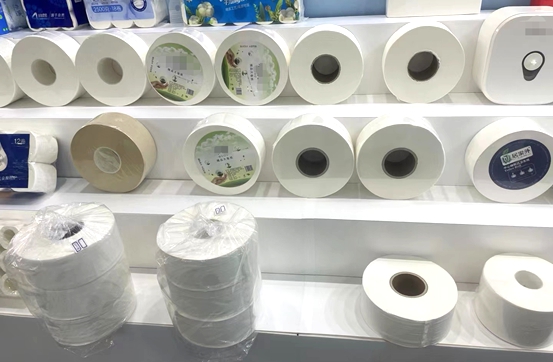
Does Your Dispenser Have Enough Clearance for a 12-Inch Roll?
Effective deployment of 12-inch jumbo rolls requires a minimum internal cabinet clearance of 13 inches to prevent rotation friction and paper “shredding” caused by cabinet-wall contact.
Evaluating Internal Diameter for Jumbo Roll Rotation
Standard 12-inch (Senior JRT) rolls require more than just a 12-inch opening. In 2026 commercial environments, facility managers must verify that dispenser cabinets provide at least 13 to 13.5 inches of internal vertical and horizontal space. This extra clearance ensures the roll rotates freely as it depletes. If the roll diameter is too close to the dispenser housing, the resulting surface friction increases the torque required to pull the paper, often leading to premature tearing or mechanical jams at the exit slot.
| Specification | 9-Inch Junior JRT | 12-Inch Senior JRT |
|---|---|---|
| Minimum Cabinet Clearance | 10.5 Inches | 13.5 Inches |
| Load Capacity Requirement | 30 – 45 lbs | 50 – 70 lbs |
| Standard Core Diameter | 2.25″ or 3.3″ | 3.3″ (Reinforced) |
We also recommend checking the face width compatibility. If the jumbo roll’s face width exceeds the dispenser’s internal track, the paper edges will rub against the sides, causing “dusting” and buildup within the unit. Matching the roll’s precision perforation with a dispenser that provides 100% axial clearance is essential for maintaining the high-traffic efficiency expected in airports and stadiums.
Structural Integrity and Weight Load Limits
High-capacity 12-inch rolls exert significant mechanical stress on mounting systems. A full 12-inch roll made from 100% virgin wood pulp carries substantial mass, requiring dispensers rated for 50 to 70 pounds of dynamic load. We advise using heavy-duty wall-mounting hardware rather than standard plastic anchors. If the spindle or core holder begins to bend under the weight, the roll will sit at an angle, creating uneven tension distribution and causing the paper to “star” or telescope during high-speed pulling.
Material Selection for Sanitary and Industrial Environments
The environment dictates whether you should install stainless steel or high-impact plastic dispensers.
- Stainless steel models are mandatory for healthcare and food service zones to withstand rigorous chemical cleaning and maintain OBA-free hygiene standards.
- High-impact plastic units are better suited for industrial warehouses where they can resist physical damage and offer a cost-effective solution for massive floor plans.
Custom Sizing for Global Compliance Standards
Top Source Hygiene provides specialized OEM and ODM solutions to bridge the gap between regional dispenser designs. While North American markets often standardize on 3.3-inch spindles, European and Middle Eastern facilities may use modular configurations with varying exit slot capacities. We adjust our jumbo roll tissue (JRT) specifications—including custom GSM and ply levels—to ensure the total paper thickness never exceeds the dispenser’s mechanical limits, maintaining smooth dispensing across 56 countries.
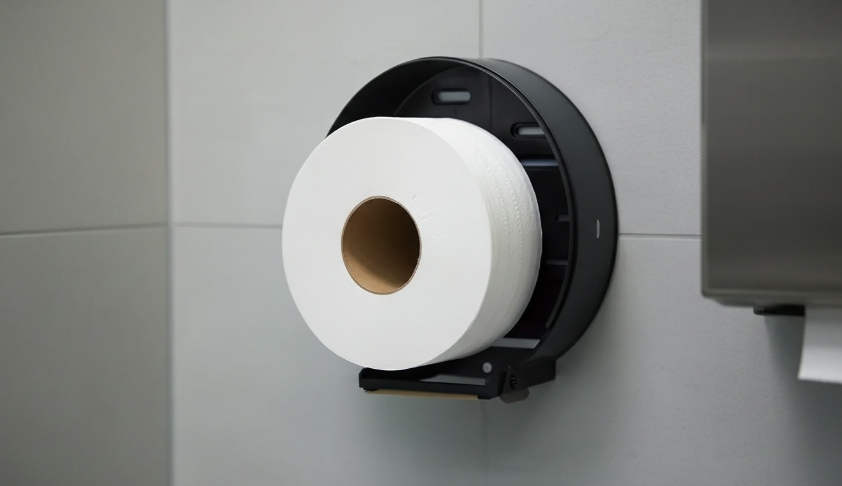
How Does Roll Diameter Impact the Ease of Pulling Paper?
Managing the physics of a 12-inch jumbo roll requires precise mechanical winding to ensure the initial torque doesn’t snap the paper or create excessive resistance for the user.
Roll diameter serves as the primary variable in determining the mechanical force needed to initiate and maintain the unwinding process. As a roll expands toward the 12-inch “Senior” standard, the torque requirements in center-winding operations increase significantly. If a manufacturer fails to account for this, the weight of the paper creates a heavy “pull” that can lead to sheet tearing or dispenser frustration. We utilize surface-winding methods to mitigate these forces, allowing for a consistent user experience even when rolls reach build-up ratios of 20 times the core diameter.
Torque Requirements and Build-Up Ratios
The physics of a Jumbo Roll Tissue (JRT) change as the radius increases. High build-up ratios—the difference between the core size and the final outer diameter—demand precise mechanical adjustments during production. In 2026, Top Source Hygiene utilizes automated winding systems that adjust the rotation speed and pressure in real-time. This prevents the paper from feeling too heavy during the initial pull, ensuring that even a full 12-inch roll rotates with minimal effort from the user.
Tension Distribution and Pulling Force
Internal pressure within a wound roll dictates the resistance felt during extraction. Diameter directly influences clamping force calculations; if the tension is too high at the outer layers, the sheets stick together. If it is too low, the roll loses its structural integrity. Our production lines balance these compression and pulling forces to ensure uniform tension from the first sheet to the core. This balance prevents the paper from snagging or hesitating during high-speed extraction in high-traffic environments like airports or stadiums.
Structural Stability and Defect Prevention
Consistent roll geometry is essential for a smooth dispensing experience. Inconsistent diameter management during the manufacturing process leads to several mechanical failures:
- Telescoping: Layers of paper slide sideways, creating a conical shape that jams the dispenser.
- Starring: The core collapses under uneven tension, creating a star-shaped deformation that prevents smooth rotation.
- Cross-Machine Thrust: Uneven weight distribution causes the roll to wobble, increasing the risk of paper breaks during the pull.
Strategic winding techniques ensure that the JRT retains its cylindrical shape. By maintaining strict diameter-to-core ratios, we allow for a predictable and smooth pull regardless of how much paper remains on the roll. This mechanical stability reduces maintenance calls and ensures that high-capacity systems perform reliably under constant use.
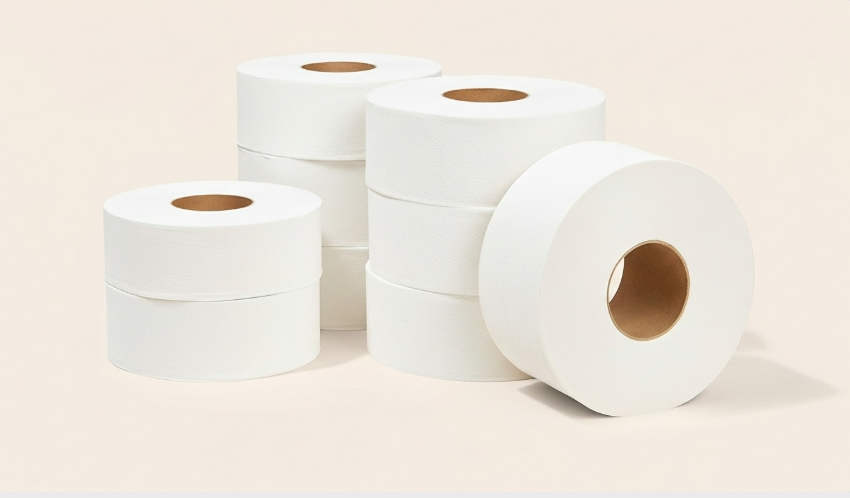
What Are the Shipping Efficiency Differences Between JRT Sizes?
Maximizing 40’HQ container utilization hinges on balancing the 9-inch roll’s stacking flexibility with the 12-inch roll’s superior weight density.
Container Volume Utilization for 9-Inch vs. 12-Inch Rolls
Shipping efficiency for Jumbo Roll Tissue (JRT) depends on how well the circular geometry of the rolls integrates with the rectangular constraints of a 40’HQ container. 9-inch JRT rolls typically allow for more flexible stacking configurations. We optimize packaging dimensions for 2026 export standards to ensure zero wasted headspace, often resulting in higher case counts per shipment compared to 12-inch variants.
While 12-inch rolls provide more footage per unit, they create larger diameter gaps within standard cartons. If the outer cartons do not align perfectly with container widths, these gaps reduce total volume efficiency. Our Hebei loading teams use precision arrangements to mitigate this, but the 9-inch roll remains the standard for maximizing pure unit count.
| Shipping Metric | 9-Inch JRT (Junior) | 12-Inch JRT (Senior) |
|---|---|---|
| 40’HQ Payload Capacity | 7,000 – 8,000 kg | 8,500 – 9,000 kg |
| Stacking Flexibility | High (Optimal for mixed loads) | Moderate (Rigid dimensions) |
| Landed Cost Focus | Volume-optimized | Weight-optimized |
Weight and Freight Cost Implications
Freight costs in 2026 rely on whether a shipment hits the weight limit or volume limit first. 12-inch high-capacity rolls concentrate more weight into fewer units. This helps high-volume facilities reduce the frequency of restocking orders and assists importers in hitting the maximum 9-ton payload of a 40’HQ container. Concentrated weight often lowers the freight cost per foot of paper.
- 9-inch rolls typically fill container volume before reaching weight restrictions, making them better for long-distance routes where volume dictates pricing.
- We analyze GSM and ply count to ensure the chosen roll size matches the client’s specific logistics budget.
- 12-inch rolls are preferred for regions like Africa where maximizing total tonnage per container is critical for profitability.
Palletization and Handling Efficiency
The physical diameter of the JRT roll determines the stability of pallets during global transit. 9-inch rolls fit standard pallet footprints more evenly. This reduces the risk of load shifting during the 15-25 day transit times to South America or Africa. Even weight distribution across the pallet prevents tilting and damage during port handling.
Larger 12-inch rolls require heavy-duty reinforced packaging. Because these rolls are heavier, we use 5-ply export cartons to prevent the bottom layers from crushing under the weight of the stack. Custom OEM packaging ensures that regardless of the roll size, the pallet height stays within the safety limits of modern automated warehouses.
Regional Shipping Lead Times for 2026
Logistical speed is a critical factor for commercial JRT buyers managing tight inventory cycles. Our manufacturing facility in the Hebei paper industrial hub maintains a production lead time of 20-25 days for full 40’HQ container orders. We coordinate directly with Tianjin Xingang Port to expedite dispatch for all JRT specifications.
- North American and European routes benefit from established shipping lanes with 7-14 day windows.
- Asian and Oceanian markets receive JRT shipments within 10-20 days.
- South American and African routes typically average 15-25 days due to transshipment schedules.
Conclusion
Choosing between 9-inch and 12-inch diameters dictates how often maintenance teams refill dispensers and how many units fit into a 40HQ container. Matching the roll size to specific dispenser clearance prevents operational delays and ensures consistent paper tension for the end user. High-capacity rolls reduce labor requirements while optimizing the landed cost per meter for bulk shipments.
We recommend auditing your current dispenser fleet or reviewing our technical data sheets to determine which jumbo roll size maximizes your container payload. Reach out to our team for detailed loading specifications or to request samples for compatibility testing.
Frequently Asked Questions
What is the diameter of a jumbo roll?
Jumbo Roll Tissue (JRT) is typically manufactured in two industry-standard diameters: 9 inches (referred to as Junior rolls) and 12 inches (referred to as Senior rolls). The exact physical measurement usually ranges from 8.5 to 9 inches for Junior sizes and 11.5 to 12 inches for Senior sizes, depending on the tightness of the wind and the ply of the paper.
How many feet in a 9 inch jumbo roll?
A standard 9-inch jumbo roll generally contains between 700 and 1,000 feet of 2-ply tissue. For 1-ply varieties, the footage can increase significantly, often reaching up to 2,000 feet per roll. The 1,000-foot 2-ply roll is the most common specification used in commercial facilities to balance capacity and soft texture.
Will a 12 inch roll fit in a 9 inch dispenser?
No, a 12-inch roll will not fit in a 9-inch dispenser. The physical housing of a 9-inch (Junior) dispenser is specifically designed to accommodate the smaller radius of a Junior roll. Attempting to use a Senior roll would prevent the dispenser cover from closing and would jam the rotation mechanism.
What is JRT junior vs senior?
JRT Junior refers to the 9-inch diameter roll, which is the most common size for standard commercial restrooms. JRT Senior refers to the larger 12-inch diameter roll. Senior rolls are specifically designed for high-traffic environments like stadiums, airports, and large industrial complexes to minimize the frequency of maintenance refills.
How long does a jumbo roll last?
A single 1,000-foot jumbo roll is roughly equivalent to five standard residential rolls. In a medium-traffic commercial setting, a jumbo roll typically lasts between one to two weeks. In high-traffic public restrooms, these rolls are designed to last several days, significantly outperforming standard rolls which would require daily or multi-daily replacement.
What are the common JRT widths?
The standard width for Jumbo Roll Tissue is typically 3.3 to 3.8 inches, with 3.5 inches being the most prevalent industry standard. This width is engineered to fit standard commercial JRT dispensers while providing sufficient surface area for user comfort.
