
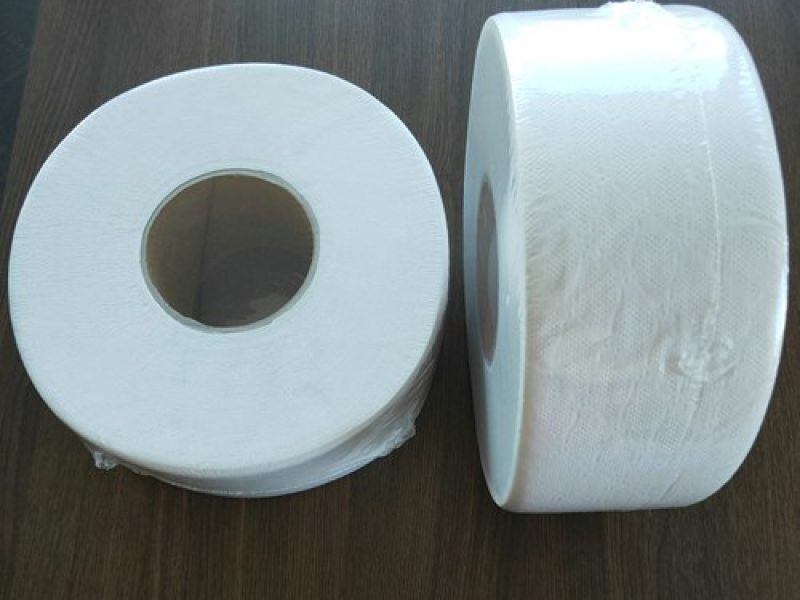
Mega vs Jumbo Roll decisions directly affect restroom uptime and can trigger compliance headaches that cost facility managers thousands in lost productivity or even OSHA fines. Confusing retail labels, mismatched dispenser sizes, and opaque sheet counts turn a routine supply purchase into inventory errors, emergency reorder cycles, and unnecessary storage costs.
This guide lays out the technical facts facilities and procurement teams need. It exposes retail “Mega” and “Super” marketing claims, gives exact specs for a 9-inch jumbo toilet paper roll, breaks down sheet count versus continuous linear footage, compares 1.5-inch home spindles with 3.3-inch commercial cores, and explains how weight and winding density change usable footage. It also shows why a jumbo roll often equals about five retail mega rolls and answers the operational questions maintenance teams ask most—fit on home dispensers, feet per roll, what JRT means, and why commercial paper is wound so tight. Use the inspection checklist, dispenser-fit procedure, and simple conversion method here as your SOP to standardize orders, cut emergency runs, and reduce waste.
The Deceptive Marketing of Retail “Mega” and “Super” Rolls
Marketing labels such as “mega” and “super” serve sales objectives, not technical specifications — they obscure usable paper area and mislead unit-cost comparisons.
How “Mega” and “Super” Labels Mislead Consumers
Brands assign “mega” or “super” tags to imply superior value without committing to a measurable standard. Shoppers see larger badges and assume more product; manufacturers count on that perception instead of publishing objective metrics like total square inches or grams per roll.
- Brands use subjective labels to signal value while avoiding a clear, consistent unit of measure.
- Packaging highlights perceived benefits (more sheets, longer roll) without standard metrics such as total square footage or sheet area.
- Visual cues—bigger boxes and bold badges—create a savings impression even when unit cost and usable area remain unclear.
Inconsistent Definitions and No Industry Standard
The market lacks a single definition for terms like “mega,” “double,” or “jumbo.” Manufacturers set those labels by sheet count, ply, sheet size, or marketing tier, so one brand’s “mega” can contain less usable paper than another brand’s standard roll.
- A “mega” roll can have smaller sheet dimensions or tighter winding that reduce total square inches compared with a competitor’s standard roll.
- Ply, sheet size, and winding density vary; sheet count alone does not indicate total usable area or absorbency.
- Without standardized label definitions, shelf unit-price comparisons mislead buyers unless adjusted for actual paper area or weight.
Why Larger Rolls Can Cost More Per Unit
Manufacturers often position larger-format rolls as premium or convenience products. That positioning, plus differences in ply and winding, drives prices that can exceed the per-square-inch cost of smaller formats even when the roll looks bigger on the shelf.
- Producers may price bigger rolls at a premium, so per-sheet or per-square-inch cost rises despite larger appearance.
- Tighter winding or heavier ply changes weight and feel, but not necessarily cost-efficiency measured by area.
- Retail price-per-roll ignores sheet dimensions, core loss, and usable footage; a visually larger roll can still be less economical.
Practical Metrics and Shopping Tips
Use verifiable metrics when comparing products: cost-per-square-inch, grams-per-roll, and continuous linear footage remove marketing noise. Apply simple calculations and validate the manufacturer specs before you buy or place a private-label order.
- Calculate cost per square inch: price ÷ (sheets × sheet width (in) × sheet length (in)). Use inches for consistent units.
- If sheet dimensions are missing, request total square footage, grams per roll (GPR), or full technical specs from the supplier.
- Compare cost per sheet only when sheet sizes match; otherwise normalize by sheet area or use continuous linear footage as the comparator.
- Watch core diameter and winding: a larger core reduces usable material; dense winding affects feel but not area—inspect grams-per-roll to detect core loss or over-compression.
- Prefer suppliers and retailers that publish unit pricing on shelves (price per sheet or per square foot) and provide full roll specifications for B2B purchasing decisions.

The Exact Dimensions of a 9-Inch Jumbo Toilet Paper Roll
A 9-inch jumbo roll denotes the roll’s outer diameter and, in commercial practice, usually contains roughly 1,000 feet of tissue—confirm length by checking OD, core ID and paper caliper rather than trusting marketing labels.
External diameter and total linear footage
Manufacturers label a roll “9-inch jumbo” to indicate the outside diameter measured across the roll. In commercial specifications that label commonly pairs with a total linear footage of about 1,000 feet (12,000 inches). Use those two baseline numbers when you compare product samples or supplier datasheets.
Calculate sheet count from linear footage: sheets = total inches ÷ sheet length in inches. For example, with 4-inch sheets a 1,000-foot roll gives 12,000 ÷ 4 = 3,000 sheets. To verify vendor claims, compute linear footage from geometry when you know OD, core ID and paper thickness: L (in inches) = π·(D² – d²) / (4·t), where D and d are diameters and t is single-sheet caliper in inches.
Core diameter and dispenser compatibility
Commercial jumbo cores commonly range from 2 to 3 inches inside diameter; some dispensers and hub systems use a 3.3-inch standard. Confirm core ID and spindle specifications before purchasing—mismatched cores will jam dispensers or require adapter parts.
When you build a product database, capture core ID, core wall thickness and dispenser hub spec for every SKU. If you replace rolls in an existing facility, measure a fitted roll’s core and outer diameter on-site and cross-check vendor technical sheets to avoid installation surprises.
| Parameter | Common Commercial Spec | Top Source Hygiene Example |
|---|---|---|
| Outer Diameter | 9 in (standard jumbo) | TSH-JRT08: 9″ OD |
| Total Linear Footage | ~1,000 ft (12,000 in) typical | ~1,000 ft per roll (Configurable) |
| Sheet Width | 3.3–3.5 in width | Typical 102–105 mm (~4″) |
| Sheet Count (example @4″) | ≈3,000 sheets | Example: 3,000 sheets @4″ |
| Core ID | 2–3 in core (3.3″ hubs common) | Options: 2″–3″ (confirm per SKU) |
| Ply | Usually 1–2 ply for JRT formats | Configurable 1–2 ply |
| Rolls per Case | Standard: 12 rolls/case | 12 rolls/case; 40HQ (7–9 T payload) |
Sheet dimensions, ply, and material
Sheet width and sheet length define perceived roll capacity and user experience. Commercial jumbo widths typically sit in the 3.3–4.125 inch range; sheet length varies by SKU and drives the sheet count calculation. Ply choices (2–5 ply in retail; 1–2 ply common for heavy-duty JRT) alter caliper and therefore linear footage for a given OD.
Material and GSM control weight, strength and absorbency. Many commercial jumbo rolls use virgin wood pulp or engineered blends; record GSM, raw material description and ply in your product records so procurement teams compare like-for-like performance rather than marketing names.
Weight, density, and packaging specifications
Estimate roll mass by computing paper area (linear footage × sheet width), converting area to m², then multiplying by GSM and converting grams to kilograms. Winding density matters: tightly wound rolls occupy less volume per unit of paper than fluffed rolls, so pallet counts and container fill rates change with winding tension and caliper tolerances.
Capture packing details in procurement specs: rolls per carton, cartons per pallet, pallet height and weight, and container fill (e.g., how many cartons per 40’HQ). Always request supplier technical sheets that list roll weight, packed dimensions and typical lead times before finalizing MOQ or logistics planning.
Custom OEM Toilet Paper — Fast Global Supply
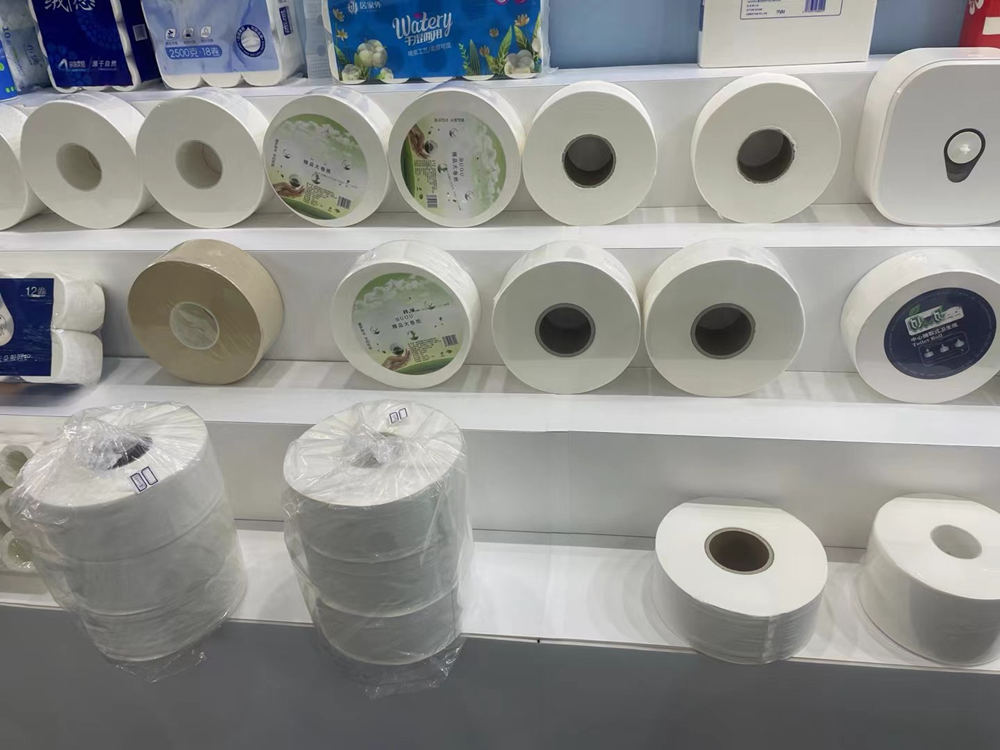
Sheet Count vs Continuous Linear Footage
Sheet count alone doesn’t define roll capacity—sheet length, ply thickness, core ID, and winding tension determine the actual continuous feet you get from a roll.
Key factors linking sheet count and linear footage
To convert a sheet count into usable linear footage you must treat four variables as fixed inputs: the single-sheet length (defined by perforation), the sheet width, the effective paper thickness (ply × GSM behavior), and the core/internal diameter. Those four determine how many inches of paper sit on the roll and how that paper behaves during dispense.
Operationally, winding tension and how the converter stacks wraps change how much paper fits into a given outer diameter. Tight winding increases linear footage for the same outer diameter, while a larger core reduces usable footage. To compare retail-format rolls (sold by sheets) with commercial jumbo rolls (sold by feet), convert sheets × single-sheet length to get continuous length, then apply diameter and core constraints when estimating capacity from roll geometry.
| Metric | Retail “Mega” (Typical) | Commercial Jumbo (9 in) |
|---|---|---|
| Roll Diameter | 4.5 – 5 in | 9 in (Standard JRT) |
| Sheet Count | 224 – 370 Sheets | ~1,000 – 2,000 (Varies) |
| Total Linear Feet | ~73 – 124 ft | 700 – 1,300 ft (1,000 ft common) |
| Core ID (Inner Diameter) | ~1.5 in (Home Spindle) | 2.25 – 3.3 in (84mm Hub) |
| Ply & Comfort | 1 – 3 Ply (Consumer Comfort) | Typically 1 – 2 Ply (Durability Focus) |
Practical conversion method and worked examples
Use a simple, auditable formula to convert sheet counts to linear feet: linear feet = (sheet count × sheet length in inches) ÷ 12. Keep sheet length accurate—manufacturers define it by perforation and some brands use non-standard cuts that break comparisons.
Example: 1,000 sheets at 4.5 inches per sheet = 4,500 inches = 375 feet. When you estimate from diameters, measure core ID and outer diameter, calculate average circumference across wraps, and divide roll radial growth by average paper thickness to estimate number of wraps. That approach requires sheet thickness (use ply × gsm-derived thickness) to avoid large estimation errors.
Manufacturing variables that change linear footage outcomes
Producers adjust four manufacturing levers that change footage even when sheet count stays constant: core size, winding tension, paper formulation/GSM, and converter quality controls. Those choices reflect trade-offs between performance on the dispenser, transport robustness, and freight economics.
- Core size — larger commercial cores speed dispenser changes but reduce paper capacity for a given outer diameter.
- Winding tension — tighter winding packs more linear footage but can increase unwind force and risk web breaks if excessive.
- Paper formulation and GSM — heavier or high-GSM sheets take more volume; manufacturers compensate by changing parent roll length or changing ply.
- Quality control tolerances — real rolls vary; suppliers publish ranges. Ask for sample pull tests to validate claimed footage under your dispenser conditions.
Procurement and inventory implications for buyers
Buyers who convert usage into linear footage make better choices. Translate daily wipes into feet per day, then choose formats that minimize changeovers without exceeding dispenser capacity. Commercial operations usually prioritize feet-per-roll and dispenser compatibility; retail purchasers focus on sheet count and consumer-facing pack sizes.
- Cost metrics — calculate cost-per-foot and cost-per-sheet. For facility budgets, cost-per-foot aligns with refill labor and storage costs.
- Storage & handling — jumbo rolls cut refill frequency and labor but need different storage and heavier dispensers; confirm footprint and weight in receiving plans.
- Order planning — convert your site’s daily linear usage into roll counts and then into pallet/container quantities using supplier specs to avoid shortages during lead times.
- Supplier validation — request sample rolls and spec sheets covering core ID, outer diameter, sheet length, ply, and GSM. Verify footage with a simple roll-unwind test before finalizing contracts.

Core Diameters: 1.5-Inch Home Spindles vs 3.3-Inch Commercial Cores
Core diameter determines dispenser mechanical design, roll capacity, and operational cost: 1.5-inch cores suit retail and residential convenience, while 3.3-inch cores optimize uptime and service efficiency in commercial facilities.
Different end-user needs: 1.5-inch home spindles vs 3.3-inch commercial cores
Residential and retail channels prioritize compactness and shelf compatibility, so manufacturers build household rolls around 1.5-inch spindles to fit common bathroom dispensers and retail shelving. Those smaller cores simplify handling, reduce package volume, and meet consumer expectations for interchangeability with home hardware.
Commercial buyers focus on runtime and labor reduction, which pushed 3.3-inch cores to become the de facto institutional standard. Facilities use larger cores to support bigger diameters and long runs, cutting refill frequency and enabling standardized dispensers across multiple sites.
Dispenser compatibility and retrofit considerations
Dispensers lock in a core size and mounting method. Most institutional dispensers accept only 3.3-inch cores, so operators who try to switch to 1.5-inch rolls must either install adapters or replace dispensers. Those swaps require a one-time capital decision that you should compare against ongoing refill labor and stocking complexity.
Before changing core standards, audit dispenser geometry, locking mechanisms, and theft-resistance features at each site. Track which locations use which standard so procurement and service teams avoid ordering incompatible roll sizes.
- Most institutional dispensers accept only 3.3-inch cores; adapters add parts and failure points.
- Retrofits create a predictable capex but reduce refill labor and stock-keeping complexity over time.
- Verify clearance, locking features, and dual-roll vs single-roll designs before standardizing.
Operational impacts: refill frequency, storage, and cost trade-offs
Core diameter ties directly to roll capacity and handling. Choosing 3.3-inch cores supports larger rolls that dramatically reduce changeovers, lower staff time spent on maintenance, and cut the incidence of empty dispensers in high-traffic areas. Those savings often offset higher initial dispenser and roll costs when you measure whole-life expense.
Conversely, 1.5-inch rolls simplify storage, individual handling, and retail distribution for smaller facilities or offices where big dispensers are impractical. Evaluate unit cost per usable sheet, packaging and shipment economics, and labor rates to select the core standard that minimizes total operating cost for your estate.
- 3.3-inch cores reduce refill frequency and maintenance interruptions in high-traffic sites.
- Fewer changeovers decrease exposure to vandalism and pilferage in public restrooms.
- Jumbo-roll logistics lower cost per usable sheet through fewer shipments, but require higher initial inventory or dispenser spend.
- 1.5-inch rolls remain the practical choice for retail sale and small-office environments where handling and shelf space matter most.
Weight and Density: Tightly Wound vs Fluffed Paper
Winding tension and structural treatments control both roll capacity and perceived quality—GSM alone does not predict how a roll will feel, absorb, or stack in real operations.
How winding tension changes roll density
Winding tension sets how compact the web sits on the core and directly alters linear footage per roll. Higher tension compresses layers, increases effective sheet count in the same diameter, and yields a firmer roll that behaves predictably on conveyors and inside dispensers. Lower tension leaves more air in the structure, producing a “fluffed” roll that looks thicker and feels softer at identical GSM.
Treat winding tension as a production control variable: specify target linear footage per roll or a numeric wound-in tension (WIT) setpoint when you place orders. Machines, line speed, and core diameter all change the outcome—ask suppliers for machine settings and trial-run footage so you get consistent density batch-to-batch.
GSM versus apparent thickness: why mass alone misleads
GSM measures mass per square meter; it does not tell you thickness or bulk. Caliper (thickness, usually reported in microns) and bulk (caliper ÷ GSM) define perceived volume and hand. Two products with identical GSM can deliver very different consumer experiences if one uses heavier creping, deeper embossing, or a more porous fiber structure to raise caliper.
When you specify material, request both GSM and caliper and ask the supplier to report bulk and apparent density (apparent density = GSM ÷ caliper when converted to consistent units). That prevents surprises where a low-GSM product feels thick or a high-GSM product compresses too much in dispensers.
Performance trade-offs: absorbency, rigidity and logistics
Changing structure shifts performance across multiple vectors. Fluffed, high-bulk sheets usually absorb faster and feel softer but reduce sheet count per roll and increase pallet volume. Tighter winding and lower caliper improve dispenser runtime, reduce refill labor, and cut shipping and storage costs by volume.
- Absorbency scales with porosity and surface area; higher-bulk constructions typically perform better per sheet.
- Tighter rolls extend runtime in high-traffic dispensers and reduce maintenance frequency.
- Higher-density rolls save pallet space and lower freight cost per useful meter of paper.
- Brand perception still favors caliper and pattern for softness—match the spec to the end-use (hospitality vs facility services).
How manufacturers test and specify density consistently
Producers combine lab metrics with roll-level checks to control density. Typical lab tests include GSM scales, micrometer caliper readings, tensile strength, porosity/absorbency tests, and calculated apparent density or bulk. At roll level they measure linear footage, roll hardness/uniformity, and core concentricity to catch winding defects early.
Set clear tolerances (for example ±5% GSM, ±10% caliper) and require sample runs with measured GSM, caliper, bulk, and footage before full production. Ask suppliers which process levers they will use—creping, embossing depth, pressing/compacting, and winding tension—and require batch reports so you can trace density drift and enforce acceptance criteria.
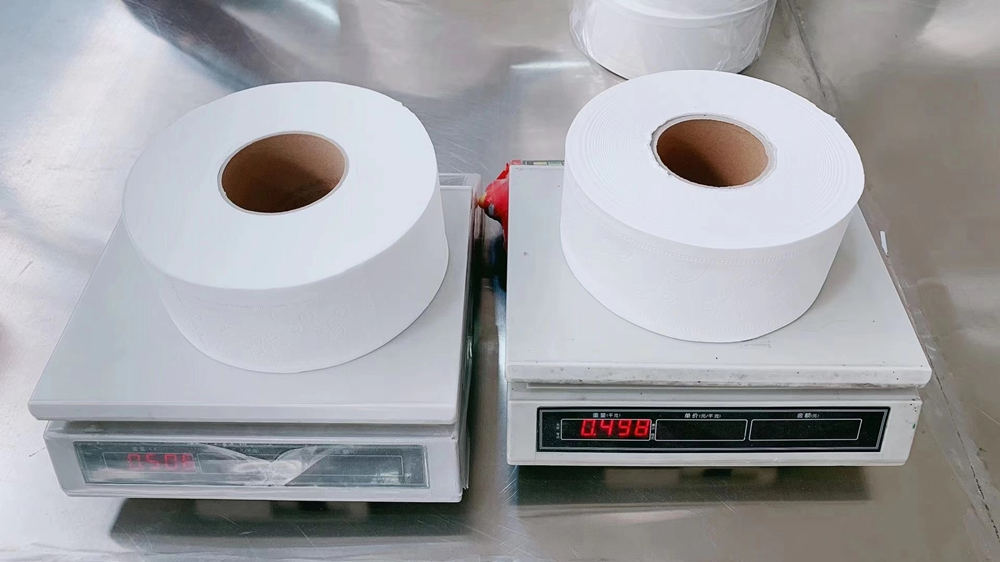
Why a Jumbo Roll Equals Five Retail Mega Rolls
A 9-inch commercial jumbo (≈1,000 ft) will match roughly five retail “mega” rolls only when you compare total linear footage or sheet count adjusted for ply and core size.
No industry standard for size labels
Manufacturers and retailers label rolls as “mega,” “super,” or “jumbo” without consistent definitions. Brands calibrate those labels to suit marketing and shelf positioning, so the conversion factors printed on packaging (for example “2×” or “4×” a standard roll) serve as sales claims, not engineering standards. Jumbo rolls belong to a commercial category that operators specify by dispenser capacity and feet-per-roll rather than by consumer-facing marketing names.
- Labels vary by brand and region; a “mega” from one maker can differ widely from another.
- Retail conversion claims reference a hypothetical ‘regular’ roll and act as marketing guides, not manufacturing standards.
- Jumbo rolls are specified for dispensers and measured by capacity (feet/sheets), not the same consumer metrics used for retail formats.
Sheet count and ply determine true equivalency
The only reliable conversion between retail and commercial formats uses total usable sheet count or continuous linear footage, adjusted for ply and sheet length. You get a realistic equivalency by dividing the jumbo’s total feet (or sheets) by the retail mega’s feet (or sheets). For example, a 9-inch jumbo at ~1,000 ft equals five retail rolls if each retail mega contains ~200 ft; change the retail roll length or ply and that ratio shifts immediately.
| Metric | Retail “Mega” (Typical) | Commercial Jumbo (Typical) |
|---|---|---|
| Roll Diameter | ~4.5 – 5 in | ~8 – 12 in (9 in common) |
| Sheet Count | 224 – 370 Sheets | 1,000 – 4,000+ Sheets |
| Linear Footage | ~73 – 124 ft | 500 – 2,000+ ft |
| Core ID | ~1.5 – 1.75 in | ~2.25 – 3.3 in |
| Intended Use | Home / Light Commercial Use | High-traffic Institutional Dispensers |
Core diameter and dispenser compatibility matter
Core size directly changes usable paper volume and determines which dispensers will accept a roll. Home spindles use roughly 1.5-inch cores; commercial jumbo systems use larger cores (commonly 3.3 inches). A bigger core reduces the paper annulus inside the outer diameter, so two rolls with the same outer diameter can contain different sheet counts if they use different core sizes. When you convert retail roll counts to jumbo equivalents, include core diameter in the math to avoid overestimating capacity.
- Larger cores reduce available paper volume for a given outer diameter.
- Commercial dispensers require specific core diameters; fit, not just diameter, dictates operational compatibility.
- Always confirm dispenser specs before substituting retail rolls for jumbo systems.
Winding density, weight and cost-per-sheet affect perceived value
How tightly mills wind the roll and the paper’s density change both sheet count and perceived quality. Tight winding packs more linear footage into the same outer diameter; loose or fluffed rolls look thicker but hold less footage. Buyers who judge value by roll diameter alone risk overpaying. Compare cost-per-sheet or cost-per-linear-foot after adjusting for ply, sheet length, core, and winding density to get an apples-to-apples view.
- Tighter winding raises paper density and increases sheets per outer diameter.
- Ply and GSM affect feel and wet performance; equal sheet counts can still deliver different user experiences.
- Marketing claims that a jumbo equals five mega rolls assume matched sheet length, ply, core and winding; verify those specs before trusting the multiplier.
Conclusion
Correct installation and wiring of commercial dispensers matters: it protects users, ensures OSHA and building-code compliance, and reduces service calls. Matching roll size, core diameter, and winding density to the dispenser also extends equipment life and prevents jams and premature wear.
Review your facility’s dispensers and current roll inventory to confirm compatibility, especially core diameter, roll width, and wound density. Contact Top Source Hygiene for technical samples, dispenser-fit guidance, or our commercial roll catalog to streamline ordering and reduce stocking errors.
Frequently Asked Questions
Which is bigger mega or jumbo toilet paper?
Jumbo is generally bigger than mega, especially in commercial contexts. There is no universal industry standard so manufacturers sometimes use the terms differently, but in common usage jumbo denotes a larger, high-capacity commercial roll while mega refers to an oversized consumer retail roll.
How big is a jumbo roll of toilet paper?
A typical jumbo commercial roll has a diameter of roughly 9 to 12 inches and contains about 800 to 2,000 feet of paper depending on ply and sheet size. Exact diameter, core size, and linear footage vary by manufacturer and product line.
Will a jumbo toilet paper roll fit on a home dispenser?
Not usually. Home dispensers are sized for standard household rolls with diameters around 4 to 5 inches and small cores. Jumbo rolls require a commercial jumbo dispenser or a special adapter to fit a residential holder.
How many feet are in a mega roll vs a jumbo roll?
Mega consumer rolls commonly contain roughly 250 to 500 feet of paper per roll depending on ply and sheet size. Jumbo commercial rolls commonly contain roughly 800 to 2,000 or more feet per roll depending on ply and sheet size.
What does JRT mean in commercial toilet paper?
JRT stands for Jumbo Roll Tissue. It designates large diameter commercial toilet tissue intended for use in jumbo dispensers.
Why is commercial toilet paper wound so tight?
Commercial toilet paper is wound tightly to maximize roll capacity and density, improve structural rigidity for large dispensers, reduce unraveling and damage during shipping, and ensure controlled dispensing in high traffic restrooms.