

Multi-Ply Branding (3-Ply/4-Ply) determines whether your private label competes on race-to-the-bottom pricing or captures high-margin luxury market share. Brands that rely solely on standard 2-ply products face the risk of commoditization as consumer demand shifts toward premium tactile experiences. Ignoring the transition to thicker, softer grades leads to lost shelf space and diminished customer loyalty in a retail environment that increasingly rewards superior paper quality.
We break down the shift toward luxury tissue and provide a framework for marketing the hotel-quality feel of multi-ply paper. This guide evaluates the technical necessity of 100% virgin wood pulp, explores the manufacturing challenges of consistent 4-ply production, and establishes a clear logic for pricing premium rolls. These standards serve as a technical roadmap for brand owners looking to upgrade their product portfolio and secure a competitive edge in the luxury segment.
Why Is the Market Shifting Toward 3-Ply and 4-Ply Luxury Tissue?
High-density tissue configurations are no longer niche; they represent a fundamental shift toward functional luxury where 100% virgin fiber performance justifies higher price points for B2B buyers and premium retailers.
The global tissue market is undergoing a structural realignment as buyers prioritize physical mass and performance over basic utility. In 2026, the transition from standard 2-ply to 3-ply and 4-ply options is driven by a consumer base that equates thickness with value. This isn’t just about comfort; it is a shift toward efficiency. Thicker rolls provide superior liquid retention, which often results in lower sheet consumption per use, a critical selling point for both eco-conscious households and high-traffic commercial facilities.
Consumer Demand for Superior Comfort and Absorbency
Modern buyers prioritize the physical performance of paper products, moving away from thin, basic options. Multi-ply configurations provide a thicker, more cushioned feel that consumers associate with luxury and high-end hospitality. This tactile experience is a primary driver in the residential sector.
- Increased fiber density in 4-ply rolls significantly improves liquid retention, allowing users to use fewer sheets per task.
- Top Source Hygiene utilizes 100% virgin wood pulp to ensure these thicker layers remain soft rather than stiff or abrasive.
- Luxury hospitality clients favor models like the TSH-4010 for its 5-ply thickness and cloud-like texture.
Rising Disposable Income and Premiumization Trends
A global shift in purchasing power has led to a “trading up” phenomenon. Household essentials are no longer viewed as mere commodities but as lifestyle choices. The luxury tissue segment now accounts for approximately 15% of total market revenue, a steady increase from previous years. This premiumization allows retailers to see a 20-30% price premium on 3-ply and 4-ply products, helping them increase margins in an otherwise crowded market.
To justify these price points, brands are moving beyond simple layer counts. They are integrating value-added features such as intricate CNC-precision embossing patterns and lotion-infused surfaces. These elements enhance the sensory experience and reinforce the brand’s premium positioning in the eyes of the consumer.
Evolution of Hygiene Standards and Brand Perception
Awareness regarding sanitary standards continues to influence hygiene choices, with consumers equating thickness with better protection. Thicker paper acts as a stronger physical barrier, meeting the higher expectations of both residential and commercial settings. In the B2B sector, particularly within the hospitality and corporate segments, multi-ply tissue serves as a silent ambassador for quality.
- Top Source Hygiene clients report higher guest satisfaction when providing luxury grades compared to standard industrial rolls.
- Custom-branded 4-ply options allow businesses to differentiate themselves from competitors using standard, lower-quality paper.
- The use of OBA-free materials ensures the product is safe for sensitive skin, aligning with modern health and safety trends.
Technological Advancements in Fiber Blending
Manufacturing innovations enable the production of multi-ply rolls that maintain structural integrity without excessive bulk. Advanced embossing technology bonds multiple layers together securely, preventing ply separation during use. This is a critical technical hurdle; without high-pressure lamination, 4-ply rolls would often delaminate, leading to a poor user experience.
Refined fiber blending techniques create 4-ply paper that remains flushable and biodegradable despite its increased thickness. Our production facilities in the Hebei Paper Industrial Hub now reach capacities of 2,860 tons per month to meet the scaling global demand. By balancing long-fiber tensile strength with short-fiber softness, we produce high-ply rolls that dissolve quickly in water, meeting the strict septic-safe standards required for North American and European markets.
How to Market the “Hotel-Quality” Feel of Multi-Ply Paper?
Effective luxury tissue marketing in 2026 shifts the narrative from basic utility to a sensory amenity, using multi-ply thickness and material purity as tangible evidence of a facility’s standards.
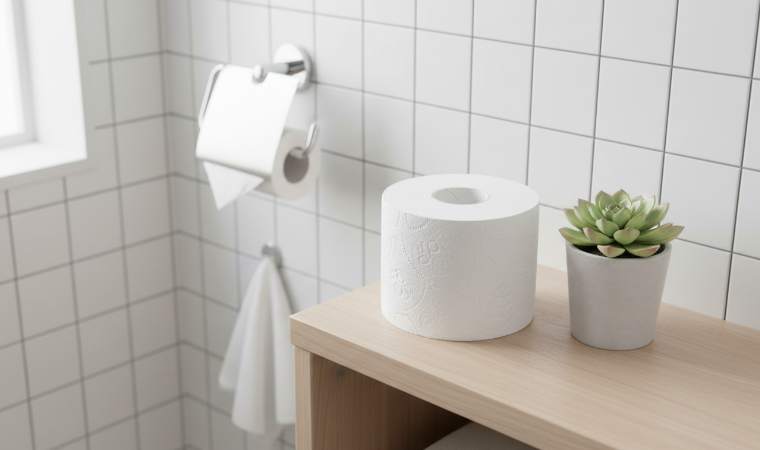
High-end hospitality and premium retail sectors prioritize the immediate “hand-feel” of 3-ply and 4-ply options. These products provide a physical cushion and thickness that economy grades cannot replicate. We focus on the tactile softness achieved through sophisticated embossing patterns. These CNC-precision designs increase the surface area for absorbency while simultaneously enhancing the plush, cloud-like texture of the paper.
Highlight Tactile Softness and Physical Comfort
Luxury brands justify premium pricing by focusing on the immediate sensory response. A 4-ply roll provides a structural loft that users associate with high-end suites. Top Source Hygiene leverages 30 years of manufacturing expertise to ensure that advanced fiber bonding creates a lint-free, smooth finish. This technical precision prevents the “dusting” common in lower-quality alternatives, keeping restrooms cleaner and improving the user experience.
- Use 3-ply and 4-ply thickness to provide a tangible “cushion” effect during use.
- Implement point-to-point embossing to increase absorbency by 30% while maintaining softness.
- Promote the lint-free finish as a key indicator of manufacturing quality and hygiene.
Utilize Custom Packaging for Brand Storytelling
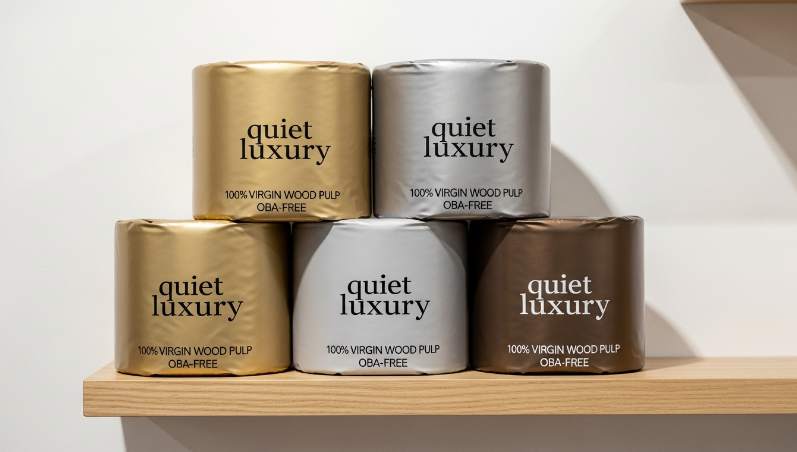
Visual presentation serves as the first touchpoint for quality perception. We use private label services to develop bespoke packaging that mirrors the aesthetics of luxury hotel chains. Minimalist designs, matte wraps, or metallic finishes communicate exclusivity before the roll is even touched. High-resolution printing on facial tissue boxes and individually wrapped toilet rolls builds a cohesive brand story that reflects a facility’s attention to detail.
- Apply metallic or minimalist design elements to individual wraps for a premium retail look.
- Position the product as an essential amenity that reflects the overall commitment to guest satisfaction.
- Leverage high-resolution printing to maintain brand consistency across all tissue categories.
Promote Material Purity and Environmental Integrity
Modern luxury is defined by clean, sustainable performance. We emphasize the use of 100% virgin wood pulp, which guarantees the paper is free from fluorescent whiteners and chemical additives (OBA-Free). This purity is essential for sensitive skin and aligns with the transparency demanded by European and North American markets. High GSM (grams per square meter) in multi-ply rolls also supports a sustainability narrative; because the paper is more effective, users require fewer sheets, reducing overall waste.
- Guarantee 100% OBA-Free material to appeal to health-conscious and premium demographics.
- Highlight FSC-certified sourcing to prove a transparent and ethical supply chain.
- Market the natural strength of virgin fibers as a way to lower per-use consumption.
Showcase Technical Durability and Manufacturing Precision
Performance differentiation separates premium rolls from economy options in high-traffic environments. The structural integrity of 4-ply and 5-ply tissues prevents tearing and provides a superior moisture barrier. Top Source Hygiene maintains a monthly production capacity of 2,860 tons, ensuring that this quality remains consistent across large-scale global orders. For business buyers, the value is clear: upgrading to premium grades often correlates with higher guest satisfaction scores and a more professional brand image.
- Detail the ply-bonding technology that prevents layer separation during use.
- Use technical specs like GSM and tensile strength to prove durability in commercial settings.
- Reference consistent batch-to-batch brightness levels (85-92%) to demonstrate manufacturing control.
Premium Jumbo Rolls at Wholesale Prices
Does More Ply Always Mean Better Quality for Your Brand?
A higher ply count signals luxury, but brand value depends on the synergy between fiber quality, GSM density, and application-specific engineering.
Balancing Ply Count with Production Complexity
While 4-ply and 5-ply options offer a premium feel, they require more raw material and specialized machinery settings. Adding layers increases manufacturing costs and logistics complexity. Top Source Hygiene manages these technical demands through a 2,860-ton monthly capacity, ensuring consistent quality even for high-ply luxury orders. Maintaining uniform web tension and preventing lateral drift is essential to ensure alignment accuracy across multiple layers.
Application-Dependent Value for Commercial Sectors
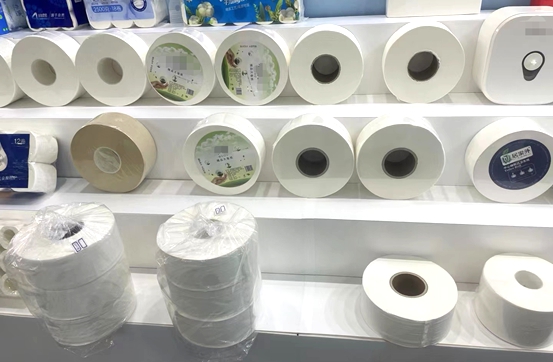
The ideal ply count depends on the specific environment. High-traffic areas often benefit from lower ply counts to gain efficiency. Commercial venues like airports and malls prioritize 2-ply jumbo rolls to maximize roll length and reduce maintenance intervals. Luxury hotels and high-end retail brands use 3-ply or 4-ply tissues to align with guest expectations for comfort and brand prestige.
| Ply Configuration | Target Segment | Primary Brand Benefit |
|---|---|---|
| 2-Ply (High GSM) | Commercial / High-Traffic | Maximum roll length and cost efficiency. |
| 3-Ply (Virgin Pulp) | Premium Retail / Office | Balanced softness, strength, and absorbency. |
| 4-Ply / 5-Ply | Luxury Hospitality / Boutique | Maximum tactile “cushion” and elite status. |
Material Efficiency and Sustainability Goals in 2026
The market trend in 2026 emphasizes material efficiency and functionality alignment over layer quantity alone. Modern branding focuses on optimizing materials to meet sustainability targets without sacrificing functional performance. Strategic material selection allows 2-ply or 3-ply products to match the absorbency of thicker alternatives through higher GSM and quality pulp. Using 100% virgin wood pulp ensures that even lower ply counts maintain the structural integrity required for professional use.
Functional Quality vs. Layer Quantity
Perceived quality often stems from softness and absorbency rather than just the total number of layers. Brands achieve a high-end feel by focusing on tissue embossing and pulp quality instead of simply adding more layers. Customizing the GSM and ply count helps brands find a middle ground between luxury appeal and cost optimization.
- Precision embossing increases surface area and absorbency by up to 30%.
- 100% Virgin wood pulp provides long fibers for superior tensile strength in multi-ply rolls.
- OBA-Free guarantees ensure the product remains safe for sensitive skin regardless of ply count.
What Are the Technical Challenges of Producing Consistent 4-Ply Rolls?
Managing the synchronization of four separate paper webs requires extreme mechanical precision; even a 1% deviation in tension or humidity across layers can cause structural debonding or catastrophic material waste.
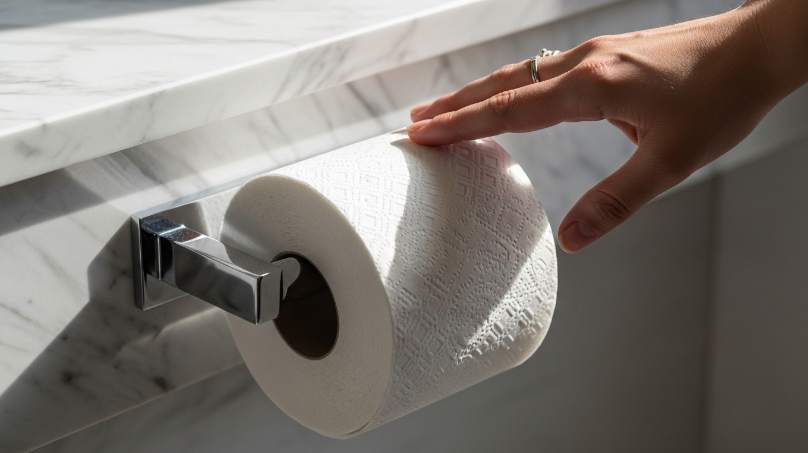
High-speed production lines in 2026 operate at velocities where even minor tension imbalances cause significant lateral drift. We solve this by implementing adaptive sensor arrays that measure the stretch of each individual ply in real-time. If one layer lags or pulls, the system adjusts the braking torque automatically. This prevents the “shredded edge” effect and uneven roll diameters that plague lower-tier manufacturing facilities.
| Technical Variable | 4-Ply Consistency Risk | Top Source Hygiene Solution |
|---|---|---|
| Web Tension | Lateral drift and uneven roll edges. | Adaptive control systems with real-time stretch monitoring. |
| Material Humidity | Layer deformation and inter-ply debonding. | Climate-stabilized Hebei production environment. |
| Ply Adhesion | Stiff sheets or layers separating during use. | Point-to-point embossing and CNC glue laydown. |
Managing Material Humidity and Thermal Stability
Wood pulp fibers are naturally hygroscopic, meaning they react to ambient moisture by expanding or contracting. In a 4-ply configuration, any variation in moisture content between the layers leads to internal stresses. These stresses manifest as “wrinkling” or the layers pulling apart after the roll is packaged. Our engineers maintain strict thermal stability throughout the manufacturing process, ensuring the 100% virgin wood pulp maintains its structural integrity across the entire 2,860-ton monthly output.
Precision Glue Application and Layer Adhesion
Applying adhesive across four layers is a delicate balancing act. Excessive glue creates hard spots that destroy the “cloud-like” softness consumers expect from a premium brand. Conversely, insufficient adhesive causes the plies to separate, frustrating the end-user. We utilize advanced process modeling to apply a micro-mist of adhesive. This ensures uniform lamination and maintains the quilted texture without compromising the 13–22g/m² GSM standards required for luxury grades.
Mitigating Roller Eccentricity and Mechanical Vibration
Mechanical imperfections in manufacturing rollers often introduce periodic disturbances. At the high speeds required for bulk OEM production, roller eccentricity causes vibrations that result in uneven thickness throughout the 4-ply stack. We employ precision-manufactured rolls with active vibration dampening. This guarantees a consistent, high-quality product for global retail brands, ensuring that every sheet provides the same tensile strength and absorbent capacity.
- Precision perforation ensures a clean tear every time, preventing “shredded edges.”
- High-pressure ply-bonding technology keeps all four layers intact during intensive use.
- CNC-precision embossing increases absorbency by 30% compared to non-embossed alternatives.
How to Price Your Premium Multi-Ply Brand Against Big Retailers?
Luxury tissue brands win by shifting the consumer focus from “price per roll” to “value per use,” leveraging direct factory access to maintain competitive margins that big-box retailers cannot match with their high-overhead models.
Wholesalers and middle-market distributors add layers of cost that dilute profit margins for private label brands. By partnering directly with a source factory like Top Source Hygiene in the Hebei paper hub, brands eliminate these markups. This direct model provides a transparent cost structure, protecting owners from the price volatility seen in 2026’s traditional supply chains. Manufacturing at scale enables these brands to match retail pricing while retaining a significant portion of the margin typically lost to intermediaries.
Direct-to-Factory Sourcing for Margin Protection
Eliminating intermediaries is the most effective way to secure a pricing edge. Brands that source directly from the manufacturer bypass the 15-30% markups typically applied by domestic wholesalers. We see that factory-direct partnerships in 2026 allow for real-time production scaling based on actual demand, which drastically reduces the overhead costs associated with excess inventory and warehouse fees.
- Bypassing wholesalers allows premium brands to retain higher profit margins while matching or slightly exceeding retail price points.
- Factory-direct models offer transparent cost structures that protect brands from the volatility of traditional supply chain markups.
- Direct partnerships enable brands to scale production based on real-time demand, reducing overhead costs.
Multi-Ply Performance Metrics as Value Justifiers
High-ply products, particularly 4-ply and 5-ply variants, offer functional superiority that justifies a higher shelf price. Data indicates that educated consumers prioritize absorbency and tensile strength over raw sheet count. We demonstrate that while a 5-ply roll costs more upfront, the “cost-per-use” often falls below cheap 2-ply alternatives because users require fewer sheets per task. Technical features, such as CNC-precision point-to-point embossing, increase absorbency by 30%, providing tangible evidence of quality that commodity brands lack.
- Sales data shows that highlighting increased absorbency and tensile strength helps shift consumer focus from price to utility.
- Brands demonstrate that high-ply rolls provide a lower “cost-per-use” because consumers require fewer sheets per task compared to thin 2-ply alternatives.
- Technical advantages, such as proprietary ply-bonding that prevents separation, serve as tangible proof of quality that justifies a price premium.
Material Integrity and Premium Price Anchoring
The use of 100% virgin wood pulp creates a clear quality gap between luxury offerings and the recycled or blended products found in big-box stores. Virgin pulp delivers a level of softness and natural brightness (85-92%) that recycled materials cannot replicate. By focusing on OBA-free (no optical brightening agents) and FSC-certified sourcing, brands anchor themselves in the health-conscious and ethical tiers. These buyers readily pay a premium for safety and purity, viewing the product as a hygiene essential rather than a generic household expense.
- Virgin wood pulp delivers a level of softness and brightness that recycled materials cannot achieve, anchoring the product firmly in the luxury tier.
- Brands leverage the absence of chemicals and fluorescent whiteners to attract health-conscious demographics willing to pay more for safety and purity.
- Sourcing FSC-certified materials adds an ethical layer to the pricing strategy, appealing to environmentally aware buyers.
Market Differentiation through Bespoke OEM Branding
Customization is the ultimate defense against price comparison. By adjusting GSM weights, roll widths (such as 132mm for premium comfort), and custom roll dimensions, brands make it difficult for shoppers to perform direct “price-per-sheet” calculations against store brands. Bespoke packaging transforms a basic commodity into a lifestyle amenity. This differentiation fosters brand loyalty and reduces price sensitivity, allowing private labels to offer “hotel-quality” experiences that big-box retailers rarely replicate in their budget-focused lines.
- Unique GSM weights and custom roll dimensions make it difficult for shoppers to perform direct “price-per-sheet” comparisons with retail competitors.
- Bespoke packaging designs elevate the product from a basic commodity to a lifestyle amenity, fostering brand loyalty.
- Private label services allow brands to offer exclusive “hotel-quality” experiences that big-box retailers rarely replicate.
Why Is 100% Virgin Wood Pulp Non-Negotiable for Luxury Grades?
Luxury tissue relies on the structural integrity of long-fiber virgin pulp to achieve the tactile softness and wet-strength that recycled alternatives cannot replicate in multi-ply configurations.
Fiber Integrity and Tactile Softness
Virgin wood pulp utilizes long, intact fibers that create a naturally smooth surface. Unlike recycled fibers, which break down and shorten with each processing cycle, virgin pulp maintains its structural shape. Top Source Hygiene sources 100% virgin pulp to eliminate the microscopic scratchiness inherent in lower-grade papers. Hospitality clients in 2026 prioritize this tactile profile because it correlates directly with guest satisfaction scores in premium hotel environments.
Tensile Strength in Multi-Ply Configurations
High tensile strength provides the structural bond required to hold three or four layers together without the paper shedding or tearing during use. This strength ensures the product remains functional when wet—a non-negotiable requirement for high-end toilet paper and kitchen towels. Uniform fiber distribution also allows for deep, consistent embossing patterns. These patterns stay defined across every layer, rather than flattening out during transport or storage.
| Performance Metric | 100% Virgin Wood Pulp | Recycled / Mixed Pulp |
|---|---|---|
| Fiber Length | Long, intact (Superior strength) | Short, fragmented (Brittle) |
| Chemical Safety | 100% OBA-Free (Safe for skin) | Often requires whiteners/OBA |
| Brightness (Natural) | 85-92% (High-end consistency) | Variable (Grayish/yellow tint) |
| Linting Level | Near-zero (Dust-free) | High (Frequent paper dust) |
Chemical Purity and Visual Consistency
Premium grades achieve a bright, clean appearance through fiber selection rather than harsh chemical additives. Top Source Hygiene ensures all luxury rolls are 100% OBA-Free, meeting FDA and ISO 9001 standards. This process avoids fluorescent whiteners, which can cause skin irritation in medical or high-end hospitality settings. Brands benefit from a consistent white shade across every production batch, protecting their visual identity in the retail market.
Absorbency and Efficient Resource Use
The natural capillary structure of virgin fibers maximizes liquid retention, allowing for high-density networks that consumers associate with durability. Enhanced absorbency means users need fewer sheets to achieve the same result, which supports regional waste reduction goals. Commercial facilities in North America and Europe adopt these premium grades to lower restocking frequencies and manage facility maintenance costs effectively.
- Long-fiber pulp provides a 30% increase in liquid retention compared to short-fiber recycled alternatives.
- OBA-Free guarantees make the product safe for sensitive skin and medical environments.
- High-wet strength prevents the paper from disintegrating prematurely during use.
Conclusion
Transitioning to 3-ply and 4-ply tissue allows brands to differentiate through tactile quality and strength while avoiding the low-margin competition of standard 2-ply products. High-performance manufacturing and the use of 100% virgin wood pulp ensure these premium rolls meet the absorption and softness standards that high-end retail and hospitality sectors expect. Consistent technical specifications across large-scale production runs protect brand reputation and customer loyalty.
Review your current product portfolio to identify opportunities for premium upgrades that align with your market’s specific plumbing and softness requirements. You can contact our team to discuss custom specifications or request a sample of our hotel-grade 4-ply rolls for your next 40HQ order.
Frequently Asked Questions
Is 3-ply toilet paper better for my brand?
Yes, incorporating 3-ply toilet paper is a strategic move for brands aiming to capture the premium market. Current trends show consumers are prioritizing enhanced comfort, durability, and superior absorbency. By offering 3-ply, your brand aligns with the premiumization shift, allowing for 20-30% higher pricing compared to standard utility products.
What is the difference between 2-ply and 3-ply?
The primary difference lies in the number of layers and the resulting performance. 2-ply is the industry standard for daily use, whereas 3-ply adds an extra layer of tissue to significantly increase thickness, tensile strength, and liquid retention. This extra ply provides a much softer, “cushioned” feel that consumers associate with luxury and higher hygiene standards.
Is 4-ply toilet paper too thick for septic?
While 4-ply toilet paper is significantly thicker, it is safe for septic systems provided it is manufactured with rapid-disintegration technology. High-quality 4-ply products are engineered to break down quickly upon agitation in water. However, for older septic systems with low-flow capabilities, it is recommended to confirm that the product is specifically labeled as “Septic Safe.”
How to market luxury toilet paper?
Luxury toilet paper marketing should focus on the “sensory experience” and “value-added features.” Highlight innovations such as sophisticated embossing patterns, lotion-infused fibers, and the use of premium fiber blends. Emphasize that your product offers a 15% increase in total market revenue potential by targeting the high-end segment where buyers prioritize strength and skin-friendly softness.
Why use 100% virgin pulp for 3-ply?
100% virgin pulp is used for 3-ply products because it contains longer, intact cellulose fibers that have not been weakened by the recycling process. This results in maximum softness, superior brightness, and high absorbency. For premium multi-ply segments, virgin pulp is essential to ensure the product does not feel rough or lint excessively during use.
What is the MOQ for 4-ply custom rolls?
The Minimum Order Quantity (MOQ) for custom-branded 4-ply toilet paper typically starts at one 20ft container, which equates to approximately 15,000 to 20,000 rolls depending on the sheet count and roll diameter. For specialized embossing or custom packaging designs, some manufacturers may require a 40HQ container to ensure production efficiency and cost-effectiveness.