
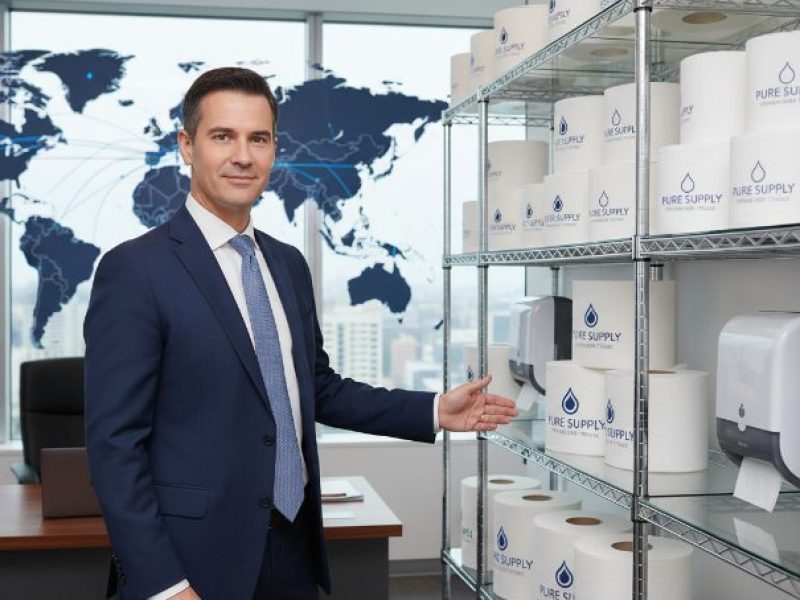
Adopting an OEM/Private Label strategy allows distributors to reclaim control over their supply chain and stop the margin erosion caused by volatile national brand pricing. Relying on external manufacturers often leaves janitorial suppliers vulnerable to sudden price hikes and supply gaps that jeopardize long-term service contracts. Shifting to a proprietary brand ensures that every case of tissue delivered builds equity in your own business instead of a third-party corporation.
We break down the technical differences between OEM and ODM manufacturing while detailing how to specify ply count, roll diameter, and sheet dimensions for specific commercial environments. This manual provides the requirements for designing custom poly wrappers and corrugated cartons, serving as a technical standard for distributors ready to launch a professional line of branded hygiene products.
The Rise of Private Labeling in Janitorial Supplies
Distributors in 2026 are recapturing up to 25% in lost margins by replacing stagnant national paper brands with high-performance, factory-direct private labels.
Cost Efficiency and Profit Margin Optimization
Janitorial supply companies now prioritize factory-direct models to bypass the price premiums forced by national brand conglomerates. By sourcing directly from a manufacturer like Top Source Hygiene, distributors set competitive market prices while retaining a much larger share of the profit. This shift secures higher margins on essential, high-frequency products like jumbo rolls and household toilet tissue, which provide the steady cash flow needed to stabilize revenue in volatile markets.
- Factory-direct sourcing allows janitorial companies to eliminate brand-licensing fees and middleman markups.
- Customized paper products ensure consistent, recurring sales volumes that anchor the distributor’s business.
- Full control over pricing and promotional cycles enables distributors to react quickly to local competitor movements.
Rapid Product Iteration through Advanced Labeling Technology
Modern manufacturing facilities utilize integrated printing and digital prototyping to shrink development timelines. We help smaller distributors test new product lines without the burden of massive capital investment through flexible OEM services. This agility allows brands to pivot their designs or specifications within weeks, ensuring they always align with current end-user preferences.
- In-house label printing significantly reduces the lead time required for launching new branded products.
- Digital prototyping ensures that every custom wrapper and carton meets brand standards before mass production begins.
- Lower minimum order requirements empower distributors to scale their proprietary lines incrementally.
Sustainability as a Competitive Differentiator
Eco-friendly certifications and high-purity material formulations now define the premium segment of the janitorial market. Distributors use 100% virgin wood pulp—free from fluorescent whiteners—to appeal to health-conscious clients in the healthcare and hospitality sectors. Adopting FSC-certified materials and plastic-free packaging helps these companies navigate strict environmental regulations across North America and Europe while improving their overall brand perception.
- FSC-certified and OBA-free products meet the growing demand for safe, sustainable hygiene solutions.
- Sustainable product lines attract high-value corporate clients committed to green procurement mandates.
- 100% Virgin wood pulp provides superior tensile strength and a lint-free experience for premium facilities.
Building Brand Loyalty in Commercial Sectors
Proprietary product lines build a unique market identity that prevents customers from price-shopping against generic national brands. By offering custom-branded dispensers paired with specific tissue roll diameters, distributors create a “locked-in” ecosystem. This strategy ensures that end-users return for refills, securing long-term service contracts and predictable recurring revenue.
- Branded packaging and custom-embossed logos reinforce professional aesthetics in luxury hotel and corporate environments.
- Exclusive labels force end-users to rely on the original distributor for product refills.
- Precision customization of ply, GSM, and sheet size allows for products tailored to specific client technical requirements.
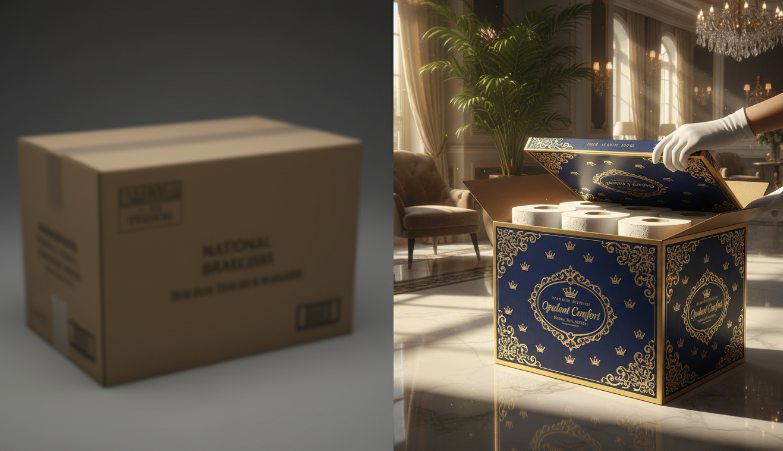
Why Distributors are Abandoning National Paper Brands
Distributors in 2026 are pivoting from acting as third-party fulfillment centers to becoming brand owners, capturing 15-30% in lost margins by eliminating the bloated overhead of national advertising campaigns.
Enhancing Profitability via Factory-Direct Procurement
The fiscal reality for modern distributors is that national brands carry a “brand tax” that funds corporate marketing rather than product quality. These multi-million dollar advertising campaigns do not benefit the local distributor’s bottom line. By sourcing directly from a Hebei-based manufacturer like Top Source Hygiene, wholesalers bypass the multi-layered markups of intermediaries.
- Factory-floor pricing allows for a significantly larger spread between procurement cost and retail price.
- The elimination of middleman logistics provides a 15-30% cost advantage in high-volume commercial paper categories.
- Direct sourcing enables distributors to reinvest their saved margins into local sales forces rather than supporting a national brand’s multi-tier overhead.
Securing Market Independence Through Private Labeling
Selling a national brand makes a distributor a commodity. If a facility manager can find the same case of paper from a dozen different vendors, loyalty is purely a race to the bottom on price. Private labeling shifts the power dynamic. By developing a proprietary brand—such as a custom-ply line or specialized coreless rolls—distributors own the customer relationship and prevent direct price comparisons across competitors.
OEM services allow for the creation of unique product lines that reflect the distributor’s specific reputation for quality and reliability. When a client buys a distributor’s private brand, they cannot simply search for a lower price on the same SKU elsewhere. This market independence creates long-term brand equity and higher customer retention rates in the competitive janitorial supply sector.
Addressing Regional Compliance and Sustainability Demands
National brands typically rely on high-volume, “one-size-fits-all” production runs that ignore hyper-local regulatory shifts. In 2026, North American and European markets demand strict FSC and FDA certifications that many generic national lines have been slow to adopt. Custom manufacturing allows for surgical adjustments in GSM (grams per square meter) and ply counts to meet specific regional expectations.
- Flexible ODM partners easily implement plastic-free packaging and eco-friendly materials that rigid national production lines avoid.
- Specialized hospitality requirements, such as high-absorbency 4-ply standards, are more achievable through tailored OEM partnerships.
- Compliance with OBA-free (No Optical Brightening Agents) standards ensures product safety for sensitive skin markets in Europe and North America.
Responding to the Decline of National Industry Marketing Initiatives
The industry reached a turning point in March 2026 when the Paper and Packaging Board was officially terminated following a manufacturer vote. This collapse of a major national marketing initiative signals that the era of generic brand promotion is over. Manufacturers and distributors no longer see value in paying into collective awareness campaigns that fail to differentiate their specific offerings.
As market saturation for national brands peaks, distributors are seeking differentiation through niche, high-performance products. Specialized items, such as the TSH-3396 high-density solid rolls or high-capacity jumbo rolls, provide more tangible value to commercial end-users than standard retail-focused national brands. The shift away from generic national promotion allows distributors to focus on their “Big 10” core inventory, ensuring they have the right products for local demand without the burden of national brand politics.
Scale Your Brand With Expert OEM Manufacturing
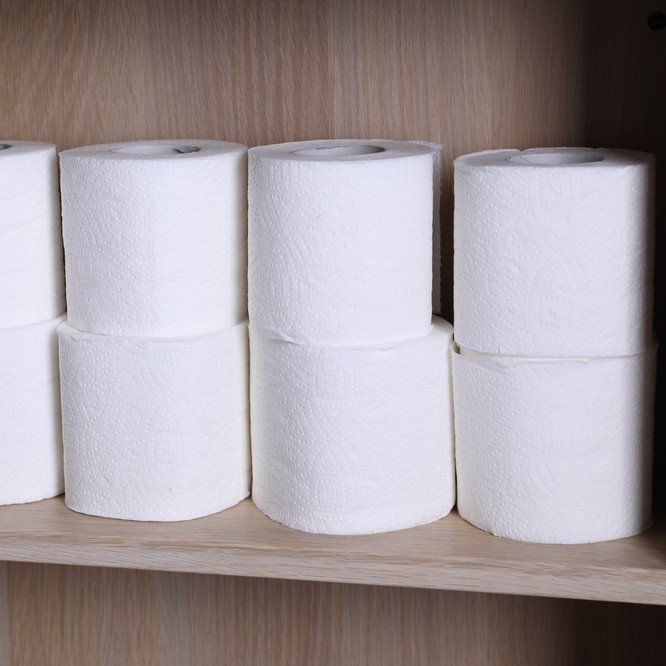
OEM vs ODM Manufacturing for Commercial Tissue
The choice between OEM and ODM dictates whether a brand competes on proprietary technical innovation or speed-to-market efficiency within the 2026 commercial tissue landscape.
Defining OEM for Premium Brand Customization
OEM manufacturing gives brands total control over the technical architecture of the paper. We see distributors in the luxury hospitality sector moving toward specific 13–22g/m² ply densities and CNC-precision embossing to differentiate their offerings. This model requires a deeper investment in development but results in a proprietary product that competitors cannot easily replicate. Clients specify every detail, from the selection of long-fiber 100% Virgin Wood Pulp to the exact width—ranging from 102mm to 132mm—ensuring the final roll fits niche dispenser requirements or premium comfort standards.
| Feature | OEM Manufacturing | ODM Manufacturing |
|---|---|---|
| Design Ownership | Client provides full technical specs | Manufacturer provides pre-set designs |
| Customization Depth | High: Ply, GSM, Embossing, Pulp Mix | Moderate: Packaging and Logo only |
| Time to Market | 4-6 Weeks (Development + Testing) | 2-3 Weeks (Rapid Production) |
| Ideal Use Case | Luxury Hotels & Specialized Brands | Retail Chains & High-Volume Wholesale |
Accelerating Market Entry with ODM Solutions
ODM models allow distributors to bypass the engineering phase by selecting from proven, high-capacity production lines. For organizations prioritizing rapid expansion into retail or high-traffic commercial environments, leveraging a manufacturer’s existing technical library reduces lead times significantly. This approach focuses on volume-based efficiency, utilizing standard specifications that have already cleared regional compliance like FDA or EU hygiene standards. We typically see ODM clients choose “The Big 10” inventory models, such as the TSH-2559, which provides a balanced 2-ply or 3-ply configuration optimized for 40HQ container payloads.
- Distributors select from pre-engineered product lines, focusing on volume-based efficiency and cost-effective retail solutions.
- The manufacturer handles the design and engineering phases, reducing the upfront investment for new market entrants.
- This model provides a faster path to retail shelves for organizations prioritizing speed over unique product architecture.
Strategic Selection Based on 2026 Market Demands
Selecting the right model depends on the distributor’s long-term margin strategy. While OEM secures brand loyalty through unique fiber performance and OBA-free safety, ODM provides the agility needed for price-sensitive markets. At Top Source Hygiene, we support both paths by maintaining a 2,860-ton monthly capacity, ensuring that even highly customized OEM projects benefit from the same logistics optimization as our high-volume ODM bundles. We utilize mechanical compression technology to minimize roll bulk, allowing more product per cubic meter while maintaining the necessary “cloud-like” softness expected in the 2026 market.
- OEM models appeal to established brands willing to invest in longer development cycles for proprietary product features.
- ODM models serve cost-conscious retailers who require high-capacity production and proven product performance.
- Top Source Hygiene supports both paths by offering a significant 2,860-ton monthly capacity and 30 years of manufacturing experience.
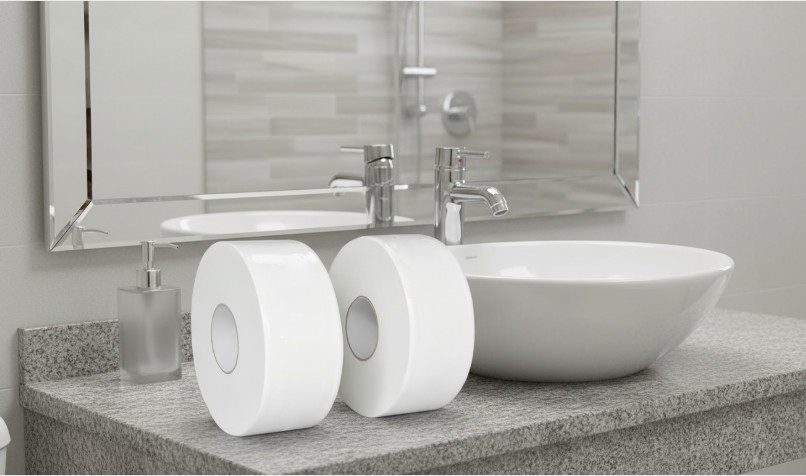
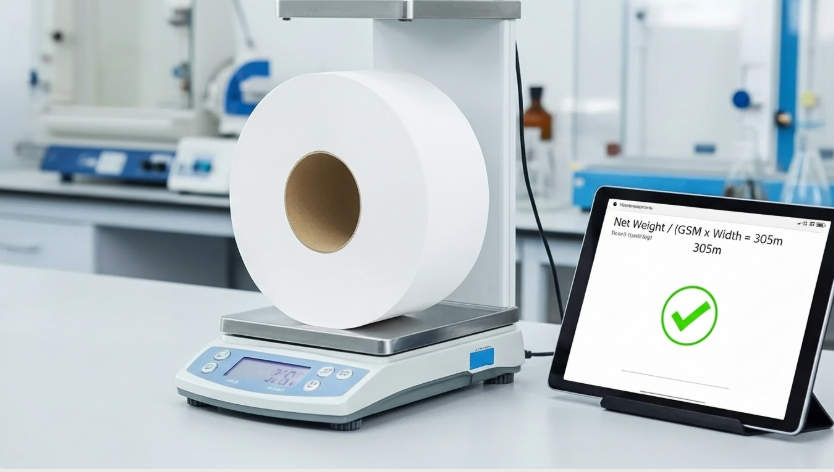
Customizing Ply, Sheet Size, and Roll Diameter
Precise calibration of physical roll attributes allows B2B distributors to align product performance with specific regional dispenser standards and luxury market tiering.
Selecting Ply Configurations for Strength and Texture
Manufacturing flexibility starts with the layering process. We engineer configurations ranging from 2-ply to 5-ply using 100% virgin wood pulp to ensure high absorbency and tensile strength. While 2-ply remains the standard for high-volume commercial environments, the 2026 market shows a sharp pivot toward 4-ply and 5-ply options in the luxury hospitality sector. These premium tiers provide a cloth-like feel and superior hand-feel without sacrificing the structural integrity required for heavy use.
| Ply Configuration | Target Segment | Technical Specs (GSM) |
|---|---|---|
| 2-Ply & 3-Ply | Retail & High-Traffic Commercial | 13–15g/m² (Septic Safe) |
| 4-Ply & 5-Ply | Luxury Hotel & Premium Private Label | 18–22g/m² (Ultra-Soft) |
We adjust the grams per square meter (GSM) and paper weight to meet specific branding requirements. Our North China facility utilizes long-fiber pulp that achieves an 85-92% natural brightness level without the use of Optical Brightening Agents (OBA). This chemical-free approach ensures the final product is safe for sensitive skin while maintaining the “Pure Quality” standard demanded by global importers.
Defining Sheet Dimensions for Global Market Compatibility
Custom sheet sizing ensures that paper products comply with regional hardware standards and retail packaging norms. Advanced cutting systems achieve precision dimensions for facial tissues and kitchen towels, matching North American and European sizing requirements. We maintain tight dimensional tolerances during the trimming process to ensure clean edges and consistent stacking in boxed products, preventing the “shredded edge” issues common in low-tier manufacturing.
- Variable widths from 102mm to 132mm cater to premium comfort standards in the Middle East and Asia.
- Point-to-point embossing patterns increase absorbency by 30% through CNC-precision texturing.
- Precision perforation technology ensures smooth tearing at designated lengths to reduce waste.
Engineering Roll Diameters for Commercial Dispenser Requirements
Adjustable winding technology allows for the production of varied roll diameters, ranging from standard household sizes to high-capacity industrial jumbo rolls. Jumbo roll tissues (JRT) feature expanded diameters designed specifically for high-traffic venues like airports, malls, and office complexes. By modifying the core diameter, we ensure total compatibility with the existing hardware used by facility management companies.
Increasing roll density through precision winding helps commercial clients reduce maintenance frequency and operational costs. For distributors focused on logistics efficiency, our coreless toilet paper options maximize paper length and transport volume. These high-density solid rolls (such as the TSH-3396 model) provide 5000g of paper per bundle, significantly lowering the landed cost per meter for international buyers in Africa and Southeast Asia.
Designing Custom Poly Wrappers and Corrugated Cartons
High-performance packaging in 2026 serves a dual purpose: it reinforces brand premiumization through high-definition flexo-printing while safeguarding structural integrity during high-humidity maritime transit.
Flexo-Printing and Visual Branding for Poly Wrappers
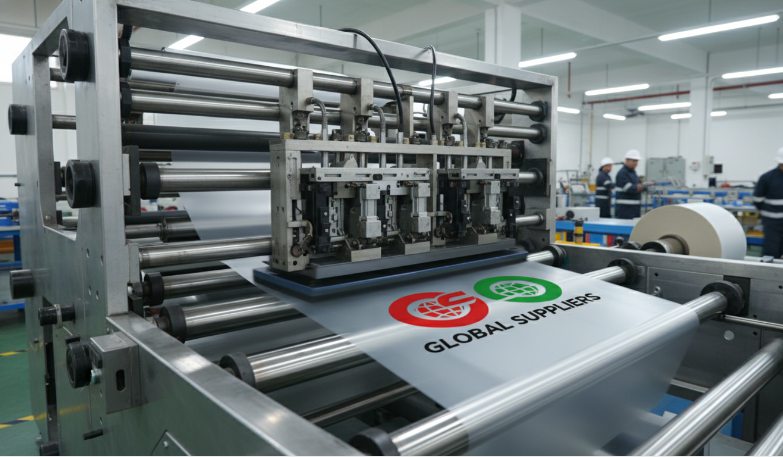
Top Source Hygiene utilizes high-definition flexographic printing systems to apply sharp, precise brand identities directly to thin-film poly wrappers. These advanced systems allow for exact color matching and high-resolution logo placement on wrappers used for both retail toilet rolls and facial tissues. Because we exclusively serve B2B distributors and hospitality groups, we ensure every wrapper maintains absolute brand consistency across global markets. 100% OBA-free paper requires packaging that communicates purity, and our flexo-printing capabilities achieve this by maintaining vibrancy without bleeding or fading.
Customized wrappers do more than protect the roll; they act as a primary marketing tool in retail and hotel environments. We provide varied format options, including individual wraps for luxury hospitality (Format A) and direct bundle packs for high-volume retail (Format B). This flexibility allows distributors to target different price points while using the same high-purity virgin wood pulp core product. Our printing process also accommodates rapid iterations, allowing brands to update designs for seasonal promotions or regional compliance requirements without significant lead time delays.
| Packaging Type | Technical Specification | Commercial Benefit |
|---|---|---|
| Individual Poly Wrap | High-definition Flexo-printing; 100% Recyclable Film | Maximum hygiene for hospitality and premium retail branding. |
| Master Corrugated Carton | 5-Ply Reinforced Export Grade; Moisture-controlled | Prevents crushing during high-stacking in 40HQ containers. |
| Bundle Wrap (Format B) | Mechanical compression technology | Optimizes container payload (up to 9 tons) to lower landed costs. |
Engineering Durable Corrugated Cartons with FFG Systems
Our facility integrates Flexo-Folder-Gluer (FFG) systems to streamline the production of secondary shipping cartons. These systems combine printing, die-cutting, folding, and gluing into a single high-speed workflow, reaching speeds of up to 350 boxes per minute. This automation ensures our packaging production keeps pace with a monthly output of 2,860 tons of paper. By eliminating manual handling steps, we reduce the risk of structural defects and ensure that every carton meeting our strict durability standards for international logistics.
Moisture control is a critical factor during the corrugation process. We utilize built-in humidity sensors and automated adjustment systems to maintain board flatness and structural integrity. This engineering focus is vital for bulk shipments traveling through varying climates during maritime transit. Reinforced 5-ply export cartons protect the soft, high-density rolls inside from compression damage, ensuring that products arrive at the distributor’s warehouse in “shelf-ready” condition.
Sustainable Material Integration and Waste Reduction
Sustainability mandates in 2026 drive our choice of materials. We use FSC-certified corrugated board and recyclable poly films to help our partners meet environmental compliance standards in North America and Europe. Our modular production workflows minimize material scrap by optimizing die-cut patterns, which reduces the overall carbon footprint of every 40HQ container we ship. We also offer bamboo pulp and recycled pulp options for brands targeting eco-conscious demographics, ensuring the packaging aligns with the sustainable nature of the tissue itself.
Scalable Customization for High-Volume Global Logistics
We leverage modular design capabilities to handle rapid transitions between different carton sizes and branding requirements. Quick-changeover technology allows our Hebei factory to switch between custom-branded hospitality boxes and large-format commercial jumbo roll cartons (JRT) without significant downtime. This scalability is essential for distributors who manage diverse portfolios ranging from TSH-4010 luxury hotel rolls to TSH-3082 industrial value bundles.
- Precision-engineered carton dimensions maximize container loading efficiency, allowing for payloads of up to 9,000kg in a 40HQ container.
- Mechanical compression technology minimizes bulk without sacrificing the “cloud-like” softness of the 100% virgin wood pulp.
- Automated palletization ensures stable stacking, reducing the risk of product displacement during long-haul shipping.
Partnering with Top Source Hygiene for Private Label Success
Partnering with a direct source factory in the Hebei paper hub eliminates middleman markups while providing the technical infrastructure needed to scale a proprietary brand across global markets.
Three Decades of Specialized OEM and ODM Expertise
Top Source Hygiene has operated from Mancheng, Baoding—China’s primary paper production base—since 1995. This 31-year track record as of 2026 allows us to navigate the complexities of global supply chains for distributors in over 56 countries. Unlike smaller converters that rely on third-party mills, we manage the entire production lifecycle to provide stability in both pricing and product availability.
- Direct factory operations based in the Hebei industrial hub since 1995.
- Established distribution support for household and commercial sectors across 56 countries.
- Long-term supply chain reliability built on three decades of technical manufacturing experience.
High-Volume Manufacturing with 2,860-Ton Monthly Capacity
We operate two advanced facilities capable of producing 2,860 tons of paper products per month. This high-volume capacity is essential for large-scale distributors who cannot risk inventory shortages during seasonal demand spikes. By sourcing toilet paper, jumbo rolls, and facial tissues directly from our factory, partners reduce the overhead costs typically associated with multi-tier distribution.
Logistics efficiency is central to our operations. We maintain production lead times of 15 to 25 days for standard 40-foot high-cube (40HQ) container orders. Our loading teams in Hebei maximize container payload—typically between 7,000kg and 9,000kg—to ensure the lowest possible landed cost per unit for international buyers.
International Quality Standards and Sustainability Compliance
Our manufacturing processes meet the rigorous regulatory requirements of North American and European markets. We adhere to ISO 9001, FDA, and FSC standards to guarantee product safety and environmental responsibility. Every roll is produced using 100% virgin wood pulp, which we guarantee is free from fluorescent whiteners and optical brightening agents (OBA).
- 100% OBA-Free virgin wood pulp ensures safety for sensitive skin and meets EU hygiene standards.
- Septic-safe engineering allows for rapid disintegration, satisfying plumbing requirements in the USA and Canada.
- Full documentation and third-party testing are provided to help distributors mitigate liability and meet green consumer demands.
End-to-End Customization for Private Label Branding
Distributors gain full control over technical specifications to differentiate their brands in competitive markets. We offer customization of paper weight (GSM), ply counts ranging from 2-ply to 5-ply, and specific sheet dimensions. This flexibility allows partners to tailor products to regional preferences, such as the high-density wide formats favored in the Middle East or the cost-efficient coreless rolls popular in Southeast Asia.
Branding extends to the final packaging, where we design custom poly wrappers and reinforced 5-ply corrugated cartons. For emerging brands in Africa and South America, we provide flexible order minimums and free samples to facilitate market entry. Our “Profit Protection” policy ensures we exclusively serve B2B clients, strictly protecting the margins of our wholesale and distribution partners.
Conclusion
Transitioning to a private label model allows distributors to move away from low-margin national brands and build long-term brand equity. Customizing specifications like ply density and roll diameter ensures the product meets specific regional market demands while maintaining strict hygiene and safety standards. High-quality manufacturing from 100% virgin wood pulp creates a reliable supply chain that protects dealer margins and customer loyalty.
Review your current inventory requirements and determine which custom specifications best serve your high-volume clients. Contact our team at Top Source Hygiene to request a manufacturing quote or a sample pack of our core inventory models.
Frequently Asked Questions
How to start a private label commercial toilet paper brand?
Starting a private label brand begins with identifying a market niche, such as eco-friendly or sustainable formulations, which are currently driving robust growth. You should partner with a contract manufacturer that offers in-house label printing to minimize initial order quantities and allow for rapid product iterations. Success in this sector relies on leveraging the high-frequency nature of janitorial supplies to build long-term customer retention.
What is OEM toilet paper manufacturing?
OEM (Original Equipment Manufacturer) manufacturing in the tissue industry is a scalable solution where a factory produces toilet paper based on your specific technical requirements and branding. This allows distributors and retailers to build proprietary product lines without investing in heavy machinery, utilizing the manufacturer’s existing industrial infrastructure to produce high-quality, cost-effective supplies.
Can I put my logo on jumbo toilet paper packaging?
Yes, you can apply custom branding to jumbo toilet paper packaging. Modern manufacturers utilize advanced in-house printing technology specifically designed to facilitate customization. This enables brands to feature their logos and corporate identity even on large-format commercial supplies, fostering brand loyalty and professional presentation in high-traffic facilities.
What are the margins on wholesale janitorial paper?
While traditional wholesale margins can vary, private label proprietary product lines offer significantly premium margins compared to national brands. By leveraging contract manufacturing and customizable solutions, distributors can reduce their cost-of-goods and capture higher profits while still providing a cost-effective solution to the end-user.
How to find a private label tissue manufacturer?
To find a reliable manufacturer, focus on those who specialize in contract manufacturing and offer flexible scalability. Look for partners who invest in sustainability and modern printing technologies. Utilizing B2B industry directories and attending janitorial supply trade shows are the most effective ways to identify manufacturers capable of supporting proprietary product lines with low minimum orders.