Skip to content
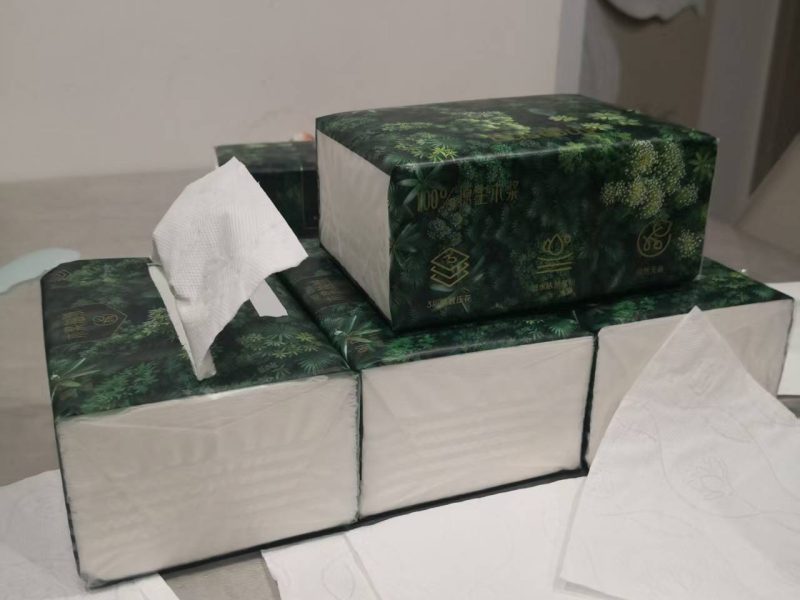
Here’s the advice every sourcing guide hands you: always request a pre-production sample before signing off on a container of private label facial tissue packaging. That advice will cost you a $50,000 order faster than a missed FOB pricing quote. Why? Because the pre-production sample you approve is almost always a hand-assembled prototype. The carton board is cut and glued by a craftsman. The colors are adjusted manually. The tissue fits perfectly. Then the factory runs 1,500 cases on an automated line — and the box compression strength drops 15% because machine folding applies different pressure. Suddenly your logo is on a box that crumbles on a retail shelf. The real answer is not more samples. It’s demanding a digital mockup compression test and a signed 4-color spectrophotometer report before production starts. That stops the sample-to-mass-production gap cold.
The quality tolerance between a hand-built prototype and a high-speed production run is where most private label tissue packaging buyers get burned. I’ve watched procurement managers from hotels and healthcare chains spend weeks on sample approval, only to reject the first production batch because the outer carton’s color deviated from the approved 4-color proof. That’s weeks of delay and a reprint charge nobody budgeted. The fix is straightforward: insist on a signed color proof tied to a specific spectrophotometer reading, and require a pre-production sample taken from the actual production line, not the sample room. At Top Source Hygiene, we use a digital mockup compression tester on every new SKU and provide a signed certificate for each box’s collapse strength. That data belongs in your contract, not just your wish list.
Why Custom Packaging Fails Without a Strategy
Most sample boxes look perfect but lose 15% compression strength in automated production lines.
Custom facial tissue packaging fails when the interplay between ply thickness, box dimensions, and shelf appeal is ignored. A 4-ply tissue requires a deeper box to avoid cramming the sheets, which adds 5-8% to corrugated material cost. Soft packs (poly pouches) cut packaging cost by 12-15% but lack the structural rigidity hotels and premium retailers demand. The wrong choice either inflates unit cost or drags down brand perception — and the sample won’t tell you until you’re in full production.
- Ply-to-box depth calculations: 4-ply tissue needs a box depth of at least 230 mm to avoid tearing. Most standard 3-ply boxes are 210 mm deep. The extra 20 mm adds 5-8% to board cost and increases case cube, raising shipping cost by roughly 3%.
- Automated Line Compression Shifts: Hand-made prototypes used in sample approval often test 15% higher in box compression strength than machine-folded cartons. Top Source runs digital mockup compression testing on every new SKU before production to catch this drop early.
- Chemical Formulation Safeguards: Most factories use solvent-based inks for outer cartons, which can migrate to the tissue and violate FDA 21 CFR regulations. Top Source uses only food-safe, low-migration inks on box interiors.
- Carton Branding Color Deviations: Color drift between printed samples and production runs remains a significant complaint. Top Source maps jobs via 4-color spectrophotometers to guarantee all outputs sit securely within brand tolerance corridors.
Real Cost of Private Label Tissue Packaging (2026)
A 20-ft container of 3-ply box tissues runs $18k–$24k landed; full-color FSC certification adds 6-10% budget overhead.
For a standard 20-foot container of 3-ply box facial tissues (50 boxes per case, 100 pulls each), landed cost typically falls between $18,000 and $24,000 depending on packaging complexity. Full-color printing with FSC certification adds 6–10% compared to plain white boxes. Raw material and board thickness also affect the final figure.
- FCL Container Commitments: Standard MOQ targets one 40’HC container (approx. 1,500–2,000 cases). Backed by a 2,860-ton monthly capacity, direct-factory scaling is maintained smoothly.
- Sampling Lead Turnarounds: Free stock samples ship in 2–3 days to evaluate fiber softness, while custom artwork prepress mockups complete in 10 days with shipping covered.
- Contractual Payment Operations: Transaction loops clear under a secure 30% deposit and 70% balance via T/T or L/C parameters, adjustable for established multi-property clients.
| Feature | Specification | Cost Impact | Compliance Note |
|---|---|---|---|
| Packaging Format | Box (folding carton) – custom printed, FSC-certified | Full-color adds 6–10% vs plain white | Requires food-safe, low-migration inks for FDA compliance |
| Ply & Material | 100% virgin wood pulp, 3-ply or 4-ply | 4-ply: paper cost +10–15%, but packaging cost –5–8% per case | ISO 9001, FSC, no fluorescent whiteners |
| Minimum Order (MOQ) | 1 × 40’HQ container (~1,500–2,000 cases) | Landed cost $18,000–$24,000 (3-ply box) | 30% deposit T/T or L/C; smaller trial pallets negotiable |
| Color & Print Accuracy | 4-color spectrophotometer proofing | Prevents costly reprints; signed proof per SKU | Brand consistency; deviation is #1 buyer complaint |
| Box Compression Strength | Digital mockup compression testing | Guards against 15% strength drop in mass production | Ensures shelf integrity and logistics performance |
Box vs Soft Pack vs Pocket: Which Format Works?
Isolating dimensional casing footprints optimizes marine payload cube distribution values cleanly.
Box tissues are the default for premium presentation in hotels, retail stores, and luxury clinics. They allow full-color printing, embossing, and a rigid structure that signals quality. But the case cube is larger — a 40’HC container holds roughly 1,500–2,000 cases of boxed tissue versus 2,500–3,000 for soft packs. That drives up FOB shipping cost per unit by 10–15%.
Soft packs (poly pouches) are the cost-effective workhorse for public facilities, schools, and transit hubs. They ship flat, reducing cube, and the printing is typically limited to 1–2 colors on the film. The downside: no shelf presence, and the bag can tear in humid environments. Pocket tissues (handkerchief packs) target on-the-go consumers and promotional giveaways. They require precise folding and a smaller footprint, but the per-unit packaging cost is higher due to the manual-like assembly.
- Rigid Box Tissue: Premium feel, full-color offset printing, larger case cube. Requires continuous laboratory digital mockup compression test parameters to block stacking collapses.
- Poly Soft Pack: Lowest packaging material cost base, minimal cargo cube, utilizing low-migration food-grade ink barriers for FDA compliance.
- Pocket Handkerchief Pack: Miniature format, ideal for branded giveaways. Requires a specialized 4-color spectrophotometer signed proof corridor to stop tone variations completely.
The real trap is color consistency. Many factories produce a perfect sample box by hand, then the production run comes out with a 15% color shift on the corrugated outer carton. That’s why we use a 4-color spectrophotometer and provide a signed proof for every SKU before mass production. If your supplier can’t show you their color control process, you’re gambling on your brand perception.
How to Source Custom Facial Tissues Without Hidden Fees
Unmasking hidden prepress and tooling line-items protects baseline private-label profitability.
Start by demanding a full cost breakdown before committing. Most suppliers quote a per-unit price that excludes artwork setup, plate charges for offset printing, and carton marking fees — these can total $800–$2,500 per SKU. Ask specifically whether the quote includes digital proofing, die-cut costs, and any minimum charge for shorter print runs. Without this, your landed cost per case jumps 6–10% on a 40’HC container.
- Prepress Cylinder & Plate Fees: Offset layouts require zinc or metal plate castings ($120–$250 per color). Top Source Hygiene incorporates free digital proofing setups to bypass surprise billing.
- Multilingual Carton Marking Fees: Secondary barcode adjustments or multi-language box updates often trigger extra processing premiums ($150–$400) if not locked down in the initial proforma invoice.
Next, insist on a pre-production sample pulled from actual production stock — not a hand-built mock-up. Hand-made samples hide two common failures: box compression strength can drop 15% once machine-folded, and color deviation on corrugated cartons becomes visible. Buyers have been observed approving a hand-taped sample, only to find the mass-produced boxes collapse under stacking load in transit. Top Source Hygiene runs digital mockup compression testing and uses a 4-color spectrophotometer, then provides a signed color proof for every SKU.
Finally, confirm your supplier handles multilingual labeling and compliance certification paperwork. For North America, facial tissue boxes must meet FDA 21 CFR if used near food; for Europe, FSC certification and EU Ecolabel criteria are often mandatory. Some factories pass the paperwork cost to you or lack the in-house capability — then you pay a third-party lab $500–$1,500 per test. Top Source Hygiene prepares all compliance documents (FDA, FSC, COA) at no extra charge, and supports any language with proper prepress checks. That alone saves 2–4 weeks of back-and-forth.
Compliance Checklist for Global Markets
Request a Certificate of Analysis before production—many suppliers skip heavy metal testing.
Compliance is not just about checking a box. Each importing region has specific legal requirements that, if missed, can hold a container at customs or trigger a recall. The most common mistakes involve incorrect labeling, missing certifications, and using inks that contaminate the product.
- North American Port Redlines: Facial tissues must comply with FDA 21 CFR for food contact if used in food service. Inner lining inks must be certified low-migration, blocking chemical transfers seamlessly.
- European Retail Redlines: CE markings guide basic customs entry thresholds, while EU Ecolabel criteria dictate FSC certification on both internal plies and external cardboard boxes.
- Middle Eastern Tenders: Mandatory Arabic typographic translations must align with active SASO heavy metal ink filtration testing rules cleanly.
- African Institutional Tenders: Durability scales outrank premium design, but omitting certified analytical data logs for formaldehyde or FWAs can hold container cargo at entry.
Conclusion
That $50K order gone wrong because the pre-production sample didn’t match mass production? It comes down to one measurable spec: color deviation tolerance. Industry best practice demands a signed proof with Delta E ≤ 2.0 before any container ships. Without that quality tolerance locked in during sample approval, you’re betting the entire FOB pricing on trust.
Frequently Asked Questions
What is the minimum order quantity for custom facial tissue boxes?
The standard MOQ is one 40-foot high-cube container, but smaller orders may be accommodated for certain regions like Africa and South America. Your final MOQ depends on your specific packaging. Confirm exact MOQ with your account manager after finalizing the box spec.
How long does custom packaging design and sampling take?
Custom samples require about 10 days after your artwork is finalized and approved. Stock samples ship in just 2-3 days if you only need to check tissue quality. Allow at least two weeks from design sign-off to sample in hand.
Do you offer FSC-certified packaging and tissues?
Yes, we offer FSC-certified facial tissues and packaging options, particularly for clients targeting Europe and North America where green compliance is critical. These options add about 6-10% to packaging cost versus plain white. Include FSC certification requirements early in your specification sheet.
Can you print packaging in multiple languages?
Yes, our custom packaging service supports multi-language printing as part of your private label design. You just need to provide the artwork with all required language copy before sampling begins. Submit a finalized multilingual artwork file to avoid revision delays.
What is the cost difference between 3-ply and 4-ply facial tissue packaging?
Switching from 3-ply to 4-ply reduces per-unit packaging cost by roughly 12% because fewer tissues fit per case, but raw material cost increases about 8%. Your total landed cost will shift based on case payload volume boundaries. Run a full landed cost comparison before choosing ply for your target market.