Skip to content
Retailers and procurement teams face a shifting landscape where FOB unit prices for paper towels in China stay 20–40% lower than Western domestic options, yet geopolitical risks and logistics bottlenecks make single-country sourcing a liability. Balancing high-volume supply with 2026 chain resilience requires a move away from simple cost-cutting toward a diversified network that limits any single-country exposure to under 40% of total volume.
This guide analyzes the top global private label paper towel manufacturers and the financial trade-offs between offshore hubs and regional nearshoring. We break down the total landed cost variables, including the 15–20% average cost of poor quality, and provide a framework for auditing overseas factories to ensure your global private label paper towels meet strict absorbency, tensile strength, and FSC certification standards.
Top 10 Global Private Label Commercial Paper Towel Manufacturers
Quick Comparison: Top Picks
| Manufacturer | Location | Core Strength | Verdict |
|---|---|---|---|
| Top Source Hygiene | Mancheng, Baoding, China | Private label kitchen towels, facial tissues, jumbo rolls | Best for high-capacity global OEM/ODM with factory-direct pricing. |
| Oasis Towels | Dubai, UAE | Private label tea towels, commercial towel lines | Top choice for hospitality-focused textile and paper hybrid customization. |
| PlantPaper | Los Angeles, USA | Bamboo TAD paper towels, eco-friendly household paper | Ideal for premium North American retail seeking 100% toxin-free bamboo. |
| Kruger Products | USA and Canada | Store-brand kitchen towels, jumbo roll towels, AFH formats | The go-to for massive scale production for North American big-box retail. |
| Sofidel Group | Italy, Germany, Poland, Spain | Multifold hand towels, recycled paper towels, private label tissue | Leaders in EU regulatory compliance and recycled fiber innovation. |
| Asia Pulp & Paper (APP) | Indonesia, China, Vietnam | OEM kitchen towels, institutional paper towels, bulk reels | Highly competitive cost-efficiency for large-scale international importers. |
| Latin American Private Label Converters | Brazil, Mexico, Colombia, Chile | Private label kitchen paper, folded hand towels | Best regional choice for value-driven distribution across the Americas. |
| Middle Eastern Private Label Hygiene Manufacturers | Saudi Arabia, UAE, Egypt | Private label paper towels, napkins | Specialists in multi-language packaging for the GCC/MENA market. |
| Global Commercial Towel & Linen Distributors | Global (USA, UK, EU, Asia) | Institutional roll towels, folded towels, textiles | Best for facilities management requiring comprehensive product bundling. |
| Global Eco-Focused Private Label Suppliers | Asia-based Production / Global Sales | Bamboo paper towels, FSC-certified kitchen rolls | Top choice for premium brands achieving strict sustainability targets. |
Top Source Hygiene
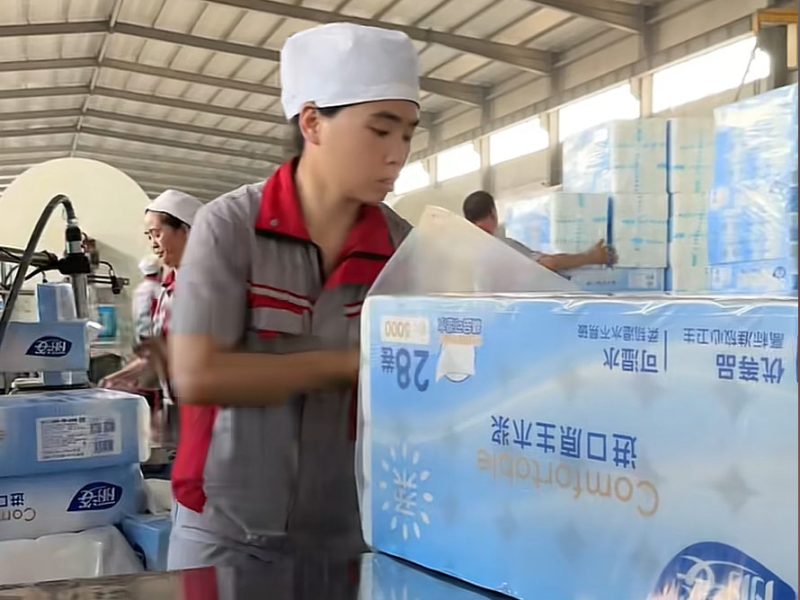
Top Source Hygiene operates as a major force in the paper manufacturing sector, providing direct factory access to a massive monthly output of 2,860 tons. By maintaining full control over the production line in Mancheng, Baoding, they eliminate middleman markups and offer professional-grade kitchen towels, facial tissues, and jumbo rolls. Their three decades of experience ensure that brand owners receive products manufactured under rigorous international standards, including ISO 9001 and FDA compliance.
The company specializes in reducing supply chain risk for global partners through highly customizable private label solutions. Clients can adjust GSM, ply thickness, and choose eco-friendly wood pulp materials to meet specific market demands in over 56 countries. This level of local execution and technical flexibility allows retail and hospitality brands to scale their inventory efficiently while keeping costs low through high-volume manufacturing specialized for the North American and European markets.
At a Glance:
- 📍 Location: Mancheng, Baoding, China
- 🏭 Core Strength: Private label kitchen towels, facial tissues, jumbo roll tissue, and toilet paper
- 🌍 Key Markets: North America, Europe, Asia, Africa, and Oceania retail and hospitality sectors
Why We Picked Them:
| ✅ The Wins | ⚠️ Trade-offs |
|---|---|
|
|
Oasis Towels
Oasis Towels operates as a high-capacity manufacturing partner for B2B clients who require precise textile engineering for their commercial operations. By maintaining direct factory control, the brand manages the production of diverse tea towels and kitchen lines while ensuring that every batch meets rigorous industry standards. This centralized production model reduces logistical risks for international buyers and allows for a seamless transition from concept to finished product, especially for large-scale hospitality groups and bulk wholesalers.
The company distinguishes itself through a comprehensive end-to-end customization process that empowers clients to dictate every specification of their order. Buyers can modify physical dimensions, select specific material blends, and apply custom prints to both disposable and reusable products. This level of local execution ensures that private label brands receive consistent quality across their entire inventory, providing a reliable supply chain solution for those seeking bespoke textile branding in the Dubai hub and beyond.
At a Glance:
- 📍 Location: Dubai, UAE
- 🏭 Core Strength: Private label tea towels, kitchen towels, commercial towel lines
- 🌍 Key Markets: International bulk wholesalers, hospitality, and promotional retailers
Why We Picked Them:
| ✅ The Wins | ⚠️ Trade-offs |
|---|---|
|
|
PlantPaper
PlantPaper operates as a Los Angeles-based sustainability brand that focuses on reforming the household paper industry through better materials and smarter engineering. By utilizing 100% bamboo fibers instead of traditional tree pulp, they offer a product line that directly addresses the environmental impact of North American consumer habits. Their primary focus on Through-Air-Dried (TAD) technology allows them to create paper products that do not rely on the harsh chemical bleaching or binding agents typically found in supermarket brands.
The brand maintains strict factory control to ensure their paper towels and bathroom tissues remain entirely toxin-free, catering specifically to premium eco-retail channels and direct-to-consumer markets. This localized execution and commitment to manufacturing transparency reduce the risks associated with chemical contaminants and “greenwashed” supply chains. For private label partners, this means a reliable high-end product that delivers superior absorbency and structural integrity without sacrificing its ecological mission.
At a Glance:
- 📍 Location: Los Angeles, USA
- 🏭 Core Strength: Bamboo TAD paper towels, eco-friendly household paper
- 🌍 Key Markets: North American DTC and premium eco-retail channels
Why We Picked Them:
| ✅ The Wins | ⚠️ Trade-offs |
|---|---|
|
|
Kruger Products
Kruger Products operates as a primary engine for the North American paper market, specializing in the high-volume manufacturing of essential household and Away-From-Home (AFH) goods. By maintaining localized factory control across the USA and Canada, the company reduces supply chain risks and ensures a steady flow of inventory to major retail partners. Their operations focus on heavy-duty execution, turning raw pulp into finished consumer units that meet the strict requirements of nationwide store-brand programs.
The technical setup of their facilities features high-speed production lines specifically engineered for massive throughput and consistent output quality. These systems allow for precise customization of functional attributes, such as specialized embossing patterns and specific sheet counts for kitchen towels. This level of industrial capacity is designed for big-box retailers and foodservice distributors who require significant volume and reliable shipping windows without the logistical hurdles of overseas transport.
At a Glance:
- 📍 Location: USA and Canada
- 🏭 Core Strength: Store-brand kitchen towels, jumbo roll towels, private label napkins
- 🌍 Key Markets: Big-box retailers, major grocery chains, and foodservice distributors
Why We Picked Them:
| ✅ The Wins | ⚠️ Trade-offs |
|---|---|
|
|
Sofidel Group
Sofidel Group operates through a network of specialized independent mills strategically located across Germany, Italy, Poland, and Spain. These facilities prioritize regional factory control to ensure all hygiene products strictly adhere to EN standards and European safety regulations. By maintaining localized operations, these producers provide major supermarket and discount chains with high-volume multifold hand towels and kitchen rolls that meet specific regional quality benchmarks while reducing the logistical risks associated with long-haul importing.
Innovation in sustainable manufacturing remains a primary focus for these mills, particularly regarding recycled fiber technologies and FSC-certified paper lines. The manufacturing process integrates advanced recycled fiber processing to cater to the growing demand for eco-friendly products in the cash-and-carry and wholesale sectors. This mastery of recycled materials allows retailers to offer sustainable alternatives without sacrificing the tensile strength or absorbency required for commercial and domestic paper products.
At a Glance:
- 📍 Location: Germany, Italy, Poland, Spain
- 🏭 Core Strength: Multifold hand towels, kitchen rolls, recycled paper towels
- 🌍 Key Markets: European supermarkets, discounters, and cash-and-carry wholesalers
Why We Picked Them:
| ✅ The Wins | ⚠️ Trade-offs |
|---|---|
|
|
Asia Pulp & Paper (APP)
Asia Pulp & Paper (APP) represents the backbone of the global private label hygiene market, particularly for high-volume retailers and industrial suppliers. By situating production near massive converting hubs in China, Indonesia, and Vietnam, these facilities benefit from direct access to raw pulp and recycled fiber streams. This proximity allows for a highly controlled manufacturing process where costs remain low without sacrificing the technical requirements of international buyers. These factories excel at high-volume execution, providing the scalability needed to fill entire containers with consistent, specification-heavy paper products.
Quality control in these regions has evolved to meet rigorous global standards, offering a vast array of GSM (grams per square meter) and ply configurations. Whether producing ultra-absorbent kitchen towels for consumer markets or durable institutional rolls for commercial dispensers, these manufacturers maintain strict factory control over the embossing and perforation stages. For global importers, this means the ability to customize towel thickness and tensile strength while maintaining a competitive price point. By managing risk through standardized production protocols and diverse sourcing, these hubs offer a reliable pipeline for brands looking to maintain high inventory levels.
At a Glance:
- 📍 Location: China, Indonesia, Vietnam
- 🏭 Core Strength: OEM kitchen towels, institutional paper towels, jumbo rolls
- 🌍 Key Markets: Global importers in EMEA and North America seeking cost efficiency
Why We Picked Them:
| ✅ The Wins | ⚠️ Trade-offs |
|---|---|
|
|
Latin American Private Label Converters
These regional converters operate as vital tissue hubs across Brazil, Mexico, Colombia, and Chile, specializing in the transformation of large parent rolls into finished retail products. By maintaining local factory control, these facilities optimize the supply chain for essential paper goods, ensuring that regional supermarkets and wholesalers receive high-quality kitchen paper and folded towels. Their business model emphasizes local execution, which significantly reduces the logistical risks associated with importing bulky paper products from overseas and allows for rapid response to regional demand shifts.
The secondary focus of these operations is providing white-label solutions that meet the specific price sensitivity of the South and Central American markets. Through disciplined manufacturing processes, these converters provide retailers with reliable private label alternatives that compete directly with global brands on quality while maintaining a lower cost per unit. This strategy provides wholesalers with greater variety in their inventory and helps local businesses maintain steady stock levels without the volatility of long-distance international shipping schedules.
At a Glance:
- 📍 Location: Brazil, Mexico, Colombia, Chile
- 🏭 Core Strength: Private label kitchen paper, folded hand towels
- 🌍 Key Markets: Regional South and Central American supermarkets and wholesalers
Why We Picked Them:
| ✅ The Wins | ⚠️ Trade-offs |
|---|---|
|
|
Middle Eastern Private Label Hygiene Manufacturers
These manufacturers operate out of industrial hubs in Saudi Arabia, the UAE, and Egypt, focusing on integrated production lines that handle everything from raw tissue processing to final converting. This regional setup serves supermarkets and HORECA distributors who require high-volume paper products like napkins and multifold towels. By maintaining factory control within the MENA region, these suppliers reduce logistics risks and provide a stable supply chain for local brands that need to move quickly in a competitive retail environment.
A major advantage of working with these specialized producers is their mastery of local execution, particularly regarding regulatory compliance and localized branding. They offer multi-language printing capabilities directly on the production line, ensuring that packaging meets the specific linguistic and legal requirements of Gulf and North African markets. This localized approach allows retail partners to bypass the complexities of importing from distant regions while ensuring that every product arrives shelf-ready for the domestic consumer.
At a Glance:
- 📍 Location: Saudi Arabia, UAE, Egypt
- 🏭 Core Strength: Private label paper towels, napkins, multifold towels
- 🌍 Key Markets: GCC/MENA supermarkets and HORECA distributors
Why We Picked Them:
| ✅ The Wins | ⚠️ Trade-offs |
|---|---|
|
|
Global Commercial Towel & Linen Distributors
These global distributors operate as the primary bridge between manufacturing and end-user facilities within the healthcare, hospitality, and industrial cleaning sectors. By managing exclusive private label brands, they maintain rigorous factory control and ensure that every roll towel or bath textile meets specific institutional standards. This approach provides a streamlined procurement experience where facility managers can source a diverse range of hygiene products through a single, reliable channel.
Local execution remains a core strength for these organizations, as they maintain significant inventory across the USA, UK, EU, and Asia to reduce lead times and supply chain risk. They function as a one-stop-shop, offering bundled paper and textile solutions that simplify inventory management for complex organizations. While they may not always own the physical looms or paper mills, their oversight of the production process ensures consistent quality across varied product categories.
At a Glance:
- 📍 Location: Global (USA, UK, EU, Asia)
- 🏭 Core Strength: Private label roll towels, folded towels, institutional bath textiles
- 🌍 Key Markets: Healthcare, Hospitality, and Industrial cleaning sectors
Why We Picked Them:
| ✅ The Wins | ⚠️ Trade-offs |
|---|---|
|
|
Global Eco-Focused Private Label Suppliers
These suppliers operate as specialized manufacturing partners for businesses looking to transition away from traditional wood-pulp paper products. By centering their production around bamboo and high-grade recycled materials, they provide a direct path for premium brands to meet rigorous environmental targets. The primary focus remains on localized factory control in Asia, ensuring that every batch of hygiene products meets the specific structural integrity and softness requirements expected by high-end consumers.
Quality management is handled through a systematic oversight process that reduces the risks associated with international sourcing. By working with certified facilities, these suppliers offer customized product lines that include detailed transparency reports, helping brands maintain their reputation in the competitive natural goods sector. Their expertise helps bridge the gap between initial design concepts and final, shelf-ready goods that comply with global sustainability standards.
At a Glance:
- 📍 Location: Asia-based Production / Global Sales
- 🏭 Core Strength: Bamboo paper towels, FSC-certified kitchen rolls
- 🌍 Key Markets: Natural food retailers, premium supermarkets, and DTC eco-brands
Why We Picked Them:
| ✅ The Wins | ⚠️ Trade-offs |
|---|---|
|
|
Global Tissue Supply Chain Diversification Strategies
Global procurement teams mitigate tissue supply risks by distributing private label volumes across diverse geographic nodes, aiming to keep single-country exposure below 40% while pairing low-cost offshore production with regional nearshore facilities to ensure 2026 supply chain resilience.
Multi-Country Sourcing and Risk Mitigation Metrics
Modern procurement programs for private label bathroom tissue and paper towels now prioritize a distributed network of manufacturers across Asia, Latin America, and domestic regions. By maintaining a ceiling of 30–40% on volume sourced from any single country, buyers reduce their susceptibility to sudden trade policy changes, regional logistics bottlenecks, or local industrial crises. This strategy facilitates continuous benchmarking of landed costs, lead times, and defect rates between disparate suppliers, ensuring that the global standard for quality and sustainability remains competitive across the entire portfolio.
Regional Nearshoring and Dual-Supply Frameworks
Supply chain resilience for high-volume SKUs increasingly relies on a dual-supply structure that balances cost efficiency with regional agility. Retailers often pair primary low-cost offshore manufacturers with nearshore mills to stabilize inventories against maritime disruptions. This framework targets significant lead-time improvements, typically achieving under 4 weeks for regional supply compared to 8 weeks for intercontinental imports. Maintaining these parallel production lines ensures consistent shelf availability and enables a rapid response to promotional surges in the North American and European markets.
Strategic Partnerships with Multi-Facility Manufacturers
Collaborating with comprehensive OEM/ODM providers like Top Source Hygiene allows brand managers to centralize compliance and relationship management while diversifying physical production. These single-partner models leverage suppliers with agile machine parks capable of switching between various basis weights and embossing patterns with minimal downtime. By utilizing manufacturers that offer integrated services from raw pulp sourcing to sophisticated export logistics, procurement teams can standardize product specifications while benefiting from the scale economies and risk-hedging capabilities of a multi-facility production footprint.
China Sourcing vs. Domestic Western Production: The Real Cost Breakdown
Sourcing paper towels from China offers a 20–40% advantage in FOB unit pricing due to manufacturing scale and labor efficiencies. However, the true economic comparison requires a total landed cost analysis that includes ocean freight, Section 301 tariffs, and a risk-adjusted Cost of Poor Quality (COPQ) that typically averages 15–20% of revenue.
FOB Factory Pricing and Total Landed Cost Variables
For mid-range private label paper towels, Chinese FOB ex-factory unit prices typically sit 20–40% lower than Western domestic alternatives. This price gap stems from significant labor advantages and the sheer scale of high-capacity manufacturers like Top Source Hygiene, which produces up to 2,860 tons per month. While pure factory costs for some automated categories are nearing parity, the Chinese export model remains highly competitive for bulk private label programs where raw pulp is globally sourced and processed at volume.
A comprehensive cost model must move beyond the factory gate to calculate the total landed cost per case. For imported goods, this includes ocean freight, insurance, customs brokerage, and domestic drayage. Top Source Hygiene utilizes a factory-direct model to eliminate middleman markups and maintains a consistent 15-25 day production lead time for 40’HQ containers. In contrast, domestic Western mill costs eliminate international shipping and duties but often carry higher baseline manufacturing expenses and local logistics fees that can offset the absence of freight.
Tariff Exposure and Trade Policy Considerations
The primary cost driver in modern sourcing has shifted from manufacturing labor to trade policy. Section 301 and anti-dumping duties significantly impact the final landed price of tissue and towel imports. Procurement teams must audit specific HS-code treatments with licensed customs brokers to calculate the exact percentage multiple applied to paper goods. For many buyers, a sourcing quote from a secondary country like Vietnam might appear higher at the factory level but result in a lower warehouse price because it avoids the specific tariffs levied against Chinese production.
To mitigate these geopolitical risks, many brand managers now employ a China-plus-one diversification strategy. This approach balances the cost advantages and massive capacity of Chinese factories with regional nearshoring or domestic supply for critical, time-sensitive SKUs. By maintaining parallel production lines, retailers can stabilize their inventories against shifting trade remedies and logistical bottlenecks while keeping their overall cost per unit balanced across a global portfolio.
Hidden Operational Costs: Quality, Lead Times, and Inventory
The Cost of Poor Quality (COPQ) can quickly erode the savings gained from low FOB prices. Across the industry, COPQ averages 15–20% of sales when accounting for defects, customer returns, and administrative overhead. Robust incoming material inspections and standardized non-conformance logs are essential when working with offshore partners. Without strict quality controls, a high defect rate in a single 40’HQ container can eliminate the entire margin advantage of sourcing internationally.
Lead times also play a critical role in the financial viability of an import program. Longer international shipping windows—typically ranging from 7 to 25 days—require higher safety stock levels and increased inventory carrying costs compared to just-in-time domestic supply. Leveraging the OEM/ODM capabilities of established manufacturers helps reduce these pressures by streamlining the design and tooling phases. High-capacity suppliers provide the variety of embossing patterns and ply counts needed to launch broad SKU portfolios without the heavy capital expenditure often required by smaller Western mills.
Scale Your Brand with Global OEM Experts
Managing Quality Risks in Cross-Border Private Labeling
Effective risk management in global paper towel sourcing requires a multi-layered approach combining systematic supplier audits, strict raw material traceability, localized performance testing, and structured corrective action protocols. By aligning factory quality systems with destination-market regulatory standards, brand owners prevent functional failures and costly border seizures.
Supplier Audits and Regulatory Compliance Standards
Protecting brand integrity begins with systematic vetting of overseas paper towel converters through rigorous quality system audits, specifically targeting ISO 9001 and ISO 14001 certifications. We verify factory hygiene controls and ethical sourcing practices to ensure production lines meet 2026 international market entry requirements. This includes confirming compliance with FDA regulations for North American retail and specific sanitary standards required for the Oceania region.
Raw Material Traceability and Certification Control
We document the origin of 100% virgin wood pulp and recycled fiber content to mitigate the risk of border seizures caused by mis-declared materials. Maintaining valid FSC or PEFC chain-of-custody certificates for every private label paper product batch is mandatory for market access. Regular spot-checks on pulp mill certificates validate sustainability claims, ensuring eco-labeling accuracy and preventing regulatory non-compliance during customs clearance.
Performance Testing and Safety Verification Regimes
Standardized protocols for sheet absorbency, tensile strength, and dispersibility are essential to prevent functional failures across diverse plumbing and disposal systems. Finished paper towels undergo testing for optical brighteners and chemical additives to meet strict destination-market safety regulations. Furthermore, monitoring logistics and storage conditions prevents humidity-related degradation or physical transit damage, such as crushed rolls, during intercontinental shipping.
Monitoring Systems and Corrective Action Protocols
Structured Corrective and Preventive Action (CAPA) processes allow procurement teams to address quality incidents and maintain defect rates below established thresholds per 10,000 rolls. Advanced traceability databases link market feedback and customer complaints directly to specific production batches and raw material lots. This data-driven approach aligns on-pack claims and localized labeling with certified test results, effectively avoiding mislabeling fines and consumer disputes.
Frequently Asked Questions
Which factories manufacture for major global tissue brands?
Global tier-1 tissue supply chains rely on massive integrated networks and certified contract manufacturers. Market leaders like Kimberly-Clark Professional, Essity, and Procter & Gamble operate global networks of mills across multiple continents to produce consumer brands like Kleenex, Scott, and Bounty. For institutional private labels and white-label store brands, procurement networks frequently contract specialized pulp processors and converters like Top Source Hygiene or local nearshore hubs to maintain strict regional capacity balances.
How do I vet an overseas paper towel factory?
Effective vetting requires verifying legal identity, production equipment, and quality certifications like ISO 9001 or FSC. Beyond reviewing documents and test reports, procurement teams should conduct on-site or third-party audits to inspect the factory floor and confirm the audit trail for quality control. Essential requirements include a signed vendor agreement and a clear corrective-action process for any out-of-spec batches.
What are the hidden costs of importing tissue?
Beyond the FOB price, hidden costs include logistics factors like container detention and dimensional-weight surcharges due to the bulkiness of tissue products. Trade-related expenses such as customs duties, anti-dumping measures, and inspection fees also add to the total landed cost. Furthermore, quality risks—such as inconsistent absorbency or packaging failures—can lead to expensive rework, markdowns, or stock-outs that impact retail performance.
What are the standard lead times and MOQs for international tissue orders?
For major manufacturers like Top Source Hygiene, the standard minimum order quantity (MOQ) is typically one 40-foot high-cube (40’HQ) container. Production lead times generally range from 15 to 25 days, with total shipping times varying by region, such as 7-14 days for North America and Europe, or up to 25 days for Africa and South America.
Final Thoughts
Building a resilient paper towel supply chain for 2026 requires balancing cost advantages with geographic diversity. While Chinese manufacturers like Top Source Hygiene provide unmatched scale and technical capabilities, successful procurement teams integrate these benefits into a broader strategy that includes regional backups and rigorous quality oversight. This approach protects against trade volatility while keeping unit costs low enough to maintain retail margins.
Selecting the right private label partner involves looking past the initial quote to evaluate long-term reliability and compliance. Companies that prioritize raw material traceability and maintain high production standards will avoid the hidden expenses of product failures and customs delays. Ultimately, those who combine offshore efficiency with data-driven risk management will secure a competitive edge in the global tissue market.