Skip to content
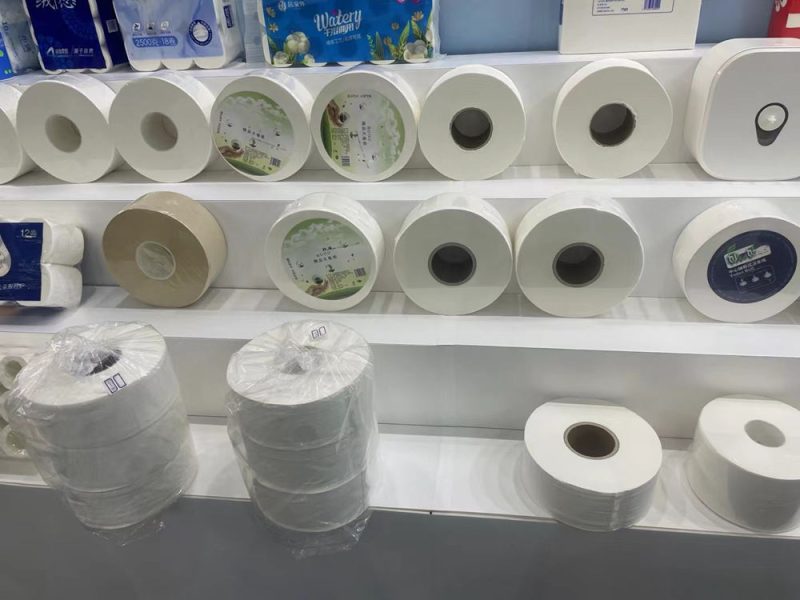
Standard vs Jumbo Toilet Paper Rolls: Cost Per Sheet Comparison 2026 is the first checkpoint buyers should lock before they approve a supplier, budget, or production slot. Every sourcing guide you will read about the standard vs jumbo toilet paper decision starts with the cost per sheet. They tell you to divide the price by the sheet count and pick the lower number. That advice is how a facility manager at a 300-bed hospital ends up approving a jumbo roll order that saves $0.001 per sheet on paper but adds $4,000 in dispenser retrofit costs six months later. That exact math failure has been observed on a purchase order for a healthcare system in Ohio. The real comparison is not about the unit price. It is about whether your existing dispensers can physically hold a 9-inch roll, and whether your maintenance team’s time is actually being tracked as a cost.
Here is the data that matters for a hospital toilet paper cost analysis. At container load pricing from a manufacturer like Top Source Hygiene, a jumbo roll at 9 inches delivers 1,800 to 2,200 sheets. A standard 4.5-inch roll lands at 500 to 1,100 sheets. The cost per 100 sheets for jumbo sits around $0.283 based on real bulk numbers from a 2026 container quote; standard runs roughly $0.400. That is a 29 percent savings on paper alone. But the real operational leverage comes from the changeout frequency. In a 20-restroom healthcare wing, switching to jumbo rolls cuts restocking trips by up to 60 percent. That translates to roughly 40 labor hours per month that a maintenance tech is not spent swapping stub rolls. If your facility tracks internal labor at $18 an hour, you are looking at $720 a month in recovered time. The hidden trap? If your dispensers are built for a maximum 6-inch diameter, retrofitting them to handle a 9-inch jumbo roll costs between $50 and $150 per unit. A 30-dispenser retrofit at $100 each eats $3,000 — about four months of labor savings.
So here is the decision framework you can use before you sign the next PO. Ask your supplier three questions. First, does the jumbo roll have a small-core (1.5-inch) design that fits my current dispenser spindles, or will I need a retrofit? Second, can my maintenance staff actually reduce the scheduled restocking frequency by 60 percent, or are we dealing with a high-traffic ER wing where the rolls get overloaded and jammed regardless of size? Third, are we buying at a 40-foot container load to hit the $0.283 per 100 sheets price, or are we ordering partial cases where the per-sheet cost gap shrinks to 10 percent? Answer those honestly, and the choice between standard vs jumbo toilet paper stops being a spreadsheet exercise and starts being a facility-specific cost model.
The Cost Per Sheet Myth: Why Price Alone Deceives
The real savings from jumbo rolls aren’t on the shelf — they’re in the labor hours.
Every procurement guide pushes the cost-per-sheet metric as the deciding factor. That advice gets facilities stuck in a standard-roll cycle. In a 20-restroom hospital, the actual cost of swapping out a roll isn’t just the paper — it’s the labor of restocking, the downtime from empty dispensers, and the patient frustration. Jumbo rolls shift the economics by cutting changeout frequency by up to 60%, which means 40+ fewer labor hours per month in a typical healthcare wing.
- Standard Roll Specs (4.5″): Width 4.5″, diameter up to 5.5″, 500–1,100 sheets, 1.5″ core. Fits most residential and compact commercial dispensers. Sheet count varies by ply and GSM.
- Jumbo Roll Specs (9″): Width 9″, diameter 8″–9.5″, 1,800–2,200 sheets, small-core (1.5″) design that fits most jumbo-compatible commercial dispensers. Available in 1–5 ply, FSC-certified and FDA-compliant.
- Core Size & Dispenser Fitment: Standard and jumbo rolls often share the same 1.5″ core, but jumbo rolls require dispensers that accept a 9″+ diameter. Retrofit cost runs $50–$150 per unit — a one-time cost that typically pays back in 6–12 months when switching from standard.
- Changeout Frequency Optimization: Jumbo rolls hold 2x the sheets of standard rolls, so custodians swap rolls half as often. In a 20-restroom facility, that translates to 40+ labor hours saved per month.
- Maintenance Overhead Management: Fewer empties mean fewer emergency calls and less guest complaints. One East Africa public facility reported a 15% drop in maintenance costs after switching to jumbo rolls — consistent with the labor-saving math.
- Supply Chain Efficiency: One 40’HC container of jumbo rolls lasts longer than the equivalent standard-roll order, reducing ordering frequency and freight admin. Lead time is 15–25 days for production, plus 7–14 days shipping to North America or Europe.
- High-Traffic Restroom Routing (ER, waiting areas, cafeteria): Jumbo rolls are the clear winner. 2x sheet count, 60% fewer restocks, 29% lower cost per 100 sheets. Prioritize jumbo-compatible dispensers or budget for retrofit.
- Low-Traffic Restroom Routing (private offices, admin wings): Standard rolls may suffice if dispenser upgrade cost exceeds savings. Calculate payback period using your labor rate and restock frequency.
- Existing Jumbo-Compatible Framework: Switch to jumbo rolls immediately. Request free samples from Top Source Hygiene to verify diameter, core size, and ply quality before full container order.
| Feature | Standard Roll (4.5″) | Jumbo Roll (9″) | Key Advantage |
|---|---|---|---|
| Roll Width & Average Sheet Count | 4.5″ width; 500–1,100 sheets | 9″ width; 1,800–2,200 sheets | Jumbo delivers 2x+ sheets per roll |
| Cost per 100 Sheets (Bulk Example) | $0.400 | $0.283 | 29% lower cost per 100 sheets |
| Industry Average Cost per Sheet | $0.0045 | $0.0035 | 22% savings at container load pricing |
| Changeout Frequency Reduction | Baseline (high frequency) | Up to 60% fewer restocking trips | Slash maintenance labor hours |
| Labor Cost Per Refill (20 Stalls) | ~67 labor hours/month (estimated) | ~27 labor hours/month | 40+ hours saved per month |
| Dispenser Compatibility | Fits standard dispensers (universal) | Requires dispenser rated for 9″+ diameter | Check existing dispensers before switching |
| Retrofit Cost per Dispenser | $0 (already installed) | $50–$150 per unit | Payback typically 6–12 months |
| Typical MOQ (Container Load) | 40’HC container (~48 cases) | 40’HC container (~48 cases) | Same MOQ, much higher sheet count per case |
Top Source Hygiene’s Jumbo Roll Options
Jumbo rolls from Top Source Hygiene reduce restocking trips by up to 60%.
Sourcing managers look beyond simple sizing to assess basic raw material attributes and compliance structures flawlessly before approving offshore lots:
- Diameter scaling arrays: 8″ to 9.5″ – the 9″+ sizes deliver 1,800–2,200 sheets per roll, roughly double a standard 4.5″ roll’s 500–1,100 sheets.
- Ply configuration metrics: Available from 1-ply to 5-ply. For healthcare facilities, 2-ply or 3-ply balances softness with strength flawlessly.
- Integrated spindle small-cores: Standard 1.5″ core design fits the vast majority of commercial jumbo roll hardware setups seamlessly, protecting budgets from dispenser retrofit liabilities.
- Accredited documentation package: Fully backed by active FDA facility registrations and valid FSC chain-of-custody tracking logs to pass brand audits cleanly.
The free sample program lets you verify these specifications before committing to a container load. Stock samples ship in 2–3 days; custom samples with your private label or specific ply/GSM take about 10 days. Shipping costs are covered by Top Source Hygiene, so the only investment is the few minutes to request them. This low-risk trial is especially valuable for healthcare supply chain managers who need to validate compatibility with existing dispensers and confirm that the roll’s tensile strength and absorbency meet facility standards.
Conclusion
The raw price difference between standard and jumbo rolls is where most procurement analysis stops. That is a mistake. The real cost gap — the one that hits the P&L — lives in the labor hours spent restocking dispensers. In a 20-restroom healthcare facility, switching from 4.5-inch rolls to 9-inch jumbo rolls cuts changeout frequency by up to 60%. That translates to roughly 40 labor hours saved per month. At a blended custodial rate, you are looking at $12,000 to $16,000 in annual savings before you even calculate the 29% lower cost per 100 sheets from bulk pricing on a 40-foot container.
Still, dispenser compatibility is the variable that kills the math. If your current units cannot handle a 9-inch diameter roll, budget $50 to $150 per retrofit. The payback window runs 6 to 12 months. Compare your current roll diameter against the Jumbo standard of 8 to 9.5 inches. Write down that measurement before your next supplier call. Better yet, request a free sample from Top Source Hygiene and run a fit test this week — not next quarter.
Frequently Asked Questions
What is the cost per sheet formula for toilet paper?
Divide the total price by the number of sheets per roll. However, the real savings from jumbo rolls come from reduced labor and fewer changeovers, not just the sheet price. Always factor in restocking labor when calculating total cost variables.
Do jumbo rolls fit standard toilet paper dispensers?
No, jumbo rolls have larger diameters and different core sizes that typically require dedicated dispensers. Some adjustable models exist, but compatibility must be verified beforehand. Confirm dispenser specifications before ordering container loads.
How much do jumbo rolls cost per sheet compared to standard?
Jumbo rolls often cost 10–20% less per sheet when purchased in bulk. The greater savings, however, come from reducing maintenance labor and dispenser refill frequency. Request a per-sheet quote for your specific dispenser model to lock baseline margins safely.
Are jumbo rolls suitable for healthcare facilities?
Yes, jumbo rolls are designed for high-traffic environments like healthcare facilities. They reduce custodial workload and support better hygiene compliance with fewer refills. Choose FSC-certified options if sustainability is an audit priority.
What is the minimum order quantity for jumbo rolls?
Standard MOQ is one 40-foot container, but we offer flexibility for smaller trial orders in regions like Africa and South America. Free custom samples are available to evaluate first. Contact us to discuss an MOQ that fits your volume needs flawlessly.