
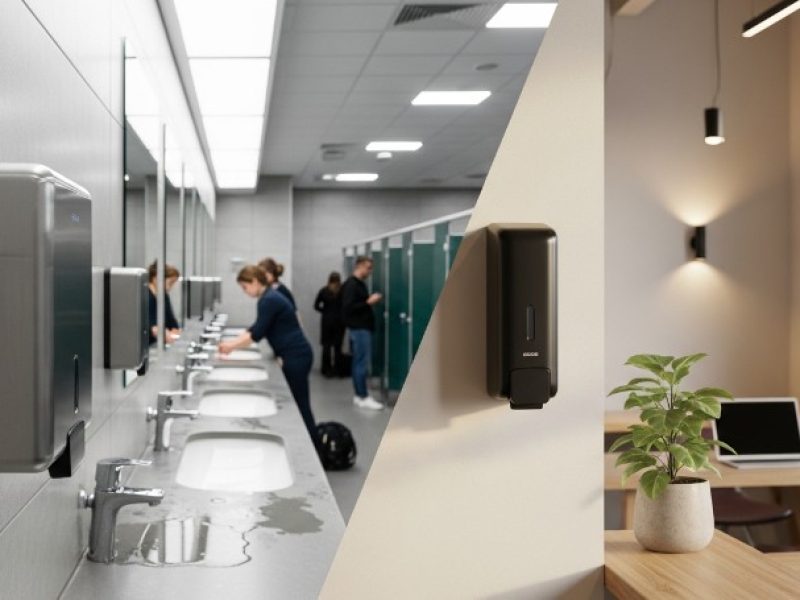
Steel vs Plastic Dispensers directly affect operational downtime and OSHA fines when vandalism or dispenser failures force restroom closures. In high-traffic facilities a single damaged jumbo-roll dispenser can trigger emergency maintenance, supply gaps, and tenant complaints that hit budgets and service-level commitments. Facility managers face a tradeoff between quick, low-cost fixes and investments that reduce repeat replacements, liability, and negative brand exposure.
This guide acts as a technical SOP for procurement and maintenance teams: it maps restroom foot-traffic and vandalism risk profiles to material selection, breaks down ABS plastic traits (cost, translucency, rust-proof behavior) versus 304 stainless steel strengths (blunt-force protection, fire resistance, finish longevity), and specifies mounting, inspection, and cleaning protocols to prevent streaks and chemical etching. You will find lifecycle cost models, replacement-rate benchmarks, vendor acceptance tests, and a decision matrix that aligns durability, aesthetics, and total cost of ownership across Class-A executive suites and heavy-use public restrooms.
Evaluating Restroom Foot Traffic and Vandalism Risk Profiles
Quantify usage with mixed sensors and occupancy feeds, then prioritize material and placement interventions by combining likelihood and consequence scores to protect high-impact fixtures first.
Measuring Restroom Foot Traffic: Methods and Key Metrics
Facilities teams rely on a mix of direct and proxy sensors to build accurate usage profiles. Common direct methods include door-mounted counters, infrared beam counters at entrances, and ceiling-mounted people counters; proxies include soap, flush, and toilet-paper consumption sensors. Digital options—Wi‑Fi and BLE occupancy detection—provide anonymous counts and integrate with BMS for real‑time dashboards.
Track visits per hour/day, peak-hour windows, average dwell time, fixture utilization, and turnover per shift. Sample weekday vs weekend and seasonal periods to avoid biased forecasts. Pay attention to sensor placement and calibration: false positives rise near clustering points, and privacy rules limit camera use. Use traffic outputs to set cleaning frequency, stock levels (e.g., jumbo rolls), and staffing cycles.
| Traffic Profile | Material Recommendation | Recommended TSH Roll Model |
|---|---|---|
| High-footfall public spaces (airports, transit hubs, stadiums) | Reinforced 304 stainless steel, recessed mounting, tamper-resistant locks | TSH-JRT08 (Commercial Jumbo) — high-capacity rolls to minimize restocks |
Vandalism Risk Assessment Framework for Restroom Fixtures
Build a practical scorecard: evaluate venue type, hours of operation, visibility, and local vandalism history. Rate likelihood and consequence separately on a simple 1–5 scale. Use incident logs, maintenance tickets, CCTV reviews, and staff reports as data inputs to validate scores instead of relying on intuition.
Combine likelihood and impact into a 3×3 risk matrix and prioritize interventions for high-likelihood, high-impact fixtures—usually dispensers in unsupervised public restrooms. Factor consequence as service downtime, replacement cost, safety/liability, and reputational damage for hospitality clients when deciding whether to upgrade material, add anchors, or change mounting method.
Comparing Damage Resistance: Steel vs Plastic Dispensers
Choose steel where blunt-force resistance and tamper deterrence matter. 304 stainless steel handles impact, resists fire, and sustains a longer service life under abuse; expect dents and scratches rather than catastrophic failure. Plastic (ABS or similar) lowers upfront cost, offers corrosion immunity, and can be translucent for quick level checks, but it cracks or splits under heavy impact and degrades under UV or aggressive cleaners.
Plan maintenance economics around likely failure modes: repair and replace parts for steel (hinges, locks), and accept wholesale replacement for plastic after major damage. Design elements—lock type, hinge robustness, recessed versus surface mounting, and finish—often affect real-world resilience more than base material. For transit, stadiums, and public facilities, specify steel or reinforced alloys; use plastic when vandalism risk stays low and cost or transparency matter.
Standards, Case Examples, and Best Practices for Maintenance and Security
Follow local building and hygiene codes and reference material specifications when writing procurement requirements. Proven physical interventions include recessed or tamper‑resistant dispensers, anchored mounting plates, keyed locks, and robust hinge/pin designs that prevent easy removal. Combine these with CCTV coverage or design changes that increase visibility to deter vandalism.
Operational controls must pair equipment choices with routine inspections and a fast repair/replace workflow. Use traffic data to size inventory—select jumbo rolls for high-turnover sites—and integrate sensor alerts with maintenance ticketing to cut stockouts. Maintain a procurement checklist and track post-intervention incident metrics to validate choices and refine specifications.
- Procurement checklist: spare-parts availability, warranty terms, chemical-compatibility with cleaners.
- Inventory rules: match roll model to traffic class (e.g., TSH-JRT08 for heavy use).
- Monitoring: log incidents, measure MTTR (mean time to repair), and adjust placement or material spec based on trending data.
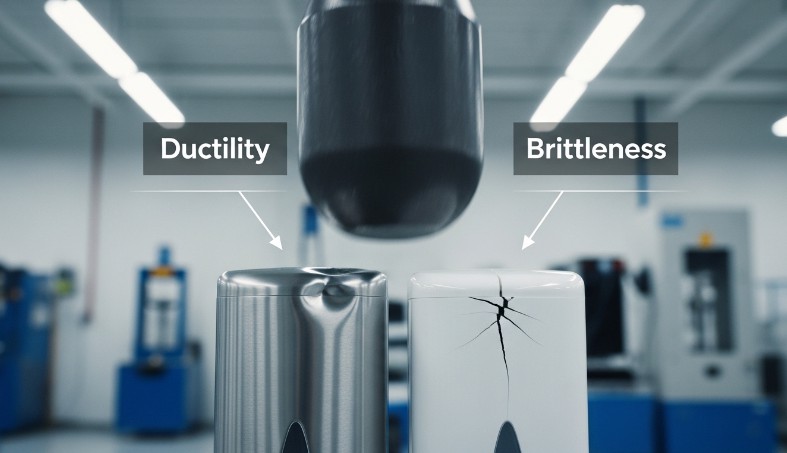
ABS Plastic: Cost-Effective, Translucent, and Rust-Proof
ABS offers a low-cost, impact-tolerant platform for commercial dispensers where visibility, weight savings, and corrosion immunity outweigh the need for blunt-force or fire resistance.
Material properties and mechanical performance
ABS combines toughness with workable stiffness, which lets designers produce thin-wall, snap-fit dispenser parts that survive daily handling and light impacts. Expect consistent dimensional stability for molded features, but plan designs around ABS’s thermal softening range.
- High impact strength and good toughness make ABS resist drops and everyday knocks in restroom environments.
- Moderate stiffness and dimensional stability support snap-fit and thin-wall injection-molded parts without frequent deformation.
- Thermal use range typically covers normal ambient and hot-water exposure; prolonged exposure above ~80–100°C can soften parts.
- ABS accepts a range of textures and finishes, allowing matte or glossy surfaces that hide scratches and wear.
Cost and manufacturing trade-offs versus steel
ABS reduces per-unit production and logistics costs, which shifts economic advantage to plastic for high-volume SKUs. Still, evaluate site risk: areas with frequent vandalism or intentional blunt-force damage may justify higher capital spend on metal units.
- Material and production costs for injection-molded ABS parts are substantially lower than stamped or fabricated 304 stainless at equivalent volume.
- Tooling for injection molding carries an initial cost, but per-unit prices fall sharply at volume, making ABS attractive for high-volume SKUs.
- ABS reduces shipping weight and handling costs, which lowers landed cost for global distribution.
- Long-term replacement and maintenance may be higher in high-vandalism sites where metal resists blunt-force damage better.
Translucency, aesthetics, and functional benefits
Use translucent or tinted ABS grades to add functional visibility without compromising tamper resistance. Designers can integrate hidden windows, consistent brand colors, and textured finishes to improve usability and appearance while keeping costs down.
- Manufacturers can produce translucent or lightly tinted ABS grades or blend ABS with other polymers to achieve semi-transparent parts for level indication.
- Translucent ABS supports hidden-window designs so facility staff can check roll or soap levels without opening the unit.
- Color-matched ABS enables consistent brand palettes and hides fingerprints better than polished metal.
- Surface texture options help hide scuffs and maintain a neat appearance between cleanings.
Corrosion resistance and chemical compatibility
ABS eliminates rust risk and performs well in wet, humid restrooms, but cleaners and environmental exposure define long-term durability. Specify compatible formulations when facilities use aggressive disinfectants or the unit sees sun exposure through windows or skylights.
- ABS does not rust and resists corrosion in wet and humid environments, making it suitable for long-term restroom use.
- Most diluted cleaners, alcohols, and bleach solutions are tolerated short-term, but strong solvents (ketones, chlorinated hydrocarbons) can craze or soften ABS.
- UV exposure can lead to surface discoloration and some embrittlement unless UV-stabilized grades or additives are used.
- Specify chemical- and UV-resistant formulations when the product will face heavy disinfectant use or prolonged sun exposure.
Sustainability, recyclability, and end-of-life
Design choices determine how ABS performs on circularity metrics. Favor single-polymer assemblies, clear resin marking, and verified recycled-content suppliers to reduce life-cycle impact without compromising performance.
- ABS is mechanically recyclable; design for disassembly and single-material construction simplifies recycling streams.
- Using recycled ABS or alloying with recycled content reduces life-cycle impact, but suppliers must verify incoming resin quality for performance-critical parts.
- Plastics avoid the mining and energy intensity of steel production per part, yet long-term durability and replacement frequency affect overall footprint.
- Label parts with resin identification and design to enable easy separation of non-plastic components to improve recyclability.
Scale Your Brand with Custom Toilet Paper
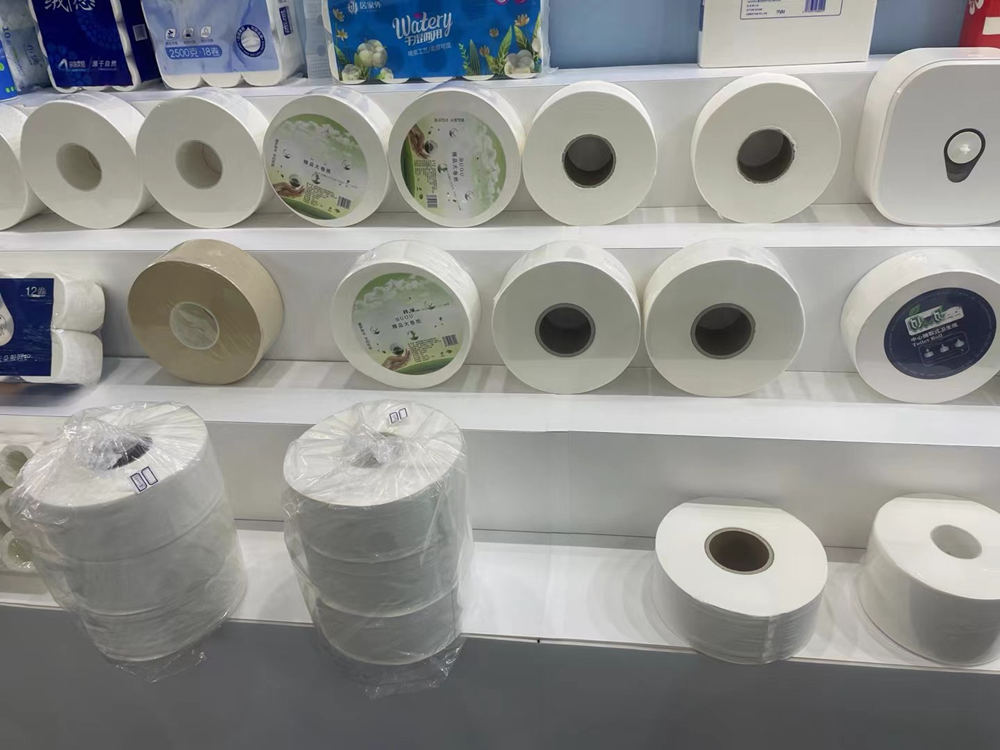
304 Stainless Steel: Blunt-Force Protection and Fire Resistance
304 stainless provides high ductility and thermal stability, so it absorbs blunt impacts and does not contribute fuel in a fire—traits that cut replacement frequency in high-abuse commercial restrooms.
Material properties of 304 stainless steel relevant to impact resistance
304 is an austenitic alloy with approximately 18% chromium and 8% nickel; that composition produces a microstructure with high toughness and excellent ductility. Typical mechanical numbers sit around a 215 MPa yield strength and roughly 515 MPa tensile strength, with elongation commonly above 40%, which lets panels deform significantly under blunt loads instead of cracking.
Because 304 fails by ductile deformation, it spreads impact energy over a larger area and reduces the chance of a local penetration you see with brittle plastics. Increasing gauge (18–16 ga, ~1.2–1.6 mm) and using reinforcing geometry—ribs, hems, and tight bends—raises stiffness and moment of inertia, directly improving push and pry resistance in dispenser enclosures.
Comparative impact performance: 304 stainless vs common plastics
Under blunt force, stainless steels dent and remain a barrier; common dispenser plastics such as ABS, polypropylene, and polystyrene crack, tear, or shatter and often lose function after a single hard strike. When vandals strike repeatedly, metal maintains structural integrity while plastics accumulate microcracks that grow into catastrophic failures.
Steel also enables welded or formed closures and tamper-resistant fasteners; molded plastics rely on snap fits and bosses that shear under concentrated loads. The higher mass and perceived strength of steel deter casual tampering, though determined attackers can still force access without proper fastening and mounting.
| Characteristic | 304 Stainless Steel (typical) | Common Plastics (ABS / PP) |
|---|---|---|
| Composition / Thermal | Austenitic Fe-Cr-Ni (~18% Cr, ~8% Ni); melts ~1400–1450°C; non-combustible; conducts heat. | Polymer matrices (ABS, PP); softening/ignition ~105–160°C; combustible; low thermal conduction. |
Fire and thermal performance of 304 stainless steel in dispenser applications
304 maintains dimensional stability at temperatures far above the ignition and melt points of common plastics. Because steel does not burn, it does not add combustible load or emit polymer-derived smoke and toxic gases under fire conditions, which lowers risk for enclosed public restrooms.
Metal conducts heat away from a hotspot; that conduction can either protect nearby components by dispersing heat or accelerate heat transfer to vulnerable mounts and fasteners. When you place steel near materials that degrade at low temperature, specify thermal breaks or avoid direct contact to prevent secondary failures. Selecting steel can help meet stricter local fire-safety rules for commercial installations.
Design, installation, and lifecycle trade-offs for steel dispensers
You pay more up front for stainless and accept higher weight and shipping cost, but the material reduces replacement frequency in high-traffic or vandal-prone locations. Evaluate chloride exposure and cleaning regimes: 304 resists many environments, but repeated exposure to chlorides or heavily chlorinated cleaners increases pitting risk; in those settings choose 316 or add protective finishes.
Design choices matter. Use thicker gauges, recessed mounting, tamper-proof fasteners, and internal reinforcement plates to maximize blunt-force tolerance. Factor the following into lifecycle decisions:
- Replacement frequency versus purchase price: steel reduces service calls for breakage but increases initial capex.
- Maintenance profile: stainless accepts aggressive sanitizers and frequent cleaning without cracking; finishes affect visible wear and scratch hiding.
- Security fitment: combine tamper-resistant hardware with placement strategy to limit attack vectors.
- End-of-life: consider repairability (dent repair) and recycling versus plastic landfill impact when calculating total cost of ownership.
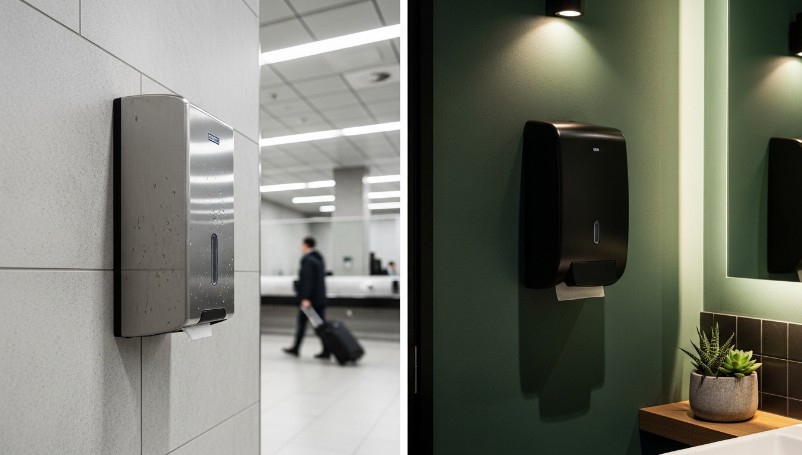
The Aesthetic Requirement for Class-A Corporate Executive Suites
Dispenser selection must balance finish, scale, and maintenance so fixtures read as intentional, durable design elements rather than afterthoughts.
Material Visual Impact: Steel vs Plastic
Choose materials by how they behave under real lighting and at human scale. Polished stainless throws highlights and can read as premium when paired with other polished metals, but it shows fingerprints and specular glare. Brushed or bead-blasted steel lowers reflectivity, masks smudges, and reads consistently against stone and wood. Glossy plastics create color saturation and shine, which can look contemporary in an accent application but cheapen the room if used as the primary finish. Matte or soft-touch plastics reduce sheen and can work as discreet backgrounds when matched correctly.
- Reflectivity and sheen: polished stainless, brushed steel, matte powder-coated metal, and glossy vs matte plastics each change perceived value under warm and cool LEDs.
- Texture and detail: visible seams, edge treatments, and fastener styles control whether a dispenser reads bespoke or mass-market.
- Scale and proportion: match dispenser depth and height to vanity sightlines and mirror planes so the unit integrates with executive fixtures.
- Lighting interaction: test finishes under the suite’s actual temperature (2700K–4000K) and in shadowed zones to avoid glare or color shifts.
Finish and Color Coordination with Executive Interiors
Treat dispensers as part of the finish palette the same way you specify faucets and door hardware. Decide whether the unit should recede or act as an accent and lock the decision into the finish schedule so installers don’t mix metallic tones on site. Approve physical finish samples and light them in-situ before final procurement.
- Palette alignment: match or complement metal tones used on faucets, door hardware, and accessories—use satin nickel, PVD brass, or dark oxide consistently.
- Accent vs neutral strategy: specify whether dispensers are background elements (neutral matte) or brand accents (subtle color bands or PVD highlights).
- Custom finish options: require manufacturer options such as powder coating, PVD plating, proprietary laminates, or soft-touch coatings and include sample approval in the contract.
- Consistency across touchpoints: require finish codes in the FF&E schedule and a single supplier or approved finish family to avoid mismatched tones.
Perceived Quality and Brand Alignment
Executive-level spaces demand tactile and visual cues that imply longevity and attention to detail. Prioritize units that feel solid in hand, operate smoothly, and conceal fasteners. Use discrete branding rather than large logos so dispensers support the brand without dominating the design.
- Tactile cues: specify door action (soft-close or positive latch), perceived weight, and material feel to match guest expectations for luxury spaces.
- Visual cues of durability: prefer concealed fasteners, tight panel gaps, and serviceable internal layouts that signal repairability rather than disposable replacement.
- Branding opportunities: require options for small, laser-etched logos, custom color bands, or branded refill packaging that align with corporate identity.
- Guest expectations: select low-profile, metal-dominant designs for executive suites unless a curated accent strategy justifies a high-contrast plastic finish.
Maintenance, Cleanability, and Long-term Appearance
Specify finishes for real-world cleaning regimes. Brushed stainless and bead-blast finishes hide fingerprints and fine scratches; avoid mirror-polished faces in high-touch zones. For plastics, require UV-stable, solvent-resistant formulations where facilities use stronger detergents. Lock cleaning chemistries into the maintenance spec so staff know which agents preserve the finish.
- Scratch, dent, and abrasion resistance: prefer stainless or coated-metal faces in high-touch areas; use impact-resistant, high-grade ABS or polycarbonate only for accent or low-traffic applications.
- Fingerprint and smudge visibility: specify brushed or satin textures on metal and matte/soft-touch coatings on plastics to minimize visual maintenance.
- Chemical compatibility: list approved cleaners (pH-neutral detergents, isopropyl up to 70% for sanitizing). Prohibit chlorine bleach on stainless finishes and ketone/ester solvents on plastics to avoid etching and crazing.
- Lifecycle appearance strategy: include spare faceplates and fasteners in the contract so facilities can swap damaged panels without full replacement and schedule quarterly inspections for high-use suites.
Sustainability, Compliance, and Specification Language for Procurement
Write procurement specs that reduce ambiguity and lock vendors to measurable commitments. Require recyclability data, post-consumer content where relevant, and clear warranty and spare-parts timelines. Call out accessibility and product-size requirements so dispensers accept the paper SKUs your facilities source.
- Material sustainability: request EPDs or manufacturer environmental statements and require recyclable-metal or PCR-plastic content thresholds where ESG targets exist.
- Regulatory and accessibility compliance: specify ADA operability metrics, mounting heights, and fire-code notes (non-combustible faces where required).
- Warranty and serviceability: require minimum 5-year mechanical warranty, spare-face availability, and local distributor support to preserve the suite appearance.
- Clear spec language: include finish codes, mounting details, weight tolerances, and approved-cleaning instructions. Verify dispenser fit for roll formats used by operations—for example, confirm clearance for wide-format 165mm (TSH-2269) and 235mm (TSH-3099) rolls and compatibility with coreless/jumbo formats like TSH-JRT08.
Cleaning Protocols: Preventing Streaks and Chemical Etching on Steel
A regimented program—neutral‑pH cleaners, soft microfiber wiping, deionized final rinse, and scheduled passivation—stops mineral streaks and preserves stainless steel’s protective chromium oxide layer.
Common Causes of Streaking and Chemical Etching
Streaks and etching come from both physical abrasion and chemical attack. Identify the root cause before choosing corrective action: mineral deposits and mechanical damage leave visible marks that simple polishing won’t fix, while chloride or strong acid exposure damages the passive oxide and creates pitting that progresses over time.
- Hard-water minerals (calcium, magnesium) leave white spots and streaks when water evaporates.
- Chloride exposure (salt, bleach) attacks stainless steel’s passive layer, causing pitting and etching.
- Strong acids or concentrated caustic cleaners with long contact times degrade decorative or thin-coated surfaces.
- Abrasive pads, steel wool, or hard brushes create micro-scratches that trap soils and highlight streaks.
- Residual cleaning agents or incomplete rinsing leave films that re-deposit as streaks after drying.
- Contamination from other metals (iron particles) causes rust stains and localized corrosion.
Chemical Compatibility: What Cleaners to Use and Avoid
Choose cleaners by finish and stainless grade, and always check pH and chloride content before deployment. When in doubt, test a small area and consult the manufacturer’s compatibility chart and MSDS to avoid irreversible damage.
- Use neutral‑pH or mildly alkaline detergents formulated for stainless steel; they remove soils without attacking the passive layer.
- Avoid bleach (sodium hypochlorite) except in well‑diluted, short‑contact applications, and rinse immediately after use.
- Keep chloride‑containing cleaners and high‑chloride hard water away from exposed stainless surfaces.
- Do not use strong acids or concentrated caustics on decorative or thin‑coated steel finishes.
- Prefer citric‑acid‑based passivation products over stronger acids when feasible, and follow manufacturer instructions strictly.
- Always review product MSDS and supplier compatibility charts before first use; perform a small test patch on each surface type.
Cleaning Techniques to Prevent Streaks
Follow a repeatable process that removes soils, avoids scratches, and prevents mineral redeposit. Mechanical technique and water quality matter as much as chemistry: poor rinsing or rough wiping undoes correct chemical choices.
- Rinse surfaces first to remove loose debris, apply cleaner, then rinse again thoroughly to remove residues.
- Wipe with soft microfiber cloths or non‑abrasive sponges; avoid steel wool and coarse scouring pads.
- Work with the grain on brushed finishes to hide minor marks and reduce visible streaking.
- Use deionized or softened water for final rinses where practical to prevent mineral deposits.
- Dry immediately with a clean microfiber towel or a squeegee to prevent water spotting.
- For polish, apply stainless‑safe polish sparingly and buff with a lint‑free cloth to a uniform sheen.
Passivation, Protective Coatings, and Surface Treatments
Restore and strengthen the chromium oxide layer through scheduled passivation and consider barrier coatings in aggressive environments. Choose treatments that manufacturers approve and record all interventions for traceability.
- Schedule periodic passivation (citric or nitric acid per spec) to restore the chromium oxide layer on stainless surfaces.
- Use manufacturer‑recommended passivation procedures and neutralize and rinse thoroughly after treatment.
- Apply clear protective coatings or waxes on decorative steel in corrosive settings to reduce direct chemical contact.
- Consider electropolishing or polished finishes in highly corrosive or aesthetic‑critical locations to improve resistance and reduce staining.
- Record coating types and reapplication intervals in maintenance logs to ensure consistent protection.
- Avoid DIY plating or incompatible coatings that trap moisture or introduce galvanic corrosion.
Maintenance Schedule, Testing, and Incident Response
Define cleaning cadence by traffic and risk, document every action, and train staff on incident steps. Rapid response to chemical exposure and structured records shorten repair cycles and limit long‑term damage.
- Set cleaning frequency by location: daily for high‑contact areas, weekly for moderate, monthly for low‑traffic spots.
- Inspect surfaces routinely for discoloration, pitting, or streaking and document findings with photos and timestamps.
- Keep a log of cleaning agents used, concentrations, contact time, and personnel who performed cleaning.
- If chemical exposure occurs (e.g., bleach spill), rinse immediately with copious fresh water and neutralize if recommended.
- When etching or pitting appears, stop using suspected agents, run compatibility tests, and consult the surface manufacturer for repair options.
- Train staff on safe handling, correct dilutions, PPE, and the protocol for test patching new products before full use.
Lifecycle Cost Analysis: Replacement Rates of Plastic vs Steel
Compare replacement-frequency using RPUY (replacements per unit-year) and site segmentation: plastic units typically need swapping every 2–7 years while stainless steel often endures 8–20 years, so higher upfront steel cost can lower lifecycle replacement and service expense.
Replacement Frequency Metrics for Plastic and Steel Dispensers
Use replacements per unit-year (RPUY) to compare materials across locations: RPUY = total replacements ÷ (number of units × years observed). Report RPUY alongside the definition of a “replacement event” — full unit swap versus component repair or refurbishment — because the chosen definition shifts measured frequency and the resulting cost model.
Segment RPUY by site type (hospitality, retail, transit, corporate), traffic level (low/medium/high), and a vandalism index before aggregating averages. Typical field ranges (illustrative and site-dependent): plastic dispensers: replacement every 2–7 years; stainless steel: 8–20 years. Use these ranges only as priors to be validated with site data.
| Key Metric | Plastic (Typical) | Stainless Steel (Typical) |
|---|---|---|
| Replacement frequency (illustrative, RPUY) | 0.14–0.50 replacements per unit-year (≈2–7 years) | 0.05–0.125 replacements per unit-year (≈8–20 years) |
Failure Modes and Environmental Factors Affecting Lifespan
Materials fail for different reasons and the operating environment changes failure rates. Track failure mode at each service visit so you can build a failure-mode matrix by material and site type; that matrix lets you forecast replacements and prioritize design changes or protective finishes.
- Plastic: cracking from impacts, hinge/latch wear, UV embrittlement in exposed sites, discoloration, and chemical attack from strong cleaners.
- Stainless steel: surface dents from blunt force, finish damage exposing base metal, pitting/crevice corrosion in high-humidity or saline environments, and scratched surfaces that invite vandal tampering.
- Environmental accelerants: coastal salt spray, high humidity, harsh cleaners (bleach, high-pH detergents), wide temperature swings, and repeated mechanical abuse.
- Operational note: in high-vandalism sites use ductile metal or thicker-gauge steel; in low-risk interiors, engineered plastics with reinforced geometry can meet performance goals at lower cost.
Total Cost of Ownership: Repair, Maintenance, and Replacement Costs
Treat purchase price as one component of TCO. Build a model that combines acquisition cost, routine maintenance, repair actions, emergency replacements, downtime impacts, and end-of-life disposal or salvage. Use a clear repair-versus-replace rule to standardize decisions across service teams.
- Acquisition cost: capture unit price, finish options, and any branding/printing premiums. Steel typically carries higher upfront cost than plastic.
- Maintenance cost: logging labor per visit, frequency of part replacements (hinges, springs), and cleaning chemistry compatibility.
- Repair vs replace rule: adopt a numeric threshold (example: replace when repair cost > 40% of replacement cost) to remove ad-hoc decisions.
- Operational failures: include service call dispatch cost, emergency shipping, and reputational/downtime impacts (e.g., guest complaints).
- End-of-life: include recycling or scrap credit for steel and disposal or recycling options for plastic; account for any regulatory disposal fees.
- Financial model: calculate net present cost over a chosen horizon (suggested: 10 years as of 2026) using expected replacement schedule and an appropriate discount rate for the client.
Data Gaps, Assumptions, and Recommended Field Measurements
Existing inputs lack dispenser-specific lifecycle studies. Close that gap with a focused measurement plan: collect timestamps, failure causes, and labor records so you can convert field events into validated RPUY inputs and realistic cost curves.
- Essential data: installation dates, unit counts by material/model, timestamped failure reports with root cause, service logs with labor hours, and part-level replacements.
- Site inputs: mean daily users, access control (public vs. staff-only), cleaning regimen and chemicals, and local climate (humidity, coastal exposure).
- Monitoring period: minimum 12–36 months to capture seasonal effects and low-frequency vandal events; extend to 60 months for robust steel lifespan validation.
- Analytical assumptions to declare: discount rate, service labor rate, replacement thresholds, maintenance policy (preventive vs. reactive), and salvage value.
- Pilot recommendation: install matched plastic and steel units at representative sites, track RPUY and cost inputs for 12–24 months, then scale results to regional portfolios using stratified weighting by site type and vandalism index.
Conclusion
Specifying the right dispenser material and installing it to manufacturer standards reduces vandalism, preserves hygiene, ensures OSHA and local code compliance, and extends service life. Routine cleaning and lifecycle-cost planning prevent premature replacement and keep operational budgets predictable.
Start by auditing your current dispenser fleet against facility foot-traffic and vandalism profiles, then request technical datasheets or samples from Top Source Hygiene to validate fit and pricing. Our team can provide OEM options, mounting guides, and lifecycle cost estimates to help finalize your specification.
Frequently Asked Questions
Stainless steel vs plastic commercial toilet paper dispensers?
Stainless steel dispensers are more durable, vandal-resistant, and have a longer service life; they are heavier, more expensive, and require secure anchoring. Plastic dispensers are lower cost, lightweight, corrosion-free, quieter, and easier to replace; they suit low- to medium-traffic offices. Choose stainless steel for high-traffic or high-risk public restrooms and plastic for cost-sensitive, low-risk office environments.
What is the most durable jumbo roll dispenser?
A recessed, heavy-gauge stainless steel jumbo roll dispenser (304 or 316 stainless, 12–14 gauge) with welded seams, tamper-resistant lock, reinforced mounting plate and full-length steel spindle is the most durable. Look for vandal-resistant models and concealed fasteners; dual-roll or continuous-feed designs add uptime.
Are stainless steel dispensers vandal proof?
They are highly vandal-resistant but not completely vandal proof. Thick-gauge stainless with tamper locks and recessed installation greatly reduces theft and deliberate damage, but determined vandals with tools can still dent, pry or cut them. For maximum protection combine stainless units with recessed mounting, security anchors and regular maintenance.
How to clean stainless steel bathroom dispensers?
Clean with a mild detergent and warm water using a soft cloth, always wiping along the grain; rinse and dry to prevent water spots. For fingerprints and disinfecting use isopropyl alcohol or an EPA-approved disinfectant compatible with stainless; avoid chlorine bleach, abrasive pads, and steel wool which can cause corrosion or scratching. Use a nonabrasive stainless polish occasionally and inspect seals and locks.
Why use plastic toilet paper dispensers in offices?
Plastic dispensers are affordable, rust-proof, lightweight and easy to install and replace, making them ideal for low- to medium-traffic office restrooms. Many have translucent windows for quick refill checks and lower upfront costs; durable engineering plastics like ABS or polycarbonate offer good impact resistance while keeping maintenance and noise low.
Do stainless steel toilet paper holders rust?
Stainless steel resists rust but is not absolutely immune. Grades like 304 are excellent for indoor restrooms; 316 is recommended for coastal or chemically harsh environments due to superior chloride resistance. Poor maintenance, surface damage, exposure to bleach or contact with dissimilar metals can cause staining, pitting or galvanic corrosion.