
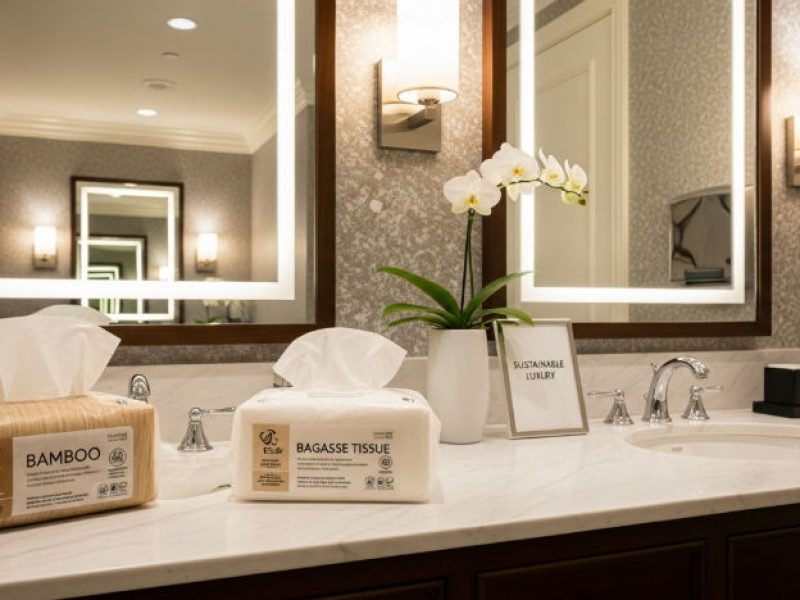
Sugarcane vs Bamboo choices set the difference between predictable restroom service and costly sanitation incidents—make the wrong call and your facilities face higher restocking cadence, more customer complaints, and potential regulatory fines tied to hygiene standards.
This guide acts as a technical SOP for procurement, operations, and quality teams: we outline the B2B shift away from tree pulp, define sugarcane bagasse and its processing for tissue manufacturing, quantify bamboo fiber tensile properties, compare softness and performance of bagasse versus bamboo jumbo rolls, contrast agricultural byproduct sourcing with dedicated bamboo farming, and deliver a wholesale cost analysis and sourcing checklist. Expect clear specs, test thresholds, and vendor-evaluation criteria you can use to standardize purchases and reduce supply risk.
The B2B Shift Away from Traditional Tree Pulp
By 2026, certification-driven procurement and volatile wood-pulp markets force large buyers to substitute virgin tree pulp with bagasse, bamboo, or recycled fibers and require manufacturers to demonstrate traceable, lower Scope 3 emissions.
Market drivers: sustainability, procurement policy, and reputational risk
Corporate and institutional buyers now tie purchasing to measurable sustainability outcomes. Procurement teams demand chain-of-custody proof such as FSC or equivalent certifications and expect suppliers to present lifecycle data that reduces reported Scope 3 emissions and mitigates deforestation risk.
Regulatory pressure in Europe and parts of North America raises the cost and compliance burden for uncertified virgin pulp. At the same time, hospitality and retail chains push private-label eco-labeled tissue, and wood-pulp price swings make alternative fibers an active hedging strategy.
- ESG scorecards and supplier evaluations increasingly require FSC or equivalent chain-of-custody documentation.
- Regulatory frameworks in EU and North America raise compliance costs for uncertified virgin pulp, changing supplier selection criteria.
- Buyers prioritize suppliers that can demonstrate lower Scope 3 emissions and transparent sourcing to reduce reputational exposure.
- Hospitality and retail chains drive demand for eco-labeled private-label tissue products as part of brand commitments.
- Commodity price volatility in global wood-pulp markets motivates procurement teams to evaluate alternative fibers for cost stability.
Alternative fibers gaining traction: bagasse, bamboo, and recycled pulp
Buyers compare bagasse, bamboo, and post-consumer recycled fiber against performance, supply risk, and certification pathways. Each fiber presents measurable trade-offs: bagasse offers strong carbon-profile arguments in sugarcane regions; bamboo delivers tensile strength and fast growth cadence; recycled pulp lowers virgin demand but raises deinking and softness challenges.
Traceability and lifecycle data matter for all alternatives. Procurement teams request third-party audits and documented processing methods that show chemical use, yields, and end-of-life impacts before they shift long-term contracts.
- Sugarcane bagasse: abundant near sugar mills, offers good absorbency and stiffness for core commercial grades and a favorable agricultural-byproduct carbon profile.
- Bamboo: fast-growing, high tensile strength; ideal for jumbo rolls and high-strength commercial products when processed to control fiber length and softness.
- Recycled pulp: reduces virgin-fiber demand and carbon intensity but requires more deinking and contamination-control steps that can affect softness.
- Certification and traceability: buyers commonly request lifecycle assessments and chain-of-custody claims for any non-wood feedstock.
- Regional availability dictates choices: bagasse fits sugarcane geographies; bamboo suits areas with established bamboo processing and transport networks.
Operational impacts for OEM/ODM manufacturers
Manufacturers must change pulping, bleaching, and refining recipes to meet target softness and wet-strength when they switch feedstocks. Expect capex-light adjustments—refiner settings, retention aids, and cationic starch dosing—plus revised chemical dosing plans to balance strength and softness.
Quality control expands to include fiber-source verification, contamination testing, and scheduled third-party certification audits. OEMs and ODMs that offer pilot runs, validated technical sheets, and transparent supply chains reduce buyer friction and win multi-year procurement slots; Top Source Hygiene’s OEM/ODM model and FSC options position it to support these transitions.
- Processing changes: revise pulping and refining protocols, adjust bleaches and retention aids to match softness and tensile targets.
- QC & compliance: add fiber-source verification, contamination screens, and third-party certification audits to standard inspections.
- Equipment & partnerships: plan supplier partnerships or minor equipment upgrades to keep continuous production without extending lead times.
- Buyer enablement: provide pilot runs, low-cost samples, and technical data sheets to de-risk procurement trials.
- Competitive edge: OEM/ODM suppliers with tested, certified alternatives capture larger corporate contracts that prioritize verified sustainability.
Procurement and commercial considerations for B2B buyers
Procurement teams run small pilots to validate softness, absorbency, and dispenser compatibility before scaling orders. Evaluate total cost of ownership—unit price, waste rates, maintenances impact, and the brand-value uplift from certified products—rather than unit price alone.
Expect longer lead times when new supply chains form; plan higher MOQs during transition windows and restructure inventory policies accordingly. Contractually, favor multi-year agreements with price-adjustment clauses tied to feedstock benchmarks to manage volatility and secure supply.
- Run pilot programs to validate product performance and machine compatibility before scaling purchases.
- Include total cost of ownership in evaluations: unit price, waste rates, maintenance, and certification benefits to brand value.
- Require minimum certifications (FSC, ISO) and product compliance with regional hygiene standards such as FDA or EU rules.
- Adjust inventory planning for longer lead times and expect higher MOQs during supplier transition periods.
- Structure contracts as multi-year deals with feedstock-linked price-adjustment clauses to manage cost volatility.

What is Sugarcane Bagasse in Tissue Manufacturing?
Bagasse—the fibrous residue left after sugarcane juice extraction—delivers roughly 50% cellulose and low lignin, allowing mills to use low-chemical pulping and mechanical refining to produce tissues that meet commercial softness, absorbency and strength targets while cutting reliance on wood pulp.
Why bagasse works in tissue production
Bagasse provides a consistent, regional feedstock where sugarcane processing operates. Its fiber chemistry—about 50% cellulose with comparatively low lignin—eases fiber separation and supports liquid uptake, so mills can meet typical absorbency and hand-feel goals without resorting to long-fiber wood pulps for every product line.
- Source: an agricultural byproduct that delivers steady volumes near sugar mills, reducing dependency on long-haul wood pulp shipments.
- Fiber makeup: ~50% cellulose and lower lignin than many softwoods, which helps with fiber separation and bonding during papermaking.
- Applications: suits toilet paper, facial tissues and jumbo rolls where absorbency and acceptable softness matter.
- Commercial fit: lets mills replace part of wood pulp input while keeping product quality within market specifications when process controls match product targets.
Pulping and processing methods for bagasse
Producers favor low-chemical cooking routes—carbonate and bicarbonate systems—because they raise pulp yield and reduce caustic load compared with aggressive kraft cooking. Yields approach 72% under optimized carbonate/bicarbonate conditions. After cooking, mills apply mechanical refining and targeted additives to tune bonding, sheet formation and handling.
- Low-chemical cooking: carbonate/bicarbonate processes increase pulp yield to ~72% versus some conventional methods.
- Mechanical refining: controlled fibrillation improves inter-fiber bonding and sheet uniformity without heavy chemical input.
- Strength additives: cationic starch and similar polymers can raise dry strength by up to ~60%, letting mills hit tensile targets at lower GSM.
- Operational impact: these methods reduce chemical consumption and can lower processing cost while keeping line speeds commercially viable.
Product performance: strength and absorbency
Bagasse fiber supports good liquid uptake because of its high cellulose fraction and cell-wall structure. Mechanical refining increases surface area and bonding, and when producers add strength agents they compensate for shorter fiber length to meet tensile and handling requirements across roll formats.
- Absorbency: cellulose-rich bagasse offers reliable liquid uptake for household and commercial tissues.
- Tensile and wet strength: refining plus cationic starch noticeably boost dry strength and improve sheet integrity during converting.
- Format suitability: bagasse pulp adapts to single- and multi-ply rolls, facial tissues and jumbo rolls when mills set ply, crepe and drying parameters to spec.
- Quality trade-offs: manufacturers balance ply count, GSM and additive dose to optimize softness versus strength and cost for each SKU.
Environmental and supply-chain advantages
Using bagasse converts an agricultural waste into a valuable feedstock and supports circular-economy objectives. Where sugarcane processing sits near paper mills, suppliers cut transport emissions and raw-material costs. Substituting part of wood pulp reduces pressure on forests and helps brands meet sustainability criteria when they couple supply transparency with appropriate certifications.
- Circular use of waste: diverts bagasse from burning or landfill into tissue production, adding value at the source.
- Deforestation relief: replacing a share of wood pulp lowers demand on forest resources.
- Cost and logistics: local bagasse supply near mills reduces freight and improves raw-material security for nearby paper plants.
- Market fit: bagasse offers a credible eco-friendly option for sustainability-focused brands when supply consistency and certification align with buyer requirements.
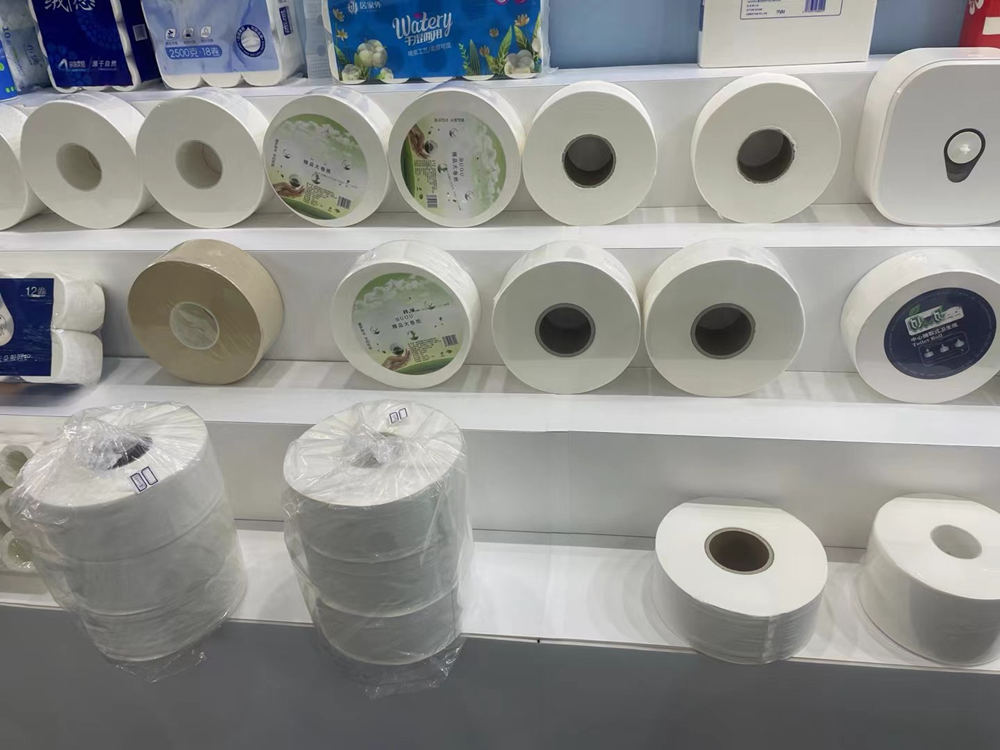
Build Your Private-Label Toilet Paper
Bamboo Fibers: The King of Tensile Strength
Bamboo delivers longer, higher‑crystallinity cellulose fibers that raise tensile and tear resistance, letting manufacturers cut GSM or plies while keeping on‑machine reliability.
Mechanical Properties of Bamboo Fibers
Bamboo fibers combine long cellulose chains, relatively high crystallinity, and favorable microfibril angles. Those structural traits increase fiber‑to‑fiber bonding and raise both tensile strength and tear resistance versus many agricultural residues. Longer, more continuous fibers support stronger interfiber bonds; that improves sheet integrity and reduces tearing during converting and dispensing.
Bamboo shows higher wet and dry tensile strength and better elongation at break than most byproduct fibers, which improves runnability on high‑speed paper machines and lowers web breaks. Manufacturers validate suitability with tensile, tear, and burst tests; consistent lab data helps predict on‑machine behaviour and set refining targets for production.
| Property | Bamboo (Typical) | Top Source Hygiene (Virgin Wood Pulp) |
|---|---|---|
| Key metrics & supply fit | Long fibers and higher crystallinity → higher tensile/tear; suitable for lower‑GSM or fewer‑ply designs; supply concentrated in regional bamboo hubs; pulping routes affect yield and brightness. | Long‑fiber wood pulp delivers consistent cloud‑soft hand and high tensile; established large‑scale supply from Hebei hub; optimized for hospitality and retail specs (OBA‑free, septic safe). |
Processing and Fiber Treatments for Paper and Composites
Pulping route changes bamboo performance dramatically. Mechanical pulping preserves fiber length but leaves more lignin; kraft or soda pulping lowers lignin and brightens the pulp at higher processing cost. Process choice trades off yield, brightness, and fiber integrity—pick the route that supports your target product specification.
Controlled refining and beating tune fibrillation: more refining raises tensile and bonding but reduces bulk and perceived softness. Surface chemistries—alkaline washes, enzymatic treatments, or sizing/coating—improve bonding, wet strength, or compatibility with adhesives. For specialty reinforcement, mills can extract microfibrillated cellulose or nanocellulose to add mechanical reinforcement in composites, though those routes increase cost and processing complexity.
Applications in Tissue Products and Industrial Uses
Manufacturers use bamboo where tensile strength cuts operational costs: stronger sheets reduce web breaks, enable higher machine speeds, and let producers target lower GSM or fewer plies while maintaining durability. For jumbo rolls and high‑traffic dispensers, bamboo extends roll life and reduces change‑out frequency.
Outside consumer tissue, bamboo fibers reinforce liners, filter media, and molded fiber products where strength‑to‑weight matters. Formulators balance tensile, softness, absorbency, and cost through blends, ply choices, and chemical aids to meet product and dispenser requirements.
Comparison with Sugarcane Bagasse and Other Plant Fibers
Bamboo typically outperforms bagasse on tensile and tear strength and offers longer fibers that improve sheet integrity. By contrast, bagasse and many agricultural residues provide shorter fibers that can produce softer hand but weaker sheets. Producers often blend bamboo with bagasse or recycled pulp to capture both strength and cost advantages.
Choose bamboo for heavy‑duty towels, high‑capacity jumbo rolls, or any specification that penalizes web breaks. Use bagasse for cost‑sensitive, softer tissue lines or where proximity to sugar mills lowers logistics cost. Blends let you tune cost, softness, and strength for the target market.
Sustainability, Supply Chain, and Market Factors
Bamboo regenerates quickly and can deliver high biomass yields per hectare, lowering pressure on forests when managed correctly. Still, sustainability outcomes depend on land use changes, harvest practices, and processing emissions. Evaluate lifecycle impacts—pulping chemistry, water use, and energy—when comparing suppliers.
Certifications (FSC and regional schemes), local processing capacity, and transport costs influence procurement decisions and buyer acceptance. Expect regional supply concentration and seasonal cycles to affect price stability and lead times; build contingency plans and vet mill practices to secure a responsible, reliable supply chain.

Comparing the Softness of Bagasse vs Bamboo Jumbo Rolls
Raw fiber morphology sets the softness ceiling: bamboo’s longer, finer fibers give a softer starting point while bagasse needs targeted pulping and finishing to reach equivalent hand-feel.
Material composition and fiber structure
Softness begins at the fiber level. Bagasse comes from sugarcane stalk residue and supplies shorter, thicker fibers with higher fines and residual lignin; that makes the unprocessed sheet feel coarser. Bamboo yields longer, finer fibers and a different cell-wall architecture, which forms a smoother surface and greater compressibility when converted to tissue.
- Bagasse fibers: shorter average length, larger diameter, higher fines content — feels harsher unless refined or chemically softened.
- Bamboo fibers: longer, finer, and more flexible — they form a softer surface with less extreme processing.
- Fiber composition controls compressibility and surface smoothness; softer tissue needs fibers that make a resilient, low-friction sheet.
- Blending bagasse with long virgin pulp boosts softness while preserving cost advantages.
Manufacturing steps that control perceived softness
Processing translates raw fiber traits into hand-feel. Chemical pulping, refining intensity, creping pattern, drying method and surface treatments each shift softness, bulk and strength. You can take identical raw fibers and produce very different outcomes by tuning these steps.
For bagasse, stronger delignification and targeted refining reduce coarseness. For bamboo, gentler pulping preserves fiber length and tensile performance while delivering a softer sheet with less finishing chemistry.
| Metric | Bagasse (Typical) | Bamboo (Typical) |
|---|---|---|
| Fiber & softness summary | Shorter, coarser fibers; higher lignin (~18–22%); baseline feel firmer—requires delignification, refining, or long-fiber blend to soften. | Longer, finer fibers; lower lignin (~11–13%); naturally softer and more compressible with comparable tensile strength after standard pulping. |
- Pulping: chemical pulps remove lignin and soften fibers more than mechanical pulps; bagasse needs stronger delignification to approach bamboo softness.
- Refining and fibrillation increase surface bonding and smoothness but lower bulk; control refining to balance softness with sheet cushion.
- Creping and embossing add surface microstructure that improves perceived softness; crepe angle and degree directly affect hand-feel on jumbo rolls.
- Drying tech: through-air-drying (TAD) gives higher bulk and a cushiony feel; conventional wet-pressing yields denser, firmer sheets.
- Additives: softeners or lotions reduce surface friction and markedly improve hand-feel, especially for coarser raw fibers like bagasse.
Objective metrics and sensory testing for softness
Quantify softness with instruments and validate with human panels. Use consistent protocols so material comparisons remain meaningful: same basis weight, same ply count, and controlled environmental conditions for panel testing.
- Instruments: Tissue Softness Analyzer (TSA) and surface friction testers provide repeatable proxies for perceived softness.
- Correlated physical metrics: surface roughness, bulk (thickness per gram), compressibility and friction coefficient map to hand-feel.
- Strength tests (tensile, stretch-to-break) matter. Consumers reject sheets that feel soft but tear easily; design for minimum usable strength.
- Sensory panels: trained assessors or representative consumers rate softness, cushioning and perceived gentleness under standardized conditions.
Practical trade-offs: softness versus cost, strength, and sustainability
Choose material by use case. Bagasse lowers raw material cost and valorizes agricultural waste but needs extra processing to reach premium softness. Bamboo delivers a softer, stronger sheet with less severe finishing, yet sourcing, certification and price can constrain deployment.
- Cost: bagasse often costs less at source but adds processing or softener costs to hit target softness; bamboo carries higher raw-material cost but can reduce finishing spend.
- Performance: bamboo-based sheets hit high softness and tensile strength more easily; bagasse typically needs blending with long fibers for parity.
- Sustainability: bagasse rates well as a byproduct stream; bamboo grows fast but requires credible management and certification for some buyers.
- Use cases: for high-traffic jumbo rolls where cost and durability matter more than luxury softness, treated bagasse blends perform well; for premium washrooms prioritizing guest perception, choose bamboo or long-fiber blends.

Agricultural Byproducts vs Dedicated Bamboo Farming
For B2B tissue sourcing, bamboo gives predictable, auditable biomass and long-term supply stability while agricultural residues cut feedstock cost and waste but require logistics and seasonal risk management.
Resource Availability and Yield
Agricultural residues such as sugarcane bagasse and cereal straw only appear where those crops grow; supply ties directly to planted area, harvest timing and crop economics. Collection windows concentrate logistics into short seasons, and availability shifts with crop rotations or commodity-price-driven planting decisions.
Bamboo delivers continuous biomass from managed stands after the establishment phase. Plant once, harvest cyclically—reducing annual replanting cost and smoothing year-to-year tonnage. That makes bamboo better for planned, large-scale contracts; residues work well where you can tap dense, local agro-industrial hubs or accept opportunistic buys.
Environmental Impact and Carbon Benefits
Using residues diverts waste from open burning or landfill, cutting local air pollution and greenhouse emissions tied to disposal. Turning bagasse into pulp supports a circular flow: growers keep land in food production while manufacturers gain low-carbon input streams.
Well-managed bamboo plantations store carbon in above- and below-ground biomass and can rehabilitate degraded land, improving soil structure and reducing erosion. Watch species choice and irrigation: poor management can raise local water demand or reduce biodiversity. In both cases, processing energy and chemical inputs determine the net climate and pollution balance; low-input pulping improves sustainability credentials materially.
Processing, Fiber Quality, and Product Performance
Bamboo produces relatively long, strong fibers that support higher tensile strength and durability in tissue and jumbo rolls. Many agricultural residues yield shorter fibers, which can lower sheet strength and perceived softness unless you blend, refine, or chemically modify the pulp. For example, bagasse offers high cellulose (~50%) and modern low-chemical pulping can reach yields near 72%, but the resulting fiber mix differs from bamboo and softwood.
Manufacturers must match pulping routes to feedstock: residue pulping needs steps to remove non-cellulosic components, while bamboo pulping requires its own process controls to protect fiber length and reduce damage. Practical levers—GSM, ply count, creping, embossing and targeted blends—let mills tune softness, absorbency and wet strength across both feedstock types.
Economic and Supply Chain Considerations
Byproducts usually cost less per raw ton because growers treat them as secondary outputs, but you pay in collection, storage and seasonal variability. Expect higher operational complexity: more pickup points, quality variance and buffer inventory needs. Dedicated bamboo requires upfront land, planting and a multi-year wait to reach steady yields, yet it reduces long-term feedstock price volatility and supports stronger sustainability claims that buyers value.
Traceability and certification differ materially. Bamboo plantations allow direct audits and simpler chain-of-custody. Residue sourcing forces you to build farm-level traceability and aggregation controls. Regionally, dense sugarcane or cereal production offers logistics hubs that lower landed cost; bamboo sourcing fits where land, labor and working capital support plantation management or where brands need a controllable, brandable supply.
- If you prioritize lowest feedstock price and quick wins, target residue streams near mills and lock flexible contracts for peak-season collection.
- If you need supply certainty and certification, invest in or partner on bamboo plantations with audited management plans and agreed harvest schedules.
- Build processing flexibility: design your mill to blend feedstocks and adjust pulping profiles so product quality stays stable despite feedstock swings.

Wholesale Cost Analysis for Eco-Friendly Procurement
Procurement teams must price and manage five levers — feedstock sourcing, pulping route, transport density, certification overhead, and contract terms — to compare true landed cost between bagasse and bamboo.
Raw material cost drivers: sugarcane bagasse vs bamboo
Bagasse typically enters the market as an agricultural byproduct tied to sugar-milling cycles, which reduces its baseline price but links supply to the sugar industry’s seasonality and mill capacity. Bamboo requires dedicated plantations and upfront establishment capital, so buyers pay a premium during the crop maturation phase but gain predictable annual harvests once stands mature.
- Feedstock status: Bagasse often trades at byproduct rates; bamboo reflects land and planting costs plus harvest labor.
- Yield and density: Mature bamboo delivers high biomass per hectare, improving scale economics; bagasse volumes mirror cane crush rates and spike around harvest.
- Price volatility: Bagasse prices move with sugar and mill throughput; bamboo prices change with plantation maturity and local labor markets.
- Regional availability: Source where feedstock grows locally to cut freight and handling costs.
- Moisture and bulk: Both arrive wet and bulky; higher water content raises per-ton transport and drying energy costs, inflating landed price.
Processing and manufacturing cost differences
Pulping routes diverge materially. Bagasse often requires alkaline or soda pulping adapted to its higher silica and variable fiber length; recent low-chemical carbonate processes can push yields near 72% and lower chemical input. Bamboo typically uses chemical or semi-chemical pulping with fiber-specific refinements that improve tensile strength but can increase chemical use and energy per ton.
Per-unit manufacturing cost depends on pulp yield, required refining, energy and water intensity, and any retrofit capex. Mills optimized for wood pulp may need capital upgrades to process either feedstock cleanly; bleaching and eco-bleach specs (no OBAs, reduced chlorine) add both chemical cost and effluent-treatment load.
| Cost Factor | Bagasse | Bamboo |
|---|---|---|
| Typical landed cost drivers (raw + processing + transport) | Lower raw-material base (byproduct), higher seasonal variability; pulping needs silica-handling and drying energy; yields ~72% achievable with low-chem routes. | Higher upfront feedstock cost (plantation), steadier seasonal harvests; pulping gives stronger fibers but can demand more energy and higher labor for harvest/logistics. |
Supply chain and logistics considerations
Logistics change landed cost more than catalogs suggest. Haul distance, storage, and how you compress material to containers determine freight per usable ton. Bagasse surges around crushing windows and needs staging capacity close to mills; unpredictable spikes push up short-term haul and storage spend. Bamboo harvests you can schedule, but you must invest in dry storage, bale compression, or onsite pre-processing to reduce bulky freight.
- Proximity to processing: Co-locate processing where feedstock concentrates to cut spoilage and cost.
- Seasonality and storage: Build staging capacity for bagasse; for bamboo, plan drying and compressed bales to control freight spend.
- Packaging density: Use compressed bales or coreless rolls to lower per-container cost.
- Customs and trade: Account for import duties, port handling, and HS code treatment when selecting offshore suppliers.
- Supplier diversity: Keep multiple regional sources to reduce lead-time risk and working-capital spikes.
Certification, compliance, and cost premiums
Certifications and testing create explicit and hidden costs. Chain-of-custody audits, lab testing for hygiene and extractables, and documentation for sustainability claims add per-batch overhead and delay. Buyers who require FSC/PEFC-equivalent traceability must budget certification fees, audit time, and extra supplier administration.
- Certification fees: Include initial audit, annual surveillance, and corrective action costs in unit pricing.
- Testing overhead: Factor lab tests and hold times per batch into lead-time and inventory plans.
- Labeling & admin: Verify claims (e.g., ‘no OBA’, ‘septic-safe’) and maintain traceability records — this raises SG&A per order.
- Market premiums: Price certified product only when end buyers accept the premium; otherwise price-sensitive channels will resist.
Total landed cost comparison and procurement strategies
Compare true unit cost by summing raw feedstock, pulping and yield losses, bleaching/finishing, transport, duties, inland logistics, packaging, quality rejects, and inventory carrying. Use that landed cost as the baseline for RFPs and supplier selection rather than headline FOB prices.
- Blend feedstocks: Combine bagasse, bamboo, and wood pulp to hit cost and performance targets without overpaying for full-certification premiums.
- Contract design: Negotiate multi-year volumes, index-linked pricing, or seasonal take-or-pay terms to lock price and availability.
- Operational levers: Consolidate shipments, maximize container fills, use compression, and align production runs to reduce per-unit logistics and changeover cost.
- Risk vs performance: Quantify how much softness, strength, or whiteness you can trade off to reduce cost; small spec relaxations often yield outsized savings.
- Tactical sourcing: Run dual-sourcing pilots and compare real landed cost over two quarters before committing to large-scale shifts.

Conclusion
Choosing between sugarcane bagasse and bamboo influences product performance, supply-chain sustainability, and total landed cost—bagasse leverages agricultural waste for circularity while bamboo delivers high tensile strength and rapid renewability. For ESG officers and eco-focused distributors, align your choice to priorities like softness, septic-safe disintegration, and wholesale cost per meter to meet regulatory and customer expectations.
Start by auditing your current tissue specifications and procurement pricing to spot gaps in comfort or sustainability. Contact Top Source Hygiene for technical datasheets and sample jumbo rolls so you can evaluate feel, dissolution rates, and landed cost before scaling supply.
Frequently Asked Questions
Is sugarcane toilet paper better than bamboo?
Neither is universally better; sugarcane (bagasse) toilet paper is excellent for using agricultural waste and is often more cost-effective, while bamboo is praised for rapid renewability and typically produces softer, stronger fiber—choice depends on priorities (waste‑utilization and lower cost versus softness, supply chain and land‑use considerations).
What is bagasse commercial toilet paper?
Bagasse toilet paper is made from the fibrous residue left after extracting juice from sugarcane; that residue is pulped, bleached or unbleached, and formed into tissue—commercial bagasse grades aim to replace tree pulp by using agricultural waste, offering a lower‑cost, lower‑impact feedstock for rolls and jumbo formats.
How soft is sugarcane jumbo toilet paper?
Sugarcane jumbo toilet paper typically has medium softness—softer than many post‑consumer recycled papers but usually a notch below premium bamboo or virgin‑wood tissues; manufacturing treatments (creping, additives, ply and GSM) can significantly improve perceived softness to approach premium levels.
Which tree-free toilet paper is cheapest wholesale?
Bagasse (sugarcane) products are generally the cheapest wholesale among tree‑free options because they use agricultural waste as feedstock; wheat straw and some cereal‑straw papers can be competitive regionally, while bamboo typically costs more due to cultivation, harvesting and processing expenses.
Is bamboo or sugarcane better for septic systems?
Both can be septic‑safe if the product is formulated to disintegrate quickly, but bagasse papers often break down faster than dense, strong bamboo sheets; the critical factors are ply, additives, and whether the manufacturer certifies the product as septic‑safe—choose single‑ply or labeled fast‑dissolving towels for septic systems.
Sourcing agricultural waste toilet paper?
Source via tissue manufacturers and pulp mills that accept bagasse or straw feedstock, B2B marketplaces (Alibaba, GlobalSources), industry trade shows (Tissue World), and specialized brokers; request technical specs (percent bagasse, GSM, ply, tensile, absorbency), certifications (ISO, compostability or biobased labels), samples, MOQ, lead times, and run pilot orders and factory audits before scaling.