Skip to content



Paying a Chinese Tissue Factory: Deposit Schedules, Balance Triggers, and When a Letter of Credit Pays for Itself
Short answer: the 30 percent deposit plus 70 percent before shipment that every Chinese tissue mill quotes is a convention, not a ceiling. The negotiation that changes your risk is not the deposit percentage but the balance trigger: moving it from the mill’s word to an independent inspection release, with the product spec attached to the contract as the definition of conforming. A letter of credit becomes worth its bank charges on three conditions only: order value large enough that one bad container is a serious loss, a genuinely new supplier you have never had production inspected, and a document set you can predict (fixed Incoterms, named inspection agent, generous tolerance margins). On a first private-label trial order, an inspection-conditioned wire on a real contract outperforms an LC for less money; on your second year with 40HQ campaigns across three SKUs, the LC question deserves a fresh look.
Payment structure is where tissue importers with good products still lose money: not through fraud, but through a thousand small disputes where the contract says the buyer pays “before shipment” and nobody defined what evidence release requires. This guide takes the 30/70 convention apart and rebuilds it around the three documents that actually protect you.
Why Every Mill Quotes 30/70, and Which Half You Can Actually Move
Chinese converters buy pulp and parent rolls with their own deposits and cash flow, so a buyer’s down payment is the mill’s raw-material financing; that is why the deposit percentage rarely moves much on a first order and why pushing it down too hard reads as a red flag about your own staying power. The 70 percent, by contrast, is pure risk allocation, and importers with commercial weight (repeat volume, clean forecasts, multi-SKU commitment) move it without argument: same percentage, different trigger. Two versions of “70 percent before shipment” behave completely differently. In version one, the mill declares the order finished and the money moves. In version two, an inspection company the buyer appoints verifies the contract spec at the loading stage, and its release report triggers both payment and booking. Mill lawyers know both exist. Your job is getting version two into the signed contract, not into the WeChat history.
The reason this works even on a new supplier: a converter that has shipped to European retail already passes third-party inspections routinely, and a release trigger costs an honest mill nothing but a signature. The hesitation you get tells you more about the order than the deposit ever will. The same spec discipline is what makes the 32-point factory audit checkable, and the sample that anchors the inspection release is locked before production in the way the private-label MOQ guide covers for first orders.
What the Contract Has to Contain for Payment Terms to Be Real
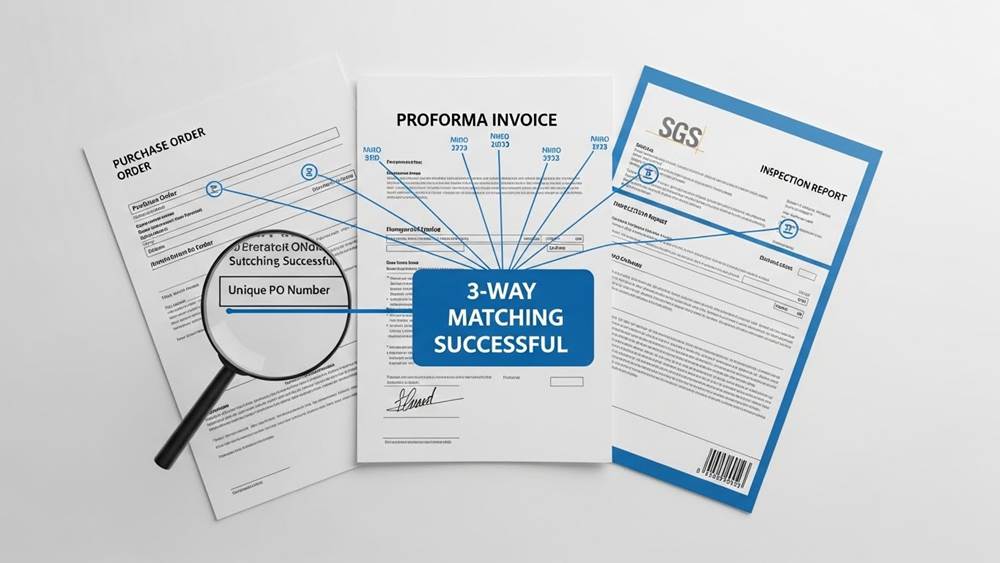
Payment clauses fail when the rest of the document lets them float. The working version binds three documents together. First, the specification as a contract exhibit, numbered and referenced by clause: GSM, ply, sheet count, roll and pack dimensions, packaging artwork, and the named test methods. Second, the inspection protocol: who performs it (a firm both sides can name), the sampling plan, the pass and fail criteria tied to those exhibit numbers, and the clause that says the balance becomes due when a conforming report issues, not when the container leaves. Third, the remedy ladder: what happens on a minor fail (rework at whose cost, with a re-inspection window) versus a major fail (buyer’s right to cancel the production at the mill’s account, with the deposit refund path written out). Without the ladder, a failed inspection just means nobody pays and the finished rolls sit in a warehouse burning both sides. The baseline risk layer these clauses sit on, deposits and contract security in the generic sense, is developed in the older payment security article; this guide is the upgrade path for buyers who need the balance trigger itself written into the deal.
The Letter of Credit Decision for Tissue Buyers
An LC is a bank promise: if your documents match, the bank pays; if they mismatch, the bank does not care how good your rolls were. That is the whole argument for and against it in one sentence. For an importer, an LC converts product risk into paperwork risk, and paperwork risk has real market data behind it: the practice rules that decide whether your bank gets to reject on a typo are the ICC Uniform Customs and Practice, UCP 600, published in full text by the ICC’s digital library at library.iccwbo.org (UCP 600). The honest version of the LC question goes like this. If the order is a container or two and a factory whose production you have already inspected once, an LC costs you fees, a document-mismatch hostage line, and weeks of amendment friction, and buys you protection you already have from the inspection trigger. If the order is multiple full campaigns with a brand-new mill, the balance is a heavy number, and your alternative is a wire against nothing but a promise, an LC is the price of the relationship starting safely; ask the mill to allow a photocopy-set discrepancy tolerance, name the inspection certificate as a required document, and keep the shipment window wide enough that a normal port delay does not breach the credit itself.
The hybrid importers actually negotiate is an LC where the release documents include the third-party inspection certificate and an FOB basis that matches the Incoterms you priced in the FOB versus CIF guide; the credit then pays on the same evidence your wire version pays on, and the bank has removed your trust problem without replacing it with your product problem. Whether that structure is even available in your lane is a factory acceptance question first and a bank question second; established converters accept it, new ones refuse it because they do not know what they are refusing, and that refusal is data too.
Deposit Protection When Trust Is Still Being Built
For orders where you cannot get an LC and will not pay a balance without inspection, three incremental protections cover most of the gap. Split the balance across milestones tied to documents you control copies of: 10 percent on packing-list approval, 20 percent on inspection release, the remainder at bill-of-lading copy. Cap the deposit with a production-start gate: the mill does not start your jumbo rolls until the approval sample is returned signed, which turns the deposit into the mill’s commitment device rather than yours. And hold the right to requote or cancel for a second campaign if the first release report comes back with any critical-level failure; one campaign is a trial, and contract it like one, which is the same wave logic the MOQ and logistics optimization guide applies to volumes.
The Money Conversation Sequence That Factories Respect
Order matters more than the percentage. Agree the spec and the approval sample first; the payment clause is only enforceable against a defined product. Agree the Incoterm and the inspection appointment second; both define what the release documents will read like. Open payment structure last, in writing, with the trigger, the ladder, and the documents named. A buyer who opens with “30 is too much” gets the scripted answer; a buyer who arrives with a numbered exhibit and a named inspection firm gets treated as an account that has shipped before, which is exactly the posture your best terms come from. The negotiation cadence itself, before the paperwork stage, is the territory of the mill negotiation tactics guide; payment structure is where that posture finally gets clause form.
FAQ
Is 30 percent deposit really normal for Chinese tissue factories?
Yes, and it reflects the mill’s own pulp cash flow; the deposit is the hard half of the number to move. The balance trigger, who releases it and against what evidence, is the negotiable half, and moving it buys you more protection than shaving three percentage points off the deposit does.
When is a letter of credit worth the fees on tissue orders?
When the order value is large enough to matter, the supplier is genuinely unproven, and your document set is predictable. On a first small trial with a named inspection firm already agreed, an inspection-conditioned wire on a real contract usually delivers more protection per fee dollar than an LC.
What documents should an LC include so it actually protects me?
Make the third-party inspection certificate and the signed spec exhibit part of the required document set, name the FOB port and Incoterms version precisely, and give the shipment window slack. An LC that pays on your quality evidence protects the buyer; an LC that pays only on shipping paperwork protects just the paperwork.
Can the factory hold my container if I dispute quality?
Yes, which is why the remedy ladder has to be written before payment, not argued after: rework window, re-inspection, cancellation at mill’s account on critical failures, and the deposit return route all need to be clauses, because after the goods are finished, whoever wrote the contract first controls the bargaining position.
Should I ever pay 100 percent before shipment?
No. A 100 percent pre-shipment demand removes your only remaining commercial protection and is outside what established converters ask; a buyer asked for it should treat it as a supplier-selection signal and not a payment question at all.