Skip to content


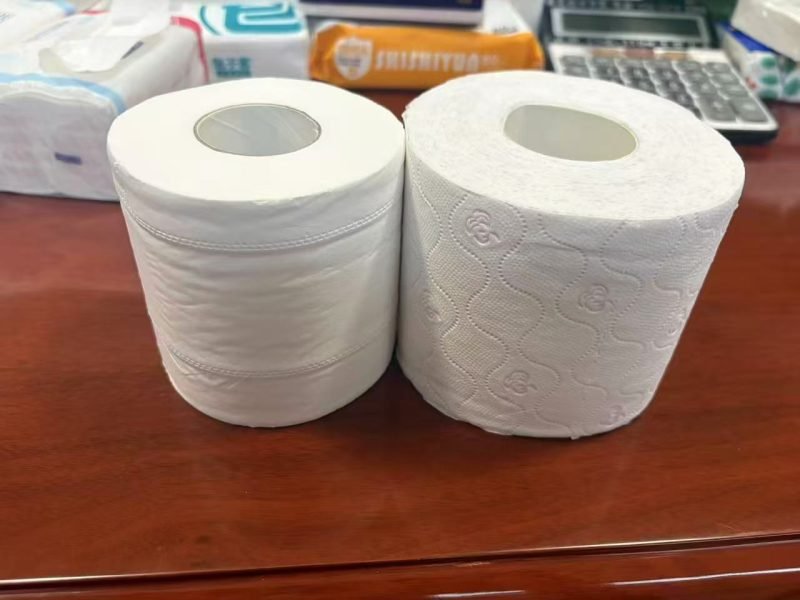
Ireland is the clearest case on this site of a market where the freight bill decides the supplier. On 2023 trade data carried by the World Bank’s WITS platform from UN Comtrade, Irish imports of toilet paper under HS 4818.10 were worth about US$132 million on roughly 48,450 tonnes — and the United Kingdom supplied about US$123 million of that, some 93% of the total, with Italy, Germany, France and Turkey each below 2%. Tissue is bulky, low-value cargo, so neighbouring capacity wins and nobody ships a container of rolls further than the economics allow. Any sourcing plan for Ireland that ignores this will look sensible on a price list and fail on a landed cost.
This guide keeps its original shape — ten entries, one verdict each, then manufacturing investment, logistics and retail. What has been rebuilt is the evidence, and there is a structural honesty to state up front: only two companies on this list convert tissue in Ireland. The rest are the brand owners, converters, distributors and one widely repeated mistake that together determine what actually appears on Irish shelves. A previous version of this page presented all ten as manufacturers and included our own company as though it were Irish. See About This List.
Key Takeaways
- Ireland is import-dependent by geography, not by failure. About 93% of Irish toilet-paper imports (HS 4818.10, 2023) came from the United Kingdom. Ask any Irish supplier where their parent reel comes from and the answer is usually the same island.
- Two real domestic producers matter. Aldar Tissues, part of the Zeus Group, opened a €15 million, 100,000 sq ft manufacturing and converting facility at Rathcoole, Dublin, moving from Finglas and reporting roughly a four-fold capacity increase. Dawn Paper & Tissue invested €5 million in two fully automated converting lines.
- “Irish-owned” needs a second look. Aldar is Irish-operated but Zeus Group-owned; that is a good thing to know before it appears in your proposal as a local-content argument.
- The brands Irish shoppers buy are mostly made elsewhere. KittenSoft and Regina are Sofidel; Cushelle and Velvet are Essity; Andrex is Kimberly-Clark. None of those three groups makes tissue in Ireland — they sell here from UK and European mills.
- One entry here exists to correct a mistake. Procter & Gamble does not manufacture toilet paper in Ireland. Its Newbridge plant in County Kildare was sold in 2022 and did not make tissue; Charmin is made in the United States.
- Post-Brexit paperwork is the cost nobody quotes. Goods crossing into Northern Ireland carry customs declarations, product-compliance notification and sanitary controls that did not exist before 2021. If your Irish program has a Northern Ireland leg, price the paperwork, not just the sailing.
Top 10 Manufacturers and Private Label Powerhouses in Ireland
Quick Comparison: Top Picks
| Company | Where they operate | What they actually sell | Verdict |
|---|---|---|---|
| Aldar Tissues (Zeus Group) | Rathcoole, Dublin | Consumer and AFH converting; Jasmine plus retail own-label | Ireland’s volume domestic producer, with new capacity and a group behind it. |
| Dawn Paper & Tissue Manufacturing Ltd | Drogheda, Co. Louth (registered at Slane, Co. Meath) | Family-run converting; White Leaf, KTULTRA, contract work | The other genuine Irish converter, and the one that will take smaller contract business. |
| Sofidel Ireland Ltd | Dublin 2 office; production in Italy and the UK | KittenSoft and Regina branded tissue | The brand presence you cannot avoid on an Irish shelf — but there is no Irish paper machine. |
| Essity (Irish operation) | Dublin support; UK mills at Prudhoe and Oakenholt | Cushelle, Velvet, Tork professional paper | Serves Ireland from Britain, and its consumer tissue business is reported to be for sale. |
| Kimberly-Clark (Irish operation) | Dublin; no Irish plant | Andrex, Kleenex, Scott | Distribution and marketing operation, listed so the distinction is on the record. |
| Adapt Paper | Baltinglass, Co. Wicklow / Naas, Co. Kildare | AFH washroom paper; ExtractOne, Smartone | Converter and supplier for the facilities channel rather than the supermarket. |
| Universal Packaging | Rathcoole, Dublin 24 | Packaging and janitorial wholesale, tissue carried as part of a range | A wholesale route into AFH supply. Not a manufacturer, and useful precisely because of that. |
| Wilton Technology (Ambercroft Ltd) | Ovens, near Cork | Hygiene and cleaning distribution since 1988 | Where institutional tissue actually gets sold in the south: through a hygiene distributor. |
| Procter & Gamble (Irish operation) | Dublin office; Newbridge plant sold in 2022 | Consumer brands; no Irish tissue manufacture | Kept as a correction. If a list of Irish manufacturers includes P&G, check the list. |
| Kelford Group | Dublin and UK | Dry goods, tableware and consumables supply into hospitality | Included because hospitality buyers meet tissue through consumables suppliers, not mills. |
Aldar Tissues (Zeus Group)
Aldar converts tissue for the Irish retail and away-from-home trade, producing its own Jasmine consumer brand alongside own-label and private-label toilet paper and kitchen towel for major multiples. Until recently it ran from Finglas in Dublin; it has now moved operations to a purpose-built facility at Rathcoole on the western approaches to the city, a 100,000 square foot plant backed by a reported €15 million investment from its parent, the Zeus Group. Reported line speeds of around 600 metres per minute with automated packaging, a move from a five-day to a seven-day production week, and roughly thirty additional roles have been described publicly, along with an effect on capacity measured in multiples rather than percentages.
Two things to read carefully before using Aldar as a local-content argument in a tender response. The first is ownership: Aldar is Irish-operated but Zeus Group-owned, and the claim of wholly Irish ownership that this page previously carried is not accurate — the packaging business it sits alongside is the group’s. The second is base paper: converting in Ireland does not mean Irish paper, and given that Ireland imported roughly 93% of its toilet paper from Britain in 2023, a domestic converter’s reel supply is a cross-channel question. Ask which mill supplies the reels, whether that changes by grade, and get it on the specification sheet. The investment and the new facility have been covered by Checkout and Irish Examiner.
📊 At a Glance:
- 📍 Location: Rathcoole, Dublin (previously Finglas)
- 🏭 Core Strength: Consumer and away-from-home tissue converting; Jasmine plus retail own-label
- 🌍 Key Markets: Irish multiples retail and the professional/cleaning trade
Why We Picked Them:
| ✅ The Wins | ⚠️ Trade-offs |
|---|---|
|
|
Dawn Paper & Tissue Manufacturing Ltd
Dawn has operated in the Irish midlands for decades and describes itself as a manufacturer of domestic tissue and industrial cleaning paper, producing consumer lines including White Leaf and KTULTRA while also running contract manufacturing and private-label work for third parties. Its published certifications include ISO 9001 quality management and FSC chain of custody for its sourcing programme. A €5 million investment covering two fully automated converting lines is documented, and it is the specific, checkable sort of capacity claim a buyer can ask to see rather than take on trust.
The address detail matters more here than it looks, because this page previously got it wrong and Irish directories get it wrong too. Dawn’s registered office is at The Old Brickworks, Grangegeeth, Slane, County Meath, close to the M1 corridor, while the converting plant described in its own material is at Drogheda, County Louth — a few kilometres away, different county, different rate environment, same road axis into Dublin and Belfast. If a supplier’s paperwork and a tender submission disagree about which site produces your goods, that is not a typo, it is a traceability gap. Company detail at dawnpaper.ie.
📊 At a Glance:
- 📍 Location: Plant at Drogheda, Co. Louth; registered at Grangegeeth, Slane, Co. Meath
- 🏭 Core Strength: Domestic tissue and industrial cleaning paper; own brands plus contract manufacture
- 🌍 Key Markets: Irish retail, industrial and away-from-home accounts
Why We Picked Them:
| ✅ The Wins | ⚠️ Trade-offs |
|---|---|
|
|
Sofidel Ireland Ltd
Sofidel Ireland is the Irish subsidiary of the Italian family-owned group and handles KittenSoft and Regina, which together occupy the mainstream branded position in Irish supermarkets and are the reference point a shopper uses when judging unbranded product. The Irish operation is commercial — a Dublin office at the centre of the city — while production serving the market sits in the group’s Italian and British plants.
The buyer-relevant implication is about supply, not quality. Branded product like this arrives on finished-goods schedules from existing European capacity, which means an Irish retailer can be a customer of a marketing organisation but not of a factory. If you are a distributor, your real comparison is not price per roll against a converter but the promotional calendar a brand owner runs, because that determines when your margin exists and when it is being promoted away. Group information: sofidel.com.
📊 At a Glance:
- 📍 Location: Dublin (commercial); production in Italy and the United Kingdom
- 🏭 Core Strength: Branded toilet tissue and facial tissue: KittenSoft, Regina
- 🌍 Key Markets: Irish retail grocery
Why We Picked Them:
| ✅ The Wins | ⚠️ Trade-offs |
|---|---|
|
|
Essity (Irish operation)
Essity holds the Irish professional and consumer hygiene position with Cushelle and Velvet on the shelf and Tork in the washroom, and services the market through a Dublin operation. Manufacturing for these Irish-facing brands is not in Ireland: the group’s British tissue mills are at Prudhoe in Northumberland and Oakenholt in Flintshire, and those are the sites whose planning determines Irish availability. That is a straightforward consequence of geography and freight economics rather than a gap in the operation.
The part that a buyer needs to know now: from late October 2026 it has been reported that Essity is marketing its consumer tissue business — the Zewa, Tempo, Cushelle, Lotus and related brands and the European mills behind them — with several large groups named as interested parties and no transaction closed. Essity has responded publicly to the reports. For an Irish account this reads as a reason to check entity names, price-list validity and the treatment of existing terms if ownership changes, which is exactly what the previous version of this page omitted while describing Essity as a stable anchor of the market. Group detail: essity.com.
📊 At a Glance:
- 📍 Location: Dublin commercial office; UK mills at Prudhoe and Oakenholt
- 🏭 Core Strength: Branded consumer tissue and Tork professional paper
- 🌍 Key Markets: Irish and British retail, healthcare, facilities and hospitality
Why We Picked Them:
| ✅ The Wins | ⚠️ Trade-offs |
|---|---|
|
|
Kimberly-Clark (Irish operation)
Kimberly-Clark sells Andrex, Kleenex and Scott into Ireland through a Dublin-based organisation, again with British rather than Irish manufacturing behind the tissue. The brand-side detail, including where Andrex sits after the 2026 Suzano joint venture, is worked through on our page covering toilet paper manufacturers in the UK. The distinction is worth stating explicitly because a previous version of this page sat all of these multinational presences in a list titled “manufacturers in Ireland” without saying which of them manufacture anywhere in the country.
For institutional and hospitality buyers, the practical route into brands like these is the distributor layer further down this list rather than a direct factory relationship, and the price you pay reflects that. Where a brand-owner presence genuinely helps you is in specification benchmarking: Andrex’s position in the UK and Irish market is a good proxy for what a “soft but strong” retail expectation actually means in this market, which is useful when you are trying to get an own-label product accepted at a comparable feel.
📊 At a Glance:
- 📍 Location: Dublin; manufacturing for the market in Britain
- 🏭 Core Strength: Andrex, Kleenex, Scott; professional wipes
- 🌍 Key Markets: Irish and British retail and away-from-home
Why We Picked Them:
| ✅ The Wins | ⚠️ Trade-offs |
|---|---|
|
|
Adapt Paper
Adapt Paper supplies commercial washroom tissue — centre-pull and jumbo formats, hand towels and related consumables — under its ExtractOne and Smartone ranges, and its products move through hygiene distribution including the Selco network. Its location is given as Baltinglass in County Wicklow with commercial operations associated with Naas, County Kildare; an earlier version of this page said Dublin, which is a different market and a different drive time.
This is the part of the Irish market where a foreign supplier actually competes, because washroom paper is bought on cost-per-use, dispenser compatibility and delivery reliability rather than on brand, and the channel is consolidating. The specification conversation is short and concrete: reel width, paper ply, grammage, metres per roll, core diameter, and whether it fits the dispenser already installed. Anyone quoting you AFH tissue without those six items has quoted a product, not a solution. Details at adaptpaper.com.
📊 At a Glance:
- 📍 Location: Baltinglass, Co. Wicklow, with Naas, Co. Kildare operations
- 🏭 Core Strength: Jumbo and centre-pull toilet tissue, hand towels, dispenser formats
- 🌍 Key Markets: Irish facilities management, healthcare, hospitality and cleaning contractors
Why We Picked Them:
| ✅ The Wins | ⚠️ Trade-offs |
|---|---|
|
|
Universal Packaging
Universal Packaging operates from the Greenogue business park at Rathcoole, Dublin 24, and its business is packaging and cleaning-supply wholesale — of which tissue is one part of a wider consumables range. It is not a manufacturer and previous text describing it as a private-label tissue operation was wrong. We have left it in the list because an accurate picture of Irish tissue supply has to include the wholesaler layer: many restaurants, offices and small chains do not buy tissue as a category decision at all, they buy it as one line on a consumables order.
The consequence for a supplier hoping to sell into Ireland is useful and uncomfortable. Winning a distributor like this is rarely about a better roll; it is about whether tissue can be added to an order they already place, at a delivery cadence they already run, with a case size their driver can drop. That is a packing and pallet-configuration question before it is a paper question, and it is where most overseas bids quietly fail.
📊 At a Glance:
- 📍 Location: Rathcoole, Dublin 24
- 🏭 Core Strength: Packaging and janitorial wholesale, tissue as part of a consumables range
- 🌍 Key Markets: Irish food service, offices, facilities and small trade accounts
Why We Picked Them:
| ✅ The Wins | ⚠️ Trade-offs |
|---|---|
|
|
Wilton Technology (Ambercroft Ltd)
Wilton Technology, operating as Ambercroft Ltd and established in 1988, is a hygiene and cleaning-supplies business based at Ovens, just outside Cork city rather than in it. Its offer covers washroom and cleaning programmes, equipment and consumables — including tissue — sold into healthcare, food production, hospitality and facilities accounts across the south of the country.
The reason it belongs on a page about Irish tissue supply is regional structure. Ireland has two genuine converting operations and a large distributor layer, and outside Dublin the distributor is where product decisions are made. If you are trying to place tissue into southern institutional demand, the specification conversation happens with people whose job is hygiene outcomes — dispenser, dosing, audited cleaning regimes — and tissue is judged on whether it breaks down in a pump and whether housekeeping can reorder it in one line.
📊 At a Glance:
- 📍 Location: Ovens, near Cork
- 🏭 Core Strength: Hygiene and cleaning distribution including washroom consumables
- 🌍 Key Markets: Munster and national institutional accounts
Why We Picked Them:
| ✅ The Wins | ⚠️ Trade-offs |
|---|---|
|
|
Procter & Gamble (Irish operation)
Procter & Gamble has a substantial Irish corporate presence, but it is not an Irish tissue manufacturer. The company’s long-standing Irish plant at Newbridge, County Kildare made appliances rather than paper and was sold in 2022; Charmin, its North American toilet-paper brand, is produced in the United States. A previous version of this page listed P&G among the top manufacturers in Ireland, which is the kind of error that survives on the internet because one page copies another.
We have kept the entry rather than deleting it, because a buyer who has seen P&G described as an Irish producer elsewhere deserves to find the correction in the same search result. If you are checking a supplier list for credibility, this is a good test item: a list that gets P&G wrong on Ireland is very likely to get the smaller names wrong too, and on this page the smaller names were the ones we actually had to replace.
📊 At a Glance:
- 📍 Location: Dublin corporate presence; no Irish tissue manufacture
- 🏭 Core Strength: Consumer brands; Newbridge plant sold in 2022, appliance manufacturing
- 🌍 Key Markets: Irish retail through distribution
Why We Picked Them:
| ✅ The Wins | ⚠️ Trade-offs |
|---|---|
|
|
Kelford Group
Kelford supplies tableware, dry goods and hospitality consumables across Ireland and Britain, and tissue sits inside that range. Like the two distributor entries above, it is included deliberately: for hotels, restaurant groups and leisure operators, the buying decision is made inside a consumables tender, and a paper mill that cannot offer a combined range will not reach that demand at all.
If you are evaluating this market as a prospective exporter, the useful summary of this list is now unavoidable. Ireland supports two converters with real capacity, a strong import relationship with Britain driven by freight physics, and a distribution layer that decides most non-grocery volume. A Chinese tissue exporter entering Ireland is not replacing Aldar or Dawn; it is trying to win a line on a distributor’s order against a British pallet that costs a fraction as much to move. That is the honest framing, and it is the one a previous version of this page avoided entirely.
📊 At a Glance:
- 📍 Location: Dublin and UK operations
- 🏭 Core Strength: Hospitality dry goods, tableware and consumables including tissue
- 🌍 Key Markets: Irish and British hotels, restaurant groups, leisure and facilities
Why We Picked Them:
| ✅ The Wins | ⚠️ Trade-offs |
|---|---|
|
|
Ireland Buys From Britain, and Builds Capacity at Home
Ireland is not shifting away from imports in any near-term sense; geography and freight physics keep the country supplied from Britain. What is real is the domestic capacity step-change. With its Rathcoole plant commissioned, Aldar has been reported to have roughly quadrupled output to a level that could, on the company’s own framing, serve up to 40% of Irish demand for bathroom tissue and kitchen towel. That genuinely changes what a buyer can source locally. It does not make Irish product beat British product in every grade, because the reels are still largely bought in.
Reducing Dependency on International Supply Chains
The trade figures on this page were wrong before, and the corrected ones make the argument sharper. For 2023, WITS data drawn from UN Comtrade records Irish imports of HS 4818.10 toilet paper at roughly US$132 million on about 48,450 tonnes, of which the United Kingdom accounted for some US$123 million — near 93% of the value — with Italy, Germany, France and Turkey each below 2%. All three of the trade figures previously stated on this page were materially wrong, and the corrected ones are what the page now uses. For a buyer the lesson is not that Ireland is protected. It is that this market is priced against a British pallet that arrives cheaply and quickly.
A correction on ownership language, because it shows up in tender responses. Aldar is Irish-based and Irish-operated, and it is part of the Zeus Group, a packaging and consumer-goods business. The claim that it is entirely Irish-owned, which was on this page, is not accurate. The local-content argument is still real — Irish sites, Irish employment, local investment, origin of manufacture — but it has to be made precisely, because a procurement officer who checks will find the group structure and it costs you credibility.
Investments in High-Capacity Production Facilities
The two documented investments are worth stating exactly, because they are the verifiable part of any Irish capacity claim. Dawn Paper completed a €5 million programme covering two fully automated converting lines. Zeus Group invested €15 million in the Aldar facility at Rathcoole — around 100,000 square feet, replacing the Finglas site — with reported line speeds near 600 metres per minute, automated packaging and wrapping, a move toward continuous seven-day operation, and roughly thirty additional roles. Both figures are publicly reported. Neither is a marketing adjective.
- Drogheda, Co. Louth: the Dawn converting plant described in its own material, with the registered office at Grangegeeth, Slane, Co. Meath a short distance away. Both addresses are legitimate; this page previously used only the wrong one.
- Dublin 24 (Greenogue): Universal Packaging’s wholesale base for packaging and janitorial supply, with tissue as one line among many.
- Rathcoole: Aldar’s new plant, and a cluster of distribution operations on Dublin’s western corridor.
What the money buys a buyer is repeatability rather than softness. Automated lines hold grammage, sheet count and roll diameter within tighter tolerance across a long run, reduce the handling that damages product, and make a format changeover cheap enough that a converter will say yes to something unusual. That is the honest description of the capacity change on this island, and it matters more in an own-label tender than a general claim about quality.
Contract Manufacturing: What Irish Converters Can and Cannot Take On
The realistic framing: Irish converters win on responsiveness and on the absence of a sailing for domestic accounts, not on unit cost against British capacity running larger machines closer to British volume. If the business case is “Irish production is cheaper than British”, it is probably wrong. If it is “Irish production replenishes faster, with more certainty”, it holds.
Private Label Solutions for Major Supermarket Chains
Both Aldar and Dawn run private-label and contract work alongside their own brands — Aldar with Jasmine, Dawn with White Leaf and KTULTRA. That combination helps a retailer: a converter that has to keep its own product competitive on the same shelf is held to a standard a pure toll operation is not.
What an Irish converter can genuinely vary on request, and what it cannot:
- Ply: 2 to 5 is the practical commercial range; beyond that is a niche and a price conversation.
- Fibre: both are available, but availability depends on the reels the converter can buy, so ask per grade rather than per company.
- Optical brighteners: excluded when you specify a recycled-fibre eco-label grade. That is a scheme criterion, not an Irish statutory one.
- Format and artwork: embossing, perforation, roll diameter, core size, pack count and print make up the standard customisation set.
Supply Chain Integration and Cross-Border Logistics
The cross-border point is narrow and real: an Irish converter supplying a Dublin retailer skips the sailing entirely, and for bulky low-value cargo that is the whole advantage. The advantage shrinks for a national UK program, where you are then comparing Irish conversion cost against British mills with British freight, and Irish product wins on lead-time certainty rather than price.
Four questions that separate converters that actually run a process from converters that own a machine:
- Reel source: which mill, which grade, and does it change when pulp prices move? Ask per SKU.
- Specification testing: which method, which laboratory, and what is the retained-sample policy when a batch is disputed?
- Converting: line speed is the interesting-sounding number; changeover time is the one that decides your minimum order.
- Fulfilment: pallet configuration, case cube and delivery cadence must match the customer’s DC, not your production convenience.
Compliance with 2026 Environmental and Quality Standards
Retailers use contract manufacturing to transfer risk as much as to cut cost, and Irish converters sit inside the same audit regime as everyone else: retailer technical audits, food-contact audits where napkins run on site, and fibre certification wherever the claim is printed on the pack. What a small national market changes is depth. There are few alternative producers, so one converter’s downtime becomes your stockout — which is an argument for dual sourcing rather than for domestic sourcing.
The certifications that actually bear on an Irish tissue purchase:
- ISO 9001 quality management — published by Dawn. It evidences process control; it does not specify your product.
- FSC chain of custody — published by Dawn, available for Aldar programs. It lets a certified claim travel onto your packaging, but only where the licence scope covers the product.
- “Guaranteed Irish” is a membership and origin mark supporting Irish manufacture and employment. It is not a product quality standard and should never be cited in place of one.
Build Your Premium Toilet Paper Brand with Expert OEM Manufacturing
Investment in Technology: The €5 Million Modernization of Irish Paper Lines
This section previously read as a campaign to replace imports. It is better described as a capacity decision: Irish converters were constrained, demand grows, and Zeus chose to build rather than keep running out of room at Finglas.
Dawn Paper’s Strategic Shift to Fully Automated Converting
Dawn’s €5 million covered two fully automated converting lines. The consequence a buyer should care about is consistency and changeover: automated lines hold specification over a long run and make a format switch cheap enough that a converter will accept something non-standard. The investment figure is documented; the conclusion about what it enables is ours.
Production Capacity and Infrastructure in Drogheda
Dawn’s site of around 70,000 square feet at Drogheda, on the Dublin-Belfast axis, is the practical reason it can serve both markets from one plant. Success in this category is a logistics property as much as a paper one: the converter that can replenish a Dublin distribution centre on a Tuesday without a sailing is the one a retailer keeps.
Industry-Wide Adoption of Modern Facilities
Aldar’s expansion is the Rathcoole manufacturing and converting facility described above: 100,000 square feet, €15 million, high-speed automated lines, replacing Finglas. We have dropped the separate innovation-centre framing, which we could not verify as a distinct facility.
- GSM Control: Increased precision in paper weight and thickness across entire production runs.
- Ply Bonding: Advanced lamination techniques to prevent sheet separation in multi-ply products.
- Manual Handling: Reduced human intervention to lower contamination risks and increase safety.
- High-Speed Converting: High-output machinery designed to lower the unit cost per roll.
The strategic read for a foreign supplier: Irish capacity is now real but small, and small capacity with domestic proximity is exactly the profile that wins replenishment business and loses bulk tenders. Position against it on flexibility, not on price per tonne.
Logistics: Efficient Distribution to the Irish and UK Markets
Irish tissue logistics is one crossing and one corridor. Most volume moves from Britain, the rest is converted domestically, and anything from further away competes against both. Plan on that rather than on a spreadsheet that assumes freight is a rounding error.
Integrated Networks for Cross-Border Supply
Essity supplies Cushelle, Velvet and Tork into Ireland from its British operations, supported by a Dublin commercial function. The group’s tissue manufacturing sites relevant to this market are Prudhoe in Northumberland and Oakenholt in Flintshire.
- Manufacturing sites: Prudhoe and Oakenholt. This page previously listed an English city office as a manufacturing site; it is not one.
- Local support: a Dublin commercial organisation services Irish retail and professional accounts.
- Domestic logistics: Aldar converts at Rathcoole, which removes the sailing from domestic replenishment entirely.
Global Shipping Lead Times and Import Logistics
Two numbers belong in a planning model and one does not. Production lead time and port-to-port transit are separately quotable and should be quoted separately, because the second is a carrier’s undertaking and the first is a manufacturer’s. What does not belong is a supplier-asserted day range covering both at once.
- Production lead time: ours is about 25 days from deposit and approved artwork, with a minimum order of one 40-foot container per SKU, FOB Tianjin.
- Ocean transit: read it off the carrier booking confirmation for the sailing actually nominated. No supplier should promise a door date on a vessel it does not control.
Retail and Wholesale Distribution Models
Irish retail delivery cycles are short and frequent, and the accounts that set them — the grocers and the club-format warehouses — judge suppliers on fill rate and case integrity rather than on tissue quality. A supplier that cannot evidence on-time performance over a quarter will not reach the category conversation at all.
- Delivery model: direct-to-DC cuts handling but moves the appointment and compliance burden onto the supplier.
- Pack formats: single-roll multipacks to large institutional cases are different lines with different cost models, not variants.
- Origin marks: “Guaranteed Irish” supports an origin argument in domestic listings; it is not a product specification.
Pro Tip: Why Contract Manufacturing is the Secret to Success in Ireland’s Retail Market
We have removed the market valuation that used to sit in this sentence. It had no source we could trace, and quoting a market size you cannot show the working for teaches a buyer to accept one. The structural point survives without it: contract manufacturing lets an Irish retailer own a brand without owning a converting line.
Strategic Advantages for Irish Retailers and Wholesalers
And the local-content case should be stated properly. Aldar and Dawn are Irish sites employing people locally, which is what the origin marks and domestic procurement preferences respond to. That is a genuine advantage and also a narrow one, because the base paper is largely imported, overwhelmingly from Britain. If your pitch is that the product is Irish from tree to shelf, expect the buyer to know otherwise.
Customization and Supply Chain Reliability
The reason to keep a local converter alongside an import is not price. It is that a converter two hours from the DC can absorb a demand spike that an overseas supplier can only absorb by you carrying more stock — and inventory carrying cost is the line that import business cases routinely omit.
- Aldar — national-scale private-label converting from Rathcoole, own brand Jasmine.
- Adapt Paper — washroom and away-from-home formats for the facilities channel. Specify the dispenser, not the sheet count.
- Dawn — ISO 9001 and FSC chain of custody published, contract work available, own brands White Leaf and KTULTRA.
- Universal Packaging — packaging and janitorial wholesale, the channel where tissue arrives on a combined consumables order.
Scaling Operations for the 2026 Market Landscape
What to do with this list. Treat the two converters as your local replenishment option, the brand owners as the shelf benchmark you must beat, and the distributors as the actual route into non-grocery demand. Then test whichever you pick on four things: producing site named on the contract, reel source recorded per grade, certificates with scope and validity dates, and whether the business survives a quarter in which recovered paper and freight both move against it.
- Import option — an overseas producer brings container-scale pricing and specification breadth, and brings the freight and lead-time questions with it. Compare landed cost per sheet, not unit price.
- Capacity — Aldar’s reported quadrupling could serve up to 40% of Irish bathroom-tissue and kitchen-towel demand, which is a real change and still short of ending import dependence.
- Flexibility — automated lines make format changes cheap, which is the practical reason a converter can accept a non-standard specification at all.
Frequently Asked Questions
Who is the leading supplier of domestic tissue in Ireland?
Aldar Tissues, part of the Zeus Group, is the primary domestic producer, converting at Rathcoole with a €15 million facility behind it. Dawn Paper & Tissue at Drogheda is the second. Everything else on the shelf is either brand-owner product made in Britain or continental Europe and imported, or washroom paper moved through distributors.
Does Ireland import most of its toilet tissue?
Yes, and the concentration is extreme. The 2023 WITS record for HS 4818.10 puts Irish imports near US$132 million with the United Kingdom at about 93% of value. The figure previously stated here understated that. Tissue is bulky and low-value, so whoever has the shortest sailing wins the category — that is the whole explanation, and it is why no Irish capacity announcement changes the arithmetic quickly.
Can I arrange contract manufacturing with Irish paper mills?
Available from both domestic converters: Dawn Paper & Tissue (registered at Slane, Co. Meath, converting at Drogheda, Co. Louth) and Aldar Tissues at Rathcoole. Both run private label and contract work and both publish quality and chain-of-custody certification. Neither makes its own base paper, which is the constraint that limits how far a specification can move.
What products does Wilton Technology supply in the Irish market?
Wilton Technology, trading as Ambercroft Ltd from Ovens near Cork since 1988, distributes hygiene and cleaning programmes — washroom consumables including tissue, cleaning chemicals and equipment — into healthcare, food production and facilities accounts across the south. It is a distributor, which is both the accurate description and the reason it can matter more to your volume than any mill on this list.
Where is the Dawn Paper & Tissue manufacturing facility located?
Dawn’s registered office is at The Old Brickworks, Grangegeeth, Slane, County Meath, near the M1 corridor, while its converting facility is described in its own material at Drogheda, County Louth, some 25 kilometres further north on the same Dublin-Belfast axis. Both appear in directories, which is why lists get this wrong. Where it matters to your paperwork, use the address on the producing site’s certificate.
About This List, and What We Corrected
This page was rewritten in place on 7 November 2026, and the reason it needed it is instructive. The version it replaced presented ten companies as Irish manufacturers when, on the evidence available, only two convert tissue in Ireland. One entry was our own company, a Chinese producer based in Hebei, listed as though it were Irish and credited with a monthly output we cannot substantiate; that entry has been removed from the list entirely. Procter & Gamble appeared as a manufacturer; P&G makes no toilet paper in Ireland, and its Newbridge plant, which made appliances, was sold in 2022. Essity was credited with a manufacturing site in Manchester, which is an office. Wilton Technology and Universal Packaging are a distributor and a wholesaler rather than producers — they remain on the list, because in a small national market the distribution layer genuinely is how tissue is bought, but they are now labelled as what they do.
The figures were corrected as well. Irish imports were stated as $366 million with a 68% UK share and exports as $21.4 million; the WITS and UN Comtrade record for HS 4818.10 in 2023 is roughly US$132 million of imports with the United Kingdom near 93% of value, and that is what the page now uses. A market valuation quoted twice in the original has been removed because we could not trace it. Aldar was described as wholly Irish-owned; it belongs to the Zeus Group. Dawn was placed in Navan; its registered office is at Grangegeeth, Slane, County Meath and its converting plant at Drogheda, County Louth. Certification language was tightened where it had drifted: “Guaranteed Irish” is an origin and membership mark rather than a product standard, and no Irish law requires tissue to be free of optical brighteners — that is an eco-label criterion. Lead times were reconciled to one set of facts: about 25 days production from deposit and approved artwork, one 40-foot container minimum per SKU, FOB Tianjin, with ocean transit confirmed per sailing by the carrier rather than promised by a supplier.
What replaced it is the part a buyer needs: the freight explanation for why Ireland is about 93% supplied from Britain, the Aldar €15 million Rathcoole investment and its reported capacity effect, the Dawn €5 million automation programme, the fact that the brands Irish shoppers recognise come from groups with no Irish paper machine, and a note on the reported process of sale for Essity’s consumer tissue business, which affects the entity an Irish buyer may be contracting with. Where we could not verify something, this page now says so rather than rounding upward. If you find an error, tell us and we will correct it and date the change.
Final Thoughts
Ireland is a small market with one dominant fact: about 93% of toilet-paper imports arrive from Britain, and the capacity now being built at Rathcoole and Drogheda changes the supply options without changing that arithmetic.
Decide which business you are actually in. If it is Irish retail replenishment, the two domestic converters belong in your bid set on lead-time grounds. If it is volume, you are competing against British freight economics and should price for that honestly, on the same basis your customer uses — see the Thailand and jumbo versus standard comparisons on this site.