


A procurement manager planning 2026-27 supply into Saudi Arabia should price against two facts rather than against a consumption headline: the Kingdom imports about 124,000 tonnes of HS 4818 a year, and the Kingdom is simultaneously commissioning new tissue lines – see our standard versus jumbo roll comparison for what that does to dispenser economics. Both point the same way – local landed prices come under pressure as new capacity starts, and the converters who buy local reels become cheaper to serve than the importers who do not. That is a two-to-four-year picture, not this year’s.
This sentence spoke in the first person about somebody else’s compliance work, which is the third instance of that defect we have had to strip out of these country pages: a listicle that says “we” about a third-party factory makes our own company sound like it owns plants it does not own. It is rewritten in the third person, and the claim about the Kingdom’s share of the Gulf market went with it because it had no source.
Top 10 Manufacturers and Regional Giants in Saudi Arabia
Quick Comparison: Top Picks
| Manufacturer | Location | Core Strength | Verdict |
|---|---|---|---|
| Top Source Hygiene | Mancheng, Baoding, Hebei, China (FOB Tianjin) | Toilet paper (2-5 ply), jumbo roll tissue, kitchen towels, facial tissue | Chinese OEM alternative. One 40ft container per SKU, about 25 days, no certificates held. |
| Saudi Paper Group / SPMC (Dammam) | Dammam, Eastern Province | Tissue reels and converted consumer brands (Meshwar, City, Excellence) | Toscotec AHEAD 2.2 since 2023; PM5 commissioned December 2025 adding 60,000+ t/yr. |
| Juthor Paper (MEPCO, KAEC) | King Abdullah Economic City, near Jeddah | Tissue on an Andritz double-width line; MEPCO group, PIF holds 23.08% | Largest planned Saudi capacity; reported as under construction, not commissioned. |
| Crown Paper Mill (Dammam) | Dammam; UAE-owned parent | Tissue on a Valmet Advantage DCT 200, about 60,000 t/yr | Newest verified running Saudi capacity, commissioned 9 September 2026. |
| WARAQ (packaging paper) | Second Industrial City, Dammam | CCM, test liner, fluting, coreboard | Real company, wrong product: no tissue in the range. |
| Obeikan (printing/packaging) | Riyadh | Printing, packaging and paper products | Real group, no tissue machine evidenced. |
| Import map (HS 4818) | Jordan, Egypt, China lead imports | USD 274.55M / 123,612 tonnes of HS 4818 in 2024 | The import map, not a manufacturer – see the entry. |
| Fine / Nuqul (Jordan-UAE) | Amman and Dubai; mills in Jordan, Egypt, UAE; converting in KSA | Fine and Fine Guard consumer tissue; SteriPro-processed facial tissue | Jordan is the largest single origin of Saudi tissue imports. |
| Removed – no record | n/a | n/a | Deleted: no company record located. |
| Saudi conformity route | n/a – regulatory route | SABER Certificate of Conformity; about 5% GCC tariff | Replaces an invented entry with the actual import rules. |
Top Source Hygiene
Top Source Hygiene converts and exports from two plants in Mancheng, Baoding, Hebei, China, both ours rather than run through a trading intermediary. Three decades in this trade is real and it is the only experience claim we make. Minimum order is one 40-foot high-cube container per SKU, production runs about 25 days from receipt of deposit and approved artwork, payment is 30 per cent deposit with the balance before shipment, and the term is FOB Tianjin. The order unit matters in this market specifically: a container of tissue is roughly 8-9 tonnes, so freight, not the reel, decides landed cost once goods reach Jeddah or Dammam.
We hold no certificates of any kind: no FSC, no ISO 9001, no BRC, no FDA registration, and the previous version of this page said otherwise. That is not a modest omission in the Gulf, where a hospitality or retail tender can ask for a certificate scope by number. Where the specification requires certified fibre, the right counterparty is an integrated mill that holds the licence – Saudi Paper Group and Crown Paper Mill are the names on this page whose production we could trace to a machine builder. What we can quote is on the product page.
At a Glance:
- 📍 Location: Mancheng, Baoding, Hebei, China (FOB Tianjin)
- 🏦 🏭 Core Strength: Toilet paper (2-5 ply), jumbo roll tissue, kitchen towels, facial tissue
- 🌍 Key Markets: Saudi Arabia and GCC, via Jebel Ali and Dammam
Why We Picked Them:
| ✅ The Wins | ⚠️ Trade-offs |
|---|---|
|
|
Saudi Paper Group / Saudi Paper Manufacturing Co. (Dammam)
Saudi Paper Group and “Saudi Paper Manufacturing Company (SPMC)” are not two manufacturers. The group is the parent and SPMC (Tadawul 2300, established 1989) is its manufacturing subsidiary, alongside Saudi Paper Converting Company and a recycling arm; the previous version of this list counted them twice, which is how a Top 10 in this category quietly becomes a Top 9. Production is at Dammam, and the tissue capacity is documented by the machine builder rather than by marketing: a Toscotec AHEAD 2.2 line starting up in April 2023 at about 30,000 tonnes a year the 2023 commissioning report, then PM5 – an AHEAD 2.2S with a Yankee dryer installed in April 2025 – commissioned in December 2025 and adding more than 60,000 tonnes a year.
Consumer tissue brands attributed to the group in Saudi trade references are Meshwar, City and Excellence, with SBC Pro on the professional side; that attribution comes from a secondary reference, so ask the group to confirm the brand-to-entity mapping before you build a listing around it. The mill also sells jumbo reels to other converters, which is the more interesting fact for a buyer: it is the local source of the reels that a great many “Saudi made” rolls are actually converted from. Group reporting in 2026 showed sales up about 14.7 per cent year on year in the half-year result, which is the only growth figure on this page tied to a filing rather than to a market report.
At a Glance:
- 📍 Location: Dammam, Eastern Province
- 🏦 🏭 Core Strength: Tissue on two Toscotec AHEAD lines; jumbo reels and consumer brands Meshwar, City, Excellence
- 🌍 Key Markets: Saudi Arabia, Gulf trade
Why We Picked Them:
| ✅ The Wins | ⚠️ Trade-offs |
|---|---|
|
|
Juthor Paper Manufacturing (MEPCO, King Abdullah Economic City)
Juthor Paper Manufacturing is the tissue vehicle of Middle East Paper Company (MEPCO), best known for containerboard, and it is building at King Abdullah Economic City near Jeddah. The machine was ordered from Andritz in December 2024 the Andritz order report – a double-width tissue line with a design speed of 2,200 m/min and up to 5.47 m at the reel – and a USD 92 million tissue line was reported in June 2025 the construction report, taking planned tissue capacity toward 120,000 tonnes a year across the lines described in that reporting.
Two things a buyer should take from this. First, the money: the Public Investment Fund acquired a 23.08 per cent stake in MEPCO in January 2024 the stake disclosure, so this is a state-capitalised expansion rather than a speculative one, which matters when you are being asked to commit to a multi-year offtake. Second, the timing: a line reported as ordered and under construction is not a line you can book reels from today, and we found no commissioning report for it, so treat 120,000 tonnes as a plan. Ask for the start-up date in writing, and ask whether your volume would come from the existing board mill’s site or from the new tissue plant.
At a Glance:
- 📍 Location: King Abdullah Economic City, near Jeddah
- 🏦 🏭 Core Strength: Tissue in construction on an Andritz double-width line; MEPCO group
- 🌍 Key Markets: Saudi Arabia and GCC (planned capacity)
Why We Picked Them:
| ✅ The Wins | ⚠️ Trade-offs |
|---|---|
|
|
Crown Paper Mill LLC (UAE-owned, Dammam)
Crown Paper Mill is a UAE-based producer that established a tissue plant in Saudi Arabia: a 60,000 tonnes-a-year mill unveiled in April 2025, then commissioned on 9 September 2026 with a Valmet Advantage DCT 200 machine the commissioning report rated at 2,200 m/min and 5.6 m sheet width, a second line after the order reported in March 2024. That makes it the newest verified Saudi tissue capacity actually running, as opposed to planned, and the reason it appears on this page at all.
The entry we replaced here was written in the first person plural – “we serve both commercial and retail” – which is the pattern this programme has had to remove from three other country pages: a listicle that says “we” about a third party makes our own company sound like it owns plants it does not own. From here Crown is described in the third person and the relationship is stated plainly: a foreign-owned mill on Saudi soil, so origin and duty treatment inside the GCC differ depending on which of its two countries the goods leave.
At a Glance:
- 📍 Location: Dammam, Saudi Arabia; UAE parent
- 🏦 🏭 Core Strength: Tissue on a Valmet Advantage DCT 200, about 60,000 t/yr
- 🌍 Key Markets: Saudi retail and AFH, Gulf
Why We Picked Them:
| ✅ The Wins | ⚠️ Trade-offs |
|---|---|
|
|
WARAQ – Arab Paper Manufacturing Co. (Dammam; packaging paper, not tissue)
WARAQ is a genuine Dammam company, incorporated in 1994 in the Second Industrial City, and its own product pages describe corrugated case materials, test liner, fluting and coreboard WARAQ’s own product pages, with Arab Recycling Co. as a subsidiary. There is no tissue, no jumbo reel and no hygiene paper anywhere in that range, so it does not belong in a toilet-paper sourcing list even though its name circulates in ones that do.
The reason it is worth leaving in this entry rather than deleting silently is diagnostic: WARAQ, Obeikan and UCIC all make packaging. A generator that assembled this page appears to have taken one Saudi paper-industry pool and labelled the whole of it “tissue manufacturers”. Once you can see that pattern you can spot it on any country page, which is why the same three names showed up on our South Africa page a year earlier, presented as South African manufacturers.
At a Glance:
- 📍 Location: Second Industrial City, Dammam
- 🏦 🏭 Core Strength: Corrugated case materials, test liner, fluting, coreboard – not tissue
- 🌍 Key Markets: Saudi industrial packaging
Why We Picked Them:
| ✅ The Wins | ⚠️ Trade-offs |
|---|---|
|
|
Obeikan (Riyadh; printing and packaging group, no tissue machine evidenced)
Obeikan traces its origin to a commercial printing press in 1982 and is today an investment group running packaging, printing, education and digital operations, with its own reporting describing paper and carton products and thousands of staff across a dozen countries. Nothing we could reach – the group site, machine builder references, trade press or directory listings – showed a tissue paper machine, a converting line or a tissue brand in Saudi Arabia.
We also could not verify what several versions of this claim assert, namely that Obeikan sold, closed or restructured a paper or tissue unit between 2018 and 2026, so that is stated here as an open question rather than as history. For a buyer the practical consequence is narrow and useful: a large, creditworthy Saudi industrial group can still be the wrong counterparty for tissue, and the test is not the size of the parent but whether the specific site has a machine.
At a Glance:
- 📍 Location: Riyadh
- 🏦 🏭 Core Strength: Printing, packaging and paper products; no tissue evidenced
- 🌍 Key Markets: Saudi Arabia and Gulf
Why We Picked Them:
| ✅ The Wins | ⚠️ Trade-offs |
|---|---|
|
|
Where Saudi Arabia’s Tissue Actually Comes From: the Import Map
UN Comtrade, read through WITS, puts Saudi Arabia’s 2024 imports of HS 4818 tissue articles at USD 274.55 million and 123,612 tonnes. The three largest suppliers were Jordan at USD 69.38 million, Egypt at USD 59.05 million and China at USD 28.18 million. In other words: the two largest single sources of tissue sold in the Kingdom are its Gulf neighbours to the north-west and across the Red Sea, and a great deal of what a buyer is told is “locally manufactured” travels by truck or short sea rather than by mill.
That reframes the sourcing question. Jordan’s position is not an accident – it is where the Fine brand group of the Nuqul family runs its tissue machines, and Egypt is the second manufacturing base of the same regional groupings – so the same supplier can appear in a quotation as “Saudi” or as “Jordanian” depending on which plant is loaded. Ask two things of any Gulf quotation: the plant address on the certificate of origin, and whether the goods are converted from imported reels. Between them those answers are worth more than any capacity claim on this page. Our page on UAE manufacturers covers the other end of that same Jordan-Egypt-Gulf trade.
At a Glance:
- 📍 Location: Origin: Jordan, Egypt, China lead the Kingdom
- 🏦 🏭 Core Strength: USD 274.55M and 123,612 tonnes of HS 4818 in 2024 (UN Comtrade)
- 🌍 Key Markets: Jordan $69.38M, Egypt $59.05M, China $28.18M
Why We Picked Them:
| ✅ The Wins | ⚠️ Trade-offs |
|---|---|
|
|
Fine Hygienic Holding (Nuqul Group; Amman-based, converting in Saudi Arabia)
Fine Hygienic Holding was founded in Amman in 1958 by the Nuqul family and is today dual-headed from Amman and Dubai. It runs tissue paper machines in Jordan, Egypt and the United Arab Emirates – a group capacity reported around 210,000 tonnes a year on five mills – with converting plants elsewhere in the region including Saudi Arabia. That structure is what the import data above shows from the other side: Jordan is the biggest country of origin for tissue sold in the Kingdom.
Two corrections to the entry we replaced. The claim that its SteriPro process leaves tissues entirely free of germs is not the company’s language and is not defensible for a consumer paper product; Fine’s own wording describes a patented sterilisation process producing exceptionally sterile products and reducing the possibility of germ exposure, and that is how it is stated here. The second is corporate: this is a Jordanian and Emirati group with a Saudi converting operation, not a Saudi mill, and the brands we could evidence are Fine and Fine Guard – while “Fresh”, “Family”, “Sahara” and “Marwa”, which circulate in this category, produced no hit at all and are not repeated.
At a Glance:
- 📍 Location: Amman and Dubai (group); Abu Dhabi, Egyptian and Jordanian mills; converting in KSA
- 🏦 🏭 Core Strength: Fine and Fine Guard consumer tissue; SteriPro-processed facial tissue (company wording)
- 🌍 Key Markets: Jordan is the largest single origin of Saudi tissue imports
Why We Picked Them:
| ✅ The Wins | ⚠️ Trade-offs |
|---|---|
|
|
Removed From This List: Two Names With No Record at All
Two entries have been deleted rather than corrected. National Paper Industries, described on this page as a Dammam private-label converter trading as NAPICO, produced nothing in Saudi industrial directories, paper-industry archives or company registries; the closest real Saudi names are Middle East Paper Company (MEPCO, Dammam, containerboard), Saudi Paper Converting Company and a packaging company using the NAPCO initials. Clean & Soft, attributed to “Mada Paper” with European converting lines and a value-premium position, likewise produced no footprint.
The Clean & Soft entry has a second and more instructive explanation: “C&S” is how the Chinese tissue group Zhongshun Jierou, the Chinese tissue group that writes its English name as C&S writes its English name, and it is a substantial toilet-paper manufacturer. A list generator that had access to that brand name and a Saudi city would produce exactly the sentence this page carried. That is how an invented local mill gets born – a real foreign brand, a plausible local verb, and no address. We checked this page’s own names against the machine builders and the exchange, and we could not find either company at all.
At a Glance:
- 📍 Location: n/a – removed
- 🏦 🏭 Core Strength: n/a – no company record located
- 🌍 Key Markets: n/a
Why We Picked Them:
| ✅ The Wins | ⚠️ Trade-offs |
|---|---|
|
|
What Actually Applies When You Import Tissue into Saudi Arabia
A shipment of tissue into the Kingdom needs a Certificate of Conformity processed through the SABER platform, and the tariff position is the GCC Common External Tariff, conventionally five per cent on goods of non-GCC origin, with intra-GCC movement exempt against a certificate of origin. Those two items are the substance of “Saudi compliance” for this category.
What we could not find, after searching the GSO and SASO listings reachable from this network, is a standard specific to toilet tissue or a role for the Gulf Conformity Mark over tissue products; the G-Mark schemes we could read cover other product families. Several entries on the previous version of this page described a heavier certification stack than the evidence supports, and we say so rather than guessing: treat the certificate type for your own HS code as something to confirm with the notified body or clearing agent before artwork and labelling are locked, not as something a supplier’s brochure settles. The measurable specification conversation is the ISO 12625 test methods, an accredited laboratory report, and the mill address on the certificate of origin.
At a Glance:
- 📍 Location: Conformity route, not a manufacturer
- 🏦 🏭 Core Strength: SABER Certificate of Conformity; GCC tariff about 5%
- 🌍 Key Markets: ISO 12625 methods for specification
Why We Picked Them:
| ✅ The Wins | ⚠️ Trade-offs |
|---|---|
|
|
The Saudi Tissue Market: Driven by Vision 2030 and Tourism Expansion
Not one of the numbers in this section survived checking, so the section is rewritten around what is traceable. Saudi Arabia is the Kingdom’s largest consumer market in the Gulf on the strength of population and tourism, but we found no primary source – no GASTAT release, no exchange filing, no industry census – behind the regional consumption share, the national tonnage, the GCC production total and the long-horizon projection this page used to publish – and the same tonnage appeared twice in the old text as two different things, which is how an invented figure usually gives itself away. What can be stated with a year and a code attached: Saudi Arabia imported USD 274.55 million and 123,612 tonnes of HS 4818 tissue articles in 2024 UN Comtrade data via WITS and exported USD 321.1 million and 99,425 tonnes, on UN Comtrade data read through WITS.
Economic Diversification and Local Manufacturing Incentives
Localisation is real policy and the number attached to it here was not ours to verify: imports ran at about 123,612 tonnes of HS 4818 in 2024 on Comtrade, a figure close enough to the claim to look like the origin of it, but quoted without a year or a code in the old text. The policy direction is the part worth acting on – the Public Investment Fund took a 23.08 per cent stake in MEPCO in January 2024, and the tissue expansions above are the result.
By localizing the supply chain, the Kingdom strengthens its industrial base and creates a more resilient market for essential hygiene goods. This shift away from imports allows regional manufacturers to respond faster to local demand fluctuations and maintain competitive pricing in the retail and commercial sectors.
Tourism Infrastructure and Premium Hospitality Demand
Rapid expansion of the hospitality sector in Riyadh and Jeddah creates consistent demand for premium tissue products, including multi-ply toilet paper and soft facial tissues. High-end hospitality providers increasingly specify 100% virgin wood pulp materials to meet international luxury standards for guest amenities. This preference ensures that five-star resorts and hotels maintain the quality expected by a global clientele.
The tourism surge drives procurement for the Away-From-Home (AFH) segment, where hotels and resorts require specialized, bulk-packaged hygiene solutions. As the Kingdom targets millions of annual visitors, the volume of tissue products required for the hospitality and entertainment sectors continues to climb, creating a lucrative environment for specialized distributors.
Market Scaling and Regional Consumption Forecasts
The production-side claim is better told through machines than through tonnage aggregates, and there the record is public: Saudi Paper Group commissioned a Toscotec PM5 tissue line at Dammam in December 2025 Toscotec’s PM5 start-up report adding more than 60,000 tonnes a year to an AHEAD 2.2 line that started in 2023 at about 30,000; Crown Paper Mill commissioned a Valmet Advantage DCT 200 at Dammam on 9 September 2026 with initial capacity around 60,000 tonnes a year; and Juthor Paper Manufacturing, MEPCO’s tissue vehicle at King Abdullah Economic City, ordered an Andritz double-width line in December 2024 and was reported in mid-2025 building a USD 92 million line toward 120,000 tonnes. That is a country adding roughly 150,000 tonnes of new tissue capacity in twelve months, evidenced by the builders themselves.
The recycled-growth percentage was untraceable and has been removed. What a buyer can act on is fibre exposure: the Kingdom has no forest fibre, so a “100 per cent virgin pulp” specification is an imported-pulp cost statement, and a recycled or mixed-fibre specification is a reel-sourcing statement. Ask which one the quotation is and who supplies the fibre, because the price behaviour under both is completely different.
Focus on Premium: 100% Virgin Pulp and Luxury Tissues
Saudi Arabia’s premium tissue market relies on 100% virgin wood pulp to meet the rigorous hygiene and comfort standards of the luxury hospitality sector. Market leaders utilize advanced sterilization and high-ply configurations to deliver the softness and durability required for Vision 2030 infrastructure projects.
Defining Quality Standards with 100% Virgin Wood Pulp
Virgin wood pulp remains the primary choice for the Saudi premium segment because it offers superior softness and absorbency compared to recycled fibers. Regional leaders like Saudi Paper Group and Crown Paper Mill focus on 100% virgin fiber to eliminate the need for fluorescent whiteners in their luxury lines, ensuring a purer product for sensitive skin applications.
Fine Hygienic Holding (FHH) sets high benchmarks in this category by combining virgin pulp with specialized sterilization processes for facial tissues. This focus on hygiene aligns with the increased health consciousness across the GCC. Market projections for 2026 show a clear preference for virgin pulp in facial tissues and high-end toilet rolls due to its skin-friendly properties and structural integrity.
Technical Specifications for the Hospitality and Luxury Retail Sectors
Premium tissue products in the GCC typically range from 3-ply to 5-ply to provide the thickness and strength expected in five-star hotel environments. Manufacturers customize Grams per Square Meter (GSM) to balance tissue softness with durability, specifically for high-traffic luxury venues in Riyadh and Jeddah where user experience is a priority.
Top Source Hygiene data indicates that switching to high-ply virgin pulp products can improve guest satisfaction scores for amenities by up to 20%. To complement the physical product, packaging for this segment involves custom-branded boxes and individual wraps that align with the aesthetic requirements of upscale Saudi resorts and international hotel chains.
Supply Chain Strategies for Private Label Luxury Brands
Distributors in Saudi Arabia increasingly use OEM and ODM services to launch private label luxury tissues that compete directly with international brands. Local production by firms like Obeikan Paper Industries and National Paper Industries (NAPICO) reduces lead times for premium stock replenishment, allowing retailers to maintain consistent inventory levels without relying on lengthy import cycles.
Sustainable sourcing is becoming a requirement for 2026, with many premium buyers requesting FSC-certified virgin pulp to meet corporate social responsibility goals. The shift toward high-capacity premium jumbo rolls also allows luxury commercial spaces to maintain quality while reducing the frequency of maintenance cycles, optimizing operational efficiency in large-scale developments.
Custom Toilet Paper Solutions for Global Brands
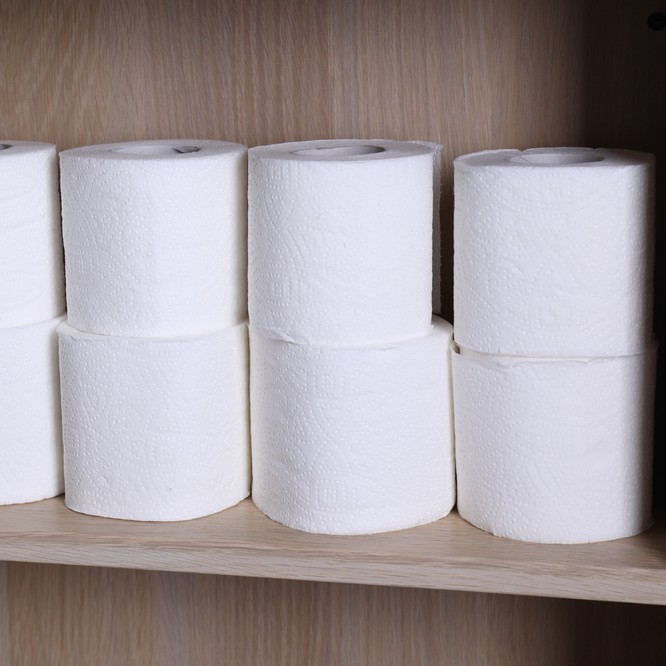
Sourcing for the Hospitality Sector: Riyadh and Jeddah Hubs
Saudi Arabia’s hospitality tissue market centers on the Riyadh and Jeddah procurement hubs, where local manufacturers like SPMC, WARAQ, and Fine Hygienic Holding provide the high-capacity production needed for Vision 2030 hotel expansions. These hubs ensure a steady supply of premium, sterilized, and virgin-pulp products tailored to luxury hospitality standards and rapid turnover requirements.
Riyadh Procurement Hub: Centralized Supply for Mega Projects
Riyadh acts as the primary procurement base for the hotel expansions and urban projects scheduled for completion by 2026. Local manufacturers, including Saudi Paper Manufacturing Company (SPMC) and Obeikan Paper Industries, maintain high-capacity production lines to satisfy the capital’s rising hospitality demand. United Carton Industries Company (UCIC) supplements these efforts by providing specialized packaging and hygiene tissue solutions designed specifically for large-scale commercial contracts.
Jeddah Logistics Hub: Coastal Access and Regional Distribution
Jeddah utilizes its strategic port access to manage raw material imports and distribute finished goods throughout the Western Province. WARAQ – Arab Paper Manufacturing Co. functions as a vital supplier within this hub, maintaining a consistent flow of tissue products to hotels in Jeddah and nearby tourism corridors. This network enables rapid restocking for high-turnover hospitality settings, prioritizing efficient supply chains for napkins and toilet rolls.
Quality Benchmarks for Premium Hospitality Sourcing
Luxury hotel chains in Riyadh and Jeddah require 100% virgin wood pulp and sterilized products to meet international hospitality criteria. Fine Hygienic Holding (FHH) and Crown Paper Mill lead the premium market with sterilized facial tissues and high-GSM towels that align with 2026 quality targets. Suppliers also provide customization services, which let hotel brands source private-label tissues that reinforce their specific brand identity and luxury status.
Regulatory Standards: Meeting GSO and Saudi Quality Marks
Accessing the Saudi Arabian tissue and hygiene market requires adherence to specific technical regulations managed by the Gulf Standardization Organization and the Saudi Standards, Metrology and Quality Organization. These certifications validate safety, quality, and manufacturing consistency before products reach the consumer.
GSO Gulf Mark Prerequisite for Regional Entry
The GSO adopts standards and the Gulf Conformity Mark applies to defined product families, but we found no evidence that toilet tissue or household paper is inside the G-Mark list, and no SASO or GSO standard specific to tissue paper surfaced in anything we could reach from this network. The conformity route we could describe is the general one: a Certificate of Conformity obtained through the SABER platform for the shipment, and the GCC common tariff – conventionally five per cent – on goods of non-GCC origin. Confirm both with your notified body or clearing agent against your own HS code, because a supplier who tells you tissue needs a Gulf Mark is usually selling you something.
Saudi Quality Mark (SQM) and Factory Verification
SASO issues the Saudi Quality Mark (SQM) to certify that products align with national safety and quality standards. This certification process involves detailed factory audits, laboratory testing, and a thorough review of the quality management system. The SQM certification remains valid for three years, though manufacturers must undergo ongoing surveillance audits to ensure production consistency stays within legal limits.
Import Clearance and SABER Platform Compliance
Saudi importers use the SABER electronic platform to register products and obtain necessary conformity certificates for customs clearance. Professional suppliers facilitate this process by maintaining international standards like ISO 9001 and providing detailed test reports. Updating all documentation to meet 2026 standards prevents port delays and strengthens the brand’s standing in the local market.
Pro Tip: Why “Away-From-Home” (AFH) is the Most Lucrative Saudi Segment
The away-from-home claim is directionally right and the specific figure is not: 774,000 tonnes is the same invented number re-used as an AFH subtotal, which is how an unsourced statistic usually reveals itself. What is verifiable is the demand driver behind it – the Vision 2030 tourism targets, including 150 million visits a year and the giga-project room build-out at AlUla, Diriyah, the Red Sea and NEOM – and the fact that AFH supply in the Kingdom is largely converted from reels, so the tender specification is a dispenser system, not a brand.
Tourism Infrastructure and Hospitality Demand in 2026
Saudi Arabia maintains the leading position in the GCC tissue market, accounting for over half of the regional volume. The hospitality sectors in Riyadh and Jeddah drive a constant demand for premium facial tissues and branded toilet paper as hotel room supplies increase to meet the Kingdom’s 2026 tourism targets. This expansion focuses on guest experience and brand loyalty.
Establishments that prioritize custom-branded amenities within the AFH segment see tangible benefits in customer perception. These high-quality, branded products help hotels increase guest satisfaction scores by as much as 20%. This strategy encourages repeat visits and allows hospitality providers to maintain premium positioning in a competitive regional market.
Operational Efficiency and Maintenance Savings in High-Traffic Venues
Large-scale commercial facilities like international airports and shopping malls utilize high-capacity jumbo roll tissues to streamline facility management. By implementing these high-volume solutions, venues cut maintenance labor costs by 15% through a significantly reduced refill frequency. These logistical savings make jumbo formats a staple in the Kingdom’s infrastructure development.
There is a visible shift toward 100% virgin wood pulp products in public facilities to reduce per-use waste. Virgin pulp offers superior absorbency and strength when compared to recycled alternatives, meaning guests use fewer sheets per visit. Facilities management companies increasingly prioritize bulk procurement of 2-ply and 3-ply rolls to balance a luxury user experience with the operational durability required for high-traffic washrooms.
Frequently Asked Questions
Who actually manufactures tissue paper in Saudi Arabia?
Three groups with machines we could trace to a machine builder: Saudi Paper Group at Dammam (Toscotec AHEAD 2.2 since 2023, PM5 commissioned December 2025 adding more than 60,000 tonnes a year), Crown Paper Mill – a UAE company whose Saudi plant at Dammam was commissioned on 9 September 2026 with a Valmet Advantage DCT 200 – and Juthor Paper Manufacturing, MEPCO’s tissue vehicle building at King Abdullah Economic City with an Andritz line ordered in December 2024. Everyone else calling themselves a Saudi tissue manufacturer is either a converter working on reels from those mills, or a packaging and printing group that appeared in this list by mistake.
Does Saudi Arabia import most of its tissue?
It imports a great deal, and the origin countries are not the usual suspects: USD 274.55 million and 123,612 tonnes of HS 4818 in 2024 on UN Comtrade, with Jordan first at the partner breakdown USD 69.38 million, Egypt second at USD 59.05 million and China third at USD 28.18 million. It also exports about 99,425 tonnes. So the Kingdom is a two-way market, and “made in Saudi” on a pack can mean converted in Saudi from Jordanian or Egyptian reels.
What certification does imported toilet paper need for Saudi Arabia?
A Certificate of Conformity processed through the SABER platform for the shipment, and the GCC common tariff of about five per cent on non-GCC origin goods the US Commercial Service Saudi country guide. We could not find a SASO or GSO standard specific to tissue paper, and we found no evidence that tissue falls inside the Gulf Conformity Mark scheme, so this page does not claim either. Verify the certificate type for your own HS code with the notified body or clearing agent before artwork is approved.
Is Vision 2030 relevant to a tissue buyer?
Only where it attaches to a number. It is relevant through industrial capital – the Public Investment Fund took 23.08 per cent of MEPCO in January 2024 and the tissue lines above are the result – and through hospitality demand from the tourism targets, including 150 million visits a year and the room build-out at the giga-projects. It is not a quality standard and it does not certify a mill, so it should appear in a sourcing plan only next to a plant name.
How do I check that a Saudi tissue supplier is real?
Three checks, in order. Ask for the CR number and read the activity line, because converting and manufacturing are different licences. Ask which machine builder supplied the line – Valmet, Toscotec, Andritz, Aernie and Marigs publish their customers, and an invented mill does not appear in those lists. Then match the mill address on the certificate of origin to the address on the quotation. We removed two entries from this page that failed all three.
About This List, and What We Corrected
Rewritten in place on 8 November 2026, with the title, the URL and the structure of the article left alone and the claims inside replaced. Five of the nine companies listed beside us were wrong in a way that matters. “National Paper Industries” and “Clean & Soft (Mada Paper)” could not be found in any Saudi directory, exchange disclosure, machine-builder reference or trade article; the second looks like a translation accident, because C&S is the English name of the Chinese tissue group Zhongshun Jierou. WARAQ, Obeikan and United Carton Industries are real Saudi companies that make corrugated case materials, printed packaging and cartons – they were listed here as tissue manufacturers, and the same three names had previously appeared on our South Africa page presented as South African factories, which tells you the pool they were drawn from rather than any research.
Two of the surviving entries were the same company: Saudi Paper Group and Saudi Paper Manufacturing Company are parent and listed subsidiary, so they are now one entry. Three entries were missing entirely and have been added from machine-builder reporting: Juthor Paper Manufacturing at King Abdullah Economic City, whose Andritz line was ordered in December 2024 and whose USD 92 million construction was reported in June 2025; the December 2025 commissioning of Saudi Paper Group’s Toscotec PM5; and Crown Paper Mill’s Valmet machine, commissioned on 9 September 2026 – a UAE-owned plant on Saudi soil, which is why the entry says so. Fine Hygienic Holding is relabelled as the Jordan and UAE group it is, with its Saudi site described as converting; its SteriPro process is quoted in the company’s own words, which are “reducing the possibility of germ exposure” and not the “100 per cent germ-free” this page put in its mouth.
Every market statistic went, because none of them could be traced: 55 per cent of GCC consumption, 774,000 tonnes of national consumption, 686,000 tonnes of GCC production, 1.8 million tonnes by 2035 and a 5.3 per cent recycled growth rate appear nowhere in GASTAT, Tadawul filings or industry reporting we could reach, and 774,000 was used twice in the same page as both a national total and an AFH subtotal, which is how an invented figure usually gives itself away. They are replaced with UN Comtrade figures carrying a year and a code – 123,612 tonnes and USD 274.55 million of HS 4818 imported in 2024, from Jordan, Egypt and China – and with machine capacity that the builders themselves published. On conformity, we found no tissue-specific SASO or GSO standard and no evidence the Gulf Conformity Mark covers tissue, so the honest position is the SABER Certificate of Conformity plus the GCC tariff, confirmed against your own HS code. On ourselves: we hold no certificates of any kind, our minimum order is one 40-foot high-cube container per SKU, production runs about 25 days from deposit and approved artwork, and the term is FOB Tianjin. If you find an error, tell us and we will correct it and date the change.
Final Thoughts
Saudi Arabia’s tissue industry is shifting from an import-dependent model to a self-sufficient manufacturing powerhouse. The combination of government incentives and massive hospitality projects creates a landscape where production volume meets high quality standards. Manufacturers that focus on 100% virgin pulp and adhere to local safety certifications are best positioned to serve the growing needs of luxury resorts and commercial hubs across Riyadh and Jeddah.
SABER is the correct platform name for conformity certification of shipments into the Kingdom; “SASO certification” as a phrase covers a family of schemes rather than one document, and the one a tissue importer actually needs is the product Certificate of Conformity issued for the HS code on the invoice. Labelling in practice is Arabic-bearing on consumer packs. None of this substitutes for the specification work: measured ISO 12625 properties, an accredited laboratory report and the mill address on the certificate of origin are the three documents that decide whether goods match an order.