

Margin & Pricing Analysis dictates the survival of a private label brand in a market where miscalculated logistics costs and thin retail spreads quickly erode capital. Many distributors enter the tissue sector focusing on the factory price but overlook the volatility of ocean freight and the competitive pressure from established national labels. One oversight in the landed cost formula turns a high-volume order into a financial burden that stalls business growth and locks up essential warehouse space.
This guide establishes a technical protocol for calculating the real profitability of toilet paper imports and domestic distribution. We examine the specific components of landed cost for shipping containers and compare typical retail margins against the pricing structures of major A-brands. The following sections detail the financial impact of factory-direct sourcing and provide a breakdown of hidden OEM expenses to ensure your manufacturing strategy maintains a sustainable return on investment.
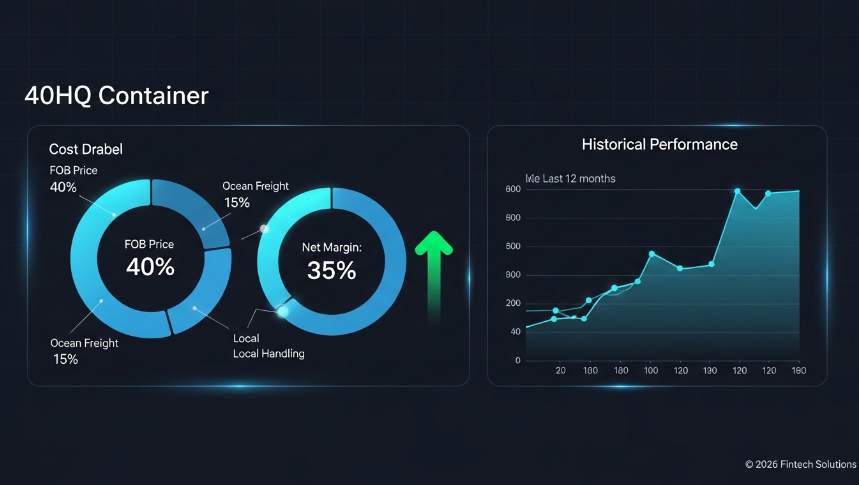
How Do You Calculate the Landed Cost of an Imported Container?
Mastering the landed cost calculation—integrating the FOB price from our Hebei facility with real-time freight and duty variables—is the only way to secure B2B profit margins against 2026 global supply chain volatility.
Automated Software for Accurate Cost Tracking
By 2026, the industry has largely abandoned manual spreadsheets in favor of integrated inventory and accounting software. These systems provide real-time cost transparency by syncing directly with global trade data feeds. For high-volume importers of hygiene products, this automation handles multi-currency processing and automatically updates import duty rates based on HS Code 4818.1000. This shift ensures that financial teams work with live data rather than lagging estimates, preventing “margin bleed” caused by unexpected mid-transit cost spikes.
Methods for Allocating Shared Logistics Expenses
Accurately calculating the landed cost of a 40HQ container requires a precise distribution of shared shipping expenses across various SKUs. We recommend allocating freight costs by volume (CBM) for household toilet rolls, as their bulk-to-weight ratio makes volume the primary cost driver. For high-density items like our TSH-3396 coreless rolls, weight-based allocation may be more appropriate to reflect the 9-ton payload stress on inland drayage.
| Cost Component | Calculation Basis | B2B Margin Impact |
|---|---|---|
| FOB Product Cost | Unit Price × Order Quantity | Baseline; standard ~$0.18/roll |
| Ocean Freight (40HQ) | Total Container Rate ÷ Total CBM | High volatility; varies by season |
| Import Duties & Taxes | Declared Value × HS Code Rate | Fixed percentage per region |
| Handling & Drayage | Flat Fee + Port-to-Warehouse Trucking | Often overlooked hidden cost |
Distributing insurance and terminal handling charges (THC) should follow the total value of the goods. By using automated software to handle these SKU-level breakdowns, distributors avoid the common error of over-pricing light, high-volume items while under-pricing heavy, compact rolls.
Factoring in Regulatory Duties and Freight Volatility
Global supply chains remain subject to shifting import regulations and local port congestion. In 2026, we see a focus on regional compliance costs, especially for hygiene products entering North American and European markets where septic-safe and OBA-free certifications are required. Buyers must factor in:
- Variable port fees and seasonal drayage surcharges.
- Compliance auditing fees for FSC or ISO standards.
- Demurrage and detention risks during peak shipping windows.
Leveraging Landed Costs for Strategic Pricing
Determining the exact landed cost allows manufacturers and wholesalers to set retail prices that protect the 30% industry benchmark for sustainable margins. For private label products, understanding the true break-even point is the only way to compete with national A-brands. When you identify the inefficiencies in your logistics—such as poorly optimized container loading—you can adjust sourcing to factory-direct models like Top Source Hygiene to reclaim those lost points of ROI. Aligning landed cost data with market positioning ensures your brand remains competitive without sacrificing the quality of your 100% virgin wood pulp products.
What Is the Typical Retail Margin for Private Label Toilet Paper?
Retailers in 2026 achieve significantly higher returns on branded private label hygiene products, with margins often tripling those of standard commodity goods through direct-to-factory sourcing.
Retailers see a stark contrast in profitability when comparing branded hygiene goods to standard commodity items. While standard commodity paper products typically yield thin margins of approximately 15%, branded hygiene goods—such as those manufactured by Top Source Hygiene—achieve retail margins between 40% and 60%. This gap exists because private labels allow retailers to bypass the massive marketing overhead and brand premiums built into the pricing of national “A-brands.”
| Product Category | Typical Retail Margin | Annual Growth (2026) |
|---|---|---|
| Branded Private Label (Premium) | 40% – 60% | 4.4% |
| National “A-Brands” | 20% – 30% | 1.1% |
| Unbranded Commodity Paper | ~15% | 0.8% |
Market Share and Growth Projections for 2026
The shift toward store brands continues to accelerate as they outperform traditional labels in the hygiene sector. Data from early 2026 confirms that store brands reached a 21.2% dollar share and a 23.2% unit share of the global market. This momentum is driven by a permanent shift in consumer purchasing habits toward value-driven essentials that do not compromise on quality.
- Private label growth maintains a 4.4% annual rate, significantly outpacing the 1.1% growth seen by national brands.
- Retailers utilize custom-branded products to build long-term customer loyalty and protect themselves against inflationary price spikes from major conglomerates.
- Increased market share reflects a consumer preference for 100% Virgin Wood Pulp products that offer the same technical performance as legacy brands at a lower price point.
FOB Pricing and Markup Potential
Low manufacturing costs at the factory level provide the foundation for substantial retail markups. FOB pricing at high-capacity facilities like our Hebei industrial hub typically averages around $0.18 per roll. This low entry cost allows retailers to maintain competitive shelf prices while securing aggressive profit goals. By sourcing directly from a manufacturer with high-capacity production, importers eliminate the 10-20% markup usually taken by trading companies or intermediaries.
Consumer Migration to Value-Driven Essentials
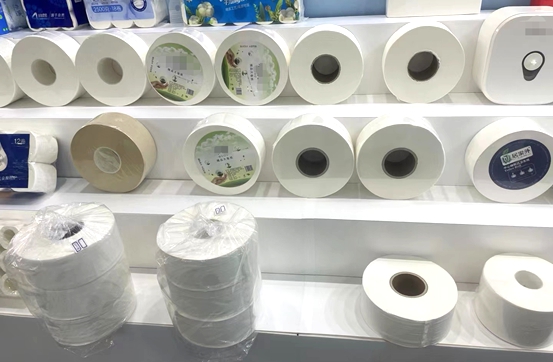
Shoppers now prioritize material integrity—such as OBA-free and septic-safe certifications—over brand mascots. This migration allows private labels to compete directly on technical specifications. Tight supply chain control enables retailers to respond quickly to consumer demands for specific configurations, such as the TSH-3396 coreless solid rolls which maximize paper volume and transport efficiency. These custom solutions meet quality expectations, supporting high repeat sale rates in the hospitality and urban retail sectors.
Scale Your Brand with Premium Jumbo Rolls
How to Price Your Brand Against National “A-Brands” in the Market?
Strategic pricing in 2026 requires maintaining a calculated 20-30% price advantage over national competitors while utilizing high-tier technical specifications to neutralize their brand equity.
Success in the current paper products market requires a detailed price gap analysis rather than simple price-matching strategies. We monitor how inflation and shifting consumer behavior narrow the gap between store brands and national “A-brands,” noting that store brands now capture over 21% dollar share. Retailers use specific price benchmarks to identify where a private label product offers the most significant perceived value. Top Source Hygiene provides factory-direct pricing that allows brands to maintain a substantial price advantage while offering quality that matches the market leaders.
Analyzing the Price Gap Between Private Labels and National Brands
We analyze the competitive landscape by looking at the “quality-to-price” perception ratio. Most national brands operate on 40-60% margins, leaving a massive window for private labels to capture the value-conscious segment. By sourcing directly from our Hebei industrial hub, distributors can secure an FOB price of roughly $0.18 per roll. This low entry point enables a retail strategy that targets the middle ground—high enough to suggest quality, yet low enough to make the national brand look overpriced.
Leveraging Brand Equity and Perceived Value Differentiation
National brands often justify premium prices through long-standing brand equity, but private labels compete by emphasizing high-tier specifications. We help clients bridge the perception gap by utilizing 100% virgin wood pulp and 4-ply or 5-ply configurations. Using certifications like ISO 9001 and FSC serves as a quality signal to consumers that rivals the trust typically reserved for household names. Our manufacturing process ensures that the finished product—such as the TSH-4010 luxury series—delivers the tensile strength and softness consumers associate with expensive “A-brands” but at a much lower unit cost.
- Fiber Integrity: Using genuine, long-fiber wood pulp ensures a lint-free experience that matches premium market standards.
- Embossing Technology: Point-to-point CNC embossing increases absorbency by 30%, a key metric used by national brands in their marketing.
- OBA-Free Safety: Guaranteeing no fluorescent whiteners attracts the growing segment of health-conscious buyers who are wary of traditional chemical-heavy brands.
Navigating Asymmetric Price Competition Dynamics
Pricing strategies must account for the fact that national brands rarely lower prices to match private labels; they rely instead on brand loyalty and massive advertising spends. We advise clients to focus on consumer reservation prices—the maximum a buyer is willing to pay—rather than just following a competitor’s lead. In 2026, successful brands use “good-better-best” pricing tiers to capture different segments. For example, high-capacity models like the TSH-3396 target volume-driven wholesale, while custom-branded solutions for the hospitality sector create a unique identity that reduces direct price comparisons with retail national brands.
Why Does Factory-Direct Sourcing Significantly Increase Your ROI?
Eliminating intermediary layers allows procurement teams to reclaim 10% to 30% of their margins while securing direct oversight of the manufacturing floor and technical specifications.
Direct partnerships with manufacturers like Top Source Hygiene remove the service fees that trading companies and sourcing agents typically charge. These intermediaries often add 10% to 30% to the unit price without adding functional value to the product. By negotiating directly with the production facility, procurement teams lower the Cost of Goods Sold (COGS) and gain access to a transparent pricing structure that reflects actual material and labor costs. This shift ensures that more capital stays within the business to fund aggressive marketing campaigns or product line expansions rather than paying third-party commissions.
Elimination of Intermediary Markups
Removing the middleman is the fastest way to improve the bottom line in the hygiene sector. A factory-direct model provides a clear view of the cost drivers, from the 100% Virgin Wood Pulp market price to the energy costs in our Hebei facility.
- Procurement teams lower the Cost of Goods Sold (COGS) by negotiating directly with the production facility.
- A factory-direct model provides a transparent pricing structure that reflects actual material and labor costs.
- Increased capital stays within the business to fund marketing or expansion rather than paying third-party commissions.
Direct Control Over Technical Specifications
Working directly with the factory ensures that product quality meets exact brand standards without the information loss that occurs during indirect communication. We maintain direct feedback loops with the production floor to reduce the risk of manufacturing errors and eliminate the costs associated with product returns.
- Clients manage specific variables like GSM, ply count, and wood pulp type to balance performance with budget goals.
- Direct feedback loops with the production floor reduce the risk of manufacturing errors and costly product returns.
- Prototyping and sample approvals happen faster, allowing brands to adapt to 2026 consumer trends in real time.
Optimized Supply Chain Logistics
Direct sourcing stabilizes lead times and simplifies the logistics chain, which is critical for maintaining inventory levels in a volatile global market. By eliminating extra stops in the shipping process, we reduce the total landed cost per container. Direct access to our production schedules helps procurement managers forecast demand accurately, avoiding the financial hit of stockouts and the need for expensive emergency air freight.
- The 15–25 day production lead time at Top Source Hygiene allows for leaner inventory management and lower storage costs.
- Eliminating extra stops in the shipping process reduces the total landed cost per container.
- Direct access to production schedules helps procurement managers forecast demand and avoid the financial hit of stockouts.
Scalability and Production Stability
Access to high-capacity facilities enables brands to scale their operations without the need for multiple vendors. Our 2,860-ton monthly capacity ensures that as your order volumes grow, unit costs drop through genuine economies of scale. Long-term factory partnerships provide the price stability required to protect margins against sudden shifts in the paper pulp market.
- The 2,860-ton monthly capacity ensures that as order volumes grow, unit costs drop through economies of scale.
- Long-term factory partnerships provide price stability, protecting margins against sudden shifts in the paper pulp market.
- Dedicated production lines prioritize established direct clients, ensuring consistent product availability during peak seasons.
What Are the Hidden Costs to Watch Out for in OEM Manufacturing?
Profitability in OEM manufacturing hinges on total landed cost analysis, as early-stage design decisions lock in roughly 80% of long-term production expenses before the first roll ever leaves the assembly line.
Warehousing and Quality Control Labor
Unit prices rarely tell the full story because material handling and warehousing fees eat into margins as supply chains scale. For a facility moving 2,860 tons of monthly production, internal tracking systems must account for every touchpoint from the loading dock to the racking. Dedicated labor and specialized testing equipment are required to maintain 100% Virgin Wood Pulp standards, specifically checking for tensile strength and OBA-free compliance. Neglecting these labor costs during the budgeting phase leads to significant margin erosion when high-volume orders arrive at the warehouse.
| Hidden Cost Driver | Financial Impact | Mitigation Strategy |
|---|---|---|
| Design Specifications | Locks in 80% of total COGS | Finalize embossing and ply counts during prototyping. |
| Currency Volatility | Unpredictable balance shifts | Use multi-currency processing and real-time rate updates. |
| Inventory Carrying | Accumulates via safety stock | Optimize 40HQ container payloads to reduce per-unit storage. |
Logistics, Tariffs, and Currency Shifts
International sourcing introduces financial variables that extend past the initial factory quote. Importing 40-foot containers involves fluctuating tariffs and customs duties that vary by region, and using the correct 4818.1000 HS code is vital for tax compliance. Currency volatility can alter the final cost of goods between the initial deposit and the final balance payment, so we provide detailed photos and videos of finished goods to ensure transparency before the final wire. Brands often maintain high safety stock levels to avoid stockouts, but these carrying costs accumulate and drag down ROI if not monitored through automated accounting tools.
- Import duties are calculated as a percentage of declared value and require precise classification.
- Fluctuating freight rates can swing the landed cost by 15% within a single quarter.
- Shared logistics costs must be allocated across multiple SKUs by volume to protect individual item margins.
Manufacturing Overhead and Design Choices
Operational expenses and early-stage product specifications dictate the majority of the total manufacturing spend. Utilities, machinery maintenance, and depreciation represent a substantial portion of hidden overhead that impacts the manufacturer’s floor price. Decisions regarding custom embossing, specific ply counts, or roll widths (ranging from 102mm to 132mm) lock in the vast majority of production costs. We focus on optimizing the production process from the Hebei industrial hub to mitigate inefficiencies that otherwise drive up the price of custom-branded tissue. Standardizing parts and utilizing high-pressure ply-bonding technology allows for better cost absorption across 40HQ container runs.
How Does High-Capacity Production Lower Your Unit Cost?
Scaling production to a 2,860-ton monthly capacity dilutes fixed overhead, allowing factory-direct sources to deliver premium 100% virgin wood pulp products at commodity-level price points.
Fixed Cost Absorption Through Large Volumes
Top Source Hygiene spreads manufacturing overhead across its 2,860-ton monthly output to minimize the expense assigned to individual product units. This strategy ensures that facility maintenance and equipment depreciation distribute across massive volumes, which lowers the cost allocated to each individual roll or tissue box.
- High-output operations stabilize pricing by mitigating the volatility common in small-batch or pilot-phase production.
- Continuous manufacturing ensures fixed labor and utility expenses remain low relative to the total tonnage of paper produced.
- Large-scale operations justify the use of heavy-duty infrastructure that operates with higher energy efficiency per ton of output.
Operational Efficiency and Lean Manufacturing
Implementing lean manufacturing at scale allows paper manufacturers to achieve significant cost reductions while accelerating global supply chain movement. Factories that adopt these practices often see manufacturing cost reductions between 20% and 30% within the first year of optimization. We focus on eliminating waste and optimizing the flow of raw materials through our Hebei industrial hub.
- Optimized production flows reduce lead times by up to 80%, minimizing the capital locked in work-in-progress inventory.
- Efficient factory stream reorganization cuts inventory holding costs by approximately 40%.
- Lean methods prioritize high-yield processes, ensuring the maximum amount of finished product per ton of raw wood pulp.
Strategic Bulk Procurement and Material Standardization
Mass production enables high-level negotiation power and simplifies inventory management through material standardization. By focusing on 100% virgin wood pulp across multiple lines, we secure deeper discounts and more reliable supply chains from primary pulp suppliers. This standardization eliminates the need for frequent machine recalibrations, further reducing operational downtime.
- Standardizing raw materials allows for larger bulk orders and stabilizes the pricing of core inputs.
- Consolidating component types across different product lines reduces procurement complexity and eliminates excess stock variety.
- High-volume purchasing power directly lowers the raw input costs for napkins, kitchen towels, and facial tissues.
Advanced Automation and Machine Utilization
High production targets justify the heavy investment in robotics and high-speed processing lines required for 2026 export standards. These automated systems become economically viable only when output reaches the specific high thresholds maintained at Top Source Hygiene’s two primary factories. Automated packaging and processing ensure that quality remains uniform across thousands of 40HQ containers.
- Robotics lower per-unit labor expenses and remove human error from high-speed tissue and towel production environments.
- Consistent machine utilization ensures every operating hour generates maximum product value without idle time costs.
- Advanced CNC-precision embossing patterns and perforation lines improve absorbency and usability without increasing material volume.
Conclusion
Precise margin calculation and specification optimization turn commodity toilet paper into a high-yield private label asset. Understanding the interplay between container payload, material quality, and unit cost allows brands to price effectively against market leaders. This data-driven approach secures long-term profitability and scales production efficiently.
Review your current product specifications to identify where adjustments in roll diameter or GSM could improve your margins. Reach out to our team to request a custom quote or a catalog of our high-capacity production models.
Frequently Asked Questions
How profitable is a toilet paper brand?
Toilet paper brands operate on a high-volume, consistent-demand model. While gross margins for manufacturers typically hover between 15% and 25%, net profitability is heavily influenced by scale and logistics efficiency. Premium segments, such as eco-friendly bamboo or ultra-plush variants, can achieve significantly higher margins by targeting consumers willing to pay a price premium for sustainability and comfort.
How to calculate landed cost for TP?
To accurately calculate landed cost, you must aggregate the unit price, ocean or land freight, insurance, customs duties, and local port handling fees. Modern industry standards involve using automated software to allocate these shared logistics costs across SKUs based on weight and volume. This ensures real-time cost transparency and accounts for fluctuating freight rates and import regulations, which are critical for maintaining competitive pricing.
What is the average margin on private label tissue?
Private label tissue typically offers higher profit margins for retailers and distributors compared to national brands, often ranging from 25% to 35%. This is achieved by eliminating the high marketing and brand-development overhead associated with major labels, allowing the savings to be split between a lower shelf price for the consumer and a higher margin for the seller.
How to compete with big toilet paper brands?
Effective competition requires differentiation through niche positioning, such as offering plastic-free packaging, bamboo-based fibers, or Direct-to-Consumer (DTC) subscription models that emphasize convenience. Additionally, leveraging agile supply chains and localized distribution can reduce the logistics costs that often burden larger, more rigid corporate structures.
Does bulk buying increase profit margins?
Yes, bulk buying significantly increases profit margins by capturing economies of scale. It reduces the per-unit cost of freight and allows for better negotiation of volume-based discounts with manufacturers. Furthermore, it stabilizes supply chain volatility, ensuring that margins are protected against sudden short-term increases in raw material or transportation costs.
What are the costs of starting an OEM brand?
Starting an OEM brand involves several primary costs: Minimum Order Quantities (MOQs) which typically require an upfront investment in inventory, custom packaging design and plate fees, quality control audits, and logistics setup. You should also budget for regulatory compliance testing and initial marketing to establish the brand’s presence in a competitive market.