Skip to content
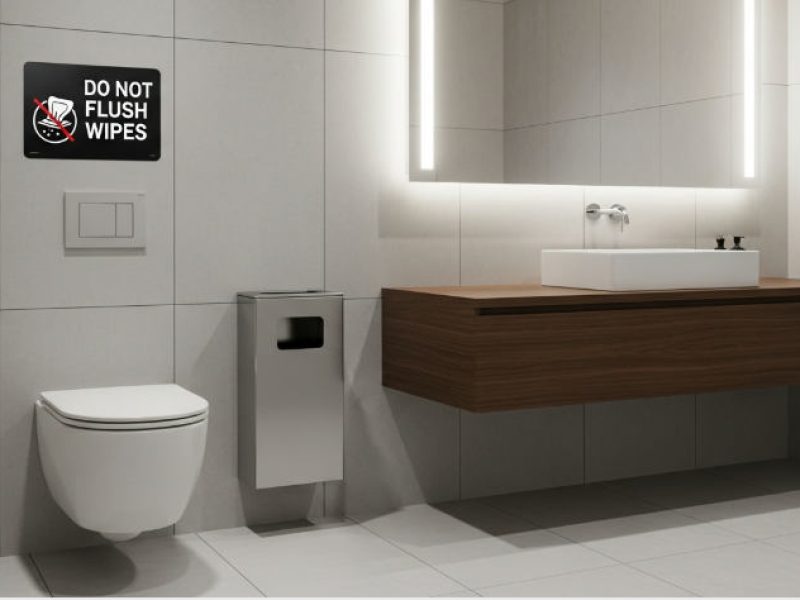
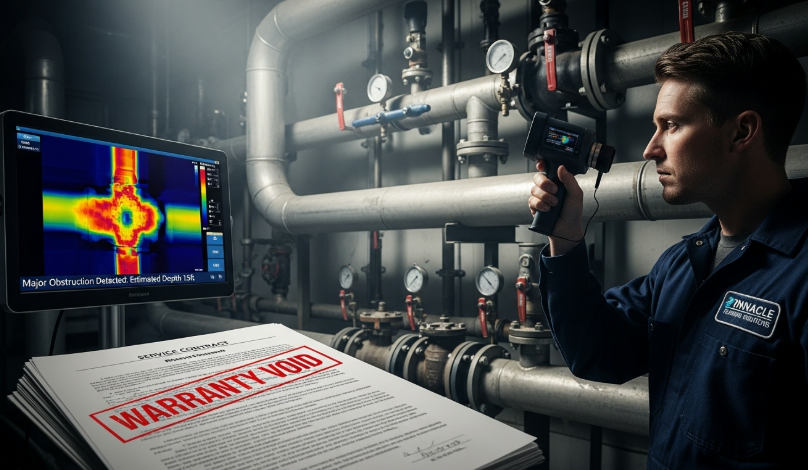
Industrial Wipes vs TP can turn ordinary restroom use into a major operational risk, triggering clogged drains, repeated service calls and six-figure sewer repairs that drain operating budgets and void commercial plumbing warranties.
This technical SOP walks facilities and maintenance teams through the full problem set and the controls they must deploy. It covers the rise of the “flushable” personal wipe trend; the synthetic fibers that prevent wipes from breaking down and seed fatbergs; how fatbergs destroy municipal sewer systems; why flushable wipes void commercial plumbing warranties; a spec-backed policy for mandating 1-ply commercial tissue in employee restrooms; and step-by-step guidance on signage and disposal-bin installations to stop flushing at the source. The final section answers the key FAQs procurement, custodial staff and plant engineers face so teams can reduce clog-related downtime, cut repair spend and keep warranties intact.
The Rise of the “Flushable” Personal Wipe Trend
Personal wet wipes scaled from convenience items into everyday hygiene staples, but product claims about being “flushable” often outpace real-world sewer performance and user expectations.
Consumer drivers: convenience, perceived hygiene, and changing routines
Consumers adopt personal wipes because they solve specific use cases: on-the-go needs, quick cleanup after meals or childcare tasks, and single-use packaging that removes handling concerns common with rolls of paper. Manufacturers optimized formats—travel packs, resealable tubs, scented and alcohol-free options—to make wipes functionally and emotionally attractive for busy households and mobile lifestyles.
Marketing reinforced the behavior by placing wipes next to toiletries and travel accessories, encouraging impulse trials. Demographically, younger urban residents and parents with small children drove early adoption; once usage patterns formed, many buyers added wipes to their routine alongside toilet paper rather than replacing it.
What ‘flushable’ actually means: testing standards and label confusion
The term “flushable” lacks a single, universally accepted definition, so consumers see inconsistent claims across brands. Some manufacturers validate dispersibility through laboratory tests that measure break-up under controlled agitation, while others rely on weaker in-house protocols. Those lab conditions rarely match sewer hydraulics, residence time, or biological activity in the field.
That mismatch creates two predictable outcomes: shoppers assume wipes behave like toilet paper, and utilities see materials that don’t fragment. Industry groups and regulators have responded with tighter test protocols and voluntary certification marks, but market recognition of those programs varies and many products still carry ambiguous labeling without third-party verification.
Sewer and environmental impacts: blockages, fatbergs, and aquatic risks
When wipes retain strength inside plumbing, they accumulate at trap points, bends, and pump stations. Over time those accumulations form larger obstructions—frequently binding with fats, oils, and grease into compact masses that crews call fatbergs. Removing these blockages demands manual excavation or mechanical cutting and drives up maintenance budgets for municipalities and private facilities.
- Plumbing damage: repeated blockages increase pipe wear and can lead to ruptures or backups in commercial properties.
- Operational cost: utilities spend more on clearing, CCTV inspections, and emergency repairs when non-dispersible wipes enter the system.
- Environmental persistence: synthetic fibers and microfragments can reach waterways, adding to plastic and fiber pollution loads.
- Infrastructure mismatch: many older sewer networks cannot handle sustained loads of non-dispersible products.
Industry and regulatory responses: tighter standards, labeling, and disposal guidance
Manufacturers, trade associations, and regulators moved to reduce ambiguity. Test protocols now emphasize real-world dispersibility and require third-party verification in several markets. Some brands reformulated products to improve break-up and biodegradability; others retained strong wet-strength fibers while shifting to clearer “do not flush” instructions on packaging.
Municipalities rolled out public education, installed disposal bins, and in some cases restricted sales of non-compliant products. Retailers and online platforms increasingly tag listings or block items that lack recognized certification. The net effect: procurement teams and facility managers must vet wipe claims, require certification where sewer resilience matters, and specify disposal rules in contract terms.
The Synthetic Fibers that Prevent Wipes from Breaking Down
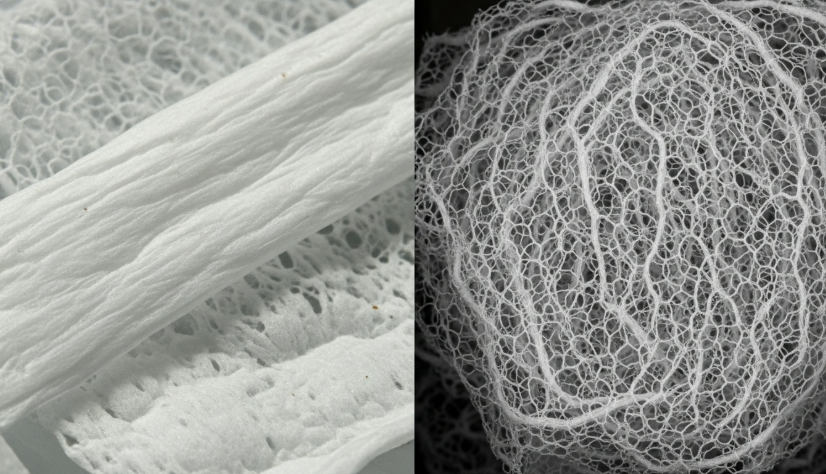
Hydrophobic synthetic fibers and wet-strength bonding keep nonwoven wipes intact under sewer flow, so they resist fragmentation and travel through plumbing as cohesive, clog-prone material.
Common Synthetic Fibers Used in Disposable Wipes
Manufacturers choose specific fibers to balance cleaning performance, feel, and wet-strength. The fibers below dominate modern wet-wipe formulations because they add tensile strength and resist mechanical breakdown when exposed to moving water.
- Polyester (PET): strong, abrasion-resistant, and hydrophobic; it does not swell and keeps filament integrity under shear in sewers.
- Polypropylene (PP): lightweight and water-repellent; gives bulk and tensile strength without absorbing water that would otherwise aid disintegration.
- Bicomponent fibers (e.g., PE/PET or PP/PE): use a low-melt sheath to thermal-bond webs; that fused sheath dramatically raises fabric coherence.
- Rayon/viscose blends: semi-synthetic cellulosic fibers that help absorb liquid, but when blended with synthetics the web keeps strength and slows breakdown.
- Microfibers and fine-denier synthetics: increase surface area and cleaning power while maintaining high tensile strength and low disintegration rates.
| Material / Structure | Typical Wipe Behavior | Top Source Hygiene Tissue Spec |
|---|---|---|
| Nonwoven webs with PET, PP, bicomponent fibers, microfiber blends | Hydrophobic, resists swelling, stays cohesive under agitation—fails to fragment in sewer shear and aggregates with fats. | 100% Virgin Wood Pulp tissue engineered for rapid disintegration and septic-safe performance (OBA-free; ISO 9001/FDA-aligned). |
How Fiber Type Affects Disintegration in Water
Fiber chemistry and geometry set the physical breakup pathways. Hydrophobic synthetics repel water and maintain fiber dimensions, so webs don’t swell and weaken. Longer fibers and entangled structures also hold together when pipes subject them to shear and turbulence.
- Hydrophobic vs hydrophilic: cellulose absorbs and softens, promoting disintegration; synthetics remain rigid and cohesive.
- Fiber length and entanglement: continuous or long staple fibers form strong nets that resist mechanical breakup compared with short, brittle fibers.
- Blend ratio: higher synthetic content reduces overall biodegradability; increasing cellulose speeds fragmentation in moving water.
- Additives and binders: wet-strength resins and latex adhesives bond fibers at contact points and prevent the web from dispersing once wet.
Manufacturing Processes That Increase Wipe Durability
Manufacturing choices amplify the inherent durability of the fibers. Mechanical entanglement, thermal bonding, and chemical binders each produce webs that survive the hydraulic stresses inside plumbing and municipal systems.
- Hydroentangling (spunlace): high-pressure jets physically knot fibers into a robust web that resists tearing and abrasion.
- Thermal bonding with bicomponent fibers: heat fuses sheath material to lock fibers without adding soluble adhesives.
- Needle punching and mechanical bonding: increase fiber interlock and raise wet tensile strength.
- Chemical bonding and wet-strength agents: resins crosslink fibers so the web retains integrity when saturated.
- Layering and composites: combining spunbond, meltblown, and hydroentangled layers yields multi-functional structures that balance softness with persistence.
Environmental and Plumbing Impacts of Synthetic Fibers
Persistent fibers from wipes create three linked problems: they fragment into microplastics, aggregate into blockages with fats and solids, and complicate wastewater handling. Utilities and regulators now test products under real-world sewer conditions because lab ‘flushability’ claims often fail field validation.
- Persistence and microplastics: non-biodegrading fibers fragment over time, increasing microplastic loads in effluent and sludge applied to land.
- Sewer blockages and fatbergs: synthetic-rich wipes act as scaffolding that catches fats and solids, producing dense blockages that require mechanical removal.
- Wastewater treatment effects: fibers can bypass screens, foul pumps, and increase sludge handling complexity and costs.
- Standards and testing: many products labeled “flushable” fail in-pipe and interceptor tests; jurisdictions now push stricter protocols and clearer labeling.
- Policy responses: municipalities restrict flushable claims, mandate disposal infrastructure, and run public campaigns to reduce wipe-related damage.
Scale Your Brand with OEM Toilet Paper
The Fatberg Phenomenon: Destroying Municipal Sewer Systems
Fatbergs form when persistent non-biodegradable solids—most commonly synthetic-fiber wipes—provide a scaffold that binds fats, oils and grease into dense, concrete-like blockages that cripple sewer capacity and assets.
What a fatberg is and how it forms
Fatbergs start as small accumulations of fats, oils and grease (FOG) that encounter solids that don’t fragment in water. Wipes and other non-biodegradable items made with synthetic fibers resist breakup, trap FOG and let chemical reactions—notably partial saponification and hardening—turn soft deposits into hard, interlocked masses. These masses grow where flow drops off, at bends, junctions and near lift stations, where material settles, compacts and builds into the large obstructions utilities remove during emergency interventions.
Main contributors: wipes, FOG, and other solids
The typical fatberg combines three streams: non-flushable wipes (often containing polypropylene or polyester), household and commercial FOG from sinks and drains, and bulk solids such as sanitary products, dental floss, packaging and congealed food. Restaurant and food-processing discharges that lack effective grease traps sharply increase the FOG load, while synthetic fibers provide tensile strength that lets the mass span pipe joints and resist rodding or simple flushing attempts.
Operational and public-health impacts on municipal systems
Fatbergs reduce hydraulic capacity, trigger backups into basements and streets, and raise the frequency of combined-sewer overflow events that threaten receiving-water quality. Utilities face repeated emergency callouts, temporary bypass pumping and large-scale cleaning campaigns that draw crews and equipment away from planned maintenance.
On equipment and assets, fatbergs overload pumps and lift stations, accelerate pipe abrasion and corrosion, and shorten service life, which increases capital and operating budgets. Overflows and sewage exposure create real public-health risks, force additional monitoring and remediation, and damage municipal trust—all of which raise regulatory and community costs when incidents occur.
Prevention, policy and engineering controls
Municipalities cut risk by combining behavioral and regulatory measures: focused public education, clear restroom signage and strategically placed disposal bins reduce improper flushing; mandatory grease-trap installation and strict maintenance schedules limit FOG inflow from food-service sites; and product-level rules that ban misleading “flushable” claims reduce upstream inputs. Utilities also adopt certification standards for true flushability to guide procurement and enforcement.
On the engineering side, utilities use routine CCTV inspection, targeted rodding and high-pressure jetting to manage problem reaches. Where budgets allow, they add upstream screening, macerators at pump stations and improved grit/FOG separators. These interventions lower the rate at which solids accumulate and give crews predictable access points for removal instead of emergency excavation.
Costs, case examples and emerging solutions
Major clean-ups and repairs run into millions for single incidents and push operating budgets higher through recurring maintenance and emergency response. Effective municipal programs pair enforcement, outreach and selective infrastructure upgrades to reduce repeat events; notable examples show measurable drops in blockage frequency after combined campaigns. Emerging technical options include targeted enzymatic or chemical degreasers, remotely operated excavation robots and finer screening at treatment works. Policy shifts—like extended producer responsibility and clearer labeling—also show promise by cutting the problematic inputs at source and shifting the cost burden upstream.
Why “Flushable” Wipes Void Commercial Plumbing Warranties
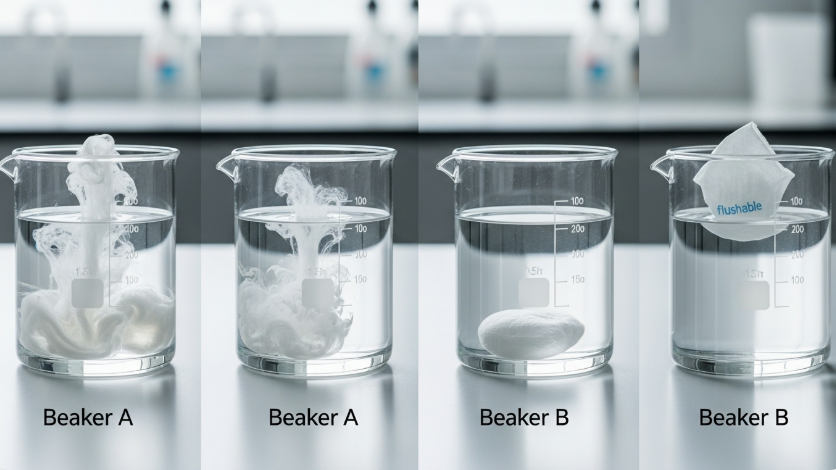
“Flushable” labeling often reflects controlled lab protocols, not commercial plumbing conditions, so using those wipes can create excluded damage that voids warranties and triggers denied insurance claims.
Product claims versus real-world degradability
Manufacturers design disintegration tests to show short-term breakup under specific agitation and soak times. Those protocols rarely model commercial drains, long conveyance distances, pump shear, or interaction with grease and solids. As a result, wipes that “pass” lab tests can remain structurally intact in building drains and sewer mains.
- Lab tests measure short-term breakup under controlled conditions; they don’t test long transport times, shear in pumps, or interaction with grease and other solids.
- Many wipes contain synthetic fibers that resist fragmentation and do not biodegrade quickly, so they stay intact during collection and transport.
- Municipal and industry groups publish differing standards, creating labeling inconsistency; facility managers cannot assume compatibility with commercial systems.
Typical warranty language and common exclusions
Commercial plumbing and fixture warranties commonly require approved consumables and adherence to maintenance schedules. Manufacturers and contractors list damage from foreign objects and improper use as exclusions, which gives them a clear basis to deny warranty coverage when wipes contribute to failures.
- Warranties usually require use of approved consumables and adherence to maintenance schedules; using non-approved wipes can be cited as breach of those terms.
- Manufacturers and plumbing contractors document exclusions for blockages, pump failures, and corrosion caused by foreign materials.
- Insurers may deny claims if maintenance records or procurement practices show routine use of products that contribute to blockages.
How wipes trigger commercial-system failures
Wipes travel through traps, fittings, and mains where they snag, bundle, and attract fats and other solids. Commercial sites produce higher volumes and more complex waste flows, so a single repeated practice of flushing wipes magnifies the risk of recurring clogs, pump overloads, and large-scale sewer obstructions.
- Wipes aggregate into clumps and “ropes,” catching on fittings and leading to recurring blockages in traps and line saddles.
- They combine with grease to form fatbergs that obstruct mains and overload pumping stations, increasing service calls and repair costs.
- Blockages cause backups and downtime that affect operations, create health risks, and can trigger code violations and emergency restorations.
Actions facilities can take to protect warranties and systems
Facility managers can cut exposure by turning product policy into enforceable procurement and maintenance practice. Documented rules, targeted training, and verified consumable specifications create the audit trail warranty providers and insurers look for when assessing claims.
- Specify allowed products in purchase orders and vendor contracts; keep records showing compliance with manufacturer recommendations.
- Install clear signage and provide sanitary disposal bins to steer users away from flushing wipes.
- Train cleaning and maintenance staff on inspection schedules and early clog detection; schedule regular CCTV inspections and grease-trap maintenance.
- Choose toilet paper and wipes formulated for rapid disintegration for commercial sites, and require supplier documentation when warranties demand approved consumables.
Mandating 1-Ply Commercial Tissue in Employee Restrooms
Switching to 1‑ply cuts unit paper cost but raises usage and supply churn—procurement must optimize roll format, dispenser fit, and reorder points to protect total cost and plumbing performance.
Cost and supply implications
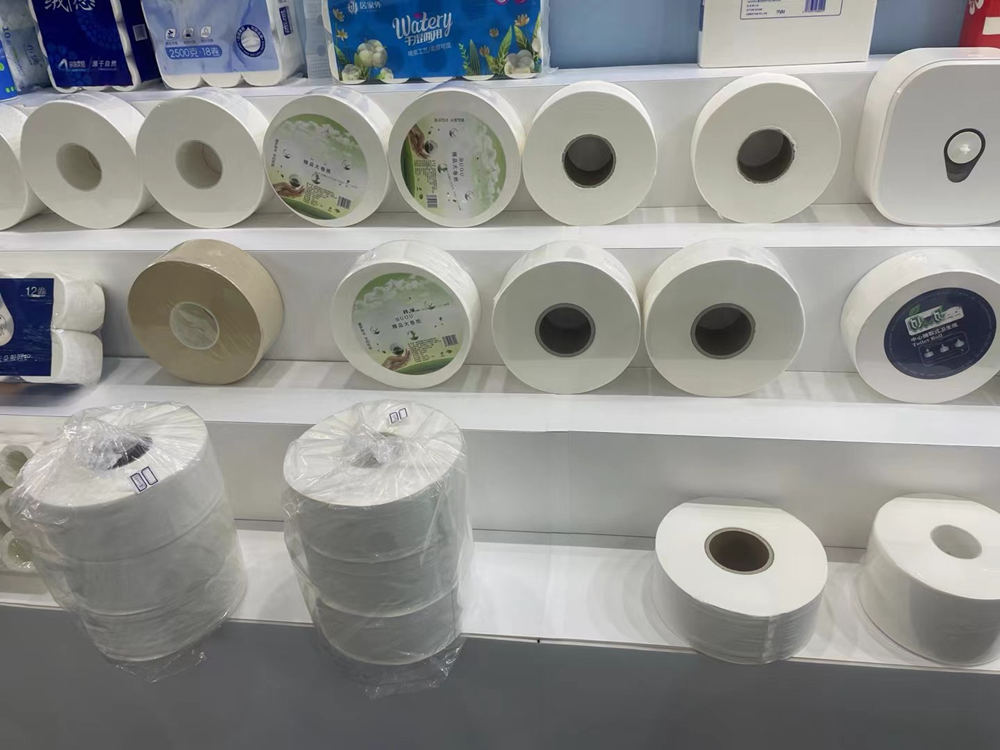
On a per-linear-meter basis 1‑ply costs less, and purchase price per roll typically falls. Expect usage to climb because users compensate for lower thickness by taking more sheets per use. That consumption increase can erase expected savings if you don’t change roll formats or inventory strategy.
You can recover savings by choosing longer rolls and compatible dispensers that reduce changeovers. Roll core diameter and dispenser type determine usable length and theft/loss exposure, so standardize those elements before buying at scale.
| Spec | Typical 1‑Ply | Top Source Example |
|---|---|---|
| GSM, disintegration & roll format | ~13–18 g/m² per ply; disintegration varies by maker; standard rolls only | Controlled 13–22 g/m² per ply; OBA‑free, engineered rapid disintegration; jumbo (JRT08) and coreless options |
- Recalculate unit cost using expected sheets-per-use, not price-per-roll alone.
- Specify longer roll lengths or jumbo formats to reduce labor from dispenser changeouts.
- Update reorder points and safety stock to cover higher turnover and avoid stockouts.
- Mitigate cost impact with bulk contracts, standardized dimensions, and supplier SLAs on returns and samples.
Hygiene, comfort, and employee response
Employees usually rate 1‑ply as less comfortable and less absorbent than multi‑ply options, which drives complaints and informal workarounds like bringing personal stock. Expect a short-term morale hit if you switch without explanation or alternatives for accessibility needs.
Protect hygiene standards by ensuring dispensers remain stocked and by communicating the operational reasons—cost control and plumbing protection—clearly. Run small pilots to collect feedback and quantify complaint rates before a system‑wide mandate.
- Run a 30–90 day pilot in representative restrooms and log satisfaction scores.
- Provide an exemption or higher‑ply trial supply for employees with medical or accessibility needs.
- Announce the change, explain the procurement and plumbing rationale, and publish a feedback channel.
Plumbing, maintenance, and warranty risks
Properly made 1‑ply commercial tissue will disintegrate in plumbing systems, but performance varies by sheet size, ply bonding, and manufacturing process. If you accept cheap non‑dissolving products, you will increase clogs and maintenance calls.
Document compatibility with your facility’s plumbing and consult service providers before the rollout. Some equipment or plumbing warranties reference acceptable tissue types; confirm those terms to avoid voiding coverage.
- Request lab data on disintegration and tensile strength before buying at scale.
- Track maintenance KPIs—service calls, blockages, and drain‑cleaning spend—for 90 days after implementation.
- Specify septic‑safe or rapid‑disintegration performance in procurement documents when facility plumbing is sensitive.
Implementation steps and procurement guidelines
Treat a 1‑ply mandate as a procurement and change‑management project. Pilot in a controlled sample, gather usage and complaint data, then scale while standardizing dispensers and roll formats to prevent mismatch and theft.
Negotiate contracts that include returns, replacements, and performance guarantees. Require samples and disintegration test reports up front; refuse bids that won’t provide technical documentation.
- Pilot: 30–90 days in high, medium, and low traffic restrooms; track usage, complaints, and maintenance incidents.
- Procurement specs: sheet dimensions, core diameter, roll diameter, GSM range, and documented dissolvability tests.
- Dispenser strategy: standardize models to the chosen roll format; consider controlled‑access dispensers where overuse occurs.
- Communication: announce reasons, offer an accessibility exception, and provide a short-term trial for employees who request it.
- Supplier terms: insist on sample approvals, lab reports, and return clauses for defective or non‑performing batches.
Installing Signage and Disposal Bins to Deter Wipe Flushing
Targeted bin placement plus concise, visible signage and tamper-resistant designs cut wipe-flushing incidents by making disposal the obvious, low-effort action for users.
Assessing high-traffic locations for disposal bin placement
Start with a simple map of each restroom and adjacent service areas. Count stalls, sinks, and family or accessible rooms, then place bins where users make disposal decisions—inside stall clusters, at changing tables, and near exits—to reduce the impulse to flush.
- Survey each restroom for user flow: count stalls, handwashing stations, and baby-change areas to estimate required bin numbers.
- Prioritize stalls and changing tables since users often flush wipes there; place at least one bin per stall cluster or one inside each family/accessible restroom.
- Mount bins within reach of the toilet or changing surface but clear of door swing paths and cleaning equipment storage.
- Consider sightlines: place a bin and sign so the user sees disposal options before they consider flushing.
- Account for ADA and local accessibility rules when choosing locations and mounting heights.
| Bin Type | Capacity & Material | Recommended Features |
|---|---|---|
| Stall / Small, Family Room, High-Traffic | 5–10 L (small stalls); 20–30 L (family rooms); 50+ L (high-traffic). Use stainless steel or heavy-duty plastic with smooth, chemical-resistant finishes. | Hands-free operation (pedal/swing/touchless), liner-compatible frames, odor-sealing lids, secure locking for vandal-prone sites, clear ‘Wipes Only’ labeling, ADA-compliant mounting options. |
Design and specifications for wipe disposal bins
Choose rugged materials and simple mechanics that cleaning staff can service quickly. Prioritize odor control, liner removal speed, and interfaces that minimize hand contact to reduce contamination risks.
- Select materials that resist corrosion and cleaning chemicals, such as stainless steel or heavy-duty plastic with smooth surfaces.
- Use hands-free operation where practical: foot pedals, swing lids, or touchless sensors to reduce contamination.
- Specify liner-compatible designs with secure bag clips or internal frames to make liner changes fast and hygienic.
- Choose lid geometry and seals that limit odors and block access; include locking options in high-vandalism areas.
- Match bin capacity to traffic: small stalls 5–10 L, family rooms 20–30 L, high-traffic public restrooms 50+ L.
- Provide clear waste type labeling (e.g., ‘Wipes Only’) and, if required, a secondary waste stream for sanitary products.
Clear, effective signage: messaging and visuals
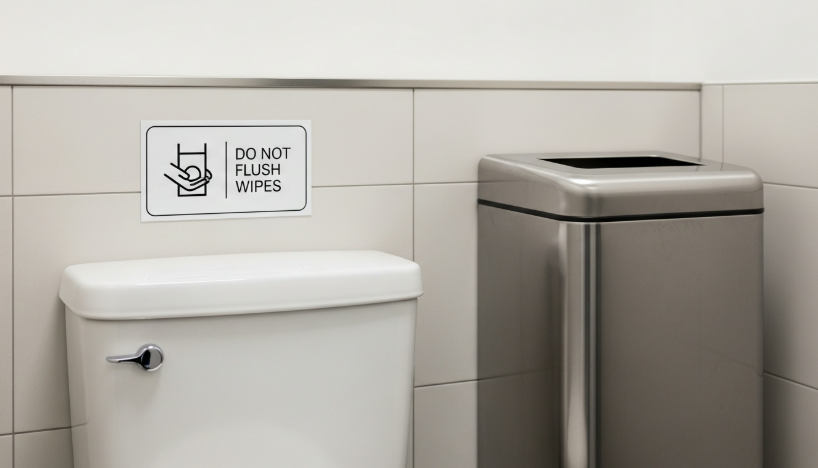
Use short, directive statements paired with a universal icon so every user understands disposal expectations immediately. Place signs where users decide—stall doors, above sinks, and at changing stations—to intercept the flush impulse.
- Keep text short and action-oriented: examples include ‘Do not flush wipes. Please use the bin.’
- Add a bold, universal pictogram showing a wipe with an X over a toilet to aid comprehension across languages.
- Place signs at eye level on stall doors, above sinks, and near changing tables; put smaller reminders on bin lids.
- Use high-contrast colors and fonts sized for quick reading; laminate or use weatherproof materials in high-moisture areas.
- Test alternative messages (e.g., explaining plumbing damage versus environmental harm) and track which yields better compliance.
- Include simple instructions for staff about signage upkeep and replacement intervals.
Maintenance, emptying schedules, and contamination handling
Define a service cadence from day one and make responsibilities explicit. Prevent overflow and odors by matching liner changes and disinfection to observed fill rates and by providing PPE and clear handling steps for staff.
- Establish emptying frequency based on observed fill rates; check high-traffic bins multiple times per day and lower-traffic bins daily or every other day.
- Require staff to wear gloves and use tongs or grabbers for liner removal; provide hand hygiene stations or sanitizer after service.
- Replace liners at each emptying and disinfect internal surfaces on a regular schedule to prevent residue buildup.
- Keep a log of emptying times, staff initials, and any incidents; use the log to adjust service frequency and spot problem locations.
- Install fill-level sensors or schedule audits where staffing is limited to trigger timely service before bins overflow.
- Coordinate with waste contractors about disposal volumes and any special handling rules; ensure bins do not become a source of cross-contamination with other waste streams.
Monitoring effectiveness and key performance indicators
Measure outcomes, not effort. Track plumbing incidents and bin metrics so you can iterate placement, capacity, or messaging based on hard data instead of assumptions.
- Track monthly restroom-related plumbing incidents and compare before-and-after installation counts.
- Monitor bin fill cycles per day and user complaints related to odors or overflow.
- Record maintenance time spent on blockages to estimate labor savings from the program.
- Survey staff and users for perceived clarity of signage and availability of disposal options.
- Adjust bin numbers, placement, or messaging based on KPI trends rather than assumptions.
Conclusion
Upgrading restrooms by choosing septic-safe toilet paper, mandating 1-ply commercial tissue, and adding disposal bins with clear signage reduces blockages and fatberg risks, protects commercial plumbing warranties, and keeps municipal sewer systems operational.
Start with a quick audit of your facility’s dispensers, waste handling, and service agreements to spot weak points. Contact Top Source Hygiene for technical specifications and commercial samples to validate products before a broader rollout.
Frequently Asked Questions
Are flushable wipes safe for commercial plumbing?
No – for most commercial plumbing systems flushable wipes are not safe. Although marketed as ‘flushable’, most wipes do not disintegrate quickly, they can plug traps, damage pumps and grinders, and increase sewer maintenance. For commercial buildings require disposal in waste bins and clear signage; if you must allow a dispersible wipe, verify independent EDANA/INDA dispersibility certification and confirm acceptance with the local wastewater authority before permitting flushing.
Commercial toilet paper vs flushable wipes?
Toilet paper is engineered to disperse rapidly and is the lowest-risk choice for commercial plumbing. Flushable wipes provide superior cleaning but are thicker, often contain binders or plastics, break down much more slowly, cost more, and raise the risk of blockages and environmental harm. For offices, prefer high-quality toilet paper or install bidet options; if wipes are supplied, make them explicitly non-flushable and provide disposal bins.
Why do plumbers hate flushable wipes?
Plumbers dislike wipes because they cause persistent clogs, damage pumps and grinders, foul traps, and increase emergency repairs and maintenance costs. Wipes combine with fats and solids to form stubborn blockages that often require manual removal or specialized equipment.
How to stop employees flushing wipes in the office?
Use clear signage, provide covered waste bins in every stall and empty them regularly, include disposal rules in employee onboarding and facilities policies, and consider supplying bidet fixtures or wet-toilet paper alternatives. Track restroom-related maintenance incidents and communicate repair or cleanup costs to discourage flushing.
Do flushable wipes break down like toilet paper?
No – in general wipes do not break down like toilet paper. Toilet paper disperses within seconds to minutes; most wipes remain intact for much longer. Some wipes are independently tested to be dispersible, but always assume wipes will not behave like toilet paper unless you have verified test results and local sewer acceptance.
What is a sewer fatberg?
A fatberg is a large, hardened mass in sewer systems made of congealed fats, oils and grease (FOG) mixed with wipes, sanitary items, and other non-biodegradable debris. Fatbergs block sewers, cause overflows, and require costly, hazardous removal; preventing them requires keeping FOG and wipes out of drains and performing regular sewer maintenance.