Skip to content
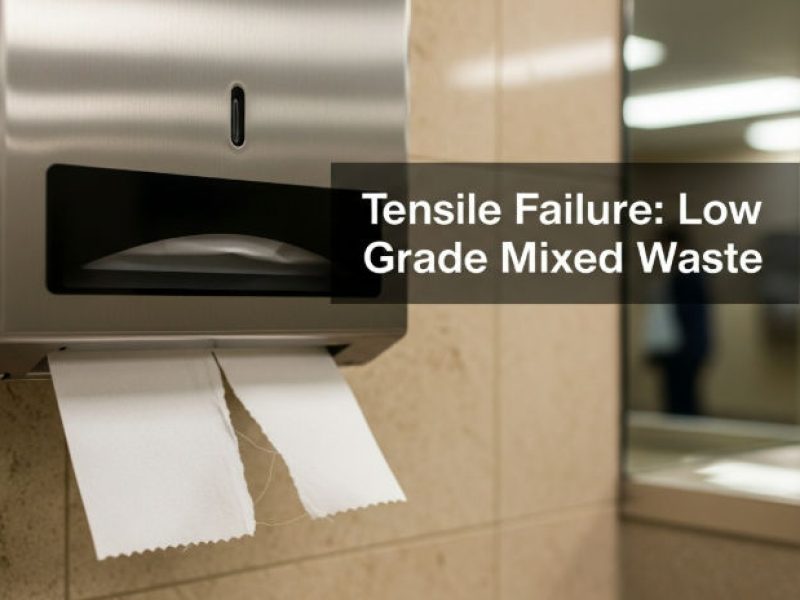
The choice between Virgin vs Mixed Waste pulp determines whether a commercial facility operates efficiently or faces constant plumbing blockages and escalating custodial labor costs. Procurement teams that overlook fiber quality often end up with brittle jumbo rolls that fail under standard use, forcing tenants to use more product to compensate for poor performance. This cycle increases waste and drives up maintenance frequencies, turning a perceived saving into a significant operational risk.
This guide details the technical specifications of recycled janitorial paper, focusing on the structural differences between Sorted Office Paper (SOP) and low-grade mixed waste. We break down the physics behind tensile strength failures and the mechanics of lint and dust production in high-traffic restrooms. These sections provide a framework for auditing wholesale supply chains, helping you secure consistent paper quality that meets professional facility standards.
The Wild West of Recycled Janitorial Paper Specs
Procurement managers currently navigate a global market where “recycled” lacks a standardized technical definition, leading to significant performance volatility in high-traffic commercial facilities.
Fragmented Standards for Recycled Paper Content
Global markets in 2026 operate without a unified definition for recycled pulp. This fragmentation creates significant quality variations across the supply chain, forcing procurement managers to reconcile conflicting regulations when sourcing across North America, Europe, and Asia. Suppliers frequently label low-grade scrap as premium material to mask fiber inconsistencies.
- Procurement teams face a landscape where regional definitions of “recycled” fail to align, complicating international compliance.
- Vague labeling often hides inferior fiber quality, leading to unexpected product failure in the field.
- Top Source Hygiene avoids these inconsistencies by focusing on 100% virgin pulp and verified FSC-certified materials to ensure batch-to-batch stability.
Structural Risks in Mixed Waste Pulp
Using lower-tier recycled fibers introduces immediate structural risks in high-traffic environments. Mixed waste pulp typically consists of short, brittle fibers that lack the necessary interlocking strength for jumbo rolls and hand towels. Facility managers report that low-grade paper breaks frequently, leading to increased maintenance costs and dispenser clogs.
- Short fibers in mixed waste reduce the tensile strength required for commercial-grade jumbo rolls.
- Frequent paper breakage in airports and malls drives up labor costs through constant maintenance interventions.
- We apply rigorous absorbency and durability testing to ensure every roll meets the high-load demands of professional facilities.
Transparency Hurdles in Global Sourcing
Verifying the origin of recycled materials remains a challenge for wholesalers operating without factory-direct oversight. A lack of transparency in the pulp chain introduces hygiene compliance risks and the potential for unmonitored chemical additives. Identifying manufacturers that rely on floor sweepings instead of clean post-consumer waste is critical for maintaining safety standards.
- Opaque supply chains often hide the use of contaminated floor sweepings or non-compliant chemical whiteners.
- Rigorous quality control identifies producers who compromise on hygiene for lower production costs.
- Reliable partners provide clear documentation and verified samples to guarantee product safety for the hospitality and healthcare sectors.
Sorted Office Paper (SOP): The Clean Recycled Standard
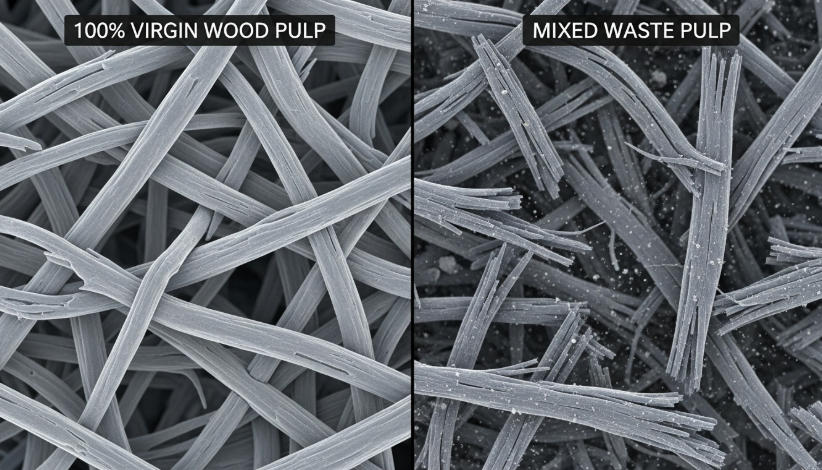
SOP serves as the premier post-consumer fiber source, utilizing bleached chemical strands to provide a high-tensile, low-lint alternative to standard mixed waste pulp.
SOP Fiber Grading and Quality Metrics
We categorize Sorted Office Paper (SOP) as a high-grade recycled pulp source consisting primarily of bleached chemical fibers from office stationery. This material provides a high-brightness fiber base that requires less aggressive bleaching than mixed waste. We prioritize this grade for premium recycled tissues to ensure a soft, professional finish that meets the expectations of high-end commercial clients.
| Performance Metric | Sorted Office Paper (SOP) | Mixed Waste Pulp |
|---|---|---|
| Fiber Integrity | Long-strand chemical fibers | Short, brittle secondary fibers |
| Lint/Dust Levels | Minimal; suitable for clinics | High; frequent surface residue |
| Tensile Strength | High (Industrial Grade) | Low (Prone to tearing) |
Impact on Tensile Strength and Durability
High-quality office paper recycling preserves the long fiber strands necessary for strong paper products. We use SOP fibers to enhance the tensile strength of jumbo rolls and industrial hand towels. Longer fibers prevent the frequent tearing often associated with lower-grade mixed waste pulp, ensuring reliable performance in high-traffic commercial dispensers.
Environmental Targets for 2026
Modern manufacturing facilities integrate SOP to meet 2026 sustainability mandates and green procurement policies. We align SOP processing with 2026 FSC standards to support eco-conscious commercial brands. Utilizing clean office paper reduces the total energy and water consumption compared to processing raw virgin materials, making it a viable component for sustainable supply chains.
Contamination Control and Lint Reduction
A clean recycled standard depends on removing adhesives, coatings, and prohibitive materials before pulping. We eliminate the dust and lint issues common in cardboard-based recycling through rigorous SOP sorting. Clean pulping results in hygienic paper products suitable for medical clinics and high-end hotels where air quality and surface cleanliness are non-negotiable.
Premium Wholesale Jumbo Rolls at Factory Prices
Mixed Waste Pulp: Cardboard, Magazines, and Floor Sweepings
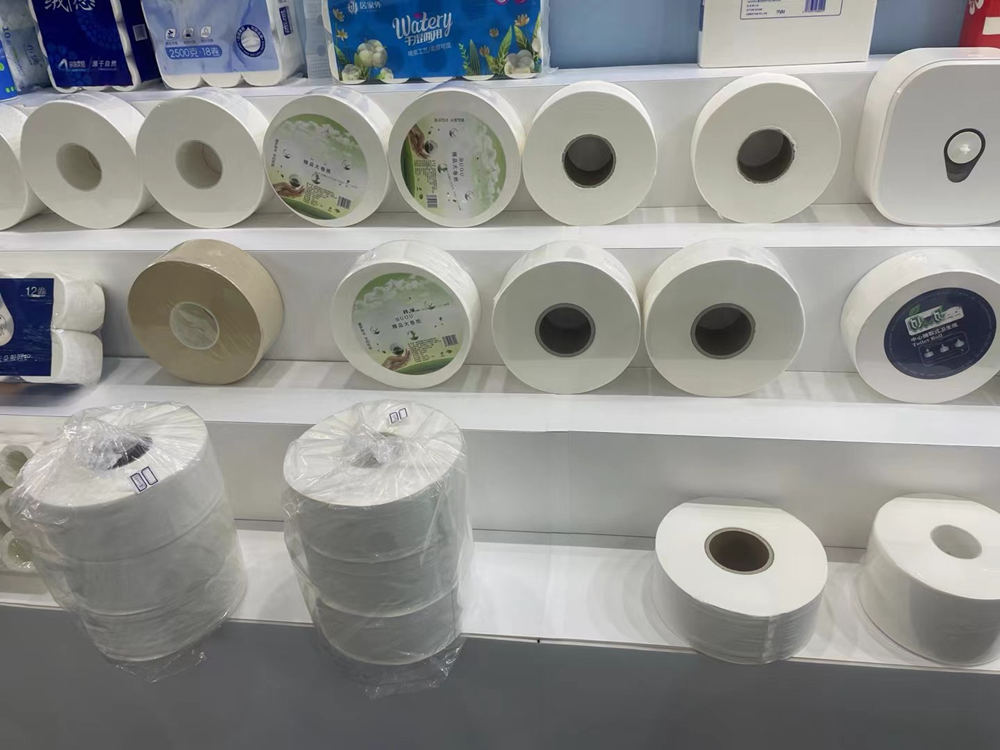
Relying on low-grade mixed waste streams fundamentally compromises the mechanical integrity and hygiene standards of commercial tissue, leading to high linting and frequent structural failure in high-traffic environments.
Composition of Low-Grade Mixed Waste Streams
Old corrugated containers (OCC) provide necessary bulk for recycled paper products, but they lack the fiber refinement found in premium office waste. These variable supply chains create high inconsistency in fiber lengths within a single pulp batch. Unsorted collection methods introduce non-paper contaminants like adhesives and plastics that disrupt the mechanical pulping process, creating structural weak points in the paper web.
Challenges with Magazine Ink and Clay Coatings
Heavy clay coatings from glossy magazines significantly increase the volume of waste sludge during the recycling process. Complex synthetic inks require aggressive chemical treatments that degrade the integrity of cellulose fibers. Residual pigments often cause visible graying or dark spotting in the finished janitorial tissue, which signals poor quality to B2B wholesalers and end-users alike.
Integrity Risks from Industrial Floor Sweepings
Incorporating floor-level debris weakens the structural bonds and compromises the hygiene profile of the finished paper. These sweepings contribute high levels of dust and microscopic grit to the final pulp mix. Ultra-short fibers from sweepings fail to interlock properly, which leads to poor tensile strength in jumbo rolls. This debris also causes frequent machinery downtime during high-speed conversion cycles.
Quality Benchmarks Against Top Source Hygiene Standards
Top Source Hygiene avoids the risks associated with mixed waste by maintaining a 2,860-ton monthly capacity using exclusively high-grade, virgin wood pulp. Virgin wood pulp offers consistent softness and durability that mixed waste materials cannot replicate in the 2026 market. Standardizing on virgin fiber eliminates the need for harsh bleaching agents commonly used to treat and whiten low-grade recycled pulp.
Why Mixed Waste Jumbo Rolls Have Zero Tensile Strength
Mixed waste jumbo rolls fail in high-traffic environments because the structural breakdown of recycled fibers eliminates the mechanical interlocking required for tensile durability.
Fiber Length Degradation in Recycled Pulp
Every time paper goes through the recycling loop, the fibers physically shorten. These truncated fibers cannot effectively interlock during the wet-end process of jumbo roll production. In 2026, the industry sees a surge in short-fiber rolls that tear under the slightest dispenser tension. Recycled materials lack the structural integrity found in the long-chain wood pulp fibers required for industrial-grade tissue.
- Short fibers create a fragile paper web that tears easily under minimal tension.
- Processing mixed waste results in brittle rolls that fail to meet commercial durability standards.
Impact of Non-Fibrous Contaminants
Mixed waste streams introduce foreign materials like adhesives, residual inks, and micro-plastics into the pulp vat. These contaminants act as physical barriers, preventing the fiber-to-fiber bonding needed for a continuous sheet. Debris from floor sweepings or low-grade magazines creates structural gaps in the jumbo roll structure. This lack of cohesion causes frequent breaks on high-speed manufacturing lines and frustrating product failure for the end-user.
| Performance Metric | Mixed Waste Pulp | 100% Virgin Wood Pulp (TSH) |
|---|---|---|
| Fiber Integrity | Shortened, brittle fragments | Long-chain interlocking matrix |
| Tensile Strength | Low (Frequent dispenser tearing) | High (Industrial traffic grade) |
| Chemical Purity | Contains residual inks and glues | 100% OBA-Free and lint-free |
Loss of Hydrogen Bonding Potential
Strength in tissue products relies on hydrogen bonding between cellulose fibers. Recycled fibers suffer significant surface damage that reduces the surface area available for these critical chemical bonds. Over-processed mixed waste lacks the natural resins found in fresh timber. Without these bonds, the resulting jumbo roll becomes brittle, snapping immediately when subjected to the pulling force of an industrial tissue dispenser.
Virgin Wood Pulp Structural Advantages
Top Source Hygiene prioritizes 100% virgin wood pulp to bypass the inherent flaws of mixed waste materials. Long-chain fibers from virgin sources create a dense and durable matrix that stands up to the demands of airports, malls, and high-traffic office buildings. Clean pulp sources eliminate structural failures caused by recycled debris and chemical additives, ensuring a consistent, lint-free experience across all wholesale orders.
- Virgin fibers create a dense and durable matrix for jumbo rolls.
- High tensile strength allows for efficient use in professional environments without product failure.
- Consistent fiber quality prevents the shedding of dust and lint common in low-grade pulp.
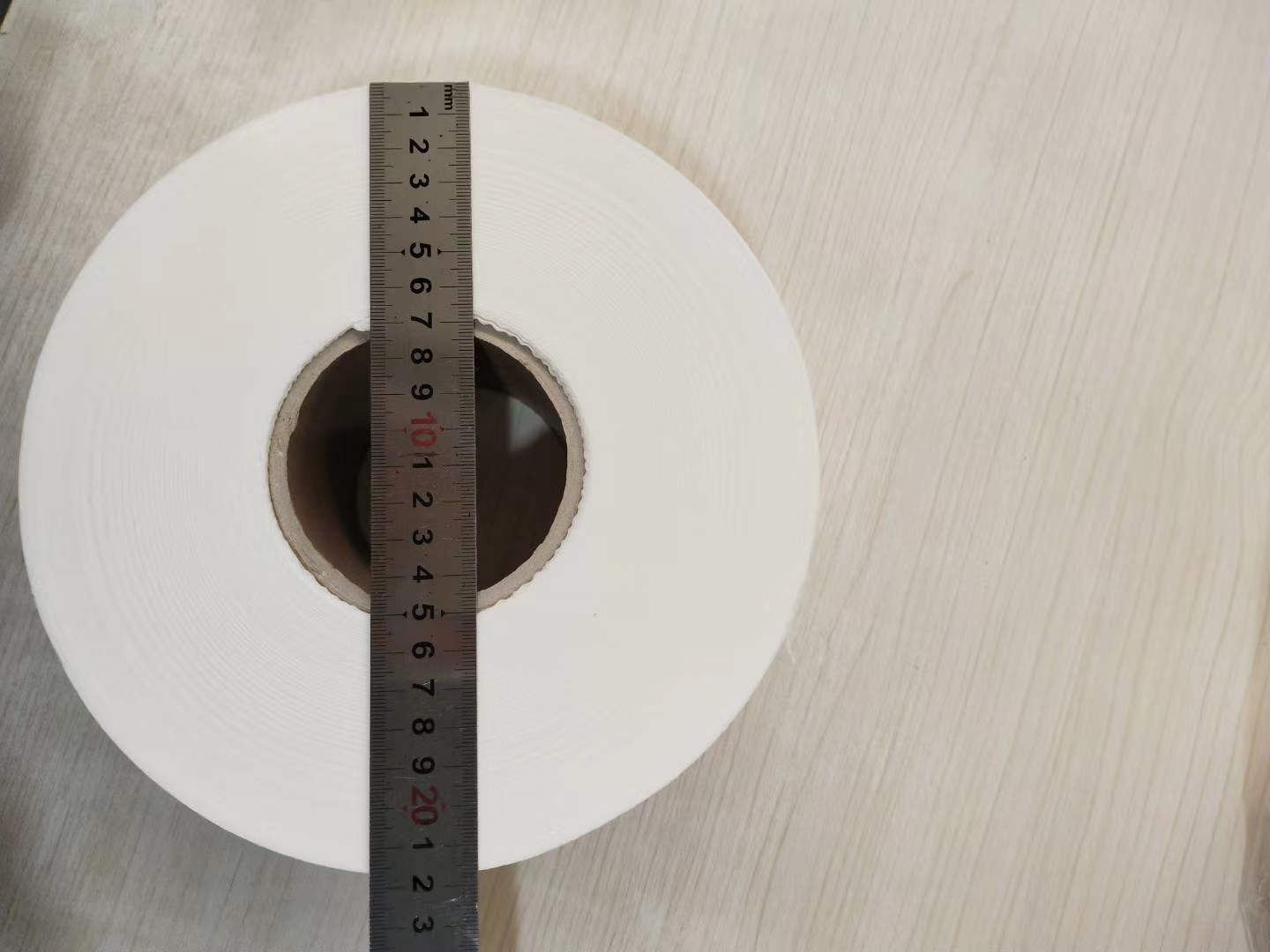
The High Lint and Dust Output of Low-Grade Pulp
Low-grade recycled pulp sheds micro-particulates that compromise the user experience and trigger frequent dispenser hardware failures in high-traffic environments.
Structural Weaknesses of Short-Fiber Mixed Pulp
Recycled mixed waste relies on fibers that have undergone multiple processing cycles, causing them to shorten and lose structural integrity. These brittle strands snap under minimal mechanical stress, leading to immediate fragmentation during use. Unlike long-fiber virgin alternatives, this material lacks the internal bonding required to remain intact when pulled from a dispenser or subjected to friction.
- Short-fiber composition lacks the interlocking strength found in 100% virgin wood pulp.
- Mechanical tension during paper separation causes these weak fibers to snap and release dust.
- Surface shedding leaves visible white residue on restroom fixtures and user clothing.
—
Maintenance Impacts on Commercial Dispensing Systems
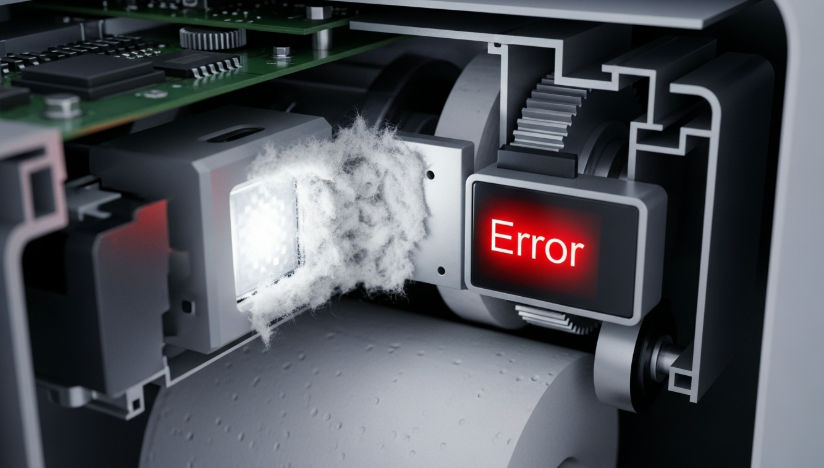
Excessive paper dust creates significant operational hurdles for facility managers. Airborne particulates settle inside the sensitive internal components of automated hardware, causing malfunctions and increasing the total cost of ownership. The labor hours required to manage this debris often outweigh the initial savings gained from purchasing lower-grade jumbo rolls.
- Paper dust accumulation clogs optical sensors in touchless dispensers, leading to mechanical failures.
- Airborne lint necessitates more frequent ventilation filter replacements in high-traffic zones.
- Facility teams spend more time on surface cleaning to manage persistent and unsightly dust buildup.
—
Top Source Hygiene’s Low-Lint Virgin Fiber Solutions
We use 100% virgin wood pulp to eliminate the linting issues common in lower-grade alternatives. The naturally long fibers provide the bonding strength necessary to keep the paper surface intact, even under heavy usage. This commitment to material purity ensures a clean, dust-free environment for end-users while protecting expensive dispensing equipment from particulate damage.
- Virgin wood pulp ensures superior fiber bonding to prevent surface disintegration.
- Our factories in Baoding employ advanced vacuum extraction systems to remove dust during the 2026 production cycle.
- High material standards help global clients maintain superior hygiene scores and reduce maintenance overhead.
Auditing Your Wholesale Supplier’s Pulp Sourcing Chain
Supply chain transparency in 2026 requires rigorous verification of raw material purity and factory capacity to prevent the infiltration of low-grade mixed waste into premium B2B paper stocks.
Procurement teams must validate that suppliers maintain active credentials to navigate global market requirements. ISO 9001 quality management systems ensure consistent production cycles, while FSC (Forest Stewardship Council) certifications track the sustainability of the wood pulp path. Compliance with FDA and EU hygiene regulations remains a non-negotiable threshold for paper products destined for the retail and hospitality sectors to avoid regulatory rejection at international borders.
Verifying International Certification Standards
- Review ISO 9001 documentation to confirm standardized manufacturing and quality control protocols.
- Verify FSC certifications to ensure wood pulp originates from responsibly managed forests.
- Ensure all products meet EU and FDA safety standards for direct skin contact and hygiene.
Tracking Raw Material Sources and Purity
Analyzing fiber content confirms that the supplier utilizes 100% virgin wood pulp without the inclusion of harmful additives or inferior recycled waste. We demand proof of OBA-Free status to guarantee that no fluorescent whiteners or chemical brightening agents contaminate the pulp. Inspecting the chain of custody for materials used in facial tissues and toilet paper prevents the accidental introduction of low-grade fibers that compromise skin-friendly softness.
| Sourcing Metric | 100% Virgin Wood Pulp (TSH) | Mixed Waste / Recycled |
|---|---|---|
| Fiber Integrity | Superior tensile strength (long fibers) | Prone to tearing (short fibers) |
| Hygiene Safety | 100% OBA-Free (Safe for skin) | High risk of chemical residues |
| User Experience | Lint-free, high softness | High dust and lint output |
Evaluating Factory Production Scale and Output
Field audits determine if manufacturing facilities can sustain high-volume global demand without sacrificing quality. Top Source Hygiene manages a significant industrial footprint in Hebei, delivering a monthly production capacity of 2,860 tons. We validate lead times for 40-foot containers to ensure that international distribution networks remain stocked and optimized for 40HQ shipping logistics.
- Audit the 2,860-ton monthly output to confirm the factory can meet large-scale wholesale orders.
- Inspect specialized machinery to ensure consistent GSM and ply thickness across all batches.
- Verify container loading protocols to maximize 40HQ payload and reduce landed costs per roll.
Validating Supplier Quality Control Systems
Direct physical testing measures the performance of paper products against strict brand specifications. This process includes verifying absorbency, softness, and tensile strength across specialized lines like the TSH-4010 luxury series. Auditing the OEM and ODM customization workflows ensures that private label packaging meets exact brand standards while maintaining cost-efficient shipping routes to North America, Europe, and Asia.
- Conduct point-to-point embossing tests to verify a 30% increase in liquid absorbency.
- Assess septic-safe disintegration rates to ensure compliance with Western plumbing standards.
- Verify pre-shipment visual inspections through photos and videos of finished goods before final payment.
Conclusion
Choosing the right pulp grade directly affects the durability and hygiene standards of your commercial tissue supply. Prioritizing 100% Virgin Wood Pulp or verified SOP standards eliminates the risks of tearing, linting, and plumbing blockages associated with mixed waste. This strategic sourcing ensures consistent quality across your distribution network and protects long-term procurement value.
Audit your current inventory for fiber integrity or review our technical manual for high-performance jumbo roll specifications. Contact our manufacturing team to request a 40HQ container quote or custom private label samples tailored for your market.
Frequently Asked Questions
What is mixed waste pulp in commercial toilet paper?
Mixed waste pulp refers to a secondary fiber source created from a blend of various recycled paper materials, including sorted office paper, newsprint, and corrugated scraps. In the commercial tissue industry, this pulp is processed through de-inking and bleaching stages to remove contaminants. While cost-effective, mixed waste pulp generally contains shorter fibers compared to virgin or high-grade recycled sources, leading to a coarser texture and lower structural integrity.
Why does cheap jumbo toilet paper tear so easily?
The tendency for cheap jumbo rolls to tear prematurely is primarily due to a high concentration of short “mechanical” fibers and a lower basis weight (GSM). To reduce costs, manufacturers often skip expensive chemical bonding agents and use lower-quality recycled pulp where the fibers have been weakened by multiple recycling cycles. This results in poor cross-directional (CD) tensile strength, causing the paper to shred or snap under the tension of a commercial dispenser.
Virgin pulp vs mixed waste recycled toilet paper?
Virgin pulp is derived directly from timber and features long, intact fibers that provide superior softness, strength, and absorbency. In contrast, mixed waste recycled paper uses reclaimed fibers that are shorter and stiffer, resulting in a more abrasive feel. While virgin pulp is the gold standard for premium hospitality environments, mixed waste recycled paper is the industry standard for high-traffic janitorial use where sustainability and “cost-per-use” are the primary procurement drivers.
How to audit the quality of wholesale tissue pulp?
A professional quality audit should focus on three technical metrics: Tensile Strength (testing both dry and wet burst strength), Brightness (using ISO standards to check for consistent bleaching), and Fiber Analysis (determining the ratio of long to short fibers). Additionally, facilities should verify the “linting” factor to ensure the pulp won’t create excessive dust. Requesting a Certificate of Analysis (CoA) from the manufacturer that aligns with TAPPI (Technical Association of the Pulp and Paper Industry) standards is essential for wholesale verification.
Does cheap commercial toilet paper create more dust?
Yes, lower-grade commercial tissue typically creates more ambient dust (linting). This occurs because the paper is composed of shorter recycled fibers and “fines” that are not securely bonded within the paper web. When the roll is pulled or the paper is torn, these loose fragments are released into the air. High-quality tissue uses longer fibers and specialized “softening” rollers that minimize surface friction and fiber release during the converting process.
Sourcing high quality recycled jumbo rolls?
To source high-quality recycled rolls, prioritize suppliers that offer “100% Post-Consumer Waste” (PCW) content rather than generic “recycled” labels. PCW fibers are generally more consistent than mixed waste. Look for rolls that meet Green Seal (GS-1) or EcoLogo certifications, which mandate specific performance requirements for strength and absorbency. Always request samples to test the “perforation pull”—the force required to tear a sheet—to ensure it meets the mechanical requirements of your specific dispenser hardware.