Skip to content
Embossing cylinder wear directly undermines the structural integrity of 2-ply commercial tissue, which triggers high rates of product returns and weakens distributor trust. When the micro-texture on these rollers fades, the mechanical bond between paper plies fails. This degradation changes a high-yield bulk product into a flat, thin roll that cannot meet professional absorbency standards.
This guide examines the mechanical degradation of steel rollers and the specific physics behind tissue de-plying. We break down how pattern loss reduces liquid capacity and why mills must keep strict maintenance records to preserve jumbo roll quality. Use these technical insights as a standard operating procedure for mill quality control and procurement auditing.
The Mechanical Heart of the Toilet Paper Mill
The synergy between high-speed production lines and the Hebei industrial hub provides the necessary scale for consistent global B2B distribution and inventory stability.
Production Scale and Monthly Output Metrics
Top Source Hygiene operates two primary manufacturing facilities in Mancheng, Baoding, ensuring a monthly production capacity of 2,860 tons. This infrastructure supports a supply chain that reaches 56 countries as of 2026. We leverage 30 years of industrial expertise to maintain a constant product flow, allowing us to manage large-scale wholesale orders and international logistics without compromising lead times.
Core Machinery and OEM Customization Capabilities
Our high-speed production lines process 100% virgin wood pulp into configurations ranging from 2-ply to 5-ply. The factory utilizes flexible machinery that allows for precise adjustments to paper weight (GSM) and roll dimensions to match specific regional requirements. These technical capabilities support comprehensive private label integration, enabling retail and hospitality sectors to implement custom branding, sheet counts, and packaging formats directly at the source.
Quality Systems within the Manufacturing Line
Integrated testing equipment verifies the absorbency and softness of every batch produced. The manufacturing process adheres to ISO 9001, FDA, and FSC certifications to ensure global compliance and product safety. Strict quality control protocols govern the transition from raw pulp to the final packaged roll, providing a lint-free experience and maintaining high-wet-strength durability for all professional-grade tissue products.
What Are Steel Embossing Cylinders?
Steel embossing cylinders function as the mechanical heart of the mill, exerting the precise pressure required to bond paper plies while defining the tactile and absorbent characteristics of the final product.
Mechanical Role in Tissue Ply Bonding
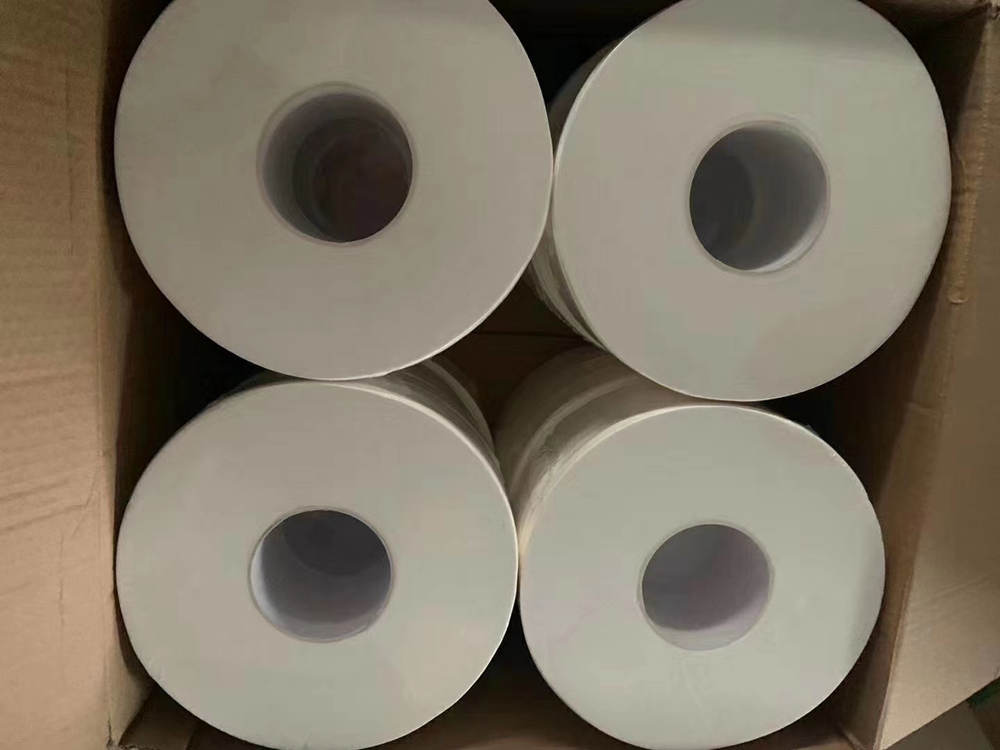
These precision-engineered rollers apply high pressure to marry multiple plies of virgin wood pulp, transforming loose webs into a single cohesive product. The mechanical bond created by the cylinder engravings ensures that multi-ply toilet paper and kitchen towels remain intact throughout consumer use. We deploy these cylinders to maintain structural integrity across our 2,860-ton monthly production capacity, preventing the delamination common in lower-grade manufacturing.
Application of Custom Branding and Texture
The engraved patterns on these cylinders facilitate the high degree of customization necessary for OEM and ODM paper manufacturing. Clients across 56 countries select specific embossing designs to differentiate their private label products in diverse retail markets. Beyond aesthetics, the texture increases the effective surface area of the paper, which significantly improves the tactile softness felt by the end user during use.
Influence on Product Bulk and Absorbency
The embossing process fundamentally alters the physical properties of the paper fibers to enhance performance. By deforming the paper at specific points, these cylinders create microscopic air pockets that increase the apparent bulk or puffiness of the roll. These pockets act as reservoirs, often boosting liquid absorbency by up to 30% in kitchen towels and facial tissues. Proper cylinder calibration ensures the paper gains thickness without sacrificing the tensile strength needed for commercial high-traffic environments.
Premium Jumbo Rolls at Factory-Direct Prices
The Degradation of the Micro-Texture Pattern Over Time
Continuous friction during high-speed production inevitably erodes the micron-level geometry of steel embossing cylinders, directly compromising the paper’s tactile bulk and ply-bonding integrity.
Mechanical Friction and Surface Erosion
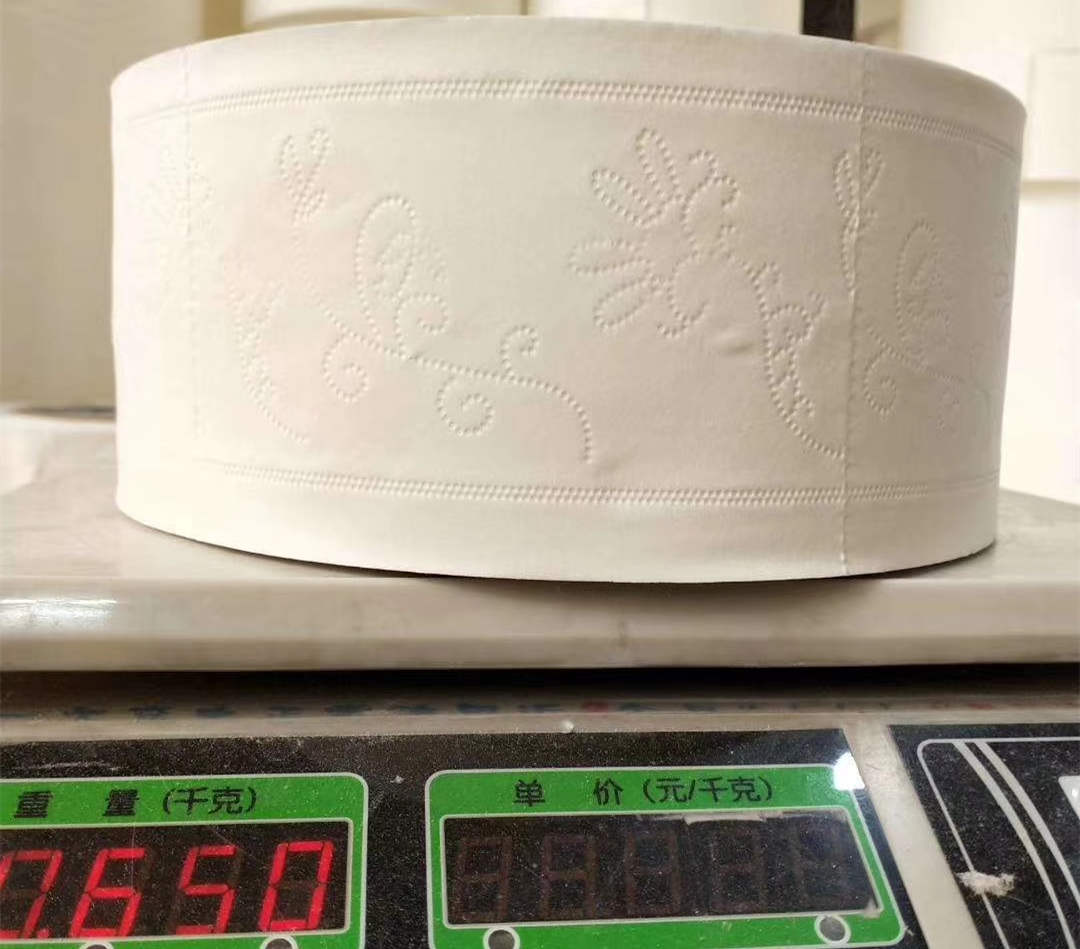
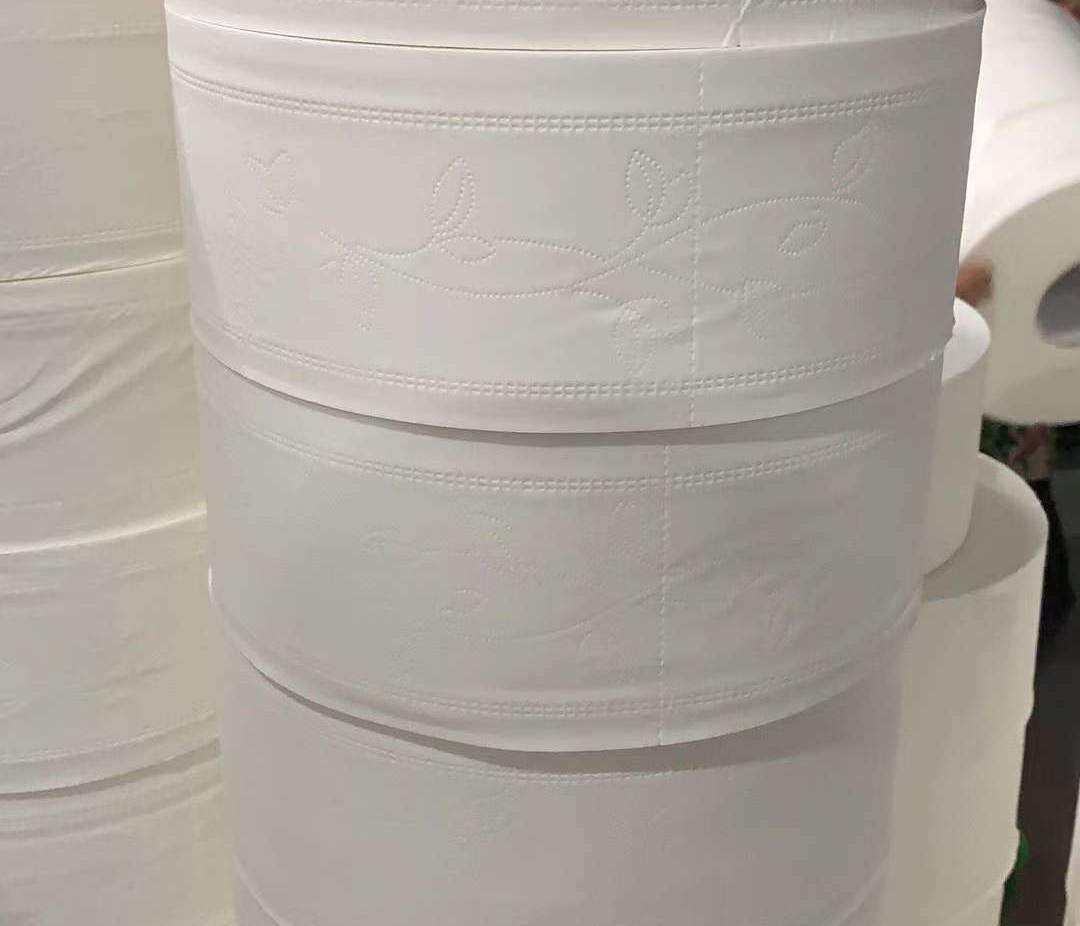
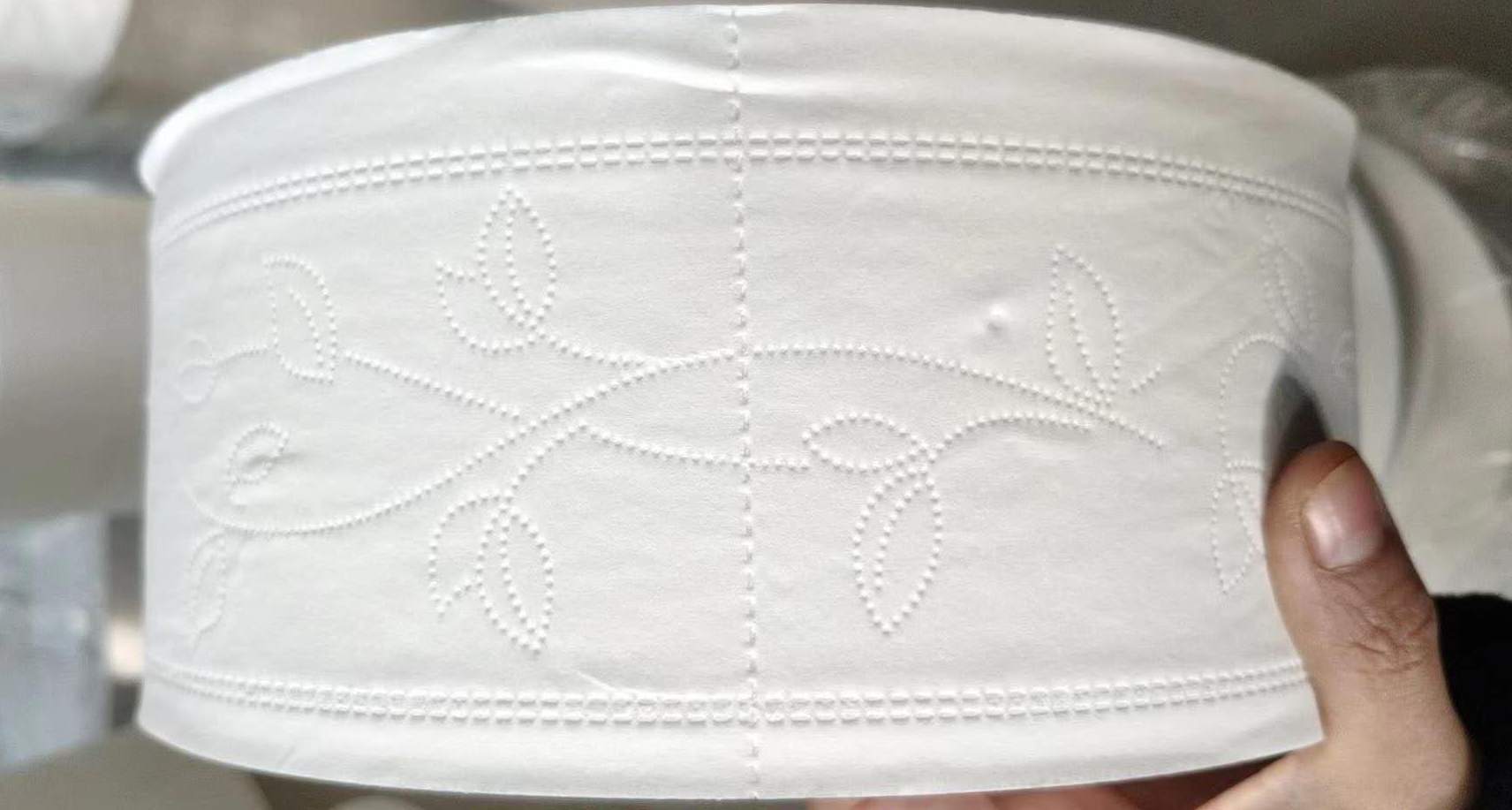
High-speed production lines at the Top Source Hygiene facility utilize CNC-precision steel cylinders to engrave signature floral and dot patterns into the tissue web. Abrasive forces from 100% virgin wood pulp fibers smooth the sharp peaks of this micro-texture over time. This mechanical stress erodes fine engraving details during months of 24/7 operation, shifting the surface profile from a sharp geometric contact zone to a blunted, less effective interface.
| Wear Metric | Optimized State (New) | Degraded State (Worn) |
|---|---|---|
| Pattern Depth | 0.3mm – 0.5mm (CNC Precision) | < 0.15mm (Blunted) |
| Ply Adhesion Strength | High-Pressure Lamination Bond | Layer Separation (De-ply) |
| Absorbency Increase | 30% (Point-to-Point) | < 10% (Surface Flattening) |
Engineers in 2026 track these erosion rates to ensure the texture remains within functional tolerances for brand consistency. We monitor the transition from sharp points to rounded edges, as this physical change dictates how effectively the fibers are displaced to create “bulk” or puffiness in the finished roll.
Impact of High-Pressure Operations on Pattern Definition
Operating at high GSM settings—typically 13–22g/m² per ply—increases the mechanical load on the steel cylinders. This constant nip pressure rounds the crisp edges of custom micro-patterns. Increased thermal energy from friction during 24/7 manufacturing cycles softens the surface resistance of the metal over time. We actively monitor pressure distribution across the roller to prevent uneven degradation across the width of the paper web, which otherwise causes “one-sided” thickness defects in jumbo rolls.
Identification of Texture Blunting and Depth Loss
Visible changes in the finished paper serve as the primary indicators of a degrading embossing cylinder. The once-distinct aesthetic of custom brand logos becomes faint as the engraving depth decreases. Physical measurements of the roller surface reveal the transition from sharp geometric points to rounded, ineffective contact zones. This loss of pattern definition results in a noticeable drop in the tactile quality and absorbency of the toilet paper or kitchen towels, signaling a need for cylinder maintenance.
Predictive Maintenance and Life Cycle Management
Systematic monitoring allows our production teams to schedule cylinder resurfacing before the texture fails completely. We use diagnostic tools to calculate the remaining operational life of each embossing set based on the total tonnage of virgin pulp processed. Regular cleaning prevents pulp buildup in the micro-textures, which can mimic the appearance of permanent wear. Accurate maintenance records help us determine the optimal window for re-engraving cylinders to maintain our strict quality standards across all B2B shipments.
How Worn Rollers Cause 2-Ply Commercial Tissue to De-Ply
Ply separation in high-volume manufacturing isn’t a material defect; it is a mechanical failure caused by the degradation of embossing cylinder nip pressure and surface geometry.
Reduction in Mechanical Nip Pressure
Mechanical bonding for 100% virgin wood pulp requires precise, localized pressure to interlock fibers across layers. When embossing cylinders wear down, they exert uneven force across the web. This failure prevents the fibers from fusing effectively at the bond points. The result is a weak structure that delaminates as soon as the tissue exits the production line or is pulled from a commercial dispenser.
At Top Source Hygiene, we use monitoring systems to identify these pressure drops in real-time. Maintaining a constant nip force ensures that every batch meets the high-tensile requirements of our commercial clients, preventing the “peeling” effect common in unmaintained machinery.
| Bonding Parameter | Optimal Cylinder Condition | Worn Cylinder Impact |
|---|---|---|
| Ply Adhesion Strength | 0.12 – 0.18 N/m | < 0.05 N/m (De-plying) |
| Pattern Definition | Sharp CNC Micro-Points | Rounded / Flattened Peaks |
| Nip Pressure Uniformity | +/- 2% Variance | > 15% Variance |
Erosion of Micro-Texture Edge Sharpness
The steel cylinders feature sharp, CNC-machined patterns designed to “bite” and nest the secondary ply into the primary sheet. Over millions of linear meters, these edges gradually flatten. This erosion turns functional mechanical bond points into smooth, ineffective surfaces. Without sharp pattern definition, the “nesting” required for 3-ply and 5-ply structural integrity fails.
Regular cylinder resurfacing is the only way to maintain the soft but durable bond expected by global hospitality brands. We prioritize these maintenance cycles to ensure the point-to-point embossing remains deep enough to facilitate a 30% increase in liquid absorbency while keeping the plies locked together.
Web Tension Variances and Layer Misalignment
Degraded rollers introduce friction inconsistencies and microscopic diameter changes. These variances cause the top and bottom plies to move at slightly different speeds during high-capacity manufacturing. This speed mismatch creates air pockets between the layers, which act as a catalyst for de-plying during the final mechanical compression and packaging stages.
We follow strict maintenance protocols to ensure that our 2,860-ton monthly output meets ISO 9001 standards. Proper roller alignment prevents these air pockets from forming, ensuring that the finished Jumbo Roll Tissue or household roll remains a single, cohesive unit until the moment of consumer use.
The Loss of Apparent Bulk (Puffiness) and Liquid Absorbency
Precision embossing serves as the mechanical engine for tissue loft, directly determining how fibers trap air and facilitate liquid transport.
Mechanical Compression and the Reduction of Air Pockets
Embossing cylinders generate volume by physically displacing wood fibers to form internal air voids. These microscopic pockets create the structural “loft” that defines premium tissue softness and hand-feel. When steel rollers wear down, they lose the mechanical precision required to maintain these critical gaps. This failure results in a thin, dense sheet that lacks the tactile comfort expected in commercial hygiene products.
We monitor equipment wear throughout 2026 to ensure our 100% virgin wood pulp maintains its structural integrity. By maintaining sharp pattern definitions, we prevent the collapse of the paper’s physical structure. This oversight ensures the final product remains fluffy rather than flat, even during high-speed production cycles.
Capillary Network Disruption and Surface Tension Effects
Liquid retention depends on the surface area and microscopic channels established during the embossing phase. Deep textures expand the area available for immediate liquid contact, which triggers wicking. Efficient wicking relies on a healthy capillary network to pull moisture into the inner plies of the tissue, a feature that differentiates high-performance towels from budget alternatives.
Degraded embossing patterns flatten the paper surface and effectively block these capillary pathways. Our 2026 internal tests show that inconsistent embossing leads to measurably slower absorption rates in kitchen towels and napkins. Sharp, well-maintained patterns remain essential for managing surface tension and ensuring the paper fulfills its primary functional requirements.
Maintaining Absorbency Standards Through Equipment Calibration
Consistent product performance requires rigorous mechanical calibration of the embossing heart. Technicians frequently adjust roll pressure to compensate for initial pattern wear, which helps preserve the specified thickness of the paper. This proactive maintenance prevents the gradual loss of bulk that often plagues high-volume production runs in unmonitored facilities.
We maintain an active monitoring system for our 2,860-ton monthly output to verify that every batch meets global ISO 9001 and FDA hygiene standards for 2026. Linking cylinder maintenance records to production quality ensures that absorbency and bulk remain constant, protecting the profit margins and brand reputation of our international B2B distributors.
Demanding Strict Quality Control and Cylinder Maintenance Records
Reliable 2-ply tissue bonding and absorbency levels depend entirely on the mechanical precision of steel embossing cylinders, necessitating a rigorous maintenance schedule to prevent micro-texture degradation.
Documenting Cylinder Lifecycle and Usage Metrics
Our engineering team tracks every embossing cycle to ensure patterns remain sharp and effective throughout the 2026 production year. We maintain detailed logs for each steel cylinder to monitor physical wear from high-volume production runs. These records include total operating hours and specific pressure settings, allowing us to predict exactly when micro-textures might begin to degrade.
| Inspection Parameter | Technical Benchmark | Maintenance Protocol |
|---|---|---|
| Embossing Depth Consistency | 13–22 GSM Tolerance | Daily micro-profile calibration |
| Ply-Bond Strength | High-Pressure Lamination | Hourly stress-test verification |
| Pattern Sharpness Index | CNC-Precision Specs | Laser-scanning every 10,000 rolls |
Production operators update these records daily to prevent the use of worn rollers that typically cause commercial tissue de-plying. By analyzing these usage metrics, we ensure that every jumbo roll leaving the factory meets the strict tactile and structural requirements of our global distributors.
Precision Inspections for Micro-Texture Integrity
Regular quality checks verify that embossing cylinders maintain the required depth for optimal liquid absorbency and puffiness. Technicians use advanced testing equipment to measure the exact physical profile of the embossing pattern on the rollers. We compare current cylinder performance against ISO 9001 quality benchmarks to ensure consistency across every batch.
Our quality control protocols require immediate cylinder servicing if automated inspections reveal any loss in pattern definition. This proactive approach guarantees that 100% virgin wood pulp maintains its integrity, providing the cloud-like softness and 30% increased absorbency our Point-to-Point embossing technology promises.
Standardized Logs for Embossing Equipment Maintenance
Strict record-keeping ensures that every component in the paper mill operates at peak efficiency to meet global demand. We archive all maintenance and cleaning activities to provide a transparent history of equipment health for our global clients. These records help our maintenance staff identify long-term trends in mechanical wear and tear across our Hebei factories.
Detailed documentation supports our 2026 commitment to delivering high-quality paper goods to over 56 countries. Providing this level of transparency protects dealer margins by ensuring product uniformity and preventing the common defects associated with unmonitored equipment wear.
Conclusion
Consistent cylinder maintenance protects the mechanical bonding of tissue plies and preserves the essential absorbency of commercial paper products. Tracking micro-texture degradation helps procurement teams avoid the quality issues associated with flat, non-absorbent jumbo rolls. These rigorous maintenance benchmarks ensure every shipment meets the physical standards required for high-performance 100% virgin wood pulp manufacturing.
Audit your current inventory for ply separation or contact our team to review our CNC-precision embossing patterns and cylinder maintenance logs. We can provide technical data sheets and production samples to assist with your next procurement quality assurance review.
Frequently Asked Questions
Why does my commercial toilet paper look flat?
Commercial toilet paper often appears flat when the embossing definition is lost during the manufacturing process. This is typically caused by insufficient pressure between the embossing cylinders or worn patterns on the rollers that fail to create necessary bulk. Additionally, if the winding tension is too high during the conversion from jumbo rolls to individual rolls, the air pockets created by the embossing are compressed, resulting in a dense, flat product.
What is an embossing cylinder in paper manufacturing?
An embossing cylinder is a specialized, heavy-duty roller used in the converting stage of paper manufacturing to press specific patterns into the tissue web. These cylinders, often made of engraved steel or laser-engraved rubber, serve three primary purposes: increasing the “bulk” or thickness of the paper without adding fiber, enhancing liquid absorbency through increased surface area, and improving the tactile softness of the final product.
How do worn machines affect jumbo roll quality?
Worn machinery components, particularly degraded bearings and misaligned rollers, cause inconsistent web tension and vibration. This leads to jumbo rolls with “soft spots,” telescoping edges, or uneven caliper (thickness) across the width of the roll. Such defects make it impossible to maintain high-speed production during the final converting process, often resulting in sheet breaks and significant material waste.
Why did my wholesale 2-ply tissue start separating?
Ply separation, or de-lamination, in wholesale 2-ply tissue is usually a sign of mechanical failure in the ply-bonding unit. In high-speed mills, plies are joined either through knurling (pressure bonding) or adhesive application. If the embossing rollers are misaligned or the adhesive nozzles are clogged or inconsistently timed, the bond strength drops below industry standards, causing the layers to peel apart during use.
How often do paper mills replace embossing rollers?
In a high-capacity commercial paper mill, embossing rollers typically undergo a major inspection every 6 months, with full replacement or professional re-engraving occurring every 2 to 3 years. Rubber-coated “mating” rollers have a shorter lifespan, often requiring replacement every 12 to 18 months due to surface hardening and heat-induced degradation that prevents uniform pattern transfer.
Quality control for imported commercial toilet paper?
Effective quality control for imported paper focuses on four critical metrics: Tensile Strength (to ensure it doesn’t tear prematurely), Basis Weight (grammage verification to ensure fiber density), Ply-Bond Integrity, and Disintegration Rate (crucial for plumbing standards). Professional importers also perform puncture resistance tests and ISO-standard brightness checks to ensure consistency across batches.