Skip to content

The facial tissue embossing process is a critical manufacturing step that prevents ply separation and protects product integrity, directly impacting wholesale margins and consumer brand loyalty. Manufacturers face the risk of product failure when sheets delaminate or lack the bulk required to meet luxury market standards. Managing these technical variables ensures that a production line delivers a consistent, high-quality product while minimizing material waste and adhesive costs.
This guide breaks down the mechanics of tissue fabrication, focusing on the differences between edge and full-sheet patterns. It examines how mechanical bonding secures multiple plies without chemicals and how specific textures increase a paper’s absorbency and physical volume. We also provide technical insights into custom OEM patterns used to differentiate high-end hygiene products in a competitive global market.
What is Tissue Paper Embossing?
Tissue paper embossing is a high-precision mechanical finishing process that alters fiber structure to maximize bulk, absorbency, and ply-bonding integrity without chemical additives.
Manufacturing high-quality facial tissue requires more than just premium pulp. Embossing serves as the critical technical stage where flat paper webs transform into functional, high-performance hygiene products. By passing the paper through synchronized rollers, we create structural changes that define the final product’s hand-feel and durability.
The Mechanical Process of Paper Texturing
Top Source Hygiene utilizes a mechanical deformation technique where the paper web travels between a laser-engraved steel roll and a resilient backing roll. This pressure deforms the 100% virgin wood pulp fibers, creating a permanent 3D texture. Unlike chemical softening agents, this physical process maintains the purity of the “OBA-Free” material while adding the “Aslike Cloth” toughness required for premium 3-ply and 4-ply products.
The machinery setup involves precise calibration of the spline shafts and embossing wheels to ensure uniform pressure across the entire width of the parent roll. This consistency prevents tearing in high-GSM luxury tissues while ensuring the pattern remains crisp throughout a high-volume 40HQ production run.
Functional Objectives of Embossed Patterns
Beyond the visual appeal, embossing provides the structural architecture for liquid management. The process significantly increases the effective surface area of the tissue, allowing for rapid moisture wicking. This is why our “Dry & Wet Using” series relies on specific patterns to maintain structural integrity when saturated, effectively mimicking the performance of a textile washcloth.
Embossing also creates essential air pockets between the 100% virgin wood pulp layers. These micro-voids increase the perceived “bulk” or thickness of the pack without adding unnecessary weight, giving distributors a product that feels more substantial to the end consumer. For multi-ply configurations, this mechanical interlocking eliminates the need for glue, ensuring a chemical-free bond between 3, 4, or 5 layers.
Industry Standard Patterns and Applications
We select specific embossing styles based on the target market’s requirements. Premium hospitality and retail products typically utilize micro-embossing or nested patterns. These techniques align the peaks of one ply into the valleys of another, creating a smooth finish that feels gentle on sensitive skin—a core requirement for our TSH-6125 Mother & Baby series.
Point-to-point embossing remains the standard for high-absorbency applications like kitchen towels, as it maximizes the air gap between sheets. For our high-capacity hanging packs (such as the TSH-6705-2), we often employ edge-embossing. This secures the plies along the perimeter of the 180x158mm sheet, preventing separation during high-speed dispensing in commercial environments while keeping the center of the sheet ultra-soft.
Edge Embossing vs Full-Sheet Pattern Embossing
Effective embossing strategy determines whether a tissue product prioritizes high-capacity industrial utility or premium retail shelf appeal by manipulating fiber density and ply adhesion.
Technical Differences in Application
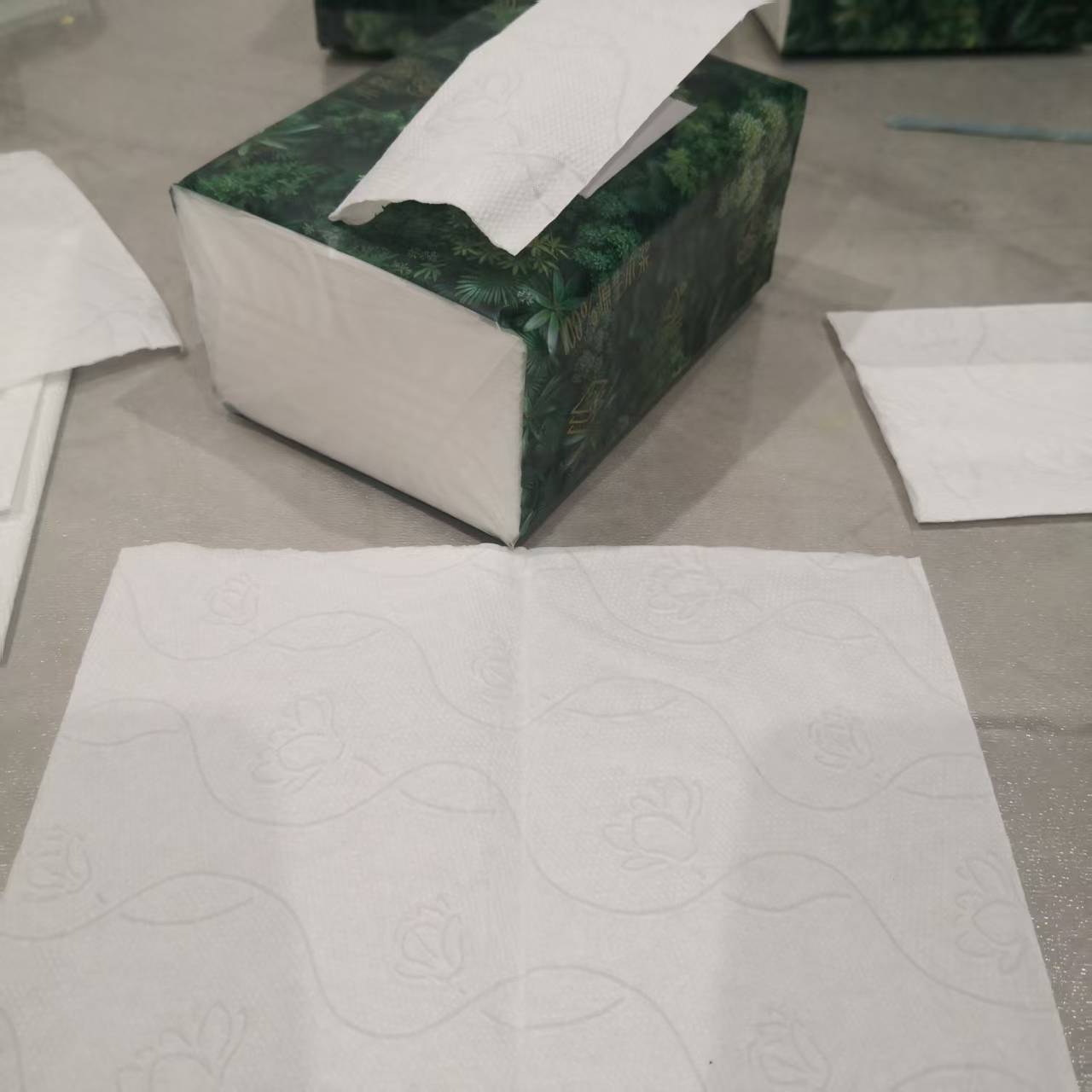
Top Source Hygiene utilizes high-pressure mechanical rollers to execute two distinct finishing styles. Edge embossing applies concentrated pressure solely to the margins of the tissue sheet. This localized compression locks 3-ply to 5-ply layers together without the need for adhesives, ensuring the center remains smooth and preserves the inherent softness of the 100% virgin wood pulp.
Full-sheet pattern embossing involves engraved steel rollers that strike the entire surface area. This method fundamentally alters the paper structure, creating a quilted or micro-patterned texture. While edge embossing focuses on structural stability, full-sheet application serves as a functional modification to the sheet’s tactile profile and mechanical performance.
| Performance Factor | Edge Embossing | Full-Sheet Embossing |
|---|---|---|
| Primary Function | Ply-bonding and margin stability | Texture, bulk, and absorbency |
| Surface Texture | Smooth center, textured edges | Uniform quilted or floral patterns |
| Product Profile | Thin, compact for high-capacity | Thick, high-GSM perceived feel |
Impact on Absorbency and Thickness
The choice of embossing style directly impacts the liquid absorption capacity. Full-sheet embossing creates microscopic air pockets between the layers. These voids act as reservoirs, allowing the tissue to hold more moisture than a flat-pressed sheet. This makes full-sheet patterns the standard for premium kitchen towels and high-end facial tissues where “Dry & Wet” performance is a priority.
- Bulk Expansion: Full-sheet embossing increases the volume of the roll or pack without adding extra fiber weight.
- Dispenser Efficiency: Edge embossing maintains a slim profile, allowing more pulls per pack in commercial hanging dispensers like the TSH-6705-2 series.
- Fiber Integrity: Edge-embossed tissues retain higher tensile strength because the majority of the fibers remain uncompressed.
Strategic Selection for OEM/ODM Brands
For global distributors, selecting the right embossing method aligns the product with regional market expectations. In North American and Middle Eastern retail sectors, consumers associate full-sheet patterns with luxury and “cloud-like” softness. Top Source Hygiene recommends this for 4-ply and 5-ply retail packs to maximize perceived value at the point of sale.
Conversely, edge embossing remains the dominant choice for high-traffic hospitality and industrial environments in Southeast Asia and Africa. It provides a cost-effective solution for large-scale procurement where utility, ply-stability, and freight optimization are the primary drivers. By micro-adjusting these specs, importers can hit aggressive price points while maintaining the structural reliability of 100% OBA-free virgin pulp.
Scale Your Brand With Expert OEM Customization
Mechanical Bonding: Holding Plies Together Without Glue
Mechanical bonding uses high-pressure fiber interlocking to secure multi-ply tissue structures, ensuring product integrity without the use of chemical adhesives.
The Mechanics of Knurling and Edge Embossing
Production lines utilize hardened steel wheels to press multiple plies together, creating a localized fusion of fibers without chemical binders. This physical interlocking ensures that 2-ply to 5-ply toilet paper remains intact during dispensing while maintaining a chemical-free profile. Top Source Hygiene applies this technique to premium virgin wood pulp rolls to preserve the 100% natural material integrity, ensuring a lint-free experience even under tension.
| Bonding Method | Technical Mechanism | Primary Benefit |
|---|---|---|
| Mechanical Interlocking | High-pressure steel knurling wheels | 100% Chemical-free & Flushable |
| Adhesive Bonding | Liquid polymer glue application | High ply-separation resistance |
| Edge Embossing | Localized perimeter compression | Enhanced aesthetics & alignment |
Benefits of Glue-Free Ply Adhesion
Eliminating adhesives prevents the stiffening effect often caused by liquid glues, keeping facial tissues and toilet paper soft to the touch. This glue-free approach supports FSC and ISO 9001 standards by reducing synthetic additives in the manufacturing stream. The absence of chemicals also improves flushability and biodegradation rates in 2026 eco-conscious plumbing systems, making it a preferred choice for global markets with strict environmental compliance.
Pressure Synchronization in High-Speed Production
Maintaining a monthly capacity of 2,860 tons requires precise calibration of mechanical bonding equipment. Factories utilize automated tension controls to prevent ply separation during the high-speed conversion of jumbo rolls. Engineers adjust the PSI (pounds per square inch) based on the GSM of the paper to ensure a secure bond that survives 15-25 day shipping routes. Quality control teams test the ply-bond strength daily to verify that mechanical interlocking meets North American and European durability requirements.
How Embossing Increases Paper Absorbency and Bulk
Embossing reconfigures the physical topography of tissue fibers to create micro-voids and expanded surface area, directly increasing both the liquid retention capacity and the tactile thickness of high-ply hygiene products.
Expanding Surface Area for Rapid Fluid Uptake
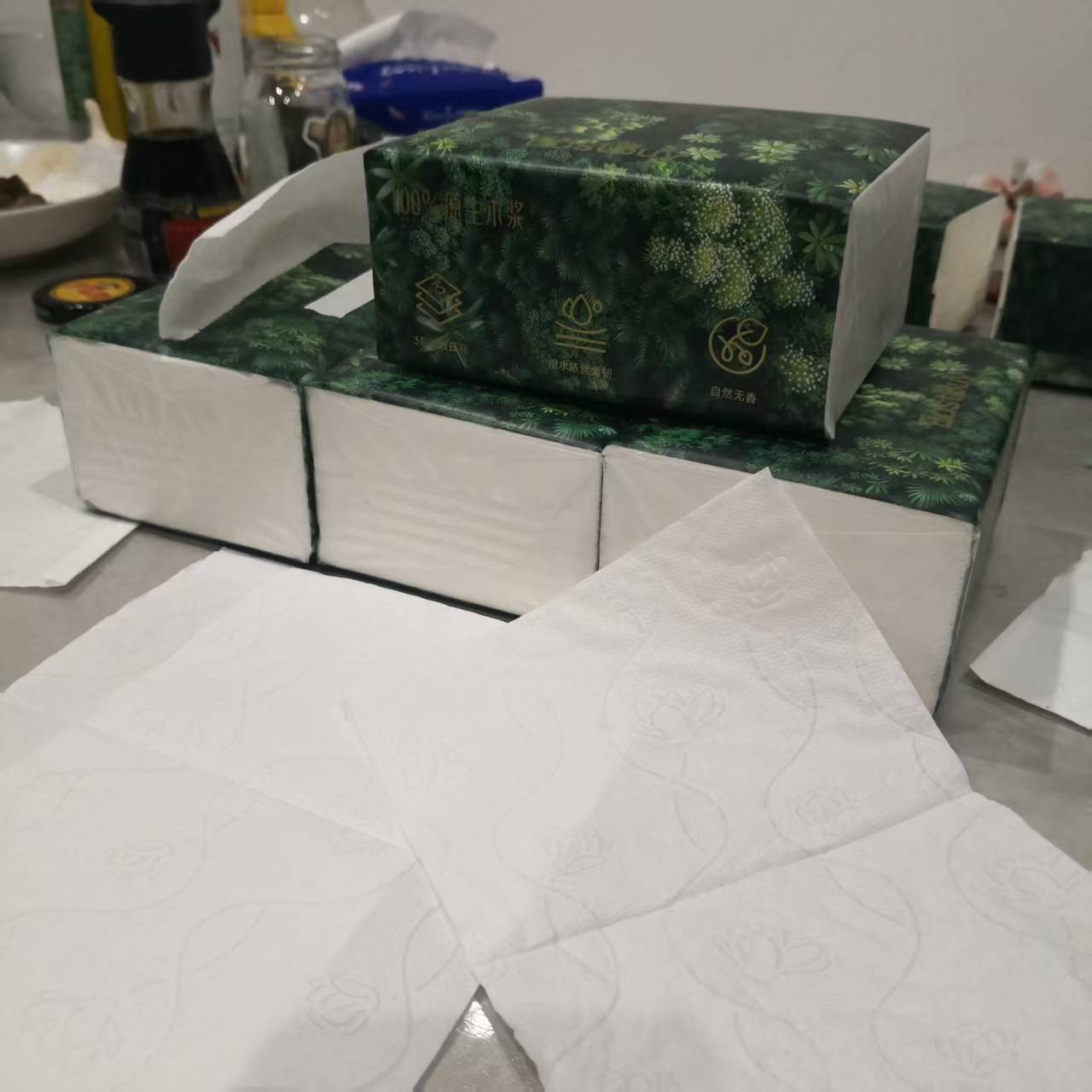
Embossing modifies the physical topography of the paper sheet, significantly increasing the total surface area available for liquid contact without expanding the product’s footprint. This three-dimensional pattern creates a network of peaks and valleys that disrupt the surface tension of liquids far more effectively than a flat, calendered sheet. By increasing the available contact points, the 100% Virgin Wood Pulp fibers can draw in moisture instantly.
- The 3D geometry directs fluid into the fiber network, preventing runoff during heavy spills in commercial food service environments.
- Increased surface area allows Top Source Hygiene kitchen towels and premium tissues to achieve rapid absorbency rates.
- Mechanical deformation breaks up the tight fiber bond of the base sheet, allowing water to penetrate the core of the tissue faster.
Creating Inter-Ply Micro-Pockets for Water Retention
The embossing process generates void spaces between paper plies, creating a “pocket” effect that traps and holds significant volumes of liquid. These air pockets formed by the raised patterns act as reservoirs, allowing the paper to hold multiple times its weight in water. This structural change is vital for 3-ply and 4-ply varieties, ensuring they remain effective yet soft during use.
| Performance Metric | Flat/Unembossed Sheet | Top Source Embossed Sheet |
|---|---|---|
| Liquid Retention Speed | Standard capillary action | Accelerated via topography |
| Total Fluid Capacity | Limited to fiber density | Enhanced by inter-ply voids |
| Caliper (Thickness) | Low/Compressed feel | High bulk/Premium feel |
Mechanical deformation of the fibers during the embossing cycle enhances the capillary action within the wood pulp matrix. By separating the layers slightly, we create a structure that absorbs liquid vertically rather than just spreading it horizontally across the surface, which is essential for heavy-duty 5-ply series like the TSH-6705-2.
Enhancing Product Bulk and Hand-Feel
Beyond functional absorbency, embossing increases the perceived thickness (bulk) of the paper. This provides a premium feel while using raw materials more efficiently. The process increases the caliper of the roll or stack, making a standard weight of paper feel more substantial to the end-user. Top Source Hygiene leverages this to produce soft facial tissues that meet the high-end requirements of global hospitality clients without compromising on tensile strength.
Higher bulk also improves the structural integrity of the sheet. The embossed pattern acts as a reinforcement grid, allowing the tissue to resist tearing even when fully saturated with liquid. This “Dry & Wet Using” capability ensures that the tissue performs like a cloth, providing a lint-free experience for cosmetic and medical applications.
Custom OEM Embossing Patterns for Corporate Brands
Advanced mechanical embossing allows corporate brands to integrate high-definition logos and functional textures into tissue products, improving both brand recognition and liquid absorption without the use of chemical adhesives.
Logo Integration and Brand Recognition
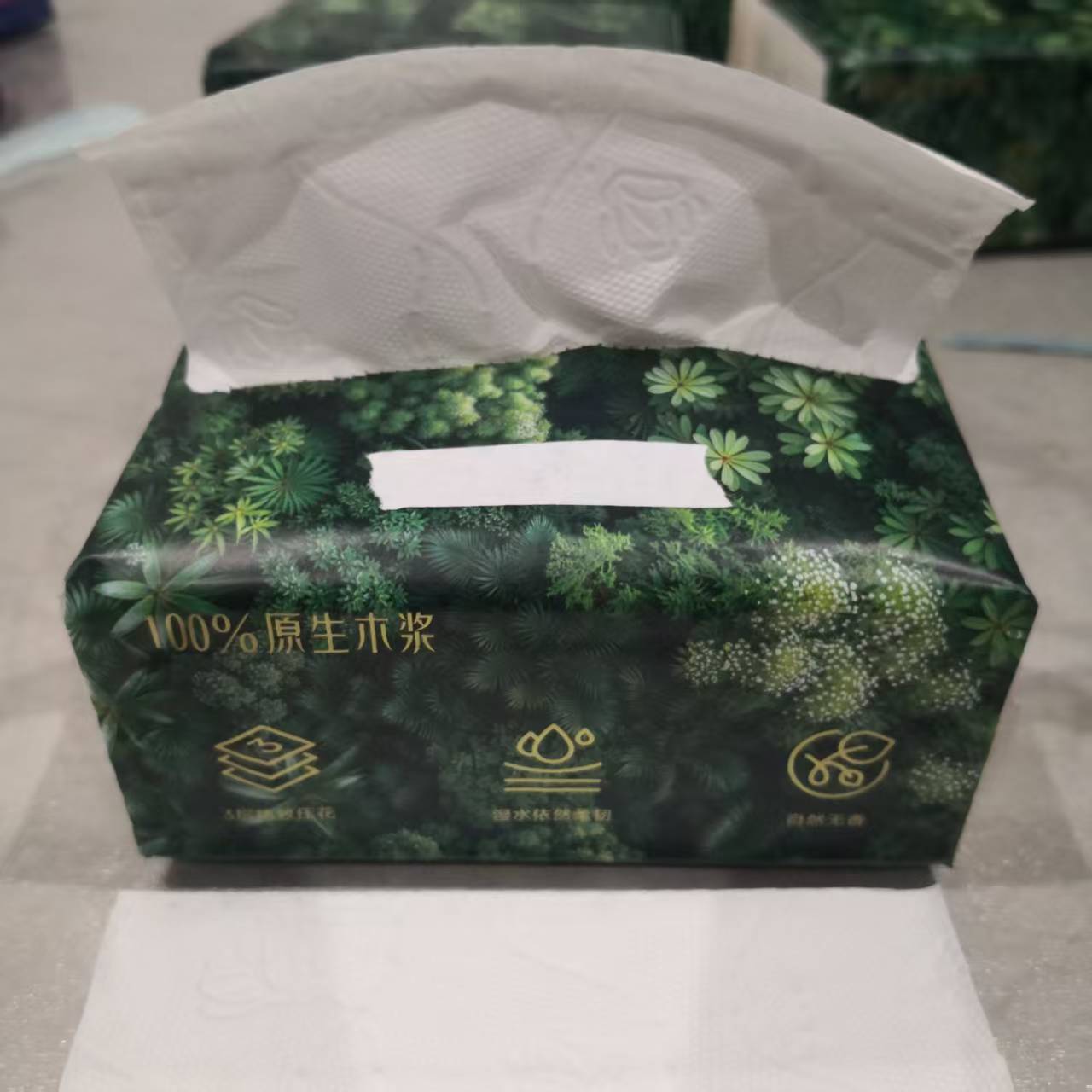
Top Source Hygiene utilizes advanced engraving technology to incorporate corporate logos directly into the tissue paper texture. We apply high-definition embossing to ensure brand logos remain visible and clear on products ranging from 2-ply commercial rolls to 5-ply luxury facial tissues. This precision turns a standard hygiene product into a sophisticated marketing tool for high-end clients.
- Custom patterns provide a professional finish for hospitality clients, as seen in the Coastal Elegance Hotels project where personalized textures improved guest satisfaction scores.
- Retail partners in the 2026 market use these unique textures to differentiate private label products from generic competitors on crowded shelves.
- Steel-to-rubber and steel-to-steel rollers maintain pattern consistency across multi-ton production runs.
Texture and Ply Strength Enhancements
Embossing serves a functional purpose by increasing the surface area and structural integrity of the paper. Specific patterns increase the absorbency of kitchen towels and facial tissues by creating micro-pockets that trap moisture more effectively than flat sheets. This mechanical bonding holds multiple plies together securely, reducing the industry’s reliance on chemical adhesives that can compromise paper purity.
Our 2,860-ton monthly production capacity allows for varied pressure settings to adjust the softness and bulk of the final product. By calibrating the depth of the emboss, we control the hand-feel of the tissue, ensuring that 4-ply and 5-ply models like the TSH-6705-2 maintain their high-density strength while remaining gentle on the skin.
Market-Specific Design Customization
We adapt embossing styles to meet the aesthetic and regulatory preferences of different global regions. Designers create minimalist, high-end patterns for the European luxury market to align with FSC-certified eco-branding and the demand for understated elegance. These designs highlight the natural quality of the 100% virgin wood pulp without distracting from the material’s purity.
- For North American commercial sectors, we focus on heavy-duty patterns for jumbo rolls that withstand high-traffic use in airports and office complexes.
- Regional teams help clients choose patterns that comply with local hygiene standards and consumer expectations in Asia and Oceania.
- Customized sheet dimensions, such as 210x210mm or compact 180x135mm formats, are paired with specific embossing depths to optimize container loading and freight efficiency.
Sustainable and Chemical-Free Patterns
The embossing process supports eco-friendly manufacturing by reducing reliance on synthetic additives. We use 100% virgin wood pulp and mechanical embossing to achieve softness without the need for fluorescent whiteners or softening chemicals. This makes the product 100% OBA-free and safe for sensitive skin, infants, and maternity care.
Our factories maintain ISO 9001 standards to ensure that custom patterns do not compromise the biodegradable properties of the paper. Sustainable embossing techniques help retail groups reach their 2026 environmental targets while maintaining the high product sales associated with premium, textured hygiene goods.
Conclusion
Embossing serves as a critical manufacturing step that transforms 100% virgin wood pulp into a high-performance product by bonding multiple plies and increasing surface absorbency. This process ensures facial tissues remain structurally sound when wet while providing the professional aesthetic required for premium branding and retail distribution. Utilizing these technical methods allows distributors to offer products that balance high-end softness with industrial-grade durability.
If you are looking to optimize your local market offerings, consider reviewing your current ply-bonding specifications or contact our team to request a custom sample of our OEM embossed patterns. We can help you adjust sheet dimensions and gsm to meet specific pricing and quality targets for your region.
Frequently Asked Questions
Why are facial tissues embossed?
Facial tissues are embossed primarily to increase the surface area, which significantly enhances liquid absorbency and improves the “loft” or bulk of the sheet. The process creates air pockets between the fibers, providing a more cushioned hand-feel and ensuring the product has the structural integrity required to perform during use without tearing easily.
How are tissue paper plies held together?
Tissue paper plies are predominantly held together through a mechanical process known as ply-bonding. During manufacturing, high-pressure embossing rollers “nest” the layers together, forcing the fibers to interlock. In premium multi-ply products, manufacturers may also apply a minute, controlled amount of adhesive—often a food-safe, water-based glue—at specific points to prevent de-lamination during dispensing.
What is edge embossing on facial tissue?
Edge embossing is a technical finishing process where decorative and functional patterns are applied specifically to the borders of the tissue sheet. This serves two main purposes: it acts as a mechanical seal to keep the plies aligned and joined, and it allows the center of the tissue to remain smooth and non-textured for maximum comfort against sensitive skin.
Does embossing make tissue softer?
Yes, embossing enhances the perceived softness and flexibility of the tissue. While the physical pressure of the rollers can compress fibers at the contact points, the overall process breaks the “stiffness” of the paper web, making it more pliable and “drapable.” By increasing the thickness (bulk) of the sheet, embossing provides a more luxurious, velvety tactile experience.
Custom embossed wholesale tissue paper?
Custom embossed wholesale tissue paper is a specialized B2B manufacturing service that allows businesses to integrate corporate logos or proprietary patterns directly into the tissue texture. This is achieved using custom-engraved steel rollers during the high-speed conversion process, providing a premium branding opportunity for the hospitality, luxury retail, and corporate sectors.