Skip to content
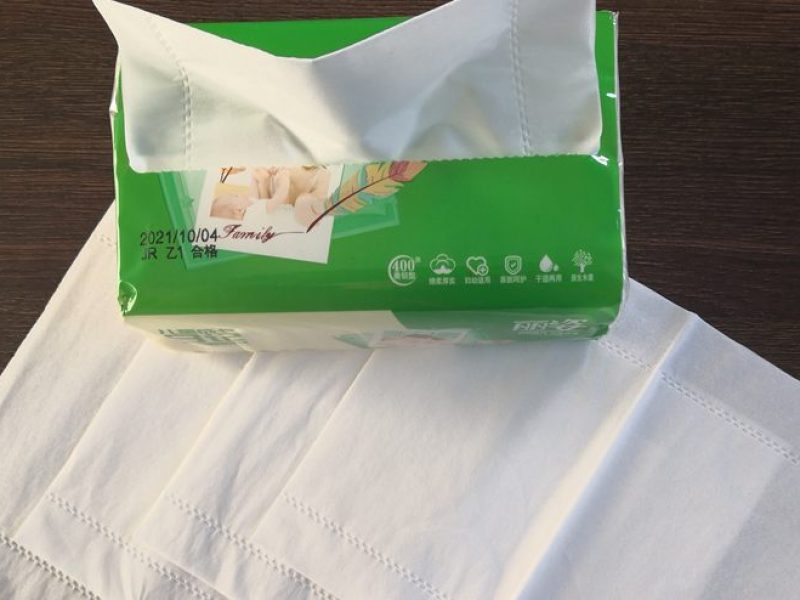
Lotion-infused tissue isn’t just a guest comfort upgrade—it’s a critical differentiator that can make or break a luxury hospitality brand’s reputation. A single complaint about chapped noses during cold season or subpar in-flight amenities can trigger negative reviews, eroding the premium experience clients pay for. For procurement teams, sourcing the wrong tissue risks operational friction, from guest dissatisfaction to wasted inventory on products that fail to deliver on their soothing promise.
This guide cuts through the marketing fluff to deliver the technical specifications you need for bulk procurement. We’ll break down the science of how lotion bonds with paper fibers, why 3-ply construction is non-negotiable for durability, and how aloe vera and vitamin E formulations affect both performance and cost. Whether you’re outfitting first-class airline cabins or five-star hotel suites, you’ll walk away with the data to vet OEM manufacturers and ensure your supply chain meets the highest standards for luxury hospitality.
The Science of Infusing Lotion into Tissue Paper
Adding lotion to facial tissue isn’t about soaking paper in oil—it’s about engineering a precise, controlled coating system that protects the skin without ruining the tissue’s core function.
The real challenge with lotion tissues is keeping the emollient stable from the factory floor to the user’s nose. If you simply coat the paper with oil, it evaporates, migrates to the bottom of the box, or oxidizes into something rancid. That’s where micro-encapsulation comes in. Manufacturers lock active ingredients like aloe or vitamin E inside microscopic shells that only break open when you apply friction—specifically, the pressure of wiping your nose. This means the lotion stays dormant during shipping, stacking, and storage, then releases exactly when it’s needed. The encapsulating material is engineered to remain highly compatible with paper fibers, non-reactive to polypropylene wraps, and stable through temperature swings from -10°C to 50°C without rupturing prematurely during high-speed embossing, cutting, and folding converting cycles.
Even distribution is the difference between a luxury experience and a greasy mess. Manufacturers use rotogravure or slot-die coating systems that control lotion application down to the gram per square meter, aiming for a uniform film across the entire web width. Virgin wood pulp with long fibers absorbs lotion at a predictable rate, preventing surface clumping. The tissue base is typically 12–18 gsm per ply, so adding a 5–15% lotion layer by weight fundamentally alters the sheet’s dynamics. Coating uniformity is verified through inline sensors and lab weight deviation checks across every roll, holding a standard target tolerance of ±0.5% in premium production lines.
| Coating Methodology | Precision Control (gsm) | Target Application Objective |
|---|---|---|
| Rotogravure Roll Transfer | ±0.3 gsm tracking | Bespoke pattern coating for targeted zoning softness. |
| Slot-Die / Curtain Coater | ±0.5 gsm tracking | Full-surface uniform coverage across high-speed lines. |
| Standard Contact Roll | ±1.0 gsm tracking | Low-cost bulk commodity production runs. |
Lotion tissues touch the most sensitive skin on your face—the nostrils and lips—so safety is non-negotiable. Manufacturers run patch tests on human volunteers under repeated-use conditions that simulate a 3- to 7-day cold cycle, ensuring zero signs of erythema or edema. The lotion base itself must be pH-balanced to match skin’s natural range (4.5–5.5) to minimize irritation. Hypoallergenic formulations exclude common triggers like lanolin, parabens, and artificial dyes. Premium OEM manufacturers like Top Source Hygiene offer fragrance-free variants using inert emollients—mineral oil, petrolatum, or glycerin—to satisfy strict medical, healthcare, and sensitive-skin procurement criteria.
Aloe Vera and Vitamin E Enhancements
Adding aloe vera and vitamin E to facial tissue turns a commodity wiping product into a dermatological tool that reduces friction, soothes irritation, and preserves the skin barrier.
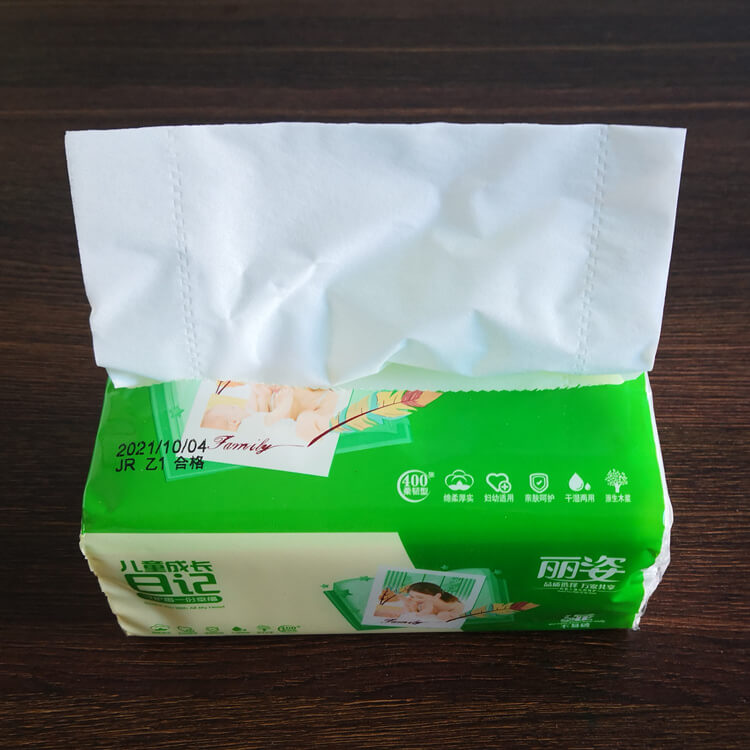
Aloe vera delivers cooling and anti-inflammatory effects that calm red, chafed skin around the nose and eyes, while vitamin E acts as a powerful antioxidant and moisturizer, actively preventing dryness and micro-cracking from repeated wiping. Mass-producing these enhanced tissues at scale requires tight control over lotion viscosity and formulation stability. At Top Source Hygiene, the emollient matrix is precisely applied onto the tissue web during converting, balancing water-based and oil-based components so the final product feels plush and non-greasy while maintaining high absorbency. Natural stabilizers and plant-derived antioxidants prevent active ingredient degradation and microbial growth over the product’s extended warehouse shelf life.
To satisfy global supply chains and regional audits, direct manufacturers calibrate the chemical composition and sourcing paths of active emollients according to distinct market expectations:
- North American Mandates: Prioritizing complete fragrance-free, OBA-free, and hyper-hypoallergenic certifications with prominent natural clean-label disclosures.
- European Compliance Filters: Enforcing strict avoidance of synthetic chemical stabilizers or preservatives, shifting formulas exclusively toward organic plant extracts and FSC-certified tissue bases.
- Asia-Pacific Preferences: Calibrating ultra-lightweight, high-absorption lotion viscosity ranges that lock down micro-hydration without leaving any glossy, visible slick residue on the skin surface.
| Performance Parameter | Standard Dry Facial Tissue | Premium Aloe & Vitamin E Line |
|---|---|---|
| Friction on Skin Surface | High — abrasive over repeated cold wipes | Low — active emollients reduce surface drag |
| Skin Moisture Retention | None — can strip natural sebaceous oils | High — supports lipid barrier functionality |
| Typical Lotion Add-On | 0% net weight | 5% – 15% of total tissue dry weight mass |
Why 3-Ply is Mandatory for Lotion Tissues
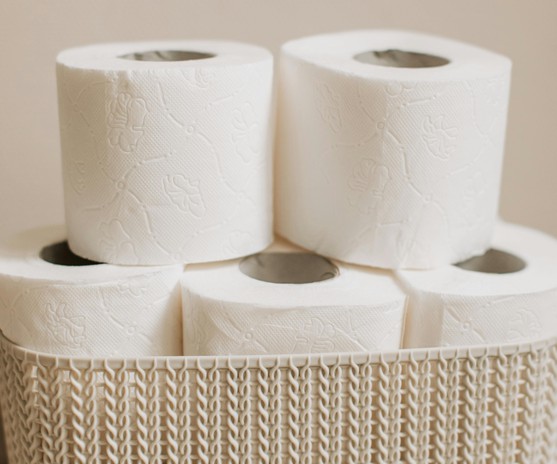
Adding lotion to a tissue fundamentally weakens its fiber bonds. 3-ply construction is the only reliable way to restore the tensile strength, absorbency, and structural integrity necessary for a premium product.
Lotion isn’t just a surface treatment. It physically interferes with the hydrogen bonding between cellulose fibers in the paper web. A standard 2-ply tissue loses roughly 20–30% of its dry tensile strength once lotion is applied. That’s not a defect in the formula; it’s a fundamental constraint of paper chemistry. To compensate, manufacturers must add a third ply to bring the mechanical performance back to acceptable levels. In production, 2-ply lotion tissues frequently fail standard wet tensile tests at moisture levels that a basic 3-ply tissue handles without issue. The lotion creates a moisture barrier that slows fluid uptake, meaning three plies are required to give you the fiber mass to pull liquid away from the skin surface efficiently.
Strike-through—where lotion migrates completely through a thin sheet and leaves a greasy, sticky feel on the user’s hands—is the number one complaint with budget 2-ply variants. The three-ply architecture solves this by design. During high-speed converting, lotion is applied specifically to the center ply or nestled between plies. The outer plies act as natural texturized barriers, distributing the emollients evenly across the sheet surface without allowing it to leach through or pool. This preserves surface smoothness while delivering the mechanical bond strength needed for smooth, jam-free dispensing in premium hospitality suites.
| Mechanical Specification | 2-Ply Lotion Tissue | 3-Ply Premium Lotion Tissue |
|---|---|---|
| Dry Tensile Strength (MD) | ~180 N/m (Marginal threshold) | ~280 N/m (High-velocity safety) |
| Wet Tensile Strength (MD) | Fails at 50% moisture saturation | Maintains integrity under heavy wet load |
| Liquid Absorption Profile | Slow; lotion barrier dominates web | Balanced; fiber mass pulls fluid downward |
| Lotion Mass Volumetric Add-On | ~8% maximum dry weight | ~12% calibrated dry weight allocation |
OEM Packaging for First-Class Airline Amenities
First-class cabin amenities are where luxury hygiene meets aviation logistics, demanding stringent weight restrictions, fire safety, and climate stability safeguards.
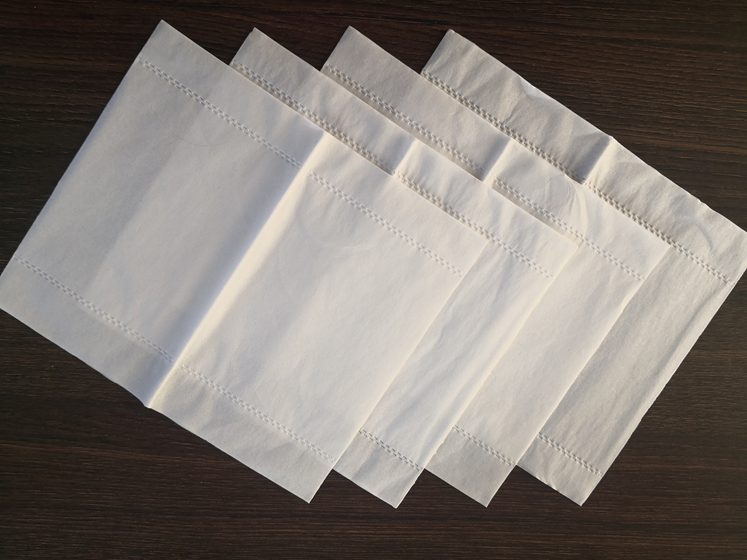
Aircraft cabins frequently drop to a restricted 10–20% humidity range, accelerating skin dehydration and nostril chafing. Standard paperboard tissue boxes fail here—they allow external dust in while venting emollient moisture out, causing the lotion layer to dry up or separate. Deploying hermetically sealed, flexible pouches engineered from high-barrier PET or aluminum foil laminates completely preserves lotion efficacy across long-haul international flights. To meet aviation infrastructure parameters seamlessly, conversion lines integrate a series of structural protections:
- Hermetic Resealable Enclosures: Utilizing a flexible pouch with a press-to-seal micro-zipper to lock moisture in and survive 10G cabin vibration shifts perfectly.
- Cabin-Optimized Dimensions: Restricting packing sizes to a compact 100mm x 70mm x 20mm grid containing a streamlined 8–12 sheet count to slot cleanly into luxury flight kits.
- Substrate Weight Control: Leveraging thin yet high-bulk 14–15 GSM fiber weights per ply to reduce baseline cargo weights by 20% compared to standard terrestrial retail packs.
- FAR Flammability Compliance: Enforcing water-based lamination glues and unbleached coatings that fully pass FAA vertical burn testing (FAR 25.853) within strict 12-second guidelines.
| Aviation Package Feature | Standard Commercial Retail Pack | First-Class Aviation OEM Pack |
|---|---|---|
| Enclosure Closure Profile | Open adhesive flap or tear-away window | Hermetic resealable zipper or localized press-seal |
| Moisture & Climate Shielding | Standard folding paperboard carton | High-barrier PET or aluminum metal laminate film |
| Turbulence Vibration Lock | None (Susceptible to splitting open under load) | Locks securely closed under intense 10G vibration limits |
| Calibrated Lotion Shelf Life | ~6 months before baseline moisture drift | 18 – 24 months stable warehouse lifecycle protection |
To accommodate corporate ESG targets, these first-class setups integrate sustainable material innovations. Plastic windows are completely replaced with plant-based cellulose films or FSC-certified paperboard components. On-sheet branding is executed via high-definition matched steel embossing wheels that press the airline logo or signature monogram directly onto the dry fiber web without tearing. These visual and tactile cues are color-matched within a tight 2 Delta-E tolerance limit to mirror cabin interior palettes precisely, ensuring your procurement assets reinforce an intentional, luxurious unboxing experience from taxiing to arrival.
Conclusion
Sourcing lotion-infused facial tissues for global luxury hospitality networks requires looking past subjective softness ratings and prioritizing certified laboratory data parameters. Balancing a uniform slot-die coating emulsion target with mandatory 3-ply structural weight profiles ensures that product sheets won’t suffer from dry tensile failures or fluid strike-through anomalies. By partnering with an agile OEM mill that combines ISO 9001 batch traceability with flight-ready FAR flammability compliance, procurement leads can optimize cabin payload parameters, eliminate custom clearance bottlenecks, and solidify uncompromised brand equity worldwide.
Frequently Asked Questions
Which specific global consumer conglomerates manufacture standard Puffs Plus tissue variants?
Puffs Plus Lotion facial tissue configurations are officially manufactured by The Procter & Gamble Company (P&G), headquartered in Cincinnati, Ohio. They are processed at centralized FMCG mills using proprietary surface-softener emulsification coatings engineered explicitly to mitigate localized skin friction.
How do commercial mills uniformly apply lotion formulas onto fast-moving tissue webs?
Lotions are integrated during the converting cycle using automated rotogravure or slot-die curtain coating systems. A precision micro-encapsulated emulsion layer containing mineral oil, glycerin, or botanical aloe extracts is applied to the outermost tissue plies, followed by low-temperature setting rollers to stabilize layer distribution and prevent core chemical migration.
Are lotion-infused tissue sheets clinically superior for mitigating cold and allergy irritation?
Yes, lotion-coated sheets are clinically verified to lower skin chafing, peeling, and redness during heavy nose-wiping cycles. The active emollients construct a temporary lipid barrier that locks in surface hydration. Sourcing agents should prioritize 3-ply structures to guarantee that high wet tensile limits back up the soothing properties perfectly.
What are the standard procurement channels and order limits for bulk aloe facial tissues?
Bulk aloe-infused portfolios are procured through specialized B2B industrial converters or direct paper mills. For custom brand configurations, baseline factory-level Minimum Order Quantities (MOQs) typically anchor at a 1x40HQ container load, with initial prototype sample boxes ready for physical fabric testing within 2 to 3 days.
What tier of customization is unlockable through direct B2B luxury tissue manufacturing?
Direct factory OEM/ODM channels unlock complete material and dimensional sovereignty. Sourcing teams can customize raw fiber assets (such as virgin bamboo or organic cotton blends), adjust micro-encapsulated lotion matrices (including hyaluronic acid or ceramides), and engineer custom foil or rigid box dimensions complete with bespoke safety sign compliance marking.