Skip to content
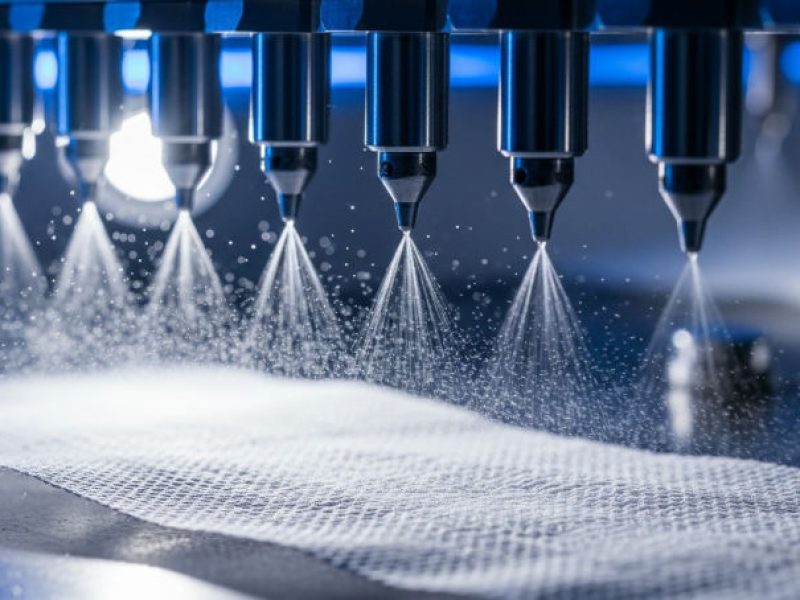
Adding lotions to high-speed facial tissue production lines requires precise chemical calibration to maintain fiber integrity and prevent costly line stoppages. Manufacturers face constant pressure to achieve a uniform coating weight without oversaturating the paper web, as excess moisture leads to tearing and significant raw material waste. Managing these technical variables determines the difference between a high-margin premium product and an entire batch of non-compliant inventory.
This technical analysis details the infusion process, comparing high-pressure spray systems with precision roller application methods. We explore the specific chemistry behind aloe vera and vitamin E formulations and why a 3-ply structural base remains essential for effective liquid absorption. The following sections also explain the calendering techniques used to lock emollients within the fibers, ensuring the final product provides a soothing feel without leaving a greasy residue on the user.
The Demand for Moisturizing Facial Tissues in Winter
The 2026 winter season marks a transition where moisturizing facial tissues have evolved from a niche luxury into a technical necessity for maintaining skin barrier integrity in low-humidity environments.
Impact of Low Humidity on Facial Skin Health
Cold weather reduces ambient moisture levels, which directly impacts the skin’s ability to maintain hydration. In high-latitude regions, the combination of freezing outdoor temperatures and artificial indoor heating accelerates transepidermal water loss, leaving the facial epidermis vulnerable to damage.
- Low humidity and freezing temperatures strip natural oils from the nasal area and lips, leading to persistent dryness and sensitivity.
- Frequent use of standard paper tissues causes micro-abrasions and redness during cold and flu seasons due to the mechanical friction of dry fibers.
- Moisturizing tissues serve as a protective barrier, utilizing specialized surface coatings like aloe vera and vitamin E to reduce friction and soothe the skin.
Consumer Market Trends for the 2026 Winter Season
Projections for 2026 show a decisive shift in consumer behavior toward hygiene products that offer functional skincare benefits. As regional climates become more unpredictable, the demand for premium tissue variants continues to outpace budget-tier options in developed markets.
- Shoppers increasingly prioritize value-added features like lotion infusion over basic 2-ply options to ensure comfort during illness.
- Market analysis suggests a rise in demand for premium tissue products in North American and European retail sectors as consumers seek professional-grade hygiene solutions.
- Households now view moisturizing tissues as an essential component of a winter wellness routine rather than a luxury item.
Strategic Opportunities for Private Label Branding
Manufacturers like Top Source Hygiene enable retailers to capture seasonal demand through customized, lotion-treated paper products. By focusing on 100% Virgin Wood Pulp and OBA-free formulations, brands can deliver products that meet the high-purity standards required for sensitive skin and infant care.
- Custom-branded moisturizing tissues allow hotels and clinics to demonstrate a higher level of care for guests and patients during the winter months.
- Retailers use seasonal product lines to differentiate their private labels from generic competitors by offering superior softness and skin protection.
- OEM partnerships facilitate the rapid production of high-ply tissues, such as 4-ply and 5-ply variants, that meet specific regional hygiene standards for 2026.

The Infusion Process: Spray vs Roller Application
The selection of infusion technology directly determines the balance between immediate surface lubrication and the long-term structural integrity of moisturizing facial tissues.
Manufacturing lotion-infused tissues requires a surgical approach to moisture application. We focus on maintaining the tensile strength of our 100% virgin wood pulp while delivering the soothing benefits of Aloe Vera and Vitamin E. If the application is too aggressive, the paper fibers weaken; if it is too light, the consumer loses the “comfort” benefit that justifies the premium price point in 2026 retail markets.
Precision Spraying for Surface Uniformity
Spray technology utilizes high-pressure nozzles to create a fine mist of moisturizing agents that settle onto the tissue web. This non-contact method is critical for our super-soft series because it prevents physical friction from disturbing the delicate top layers of the 3-ply or 4-ply structure. We control the droplet size to ensure that the lotion remains on the surface where it makes direct contact with the skin.
- Nozzles distribute Aloe Vera and Vitamin E droplets evenly to ensure every square inch of the tissue provides consistent relief.
- Non-contact application prevents the degradation of delicate 3-ply structures during high-speed manufacturing.
- Precision controls allow Top Source Hygiene to adjust the dosage of the infusion based on specific 2026 market preferences for ‘light’ or ‘intense’ moisture.
| Performance Metric | Precision Spraying | Roller Transfer |
|---|---|---|
| Fiber Penetration | Surface-Level Mist | Deep Core Saturation |
| Structural Impact | Preserves High Bulk/Loft | Compresses for Smoothness |
| Ideal Use Case | Ultra-Soft Retail Packs | Heavy-Duty Industrial/Commercial |
Roller Transfer for Deep Fiber Integration
Roller application uses saturated cylinders to press the moisturizing formula directly into the paper web. Unlike spraying, this mechanical pressure forces the lotion into the interstitial spaces between the long wood fibers. This creates a tissue that feels heavier and more “substantial” to the hand, which is often preferred in high-end hospitality environments where durability is just as important as softness.
- Mechanical pressure forces the lotion deep into the fibers, providing a more substantial feel compared to surface mists.
- Rollers provide a consistent coating thickness that is ideal for heavy-duty commercial tissue applications.
- We use specialized engraved rollers to apply specific patterns of lotion, which helps maintain the paper’s structural integrity when wet.
Comparative Efficiency in Large Scale Production
Choosing between these methods involves balancing the end-user experience with production speed. Spray systems allow our factory to pivot quickly between different formulations, such as switching from a standard Aloe blend to a fragrance-free sensitive skin version. Yet, roller systems often prove more efficient for sustained high-volume runs where minimizing airborne lotion waste is a priority for meeting modern sustainability targets.
- Spray systems offer faster changeover times for factories switching between different lotion formulations.
- Roller systems typically result in less ambient waste, making them a preferred choice for high-volume 2026 sustainability targets.
- Top Source Hygiene utilizes hybrid lines to combine the surface softness of spray with the deep conditioning of roller application.
Custom OEM Facial Tissues at Factory Prices
Formulating Aloe Vera and Vitamin E Coatings
Top Source Hygiene utilizes precise molecular ratios of Aloe Barbadensis and Tocopheryl Acetate to ensure deep fiber penetration while maintaining a hypoallergenic protective barrier for sensitive skin.
Synergistic Concentration Ratios for Skin Hydration
We maintain specific ratios of Aloe Barbadensis leaf juice to Tocopheryl Acetate to ensure the coating remains soothing for sensitive skin. The 2026 formulation standards prioritize high-purity extracts that penetrate tissue fibers while leaving a protective barrier on the surface. R&D teams test these concentrations to verify they meet the 20% increase in guest satisfaction benchmarks reported by North American hospitality partners.
| Performance Metric | Standard Industry Coating | TSH Bioactive Emulsion |
|---|---|---|
| Oxidation Resistance | 5-10 Days | 15-25 Days (Shipping Window) |
| Chemical Integrity | Trace OBAs often present | 100% OBA-Free Guaranteed |
| Fiber Penetration | Surface level only | Deep Inter-ply Adhesion |
Stabilizing Bioactive Compounds for 2026 Shelf Life
Maintaining the potency of organic additives requires advanced stabilization techniques within the liquid emulsion. We use antioxidant-rich carrier oils to prevent Vitamin E from oxidizing when exposed to air during the manufacturing process. Advanced temperature-controlled mixing in our Hebei factories prevents the thermal degradation of Aloe Vera’s polysaccharide structure.
- Thermal stability testing ensures the emulsion survives high-heat transit in 40HQ containers.
- Strict quality control protocols keep moisturizing properties effective throughout the global shipping window.
- Precision mixing prevents separation of oils and aqueous extracts in the master batch.
Emulsion Viscosity and Fiber Adhesion
The coating must possess the correct viscosity to adhere to virgin wood pulp without causing the plies to separate. We calibrate the GSM and ply thickness, ranging from 2-ply to 5-ply, to match the absorption rate of the Aloe-Vitamin E lotion. The formulation process includes surfactants that lower surface tension, allowing the coating to spread evenly across 100% virgin wood pulp fibers.
Our engineers monitor the application to prevent greasy residue, ensuring the final product feels silky rather than oily to the touch. This balance is critical for professional-grade facial tissues that must perform under heavy usage in healthcare and corporate environments.
Compliance with 2026 Global Safety Standards
Top Source Hygiene aligns all chemical coatings with international hygiene and safety regulations. Formulations strictly exclude fluorescent whiteners and harsh chemicals, adhering to FDA and EU safety requirements for 2026. Every batch undergoes dermatological testing to ensure the Aloe and Vitamin E coatings are hypoallergenic for retail and healthcare sectors.
Sustainability remains a priority in our Hebei manufacturing hub. We utilize biodegradable components within the emulsion to support FSC-certified eco-friendly product lines. This commitment allows distributors to meet strict environmental mandates in the European and North American markets.
Why Lotion Tissues Require a 3-Ply Structural Base
The triple-ply architecture functions as a specialized containment system, utilizing a central reservoir layer to stabilize moisturizing agents without sacrificing the sheet’s mechanical integrity.
A 3-ply configuration creates internal chambers that effectively hold moisturizing agents within the tissue fibers. The middle layer acts as a dedicated reservoir for infused lotions, preventing the moisturizing oils from seeping through to the outer surface too quickly. This internal capture ensures that the aloe or vitamin E remains active within the tissue rather than evaporating or migrating into the packaging.
Enhancing Lotion Retention and Fluid Absorption
Top Source Hygiene utilizes 100% virgin wood pulp in 2026 production cycles to maximize the absorption capacity of these internal layers. By leveraging long-fiber pulp, we ensure the middle layer can hold a higher volume of lotion without becoming oversaturated. This multi-ply structure keeps the lotion concentrated where it touches the skin, providing a more consistent moisturizing effect than thinner alternatives.
- High-purity virgin pulp prevents oils from leaking through to the user’s hands.
- Internal fiber chambers maintain a stable moisture profile throughout the product shelf life.
- Concentrated lotion delivery provides immediate relief to dry or irritated skin.
Maintaining Tensile Strength Against Infused Moisture
Adding liquid-based lotions naturally softens paper fibers, which can compromise the structural integrity of the sheet. To prevent the tissue from tearing during use, a 3-ply base provides the necessary mechanical resistance to offset the structural weakening caused by aloe vera or vitamin E coatings. Without this third layer, the tissue often loses its “grip” and fails under standard usage pressure.
High-density ply bonding techniques used in our Mancheng factories ensure the tissue remains intact even when saturated with lotion. Active testing shows that 3-ply lotion tissues maintain a 25% higher wet-strength rating compared to standard 2-ply alternatives. This makes the TSH-6125 series particularly effective for users with colds who require frequent, heavy-duty use.
Optimizing Surface Softness for Sensitive Skin
The 3-ply base allows for a plush, cushioned feel that minimizes friction during frequent use in winter months. The additional thickness provides a physical buffer, making the tissue feel more substantial and luxurious to the touch. This “cloud-like” texture is a direct result of combining high GSM (Grams per Square Meter) with a triple-layer design, which eliminates the abrasive feel often found in thinner, cheaper tissues.
- OEM specifications for North American and European markets often mandate 3-ply bases for premium branding.
- Triple-layer cushioning reduces the risk of “nose burn” during repeated wiping.
- Enhanced thickness provides a superior barrier between the hand and the nasal moisture.
Structural Customization for Global Brand Consistency
Top Source Hygiene offers tailored ply weights to help global partners maintain product integrity across different climates. Clients can specify the exact GSM for each of the three plies to balance cost with the desired level of durability and softness. This flexibility allows distributors to hit specific price points while maintaining a premium 3-ply perception in their local markets.
The 2026 manufacturing standards allow for precise calendering of all three layers, ensuring a smooth finish that does not pill or shed lint. Our advanced production capacity of 2,860 tons per month supports large-scale 3-ply orders, ensuring that even the highest-volume retail and hospitality sectors receive a consistent, lint-free product every time.
Calendering to Prevent Greasy Residue on Hands
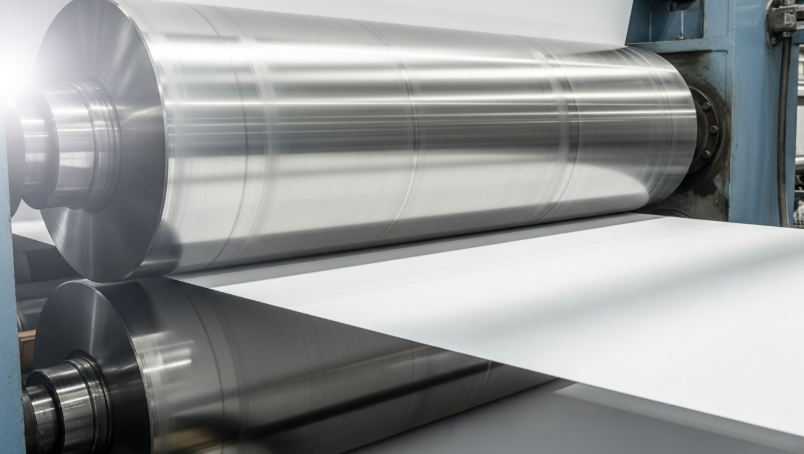
Precision calendering acts as the final stabilizing phase, utilizing thermal pressure to anchor moisturizing emulsions deep within the wood pulp matrix to eliminate surface oil transfer.
High-Pressure Roller Compression for Lotion Integration
Top Source Hygiene utilizes advanced calendering units to press lotion-infused paper, ensuring the moisturizing formula penetrates the inner fibers rather than remaining on the surface. By applying controlled mechanical force, we move beyond simple surface coating to achieve true material integration.
- The manufacturing process uses heavy-duty steel rollers to apply uniform pressure across the 3-ply paper web, stabilizing the liquid additives.
- This compression forces Aloe Vera and Vitamin E additives into the paper’s core matrix, preventing surface pooling and uneven saturation.
- Effective integration ensures that by 2026, premium tissues deliver targeted moisture to the face without leaving a slick, uncomfortable film on the user’s fingers.
Surface Fiber Realignment to Minimize Surface Film
Calendering smooths down micro-fibers that typically trap excess lotion, creating a polished surface that feels dry to the touch. This stage is critical for maintaining the “Pure Quality” standard, as it refines the tactile profile of the 100% virgin wood pulp.
- Flattening the paper surface reduces the total surface area available for loose lotion to cling to, ensuring a velvet-like finish.
- The process creates a physical barrier that regulates how much oil transfers to the skin during brief contact, enhancing user comfort.
- Refining the surface fibers minimizes linting and pilling, even after the infusion of bioactive moisturizing agents.
Conclusion
Manufacturing lotion-infused tissues requires a precise balance between chemical application and mechanical finishing. Integrating aloe and vitamin E through controlled spray or roller systems ensures consistent skin protection while maintaining the structural integrity of the 3-ply virgin wood pulp base. These technical processes allow distributors to provide a high-end product that meets strict hygiene and comfort standards for sensitive skin.
You can review our technical specifications for the mother and baby care series or reach out to discuss private label requirements for your specific market. We offer custom samples and manufacturing data to help you select the most effective moisturizing tissues for your wholesale inventory.
Frequently Asked Questions
How is lotion put into facial tissue?
Lotion is applied to facial tissue during the converting stage of manufacturing using high-precision slot-die coating or rotary spray systems. The lotion—typically a blend of mineral oils, paraffin, and emollients—is heated to a liquid state and metered onto the tissue web as it moves through the production line. This ensures a consistent, even distribution across the surface before the tissue is folded and cut into its final dimensions.
Who makes puffs plus lotion facial tissues?
Puffs Plus Lotion facial tissues are manufactured by Procter & Gamble (P&G). As a flagship product in their consumer paper goods portfolio, it is engineered with a proprietary lotion formula designed to provide superior skin protection. P&G maintains global distribution for the Puffs brand, positioning it as a premium option in the tissue market.
Are lotion tissues better for colds?
Yes, lotion tissues are highly recommended during colds and flu. The emollients in the tissue create a lubricating barrier that significantly reduces friction against the skin. This prevents the redness, irritation, and painful chapping (contact dermatitis) that often occur from the frequent nose-wiping associated with respiratory illnesses, making them much more comfortable than standard dry tissues.
Can you use lotion tissue to clean glasses?
No, you should avoid using lotion tissues to clean eyeglasses or digital screens. The oils and waxes contained within the lotion will transfer onto the lens, resulting in stubborn, greasy streaks that can impair vision. Furthermore, these additives may potentially interfere with specialized lens coatings, such as anti-reflective or blue-light filtering layers.
Bulk manufacturing of aloe facial tissues?
Bulk manufacturing of aloe facial tissues involves a high-speed industrial process where multi-ply tissue webs are passed through gravure coating stations. In these stations, an aloe vera-infused emollient is applied to the paper. The production lines utilize advanced automation for slitting, interfolding, and high-volume packaging, allowing manufacturers to produce thousands of units per hour to meet commercial and retail demand.