Skip to content
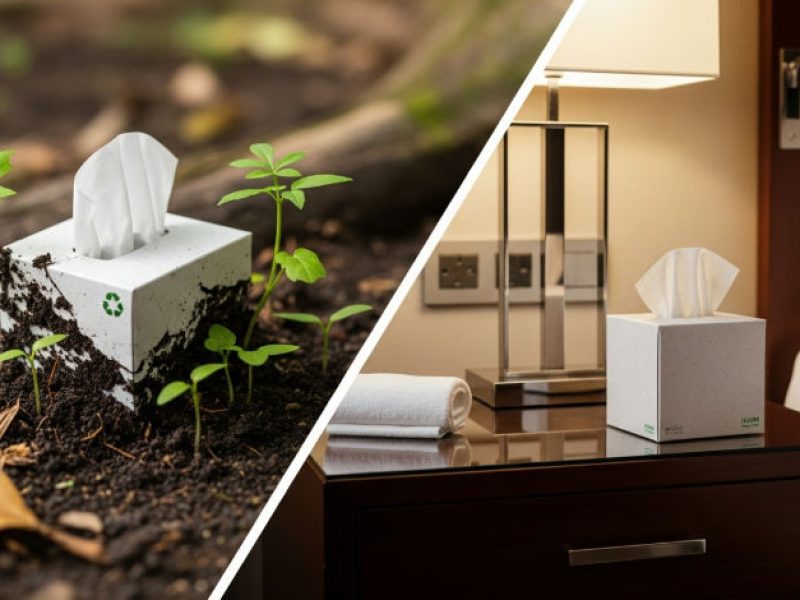
Strengthening your strategy for packaging compliance is now the only way to shield high-volume tissue exports from mounting customs seizures and hefty environmental non-compliance fines. As global markets transition away from single-use plastics, bulk distributors face the immediate risk of inventory being stranded at borders or rejected by major retail partners. The shift from a preference to a legal requirement means that operational continuity depends entirely on how quickly you phase out traditional poly-films and non-recyclable components from your supply chain.
We designed this technical guide to help procurement teams and factory managers navigate the shift toward plastic-free tissue housing. We break down the engineering behind paper-based dispensing slits, the structural integrity of 100% recyclable kraft cardboard boxes, and the application of biodegradable PLA films for soft packs. By following these specifications for soy-based inks and sustainable substrates, you can establish a standard operating procedure that meets international environmental codes without sacrificing the durability of your bulk shipments.
Global Bans on Single-Use Plastic Packaging
International regulatory pressure in 2026 has forced a transition from synthetic poly-wraps to compostable, fiber-based barriers to maintain market access in high-compliance regions.
Regulatory Landscape in 2026
Major economic blocs have moved past voluntary reductions into strict legislative enforcement. The European Union and North American markets now apply zero-tolerance policies regarding non-recyclable plastic films in secondary packaging. For distributors, this means traditional thin-film poly-wraps are no longer viable for high-volume retail. Regional compliance standards require a shift to paper-based alternatives to avoid heavy fines or shipment rejections at customs.
Export markets across Oceania and Asia have also introduced aggressive plastic taxes. These levies directly increase the landed cost for brands sticking to legacy packaging. Top Source Hygiene has adapted to these shifts by moving production lines toward 100% plastic-free OEM configurations, ensuring that our partners remain competitive despite tightening environmental protocols.
Impact on the Global Paper Industry
The move away from polymer-based protection has spiked demand for specialized wood pulp solutions. Manufacturers are currently redesigning product delivery systems to replace the standard plastic dispensing slit—historically a major recycling contaminant—with biodegradable paper windows. This transition ensures the entire box remains 100% recyclable in standard curbside programs without requiring the consumer to separate materials.
- Reliance on FSC-certified long-fiber wood pulp prevents deforestation while meeting high-strength packaging needs.
- Top Source Hygiene utilizes 30 years of Hebei-based manufacturing expertise to integrate these paper windows into high-speed production lines.
- Retailers now prioritize “Paper-on-Paper” designs to meet the ESG requirements of Tier-1 global wholesalers.
Logistical and Material Adaptations
Replacing bulk plastic shrink-wrap for commercial supplies requires an overhaul of the supply chain. We now deploy high-strength Kraft cardboard boxes for jumbo rolls and commercial tissue bundles to provide the necessary physical barrier without synthetic polymers. These reinforced 5-ply export cartons protect the structural integrity of the product during 40’HQ ocean transit, a critical factor for maintaining the “Pure Quality” standard our B2B clients expect.
Integration of soy-based inks and water-based coatings further ensures that the entire unit remains compostable. While paper-based protective packaging occupies slightly more volume than thin plastic films, our loading teams in Hebei optimize every cubic inch of the container. This meticulous process keeps the landed cost per pack at a minimum, neutralizing the potential price increase associated with sustainable material adoption.
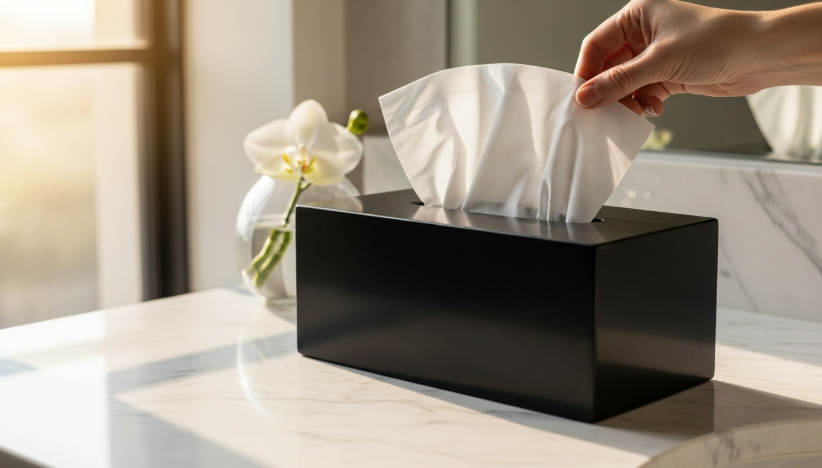
Replacing the Plastic Dispensing Slit with Paper
Integrated paper dispensing slits eliminate multi-material waste streams, allowing the entire facial tissue box to enter standard recycling cycles without consumer intervention.
Transitioning from Plastic Slits to Paper Inserts
Top Source Hygiene adapts to global sustainability trends by replacing traditional plastic dispensing films with integrated paper slits in facial tissue and napkin packaging. We redesigned the dispensing mechanism to eliminate single-use plastic components, ensuring the entire box remains 100% paper-based. The paper slit maintains structural integrity while allowing for smooth, one-at-a-time tissue dispensing without tearing or jamming.
| Performance Metric | Traditional PE Slit | TSH Integrated Paper Slit |
|---|---|---|
| Material Composition | Petroleum-based Polyethylene | Reinforced Virgin Wood Pulp |
| Recycling Process | Manual separation required | Single-stream curbside ready |
| Regulatory Status | Subject to EU plastic levies | Tax-exempt eco-compliant |
| Tensile Strength | Elastic stretch | Precision-engineered tension |
This modification simplifies the recycling process for consumers. The packaging no longer requires material separation before disposal, increasing the likelihood of successful recovery in municipal facilities. Our production lines now offer this eco-friendly configuration as a standard option for all OEM facial tissue clients, specifically targeting those entering high-compliance markets.
Material Innovation and Durability Standards
The shift to paper dispensing slits requires specific material adjustments to ensure the packaging remains functional throughout its lifecycle. We use reinforced paper fibers for the slit area to prevent premature sagging or collapsing during use. Our engineering team focused on three primary durability factors:
- Humidity Resistance: Testing confirms that our paper-based slits withstand high-humidity environments, a critical requirement for bathroom and kitchen settings.
- Fiber Integrity: Top Source Hygiene uses 100% virgin wood pulp for these inserts to match the premium feel of the primary box packaging.
- Flexibility Optimization: Our R&D team optimized the tension of the paper slit to mimic the flexibility of plastic, ensuring a consistent user experience and lint-free dispensing.
Compliance and Global Market Advantages
Adopting paper dispensing slits helps international brands meet tightening environmental regulations in Europe and North America. The all-paper design aligns with FSC-certified standards and supports brand sustainability goals for global retailers. This design choice helps clients avoid plastic-related taxes and environmental levies increasingly common in market regulations.
Removing plastic components reduces the carbon footprint associated with multi-material manufacturing and shipping. Customization options allow for branded printing directly onto the paper slit area, providing additional surface space for eco-messaging or instructional graphics. For distributors, this move positions products as “curbside recyclable,” a key selling point for ESG-conscious procurement departments.
Scale Your Brand With Expert OEM Manufacturing
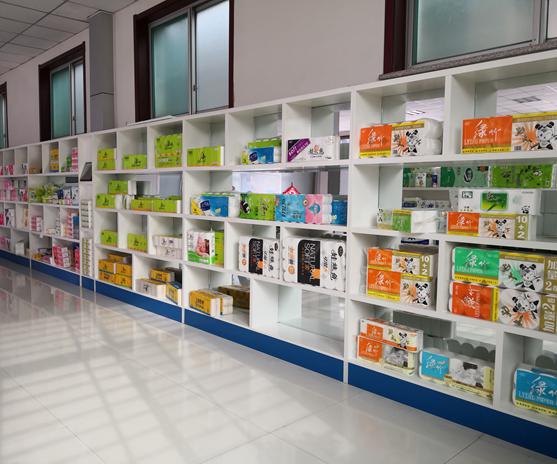
100% Recyclable Kraft Cardboard OEM Boxes
Transitioning to high-GSM kraft cardboard eliminates the need for plastic laminates while maintaining the structural integrity required for 40HQ container density and global logistics.
Structural Integrity of Eco-Friendly Kraft Materials
Top Source Hygiene utilizes high-strength kraft cardboard to ensure that 100% recyclable packaging meets the rigorous protection standards required for global shipping. We use high-GSM kraft paper that maintains box rigidity without the need for plastic lamination or coatings. This approach ensures the material remains fully pulpable in standard recycling streams while supporting heavy bulk orders of jumbo rolls and facial tissues.
Our production standards prioritize 100% virgin wood pulp and FSC-certified fibers to guarantee environmental compliance for EU and North American markets. By focusing on fiber density rather than chemical coatings, we deliver a product that handles the pressure of 40HQ payload optimization—typically 7,000kg to 9,000kg—without compromising the pristine condition of the premium tissues inside.
| Packaging Feature | Traditional Coated Boxes | TSH Recyclable Kraft |
|---|---|---|
| Recyclability Status | Limited (Plastic Film/Coating) | 100% Fully Pulpable |
| Structural Material | Mixed Secondary Fibers | High-GSM Virgin Kraft Paper |
| Environmental Certs | Standard Paper Grade | FSC-Certified & OBA-Free |
Custom OEM Branding and Box Design Services
Our design team transforms basic kraft cardboard into professional, brand-aligned packaging through advanced OEM/ODM customization techniques. We offer full private label services, allowing hotels and retail groups to print logos directly onto the natural kraft surface for a minimalist, eco-conscious aesthetic. This design strategy emphasizes the raw, sustainable nature of the product, which resonates strongly with the premium hospitality sector.
- Clients can customize box dimensions and thickness to optimize container space and reduce logistics costs by up to 15%.
- Direct-on-kraft printing eliminates the need for extra adhesive labels or plastic overwraps.
- Our two factories in Mancheng produce custom samples within 10 days to ensure branding accuracy before mass production.
Compliance with Global Plastic-Free Packaging Mandates
As regions transition toward circular economies, our kraft cardboard boxes provide a turnkey solution for meeting strict international environmental regulations. This packaging eliminates single-use plastics, helping clients bypass recent bans and plastic taxes in European and Oceanian markets. We manufacture all boxes to meet ISO 9001 and FDA requirements, ensuring they are safe for housing hygiene products like facial tissues and napkins.
Switching to our recyclable kraft OEM boxes has helped hospitality clients improve their sustainability ratings and guest satisfaction scores by 20%. By removing the plastic dispensing window and replacing the entire structure with a mono-material solution, we ensure that the entire package can be disposed of in a single recycling bin. This simplicity drives higher compliance at the consumer level and strengthens the environmental credentials of our B2B partners.
Biodegradable PLA Films for Soft Pack Tissues
Switching to Polylactic Acid (PLA) films allows distributors to bypass tightening single-use plastic restrictions while maintaining the high-clarity branding and moisture protection required for premium soft pack facial tissues.
Transitioning from Traditional Polyethylene to PLA
Top Source Hygiene utilizes corn-starch derived PLA resins to manufacture high-clarity films that effectively replace petroleum-based polyethylene. These plant-based films replicate the tactile durability and transparency of traditional plastics, ensuring that retail consumers see no drop in packaging quality. This transition directly serves our North American and European partners who face increasing pressure to eliminate fossil-fuel plastics from their supply chains.
Unlike standard films, PLA provides a natural moisture barrier that keeps 100% virgin wood pulp tissues hygienic and dry. We calibrate the film extrusion process to match the “Aslike Cloth Tough” nature of our tissues, ensuring the outer wrap does not tear during high-speed automated packing or rough handling in bulk wholesale transit.
| Feature | Standard PE Film | Top Source PLA Film |
|---|---|---|
| Raw Material | Petroleum/Fossil Fuels | Corn Starch/Bio-Resin |
| End-of-Life | Landfill (Non-degradable) | Industrial Compostable |
| Carbon Footprint | High Emission | Significantly Reduced |
Compostability and Environmental Impact
Our PLA film solutions focus on circular life cycles. These materials break down into water and carbon dioxide under industrial composting conditions, leaving zero microplastic residue. This capability helps our B2B clients meet ESG (Environmental, Social, and Governance) targets and satisfy the demands of eco-conscious consumer bases in urban retail markets.
- Lower greenhouse gas emissions during the production phase compared to polypropylene.
- OBA-free material safety that aligns with maternal and infant care product standards.
- Compatibility with bamboo pulp tissue lines for a fully sustainable, plastic-free SKU.
OEM Customization for Sustainable Soft Packs
Private label owners can integrate biodegradable films into their existing designs without losing branding impact. We optimize film surfaces for soy-based ink adhesion, ensuring that logos and product details remain vibrant. Our Baoding manufacturing hub provides scalable production of PLA-wrapped tissues, including high-capacity 5-ply hanging packs and compact travel sizes.
We offer adjustable thickness (GSM) for these films to secure everything from a 72-pull pop pack to a 1500-sheet industrial hanging pack. For new projects, we maintain a standard production lead time of 20-25 days for a 40HQ container, providing full pre-shipment visual verification to ensure your sustainable transition is transparent and secure.
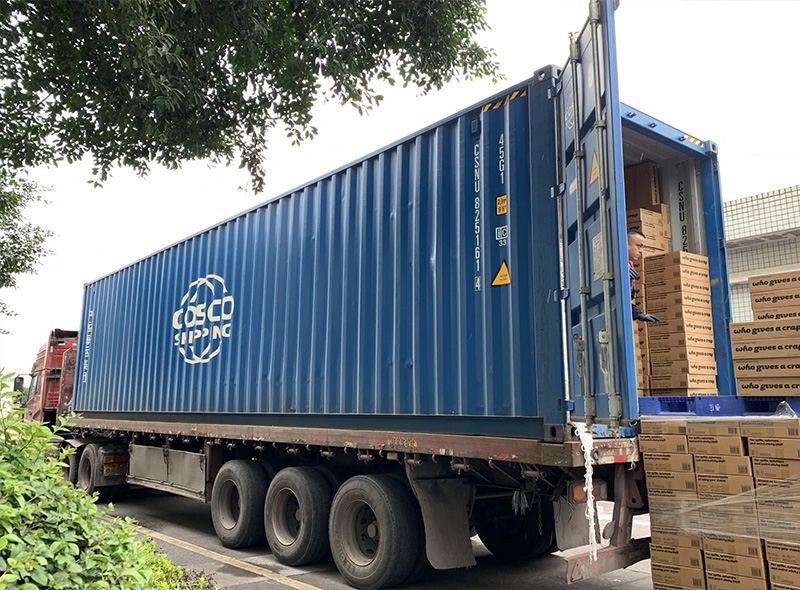
Printing with Soy-Based Eco-Friendly Inks
Switching to soy-based pigments eliminates petroleum-derived solvents from the production cycle, reducing VOC emissions while maintaining the high-contrast branding required for premium retail packaging.
Composition and Performance of Soy-Based Inks
Top Source Hygiene utilizes refined soybean oil as the primary vehicle for pigments, replacing traditional petroleum-based solvents. This shift significantly lowers the release of Volatile Organic Compounds (VOCs) during the printing phase at our Baoding manufacturing facilities. Unlike conventional inks that rely on fossil fuels, soy-based alternatives are a renewable resource that provides a cleaner production environment and a safer end product for the consumer.
These inks offer superior clarity and vibrant color saturation, ensuring that brand logos and product details remain sharp on both tissue boxes and soft pack handle bags. The high heat resistance and molecular stability of soy pigments prevent smudging or fading. This durability is essential for maintaining brand integrity during long-distance shipping across our 56+ served countries, where cargo often faces varying temperatures and humidity levels.
Eco-Friendly De-Inking and Recyclability
Using soy-based inks improves the recyclability of paper products. During the recycling process, soy ink separates from paper fibers more efficiently than petroleum-based counterparts. This easier de-inking process results in higher-quality recycled pulp, which can be reused for a wider range of paper products, effectively closing the loop in the circular economy.
Our commitment to FSC-certified materials works in tandem with these sustainable printing methods. By ensuring the ink does not contaminate the fiber stream, we help retail and hospitality clients meet their sustainability targets. This approach guarantees that custom packaging remains fully compatible with global recycling infrastructure, reducing the environmental impact of large-scale tissue distribution.
Regulatory Compliance and Safety Standards
Soy-based printing aligns with the rigorous safety regulations required for household and medical-grade paper products. These inks are non-toxic and skin-safe, which is a critical requirement for facial tissue boxes and secondary packaging used in clinics, hotels, and nurseries. We eliminate heavy metals and harsh chemicals from the printing phase to ensure our “Pure Quality” principle extends from the pulp to the packaging.
Our printing processes comply with FDA and EU safety standards, facilitating seamless entry into North American and European market segments. By removing hazardous substances from the manufacturing workflow, Top Source Hygiene reduces the environmental footprint of our two primary factories while providing distributors with a product that meets the highest international safety benchmarks for OBA-free and chemical-safe hygiene solutions.
Conclusion
Adopting plastic-free alternatives like paper dispensing slits, biodegradable PLA films, and soy-based inks aligns your brand with global environmental regulations while maintaining premium product integrity. Utilizing 100% virgin wood pulp ensures these sustainable packaging choices protect the softness and strength required by international markets. Transitioning to these eco-friendly standards secures long-term compliance and strengthens your competitive position in the global hygiene sector.
Review your current packaging specifications to identify where sustainable materials can replace single-use plastics. Contact our team to request a customized quote or a sample of our recyclable kraft cardboard series for your next private label project.
Frequently Asked Questions
Are tissue boxes recyclable with the plastic on top?
Generally, no. The thin plastic film at the opening of a tissue box is a contaminant in the paper recycling stream. To ensure the cardboard box is properly recycled, you must pull off the plastic insert and dispose of it in the trash or specialized film recycling before placing the flattened cardboard box in your recycling bin.
Eco friendly facial tissue packaging?
Sustainable facial tissue packaging includes 100% recycled post-consumer content (PCR) cardboard, bamboo-based paper boxes, and plastic-free designs that eliminate the dispensing film. For soft packs, manufacturers are shifting toward home-compostable films or high-density polyethylene (HDPE) that is compatible with store-drop-off recycling programs.
Plastic free tissue boxes wholesale?
Wholesale plastic-free tissue boxes are widely available through B2B suppliers specializing in sustainable hospitality and office supplies. These designs utilize a “S-curve” or perforated cardboard opening instead of a plastic film, ensuring the entire unit is 100% biodegradable and easily recyclable in standard paper streams.
Soy based ink for custom tissue boxes?
Soy-based ink is the industry standard for eco-friendly custom packaging. Unlike traditional petroleum-based inks, soy inks emit significantly lower levels of Volatile Organic Compounds (VOCs) and facilitate easier de-inking during the recycling process, resulting in more vibrant colors and a reduced environmental footprint for branded tissue boxes.
Biodegradable film for soft pack tissues?
Biodegradable films for soft pack tissues are typically derived from plant-based materials such as PLA (polylactic acid) or PBAT. These materials are engineered to break down in industrial composting facilities, providing the moisture protection and flexibility of plastic without the long-term environmental persistence of conventional poly-wraps.