Skip to content

Optimizing tissue machine speed to reach 2,000 m/min creates immediate physics-based challenges that can compromise the structural integrity and formation of the paper web. At these velocities, even minor fluctuations in stock jet turbulence or drainage rates lead to weak spots and rejected batches, directly impacting mill profitability and contract fulfillment for large-scale distributors. Managing this pace requires a precise balance between mechanical force and fiber chemistry to prevent costly machine downtime and material waste during high-volume production runs.
This technical guide examines the mechanics of high-velocity headbox operation and how specific jet-to-wire ratios prevent the uneven, cloudy texture often seen in poorly formed sheets. We provide a comprehensive breakdown of how high-speed Yankee drying locks in tensile strength while the paper moves at over 30 meters per second. By following these operational standards, manufacturers can maintain the fiber consistency and roll density required for demanding OEM partnerships and high-speed converting processes.
The Need for Speed in Bulk Tissue Manufacturing
Modern tissue production mandates operating speeds exceeding 2,000 meters per minute to maintain competitive pricing and meet the high-volume requirements of global distribution networks in 2026.
Increasing Throughput to Meet Global Demand
Current market conditions require manufacturers to push machine boundaries to remain viable. Top Source Hygiene leverages a massive production capacity of 2,860 net tons per month, supporting a commercial footprint in over 56 countries. Achieving this volume depends on high-velocity lines that minimize idle times and maximize every minute of the production cycle. Engineers now target machine speeds beyond 2,000 meters per minute for jumbo roll conversion lines. This velocity acts as a strategic response to rising raw material costs, capturing massive economies of scale to protect wholesale margins for private-label partners.
Managing Vibration and Dust at High Velocities
Pushing equipment to peak speeds introduces severe mechanical stress and structural frequency friction. Advanced hydraulic vibration control systems protect machine integrity at higher frequencies, mitigating equipment fatigue to eliminate unpredicted line downtime. Simultaneously, accelerated lines generate significant airborne dust. Integrating automated multi-stage dust management exhausts prevents fiber accumulation at the blade, ensuring a safer environment and cleaner, lint-free finished products essential for sensitive skin categories.
Efficiency Upgrades in Drying and Creping
Drying the paper web at maximum velocity requires massive thermal energy precision. Modern steel Yankee dryers equipped with high-efficiency hoods accelerate moisture removal while preserving raw fiber strength. This allows the sheet to reach target dryness before hitting the creping blade, even as the web moves at record speeds. These upgrades ensure that the paper maintains its “aslike cloth” toughness without becoming brittle from uneven drying curve spikes.
- Modern creping blades maintain consistent micro-fold density and absorbency even at maximum machine velocity boundaries.
- Advanced multi-layer forming fabrics improve dewatering rates, supporting faster, stable production cycles.
- Retrofitting existing lines with high-performance automated components bridges the gap between legacy output and modern standards.
Strategic Retrofits for Private-Label Growth
Private-label growth and e-commerce demands force facilities to be highly agile. Manufacturers prioritize infrastructure upgrades that allow for rapid switching between different product specifications. Whether the order calls for 2-ply value rolls or premium 5-ply facial tissues, automation tools handle these adjustments without the traditional lag time of older setups, reducing energy consumption per ton produced to satisfy strict environmental regulations while lowering landed costs.
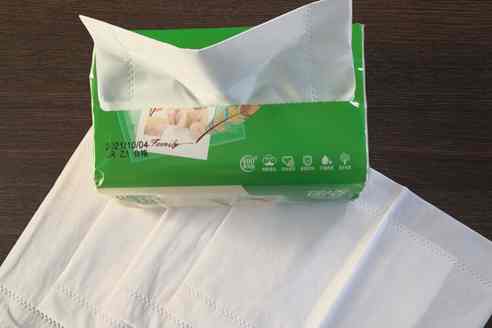
The Headbox: Distributing Fibers Evenly
The headbox serves as the hydraulic heart of the tissue machine, transforming a 99.5% liquid slurry into a precision-engineered fiber web at speeds exceeding 2,000 meters per minute.
We manage the critical transition of pulp from a liquid state into a structured sheet by distributing fibers across the full width of the paper machine. To prevent fiber flocculation—the tendency for fibers to clump together—we utilize intense micro-turbulence within the tube banks. This turbulence ensures a smooth, consistent texture across the entire web, which remains vital for the high-capacity output required by global performance standards. Precision slice control mechanisms regulate the flow of the pulp mixture to maintain an even basis weight profile, creating the lint-free experience expected from 100% virgin wood pulp products.
| Headbox Technology | Technical Mechanism | Wholesale Sourcing Benefit |
|---|---|---|
| Multi-Layer Stratification | Injects different pulp types into specific plies | High-strength core with ultra-soft surface touch |
| Dilution Profiling Control | Real-time local fiber concentration adjustment | Zero thickness variation across 40HQ container orders |
| CFD-Based Flow Design | Eliminates stagnant zones in high-velocity flow | 100% OBA-free, hygienic, and lint-free purity |
Multi-Layering for Enhanced Product Quality
Modern headbox designs allow for stratified tissue structures, a standard requirement for Top Source Hygiene’s 3-ply and 4-ply OEM products. Multi-layer headboxes inject different pulp types into specific layers, placing shorter, softer fibers on the surface for tactile comfort while embedding longer, stronger fibers in the core for tensile integrity. This layering technique optimizes the balance between softness and “aslike cloth” toughness, reducing raw material waste by concentrating premium fibers where they provide the most functional benefit.
Dilution Profiling and Consistency Stability
Automated systems integrate with the headbox to stabilize the fiber consistency profile in real-time during massive production runs. We use dilution profiling to adjust local fiber concentrations, correcting any thickness variations across the web instantly. This level of control ensures that the first ton of paper matches the last ton in every 2,860-ton monthly cycle, minimizing converting waste and protecting the profit margins of private label brand owners.
- Precision consistency control holds basis weight within ±1% of target specs.
- Closed-loop automation eliminates manual slice adjustment and profile alignment errors.
- Optimized jet-to-wire ratios stabilize cross-direction (CD) tensile strength grids.

The Risk of “Cloudy” or Weak Paper Formation
Paper formation defines the physical speed limit of a tissue machine; poor fiber distribution at high velocities creates “cloudy” weak spots that lead to web breaks and inconsistent bulk.
Fiber Dispersion and Turbulence Imbalance
High-speed manufacturing creates a chaotic hydraulic environment where fibers naturally tend to flocculate. When machine车速 exceed 1,800 meters per minute, these fiber clusters create a “cloudy” appearance in the sheet, resulting in a non-uniform basis weight. We mitigate this by optimizing headbox turbulence to keep fibers in a state of constant, uniform suspension. This prevents local clusters, ensuring the paper web remains consistent across the entire production width to eliminate edge cracks during converting.
| Formation Metric | Standard Wholesale Grade | Top Source Hygiene (Optimized) |
|---|---|---|
| Fiber Distribution Matrix | Visible “Cloudy” Flocs and dense spots | Uniform Micro-Dispersion across width |
| Tensile Load Consistency | High MD/CD variance profiles | Stable Cross-Direction Integrity profiles |
| Raw Cellulose Selection | Standard mixed short pulp parameters | 100% Virgin Long-Fiber Wood Pulp basis |
Drainage Uniformity in the Forming Section
Rapid water removal is mandatory at high production speeds, but aggressive drainage can disrupt the developing fiber mat. Non-uniform dewatering causes localized thinning, which increases the likelihood of web breaks during the critical drying phase on the Yankee cylinder. We utilize advanced forming fabrics specifically designed to handle high-volume water extraction without stripping the fine fibers that provide surface softness fields.
- Stable drainage loops reduce reliance on chemical additives, preserving 100% OBA-free purity.
- Uniform wet-end moisture profiles prevent “wet streaks” that cause pinholes during creping.
- Precision vacuum controls ensure even sheet density, facilitating high-capacity commercial hanging packs.
AI-Driven Process Control and CFD Modeling
Modern B2B manufacturing relies on predictive modeling to stabilize formation at maximum speeds. Computational Fluid Dynamics (CFD) allow our engineering teams to simulate and perfect headbox flow patterns before pulp enters the system. We integrate AI-driven sensors that monitor formation quality in real-time, making millisecond adjustments to wet-end chemistry and mechanical slice settings to guarantee that high-speed production never comes at the expense of structural integrity.

How High-Speed Drying Locks in Tensile Strength
Precise thermal management at speeds exceeding 2,000 m/min prevents fiber shrinkage and ensures the hydrogen bond network remains resilient under high mechanical loads.
High-speed tissue production relies on the synchronized performance of the Yankee cylinder and high-velocity air hoods. We deliver consistent heat to the sheet surface using impingement air temperatures between 350°C and 450°C, while the internal steel cylinder operates under a robust 12–18 bar(g) steam pressure. This dual-sided thermal approach prevents localized weak spots by maintaining a uniform moisture profile across the entire production line, which is critical for long-fiber wood pulp networks susceptible to thermal stress.
| Drying Component | 2026 Technical Specification | Tensile Strength Impact |
|---|---|---|
| Steel Yankee Cylinder | 12 – 18 bar(g) Internal Steam Pressure | High heat flux locks fiber bonds instantly before shifting occurs at 2,000+ m/min. |
| High-Velocity Hoods | 80 – 200 m/s Impingement Air Velocity | Breaks the thermal boundary layer rapidly to prevent localized moisture weak zones. |
| Real-Time QCS Sensors | Infrared Moisture Profiling Loops | Automates hood air balances to keep moisture within ±0.5%, maximizing sheet runnability. |
The water removal velocity dictates how cellulose fibers bond during dry-end transitions. Controlled evaporation encourages strong hydrogen bonding, which is essential for the durability of 3-ply and 5-ply tissues. Rapid drying at high speeds minimizes fiber shrinkage, keeping tensile strength high for demanding applications. Through Air Drying (TAD) and automated coating packages stabilize adhesion on the Yankee surface to prevent chatter and blade vibration, ensuring specified GSM profiles match target specifications smoothly.

Ensuring Consistency in Massive OEM Runs
Top Source Hygiene integrates Distributed Control Systems and predictive maintenance to ensure that every 40’HQ container meets precise basis weight and softness targets across a 2,860-ton monthly capacity.
Integrated Control Systems and Moisture Management
Top Source Hygiene utilizes advanced Distributed Control Systems (DCS) and Quality Control Systems (QCS) to manage high-volume output across its two factories. Live infrared moisture profiling maps target zones early, preventing loose spots or brittle layers in jumbo rolls and commercial hand towels. Sensors track real-time consistency parameters inside the wet end, eliminating manual errors to keep output structured during 2,860 net ton shifting shifts.
Predictive Maintenance and Standard年交期 Compliance
Standardized operational procedures and proactive equipment care protect supply chains from volatility, ensuring reliable 15-25 day production lead times. Our laboratories test every batch under strict ISO 9001 and FDA guidelines to verify the complete absence of fluorescent whiteners. This traceable framework enables wholesale buyers and retail distributors to clear regional customs audits smoothly, ensuring consistent unboxing quality across containers.
- Automated DCS platforms hold basis weights uniform to protect private-label converting tolerances.
- Vibration diagnostics detect mechanical irregularities early to shield the web from tensile breaks.
- FSC-certified records track fiber blocks end-to-end to back up enterprise green tenders seamlessly.
Conclusion
Maintaining machine speeds of 2,000 m/min requires a precise balance between fiber distribution in the headbox and rapid Yankee cylinder drying to prevent weak or cloudy formation. These technical controls ensure that high-volume OEM runs retain the tensile strength and lint-free quality expected of premium virgin wood pulp. Precision at these speeds guarantees product consistency and structural integrity across large-scale global distributions.
Evaluate your current wholesale requirements to see how high-speed manufacturing efficiency can optimize your supply chain. Contact our team to request a technical catalog or discuss customized 40HQ container configurations for your specific market.
Frequently Asked Questions
How fast do tissue paper machines run?
Modern high-performance tissue machines typically operate at speeds between 1,200 and 2,000 meters per minute (m/min). Cutting-edge installations are currently pushing boundaries beyond the 2,000 m/min mark, utilizing advanced vibration control and robust automation to maximize output while maintaining structural integrity.
Tissue machine speed vs quality?
While increasing speed drives higher output, it requires sophisticated management to protect quality. As speeds climb, manufacturers must implement advanced creping techniques and dust management systems to ensure that softness, tensile strength, and safety are not compromised. Balancing high velocity with premium quality is achieved through specialized forming fabrics and high-efficiency drying.
What is paper formation in tissue manufacturing?
Paper formation refers to the uniformity of fiber distribution across the tissue sheet. Superior formation is critical for consistent strength and tactile softness. In high-speed environments, this is optimized through precision headbox designs and high-performance forming fabrics that ensure fibers are deposited evenly, preventing defects and ensuring a high-quality finish.
High speed Yankee cylinder drying?
High-speed drying is facilitated by a Yankee cylinder—a large, steam-heated pressure vessel—working in tandem with high-efficiency air hoods. These hoods blow high-velocity heated air onto the sheet to accelerate evaporation. This combination is essential for maintaining production speeds above 2,000 m/min, allowing the sheet to dry almost instantly before the creping process.
Ensuring consistency in wholesale paper?
Consistency in wholesale tissue production is guaranteed through robust automation and integrated Quality Control Systems (QCS). These systems monitor basis weight, moisture levels, and caliper in real-time. By utilizing closed-loop feedback and advanced chemical dosing, manufacturers can ensure that every batch meets rigorous industry standards for softness and durability.