Skip to content
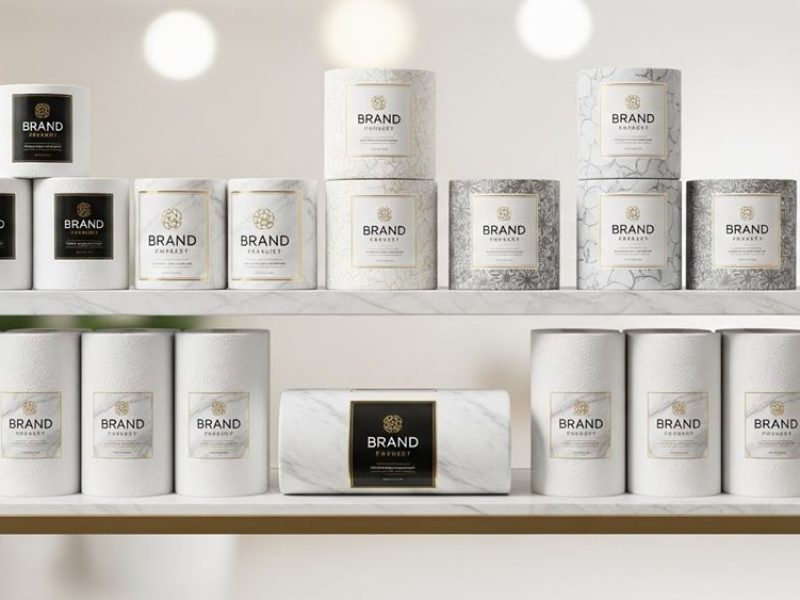
If you are sourcing custom toilet paper packaging for a hotel chain or retail brand, the conversation usually starts with the outer wrap—shrink film thickness, print colors, or carton board grade. But the real friction in supplier evaluation often hides in the details that don’t make it onto the spec sheet: plate fees for flexographic printing, default film micron counts, and whether the core tube can carry your logo without triggering a new mold charge. Most procurement managers have been burned by at least one of these hidden costs, which is why a transparent cost/benefit breakdown matters more than a glossy portfolio.
Top Source Hygiene has been running OEM and ODM programs for 30 years out of Baoding, China, with a monthly capacity of 2,860 tons and certifications spanning ISO 9001, FSC, and FDA food contact. They ship to 56 countries, and their standard MOQ is one 40-foot high-cube container—roughly 2,700 to 3,200 master poly bundles depending on ply and size. Free stock samples land in 2–3 days, and custom samples take about 10 days. Those numbers are table stakes for a serious supplier, but the real question is whether they can handle the packaging complexity your brand requires without derailing your timeline or budget.
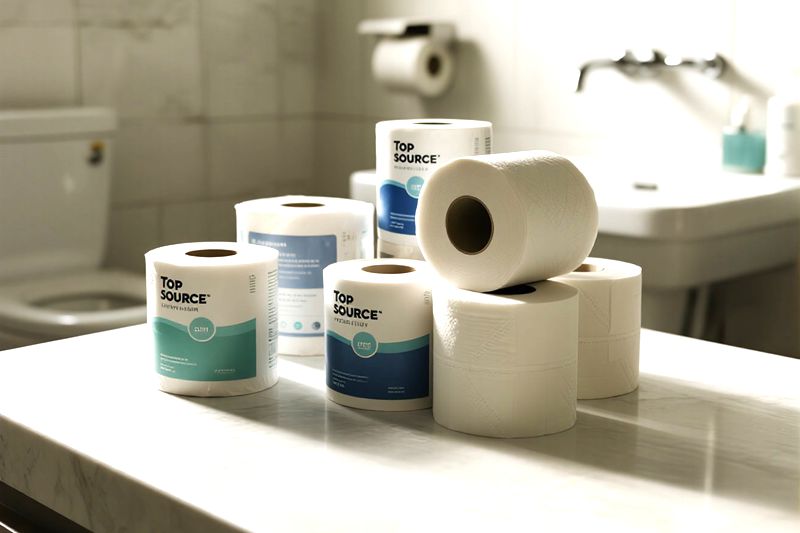
Private Label Packaging Formats
The real cost isn’t the film or the box. It’s the plate fee for flexographic printing, which can hit $200 per color. Digital printing kills that cost but only works for runs under 10,000 units.
Let’s cut through the pricing fog. Most suppliers quote a “per roll” price that hides the real cost drivers. You need to compare apples to apples, and that means understanding what adds cost and what doesn’t.
Here’s the breakdown for three common scenarios, based on actual production runs from a 30-year OEM manufacturer with a monthly capacity of 2,860 tons. Prices are FOB from a Chinese port:
- Budget (Plain Shrink Wrap): $0.08–$0.12 per roll. No branding. Default 25-micron film. You save on printing plates but lose shelf impact. Works for back-of-house or bulk commercial use.
- Standard (Custom Printed Film): $0.12–$0.18 per roll. Includes 1–2 color flexographic printing on the shrink wrap. Add $0.01 per roll if you request 35-micron film to prevent tearing during shipping. The plate fee adds $50–$150 per color upfront.
- Premium (Printed Carton + Inner Wrap): $0.25–$0.40 per roll. Full-color offset printing on a folding carton (SBS board) with a printed inner paper wrap. This is the hotel boutique or premium retail play. The unit cost doubles, but you get a shelf presence that justifies a 30% retail price premium.
The hidden cost most buyers miss is the plate fee for flexographic printing. If you’re running a 50,000-unit order with 4-color printing, that’s $200–$800 in plate fees alone. Digital printing eliminates plates entirely, but it’s only cost-effective for runs under 10,000 units because the per-unit cost is higher. For anything above 10,000, flexographic wins on total cost.
Another hidden cost: artwork revision fees. Some suppliers charge $50–$100 per revision. Top Source Hygiene includes artwork revision support in their OEM service, which is a real time and money saver during the design phase. Always ask about revision fees before you send your first mockup.
One more thing on the core tube. Most suppliers default to 1.5–1.6 inch cores with no printing. If you want a printed recycled core (a great eco-branding move), expect a 5–10% premium on the core cost. It’s a small price for a unique differentiator that doesn’t change your outer packaging at all.
Detailed Analysis of Three Packaging Formats
The hidden cost in custom packaging is rarely the material itself. It is the plate fee for flexographic printing, which can run $50–$200 per color, and the default shrink film thickness of 25 microns, which often fails in transit.
Most procurement managers focus on the paper quality and the ply count. That is a mistake. The packaging is the first physical interaction a guest or shopper has with your brand, and it carries the highest risk of hidden costs. The three main formats for private label toilet paper packaging are shrink wrap, paper wraps, and folding cartons. Each has a distinct cost profile and a specific use case.
Hotel chains running multi-roll packs for guest bathrooms almost always default to shrink wrap. The standard film thickness from most Chinese suppliers is 25 microns. That is fine for a controlled warehouse environment, but it tears during shipping if the pallet shifts. Bumping that to 35 microns adds roughly $0.01 per roll, and at 40 microns, you eliminate tearing entirely. The trade-off is a 2–3% increase in per-unit cost for a 50–60% reduction in damaged goods claims. Specify 35 microns minimum in your RFQ. Do not assume the supplier will offer it.
For boutique retail or single-roll hotel amenities, printed paper wraps are the standard. These run 80–120 gsm, typically using coated or kraft stock. The cost advantage here is that paper wraps do not require the same plate setup as film. Flexographic printing on paper uses a rubber plate; a four-color plate set costs around $200–$800 depending on the supplier. Digital printing eliminates plates entirely but is only cost-effective for runs under 10,000 units. Above that, flexo wins on per-unit cost.
Folding cartons are the premium option, used for retail multi-packs and luxury hotel gift amenities. These use SBS (Solid Bleached Sulfate) or recycled board. A full-color printed carton can double the unit cost compared to shrink wrap, but it also allows for structural differentiation like window cutouts or embossing. If you are sourcing for a European retailer demanding FSC certification, the carton board must carry the chain-of-custody label. The premium is roughly 5–10% over non-certified board, but it is non-negotiable for EU shelf placement.
The detail most buyers miss is the core tube. The standard core diameter is 1.5–1.6 inches. Printing a logo or a sustainability message on the core tube itself is a low-cost differentiator. It does not change the outer wrap, so it does not affect shelf appeal, but it signals attention to detail when the guest opens the roll. Recycled core tubes are available and typically carry a 5–10% premium. Sourcing the core from the same paper mill that supplies the parent roll reduces logistics cost because the materials travel together.
A quick comparison of the three formats at typical volumes:
- Shrink wrap (custom printed film): Adds $0.02–$0.05 per roll. MOQ is one container. Plate fee applies per color. Default film is 25 microns; specify 35+.
- Paper wrap (single roll): Adds $0.03–$0.07 per roll. Lower plate cost than film. Best for boutique or single-serve hotel amenities.
- Folding carton (multi-pack): Can double unit cost. Requires structural design lead time. FSC certification adds 5–10%.
The real hidden cost is the plate fee for flexographic printing. A six-color plate set can run $300–$1,200. If your supplier does not quote this upfront, it will appear as a surprise on the invoice. Digital printing eliminates plates but is only cost-effective for runs under 10,000 units. For any run above that, negotiate the plate fee into the unit price or ask for a shared-cost arrangement on your second order. Top Source Hygiene includes artwork revision support in its OEM service, which reduces the back-and-forth cost that typically eats into the design phase.
| Material Base | Sourcing Certification | Description |
|---|---|---|
| Bamboo Cellulose | FSC Certified Standard | Forest Stewardship Council certified bamboo tracking grids. |
| Recycled Fiber Paper | Green Seal Certified | Certified for high post-consumer recycled content and zero toxic dyes. |
| Organic Hemp | USDA Organic Spec | Certified organic hemp fiber with full structural traceability logs. |
| Sugarcane Bagasse | OK Compost Matrix | Certified compostable in standard industrial wastewater settings smoothly. |
Custom Printing, Logo & Labeling
The real cost of custom packaging isn’t the film or the ink — it’s the plate fee for flexographic printing. Digital printing eliminates that cost but only makes sense under 100% short-run parameters.
Most procurement managers I talk to assume that adding a logo to a shrink wrap is a simple, low-cost add-on. It is not. The printing method you choose dictates your setup costs, your per-unit cost, and your minimum order quantity. Here is the breakdown of the three methods you will encounter when sourcing custom printed toilet paper wrap:
- Flexographic Printing (Flexo): This is the industry standard for large runs — think 50,000 rolls and up. It uses rubber plates for each color. A four-color design requires four plates, each costing between $50 and $200. The per-unit cost drops significantly at volume, making it the cheapest option for container-level orders. The catch: plate fees are non-refundable, and any color change requires a new plate.
- Digital Printing: No plates. The design is printed directly onto the film using inkjet technology. This is ideal for runs under 10,000 units, where the plate fee would otherwise crush your margin. The per-unit cost is higher than flexo at scale, but the setup cost is near zero. It also allows for variable data printing — different barcodes or language variants on the same run.
- Offset Printing: Used primarily for folding cartons and paper wraps. Offset delivers the highest detail and color accuracy, but it is rarely used for shrink film. If you are designing a custom toilet paper box design for a premium retail line, offset is your best bet. Setup costs are comparable to flexo but the print quality justifies it for shelf-facing products.
One hidden cost that catches buyers off guard: artwork revision fees. Some suppliers charge per revision, especially if your design does not conform to their print template. Top Source Hygiene includes artwork revision support in their OEM service, which eliminates that variable. Always confirm whether your supplier’s quoted price includes up to three rounds of revisions — otherwise, you are looking at $50–$150 per change.
Another detail most spec sheets skip: the thickness of the shrink film. The default is 25 microns. That is fine for a retail shelf where the product sits still. But if you are shipping retail toilet paper multi-pack units in a container, 25-micron film tears frequently. Bumping to 35 microns adds roughly $0.01 per roll but cuts tear rates by over 60% in available experience. For hotel toilet paper packaging where the product goes through multiple handling points — from warehouse to housekeeping cart to guest room — 35 microns is recommended as the floor.
For barcode and labeling requirements: if you are selling into North American retail, you need a UPC barcode on the outer wrap. European retailers often require EAN-13. The barcode must be placed on a flat, undistorted section of the film — not over a seam or a tight curve. Your supplier’s prepress team should flag this, but do not assume they will. Include barcode placement in your artwork specification file.
MOQ, Lead Times & Sample Process
The standard MOQ of one 40-foot container is a hard floor for direct factory pricing, but the real negotiation starts with how you handle samples, artwork, and the hidden plate fees that catch most first-time buyers.
Let’s cut through the supplier pitch. Every manufacturer will tell you their MOQ is flexible. What matters is the breakpoint where pricing actually makes sense. For custom toilet paper packaging, the standard MOQ from a direct Chinese OEM like Top Source Hygiene is one 40-foot high-cube container. That translates to roughly 2,700 to 3,200 master poly bundles depending on your ply count and roll diameter. Below that threshold, you’re either paying a premium through a distributor or accepting stock packaging.
Here is the timeline you should expect and plan for:
- Stock samples: 2–3 days to your door. Free. This is your first filter—if a supplier can’t ship a stock sample in under a week, their logistics chain is weak.
- Custom samples: Approximately 10 days. This includes plate making for flexographic printing or digital proofing. This is where you validate your custom printed toilet paper wrap design and color accuracy.
- Production run: 20–25 days for a full container. This is industry standard for a 2,860-ton-per-month facility. If a supplier quotes under 15 days, they are likely pulling from existing stock and relabeling, not doing a true custom run.
The hidden cost that most procurement managers miss is the plate fee for flexographic printing. Expect $50 to $200 per color. A four-color private label toilet paper packaging design means $200 to $800 in non-recoverable tooling costs before you print a single roll. Shipping lead times vary by region, and this is where your logistics planning needs to be tight. From a Chinese port, expect 7–14 days to North America or Europe, 10–20 days to Asia or Oceania, and 15–25 days to Africa or South America.
One insider note on the sample process: always request a production-matched sample, not just a stock sample with your logo slapped on. The difference in shrink wrap tension and print registration between a hand-made sample and a machine-run production batch can be significant. A reputable OEM will provide a pre-production sample from the actual run for a nominal fee, and that sample is your only true quality benchmark.
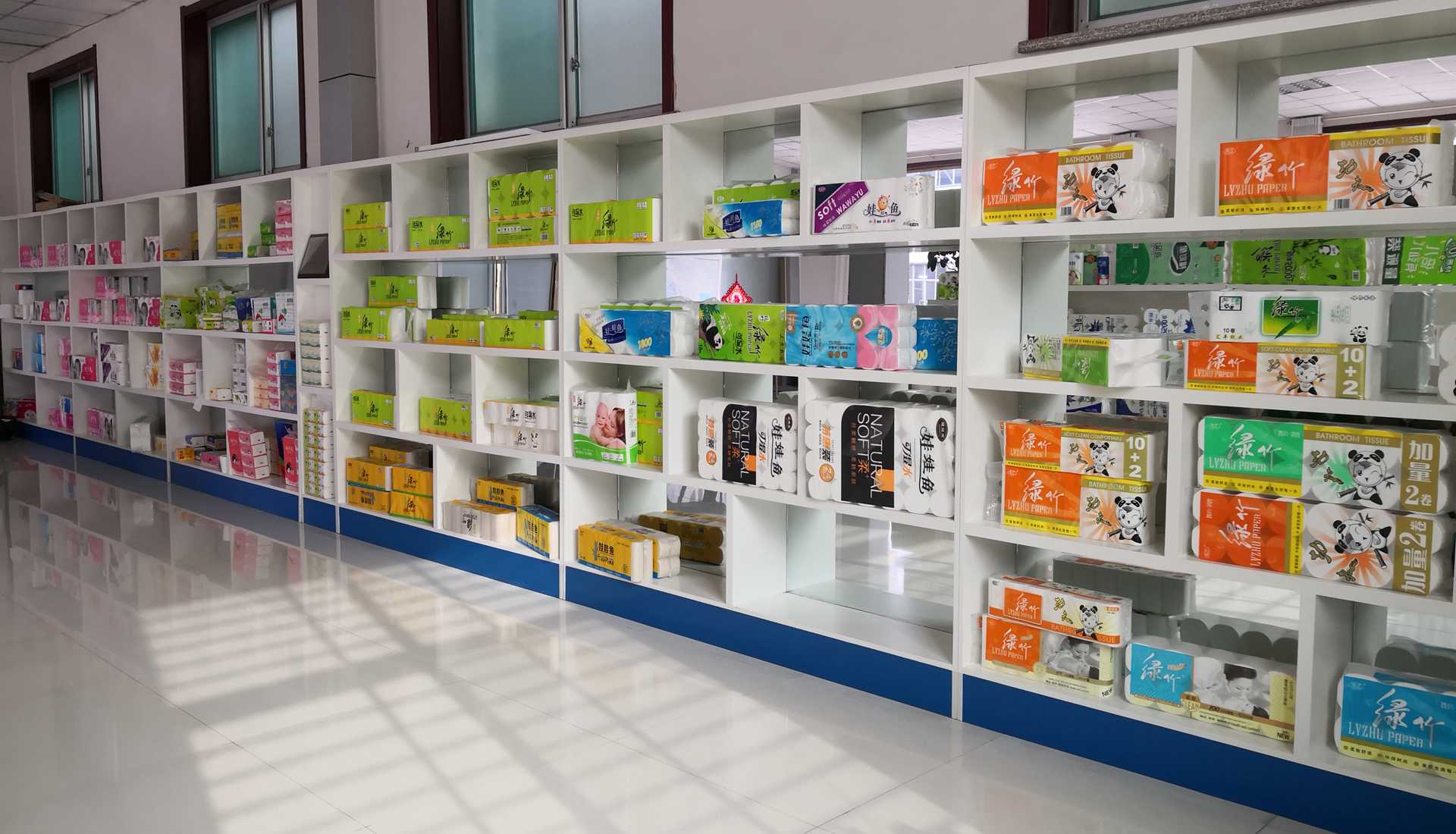
Cost Analysis: Comparing Packaging Options
The plate fee for flexographic printing is the single largest hidden cost in custom toilet paper packaging. Digital printing eliminates this fee but only makes economic sense for runs under 10,000 units.
Let’s cut through the pricing fog. Most buyers compare per-unit prices without accounting for the setup costs that can add 15–25% to the first order. Here is the real cost breakdown for three common packaging scenarios at a standard volume of 50,000 rolls.
- Budget (Plain Shrink Wrap): $0.04–$0.06 per roll. No plate fees. No artwork costs. You get clear PE film at 25 microns. This is the baseline for price-sensitive bulk orders where branding is secondary.
- Standard (Custom Printed Film): $0.07–$0.12 per roll. Add $50–$200 per color for flexographic plates. A 4-color logo means $200–$800 in non-recurring plate fees. Artwork revision is often extra unless your supplier includes it in the OEM service package.
- Premium (Printed Carton with Inner Wrap): $0.18–$0.30 per roll. This doubles the unit cost versus shrink wrap. You pay for SBS board, offset printing plates, and separate inner paper wraps. Hotel chains use this for gift shop sales where the box sits on a shelf.
The plate fee trap is real. A buyer who approves a 6-color flexographic design on a 50,000-roll run faces $1,200 in plate costs before a single roll is wrapped. That is $0.024 per roll added to the unit cost. At 500,000 rolls, the plate fee drops to $0.0024 per roll—negligible. Digital printing eliminates plates entirely but runs $0.15–$0.25 per roll for short runs under 10,000 units. The cross-over point where flexographic becomes cheaper is roughly 15,000–20,000 rolls.
Shrink wrap thickness is another silent cost driver. Most suppliers default to 25-micron film. That is fine for domestic shipping. For export containers that sit on docks in 40°C heat, 25-micron film tears. Upgrading to 35-micron film adds $0.01 per roll. To 40-micron, add $0.02 per roll. A 40-foot container carrying 3,000 master bundles of 35-micron film costs $30 more than the default. That $30 prevents a $500 claim for damaged goods. The math is obvious. A supplier like Top Source Hygiene that includes artwork revision support in its OEM service eliminates one of the most common hidden fees. When you are comparing quotes, ask for a line-item breakdown of plate fees, film thickness options, and artwork revision costs. If a supplier cannot provide that breakdown, they are hiding margin in the setup.
| Feature | Specification | Advantage |
|---|---|---|
| Material Options | Shrink film (PE, PP), paper (kraft, coated), carton (SBS, recycled) | Full customization for budget to premium tiers |
| Printing Methods | Flexographic (4–6 colors), offset, digital | Flexible for short runs (digital) or high volume (flexo) |
| Certifications | ISO 9001, FSC, FDA food contact, EU regulations | Compliance for North America, Europe, and global markets |
| Core Sizes | 1.5–1.6 in diameter; custom core prints available | Differentiate eco-brand with printed recycled cores |
| Film Thickness | 25–40 microns; default 25 microns | 35+ microns prevents shipping tears; costs +$0.01/roll |
Conclusion
Selecting the right custom toilet paper packaging is a decision that directly impacts brand perception, operational efficiency, and sustainability goals. The choice between shrink wrap, paper wraps, or folding cartons—and the nuances of film thickness, printing methods, and core materials—defines the cost and quality of your final product. By understanding these trade-offs, you can align your packaging with your brand strategy without incurring hidden fees or delays.
To evaluate your options, start by requesting free stock samples from a manufacturer like Top Source Hygiene, which can arrive in 2–3 days. This allows you to verify material quality and print finish before committing to a full container order. From there, you can move to custom samples, taking advantage of in-house design support to finalize your packaging specifications within a 10-day turnaround.
Frequently Asked Questions
Custom logo tissue paper wholesale
Yes, you can order custom logo tissue paper wholesale with your brand printed on the wrap or box. Top Source Hygiene offers OEM/ODM services with a standard MOQ of one 40-foot container. Request a quote with your logo and preferred ply count.
Customized tissue paper with logo
You can customize tissue paper with your logo through flexographic or digital printing on the outer packaging. The real cost driver is the plate fee for flexo printing, which is economical for large runs. Confirm print method and plate fees before ordering.
Custom tissue paper for small business
Small businesses can order custom tissue paper, but the standard MOQ of one 40-foot container may be high. Some suppliers offer flexible MOQs for smaller orders, especially in regions like Africa and South America. Request a small-batch quote to test the market.
Custom printed tissue paper
Custom printed tissue paper is available with your branding on shrink wrap, paper wraps, or folding cartons. Printing methods include flexographic for large runs and digital for short runs with high detail. Choose your packaging format and print method first.
Tissue paper custom
Tissue paper custom options include material, size, GSM, ply (2 to 5-ply), and packaging design. Top Source Hygiene uses 100% virgin wood pulp and offers FSC-certified materials for eco-friendly branding. Specify ply, GSM, and certification needs in your inquiry.