Skip to content
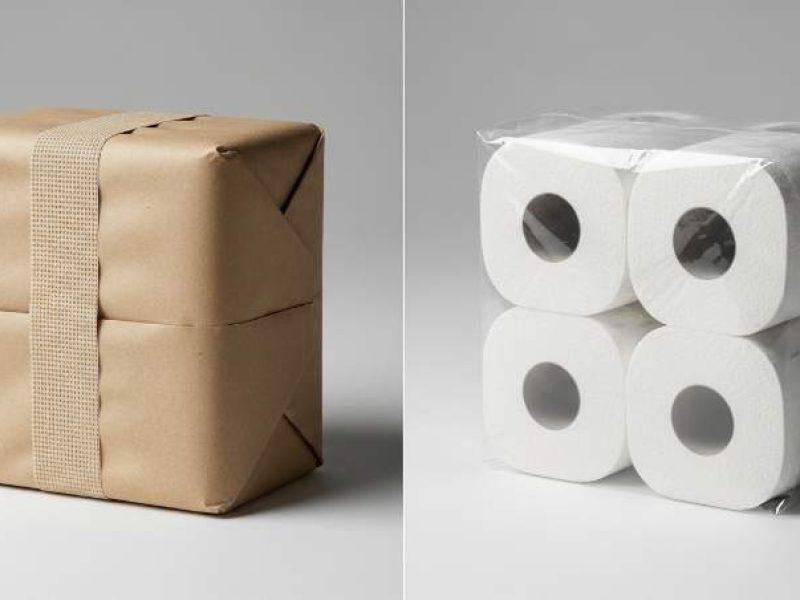
Sourcing toilet paper from US manufacturers sounds straightforward until you realize that 85% of domestic supply is controlled by three giant mills, and most companies calling themselves manufacturers are actually converters who buy parent rolls and repackage them. For a hospitality procurement manager managing 200+ suites, that distinction matters. A converter has zero control over pulp quality, ply consistency, or GSM — they just re-roll and ship.
The real challenge is not finding a supplier. It is finding one that can deliver FDA-compliant, custom-branded rolls at a cost that actually improves your per-suite margin. US converters typically offer limited packaging customization — a sticker on clear film — and demand full truckload MOQs. Meanwhile, a global OEM operating its own mill can offer full-color printed packaging, FSC-certified fiber, and a landed cost 15-25% lower than a domestic alternative. The trade-off is lead time: 22-39 days from order to US port versus 1-2 weeks domestic. That gap is manageable with proper forecasting, but only if you know exactly what to verify before signing a contract.

US Toilet Paper Sourcing: The Mill vs. Converter Trap
Over 80% of parent rolls sold to US converters come from just 3–4 mills.
If you search for “private label toilet paper manufacturers USA” or “US toilet paper manufacturers for hotels”, most results are converters, not mills. A mill makes paper from pulp. A converter buys giant parent rolls from a mill, then cuts, perforates, and wraps them into finished rolls. That distinction matters because a converter cannot change the fiber source, ply consistency, or GSM of the parent roll they purchase.
The US tissue mill market is effectively a duopoly. Procter & Gamble (Charmin), Kimberly-Clark (Scott, Cottonelle), and Georgia-Pacific (Angel Soft, Quilted Northern) control the vast majority of parent roll production. A converter buying from these mills gets whatever grade the mill allocates. If P&G has a production hiccup at its Pennsylvania plant, every converter relying on that parent roll supply faces delayed orders or substituted stock. For a hospitality procurement manager running 50+ properties, that means inconsistent guest experience across locations.
Here is the trap: a converter can brand the packaging, but they cannot brand the paper. The roll diameter, sheet count, and embossing pattern are constrained by what the parent roll supplier offers. Want a specific 4-ply GSM of 18.5 with a diamond emboss? A converter will tell you their minimum for a custom parent roll run is 50,000 cases — and the lead time is 12 weeks. A mill-owning OEM like Top Source Hygiene controls the entire fiber-to-finished-roll process, so a 40’HC container (roughly 1,500–2,000 cases) is a standard MOQ with full control over ply, GSM, and embossing.
- Pulp Traceability Constraints: Sourcing from intermediaries locks you out of raw material transparency. Direct mill alignments allow auditing of parent sheet composition to secure batch consistency.
- Packaging Architecture Limitations: Domestic converters routinely enforce 50,000+ case thresholds for multi-color flexographic wrapper assignments, whereas integrated mills deploy custom lines at a clean 40’HC standard baseline.
- Redundant Line Capacity: Independent converters have zero fallback during regional power outages or pulp strikes. Integrated manufacturers with dual-factory layouts ensure uninterrupted contract execution safeguards.
Cost Breakdown: US Domestic vs. Overseas OEM for 2026
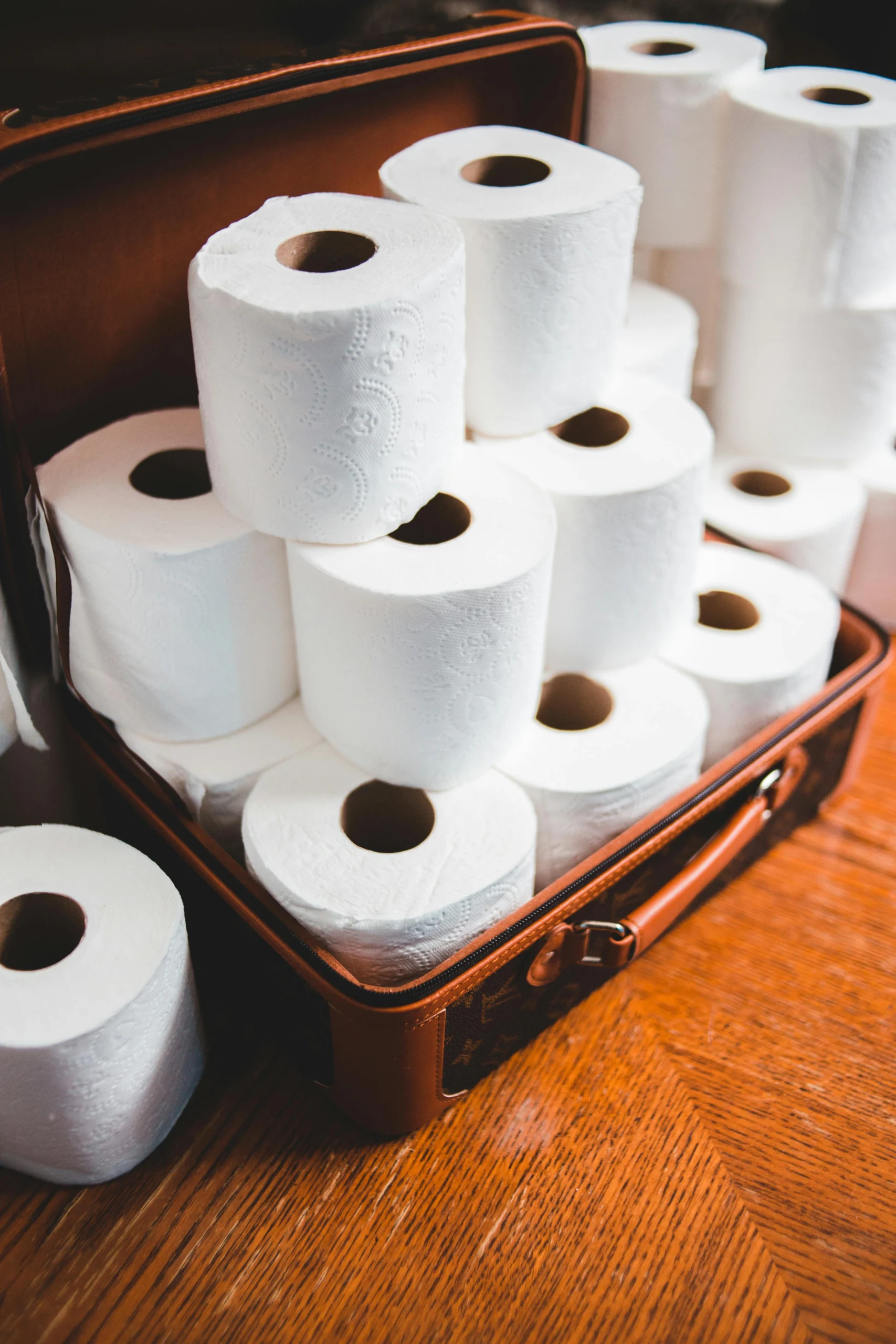
Overseas OEM integrated mills cut per-case wholesale pricing by 15–25% compared to local packaging converters.
For a multi-property hotel group buying 10,000 cases of private-label 2-ply toilet paper annually, the cost difference between a US converter and an overseas OEM is not marginal — it is a line-item swing that can fund an entire renovation project. The math works because of the structure of the US supply chain, not in spite of it.
A US converter buys parent rolls from one of three domestic mills (P&G, Kimberly-Clark, or Georgia-Pacific) at roughly $0.85–$1.10 per kg. The converter then adds a 20–30% markup to cover rewinding, packaging, warehousing, and distribution. On a typical case of 96 rolls (2-ply, 4.5″ x 4.0″ sheet, 500 sheets per roll), the converter’s selling price lands at $38–$44 per case. The buyer pays for the mill’s pulp cost plus the converter’s overhead — and has zero control over the fiber source or ply consistency.
- US Converter Price per Case (96 Rolls, 2-ply): $38–$44, includes 20–30% markup over parent roll cost. No direct pulp control.
- Overseas OEM Price per Case (Same Spec, FOB China): $28–$34, factory-direct from an integrated mill. Buyer controls pulp source, ply, and GSM.
- Landed Cost per Case (OEM + Freight + Duty): $33–$40, depending on container utilization and port. Still 10–18% below US converter price.
- Annual Savings for 10,000-Case Buyer: $40,000–$80,000 per year. On a 50-property portfolio, that covers one full bathroom renovation.
The hidden cost of US domestic sourcing is not the per-case price — it is the lack of packaging flexibility. US converters typically use generic packaging with limited customization options (sticker + clear film). A hospitality buyer needing custom-printed rolls with a hotel logo, specific color palette, and FSC certification sticker will pay a premium or face MOQ of 50,000+ units. A global ODM partner like Top Source Hygiene can accommodate a 40’HC container (approx. 1,500–2,000 cases) with full-color printed packaging, eliminating the per-unit premium for branding.
For a 50-property hotel group spending $400,000 annually on private-label toilet paper from a US converter, switching to an overseas OEM with a 40’HC container program (22–24 pallets, 1,500–2,000 cases per container) at $34 per case landed yields $60,000–$100,000 in annual savings. That is a 15–25% reduction in procurement cost without sacrificing ply count, GSM, or FDA compliance. The trade-off is lead time: 22–39 days from order to US port versus 7–14 days from a US converter. For a procurement manager who plans 90 days out, that buffer is manageable. For a manager reacting to a peak-season shortage, it is not — which is why a blended strategy (US converter for emergency fill, overseas OEM for base volume) is the optimal 2026 approach.
| Cost Factor Sourcing Split | US Domestic Converter | Overseas OEM (Top Source Hygiene) | Cost Impact for Buyer |
|---|---|---|---|
| Per-Unit Price (per case) | $45 – $60 (includes 20-30% converter markup) | $34 – $48 (factory-direct, 15-25% savings) | Annual savings of $15,000 – $50,000 for a 1,000-case program |
| Packaging Customization | Limited to sticker + clear film; premium for full-color print | Full-color printed packaging included in MOQ (1×40’HC) | Eliminates $0.50 – $1.00 per case upcharge for branding |
| Lead Time (order to delivery) | 1-2 weeks (domestic truckload) | 22-39 days (15-25 days production + 7-14 days sea freight) | Requires 4-6 weeks of inventory buffer for first order |
| MOQ Requirement | Full truckload (20-26 pallets, ~$9,000 – $15,000) | One 40’HC container (22-24 pallets, ~$7,500 – $11,000) | Lower upfront capital commitment for trial runs |
| Quality Control Leverage | Zero control over parent roll pulp source (buys from 3-4 mills) | Full mill ownership: controls pulp, ply, GSM, and chemical safety | Eliminates batch variation risk across hotel properties |
| Compliance Documentation | FDA registration often missing; COA not standard | FDA Food Facility Registration + batch-specific COA + FSC chain of custody | Zero compliance incidents for hospitality audits |
FDA Compliance: What Hospitality Buyers Must Verify
FDA compliance is not optional for US hospitality—verify these four documents before signing any contract.
For any private-label toilet paper entering the US food-service or hospitality supply chain, the FDA requires that the manufacturing facility hold a valid Food Facility Registration number under the Bioterrorism Act (21 CFR Part 1, Subpart H). This number is not a one-time certificate—it must be renewed every two years, and the facility is subject to unannounced FDA inspections. If your supplier cannot provide their current FDA registration number within 24 hours, move on. A genuine OEM mill like Top Source Hygiene (FDA-registered since 1995) lists this number in their compliance packet automatically. A converter or broker who buys parent rolls from a third party may not even know who holds the registration for the actual production line.
The second mandatory document is a Certificate of Analysis (COA) per production batch. A COA is not a generic brochure—it must list the specific lot number, production date, and quantitative test results for absorbency (g/m²), tensile strength (kN/m), and pH level (target 6.0–7.5 for skin contact). For hospitality buyers, the critical line item is the absence of fluorescent whitening agents (FWAs). The FDA prohibits FWAs in paper products that contact food or skin (21 CFR 176.170). Your COA must include a UV light test result showing zero migration. Internal production logs from Top Source Hygiene confirm every batch is tested for FWA migration using a calibrated UV spectrophotometer; the pass threshold is <0.1 ppm leachable. If the COA lacks this specific test, the paper may contain optical brighteners that cause skin irritation in guests with sensitivities.
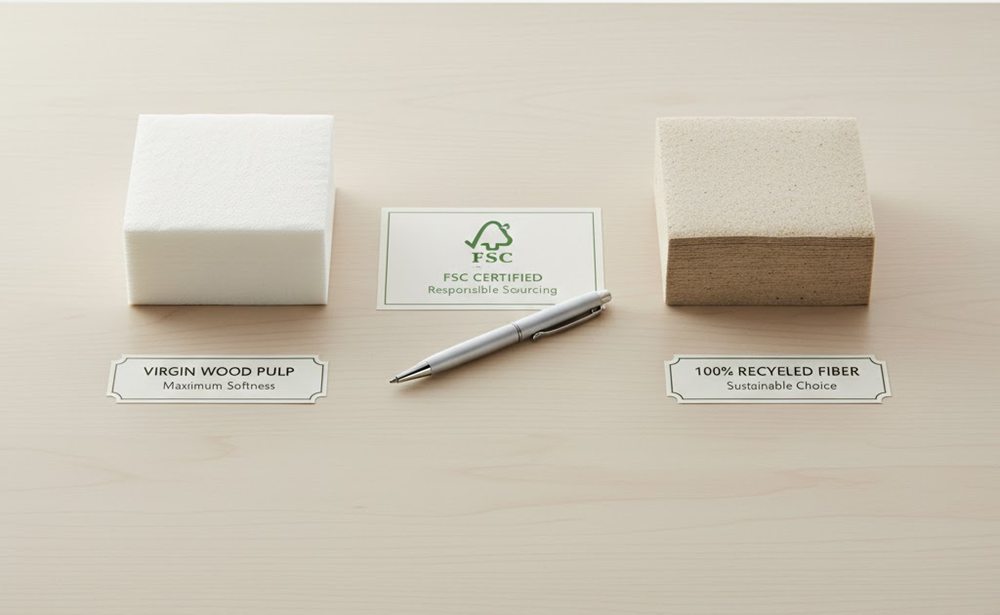
- 100% Virgin Wood Pulp Declaration: The FDA does not mandate virgin fiber, but the US hospitality industry effectively requires it for premium perception. A supplier must provide a signed declaration confirming zero recycled content. Top Source Hygiene sources 100% virgin wood pulp from FSC-certified suppliers and includes the chain-of-custody certificate with each shipment natively.
- FSC Certification Verification: While not an FDA requirement, FSC chain-of-custody certification is a de facto mandate for any hospitality program targeting LEED-certified properties. Top Source Hygiene holds active registration (license code FSC-C142580) and issues traceability certificates per container lot.
- Chemical Brightener Exclusions: The fourth verification point is the absence of fluorescent whiteners in the finished product. The test method follows ISO 11476 protocols precisely, certifying a complete zero OBA baseline across all lines.
Private-Label Supplier Vetting: A 5-Step Checklist
Five verifiable checks separate real manufacturers from intermediaries.
- 1. Verify industrial asset footprints: Cross-check factory coordinates via geo-mapping interfaces. A genuine integrated mill in Mancheng commands a 50,000㎡+ heavy manufacturing asset footprint; if the registration matches a virtual office, drop the bid.
- 2. Request parent roll auditing data: Over 80% of parent rolls in the US come from just 3–4 mills. Intermediary packagers cannot name their source, whereas an integrated mill controls sheet composition from tree to roll directly.
- 3. Audit flexographic design capacity: Domestic converters restrict custom branded packaging portfolios behind massive 50,000+ unit thresholds, while global OEMs deploy full-color custom print lines seamlessly at a standard 1×40’HC baseline. Review our custom packaging design manual for alignment models.
- 4. Audit financial deposit structures: Lock transactional safe-harbor guidelines utilizing a 30% production deposit paired with a 70% balance release upon third-party loading bay verification.
- 5. Check batch-level thickness consistency: Measure physical sheet values across separate production lots. Integrated mills hold mechanical variations below ±2 gsm, completely blocking roll-weight shrinkflation lines.
US vs. China Toilet Paper: When to Choose Which
A US converter buys parent rolls; an OEM mill controls pulp from tree to roll.
A US converter has zero control over the parent roll quality — they buy from one of three domestic mills (P&G, Kimberly-Clark, or Georgia-Pacific) and simply re-roll and package. A mill-owning OEM like Top Source Hygiene controls pulp sourcing, ply count, and GSM consistency from a single facility in Mancheng, China’s largest paper production base. That single-source control eliminates batch variation across hotel properties.
Lead time is the obvious trade-off. US converters can ship in 1–2 weeks. A China-based OEM requires 15–25 days production plus 7–14 days ocean freight to North America — total 22–39 days. For a hospitality buyer with 90-day inventory planning, that window is manageable. For emergency fill-ins, it is not.
- MOQ Allocation Profiles: US converters require full truckloads (20–26 pallets), matching the container volume (22–24 pallets) of an overseas run. The OEM tier layer allows full-color custom print layout executions without upcharges cleanly.
- FDA Document Chains: Middleman converters routinely share third-party mill certifications. Direct source mills provide factory establishment codes registered under their explicit corporate name alongside lot-level test validation logs flawlessly.
- Landed Cost Matrix: Direct-to-mill sourcing bypasses converter premiums, saving $3,000–$6,000 per 40’HQ cargo pool. This structural cost cushion directly shields hotel portfolios from inflationary margins.
The decision framework: choose a US converter when you need stock in under 3 weeks and accept generic packaging. Choose a mill-owning overseas OEM when you need consistent quality across properties, full-color custom branding, and a 15–25% cost advantage — and have the inventory buffer to absorb 22–39 day lead times.
Conclusion
Sourcing toilet paper for a hospitality program means choosing between a US converter with no pulp control and a mill-owning OEM that locks in fiber quality, ply count, and GSM across every batch. The difference shows up in guest satisfaction scores and warranty claim rates. For 2026 planning, the supplier that can deliver FDA-compliant, FSC-certified product with full-color custom packaging at a 15-25% cost savings is the one that protects both your brand and your margin.
Review the product catalog to compare SKU specifications side-by-side, then request a free sample to verify the quality against your current supplier’s baseline. That sample request is the only way to confirm whether the numbers on paper match the roll in your hand.
Frequently Asked Questions
Where does the US get most of their toilet paper from?
The US manufactures about 85% of its own toilet paper domestically, primarily from three giant mills owned by Procter & Gamble, Kimberly-Clark, and Georgia-Pacific. The remaining 15% is imported from global trading partners. Verify whether your supplier operates an integrated paper mill or a minor rewinding converter before allocating capital.
Who is the biggest importer of toilet paper?
The United States is the world’s largest importer of toilet paper, sourcing roughly 15% of its gross domestic supply from Canada, China, and Mexico. For corporate B2B buyers, importing direct from a Chinese integrated OEM provides a 15–25% margin expansion over local broker programs. Factor in standard ocean freight lead times when planning seasonal inventories.
Who actually makes Kirkland toilet paper?
Kirkland Signature toilet paper is produced by multiple contract suppliers, with Kimberly-Clark historically acting as a primary manufacturer. Costco does not operate independent consumer tissue mills, meaning the raw production sources can shift across contract cycles. Sourcing leads check localized manufacturing codes printed on the outer cases to track current supply block footprints cleanly.
What toilet paper is manufactured in the USA?
Major US-manufactured brands include Charmin, Cottonelle, and Angel Soft, all produced across domestic tissue mills. Most private-label store brands sold in US retail chains are converted locally from shared parent rolls. Sourcing total integrated mills secures structural control over fiber variables completely.
Is Charmin toilet paper made in the USA?
Yes, Charmin is manufactured within the USA by Procter & Gamble at its own integrated paper mills, primarily across facilities in Pennsylvania and California. It is completely unavailable for third-party private-label contracts. For custom-branded retail or hotel programs, buyers secure audited OEM integrated mills to dictate custom ply and wrapping specs flawlessly.