Skip to content

When you’re sourcing private label toilet paper for a hotel group, US toilet paper FDA compliance sounds straightforward—until you dig into what it actually means. Most suppliers claim “FDA compliant,” but few can tell you which CFR subpart applies or produce the lab data to back it up. That gap creates real risk for procurement managers who answer to the GM, marketing, and sustainability leads.
Toilet paper doesn’t need pre-market approval from the FDA. It’s a self-certified indirect food additive regulation under 21 CFR 176.170 and 176.180. That nuance is rarely explained. A customs hold on a 40-foot container costs thousands in delays and legal fees—and that’s before you explain empty bathroom cabinets to a five-star property. The fix is knowing exactly what documentation to request up front.
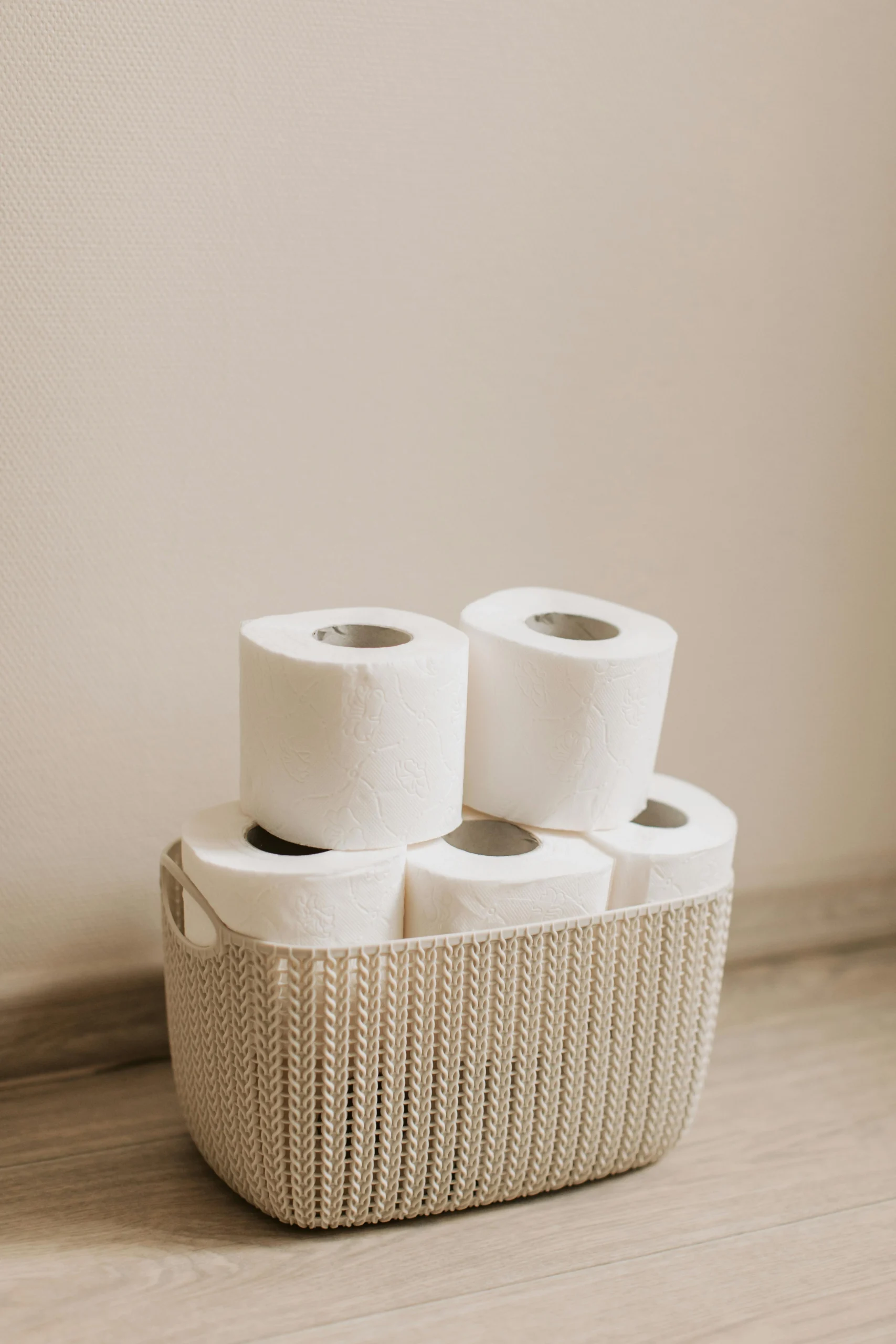
Why FDA Compliance Matters for Private Label Toilet Paper
FDA compliance for private label toilet paper is self-certified, not pre-approved.
Here’s the first thing most procurement managers get wrong: the FDA does not pre-approve toilet paper. There is no application, no review queue, no official approval number. Compliance is self-certified under 21 CFR 176.170 (components for aqueous and fatty food contact) and 21 CFR 176.180 (dry food contact). That means the manufacturer—and by extension, your brand—bears full responsibility for ensuring no prohibited substances like heavy metals, chlorinated compounds, or fluorescent whitening agents are present. If your supplier can’t produce a Certificate of Analysis showing extraction limits under these specific subparts, you don’t actually have FDA compliance.
The financial risk of getting this wrong is not theoretical. US Customs can hold non-compliant containers, impose relabeling costs, or seize the product entirely—typically adding $5,000 to $15,000 per container in delays and penalties. For a hospitality chain running private label toilet paper across multiple properties, a single recall triggered by a guest complaint about irritation or odor can cascade into brand-wide liability. One property’s bad review becomes a headline. That’s the real cost: lost guest confidence.
- Labeling Claim Pitfalls: The FDA Compliance Policy Guide warns that terms like \”therapeutic\” or medical-grade on packaging could reclassify tissue as a medical device. Private label briefs must stick to structural parameters to avoid regulatory creep.
- Facial Tissue Exemption Limits: The FDA explicitly exempts conventional facial tissues under CPG Sec 100.600. Toilet paper is governed tightly under indirect food additive rules due to the high probability of transfer to food-contact hands.
- Verification Checklist Defenses: Buyers must demand a signed Certificate of Analysis validating net extractable limits, zero fluorescent whitener migration under UV lamps, and line segregation audit protocols.
Most competitors—like Hewbonn Paper—mention FDA compliance generically but never cite the specific CFR subparts. That omission allows them to avoid documentation requirements. A buyer who presses for 21 CFR 176.170 and 176.180 separates serious manufacturers from those who rely on vague compliance claims. Top Source Hygiene lists both subparts in its certification documentation and provides free samples (stock in 2–3 days, custom in 10) so you can test before committing to a full 40-foot container lot.
21 CFR 176.170 and 176.180: The Real FDA Standards
Verifying statutory 21 CFR 176.170 and 176.180 chemical extraction thresholds acts as a shield against border border seizures.
The FDA does not pre-approve toilet paper. Compliance is self-certified under Title 21 of the Code of Federal Regulations. The two relevant subparts are 21 CFR 176.170 (components of paper and paperboard in contact with aqueous and fatty foods) and 21 CFR 176.180 (dry food contact). Toilet paper sold in the US must meet these indirect food additive rules because it can contact food packaging, utensils, or hands that later handle food.
- Prohibited Chemical Contaminants: Chlorinated binders, residual lead, mercury traces, and active fluorescent whitening agents (FWAs) are completely banned from material formulas.
- Extractable Substance Thresholds: Both CFR codes govern the net migration limits into food simulants. Importers must demand an independent lab Certificate of Analysis (CoA) mapping these thresholds.
- Letter of Guarantee (LG) Criteria: Avoid generic supplier statements. A binding corporate LG must explicitly outline the Title 21 subparts and state raw batch traceability clearly.
- Accreditation Validation: Reports generated by ISO 17025 accredited testing laboratories carry substantial legal weight at border entry terminals compared to internal plant checklists.
US vs. Imported Toilet Paper: Compliance Cost Comparison
Importing can save 30% on product cost but risks $5,000–$15,000 per container in non-compliance fees.
The price gap between domestic and overseas toilet paper manufacturers is real. US import data shows massive volume distributions from global trade partners. Foreign suppliers, particularly in Asia, can offer FOB prices 20–30% lower than US-based mills. That margin matters for hospitality buyers operating on tight budgets. But the math flips when a container gets flagged at customs for missing FDA documentation.
- Landed Cost Margins: Off-shore OEM manufacturing lowers base box prices by 20-30%. Combined with an optimized total landed cost structure, international fulfillment yields massive long-term budget savings.
- Statutory Description Defenses: Packaging descriptions must remain strictly factual (e.g., \”3-ply, 100% virgin pulp\”) rather than deploying medicinal or therapeutic keywords that trigger unexpected FDA device audits.
| Aspect Sourcing Line | US Manufacturer | Imported Manufacturer | Cost Implication Matrix |
|---|---|---|---|
| FDA Compliance Path | Pre-registered, regular domestic inspections | Self-certify per 21 CFR 176.170/180 layers | Non-compliance penalty $5k-15k per container load |
| Required Quality Documentation | Standard local compliance papers | Certificate of Analysis, third-party lab logs | Independent lot testing runs $2k-5k per batch allocation |
| Minimum Order Quantity | Flexible, smaller localized pallets | Standard 1×40’HC container (~20 tons pulp) | Higher initial logistics investment |
| Lead Time (Order to Door) | 1-3 weeks typical distribution | 5-7 weeks (20-25 days production + transit) | Demands predictive inventory pipeline safety lines |
| Custom Private Branding | Limited custom casing profiles | Full OEM/ODM: ply options, size, core configurations | Unlocks maximum brand equity and high field margins |
How to Verify FDA Compliance with Your Manufacturer
Six verification steps that separate compliant manufacturers from severe corporate liability risks.
Many suppliers claim FDA compliance without proof. For toilet paper, the FDA regulates under 21 CFR 176.170 (aqueous/fatty food contact) and 176.180 (dry food contact). Non-compliance can cost $5,000–$15,000 per container in delays. Here’s how to verify.
- CFR Code Authentication: Confirm the mill documentation explicitly maps out Title 21 subparts 176.170 and 176.180 limits. Omission of these precise legal codes signals broker-reseller masking profiles.
- FWA UV Lamp Audits: Fluorescent whitening agents are strictly prohibited under FDA indirect food additive guidelines. Run darkroom UV tests on sample sheets to catch fiber bleaching shortcuts. Optical brightener testing protects sensitive hospitality guest tissue from irritation loops perfectly.
- Raw Material Quality Mapping: Utilizing virgin pulp profiles shields contracts from thermal ink cross-contamination. Sourcing teams can request free stock samples (2-3 days dispatch) to run local verification tests before mass processing runs.
Conclusion
FDA compliance for toilet paper isn’t a marketing badge — it’s a documented chain of testing under 21 CFR 176.170 and 176.180. Skip the vague claims. Demand the specific subpart data, a Certificate of Analysis, and confirmation of no fluorescent whiteners. That’s how you protect your brand from the $5,000–$15,000 per container in customs delays and legal fees that follow non-compliant shipments.
Now that you know the exact regulations, the next step is straightforward: request a sample and the corresponding compliance documentation from your shortlisted suppliers. Validate the test results against the CFR limits before you commit to a full container order.
Frequently Asked Questions
Where does the US get most of its toilet paper from?
The US gets most imported toilet paper from Canada, which exported $275 million worth in 2023. Manufacturers outside North America, such as those in China, also supply a massive volume of private label tissue contracts. Always verify your supplier’s origin and FDA compliance documentation before shipping.
What country exports the most toilet paper to the USA?
Canada exports the most toilet paper to the USA, with over 96,000 metric tons in 2023. Manufacturers outside North America, like those in China, compete aggressively on full OEM customization loops. Check your supplier’s export volume and CFR data sets before booking container allocations.
Which toilet paper does not contain PFAS in the USA?
Toilet paper made from 100% virgin wood pulp naturally does not contain intentionally added PFAS compounds. Post-consumer recycled pulp may carry trace packaging PFAS cross-contamination, making pure virgin cellulose the safest choice. Request a zero-detect PFAS lab certificate from your supplier to confirm.
Who actually makes Kirkland toilet paper?
Kirkland toilet paper is manufactured by multiple major suppliers, including Clearwater Paper and Georgia-Pacific. For your own private label rollout, advanced manufacturers like Top Source Hygiene can produce comparable high-bulk quality with full FDA compliance. Always verify the actual manufacturer backing any brand.
What do Muslims use instead of toilet paper?
Muslims traditionally use water cleansing via bidets, shattafs, or lotas alongside dry toilet paper. This cultural hygiene practice does not alter the indirect food additive FDA compliance requirements for toilet paper manufacturers supplying hospitality properties. Consider adding biodegradable wet wipe lines if targeting these high-growth consumer segment footprints cleanly.