 Skip to content
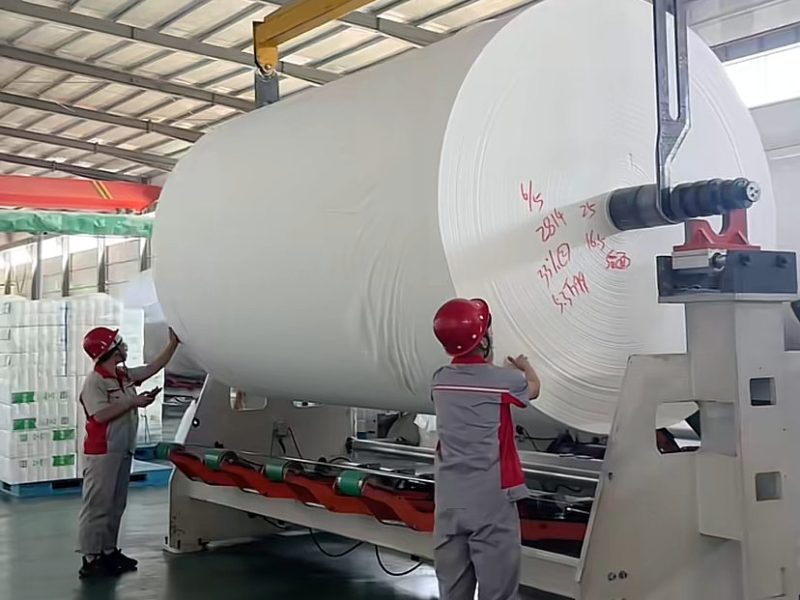
How to Verify Jumbo Roll Factory Certifications Before Ordering is the first checkpoint buyers should lock before they approve a supplier, budget, or production slot. When you need to verify jumbo roll factory certifications, the real work starts not when the certificate PDF lands in your inbox, but when you cross-check it against public registries. FSC certificates have a unique license code you can look up on info.fsc.org, and ISO 9001 claims can be checked via IAF CertSearch — a database that lists over 1.5 million accredited certificates globally. Yet many buyers skip this step. That’s how an expired or outright fake certificate slips through. For a public facility in Africa, where maintenance cycles are tight and budget reviews are strict, an unverified certification can mean paying for a compliance claim that doesn’t hold up at audit.
Top Source Hygiene, a 30-year manufacturer operating out of Baoding’s paper production base, maintains ISO 9001, FSC chain-of-custody, and FDA registration across a 2,860-ton monthly output. But you don’t have to take that on faith. The same verification tools that work for any supplier work here. The difference is that some suppliers share certificate numbers upfront; others wait until you ask — and then hesitate. Industry estimates suggest roughly one in three suppliers in Baoding display expired FSC certificates. That stat alone is reason to build a repeatable verification routine before you place a jumbo roll order. This article gives you that routine: four steps, public databases, and the specific red flags that separate a transparent factory from one that’s just printing logos.
Why Certification Verification Matters
One in three suppliers shows expired FSC certs—don’t trust the PDF.
A certificate is a piece of paper. A valid certificate is one you’ve verified against the issuer’s database. The difference can cost you a customs hold, a compliance fine, or a damaged brand. In China’s Baoding paper cluster, industry estimates suggest one in three suppliers displays an expired FSC certificate on their website or pitch deck. That ratio alone should make you question every claim before you commit to a container.
- FSC License Code Check: Every legitimate FSC certificate carries a unique license code (e.g., FSC-C123456). You can verify it in real time at info.fsc.org. Many sellers plaster old logos from certificates that lapsed years ago. A code that returns ‘no match’ or ‘expired’ means you cannot legally sell that product as FSC-certified in Europe or other regulated markets.
- ISO 9001 Cross-Check: ISO 9001 certificates are valid for three years with annual surveillance audits. The IAF CertSearch database lists over 1.5 million accredited certificates globally. Enter the supplier’s name or certificate number. If it doesn’t appear, either the certificate is fake or the certification body is not accredited. Both are red flags.
- FDA Registration Verification: FDA does not issue a certificate per se for tissue products. Instead, it requires facility registration. Go to the FDA’s establishment registration database and search the supplier’s facility name and address. If the registration is expired or missing, the exporter cannot legally bring product into the U.S. For Africa-bound shipments, that same compliance evidence often satisfies local health inspectors.
- Financial Penalty for False Claims: Under the EU Green Claims Directive, suppliers caught making false or expired FSC claims face fines of up to 4% of annual turnover. That liability sits with the importer, not just the factory. Verifying a certificate now protects your P&L later.
The most dangerous credential isn’t a missing one—it’s a counterfeit one that looks real until an auditor or a buyer pulls the database record. Verification takes 15 minutes per certificate. Skipping that step can delay a container for weeks or trigger a recall.
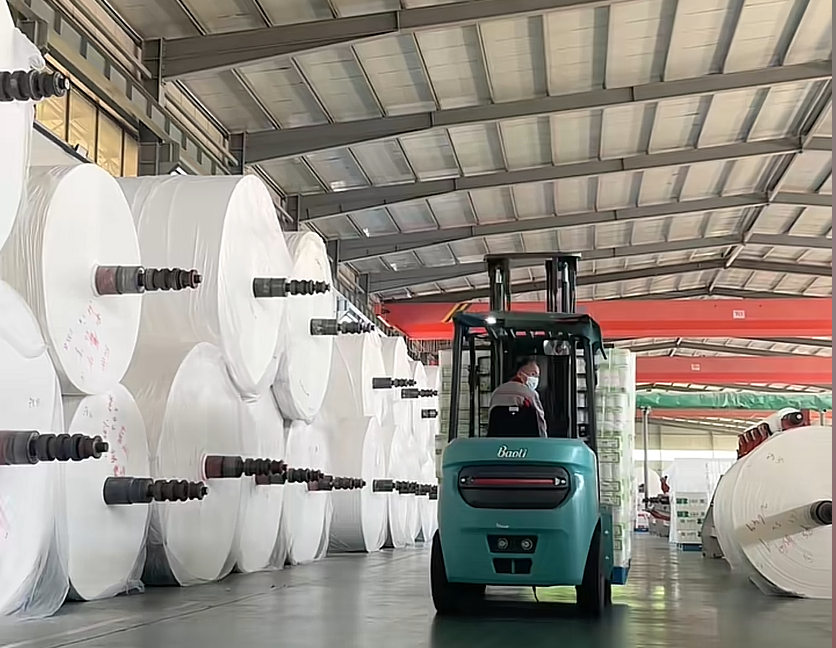
Step 1: Request Certification Copies and Check Expiry Dates
A PDF certificate proves nothing without a live database check.
Your first move before trusting any supplier is to get copies of every certification they claim — ISO 9001, FSC, FDA registration, and any other regional marks. Do not accept screenshots or low-resolution scans. Demand full, unmarked copies showing the certificate number, issue date, expiry date, and the accredited body’s logo. Most procurement managers skip this step because they assume a supplier who shares a PDF is legitimate. That assumption is what gets you non-compliant product.
- ISO 9001 Surveillance Audits: Valid for 3 years from the issue date with mandatory annual surveillance audits. The certificate must show a stamp or notation for each surveillance visit. If the certificate is older than 12 months with no audit stamp, the factory likely lost its certification status cleanly.
- FSC Chain‑of‑Custody Tracking: Each certificate carries a unique license code (format: FSC-C######). Run that code on the official FSC public database at info.fsc.org. If the code is not found or shows ‘expired’, the supplier cannot legally call their products FSC-certified.
- FDA Registration (Tissue Products Framework): Ask for the FDA establishment registration number. Verify it directly on the FDA’s establishment registration database at accessdata.fda.gov. Registration renews annually — a registration that expired more than 90 days ago means the facility is not cleared for import channels flawlessly.
A certificate that looks valid on paper but does not appear in the issuing body’s official registry is a red flag. Some suppliers will photoshop expiry dates or borrow certificates from other factories. Make verification part of your standard due diligence process — not an afterthought.
Step 2: Use Online Registries
Don’t trust the PDF—verify the license code online through designated public data中台 corridors.
Sourcing managers execute cross-checks strictly on live registries to confirm certificate scopes match product profiles. Intermediary traders frequently present shared mill certifications to secure contracts, masking low-grade conversion environments behind clean data lines:
- Scope Alignment Verification: Ensure the certified entity matches the factory legal name exactly, mapping the actual raw sheet conversion scope to your exact product type parameters perfectly.
- Accreditation Body Audits: Cross-check standard ISO registrations on international IAF search portals to confirm certifying bodies hold active accreditation status globally.
- Traceability Tag Mapping: Verify that batch-level packing slips list active chain-of-custody claim codes to shield institutional operations from dynamic greenwashing penalties cleanly.
Step 3: Ask for Lab Test Reports
Certificates prove a factory has the right systems on paper; lab test reports prove the product actually works.
Certificates prove a factory has the right systems on paper. Lab test reports prove the product actually works. For jumbo rolls going into high-traffic public facilities, three tests matter more than the rest: absorbency, tensile strength, and fluorescent whitener absence. A supplier that can’t or won’t share these reports is hiding something.
- Absorbency Speeds: Measures how fast and how much water the paper can soak up. Standard test methods (like DIN 12625 or ISO 12625-8) give you a sink time in seconds. Look for ≤ 5 seconds for a 3‑ply roll. Anything above 10 seconds is a red flag — the paper is over‑sized or poorly refined.
- Tensile Strength Bars: Measures the force needed to tear the paper in both machine direction (MD) and cross direction (CD). For commercial jumbo rolls, typical MD tensile strength should be ≥ 15 N / 50 mm, CD ≥ 8 N / 50 mm. If the supplier reports numbers far below, expect breakage in automatic dispensers.
- Fluorescent Whitener Absence: Fluorescent whitening agents (FWAs) are optical brighteners that cause skin irritation. Lab reports should confirm “no detectable FWAs” (or ≤ 0.1% per EN 648). Even if your facility is in Africa, if you ever plan to meet international donor standards, zero FWAs is the baseline.
Top Source Hygiene runs all three tests in‑house as part of its ISO 9001 quality control process. Every production batch is sampled and tested for absorbency, tensile strength, and fluorescent whitener absence before shipment. Request a copy of the latest batch test report — it should match the spec sheet you approved.
Step 4: Conduct a Virtual Factory Tour or Third-Party Audit
A virtual tour gives you visuals; a third-party audit gives you proof.
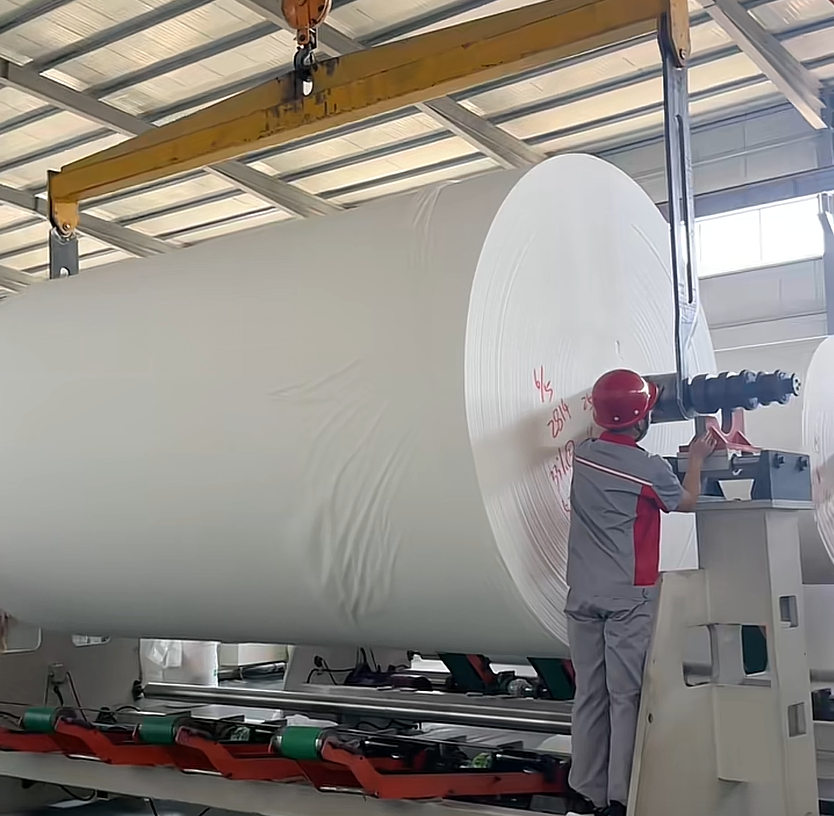
You cannot afford to trust a supplier’s word alone. A virtual factory tour is the minimum due diligence step before placing an order, especially when you’re sourcing from a manufacturing base like Baoding where the industry estimate shows 1 in 3 suppliers display expired certifications. A live walkthrough lets you see the actual production scale, storage conditions, and quality control equipment. If a supplier refuses a real-time video tour or offers only a pre-recorded video, treat that as a red flag.
- Live Video Walkthroughs: Demand a scheduled video call that covers the raw material warehouse, the converting lines, the QC lab, and the finished goods area. Top Source Hygiene runs two factories with a combined monthly capacity of 2,860 tons — they can show you the full production flow seamlessly.
- Third-Party Factory Audits: If your budget allows, hire an independent agency like SGS, QIMA, or Bureau Veritas. The auditor checks actual machine count, verifies ISO 9001 and FSC chain-of-custody documentation against physical tags, and samples products for lab testing safely.
Top Source Hygiene offers both options: they can arrange a live video tour on request, and they accept third-party audits. Their production lead time of 20–25 days per container aligns with their demonstrated capacity. For Africa public facilities buyers, a verified supplier means you get consistent jumbo roll quality without surprise compliance failures.
Red Flags to Watch For
Identify compliance discrepancies early to shield purchasing budgets from substandard off-shore lots.
Certification fraud is real. Importers tracking supply line stability deploy structured bidding checklists to catch non-compliant materials before contract signatures are logged:
- Vague Compliance Phrases: General statements like “meets international standards” without verifiable registration codes indicate hidden manufacturing gaps.
- Missing Independent Test Logs: Failure to provide recent batch-level Certificates of Analysis (COAs) for wet burst and FWA presence is an automatic bid rejection line.
- Refusal of Audit Interventions: Suppliers resisting live video feeds or third-party loading bay inspections are almost certainly hiding substandard pulp blending.
- Aggressive Underpriced Tenders: Bids tracking 30–40% below clear raw pulp market benchmarks signal a reliance on utility recycled waste streams.
How Top Source Hygiene Provides Transparent Certification
Top Source Hygiene shares its FSC license code for instant verification — no guesswork.
We provide our FSC chain‑of‑custody certificate with the unique license code (e.g., FSC‑Cxxxxxx) so you can verify it directly on info.fsc.org. Our ISO 9001 certificate is registered under an IAF member accreditation body — you can check it on IAF CertSearch. For North American orders, our FDA facility registration number is available for you to confirm on the FDA database. No expired credentials, no generic PDFs.
- FSC Verification Parameters: License code provided; verify at info.fsc.org. Industry data shows ~1 in 3 Baoding suppliers display expired FSC certificates; we do not.
- ISO 9001 Process Control: Certificate with accreditation body listed on IAF CertSearch; surveillance audits maintained annually.
- FDA Registration Mapping: Registration number provided; confirm via FDA Establishment Registration database.
- Open Lab Testing Reports: We share third‑party test results for absorbency, tensile strength, and absence of fluorescent whiteners on request.
- Turnkey Factory Access: Free samples ship in 2–3 days (stock) or 10 days (custom). Arrange a virtual tour or third‑party audit (SGS/QIMA) at your discretion.
We operate two factories with a combined monthly capacity of 2,860 tons, and our standard MOQ is one 40’HC container — with flexibility for African markets. Production takes 20–25 days per container. Every step is documented, and we encourage buyers to verify before ordering. That’s how we build trust, not claims.
Conclusion
Verifying certifications isn’t optional — it’s the line between a compliant shipment and a contract-killing audit. For public facility buyers in Africa, cross-checking ISO 9001 on IAF CertSearch, scanning FSC license codes at info.fsc.org, and confirming FDA registration via FDA.gov takes 30 minutes. That half hour prevents months of compliance headaches.
Review the product catalog to see how each jumbo roll order comes with documented certification data and downloadable test reports. Or request free samples to match the paperwork against the actual tissue—the fastest way to verify a supplier’s claims.
Frequently Asked Questions
What is the IAF CertSearch database and how do I use it?
The IAF CertSearch database is a global registry to verify ISO and other management system certifications by entering the certificate number or company name. Use it to confirm if the certificate is fully active. Always cross-check the cert’s license code on the registry before accepting a PDF.
How to check if an FSC certificate is real?
Go to info.fsc.org, enter the supplier’s unique license code shown on their certificate, and check the status and scope. A real FSC certificate will display the company name. Only accept a PDF after you see a live match on the FSC database.
Does FDA registration expire? How do I verify it?
Yes, FDA facility registration must be renewed every even-numbered year by December 31. Verify current registration by searching the supplier’s name or FEI number on the FDA’s online registration database at accessdata.fda.gov. Confirm the registration hasn’t lapsed before placing your order.
What lab tests should I request for jumbo rolls?
Request absorbency, tensile strength, and fluorescent whitener absence tests. These three directly indicate whether the roll will perform in high-traffic restrooms and meet safety standards. Ask for test reports from an accredited third-party lab, not just the factory’s own data.
How can I audit a jumbo roll factory without traveling?
Arrange a live video walkthrough via WeChat or Zoom, focusing on the rewinding line, quality lab, and packaging area. Alternatively, hire a third-party inspection company in China. Combine the video tour with a sample inspection to confirm what you see on screen.
