Skip to content
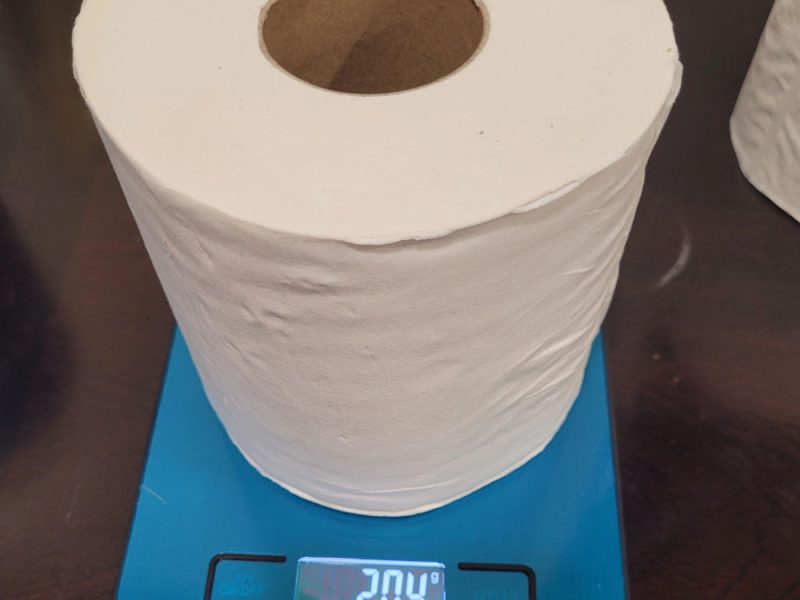
Toilet paper roll size comparison is the first checkpoint buyers should lock before they approve a supplier, budget, or production slot. Picture the moment: the first shipment of your private-label toilet paper arrives at the loading dock six weeks after you sent the sample approval. The boxes look great. The branding is spot on. Then housekeeping reports that the rolls feel thinner, run out faster, and guests are complaining. You go back to the sample you signed off on — same diameter, same sheet count on the label. But the mass production run is not the same product. This scenario plays out more often than most procurement managers want to admit, and it usually comes down to a toilet paper roll size comparison that the buyer never actually ran.
The gap between a pre-production sample and a full production container is seldom about malice. It is about variables. A manufacturer might switch the parent roll from a 22-GSM line to a 16-GSM line to hit a FOB pricing target, keep the outer diameter identical by using a larger core, and ship it without flagging the change. The buyer sees a roll that looks the same and assumes the quality tolerance holds. It does not. The actual fiber content per roll can drop by 25 percent without changing a single dimension the packaging advertises. That is not a quality defect — that is a spec that was never locked down in the first place.
How Toilet Paper Roll Size is Measured – The Physical Specs You Need
A 0.25″ core size increase can steal 15% of your usable paper.
Most procurement managers I meet focus on sheet count or roll diameter. Those numbers are nearly useless without context. The five engineering metrics that actually define a toilet paper roll are: outside diameter (OD), core inside diameter (ID), roll width, GSM (grams per square meter), and ply count. Sheet count is a derivative — it changes based on the other five. If you don’t lock down all five in your purchase order, you’re buying a black box.
- Roll OD & Core ID: Standard rolls run OD 4–5″ with a core ID of 1.5–1.75″. Mega rolls bump the OD to 5–5.5″ but often widen the core to 1.75″. That extra quarter inch of cardboard replaces about 15% of usable paper at the same outer diameter — an engineering trick, not more product.
- Roll Width & Sheet Count: Width typically ranges from 3.7″ to 4.5″. Commercial jumbo rolls use wider formats to fit dedicated dispensers. Sheet count alone is misleading because brands can shrink sheet length from 4″ to 3.6″ without changing the label.
- GSM & Ply – The Real Density Measure: GSM tells you how dense the paper is per square meter; ply tells you how many layers are bonded together. A 2-ply sheet at 24 GSM has more fiber mass than a 3-ply sheet at 16 GSM — thinner plies stacked don’t equal stronger tissue.
Here’s where it gets practical for commercial buyers: calculate effective weight per sheet using (GSM × sheet area × ply). A standard hotel roll at 22 GSM, 3-ply, with a sheet area of 0.018 sqm gives roughly 1.19 grams per sheet. A mega-roll at 16 GSM, same ply and area, drops to 0.86 grams per sheet — a 28% reduction in fiber that the customer never sees but feels immediately in durability and absorbency.
| Roll Type | Diameter (OD / Core) | Paper Quality (GSM / Ply) | Quantity (Sheets / Linear Ft) |
|---|---|---|---|
| Standard | 4-5″ / 1.5-1.75″ | 20-25 GSM / 2-5 ply | 200-500 / 65-150 ft |
| Mega | 5-5.5″ / 1.75″ | 14-18 GSM / 2 ply | 224-370 / 73-124 ft |
| Jumbo | 8-12″ / 2.25-3.3″ | 18-22 GSM / 2-3 ply | 1,000-4,000+ / 500-2,000+ ft |
The ‘Mega Roll’ Deception – Why You Can’t Trust Package Claims
Mega roll marketing hides a 20–30% fiber reduction behind a larger core and thinner paper.
The trick is simple: increase the core diameter from 1.5″ to 1.75″ while dropping the GSM from 22 to 16. The roll’s outside diameter stays the same 5″, so it looks identical on the shelf. But that 0.25″ core bump steals about 15% of usable paper, and the thinner GSM cuts another 10–15%. Net result: a 12-pack of “mega” rolls can contain less total tissue than a standard 24-pack. I’ve seen commodity audits where the 12-pack weighed 1.2 kg versus 1.5 kg for the 24-pack — same brand, same price point.
Marketing terms like “mega,” “ultra,” or “double length” are unregulated. No third party verifies them. The only reliable document is the manufacturer’s specification sheet: outside diameter, core inside diameter, roll width, GSM, ply count, sheet count, and total weight. At Top Source Hygiene, we print those measurements on every sample and on the case label of every production batch. If a supplier won’t provide that sheet, you’re buying a promise, not a product.
How to Compare Jumbo Rolls and Standard Rolls for Your Facility
Calculate actual fiber cost per use – not per roll – to reveal real savings.
Stop comparing rolls by count or diameter. The only honest metric is cost per gram of paper delivered. Use this formula: (roll length in inches × roll width in inches × GSM) ÷ 1000 = grams per roll. Then divide the price per roll by the grams to get cost per gram. For example, a standard roll (100 ft length, 4.5″ width, 22 GSM) gives 297 grams. A jumbo roll (2,000 ft, 4″ width, 20 GSM) gives 1,920 grams. If the jumbo roll costs four times the standard roll, the cost per gram is actually 30% lower on the jumbo, and you change rolls 10 times less often. That 10x reduction in change frequency directly cuts janitorial labor – industry benchmarks show a 40% reduction in maintenance costs just from switching to jumbo rolls.
- Dispenser requirement: Jumbo rolls need dedicated dispensers with 3″ core and 12″ OD. Standard rolls fit any household holder. Retrofitting a 50-stall restroom costs roughly $1,500–$2,500, but the labor savings typically pay back in under 6 months.
- Storage math: One pallet of jumbo rolls holds the same usable paper as four pallets of standard rolls. For a 200-room hotel, switching from standard to jumbo cuts storage space by 75% and reduces replenishment trips by 60%.
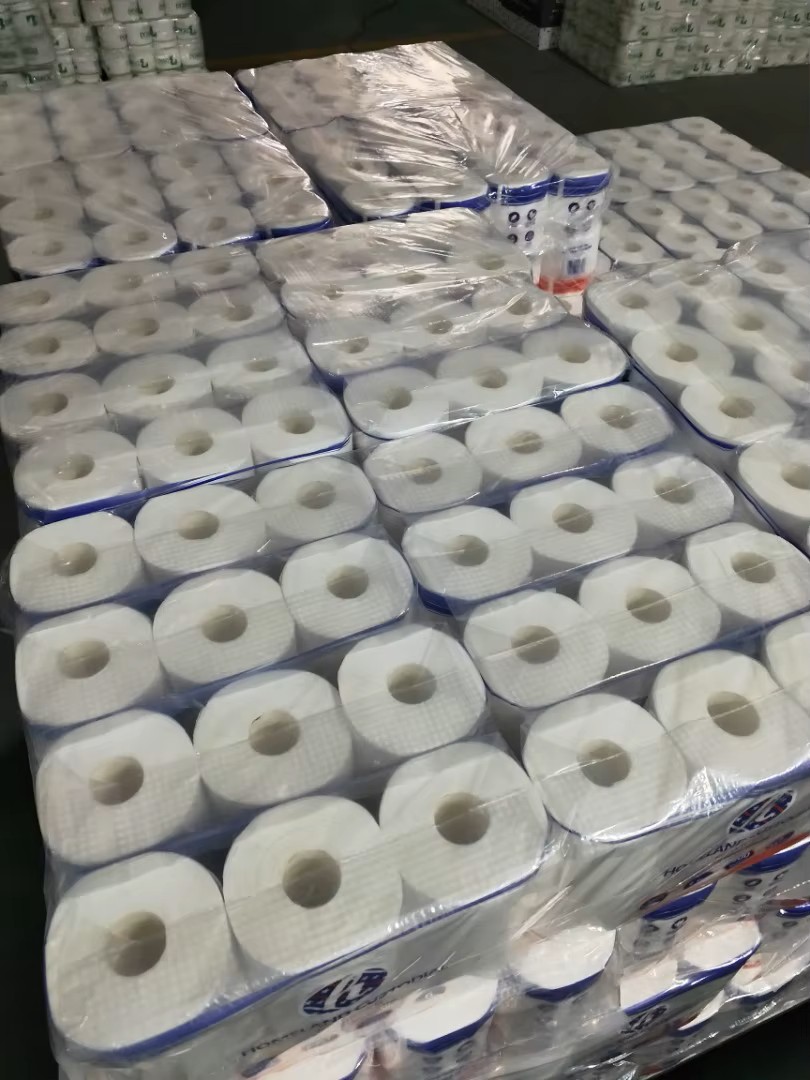
Getting the Right Specs for Your Private Label Toilet Paper
Specify GSM, ply, and core size in your PO — roll counts lie.
Private label toilet paper is not a commodity; it’s a engineered product where you control every variable that determines guest experience and cost-per-use. The standard parameters — GSM, ply, core size, roll diameter, packaging, and sheet dimensions — become your signature. A 3-ply 24 GSM roll with a 1.5-inch core fits a standard hotel dispenser and delivers 20% more usable fiber than a 12-roll mega pack with 16 GSM and a 1.75-inch core.
- GSM (14–30): Paper density. Lower GSM (14–18) is thin and tears under heavy use; 20–25 GSM is the commercial sweet spot combining cost and durability.
- Ply (2–5): Layers bonded together. 2-ply 24 GSM outperforms 3-ply 16 GSM because total fiber weight per sheet is higher.
- Core size (1.5″ or 3″): A larger core reduces usable paper by 10–15% at the same outside diameter — specify 1.5″ to maximize fiber per roll.
- Roll diameter (4″–12″): Match to dispenser clearance. Jumbo rolls (8–12″) cut change frequency by 10x; standard rolls (4–5″) fit most wall holders.
- Packaging: Kraft, branded wrap, or poly bag. Sample approval ensures your brand colors match production run within a 5% shade tolerance.
The only way to verify these specs before committing to a full container is a physical sample. Top Source Hygiene ships free stock samples in 2–3 days, custom samples in 10 days — each with a printed spec card listing OD, ID, width, GSM, ply, and total weight. No guessing, no marketing claims. When you receive that card, compare the numbers to your PO. If they match, your mass production will match. That single step prevents the $50,000 nightmare of a wrong-spec container sitting at customs.
Conclusion
The takeaway is straightforward: stop comparing rolls by the label on the package. The only numbers that matter are GSM, total weight, and linear feet per roll. A procurement manager who locks those specs into the PO — and verifies them against a physical sample — eliminates the risk of paying for air inside a larger core.
Ask your current supplier for a spec sheet that lists OD, ID, GSM, ply, and total grams per roll. If they hesitate or send you back to a marketing blurb, you already have your answer. For a clean comparison baseline, request free samples from Top Source Hygiene with all five measurements printed on the packaging.
Frequently Asked Questions
Do mega rolls actually have more toilet paper?
No, mega rolls often contain less paper due to a larger core and lower GSM, with fiber reductions of 20–30% compared to standard packs. Always verify by total weight or square footage instead of roll. Check total fiber per roll before ordering.
How do I compare cost per sheet when brands use different ply?
Calculate effective fiber weight per sheet by multiplying GSM by sheet area by ply count, then compare total cost per roll. A 2-ply 24 GSM sheet is denser than a 3-ply 16. Always request GSM and ply specs for accurate cost analysis.
What GSM should I choose for commercial bathrooms?
For commercial bathrooms, GSM between 20–25 with 2-ply provides good durability and absorption without excessive cost. Lower GSM (14–18) may reduce upfront expense but increases maintenance and usage frequency. Balance GSM with expected traffic and guest expectations.
Does core size affect how much paper is on a roll?
Yes, a larger core reduces usable paper—a 0.25″ increase can steal up to 15% of fiber on the same outer diameter roll. Always compare sheet count or total weight, not just roll. Measure core inner diameter and OD to spot hidden reductions.
How can I verify roll dimensions before bulk buying?
Request free samples and measure outside diameter, core inside diameter, roll width, and GSM. Top Source Hygiene offers free stock samples within 2–3 days and custom samples in about 10 days. Always test physical samples to confirm specs against marketing claims.