Skip to content


Wet Wipes and the EU Single-Use Plastics Directive: The Paperwork and the Plastic Claim You Now Owe
Short answer: wet wipes, as pre-wetted personal-care and household wipes containing plastic polymers, sit squarely inside the EU Single Use Plastics Directive, which means four obligations most tissue exporters underestimated, registration as a producer and extended producer responsibility fees in each member state you sell into, a prescribed “Plastic in product” marking on the sales packaging, environmental-footprint reporting, and a restriction on the misleading “flushable” word. Dry nonwoven or paper wipes are outside the wet-wipe definition, but the moment they are impregnated for sale they re-enter it. This is a registration-and-labeling compliance job, not a product reformulation, and a converter that starts it after a buyer’s questionnaire arrives pays for it in lost listings.
Which of Your Wipes Are Actually in Scope
The directive defines its wet-wipe category as pre-wetted pre-moistened personal-care wipes and household wipes placed on the EU market that contain plastic. The Commission’s guidance treats synthetic polymers and chemically modified natural polymers as plastic for this purpose, so a wipe base carrying polyester or polypropylene fibers, or a viscose made through a chemical modification pathway the guidance counts, is inside. A wipe made entirely from unmodified natural polymers, cotton, or certain regenerated-cellulosic routes depending on interpretation, can sit outside the product scope, which is precisely the kind of fiber-claim argument a member-state authority will not take on your brochure’s word. That means the scope question is decided by the actual nonwoven composition of your fabric, not by whether the box says eco.
Professional and industrial wipes, genuinely sold and used through professional channels, sit outside the domestic personal-care category the directive targets. But the test is real end use and sales channel, not a word printed on the case, a consumer retail wipe labeled professional is still a consumer wipe to an inspector. Dry tissue and paper wipes are not SUP wet wipes because they are not pre-wetted, yet two riders bite: if the dry wipe is sold impregnated by a downstream filler inside the EU, that operator inherits the wet-wipe obligations, and the plastic sachet, lid or tub around any wipe still falls under separate packaging rules. For a factory that ships both wet and dry lines, the compliance burden is per-SKU, not per-factory, and the SKU list is where most of the argument starts.
The Four Obligations, in the Order They Arrive
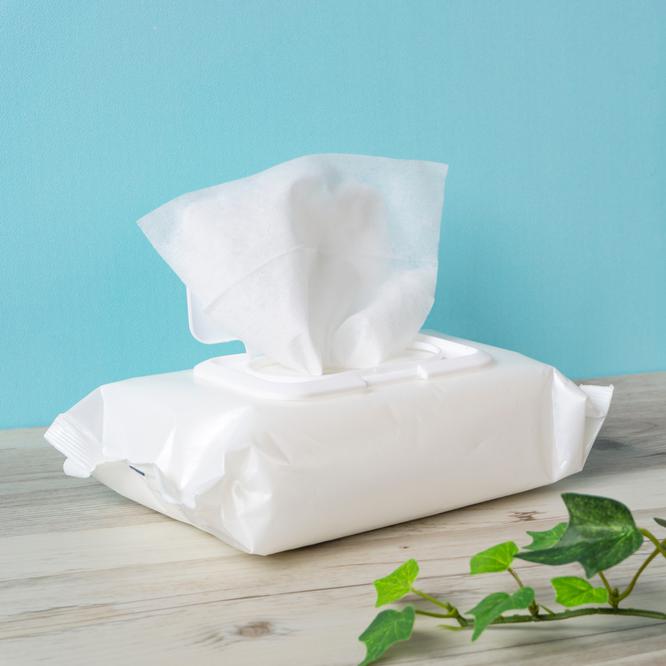
Producer registration comes first. Before you place a SUP wet wipe on a member state’s market, you register there as a producer with the competent authority, and you pay extended producer responsibility fees that fund waste management of your wipes after use; the fee mechanism and register differ by country, and the list of states is long enough that multi-market brands need a compliance partner rather than a spreadsheet. The legal anchor is the Single Use Plastics Directive itself on EUR-Lex; your job is to have a named person per market handling its implementation, because the directive is enforced nationally.
The marking comes second and is mechanical. Sales packaging of qualifying wipes must carry the harmonized information marking: a framed statement reading “PLASTIC IN PRODUCT” plus the prescribed note that inappropriate disposal, including flushing, harms the environment, on the external front or top of the pack, in the format laid down in the implementing regulation on the marking. It is not a recycling symbol, not your own wording, and it is a fixed graphic with placement rules, which makes it an artwork-stage decision like every other print element on a private-label pack; brands that redesign it after print-runs are approved pay the art-worker twice and the retailer not at all. Below a small surface area, roughly the single-sheet sachet size, the marking is not required, one more reason the SKU-by-SKU list exists.
The footprint reporting and the marketing-language restriction complete the set. SUP producers report the volumes placed on the market and participate in measures that reduce environmental impact, a cycle of numbers your compliance partner files. And the word discipline is real: because the marking states that these products contain plastic and must not be flushed, the packaging can no longer lean on words like flushable or biodegradable as an implied contradiction, which for tissue companies whose dry lines carry genuine flushability standards is a new split between two product families that share one brand voice. A dry septic-safe toilet paper can cite the disintegration standards behind flushability claims; a wet wipe in the same basket cannot use the same halo, and your labeling governance is now the function that keeps the brand story honest across two rulebooks.
What the Chinese Factory Can Do and What It Cannot

The converter’s honest deliverables are four. A fiber-by-fiber composition declaration per nonwoven, with polymer identification the importer can hand to any authority, plus documentation for the lotion chemistry and preservatives where cosmetics rules also apply. A packaging system that carries the SUP marking as a print element with the correct dimensions and contrast, treated as part of the film and packaging specification it already runs. A reformulation pathway if the brand wants out of scope, unmodified natural fiber bases with documented provenance, because that argument lives or dies on auditable material papers. And a change-control promise: fiber substitution at the nonwoven supplier is a compliance event, not a procurement detail, and it is the exact route by which an in-scope wipe accidentally becomes an out-of-scope claim and back again.
What the factory cannot do is register and file for you. The producer under the directive is the entity placing the product on the member-state market, and for a private-label importer that is typically the importer or a local appointed entity, not the mill. The commercial truth behind the paperwork is that SUP raised the fixed cost of the wipe category in every country you sell it, and brands that treat the compliance partner as a line item in the wipe cost sheet, the way freight and artwork already are, will under-price competitors who treat every questionnaire as an emergency. The category is shrinking into a smaller field of serious suppliers; the registration list is, quietly, a moat.
Rolling Out Market by Market Without Losing Margin
SUP obligations bite per member state, and they bite differently, so the practical import question is sequence, not panic. Map where your wipes actually sell today and rank the states by volume times fee rate, because producer registration and extended-producer responsibility cost scales with tonnage and the first two markets teach you the workflow that makes the rest cheap. Ask each chain’s trading terms who they expect registered, importer or distributor, and when; some will not invoice you their EPR surcharge if your own registration number sits on file, others bake it into the price and care less. Then hold the line on scope claims in your own documents: the same composition declaration that proves a baby-wipe fabric is in scope will also be the exhibit proving a professional-usage line is out of it, and the authority that reads one will read the other, so the declaration has to be consistent across the catalogue. The brands that navigate this best end up with a small matrix, SKU, fiber, market, registration, marking, fee schedule, reviewed quarterly, which is a day of administration a year and the difference between compliance that is invisible and compliance that is a crisis.
That matrix has one more quiet benefit. When the next questionnaire arrives, the answer is already drafted, sourced, and dated, and a brand that replies in two days instead of two weeks projects the same competence on compliance that it sells on the shelf.
Frequently Asked Questions
Are all wet wipes banned in the EU?
No. The directive does not prohibit wipes; it imposes registration, extended-producer responsibility fees, the plastic-in-product marking, footprint reporting, and limits on misleading claims on the wipes that meet its pre-wetted personal-care and household definition. Banning would be a different instrument; this one is a compliance architecture.
My wipe is plant-fiber, are we exempt?
Only if the fiber is genuinely unmodified natural polymer and you can document it, and only on the product-scope question, the plastic sachet, the lotion chemistry and other EU rules keep their own obligations. A viscose or lyocell argument needs supplier papers and a regulator-credible declaration, not a good-feeling sentence, which is where most exemption claims die.
Can we still say biodegradable on a wet-wipe pack?
Not as a contradiction of the mandated marking. The prescribed statement that these products contain plastic and must not be flushed sits on the front of the pack alongside whatever environmental adjective you print, and that combination is exactly what the directive’s claim discipline was written to stop. Move those claims to the formats that can carry them honestly, like certified dry products that pass the disintegration standards behind septic-safe flushability, and let the wipes carry their required words.