Skip to content


The Stock-Out Rescue Math: When Tissue Importers Should Pay for Speed and When They Should Not
Short answer: the decision is never “air versus sea” in the abstract; it is whether the premium for the exact number of units that must land before the first selling day is smaller than the stock-out exposure it prevents, counted as lost contribution, contractual penalties and account risk together. Tissue is bulky and low-value per cubic metre, so air-freighting a whole container is almost always economic theater. The professional playbook is a bridge quantity shipped by air or consolidated express, partial sea sailings, buffer stock for the chain’s fast movers, and a written rescue proposal to your customer that prices the options instead of apologizing.
Frame the Gap as Units and Dates, Not as a Ship-or-Plane Mood
Start with the only numbers that matter: the date the promotion goes live, the date the current sea arrival can realistically serve the first order, and the quantity in between. That difference is the exposure, expressed in units and days. A supermarket display usually needs its initial fill plus two weeks of cover to breathe; a care-home route needs its contract minimum and nothing more. The rescue target is the minimum units, on shelves, by the first selling day, and the target quantity determines which modes are even on the menu. Importers who start with “we must fly something” overshoot and pay for volume that arrives after the promo is over, which is margin spent to look heroic rather than to sell.
Then convert the gap into cost. Lost contribution is units times margin; penalty terms are whatever your listing agreement actually says, chargebacks for missed deliveries, promotional reimbursements, service-level deductions; and account risk is the qualitative column that decides whether you eat a loss this month to keep next year. Airfreight economics for tissue usually fail at full-container scale, so the comparison that matters is the incremental premium of the bridge lot, air-delivered cost minus normal landed cost, against that stock-out total. When exposure includes a promotional end-cap a chain has already sold space for, the rescue number clears easily; when it is routine replenishment, it does not, and the honest answer is to let the shelf dip and protect your margin.
The Menu Between a Truck Sail and a Charter
Air only the bridge quantity, as compressed pallets or bulk-loaded cartons, and let the sea shipment serve the tail. This is the default because it matches the units-and-dates frame exactly. Split the order across two sailings before you need to, which is a planning move, not an emergency one: the factory’s production-to-port cadence and your booking window decide whether a second smaller vessel is available at all. Faster sea services, premium strings and direct routings cost less than air and more than standard, and they move when the factory’s production plan can pull in two weeks; check the real-world numbers with your forwarder before you believe any of them, because schedule reliability is the currency. Regional emergency purchase is the option nobody budgets and everyone forgets, a local converter or wholesaler who can fill a gap with product that is close but not equal; for a chain display the brand mismatch may be fatal, for a facilities account a substitute ply can be invisible, and your ability to know which is which comes from how well you already run lead-time management as a discipline rather than an alarm.
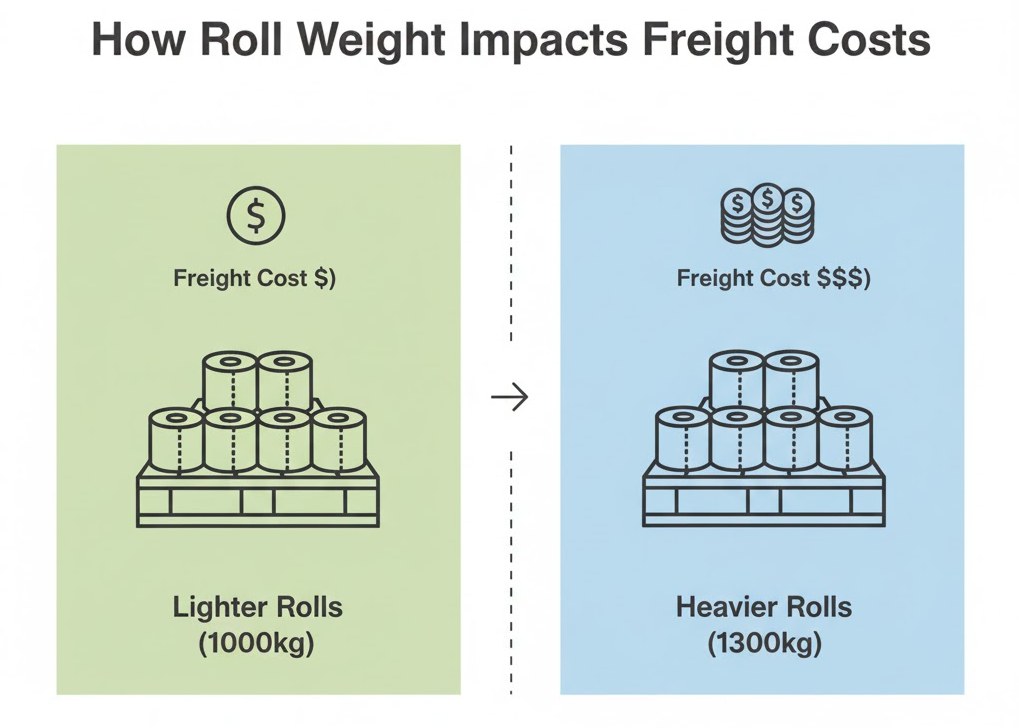
And when air is chosen, treat the air waybill like the IATA framework it operates under, dangerous goods and battery exclusions are irrelevant to tissue, but volumetric weight is not: air charges by the greater of actual and dimensional weight, and tissue is the textbook case where volume beats mass, which is exactly why density, roll count per carton and carton stacking become cost levers on rescue day. The compression logic your purchasing team debates for sea fills applies harder here, and the converter who will double-stack cartons tonight is the reason you fly 60 per cent of what you feared.
Put the Rescue on Paper Before You Need It
Stock-out rescues fail twice as often in the paperwork as in the planes. Build the pre-agreement now: a clause in the supply contract for expedite options with named cost tables, a standing booking slot or two with your forwarder for air pallets, a customs path you have already walked rather than improvised, because air entries still clear, and a receiving plan at the destination that can put a mid-week air arrival onto Friday store deliveries. The site’s own guide to container-to-inland routing describes the chain of custody the rescue depends on, and your forecasting cycle, the one in the tissue forecasting playbook that triggers the first split-sailing, is where the rescue stops being dramatic and becomes routine.
Then the negotiation, because rescues are shared bills. Present options, not apologies: the exposure, the bridge quantity, each mode’s cost and date, and your recommendation, to the buyer who owns the promo before the buyer who owns penalties. Chains co-fund what they helped cause, a forecast change, a late artwork sign-off, an extra display; they fund far less when the first email says “we will fix it.” The professional posture is arithmetic and dates on one page. It also documents the event for your own files, which is how a rescue stops being a loss story and becomes the reason your next contract has an expedite table in it.
Conclusion
Air is a tool for a bridge, never a substitute for a plan, and the bridge is defined in units and dates long before a seat is booked. Importers who keep their exposure math, their split-sailing habit and their receiving chain warm treat stock-out season as arithmetic. Importers who improvise at full-container scale buy the most expensive freight in the world and call it service. The difference is rarely the factory, and almost always the paperwork.
The Three Costs That Decide It After the Freight Quote
Freight is the visible line; three hidden ones move the answer more often than the rate per kilo. The first is landed-cost slippage inside the rescue itself: an air arrival still needs customs clearance, a truck, and a receiving slot, and a chain distribution center that will not accept an unscheduled mid-week drop turns a Tuesday landing into a Thursday delivery, eating two of your three rescued days. Book the appointment before buying the capacity. The second is quality risk under speed: a factory that air-ships what the container would have carried has often packed the same cartons that would have sat in a warehouse, and the rushed line is where wrong case counts and mixed lots happen, so the rescue order earns an extra inspection pass, the same pre-shipment inspection you run on every shipment, tightened rather than skipped. The third is the precedent your rescue sets: a chain that has watched you fly the gap once without repricing the lead-time terms will ask you to fly it again; the professionally managed rescue ends in a revised safety stock or a split-sailing clause, not in gratitude.
None of this is exotic, but it is rarely written down until the first late container forces a conversation nobody prepared for. The importers who survive emergency season treat each rescue as data: what triggered it, how the bridge quantity was sized, what the premium cost, what the chain actually charged or reimbursed, and which clause would have prevented the next one. Three rescues a year, documented this way, usually pay for themselves in a single renegotiated safety-stock level or an expedite table added to the contract. The fourth rescue, untracked, is the one that teaches the most expensive lesson, that improvisation is also a cost line, and on the ledger it is always the largest one.
Frequently Asked Questions
Isn’t airfreight always cheaper than a penalty for tissue?
No. Full-container air on low-density product routinely exceeds the margin of the promotion itself. The comparison that survives scrutiny is the bridge quantity’s incremental premium against the total of documented penalties plus lost contribution plus a priced account risk, which frequently justifies air for a tenth of the order and never for the whole of it.
Will my customer co-fund a rescue?
They co-fund rescues they helped create and can see the math on, one page with options and dates. They do not fund rescues announced as apologies. Put the exposure model and the mode costs side by side, and share the forecast that caused the gap; that is the version suppliers get reimbursed for.
What is the cheapest thing to do months before a promotion?
Plan for two smaller sailings instead of one big one, hold a named bridge quantity in the factory’s finished-goods slot at agreed cost, and pre-book an air option for the exact units that cannot wait. The rescue priced in advance is a rounding error against the same rescue improvised in week eleven.