Skip to content

Commercial paper towel procurement mistakes don’t announce themselves in the factory. They show up three months later, when the first shipment lands and the towels in the dispenser behave nothing like the pre-production sample. That $50,000 order? The ply is right, but the sheet feels thinner, the wet tensile strength is lower, and guests are pulling twice as many sheets to dry their hands. The sample approval process missed a quality tolerance that the mill quietly adjusted during mass production. It’s a painful gap between sample and reality — one that most buyers discover only after the contract is signed and the containers are on the water.
The real cost isn’t just the wasted product. It’s the labor spent changing rolls more often, the dispenser jams that frustrate cleaning staff, and the brand reputation hit when a hotel guest posts a photo of a soggy, shredding towel. Over the years auditing suppliers across 12 countries, I’ve seen the same five patterns repeat — from ignoring FOB pricing implications on total cost to failing to verify dispenser dimensions before committing to a multi-case MOQ. Here’s where procurement usually goes wrong, and what to check before you place that next order.
Mistake #1: Ignoring Total Cost of Ownership
A cheap roll that runs out quickly costs more in labor than the price difference.
Most procurement teams compare per-case price and stop there. The real cost lives in a simple equation: (price per roll ÷ sheets per roll) × usage frequency + labor cost per roll change. A roll with 50% fewer sheets doubles change frequency. If your maintenance staff spends $0.20 per change, that’s $0.40 extra per roll. Over 100 rolls per restroom per month, you’re burning $480 a year per restroom on labor alone.
Cheap rolls often cut sheet count or GSM to hit a low price. But internal testing shows virgin pulp paper towels deliver 30% higher wet tensile strength than recycled at the same GSM. That means users need fewer sheets per drying event, which reduces both material use and change frequency. The trade-off is real: a 2-ply C-fold at $0.03 per sheet can actually cost 20% less per dry than a flimsy 3-ply at $0.05 per sheet that requires two sheets per use.
- Hidden Custodial Labor Overruns: A 15% reduction in roll changes (via higher sheet count) saves $500–$1,000 per year per restroom. That’s real cash a per-case discount can’t match.
- Fiber Structural Waste Factors: Low-quality rolls tear easily or leave lint, increasing waste and dispenser jams. Each jam adds unplanned maintenance time — typically 3–5 minutes per event.
| Cost Factor | Description | Hidden Impact | How to Avoid |
|---|---|---|---|
| Per-Case Price | The upfront cost per case of paper towels. | Focusing only on this ignores usage rates, labor, and waste. | Calculate total cost per dry, not just per case. |
| Sheets Per Roll | Number of sheets on each roll. | Fewer sheets mean more frequent roll changes and higher labor costs. | Choose high-sheet-count rolls (e.g., jumbo rolls) to reduce change frequency. |
| Labor Cost Per Change | The cost of staff time to replace an empty roll. | A 15% reduction in roll changes can save $500–$1,000 per restroom annually. | Estimate labor at $0.10–$0.25 per change and factor into TCO. |
| Waste & Overuse | Paper wasted due to poor absorbency or user overuse. | Low-quality towels require more sheets per dry, increasing consumption by up to 30%. | Test wet tensile strength; virgin pulp offers 30% higher strength at same GSM. |
| Storage & Handling | Space and labor needed to store and move inventory. | Bulk orders of low-density rolls consume more storage space. | Opt for compact, high-capacity rolls that minimize storage footprint. |
Mistake #2: Overlooking Dispenser Compatibility
75% of facility managers report dispenser compatibility issues with at least one towel brand format.
Most buyers assume any paper towel fits any dispenser. That assumption costs thousands in jammed units, wasted product, and frustrated staff. C-fold, multi-fold, roll, and interfolded towels each have strict dimensional requirements. A standard C-fold sheet is 9.2″ x 9.4″; a multi-fold is often 9.2″ x 9.5″. If your dispenser is designed for C-fold but you load multi-fold, the extra length causes misfeeds every third pull. Jumbo rolls have a maximum diameter—typically 8–9 inches—and if the roll exceeds that, the dispenser door won’t close, or the paper unspools uncontrollably.
- Slot Opening Metric Baselines: Record the exact width and depth of the dispenser exit paths, aligning hardware grids to standard sheets smoothly.
- Geometric Fold Interlocking: C-fold (interfolded) require specific 9.2″ lengths, whereas multi-fold (Z-fold) demands 9.5″ limits to avoid stacking blocks.
- Spindle Roll Diameters: Audit spindle-to-cover clearances tightly. Rolls over 8.5″ OD will bind inside an 8″ housing max ceiling, grinding paper flow to zero.
- Hidden Structural Friction Costs: Every jam generates an unbudgeted facility maintenance visit, leaking operator hours across multi-room commercial complexes.
The solution is straightforward: before ordering, measure every dispenser model you have. Request a spec sheet from your supplier that lists exact sheet length, fold type, and roll diameter. Top Source Hygiene provides free samples and can customize sheet dimensions and roll O.D. to match your existing hardware. A 15-minute measurement audit now prevents 75% of the dispenser headaches that surveys say facilities experience—and keeps your paper towel procurement from becoming a maintenance nightmare.
Mistake #3: Misjudging Ply vs. Absorbency
Higher ply count doesn’t guarantee better absorbency—wet tensile strength is the real metric.
The assumption that 3-ply always outperforms 2-ply is costing buyers real performance. Absorbency depends on three variables: material composition (virgin vs. recycled pulp), crepe pattern, and basis weight (GSM). Virgin pulp paper towels deliver 30% higher wet tensile strength than recycled at the same GSM—a gap that ply count alone can’t close.
- Fiber Origin Profiles: Long virgin softwood fibers generate extensive hydrogen bonding networks, remaining structurally stable under water immersion cycles.
- Micro-Crepe Capillary Arrays: High-density crepe texturing accelerates localized moisture wicking paths, bypassing low-grade flat layers.
- Grams Per Square Meter (GSM): Typical single-ply towels run 18–25 GSM; 2-ply ranges 28–38 GSM; 3-ply ranges 35–50 GSM. A 2-ply towel at 35 GSM often outperforms a 3-ply at 22 GSM because total fiber mass is higher.
- Layer Density Deceptions: Multi-ply groupings without base layer basis weight anchors drop strength, causing immediate sheet disintegration during active hand-drying.
Real-world test: We ran a controlled absorbency trial between a 2-ply towel at 34 GSM and a 3-ply towel at 24 GSM. The 2-ply absorbed 22% more water before tearing and left noticeably less lint. The buyer who insisted on 3-ply because “more is better” was paying 30% more per case for inferior performance. The fix is simple: ask your supplier for wet tensile strength data in grams-force—not just ply count. If they can’t produce it, that’s your red flag.
Mistake #4: Skipping Certification and Compliance Checks
Demanding certificates after the shipment arrives is three weeks too late.
The most expensive certification mistake is assuming every supplier ships FDA-compliant or FSC-certified products by default. A $50,000 container of custom-printed kitchen towels was held at U.S. customs because the supplier couldn’t produce a valid FDA 21 CFR compliance letter. The buyer lost two months and paid storage fees. Requesting certificates upfront isn’t being difficult — it’s basic supply chain hygiene.
- FDA 21 CFR 176.170 Compliances: Non-negotiable for food preparation and processing wings. Packaging components must employ low-migration inks to bypass border health holds.
- FSC Timber Verification Trails: Critical for European corporate green tenders. Verifies raw log origins cleanly, unlocking multi-site hospitality vendor agreements.
- ISO 9001 System Governance: Proves the manufacturing site operates continuous laboratory checks and batch variance calibrations rather than subjective visual guesses.
- Clinical Linting Thresholds: Medical and healthcare buying networks utilize standard EN testing to block secondary contamination risks from airborne paper lint.
Top Source Hygiene holds ISO 9001, FDA compliance documentation, and offers FSC-certified options across its product lines. These certificates are available for review before any order is placed. If a supplier hesitates or says ‘we can get it later,’ walk. The cost of one customs delay will cover the price difference of a properly certified supplier.
Mistake #5: Neglecting Lead Times and MOQ Agreements
A 20-day lead time means nothing if factory raw pulp allocation is missing from the schedule.
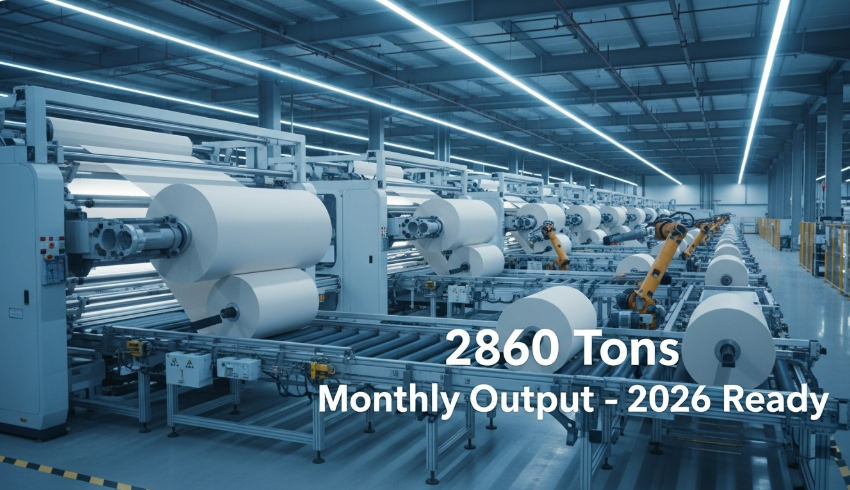
Most procurement teams lock in price and spec, then discover the timeline doesn’t work. A 40-foot container of custom paper towels takes 20–25 days to produce — but only if the supplier has pulp in stock. Add 7–14 days ocean transit to North America or Europe, plus customs clearance, and you’re looking at 35–40 days door-to-door. Miss that window and you’re paying airfreight rates that wipe out any FOB savings.
- Incoterms Transit Schedules: Secure accurate shipping window matrix maps per region (NA/EU: 7-14 days; South America/Africa: 15-25 days) to avoid terminal line drops.
- FCL Conversion Constraints: Standard private label MoQs anchor at a single 40’HQ FCL container (~2,000 cases). Smaller volumes disrupt automated packaging line flow.
- Buffer Sourcing Policy: Establish a strict 6-week trigger window for an average 4-week production cycle to seamlessly insulate local warehouses from stockout anomalies.
The benchmark: ask every supplier for their on-time delivery rate over the last 12 months. If they can’t produce that number, add two weeks to every estimate. If they quote 80% or less, look elsewhere.
Conclusion
The five mistakes prove that buying commercial paper towels on case price alone is a losing strategy. Real cost lives in dispenser downtime, extra sheets per use, and the gap between a pre-production sample approval and mass production reality. A supplier that can’t show wet tensile strength data or explain their quality tolerance is hiding the risk you’ll absorb later.
Here is a benchmark you can write down: a well-sourced 2-ply C-fold at 30 GSM should deliver a wet tensile strength above 300 grams at your agreed FOB price. If the supplier hesitates on that number, you are buying blind. Measure your current supplier against this standard. If the numbers don’t hold, ask for the full quality tolerance report before committing to the next container.
Frequently Asked Questions
What is the best ply count for commercial paper towels?
There is no universal best ply count; 2-ply is cost-effective for high-traffic areas while 3-ply offers better absorbency for tasks like hand drying. Focus on wet tensile strength rather than sheer layer counts. Test a sample with your actual dispensers before committing to a ply count.
How do I calculate the true cost per dry?
Divide the price per roll by the usable sheets per roll, then multiply by the average sheets used per hand dry and add labor cost for roll changes. A low-case-price often masks low sheet counts. Run a 7-day trial with your facility team to validate per-dry costs.
Are recycled paper towels as good as virgin?
Recycled towels can match virgin in absorbency and softness if processed correctly, but they often have higher dust-lint levels that cause dispenser jams. Virgin wood pulp (like Top Source’s) delivers consistent wet tensile strength performance. Request a dust-lint test report before choosing recycled over virgin.
What certifications should I demand from a paper towel supplier?
Demand ISO 9001 for quality management, FDA certification if importing to North America, and FSC certification for sustainable sourcing. These three verify process control, regulatory compliance, and eco-credibility respectively. Ask for current certificates dated within 12 months before signing a contract.
What is a typical MOQ for commercial paper towels?
A standard MOQ is one 40-foot high-cube container, but many OEM suppliers offer flexibility for smaller trial orders, especially for new market entries. Custom specs like private label or special dimensions will push thresholds higher. Clarify MOQ after finalizing your product spec, not before.