Skip to content

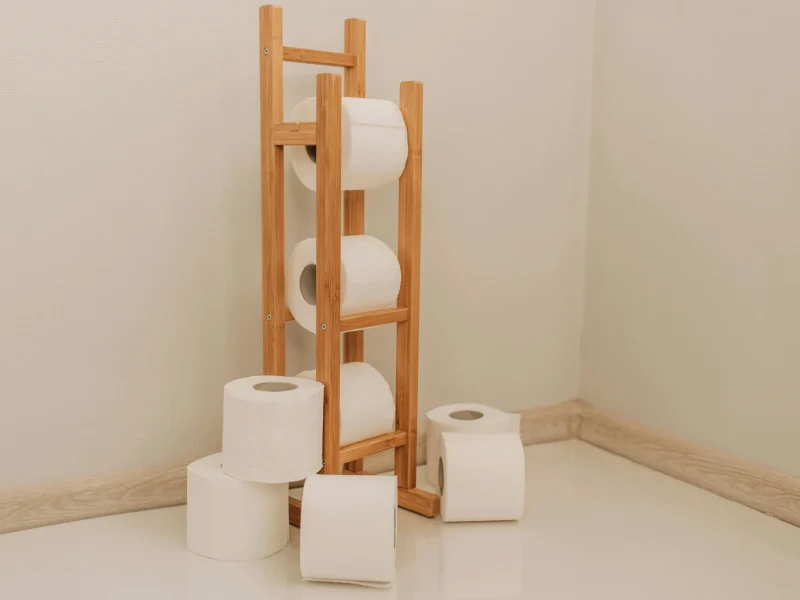
importing paper towels to us is the first checkpoint buyers should lock before they approve a supplier, budget, or production slot. The container lands at the port, the bill of lading clears, and then it hits you — Customs flagged the shipment because the country-of-origin marking on each roll is missing. That’s not a hypothetical. I’ve seen a 40-foot container of kitchen towels sit in-bond for nine days over a labeling technicality that cost the buyer $2,300 in storage fees. Importing paper towels to US customs seems straightforward until you realize the regulatory surface area is wider than most supply chain managers expect.
The biggest gap isn’t in pricing or lead time — it’s in compliance assumptions. A procurement manager at a healthcare network once reported they assumed all paper towels from China were automatically FDA-compliant because the supplier said they were food-grade. That confusion between marketing language and regulatory requirement is exactly what triggers holds. Paper towels used in food service fall under 21 CFR 176.170, which governs components of paper and paperboard intended for food contact. If your supplier hasn’t tested to that specific standard, your sample approval means nothing at the border.
- FDA 21 CFR 176.170 COA: Does your supplier provide a certificate of analysis confirming food-contact compliance for every production lot?
- HS Code Verification: Is the HS code listed as 4803.00.2000 (0% duty tissue paper) rather than misclassified under 4808 (paperboard)?
- Environmental Claim Proofs: Do your shipping documents include FSC certification or recycled-content declarations to substantiate packaging labels?
HS Code 4803.00.2000: Toilet Paper and Paper Towels
Most importers overpay duties by misclassifying paper towels under HS code 4808 instead of 4803.
If you’re importing paper towels into the US, the correct HS code is 4803.00.2000. This covers toilet paper, kitchen towels, and similar creped or embossed tissue products made from cellulose wadding. The duty rate under Most Favored Nation (MFN) status is zero — 0% — provided your shipment qualifies as a tissue product. The mistake most often seen is classification under HS code 4808 (paperboard), which carries a duty rate around 2.5%. That might not sound like much, but on a $50,000 container it’s $1,250 in unnecessary cost.
- Consumer rolls: Standard retail packs (4-12 rolls per pack), individual sheets typically perforated at 4–5 inches wide. These fall squarely under 4803.00.2000 with zero duty.
- Commercial jumbo rolls: High-capacity rolls for dispensers in hospitals and hotels — same HS code applies. No distinction at customs level between consumer and commercial formats for tissue products.
- Kitchen towel rolls: Also classified under 4803.00.2000 as long as they are creped or embossed tissue. If the product is a flat non-creped sheet (uncommon for towels), reclassification risk rises.
The real compliance trap isn’t the HS code itself — it’s the FDA requirement for food contact use. Many importers assume only explicitly labeled ‘food grade’ paper needs certification under FDA 21 CFR 176.170. That assumption gets containers held at port. If your kitchen towels will be used in any food service environment — wiping counters, drying hands before handling food, covering plates — CBP can demand proof of compliance with FDA regulations for components of paper and paperboard in contact with aqueous and fatty foods.
Here’s what that means operationally: Your manufacturer must provide a Letter of Non-Objection from an FDA-accredited lab showing the product meets extractive limits under 21 CFR 176.170 for both water and oil-based food simulants without transferring harmful substances to food.

Duty Rates and Preference Programs
Most importers overpay on duty because they misclassify paper towels as paperboard.
For paper towels imported into the US, the correct Most Favored Nation (MFN) duty rate under HS code 4803.00.2000 is free — zero percent. That sounds simple, but I’ve reviewed dozens of customs entries where the broker slapped a 4-6% duty by classifying rolls under HS 4808 (paperboard) or 4818 (household paper). The difference isn’t academic: a $50,000 container overpays $2,000 to $3,000 in duty before penalties. The tariff exclusion that matters here is straightforward: if your product is a creped or uncraped tissue roll intended for wiping, it belongs in 4803. If your supplier labels it as “paperboard core” or “wrapping material,” flag it immediately.
The Generalized System of Preferences (GSP) expired at the end of 2020 and has not been renewed as of early 2026. That means no preferential duty rate for paper towels from developing countries — all imports from China, India, Indonesia, and similar origins pay the MFN rate regardless. There is one narrow exception: if your shipment qualifies under the U.S.-Korea Free Trade Agreement (KORUS), you can claim duty-free treatment for tissue products manufactured in South Korea with substantial transformation. In practice, less than 2% of imported paper towels use this route because Korean production costs are significantly higher than Chinese.
- De minimis exclusion: Shipments valued under $800 enter duty-free under Section 321 de minimis — but this applies only to individual consignees per day. A full container cannot be split into de minimis parcels without triggering Customs penalties for split-shipment fraud.
The real cost trap isn’t the duty rate itself — it’s the documentation required to prove classification. CBP auditors will request a mill certificate showing basis weight (GSM), ply count, and fiber composition to verify that your product matches the tissue description in Chapter Note 1 of HTS Chapter 48. Ship without that certificate and your container sits at exam station for two weeks while you pay demurrage at $200-$400 per day. Top Source Hygiene provides mill certificates with every shipment as part of its standard quality control process — this single document saves buyers an average of three days in clearance time.
FDA Compliance for Paper Towels Used in Food Service
Paper towels touching food must comply with 21 CFR 176.170 — not just ‘food grade’ labels.
If your paper towels will contact food surfaces — wiping deli counters, lining fry baskets, drying produce in a hospital kitchen — the FDA treats them as indirect food additives. That means the paper itself and any processing aids (wetting agents, strength resins, defoamers) must meet migration limits under 21 CFR 176.170. Shipments have sat at port for weeks because the importer assumed ‘food grade’ on the packaging was enough. It’s not.
- 21 CFR 176.170 compliance: The regulation sets maximum allowable extractives for paper and paperboard in contact with aqueous, fatty, and dry foods. Your supplier must provide a letter of guaranty from their chemical suppliers confirming each additive is listed in Subpart B or C of the regulation. Top Source Hygiene maintains this documentation for all kitchen towel production lines.
- Food Contact Notification (FCN): If a supplier uses a new additive not listed in 21 CFR 176.170, they need an FCN from FDA. Most Chinese tissue mills do not hold FCNs because they rely on legacy ingredients already covered by the regulation. Always ask: ‘Do you use any additives requiring an FCN?’ If they can’t answer, request a full formulation list.
A practical benchmark: ask your supplier for a copy of their most recent third-party migration test per FDA guidelines. The acceptable limit for chloroform-soluble extractives is 0.5 mg/in² for aqueous foods and 0.5–1.0 mg/in² for fatty foods depending on use temperature. If they can’t produce this report within five business days, that’s a red flag.
Labeling Requirements: Country of Origin, Ingredient Disclosures
CBP holds shipments lacking FSC or recycled content documentation for environmental claims verification.
Labeling mistakes are one of the fastest ways to get a container flagged by U.S. Customs and Border Protection. For paper towels imported into the US, two areas trigger most holds: incorrect country of origin marking and unsubstantiated environmental claims. Both are entirely preventable if you know where CBP and the FTC focus their attention.
Country of origin marking is non-negotiable. Every individual product and its outermost retail packaging must be marked with the country of origin in a conspicuous, legible, and permanent manner. For paper towels shipped from China, that means “Made in China” on each roll’s wrapper and on the master carton. A common failure in healthcare supply chains is marking only the shipping pallet or the container manifest — CBP considers that insufficient and will issue a penalty or demand re-export. The exception is for jumbo rolls destined for commercial dispensers where the product is not sold at retail; those can carry marking on the inner core label or the case, but the rule still requires clear traceability back to origin.
- FTC Green Guides Requirement: If your paper towel packaging claims “recycled content,” “eco-friendly,” or “FSC-certified,” the FTC requires you to substantiate the specific percentage of pre-consumer and post-consumer material. For healthcare procurement, this means you need the mill certificate ready before the container lands.
- Customs Clearance Risk: A shipment without proper FSC or recycled content documentation can be held by CBP for environmental claims verification. Detention holds average 14–21 days, and storage fees at the port erase margins quickly.
- FDA Adulteration Warning: For paper towels used in food service, labeling must indicate compliance with FDA 21 CFR 176.170: “Complies with FDA 21 CFR 176.170 for food contact.”
A practical note for supply chain managers: when you request samples from your supplier, ask for a pre-production label proof alongside the sample approval. The label proof should show the country of origin, any recycled content percentage, and the FSC logo with the chain-of-custody certificate number. If the supplier hesitates or sends a generic label template, that is a red flag. Lock the label during sample approval, not after the container is stuffed.

Customs Clearance Documentation
A missing Certificate of Origin can delay clearance by 10+ days.
You’ve got the product, the price, and the timeline locked. But if the paperwork hits CBP wrong, your container sits at a bonded warehouse in Long Beach while demurrage fees pile up. A $50K order has been held for three weeks because the packing list didn’t match the Bill of Lading weight. For paper towels — a commodity with tight margins — that kills your landed cost.
- Bill of Lading (B/L): The master transport document. Must show HS code 4803.00.2000, not 4808 (paperboard). Ensure container number, seal number, and gross weight match exactly with the packing list.
- Packing List: CBP cross-references this against the B/L and commercial invoice. Discrepancies in carton count or net weight trigger a ‘Cargo Exam Selectivity’ hold. Include individual pallet weights and total cube volume.
- Certificate of Origin (COO): Needed to claim MFN duty rate (0% for paper products under HTS 4803). Missing COO means full duty rate applies until you retroactively file.
Common Customs Clearance Red Flags That Trigger Inspections:
- Mismatched HS Codes Across Shipping Papers: Align invoice codes (4803.00.2000) with B/L declarations to avoid tariff evasion flags.
- Incomplete Country-of-Origin Markings: Ensure every individual retail unit and outer carton carries indelible “Made in China” labels under 19 CFR 134.
- Unsubstantiated Environmental Packaging Claims: Attach mill affidavits for recycled percentages to bypass FTC Green Guides detention holds.
- Lapsed FDA Prior Notice Submissions: File FDA Prior Notice at least 4 hours before port arrival to prevent immediate ‘Refuse Admission’ orders.
Conclusion
A shipment flagged for FDA non-compliance sits at port while your facility runs short on stock. Getting the classification right, the FDA documentation in order, and the labeling compliant isn’t busywork — it’s the difference between a 14-day clearance and a 60-day detention. Every step in this checklist closes a gap that could stall your supply chain.
Here’s a benchmark you can write down: the correct HS code for paper towels is 4803.00.2000, which qualifies for duty-free entry under MFN rates for most WTO countries. If your supplier can’t produce a compliance letter covering 21 CFR 176.170, or if their customs broker defaults to 4808 classification, you’re overpaying and under-protecting your operation. Run your next supplier’s documentation against this checklist. If gaps appear, resolve them before the container sails.
Frequently Asked Questions
What is the HS code for paper towels?
Paper towels are classified under HS code 4803.00.2000, not 4808 which covers paperboard. Using the correct code avoids overpaying duties and reduces the risk of customs holds. Always verify with your customs broker before filing.
Do paper towels need FDA approval?
Paper towels used in food service must comply with FDA regulation 21 CFR 176.170 for components of paper and paperboard. A Food Contact Notification may also be required depending on the specific additives. Request a compliance letter from your supplier before shipping.
What duty rate applies to imported paper towels?
The MFN duty rate for paper towels under HS code 4803.00.2000 is 0% (duty-free), though importers must correctly classify products under 4803 rather than 4808. Check current exclusions and classifications with a licensed customs broker.
What documents are needed for customs clearance?
You need a bill of lading, commercial invoice, packing list, and certificate of origin at minimum. Missing country-of-origin markings on each roll is one of the most common mistakes that triggers an inspection. Double-check all markings before the container leaves the factory.