Skip to content
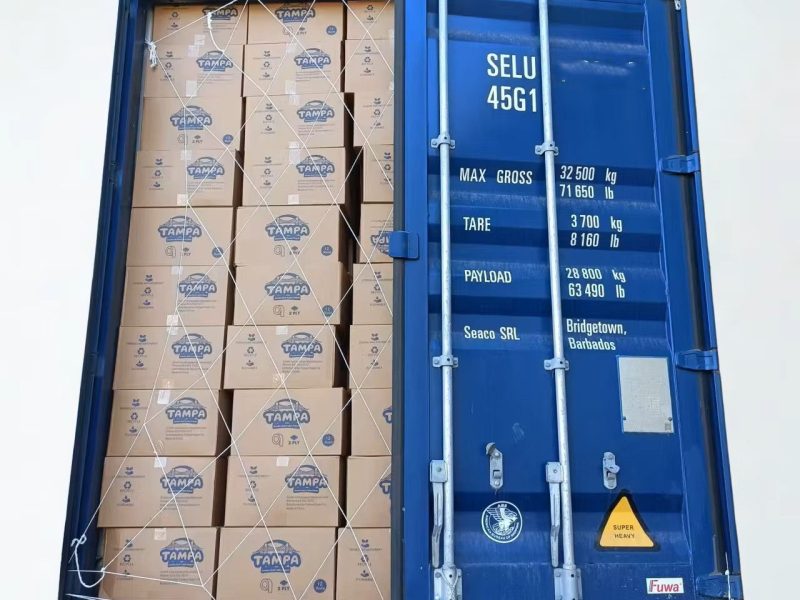
“How many times has the pre-production sample approval turned into a $50,000 headache when the mass production run shows up with a different texture and weight? If you are looking to import toilet paper from China in 2026, that question is worth more than the contract price itself.
Supplier audits across 12 countries reveal that the gap between sample approval and what leaves the factory floor is often a function of who controls the FOB pricing and the quality tolerance terms. That disconnect is especially common when the buyer treats sample approval as a formality rather than the first real checkpoint in the supply chain.
Most guides tell you to compare three quotes and pick the lowest FOB. That advice ignores the hidden failure pattern: the pre-production sample is often made on a dedicated sample line with hand-picked operators, while the production run comes from a high-speed parent roll line. The result is a measurable shift in ply adhesion and dust levels. The fix is simple but almost nobody does it.
Write this down before your next supplier call: insist that the factory provides a production-matched sample taken from the actual production line scheduled for your order. Demand a written tolerance for roll weight (within 5%), dust (under 10 specks per sheet), and ply bond strength. A factory that hesitates on those terms is telling you they cannot control their own process.
Why Most Toilet Paper Imports Fail: The Hidden Risks
Three traps that sink first-time toilet paper importers from China: compliance paperwork, bulk quality, and hidden logistics costs.
When your 40HQ container lands in Mombasa and customs demands an additional import permit because toilet paper is classified as a ‘hygiene product’ in Kenya, you are already two weeks behind schedule and looking at $400 in storage fees. That is the Compliance Trap. Many African countries require a separate health ministry import permit for paper products that contact skin. Your supplier’s FDA cert or FSC label does not override local regulations. Always ask your customs broker: ‘Is toilet paper regulated as a food-contact item or hygiene product in our destination?’ before you ship.
The Quality Shock hits when the bulk shipment arrives and the rolls are 600 grams instead of the 800 grams you approved on the sample. Or the dust level is so high that automated dispensers jam three times a day. The pre-production sample was perfect because the factory used slower line speeds and higher-grade pulp. Mass production runs at 300 meters per minute on a different rewinder. You need a pilot production sample—not a stock sample—and you need to test for ply adhesion, slitter dust, and roll hardness. Request a video of the actual production run before loading.
The Logistics Black Hole starts with the FOB quote. That price covers goods delivered to the vessel, but who stuffs the container? If the factory does not offer container loading services—common with smaller paper mills—you will pay $200–$500 for stevedores at the warehouse. Then port congestion in Lagos or Dar es Salaam can add 10–15 days, triggering demurrage at $80–150 per day per container. And do not forget fumigation: wooden pallets need an ISPM-15 certificate or they will be rejected at the destination. Landed cost for a 40HQ to Africa runs $12,000–$18,000, and 15–20% of that is ‘hidden’ logistics cost that first-timers miss.
Real Cost Breakdown of Importing from China in 2026
Expect $12,000–$18,000 landed per 40HQ — not the $8,000–$12,000 FOB price many suppliers quote.
The FOB price covers the goods loaded onto the vessel at origin. For a standard 40HQ container of 3-ply toilet paper, that runs $8,000–$12,000. But you’re not done. To get those rolls into your warehouse in Mombasa or Lagos, you add ocean freight ($2,500–$5,000), insurance ($200), customs duties (10–25% of CIF value), and inland trucking ($500–$1,500). The container stuffing itself is often assumed free — but if your supplier doesn’t provide loading services, tack on $200–$500 for stevedores. That’s how an $8,000 FOB price becomes $12,000–$18,000 landed.
- Port handling & demurrage: Port handling fees ($300–$600) and container deposit ($2,000 refundable) are commonly omitted from quotes. Demurrage after free days can add $50–$100 per day.
- Inspection fees: Third-party quality inspections (SGS or equivalent) run $400–$800 per container. Skipping them is false economy — 10% defect rates have been passed off as ‘minor variance.’
- Currency & contingency: Build in a 10% contingency for currency fluctuations and unexpected charges. A weak local currency against the USD can inflate your duty cost noticeably.
MOQ for most factories is one 40HQ container (20–22 metric tons). If your trial volume is smaller — say a 20GP — expect a 15–25% premium on per-unit cost because the factory’s setup and paperwork are roughly the same. The economic sweet spot for Africa-bound buyers is the full 40HQ: lower per-ton freight, fewer customs entries.
- Stock samples: Free stock samples ship in 2–3 days. Use them to verify ply, softness, and dust levels before customizing.
- Custom samples: Custom branding samples take about 10 days. Most suppliers cover sample cost but not express shipping — budget $50–$150 for DHL to your door.
- Pilot run: Before committing to a full container, request a pilot production of a few cases. Match the GSM and packaging specs exactly. Compare the pilot to your stock sample — if the bulk run differs, you’ve caught it before the container ships.
| Cost Component | Amount (USD) | Key Details |
|---|---|---|
| FOB Price per 40HQ Container | $8,000 – $12,000 | Based on 20–22 metric tons of standard 3-ply toilet paper |
| Ocean Freight (China to Africa, e.g. Mombasa) | $2,500 – $4,000 | Lead time 15–25 days; rates vary by port congestion |
| Insurance (0.3–0.5% of FOB value) | $200 – $300 | Covers cargo loss/damage during transit |
| Customs Duties & Taxes (10–25% of CIF) | $1,200 – $4,000 | Rate depends on country; hygiene products may need additional permits |
| Inland Trucking (Port to warehouse) | $500 – $1,500 | Distance and local logistics costs vary |
| Hidden Fees (Port handling, inspection, deposit) | $1,000 – $2,800 | Includes stevedores $200–$500, container deposit $2,000 refundable |
| Total Landed Cost per 40HQ | $12,000 – $18,000 | Includes all above; budget 10% contingency for delays |
China vs Domestic Toilet Paper: Which Is Better for You?
Chinese toilet paper offers 30–40% lower cost but requires tighter supplier vetting.
On price, China wins. FOB per metric ton for standard 3-ply toilet paper runs $800–$1,200. Local African mills quote $1,500–$2,200 per ton. That 30–40% spread is real — but it narrows once you add ocean freight ($2,500–$5,000 per 40HQ), duties (10–25% depending on country), and inland haulage. A 40HQ container landed in Mombasa ends up at $12,000–$18,000. Domestic supply skips ocean transit, so lead time drops from 25–40 days to 7–14 days. If your budget is tight and you can plan three months ahead, Chinese imports still beat local on cost per roll.
- Quality & Certification: You want 100% virgin pulp, FDA registration for US-bound orders, and FSC chain of custody for European tenders. Chinese manufacturers like Top Source Hygiene hold ISO 9001, FDA, and FSC certifications and can provide test reports for absorbency, ply adhesion, and fluorescent whitener absence. Domestic mills in Africa often cannot prove traceability for virgin pulp or maintain FSC certification — a dealbreaker if your contract demands sustainability credentials. The sample approval process is your safety net: request a pilot production sample matching your ply, GSM, and packaging before you commit a container.
- Private Label Flexibility: Chinese OEM/ODM providers let you control every variable — ply (2 to 5), GSM, roll diameter, core size, packaging design, and logo without extra tooling fees. The standard MOQ is one 40HQ container (20–22 metric tons), but smaller runs are possible with a 15–25% premium. Domestic suppliers often require larger minimums for custom branding or charge setup costs. If you need a unique package for a hotel chain or a government tender, China gives you the flexibility to match specifications exactly without overcommitting volume.
One hidden cost that favors domestic: container stuffing. When you buy FOB from a Chinese supplier, check whether the factory provides container loading. Small mills often don’t, leaving you to hire stevedores at $200–$500. Domestic suppliers typically include loading in the price. Factor that into your landed cost calculation. For an Africa public facilities buyer, the decision comes down to lead time tolerance and certification requirements. If your tender demands FSC and FDA, Chinese import is not just cheaper — it’s often the only option that ticks the compliance boxes.
How to Sourcing Toilet Paper from China Without Getting Scammed
Most importers lose money on hidden compliance fees and sample-to-bulk quality drops.
Sourcing toilet paper from China comes down to four concrete steps: verifying certifications, validating samples, structuring the contract, and planning logistics. Skip one, and you are gambling a container load.
- Step 1: Verify certifications. Ask for ISO 9001, FDA registration (if shipping to the US), and FSC chain-of-custody (for sustainability claims). Do not rely on a PDF alone — cross-check the certificate number with the issuing body. For African markets, confirm the supplier can provide a phytosanitary certificate for the wood pallets and a certificate of analysis showing zero fluorescent whiteners.
- Step 2: Sample validation: Order free stock samples first (2–3 days shipping). Once you approve the stock quality, request a pilot production sample matching your exact ply, GSM, size, and packaging. Measure roll diameter with a caliper — deviation over 2 mm means bad winding. Shake the roll over a dark surface; visible dust indicates poor edge cutting.
- Step 3: Contract and payment: Use a formal purchase order specifying 30% deposit, 70% against scanned shipping documents. Insist on a pre‑shipment inspection by SGS, Bureau Veritas, or the factory’s own QC with a signed report. Define maximum defect tolerance (2% of rolls) and return‑to‑manufacturer (RMA) terms in writing.
- Step 4: Logistics planning: Confirm HS code 4818.10.0000 with your customs broker. Check whether the destination requires fumigation for wooden pallets (most African countries do). Choose a freight forwarder experienced with paper products — they know the correct stacking weight and moisture protection. Budget an extra $200–$500 for container stuffing if the factory does not offer loading services.
Conclusion
Skip the vetting process, and the $12,000 container of toilet paper you ordered becomes a $15,000 problem sitting in port while customs flags the missing FSC certificate. The cost of inaction isn’t just a delayed shipment — it’s lost tender opportunities and a damaged reputation with facility managers who expect consistent quality.
Review your current sourcing checklist against the steps outlined here. If you’re still uncertain about certification verification or landed cost calculations, reach out to manufacturers like Top Source Hygiene that provide transparent pricing and compliance documentation upfront.
Frequently Asked Questions
What is the HS code for toilet paper?
The HS code for toilet paper is 4818.10.0000. This code covers toilet paper made from virgin wood pulp or recycled fibers. Always verify with your customs broker for your specific product variant.
Does the US import toilet paper?
Yes, the US imports toilet paper, but China’s share is only about 6.2% of total import value. Most US imports come from Canada and Mexico due to proximity and trade agreements. Check USITC data for current tariff rates before ordering.
What certifications do I need to import toilet paper from China?
For the US market, FDA registration is required; for Europe, FSC certification is often demanded. ISO 9001 is a baseline quality certification that top suppliers hold. Request certificates directly from your supplier before placing an order.
How much does it cost to ship a container of toilet paper from China?
Landed cost for a 40HQ container of toilet paper typically ranges $12,000–$18,000 depending on destination. Ocean freight alone to Africa can be $3,500–$5,000, but total landed includes duties, inland. Get a full landed-cost quote from your freight forwarder for your specific port.
What is the minimum order quantity for toilet paper from China?
Standard MOQ is one 40HQ container, but many suppliers offer smaller trial orders for Africa and South America. Custom packaging or private label typically requires the full container. Confirm MOQ after you finalize product specs and packaging requirements.
“