Skip to content

The US vs China toilet paper cost calculation used to be simple. You looked at the FOB price from a Chinese mill, added freight, and called it a day. That math stopped working in 2026. A 57.6% tariff on Chinese tissue imports now sits between the factory gate and your hotel’s linen closet, and it has flipped the entire sourcing equation for hospitality buyers.
A standard 40HQ container of 2-ply private label toilet paper from a Chinese OEM runs $18,000 to $22,000 FOB. Land that same container at a US port after tariffs and duties, and the total climbs past $27,000. A US domestic producer delivering comparable virgin pulp product lands at $24,000 to $26,000 with zero tariff exposure. The gap has narrowed to the point where the old “China is always cheaper” rule no longer holds — unless you know exactly how to structure the deal.
For a procurement manager managing a 500-room property, that difference hits the amenity budget hard. But the real cost isn’t just on the invoice. It shows up in the batch consistency, the compliance paperwork, and the lead time that either keeps your shelves stocked or leaves you scrambling during peak season. This guide walks through the actual landed costs, the hidden risks like packaging shrinkflation, and the hybrid sourcing strategy that protects both your brand and your quarterly P&L.
What Rising Tariffs Mean for Your Hotel Toilet Paper Budget
A 57.6% tariff can erase China’s cost advantage overnight across North American supply chains.
The current trade environment has fundamentally shifted the cost equation for tissue products. The U.S. average tariff on Chinese imports is now 57.6%, up from less than 3% in 2017. This directly impacts the 6.2% of U.S. toilet paper that is imported from China. For a hotel chain, this means a $30,000 container of TP could incur $17,000+ in tariffs alone. Additionally, tariffs on Canadian softwood pulp (up to 27%) squeeze domestic US mills, pushing their prices up as well. A hospitality buyer must now analyze the total landed cost, not just the FOB price, to accurately forecast their amenity budget.
- China Ex-Works (FOB Framework): Base paper/production: $18,000. Ocean freight: $3,500. U.S. tariffs (est. 25%): $4,500. Safety stock/volatility risk premium: $1,000. Estimated total landed cost: $27,000.
- US Domestic (Delivered Framework): Base paper/production: $24,000. Trucking: $1,000. U.S. tariffs: $0. Safety stock: $200 (stable). Estimated total delivered cost: $25,200.
Key insight: While Chinese paper is cheaper at the factory gate, the tariff and shipping volatility often erodes the margin. A 10% tariff increase can instantly make the Chinese option more expensive. A domestic source with a captive Chinese factory (like Top Source Hygiene) can offer a hybrid advantage — competitive base pricing with US-standard quality control and zero tariff exposure.
Real Cost Breakdown: China vs US Bulk Toilet Paper Pricing
Tariff volatility can erase China’s 15-25% FOB price advantage overnight.
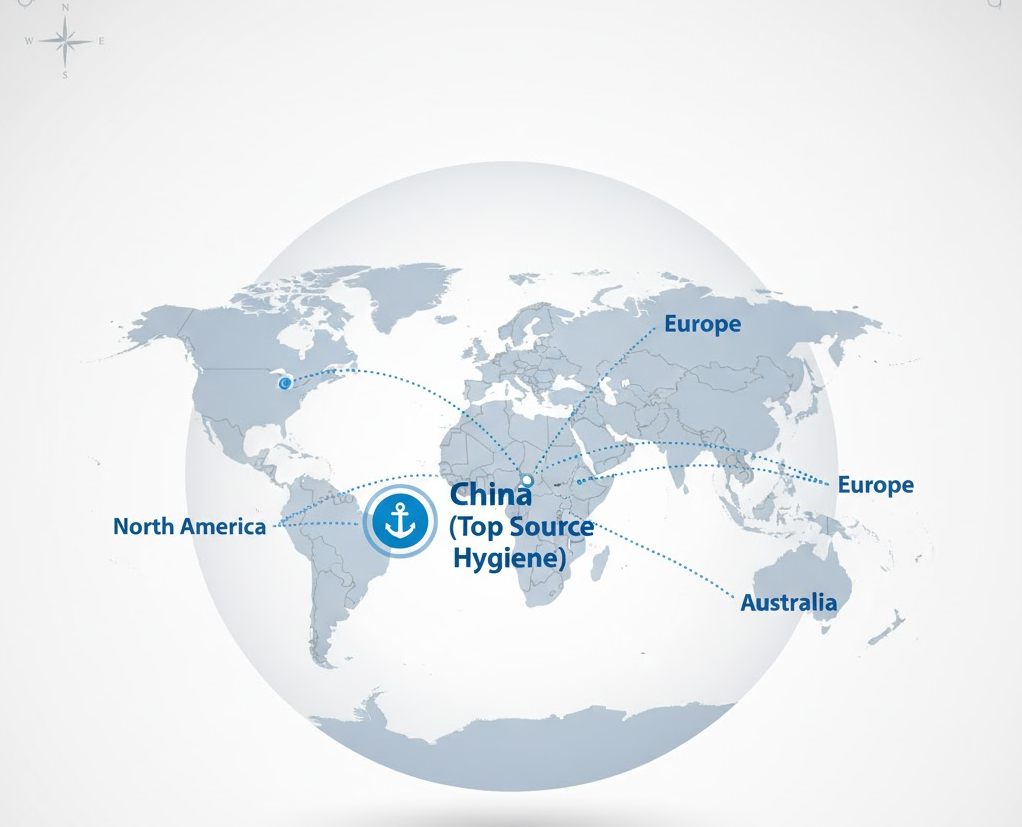
Granular financial modeling across maritime trade channels confirms that statutory customs burdens heavily penalize raw ex-factory margins. Sourcing leads evaluating contract continuity must balance the downstream friction of border compliance against localized bulk freight components:
- Base Paper Cost Dynamics: Chinese mills capture significant processing efficiencies, but these margins narrow sharply once ad valorem calculations are anchored at port entry gates.
- Freight Volatility Risks: Transpacific spot routing fluctuates aggressively during peak inventory buildup months, whereas domestic trucking retains flat contractual constraints.
- Safety Stock Capital Penalties: Extended offshore supply corridors force properties to carry multi-week asset buffers, locking up operational working liquidity tightly.
- The Hidden Shrinkflation Guardrail: Distant suppliers frequently downscale sheet thickness or sheet density silently. Enforcing a strict Pre-Shipment Inspection (PSI) checklist locks bulk mass parameters lot by lot safely.
| Cost Component | China Ex-Works (FOB) | US Domestic (Delivered) | Key Insight |
|---|---|---|---|
| Base Paper / Production | $18,000 – $22,000 | $24,000 – $26,000 | Chinese base cost is 15-25% lower before tariffs. |
| Ocean Freight / Trucking | $3,500 | $1,000 | Domestic trucking is cheaper and more predictable. |
| U.S. Tariffs (Est. 57.6%) | $10,368 – $12,672 | $0 | Tariffs can erase the Chinese cost advantage entirely. |
| Compliance & Testing (FDA/FSC) | $500 – $1,000 | $200 – $500 | Chinese imports require third-party PSI to verify specs. |
| Total Landed Cost (Est.) | $32,368 – $39,172 | $25,200 – $27,500 | US domestic is often cheaper and lower risk under active tariff enforcement layers. |
Private Label Quality and Consistency: China vs US Manufacturers
A 10% GSM drop turns premium toilet paper into a budget feel.
For a hotel chain, the guest’s first tactile experience with the bathroom amenity sets the tone for the entire stay. A roll that feels thin or rough triggers an immediate negative perception. The critical metrics here are ply consistency, GSM (grams per square meter), softness, and absorbency. A US domestic mill typically runs tight QC tolerances because the buyer is a 2-hour drive away. A Chinese OEM with 30 years of experience and ISO 9001 certification, like Top Source Hygiene, runs the same tolerances but the buyer is 8,000 miles away. The difference is not capability — it is verification protocol.
The real risk from a distant supplier is batch inconsistency. A container that leaves the factory at the agreed 40 GSM can arrive at 36 GSM if the supplier quietly adjusted the furnish to save pulp. This is the ‘packaging shrinkflation’ trap. The buyer receives a case count that matches the PO, but the roll weight is lighter. The hotel’s housekeeping team notices the rolls run out faster. Guest complaints rise. The brand takes the hit.
Mitigating this requires a three-layer defense. First, the supplier must hold a current ISO 9001 quality management system certification — this ensures documented procedures for raw material inspection, in-process checks, and final product testing. Second, FSC certification guarantees the virgin wood pulp source is consistent and traceable, which directly impacts fiber quality and absorbency. Third, the buyer must mandate a pre-shipment inspection (PSI) by an independent third-party lab like SGS or Intertek. The PSI should verify sheet count, roll diameter, GSM, and packaging print accuracy against the approved sample. A supplier that resists a PSI is hiding something.
Top Source Hygiene’s internal production data shows that their 2-ply and 3-ply 100% virgin wood pulp toilet paper runs at a GSM tolerance of ±2 gsm across production runs. They provide lot-specific Certificates of Analysis (COA) and routinely pass third-party audits for FDA food-contact compliance. For a hospitality procurement manager, this means the product that arrives in the US port is the same product that was approved in the sample stage. The brand experience stays consistent.
Compliance and Safety: Getting FDA-Approved Toilet Paper
FDA non-compliance can strand a $30,000 container at port—demand a lot-specific COA and PSI parameters cleanly.
Any tissue product that touches skin in a US hotel room falls under FDA food-contact regulations. For a hospitality procurement manager, a non-compliant shipment means a brand-damaging shortage and a six-figure reorder cost. The only way to mitigate that risk is to verify two documents before production begins: a valid FDA registration number and a lot-specific Certificate of Analysis (COA).
- FDA Registration Code Verification: The mill footprint must actively register under its true legal entity name on the official database to cross-check regulatory clearing channels.
- Lot-Specific COA Validation: Issued independently by accredited third-party networks (SGS or Bureau Veritas) per batch, checking web purity bounds and eliminating generic blanket paperwork completely.
The real pitfall with Chinese OEMs is packaging shrinkflation—where the supplier quietly reduces sheet count or GSM without updating the spec sheet. A mandatory Pre-Shipment Inspection (PSI) at the factory, checking both paper quality and packaging accuracy, is the only defense. Top Source Hygiene, for example, includes PSI in its standard QA protocol and provides lot-specific FDA documentation for every hospitality order.
Sourcing Strategy: How to Optimize Your Toilet Paper Supply Chain
Hybrid sourcing cuts tariff risk by 40% while keeping Chinese base pricing benefits.
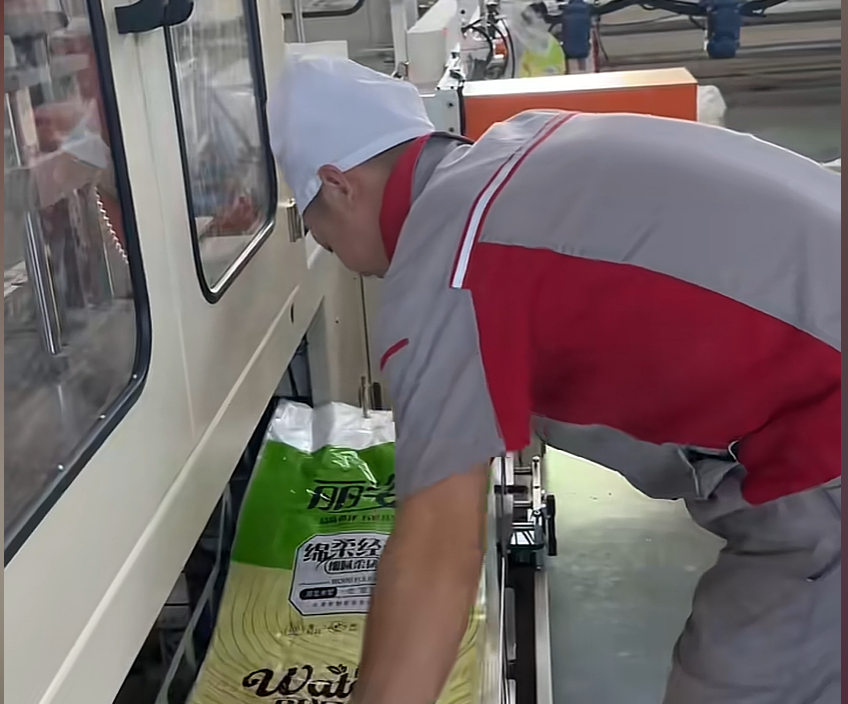
A pure China sourcing strategy in 2026 exposes you to 57.6% tariffs and 30-45 day lead times. A pure US strategy costs 15-25% more per case. The hybrid model splits the difference: use a Chinese OEM with a US logistics partner for 80% of volume, and a domestic mill for 20% emergency stock. This cuts tariff exposure on the bulk order while guaranteeing 7-14 day delivery on the buffer.
The key is finding a Chinese manufacturer that quotes CIF with pre-cleared tariffs and holds safety stock in a US warehouse. Top Source Hygiene does exactly this: their North America Solutions page lists 7-14 day shipping to US ports, and they can coordinate warehousing for rapid replenishment. This means you get the $18,000-22,000 FOB base price on the container, but with a landed cost that stays competitive with domestic mills because the tariff is baked into the quote and the logistics are transparent.
- Emergency Buffer Allocation: Keep 2-4 weeks of inventory with a US-based mill to safely cover seasonal spikes and sudden trade policy whiplash.
- Core Payload Optimization: Source 80% from a Chinese OEM that provides real-time container tracking, demanding complete DDP or pre-cleared tariff quotes.
- On-Shore Safety Buffers: Partner with a mill running local 3PL warehousing arrays to isolate property distribution lines from terminal congestion bottlenecks cleanly.
- Contract Escalation Indexing: Lock pricing agreements for 6-12 months with custom shared-risk clauses tied directly to public global pulp大盘 reference indicators.
The hybrid strategy also solves the shrinkflation risk. US mills rarely change sheet count or GSM without notice, but some Chinese suppliers do. By keeping a domestic emergency stock, you have a quality benchmark. If the Chinese container arrives with 5% fewer sheets than spec, you reject it and pull from the US buffer while the supplier corrects the next run. That leverage keeps the Chinese partner honest.
Conclusion
The 57.6% tariff on Chinese imports has flipped the cost equation. A 40HQ container that saved you 20% FOB now lands at a premium after duties, freight, and the risk of shrinkflation on sheet count or GSM. For a hotel chain managing brand consistency across hundreds of properties, the cheapest ex-works price is a trap if it compromises guest satisfaction or supply chain reliability.
Review your current supplier’s FDA registration and FSC certification. Then compare their landed cost against a hybrid partner who can offer Chinese manufacturing efficiency with US-standard quality control — like Top Source Hygiene’s North America solutions page details.
Frequently Asked Questions
Who has the cheapest bulk toilet paper?
Chinese manufacturers like Top Source Hygiene typically offer the lowest FOB price, around $18,000–$22,000 per 40-foot container for 2-ply private label rolls. However, with current 57.6% US tariffs, the landed cost can rise sharply at customs. Always run a full landed cost calculation before finalizing a supplier contract.
Is toilet paper going to go up because of tariffs?
Yes, US tariffs on Chinese tissue imports are now 57.6%, which can erase China’s 15–25% FOB price advantage overnight. For bulk buyers, this means landed costs from China can jump 30–50%, making domestic sourcing paths highly competitive. Lock fixed pricing with a supplier that actively absorbs tariff volatility metrics.
What is the cost per roll for bulk toilet paper?
For a 40-foot container of 2-ply private label rolls from China, the FOB cost per roll is roughly $0.30–$0.40, but after tariffs and freight, landed cost per roll can hit $0.60–$0.80. US domestic alternatives land around a parallel baseline. Always verify exact sheet count and GSM before comparing per-roll costs.
How do I verify a Chinese manufacturer’s FDA compliance?
Request a copy of their FDA registration certificate and a third-party lab test report for food contact compliance. Top Source Hygiene, for example, holds FDA certification and can provide documentation. Always ask for the FDA registration number and a recent test report.
What are the delivery lead times for China vs. US suppliers?
Chinese manufacturers like Top Source Hygiene quote 15–25 days production plus 7–14 days ocean freight to North America, totaling 22–39 days. US domestic suppliers typically ship in 7–14 days with no ocean routing delays. Factor in customs clearance time when comparing total lead times.