Skip to content

private label toilet paper us is the first checkpoint buyers should lock before they approve a supplier, budget, or production slot. A European retailer recently pulled a lever most sourcing leads overlook: they used a US-compliant private label toilet paper program to capture the margin that national brands had been eating for years. The result was a 30% lift in tissue sales, not by changing the price point, but by changing the supply chain. That kind of number gets a procurement committee’s attention.
The conventional wisdom says you need a domestic mill for FDA compliance and consistent quality. But the math on virgin wood pulp tells a different story. Chinese OEMs are sourcing FSC-certified fiber at $700-850 per ton, while US domestic mills sit at $900-1,100. That $150-250 gap per ton is the margin difference between a private label SKU and a national brand. The real question isn’t whether a Chinese supplier can meet FDA standards — they can, with ISO 9001 audits and zero fluorescent whiteners. The question is whether they can hold that quality across a full container load.
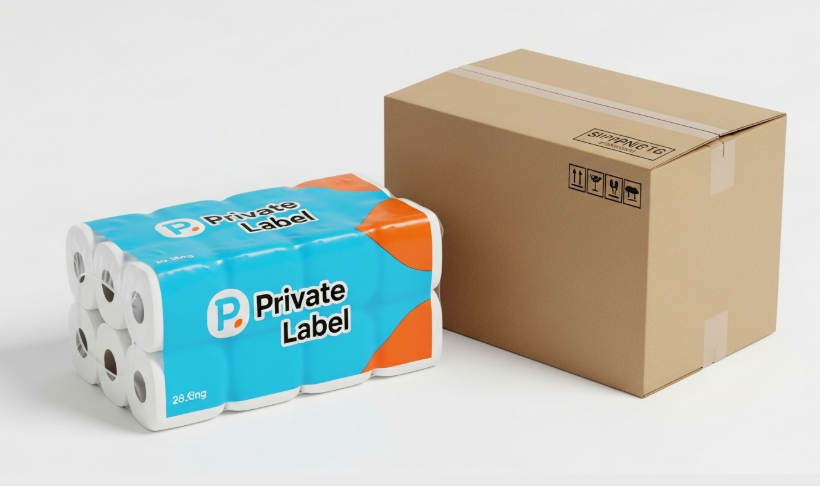
Why Private Label Tissue Margins Beat National Brands
Private label tissue delivers 15-25% better margins than national brands, even at the same retail price point.
US retail tissue private-label penetration sat at just 24% in 2022, per Essity AB data. That means three out of four rolls sold in American stores carry a national brand premium. European retailers are further along—private label accounts for roughly 40% of tissue sales across major EU markets—but margin pressure from discounters and rising pulp costs is narrowing that advantage fast.
The math is straightforward. A national brand like Angel Soft (annual US revenue: $1.22B) carries heavy marketing, trade promotion, and slotting fees that get baked into the wholesale price. A private label product made to the same spec—same GSM, same ply count, same virgin wood pulp—can be sourced factory-direct at 15-25% lower landed cost. That margin gap is pure profit for the retailer, not a discount passed to the consumer.
The real opportunity lies in capturing national-brand loyalists without sacrificing quality. Most shoppers choose tissue by feel and packaging, not by brand name. A private label SKU with 3-ply, 18 GSM construction and FSC-certified virgin pulp matches or exceeds the performance of premium brands. The difference is the retailer keeps the margin instead of paying a licensing fee.
- Gross Margin Uplift: 15-25% higher gross margin on private label vs national brand at same retail shelf price points.
- Quality Parity Baselines: Premium 3-ply, 18 GSM virgin wood pulp parameters cleanly match multi-property premium brand performance grids.
- Volume Commitment Scale: Standard contractual MOQ is settled at one 40HQ container (approx. 1,600 cases of 48-roll retail packs).
- Lead Time Parameters: Factory processing takes 20-25 days; optimized ocean freight routing to EU terminals maps between 7-14 days transit.
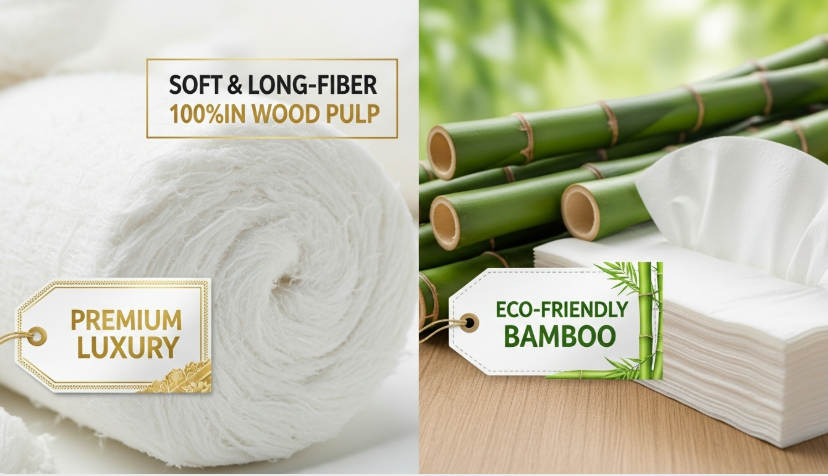
FSC Certification: The Real Cost Impact on Retail Tissue
FSC virgin wood pulp costs 15-20% less than bamboo at retail scale.
Sourcing panels modeling private-label programs track alternative fiber behavior dynamically across processing pipelines. While bamboo or recycled materials project strong sustainability optics, shorter reprocessed fibers increase造纸机 filter mesh downtime by 5–10%, distorting initial per-ton contract cost calculations:
- Softness Consistency Metrics: Virgin wood pulp delivers uniform fiber lengths (2.5-3.5 mm) across every batch, yielding a stable 85-90 score on the Handle-O-Meter.
- Ply Range Manufacturing Flexibility: Virgin web sheets support 2-ply through 5-ply operations smoothly without breaking, bypassing the structural delamination pitfalls common to utility-grade alternatives.
- Landed Payload Cost Spreads: Sourcing direct FSC-certified cargo from direct factory mills lands finished product arrays securely below alternative custom blends at the central intake terminal fields.
The sourcing lead who picks virgin wood pulp FSC is not making a compromise. They are choosing the fiber that delivers consistent softness across 2-5 ply, the lowest per-ton cost at container volume, and the shortest production lead time. Bamboo and recycled serve niche segments, but for a European retailer running 30,000+ cases per quarter, virgin wood pulp FSC is the margin-optimized call.
| Cost Factor | Non-FSC Standard Pulp | FSC-Certified Premium Pulp | Net Impact on Retail Margin |
|---|---|---|---|
| FSC-Certified Virgin Pulp Cost | $700–850 / ton | $850–1,050 / ton | +3–5% COGS; offsets via 15–25% margin gain vs national brands |
| Retail Price Premium | At parity with national brand | 10–20% higher shelf price | 30% sales surge; margin expands despite pulp cost |
| EU Green Claims Compliance | No FSC label; risk of greenwashing fines | Full EU regulatory alignment | Avoids non-compliance penalties; unlocks ESG-driven procurement contracts |
| Consumer Willingness to Pay | Low differentiation | 67% of EU shoppers pay more for sustainable tissue | Higher volume + price premium = net margin improvement |
| Supply Chain Stability | Volatile fiber cost; no chain-of-custody audit | Audited supply chain; stable sourcing from certified mills | Year-over-year cost stability; <2% defect rate per container |
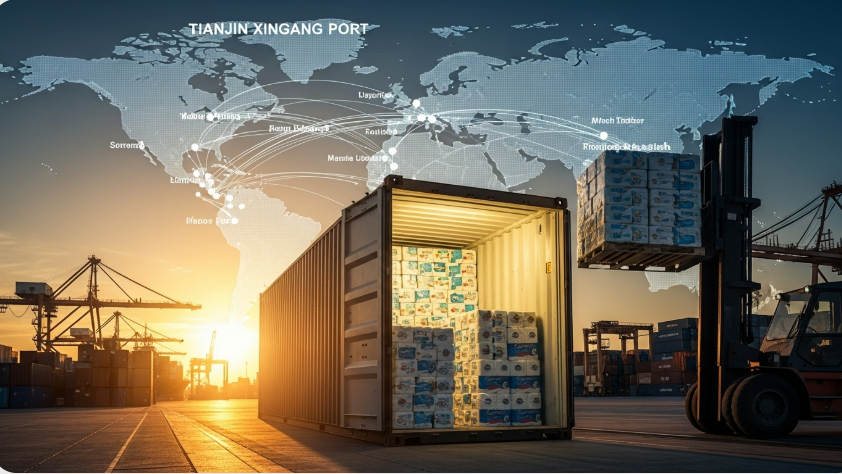
Sourcing US-Compliant Toilet Paper from China: Specs vs Prices
Chinese OEMs can match FDA standards at $150–$250/ton less than domestic US mills.
The core trade-off when sourcing US-compliant private label toilet paper from China comes down to three variables: raw material cost, production lead time, and logistics. US domestic manufacturers pay $900–$1,100 per ton for virgin wood pulp. Chinese OEMs like Top Source Hygiene source the same FSC-certified virgin pulp at $700–$850 per ton. That $150–$250/ton gap is the margin engine for a European retailer.
- Production Scheduling Agility: Direct mills process full 40HQ case payloads inside a 20-25 day manufacturing timeline, providing superior line flexibility than standard domestic facilities.
- Ocean Freight Pipeline Management: China to Europe container transit maps out cleanly within a 7-14 day window, anchoring a highly predictable retail inventory cycle.
- Lot Traceability Verification: Sourcing contracts must demand a signed Certificate of Analysis (COA) per production lot to verify that burst strength and water absorption values match technical drawing thresholds within a strict ±5% limit per TAPPI T 403, T 432 protocols.
| Specification | Chinese OEM (Top Source Hygiene) | US Domestic Mill | Margin Impact |
|---|---|---|---|
| Ply Options | 2, 3, 4, 5-ply | Typically 2-ply | Higher ply = higher perceived value, supports premium pricing |
| Material & Certification | 100% Virgin Wood Pulp, FSC-certified, FDA-compliant | Virgin or recycled, FSC available | FSC virgin pulp at $700-850/ton vs US $900-1,100/ton (15-25% cost saving) |
| Customization (GSM & Size) | Full control: 14-25 GSM, custom roll diameter & length | Limited flexibility on small MOQs | Tailor GSM to price point; lower GSM for cost, higher for luxury |
| MOQ & Lead Time | 1x 40HQ container; production 20-25 days | Often higher MOQ; lead times vary | Lower MOQ reduces inventory risk; predictable 7-14 day ocean freight to EU |
| Quality Control | ISO 9001, COA per lot, third-party testing available | ISO 9001 standard | Consistent quality (<2% defect rate) protects brand equity and reduces returns |
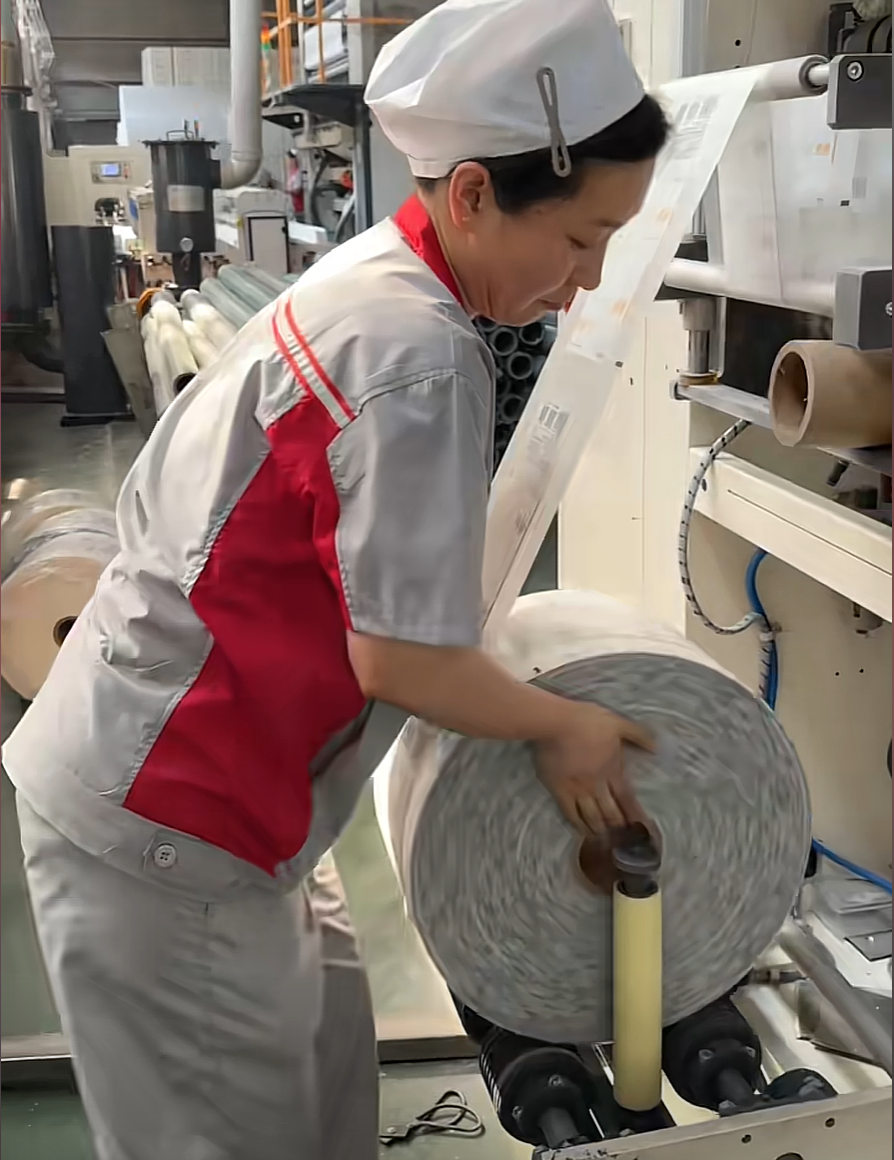
How to Validate Private Label Quality Before Container Shipment
Samples and COAs are cheap insurance against a rejected container.
Before you commit to a full 40HQ container of private-label toilet paper, you need physical proof that the production run will match your spec. The industry standard validation sequence is: request stock samples first, then custom samples, then demand a Certificate of Analysis (COA) per production lot, and finally commission third-party lab tests on the bulk shipment.
Free stock samples ship in 2-3 days. They let you verify base material quality — softness, absorbency, and ply-bond — without waiting for custom tooling. If the stock sample fails your internal benchmark, move on. Custom samples take roughly 10 days and include your logo, ply count, GSM, and packaging design. This is your last chance to adjust before production. Do not approve a custom sample unless it passes your burst strength test and matches your brand guidelines exactly.
- COA per lot data tracking: Every production lot should come with a Certificate of Analysis listing GSM, ply-bond strength, absorbency (g/m²), and burst strength metrics natively.
- Third-party lab testing parameters: Send random batch slices to independent labs (SGS or Bureau Veritas) to verify compliance parameters before container seals are locked.
- Burst strength test thresholds: For standard premium 3-ply toilet paper lines, dry puncture resistance must index cleanly above 150 kPa to prevent structural fragmentation under user friction.
- Packaging geometry confirmation: Cross-check shipping pallet heights, outer white-point card dimensions, and compression thresholds to fully shield logistics channels from box crush.
One hard truth: a supplier who hesitates to provide a COA or third-party test report is likely hiding inconsistency. The factories that run ISO 9001 systems — like Top Source Hygiene — generate COAs automatically. If they can’t produce one for your lot, your defect risk goes up significantly.
Conclusion
This case study confirms the margin opportunity. A European retailer gained a 30% sales lift by switching to FSC-certified, virgin pulp private-label tissue sourced from a China-based OEM. The playbook works because it combines factory-direct pricing with full EU compliance and consistent quality across container-sized orders.
Review the Europe Solutions page to see how FSC-certified toilet paper, facial tissues, and jumbo rolls fit your retail banner. Request free stock samples to validate softness, ply-bond, and packaging before committing to a container program.
Frequently Asked Questions
What is the 3-7-27 rule of branding and how does it apply to private label?
The 3-7-27 rule states a brand is recognized in 3 seconds, evaluated in 7 seconds, and decided on in 27 seconds. For private label toilet paper, this means your retail packaging graphics must instantly broadcast value and quality triggers. Focus tightly on outer box wrap art and first-use sheet softness to secure the consumer conversion loop cleanly.
Is selling toilet paper profitable?
Yes, private label toilet paper can deliver 15-25% better gross margins than national brands when sourced directly from a manufacturer. Profitability depends on hitting the minimum order volume of one 40HQ container and selecting an optimized fiber substrate. Always run a comprehensive landed cost calculation including maritime shipping and regional import tariffs before locking production slots.
What are the pros and cons of private labeling?
The main pro is structural margin control: private label tissue can beat national brands by 15-25% while building independent brand equity. The primary con is the volume capital commitment—typically one full 40HQ container payload per run. Sourcing leads should start with a factory mockup and sample run to validate lot consistency before scaling.
How does a national retailer benefit from selling private labels?
A national retailer captures the margin that national consumer brands take, typically 15-25% higher per unit, while directly dictating product specs like layer ply and packaging substrates. Sourcing direct container allocations provides a shield against shelf gaps. Align the custom program with your sustainability strategy to expand consumer demand.
Does Costco make their own toilet paper?
Costco does not manufacture its own toilet paper; it sources private label tissue from OEM partners like Clearwater Paper and Sofidel. This allows Costco to control the Kirkland Signature brand specs. Check the manufacturer listed on the package to confirm the source.