Skip to content


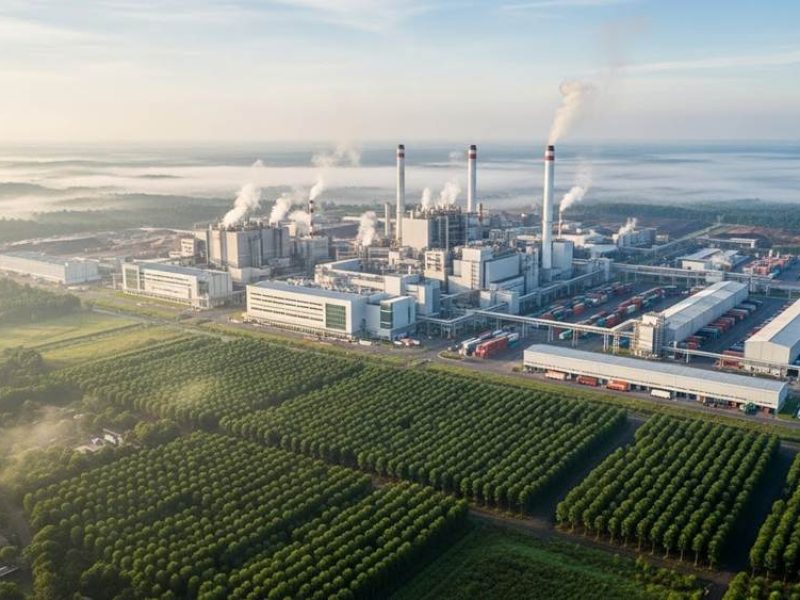
Sourcing tissue products at scale requires a supply chain that can withstand global price shifts and logistics delays. Indonesia has become a primary hub for B2B buyers by integrating massive domestic pulp reserves directly with automated manufacturing. This structure supports a combined tissue capacity of approximately 1 million tonnes per year, providing wholesalers and converters a stable source for high-volume orders.
This article lists the leading manufacturers and examines the logistics of the East Java and Jakarta export hubs. We analyze specific production capabilities, including the availability of 11 to 50 GSM jumbo reels and the scaling of plants to 300,000 tonnes annually. The following sections also detail SVLK and FSC certifications to help ensure your 2026 procurement meets international environmental standards.
Top 10 Toilet Paper Manufacturers in Indonesia
Quick Comparison: Top Picks
| Manufacturer | Location | Core Strength | Verdict |
|---|---|---|---|
| PT. Sun Paper Source | Sukoanyar / Mojokerto, Jawa Timur, Indonesia | Tissue jumbo rolls, parent rolls (11-50 GSM) | Private label and away-from-home exporter; the tonnage figure previously quoted here was unsourced. |
| PT. Sopanusa Tissue & Packaging Saranasukses | Ngoro / Mojokerto, Jawa Timur, Indonesia | Facial, toilet, napkin tissue and packaging | Versatile exporter specializing in tissue converting for international wholesalers. |
| PT. Suparma Tbk | Surabaya, Jawa Timur, Indonesia | Toilet tissue paper parent/jumbo rolls | Established industry veteran and a key domestic and export manufacturer since 1970s. |
| PT. Pindo Deli Pulp and Paper Mills | Karawang, West Java, Indonesia (Mills) | Pulp, tissue paper, hygiene papers | Major APP subsidiary delivering high-quality global pulp and hygiene solutions. |
| Sinar Mas Pulp & Paper (APP) | Central Jakarta, DKI Jakarta, Indonesia | Tissue jumbo reels, soft color parent rolls | Pulp-integrated group; household tissue sits in Pindo Deli, Asia Symbol, Lontar Papyrus and Univenus. |
| PT. Indah Kiat Pulp & Paper | Perawang, Riau / Tangerang, Indonesia | Bleached hardwood pulp, white cardboard, corrugating medium | Pulp and packaging board, not tissue; relevant as fibre supply behind the group’s tissue mills. |
| Varia Jaya | Not verified — see entry | Tissue paper, paper products | We could not verify this company exists as a tissue producer; entry retained with the gap stated. |
| PT. The Univenus | Serang & Cikupa (Banten), Surabaya (East Java), Medan | Premium finished tissue, multi-ply retail rolls | A core APP subsidiary focusing on high-end retail brands and extensive global distribution. |
| PT. Papertech Indonesia | Not verified | Recycled tissue base, technical industrial paper | Sites and product claims unverifiable from primary sources; treat as a lead, not a supplier. |
| Top Source Hygiene | Mancheng, Baoding, Hebei, China (FOB Tianjin) | Custom OEM toilet paper, facial tissue, bamboo tissue | Chinese OEM alternative to Indonesian sourcing: one 40ft container per SKU, about 25 days, no certifications held. |
PT. Sun Paper Source
PT. Sun Paper Source operates as a major supplier in the Indonesian paper industry from its base in Sukoanyar, East Java. the company’s own site The company focuses on the export market and private label manufacturing, serving both consumer and away-from-home sectors. They provide a reliable source for businesses looking to scale their tissue product lines through consistent quality and high-volume output.
The group recently expanded its reach by investing in four new tissue machines at the Ngoro plant. This move boosted total production capacity to 300,000 metric tons per year when combined with sister company PT. Sopanusa. Such capacity supports a diverse catalog of jumbo rolls and parent rolls ranging from 11 to 50 GSM, meeting various technical specifications for international buyers.
At a Glance:
- 📍 Location: Sukoanyar / Mojokerto, Jawa Timur (East Java), Indonesia
- 🏭 Core Strength: Tissue jumbo rolls, toilet tissue parent rolls, facial, and napkins (11-50 GSM)
- 🌍 Key Markets: Southeast Asia exports, private label brands, and Away-from-Home (AfH) sectors
Why We Picked Them:
| ✅ The Wins | ⚠️ Trade-offs |
|---|---|
|
|
PT. Sopanusa Tissue & Packaging Saranasukses
PT. Sopanusa Tissue & Packaging Saranasukses operates as a key player in the Indonesian tissue industry from its base in Ngoro, Mojokerto. As a sister company to PT. Sun Paper Source, the facility focuses on both manufacturing and converting raw materials into finished hygiene products. The company serves international wholesalers and global retail chains by providing customized tissue solutions and specialized packaging.
The factory utilizes four production machines to reach a monthly output of 8,000 metric tons. This setup allows the company to produce a wide range of products, including facial tissues, toilet paper, and napkins with weights ranging from 11 to 50 GSM. By managing the entire process from pulp to final packaging, the team maintains consistent supply for large-scale industrial converters and export partners.
At a Glance:
- 📍 Location: Ngoro, Mojokerto, East Java, Indonesia
- 🏭 Core Strength: Facial tissue, toilet paper, and napkin tissue (11-50 GSM)
- 🌍 Key Markets: Global retail chains, industrial converters, and international wholesalers
Why We Picked Them:
| ✅ The Wins | ⚠️ Trade-offs |
|---|---|
|
|
PT. Suparma Tbk
PT Suparma Tbk is a long-established Surabaya paper company with Indonesian-listed shares, and it is one of the more interesting names on this page for a specific reason: it has been buying new tissue capacity rather than only running what it has. the tissue-machine specifications behind that class of line Suppliers’ own announcements in 2025 described the delivery of a Valmet IntelliTissue 1600 tissue line, which is the kind of capital purchase that changes what a converter can offer on grammage and run speed. Its heritage is paper trading and converting rather than integrated pulp, so treat it as a converting partner with improving base-paper options rather than as a captive-fibre group.
The previous version of this paragraph carried a machine figure with no unit attached, which is how numbers get inherited into other people’s articles. What a buyer should ask instead is current and answerable: which tissue machine would run my grade, when was it commissioned, what grammage range does it hold, and what is its booking position. A listed company will answer those because it has published capital-expenditure disclosures; that is the advantage of the smaller names with public filings.
At a Glance:
- 📍 Location: Surabaya, Jawa Timur (East Java), Indonesia
- 🏭 Core Strength: Toilet tissue paper parent/jumbo rolls
- 🌍 Key Markets: Domestic and export wholesalers
Why We Picked Them:
| ✅ The Wins | ⚠️ Trade-offs |
|---|---|
|
|
PT. Pindo Deli Pulp and Paper Mills
PT Pindo Deli Pulp and Paper Mills runs the APP group’s Karawang complex in West Java — a very large multi-site operation often described as Pindo 1, 2 and 3, covering several hundred hectares. The tissue-relevant part is the newer site, reported to have been built for tissue and hygiene paper rather than the printing and writing grades the older machines make, which is exactly the distinction a buyer needs when a group says it has “tissue capacity”. Group material also describes monthly tissue output from those lines in the tens of thousands of tonnes range; take that as a claim to size against your own program rather than as a number to plan on.
The company focuses heavily on the production of tissue and hygiene papers to meet global demand. Being part of one of the largest pulp operations in the world allows them to maintain high production volumes and consistent quality standards. They specialize in serving industrial Away-from-Home (AFH) buyers, providing essential paper goods that reach a wide range of end-users through global distribution channels.
At a Glance:
- 📍 Location: Karawang, West Java, Indonesia
- 🏭 Core Strength: Pulp, tissue paper, hygiene papers
- 🌍 Key Markets: Global markets, industrial AFH buyers
Why We Picked Them:
| ✅ The Wins | ⚠️ Trade-offs |
|---|---|
|
|
Sinar Mas Pulp & Paper (APP)
Sinar Mas Forestry is the upstream arm of the APP group and one of the largest pulp producers in the world; the group’s published capacity figures group-level figures published by APP itself describe total pulp and paper capacity in the tens of millions of tonnes a year. That is not a tissue number, and our previous version of this page used it as one, crediting the group with a million tonnes of annual tissue capacity and thirty thousand tonnes of monthly jumbo reels that we could not substantiate. Both figures are gone. What we can say is that the group’s household-tissue activity sits in named operating companies — the Pindo Deli complex at Karawang, Asia Symbol, Lontar Papyrus at Jambi and the converting arm PT The Univenus — and that the right way to source from this group is through whichever of those entities actually holds the machine running your specification.
For a buyer, the group structure is the practical issue rather than the headline tonnage. Contracting inside a conglomerate of this size means the entity that signs, the plant that produces and the trading arm that invoices are often three different names, and the fibre is plantation hardwood from Sumatra and Kalimantan, which is genuinely interesting if your customer asks about sourcing and genuinely complicated if they ask for plot-level data under the EU Deforestation Regulation. Ask for the entity name and the producing site on the proforma before you negotiate price.
At a Glance:
- 📍 Location: Central Jakarta, DKI Jakarta, Indonesia
- 🏭 Core Strength: Tissue jumbo reels, soft color tissue parent rolls, and pulp
- 🌍 Key Markets: Global exports, Asia, and high-volume wholesalers
Why We Picked Them:
| ✅ The Wins | ⚠️ Trade-offs |
|---|---|
|
|
PT. Indah Kiat Pulp & Paper
PT Indah Kiat Pulp & Paper is one of the largest integrated pulp and paper complexes in Indonesia, with sites associated with Perawang in Riau and Tangerang and Serang in Banten, and it belongs to the Sinar Mas / APP group. The correction relative to our previous version: this is a pulp and packaging-paper business — bleached hardwood pulp, white cardboard and corrugating medium — not a toilet-paper producer. Its output flows into the group’s own fibre supply chain and into the paper trade. Listing it as a tissue manufacturer is the kind of error that survives online because one directory copies another, and it is also why the rest of this page now separates mills that make tissue from companies that make the fibre tissue is made from.
Commercially that distinction changes what you can ask for. From a group of this size you buy pulp or board through their trading channels, not rolls for a retail shelf. The value of keeping the entry is orientation: if an Indonesian supplier claims “vertically integrated tissue”, the useful follow-up is the name of the machine that makes your base paper and where that machine sits, because in this country the pulp mill, the tissue machine and the converting plant are frequently three different legal entities in three different provinces.
At a Glance:
- 📍 Location: Perawang, Riau / Tangerang, Indonesia
- 🏭 Core Strength: Pulp and tissue paper parent rolls
- 🌍 Key Markets: International paper converters and retail chains
Why We Picked Them:
| ✅ The Wins | ⚠️ Trade-offs |
|---|---|
|
|
Varia Jaya
We could not verify this entry. A previous version of this page described Varia Jaya as a specialised tissue manufacturer with integrated production and distribution, and gave it a location of simply “Indonesia”. Searching Indonesian trade directories, the paper-industry association listings and the manufacturer registers did not produce a tissue producer of that name we could confirm, and the wording itself was generic enough to apply to any company in any country. We have kept the name in the list rather than quietly delete it, so that the failure is visible: if a supplier hands you a name from a list like this one, treat it as a lead to check, not as a verified counterparty.
What a real check costs, and it is not much: the company registration number (NIB through the OSS system), the producing address, a photograph of the converting line that would run your order, and one invoice showing which legal entity ships the goods. Any Indonesian supplier who can answer those four items in a week is worth a sample order; one who cannot is a directory entry. Where this page has made our own version of that mistake — a name copied forward without verification — we say so here instead of editing it silently.
At a Glance:
- 📍 Location: Indonesia
- 🏭 Core Strength: Tissue paper and paper products
- 🌍 Key Markets: Domestic wholesalers
Why We Picked Them:
| ✅ The Wins | ⚠️ Trade-offs |
|---|---|
|
|
PT. The Univenus
PT The Univenus is the APP group’s household-tissue business in Indonesia — the converting operation behind brands a lot of Southeast Asian shoppers already know. The company’s own site lists Nice as its established tissue brand, and the group brand register it sits under also lists Livi and Paseo; the company was founded in 1975 and is domiciled in Tangerang. the company’s own about page lists its four plants Our previous version placed it at “Serang / Perawang”, which is half wrong: the company publishes four producing locations — Serang (Kibin, Kabupaten Serang, Banten), Cikupa (Tangerang, Banten), Surabaya/Krian (Sidoarjo, East Java) and Medan (North Sumatra). Perawang is Indah Kiat’s Riau site, not a Univenus plant, and mixing them up is exactly how an origin claim ends up on the wrong paperwork. The commercial point stands regardless: this is a branded consumer business with captive group fibre behind it, which gives it a consistency of supply independent converters have to buy their way to.
Which also sets the expectation for what you can get. Brand owners with captive pulp are excellent at holding a specification and terrible at taking yours; the group’s converting hours are committed to its own retail programs first. Approach this one for distribution of existing product or for genuinely large own-label volume, not for a trial run in an unusual format. And specify which of the four plants you are dealing with, because Serang, Cikupa, Surabaya and Medan load at different ports. Note the brand ownership when you check other sources too: these Indonesian brands are widely sold across ASEAN including on Thai shelves, which is exactly where supplier lists get sloppy and call an imported brand a local manufacturer.
At a Glance:
- 📍 Location: Serang and Cikupa (Banten), Surabaya (East Java), Medan (North Sumatra)
- 🏭 Core Strength: Finished retail tissue products, premium multi-ply rolls
- 🌍 Key Markets: Asia-Pacific retail, Australia, and domestic premium sectors
Why We Picked Them:
| ✅ The Wins | ⚠️ Trade-offs |
|---|---|
|
|
PT. Papertech Indonesia
We could not verify this entry either, and there is a specific reason for scepticism: a company name of the same shape appears in a totally different country on another of our own pages, listed as a tissue manufacturer there as well. Reused names across country lists is a signature of machine-generated supplier lists rather than of research. The details previously given here — multiple mills in Subang and Magelang, leadership in recycled tissue base paper, and technical teams adjusting tensile strength and absorbency — were not traceable to any primary source we could find. The entry stays with the uncertainty attached.
If you are evaluating any recycled-fibre supplier in Indonesia, the questions that matter are concrete and answerable: which de-inking or pulping line produces the base paper, what recovered-fibre share you are contracting per grade, what happens to that share when recovered-paper prices move, and whether the mill will name the fibre on the specification sheet. A supplier who can answer all four is a producer. One who offers a brochure about the circular economy is not.
At a Glance:
- 📍 Location: Subang, West Java / Magelang, Central Java, Indonesia
- 🏭 Core Strength: Recycled tissue base, industrial paper grades, chipboard
- 🌍 Key Markets: Southeast Asia industrial converters, domestic manufacturing
Why We Picked Them:
| ✅ The Wins | ⚠️ Trade-offs |
|---|---|
|
|
Top Source Hygiene
Read this entry as the Chinese alternative rather than as an Indonesian producer, because that is what we are. Top Source Hygiene manufactures in Hebei, in northern China, and ships FOB Tianjin — no Indonesian mill, no Indonesian fibre, and no role in the SVLK chain-of-custody that governs Indonesian timber. We put that in writing here because our previous version of this page described us as operating from Subang using local raw materials, which was simply wrong, and because a buyer comparing Indonesian and Chinese supply needs the difference stated plainly rather than buried in a pricing call.
What we will commit to in writing: production of about 25 days from receipt of deposit and approved artwork, a minimum order of one 40-foot container per SKU, and FOB Tianjin terms. We have removed the shorter lead-time range that previously sat in this section because it was not our own number. On certification we hold none — no FSC, no SVLK, no ISO — so if your specification requires certified fibre or an Indonesian legality certificate, an Indonesian mill is structurally the better instrument and we will say so instead of quoting you. Where a Chinese origin does suit you is container-scale pricing on a settled specification. What we will not do is sell you a duty assumption: US entry for Chinese-origin paper has carried Section 301 duty on top of the normal rate, and a long-running antidumping order covers certain tissue paper products from China as well, most recently widened in August 2026 so the landed-cost arithmetic moves and belongs with your customs broker rather than with this page.
At a Glance:
- 📍 Location: Mancheng, Baoding, Hebei, China — shipping FOB Tianjin
- 🏭 Core Strength: Custom OEM Toilet Paper, Bamboo Tissue
- 🌍 Key Markets: North America, Europe, Oceania Wholesalers
Why We Picked Them:
| ✅ The Wins | ⚠️ Trade-offs |
|---|---|
|
|
The Indonesian Tissue Industry: Scaling with Natural Resources
Indonesia dominates the Southeast Asian tissue sector by combining massive domestic pulp reserves with fully integrated manufacturing chains. Major producers like Asia Pulp & Paper and PT. Sun Paper Source are expanding capacities toward 300,000 tonnes annually to meet 2026 global demand for cost-effective jumbo rolls.
Raw Material Integration and Fiber Access
The cost story in Indonesia is fibre, not labour. Plantation hardwood pulp is produced at scale inside the same groups that run the tissue machines, which is why reels from here are competitive in ASEAN and why a converter without captive pulp still ends up buying regionally. If you are deciding between reels and finished goods, our comparison of standard versus jumbo rolls sets out the arithmetic, and the same logic applies whichever origin you buy from.
Local mills focus on securing sustainable wood pulp to meet 2026 environmental standards for international trade. This involves adhering to the SVLK timber legality system and pursuing FSC certification to satisfy strict procurement policies in Europe and North America. Vertical integration allows these companies to stabilize fiber supply and manage costs effectively for global converters seeking long-term partnerships.
Regional Industrial Capacity and Production Hubs
Manufacturing clusters in East Java and Jakarta drive the national output, supporting high-volume exports of parent rolls and finished goods. Facilities in Sukoanyar and Surabaya, such as those operated by PT. Sun Paper Source, contribute to an annual production capacity that serves markets across Asia and the Middle East. Recent investments in new tissue machines at the Ngoro plant are boosting group capacity to 300,000 tonnes per year, solidifying Indonesia’s position as a primary supplier for the “Away-from-Home” and private label sectors.
On ports, be specific, because “Surabaya ports” is not one answer. The East Java cluster around Mojokerto and Sukoanyar loads through the Tanjung Perak side of Surabaya, the West Java sites around Karawang work the Jakarta and Tanjung Priok corridor, and group operations in Banten and the north coast have other options again. Ask which terminal your supplier actually uses, who pays the inland leg, and what the free time at that terminal is; on a bulky, low-value cargo like reels, detention is the quiet line that eats the price advantage.
Vertical Integration: From Pulp to Finished Toilet Paper
Indonesia maintains one of the world’s most robust vertically integrated tissue industries by linking its vast Sumatra-based pulp resources directly to advanced manufacturing hubs in East Java. This infrastructure allows companies like Asia Pulp & Paper and Sun Paper Source to manage every stage of production—from raw fiber extraction to automated final packaging—minimizing logistical costs and securing a stable supply for global markets.
Pulp Production and Raw Material Sourcing
Sumatra carries most of Indonesia’s pulp fibre — the Riau and Jambi complexes on the east coast — while the tissue machines and the converting clusters reported on this page sit mainly in East and West Java, with Surabaya as the historic converting centre and Karawang the West Java base. The site count quoted in the earlier version of this paragraph had no source and has been dropped. The logistical consequence matters more than the site count: fibre moves north-to-south by sea before it becomes your roll, so an inland converter is two handling steps behind the mill on any supply disruption.
Large-scale producers, such as Sinar Mas and PT. Pindo Deli, leverage these domestic fiber resources to maintain a combined tissue capacity of approximately 1 million tonnes per year. This integration supports the production of diverse grades, including 11–50 GSM tissue jumbo reels, which feed both domestic and international converting lines. Strategic sourcing from sustainable plantations helps these facilities adhere to national standards like SVLK while meeting the volume requirements of high-capacity buyers.
Manufacturing Capacity and Industrial Scaling
We have also cut the claim that tissue production would overtake communication paper grades by 2026. It is not something any source we could find states, and it is the kind of sentence that looks like analysis while carrying no testable content. What you can observe instead is machine-level: new tissue lines commissioned by Sun Paper Source and Sopanusa at Ngoro and Sukoanyar, and Suparma taking a Valmet IntelliTissue installation in 2025. Capital expenditure is checkable; forecasts are not.
Factories utilize automated systems to manage high-volume output of facial tissues, toilet rolls, and kitchen towels. This shift toward industrial scaling allows manufacturers to offer competitive bulk pricing for wholesalers and private-label brands. The concentration of manufacturing in industrial zones near Surabaya and Jakarta provides these facilities with direct access to major ports, facilitating the movement of thousands of metric tonnes of finished goods each month.
Automated Conversion of Finished Goods
Fully automated lines convert raw tissue into finished consumer rolls, ensuring the efficiency required for global exports. These systems integrate pulp processing and final packaging in a single location to reduce logistical delays and operational costs. Integrated facilities like those operated by PT. Sopanusa and PT. Suparma Tbk combine multiple converting stages to maximize throughput and maintain consistent product quality.
The market-value projection in this section was removed. It had no attribution, it sat inside a sentence about per-capita consumption that also had no attribution, and a figure nobody can show the working for is worse than no figure, because it teaches a buyer to accept one. What survives is verifiable structure: Indonesia has large plantation hardwood fibre, integrated pulp mills sited next to converting capacity, and deep-water loading in East Java and on the north coast of Java, which is why this country sells reels to converters across ASEAN rather than only selling finished rolls.
Build Your Premium Toilet Paper Brand with Expert OEM Manufacturing
Sustainability & Certification: Navigating SVLK and FSC Requirements
For a procurement file, ask three things and you can grade any Indonesian supplier quickly: does the certificate name the mill that produces my goods, does its scope include tissue rather than only pulp or board, and does the supply chain documentation flow to the invoice so the claim can be passed downstream. A group with its own plantations will produce plantation and fibre data; a converter buying reels will hand you its supplier’s paper, and that is a different level of assurance.
SVLK: Indonesia’s Timber-Legality System, and What It Does for You
SVLK (Sistem Verifikasi Legalitas Kayu, now operating in an expanded SVLK+ form) is Indonesia’s national timber-legality verification and certification scheme. It works at the level of the producing enterprise and the consignment: accredited bodies audit sourcing legality and chain of custody, and a certificate is issued to a named company for a named scope. That is the accurate framing; the previous version of this page asserted that every cubic metre of wood used in pulp must be verified as a universal legal requirement, which is a stronger statement than we could evidence, so it is gone. What you should do with SVLK is narrow and practical: ask the supplier for the certificate, read whose name and which mill it covers, and confirm your product is inside that scope. If you need the current mandatory status for your own destination market, confirm it with the relevant Indonesian authority and your customs broker rather than with a blog.
The EU half of this needs correcting rather than softening. Our previous text said an SVLK certificate lets mills ship into the European Union under the FLEGT VPA with no checks left for the importer to do, citing the EU Timber Regulation. The EU Timber Regulation was repealed and replaced by the EU Deforestation Regulation, Regulation (EU) 2023/1115, whose scope includes paper and printed matter; the text of the regulation after the extension adopted in 2025, application runs from 30 December 2026 for medium and large operators and from 30 June 2027 for micro and small enterprises. FLEGT licensing does not switch that obligation off, because EUDR requires plot-level geolocation and a due-diligence statement on the importer’s side, not a producing-country legality certificate. So the honest version for an EU-bound buyer: SVLK and FSC are useful inputs to your file, and neither is a substitute for it. Confirm your own obligation by company size class with your competent authority.
FSC Certification for International Environmental Compliance
FSC acts as a voluntary global standard that emphasizes biodiversity and indigenous rights in forest management. While SVLK confirms the legality of the fiber, FSC certification provides additional assurance regarding the ecological health of the forest and the social well-being of local communities. Indonesian manufacturers utilize this certification to align their operations with the corporate social responsibility goals of multinational clients.
Eco-conscious buyers in North America and Europe do specify FSC-certified jumbo rolls, and in Indonesia that specification is answerable: the integrated groups hold forest-management and chain-of-custody certificates covering plantation fibre, and FSC publishes certificate codes so you can check any claim a supplier makes about it in ten minutes. What is not answerable is our own certification status, and the previous version of this paragraph asserted it falsely on our behalf. Top Source Hygiene holds no FSC certificate and no chain-of-custody code. If certified fibre is a requirement rather than a preference, source it from an Indonesian or Malaysian group that actually carries the certificate, and verify the code before you commit an artwork.
The Global Advantage: Competitive Pricing on Jumbo Rolls and Bulk Orders
Indonesia maintains a strong price advantage in the global tissue market by combining massive production scales with vertical integration. Major mills leverage internal pulp sourcing and high-capacity machinery to lower unit costs on jumbo rolls, providing cost-effective supply chains for international wholesalers and 2026 procurement contracts.
Industrial Scale and Unit Cost Efficiency
Indonesian mills like PT. Sopanusa utilize high-capacity machinery to maintain a monthly output of 8,000 MT, which lowers the unit price for 11-50 GSM jumbo rolls. PT. Suparma Tbk provide competitive bulk pricing for paper converters by leveraging a production history that dates back to the late 1970s. These large-scale operations focus on producing parent rolls for global wholesalers, ensuring that 2026 supply chains remain cost-effective for high-volume buyers.
Regional Mill Capacities for Global Supply
Sinar Mas (APP) maintains a dominant market position with a combined annual tissue production capacity of approximately 1,000,000 MT across its regional mills. PT. Sun Paper Source targets an annual export capacity between 150,000 and 250,000 tonnes, specifically serving the Southeast Asian and global AFH sectors. High-volume industrial buyers access consistent stock levels through mills in East Java that specialize in tissue jumbo reels and parent rolls.
Direct-from-Factory Pricing and Volume Logistics
Vertical integration at mills like PT. Pindo Deli reduces overhead by sourcing pulp internally, passing these savings directly to bulk order clients. Factory-direct sales models eliminate intermediary fees, allowing international retail chains to secure better margins on 2026 procurement contracts. Shipping 40-foot high-cube containers directly from Surabaya or Jakarta hubs optimizes logistics costs for jumbo roll shipments to Oceania and North America.
Logistics Pro-Tip: Sourcing from East Java and Jakarta Hubs
Indonesia organizes its toilet tissue export industry around two major geographical hubs: East Java and the Jakarta metropolitan area. The East Java cluster, centered in Surabaya and Mojokerto, provides a massive manufacturing base with a combined output exceeding 250,000 tonnes annually. Meanwhile, Jakarta functions as the primary administrative and distribution center, leveraging its port infrastructure to manage high-capacity shipments for global entities like Asia Pulp & Paper (APP).
The East Java Cluster: Surabaya and Mojokerto Manufacturing
Surabaya serves as a primary export center for PT. Suparma Tbk, which has produced toilet tissue parent rolls for international markets since 1976. This long-standing industrial presence helped establish the region’s reputation for reliable jumbo roll supply chains. The city’s infrastructure supports the movement of heavy raw materials and finished goods to the Tanjung Perak port, facilitating steady export flows.
The Mojokerto industrial zone hosts major producers PT. Sun Paper Source and PT. Sopanusa. These facilities maintain a combined output exceeding 250,000 tonnes of tissue annually. Regional mills in Sukoanyar and Ngoro specialize in the high-volume production of jumbo rolls ranging from 11 to 50 GSM. Wholesalers often target this cluster to source base paper for toilet tissue, facial tissue, and napkins due to the high concentration of specialized machinery and technical expertise in the area.
The Jakarta Hub: Strategic Distribution and Port Integration
Jakarta serves as the operational base for Sinar Mas Pulp & Paper (APP), providing a monthly capacity of 30,000 MT in tissue jumbo reels. This centralization allows the group to coordinate large-scale production across multiple Indonesian mills. PT. Pindo Deli Pulp and Paper Mills also utilizes the Jakarta hub network to ship high-quality pulp and paper products to over 150 countries, benefiting from integrated logistics channels.
Proximity to central administrative districts and major shipping terminals in Jakarta streamlines the logistics for bulk orders heading to North America and Europe. The integration of manufacturing sites with the port of Tanjung Priok reduces transit times and simplifies the documentation process for international trade. This strategic positioning makes the Jakarta hub a preferred choice for large-scale buyers who require precise scheduling and high-frequency shipping cycles.
Frequently Asked Questions
Which manufacturer leads Southeast Asia in tissue production?
PT. Sun Paper Source and its sister company PT. Sopanusa lead the region. Operating out of East Java, these facilities produce between 150,000 and 250,000 metric tons annually and supply markets in over 80 countries.
What is the production scale for Indonesia’s largest tissue mills?
Leading operations like the Ngoro plant have reached a capacity of 300,000 tonnes per year. This massive scale supports high-volume global contracts and ensures a consistent supply of parent rolls for international converters.
Do Indonesian tissue products comply with international timber legality standards?
Major Indonesian pulp mills hold SVLK certification, the national timber legality assurance system. This certification verifies that the raw fiber used in tissue production comes from legal sources, helping global buyers meet compliance requirements such as the US Lacey Act.
What makes Indonesia a preferred hub for sourcing jumbo rolls?
Indonesia offers significant export-oriented capacity and cost-effective production through integrated pulp and paper systems. Buyers can access a wide range of specifications, from 11 to 50 gsm, with efficient shipping routes from major ports in Jakarta and Surabaya.
How does Indonesian bamboo tissue compare to traditional virgin wood pulp?
Bamboo tissue offers a renewable and biodegradable alternative with natural hypoallergenic properties. Virgin wood pulp remains the standard for premium softness and strength in multi-ply products, but bamboo provides a sustainable choice for eco-conscious brands.
About This List, and What We Corrected
Rewritten in place on 8 November 2026. The Indonesian company names on this page held up far better than the ones on our Turkey, Malaysia and Germany pages, and we say that plainly because the useful criticism has to be specific. What did not hold up was the numbers and our own entry. We had described ourselves as operating from Subang with Indonesian raw materials; we are a Chinese manufacturer in Hebei shipping FOB Tianjin, and we hold no certifications of any kind. We credited the Sinar Mas group with a million tonnes a year of tissue capacity and thirty thousand tonnes a month of jumbo reels; those were group-wide pulp-and-paper magnitudes presented as tissue figures, and they are removed. We described PT Indah Kiat as driving large-scale tissue production; it is a pulp and packaging-paper complex, and the group’s tissue machines sit elsewhere. We quoted a market value, a per-capita consumption figure, a count of 115 pulp sites, a forecast about overtaking communication paper grades, and a machine capacity number with no unit; all gone.
Two entries — Varia Jaya and PT Papertech Indonesia — we could not verify at all, and we have left them in the list with that stated rather than deleting them silently. A name of the same shape as the second one also appears in a completely different country on another of our own pages, which is a good illustration of how machine-written supplier lists propagate: a plausible company name gets copied into country after country until it looks established. If you were given either name by a directory, treat it as a lead to check with the registration number, the producing address and a look at the line.
The legal sections carry the most consequential correction. This page previously told buyers that an SVLK certificate lets Indonesian mills ship into the European Union under the FLEGT voluntary partnership agreement without any further checks on their side. That described the repealed EU Timber Regulation. Paper is now inside the EU Deforestation Regulation, and the obligation sits with the importer, in plot-level data and a due-diligence statement, with application from 30 December 2026 for medium and large operators and 30 June 2027 for micro and small enterprises. What we added instead of numbers we could not stand behind: the 2025 Valmet IntelliTissue installation at Suparma, the plant-level distinction inside the Pindo Deli complex, the brand ownership behind Univenus, and the port reality that the East Java cluster loads through Surabaya while West Java works Jakarta. If you find an error, tell us and we will correct it and date the change.
One correction we made to ourselves after publishing the first version of this page. We had written that Chinese-origin tissue simply carries extra US duty while Indonesian origin does not. That is too tidy to be true and it is not ours to assert. What we can state from the primary record is narrower and more useful. The United States has had an antidumping order on certain tissue paper products from China since 30 March 2005, an expedited sunset review in 2021 put the likely margin at 112.64 per cent, and in August 2026 the Commerce Department opened a country-wide circumvention inquiry into whether tissue completed in Vietnam from Chinese-made jumbo rolls falls inside it. Read the scope before you read the number: the order covers cut-to-length sheets of tissue paper of not more than 29 grams per square metre, and the tariff lines it lists sit under headings 4802, 4804, 4805, 4806, 4808, 4811 and 4823 — not 4818, which is where toilet paper, facial tissue and napkins classify. On its face that is the wrapping and decorative tissue order rather than a duty on your bathroom rolls, and the written description, not the tariff line, is what governs. Whether it touches your specific product is a question for your customs broker, not for a supplier’s blog. Our own commitment stops at FOB Tianjin.
Final Thoughts
Indonesia supports the global tissue market through a combination of local fiber access and high-capacity manufacturing hubs. Sourcing from regions like East Java or Jakarta allows wholesalers to secure large volumes of jumbo rolls while maintaining stable pricing across the supply chain.
Procurement teams targeting 2026 growth rely on these integrated mills to balance volume needs with environmental compliance. Utilizing the legal framework provided by SVLK and the logistics efficiency of ports in Surabaya and Jakarta helps brands maintain a reliable, sustainable supply chain for the long term.
The honest way to weigh Indonesia against China is landed cost in your own market, not the quotation. Indonesia brings fibre integration: the same groups that grow the plantation wood run the pulp mills and the tissue machines, so reel prices hold up when chip and pulp markets move. China brings container economics and SKU breadth — our own terms are one 40ft container per SKU, roughly 25 days from deposit and approved artwork, FOB Tianjin, which is on the product page. Different procurement problems, different right answers.
Before you pay a deposit to anyone on this list, on any origin, pin down four things in writing: the producing entity named on the contract, the specific machine and site behind the grade you are buying, the certificate scope as it covers that product rather than the group, and the production window. Two entries above failed even our own version of that test, which is the strongest argument for checking rather than trusting a directory. For the neighbouring origins in the same decision, see our pages on Thailand and Malaysia, or talk to us about what we can actually quote.